





In Florence , restoration work on the Basilica of Santa Maria del Carmine has been completed ahead of schedule; this project is one of the most significant initiatives in the city’s ecclesiastical heritage revitalization program, funded through the PNRR. The project, with a total value of approximately 3 million euros, was carried out thanks to NextGenerationEU funds allocated by the Ministry of Culture, as part of a complex institutional collaboration involving the Ministry of the Interior’s Fund for Places of Worship, the Public Works Authority of Tuscany, Marche, and Umbria, and the Superintendence of Archaeology, Fine Arts, and Landscape of Florence.
The official inauguration took place on Tuesday, June 16, at 4:00 p.m., marking the return to the city of a monumental complex of extraordinary historical and artistic importance. The ceremony was attended by prominent institutional representatives, including Prefect Alessandro Tortorella, Central Director for the Administration of the Fund for Places of Worship, Superintendent Antonella Ranaldi, the Interregional Commissioner for Public Works Giovanni Salvia, and the City of Florence’s Councilor for Culture Giovanni Bettarini.
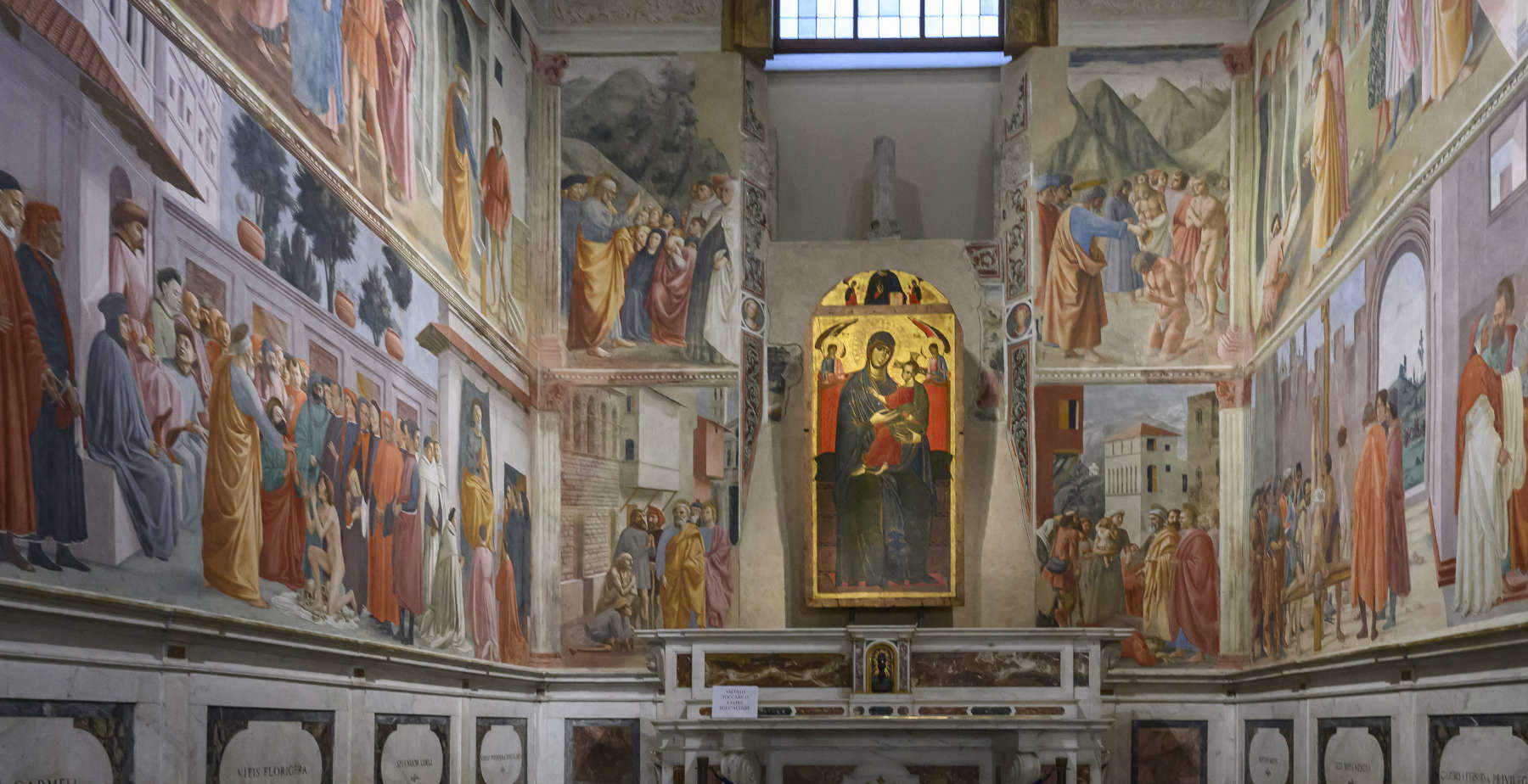
The Basilica of Santa Maria del Carmine, founded in 1268 by the Carmelite friars, is one of the iconic landmarks of the Oltrarno district and of Florence’s artistic history. The complex is internationally renowned above all for the Brancacci Chapel, considered one of the absolute masterpieces of the early Renaissance thanks to the frescoes by Masaccio, Masolino, and Filippino Lippi. Adjacent to this masterpiece is the Corsini Chapel, an example of early Florentine Baroque, created with contributions from Giovanni Battista Foggini and Luca Giordano, and now the focus of the new restoration project along with the chapels in the transept.
The church’s history is marked by a dramatic event that occurred on the night of January 28–29, 1771, when a fire almost entirely destroyed the interior of the building, sparing only the Gothic sacristy and the chapels at the ends of the transept, including the Brancacci and Corsini chapels. The reconstruction took place between 1775 and 1782 in the late Baroque style, under the direction of architect Giuseppe Ruggieri, with the illusionistic ceiling decorations created by Domenico Stagi. The new restoration project is thus part of this long historical process, restoring clarity and stability to the complex’s 18th-century layout.
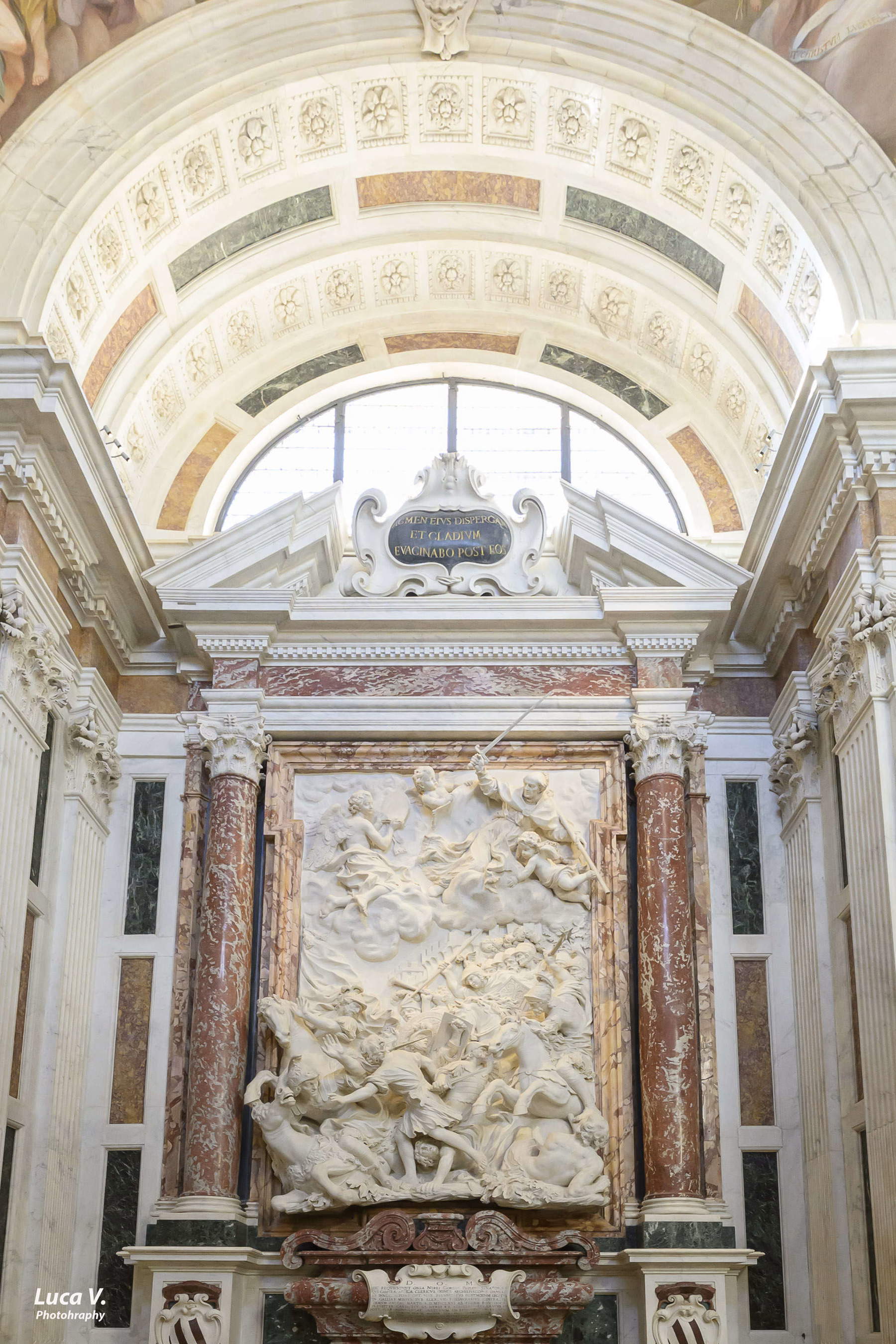
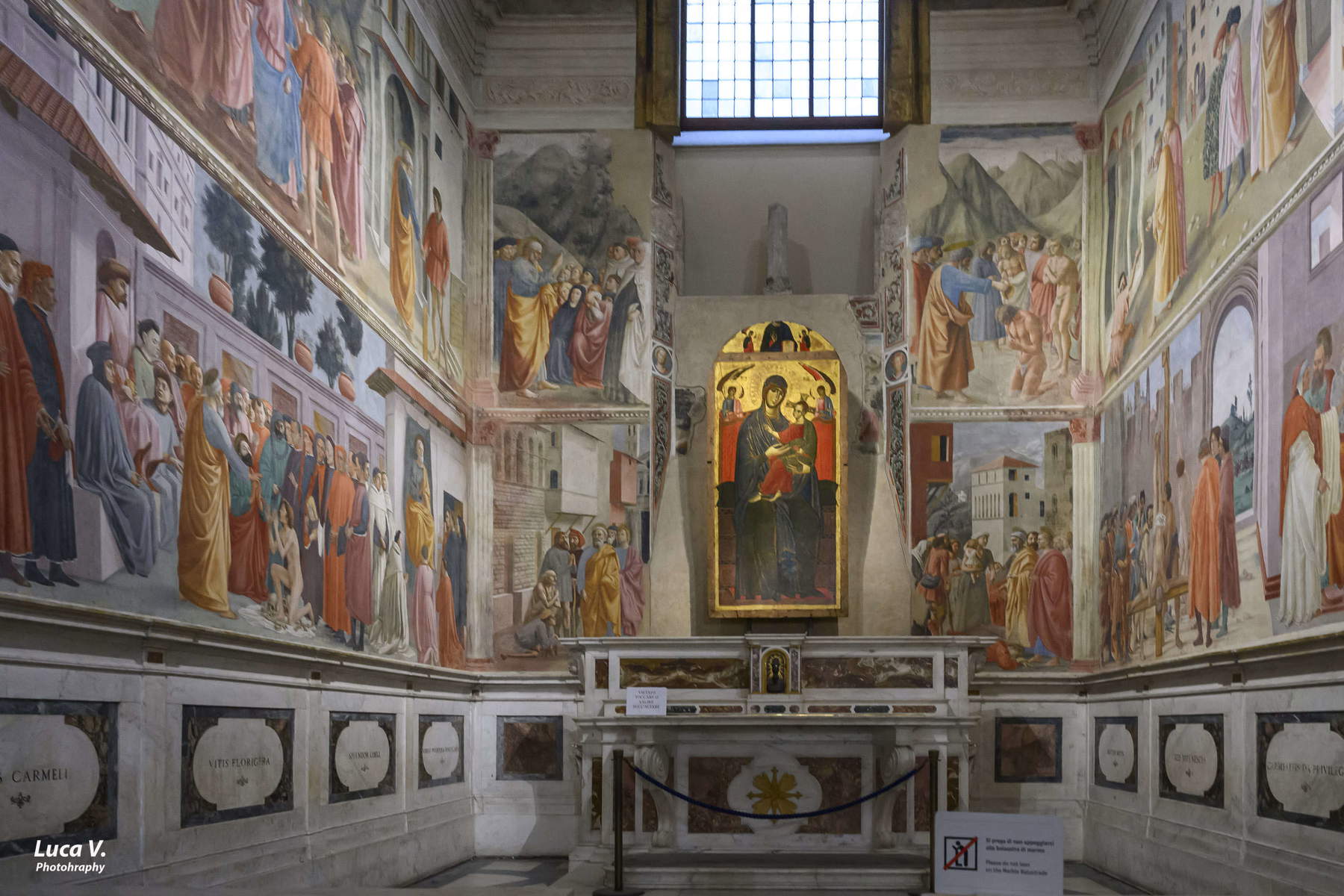
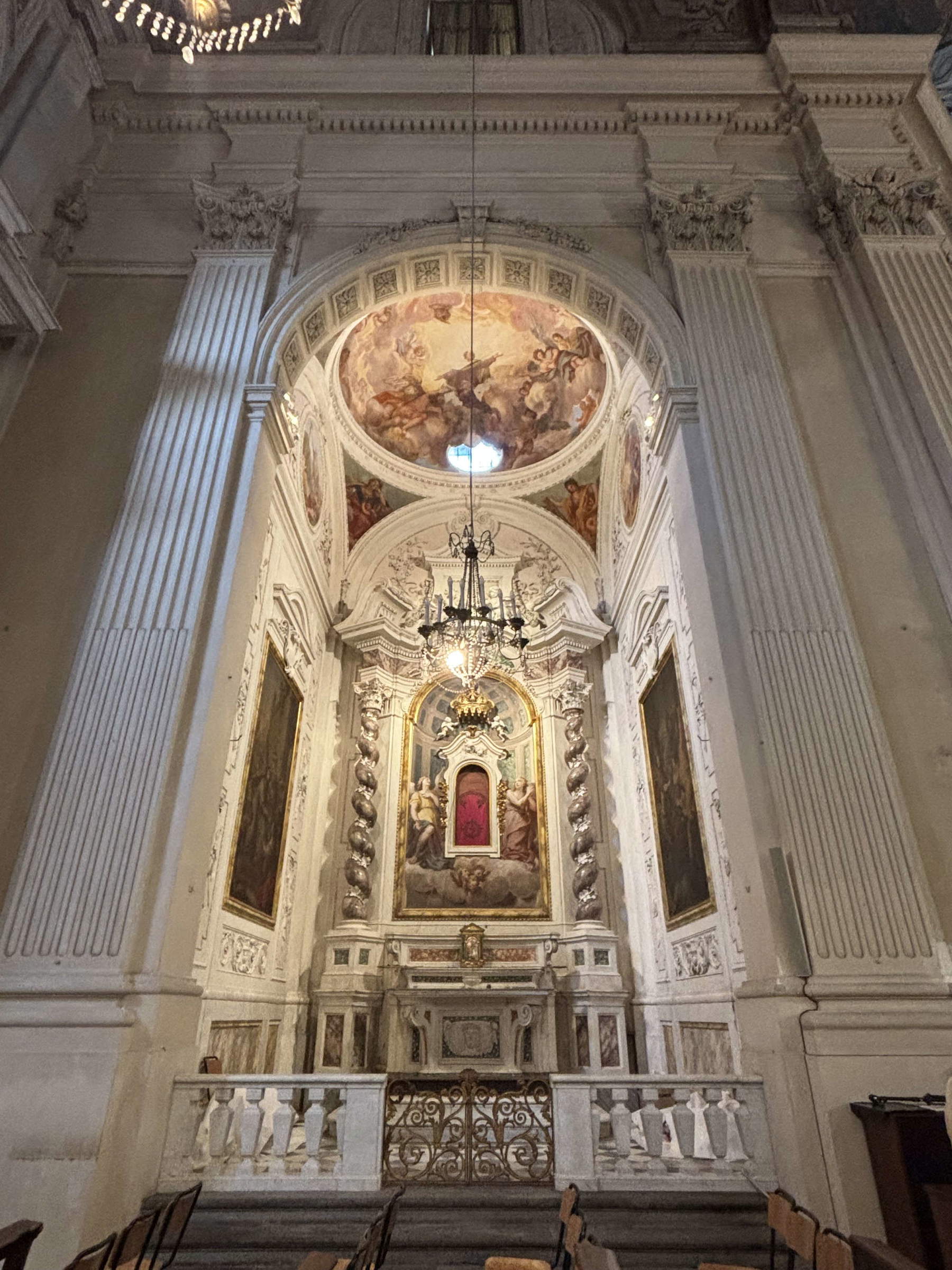
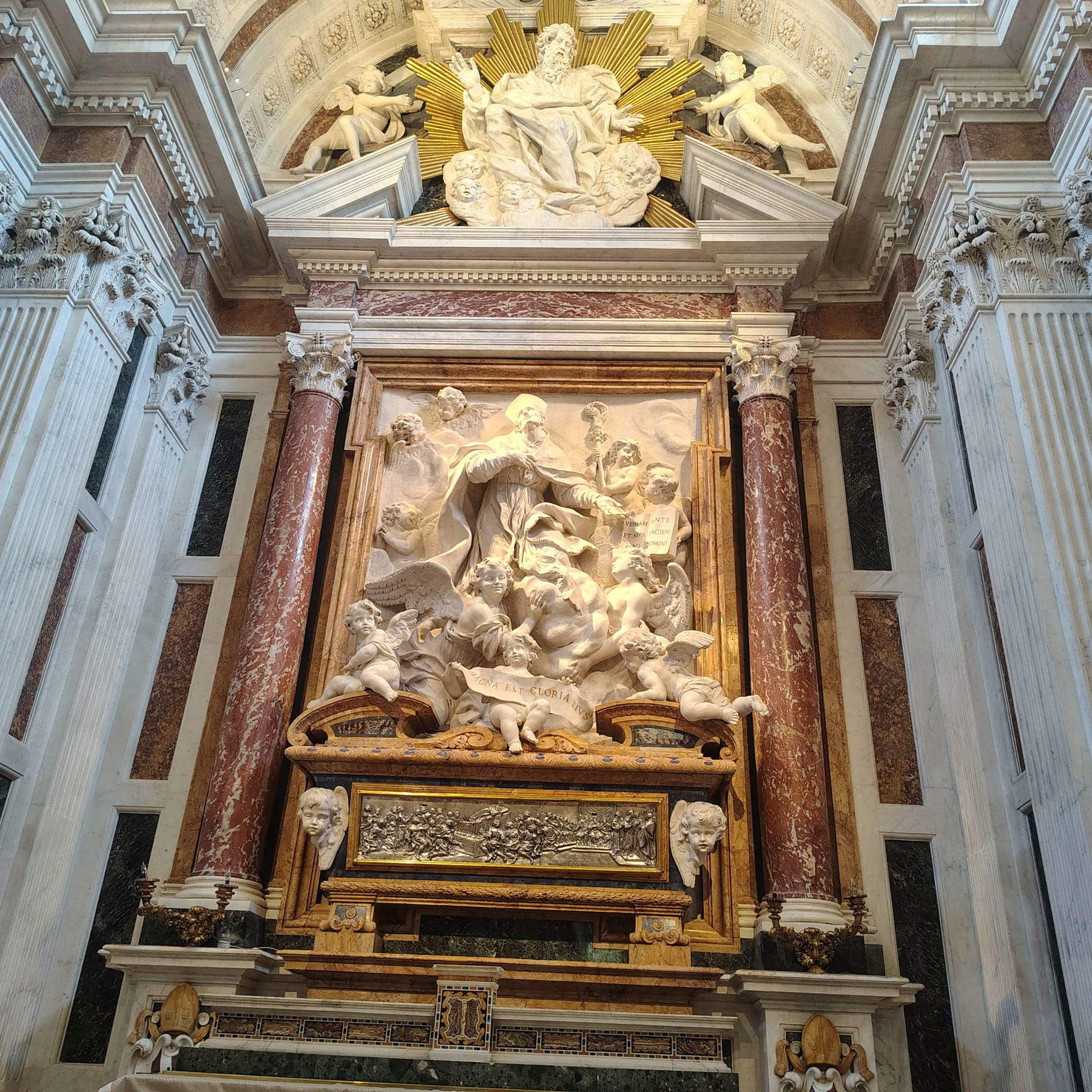
The work was completed well ahead of the initial schedule, allowing a significant portion of the basilica’s decorative and architectural heritage to be restored for the public to enjoy. In addition to the restoration of the surfaces, the project included a major upgrade of the building’s systems, with particular attention paid to the safety and accessibility of the structure.
The restoration campaign covered the Main Chapel, including the choir and the early 16th-century white marble Soderini cenotaph, the Corsini Chapel, and the transept chapels, including the Bonsi, Crucifix, Communion, and Nerli chapels. Prior to the work, these areas exhibited widespread surface deposits and significant damage, particularly in the Chapel of the Communion and the Nerli Chapel, caused by water infiltration from the roof.
In parallel with the conservation restoration, the project included the installation of a new lighting system for the entire church, including the central nave, as well as the retrofitting and code compliance of the chandelier lighting systems. A modern smoke detection and fire suppression system was also installed, extending to both the church and the sacristy, utilizing air-sampling technology to ensure comprehensive and proactive coverage.
Particular attention was given to the Corsini Chapel, considered one of the finest examples of Roman-influenced Baroque architecture in Florence. The restoration has restored the original luster to the white Carrara marble of the monumental altarpieces sculpted by Foggini and to the decorative elements in polychrome marble, created between 1675 and 1683 based on a design by Pier Francesco Silvani.
The restoration involved highly specialized procedures, including the cleaning of marble surfaces using methods calibrated and tested on preliminary samples, as well as structural consolidation work on fractured or unstable slabs. The most significant challenges concerned the stability of the stone facade, which were resolved through injections of consolidating resins and targeted restoration work.
Also restored were the silver lid of the sarcophagus of Saint Andrea Corsini—attributed to the goldsmith Heinrich Brunick based on a design by Foggini—and the saint’s wooden casket, artifacts of great artistic and devotional value that reveal the complexity of the chapel’s Baroque decor.
The chapels in the transept have regained the original clarity of their stucco, marmorino, and fresco decorations, while in the Main Chapel, the late-Baroque pipe organ by Mannaioni has also been highlighted. In the Sacristy, dating back to the original Gothic structure of 1268, diagnostic surveys were conducted, and new electrical and fire-suppression systems were installed.
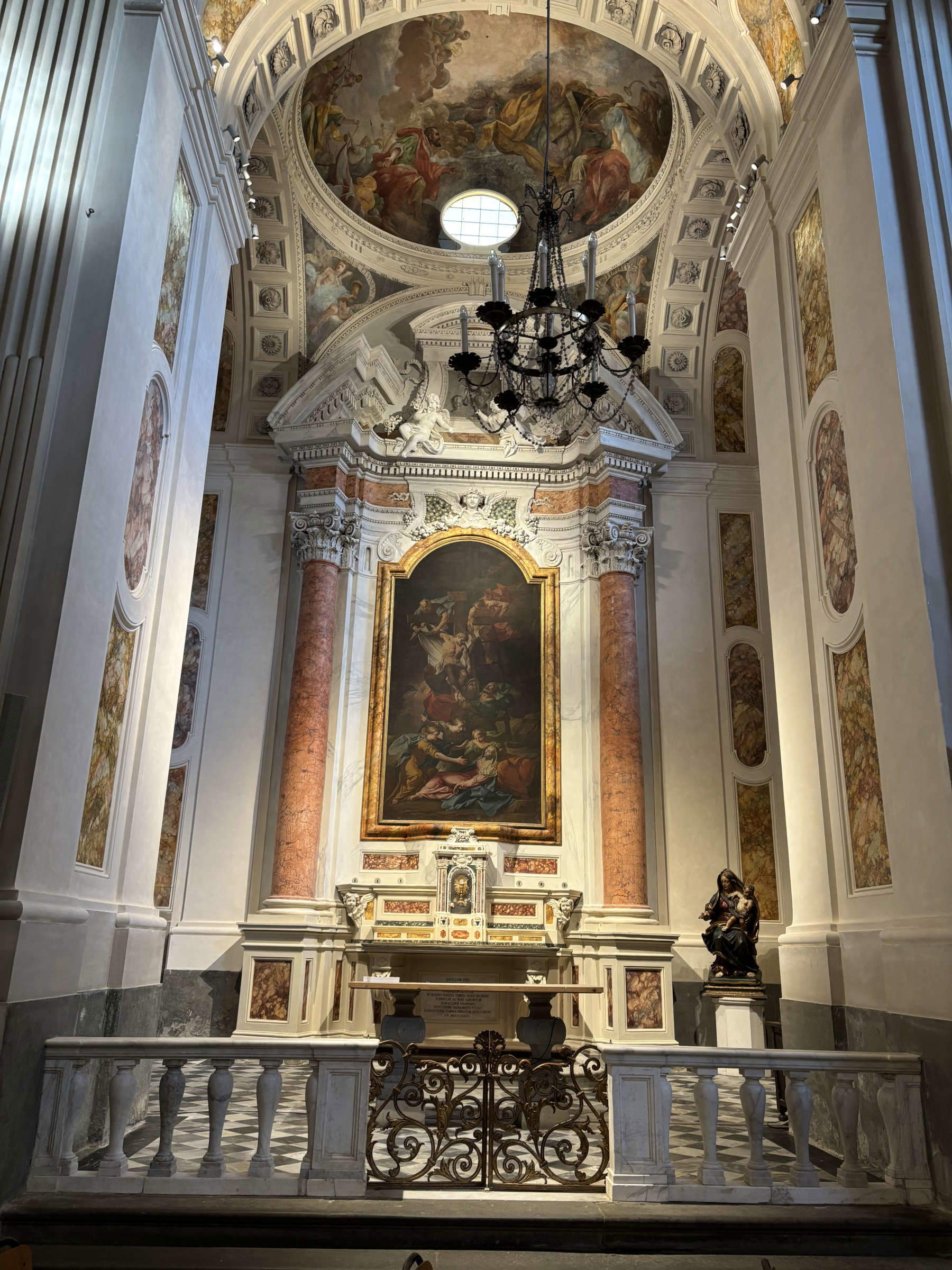
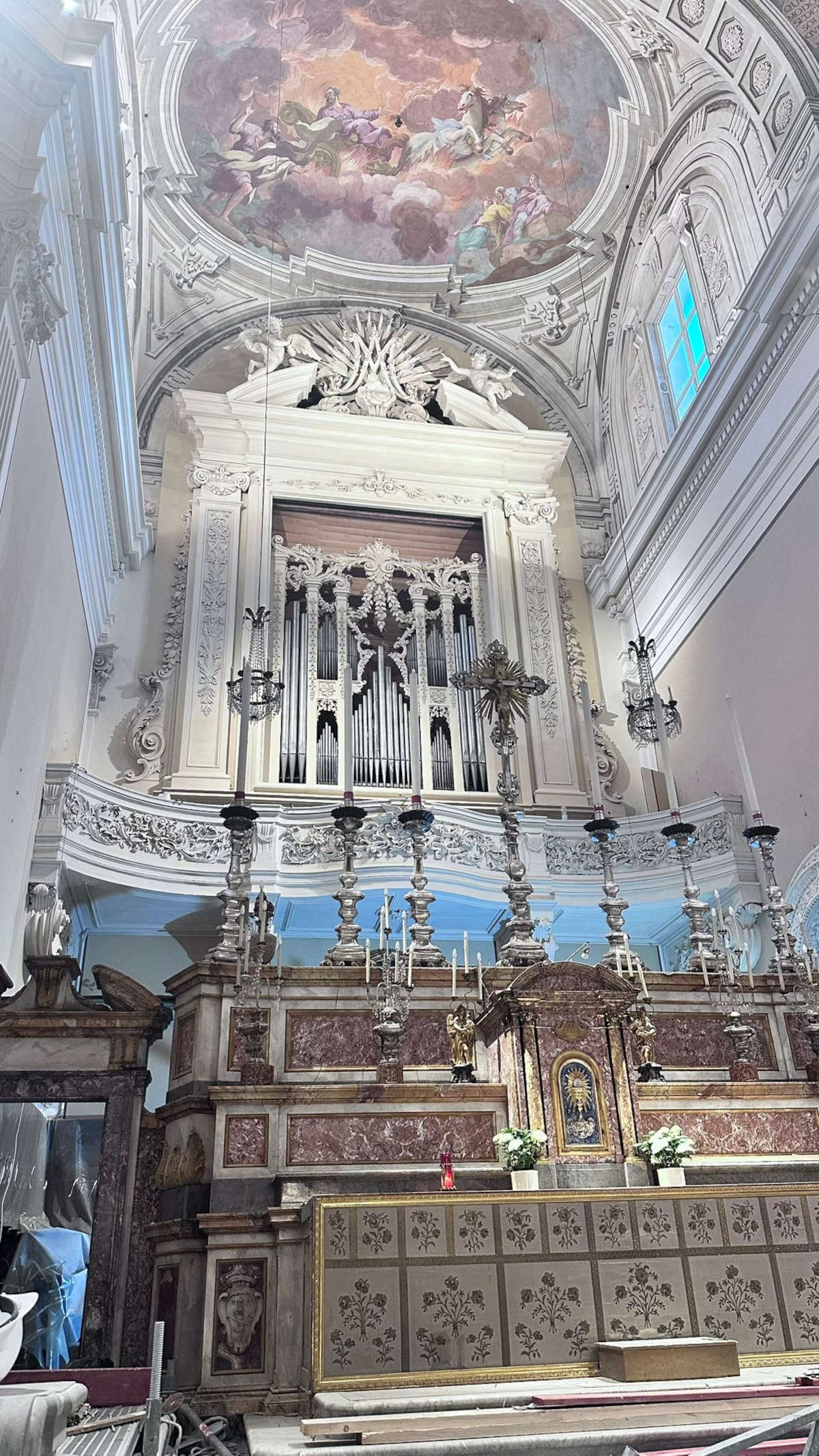
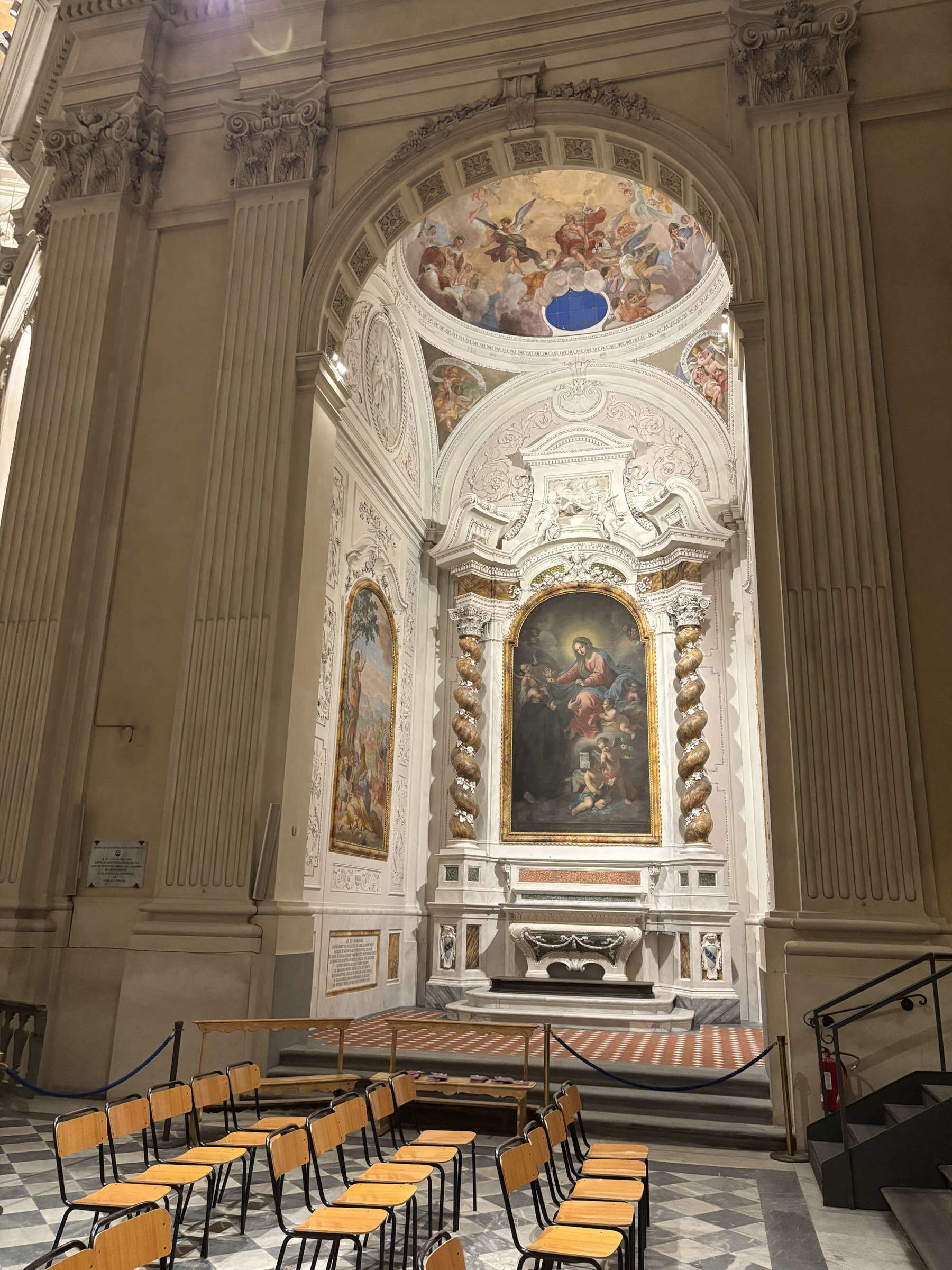
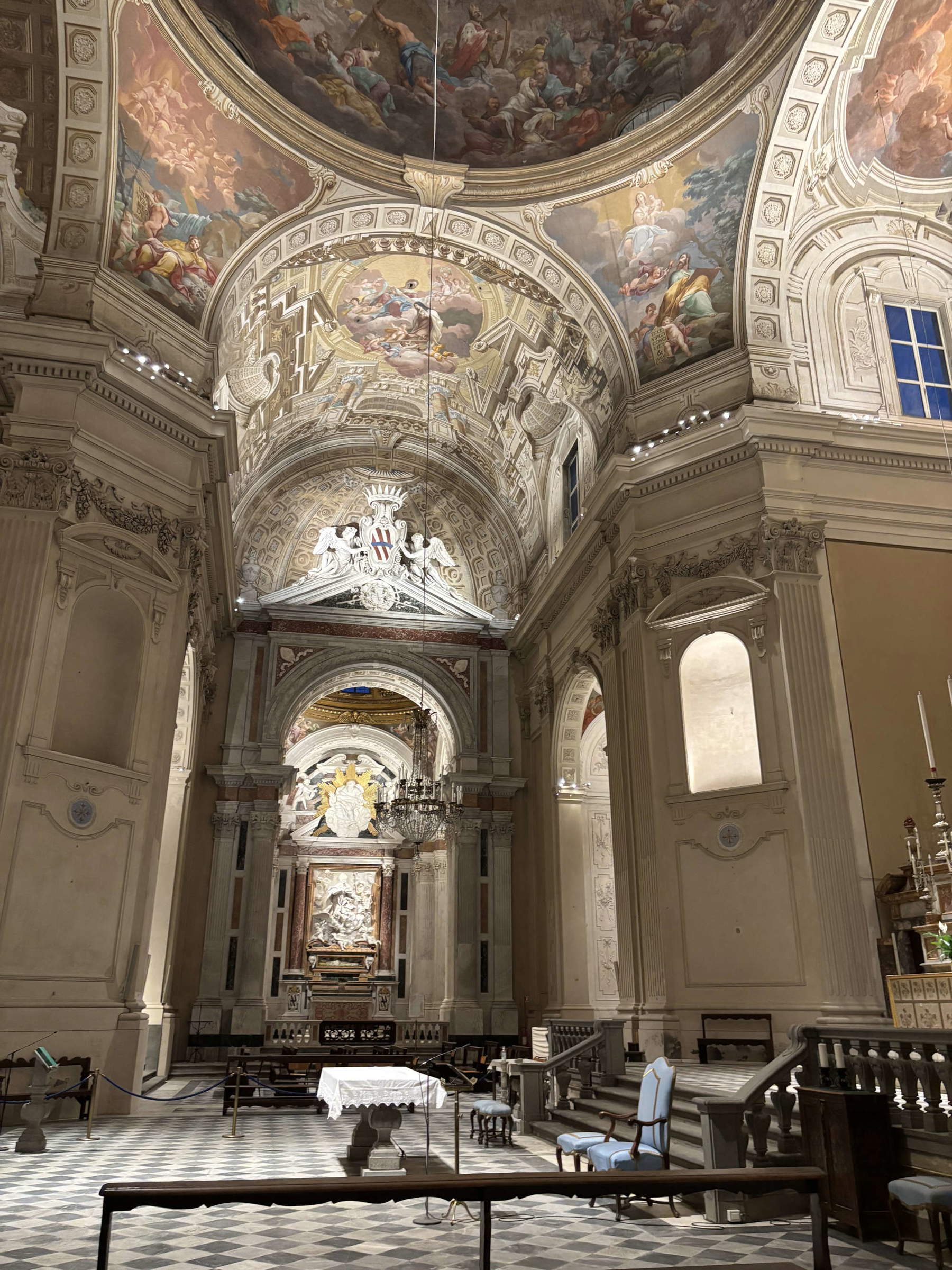
The PNRR project also introduced advanced technological solutions, including an LED lighting system designed to minimize harmful effects on paintings and historic surfaces, and an integrated fire suppression system throughout the basilica. The design decisions were guided by a preliminary analysis phase based on digital surveys and mapping of deterioration, ensuring that the restoration respected the historic fabric.
The restoration of the Basilica del Carmine represents the first and most substantial project completed in Florence as part of a broader PNRR program involving nine churches in the Fondo Edifici di Culto, with a total investment of approximately 15 million euros. The other restoration sites, including those of Santa Maria Novella and San Marco, are nearing completion.
The complexity of the restoration project, directed by Rosella Pascucci and Alberto Felici, required collaboration among numerous institutions belonging to three different ministries, along with a large group of professionals, technicians, and specialized firms, who worked under the coordination of the Florentine Superintendency and the Public Works Authority.
“About a year and a half after the conclusion of the research, diagnostic and scientific investigations, and maintenance of the frescoes in the Brancacci Chapel,” explains Superintendent Antonella Ranaldi, “the extensive and complex restoration just completed also has the merit of restoring dignity and splendor to the rest of the church and rediscovering the masterpiece of the Corsini Chapel. The Brancacci Chapel on one side and the Corsini Chapel on the other face each other in a close-up dialogue between the arts and artists at the highest levels. The former is the universal masterpiece of the early Florentine Renaissance, while the Corsini Chapel marks the arrival in Florence of the Baroque style of Roman descent, characterized by a new theatricality and a fusion of the arts, thereby renewing the city’s artistic landscape.”
“The completion of the restoration of the Basilica of Santa Maria del Carmine, which restores one of the most significant sites in Florence’s artistic and religious history to its full splendor,” says the Undersecretary of the Interior with responsibility for the FEC, Wanda Ferro, “represents an important milestone in the process of preserving and enhancing one of the most significant monumental complexes of our national historical and artistic heritage, which houses authentic gems such as the Corsini Chapel. This result was achieved thanks to the collaboration among various institutions—starting with the Ministries of the Interior, Culture, and Infrastructure—which pooled their expertise and professional skills. Through the FEC, the Ministry of the Interior plays a vital role in the preservation of sacred buildings, which are at once testimonies of faith, guardians of our collective memory, and extraordinary treasure troves of art. I would like to thank all the institutions involved, as well as the technicians and workers who contributed to the success of this complex restoration, carried out with expertise and great attention to preserving the authenticity of the site.”
 |
| Florence: Restoration Work on the Basilica del Carmine Completed with PNRR Funds |

Warning: the translation into English of the original Italian article was created using automatic tools. We undertake to review all articles, but we do not guarantee the total absence of inaccuracies in the translation due to the program. You can find the original by clicking on the ITA button. If you find any mistake,please contact us.



















 IT
IT FR
FR DE
DE ES
ES CN
CN


