





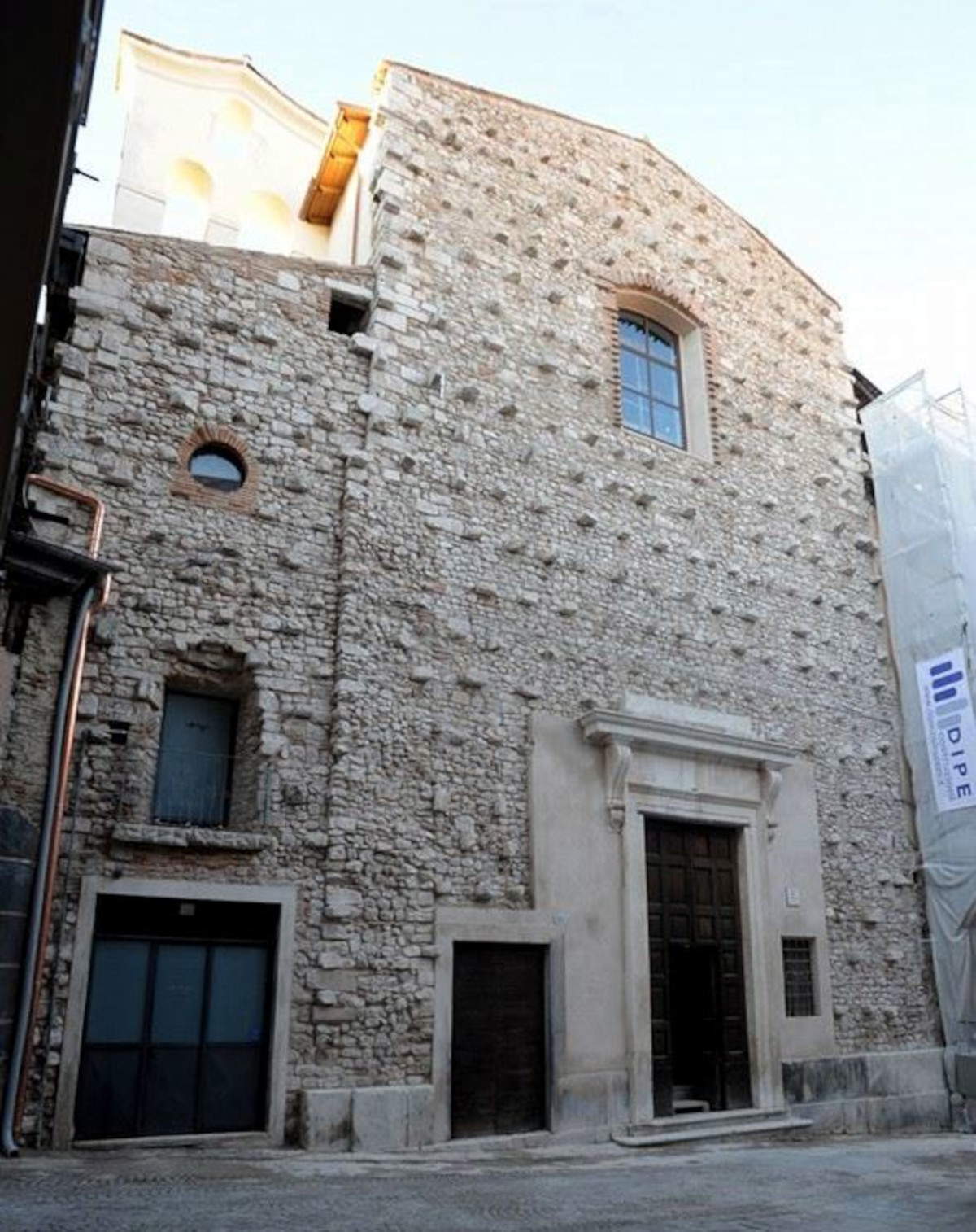
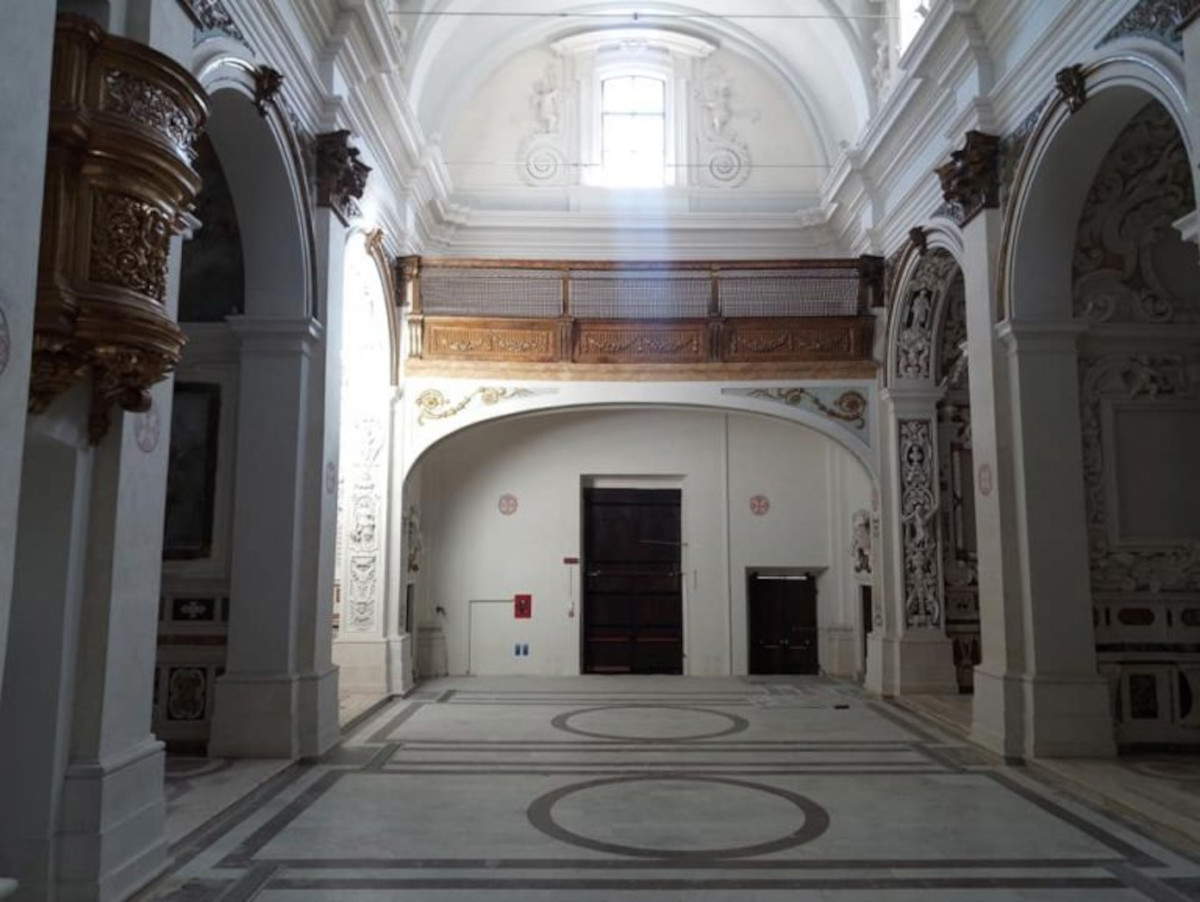
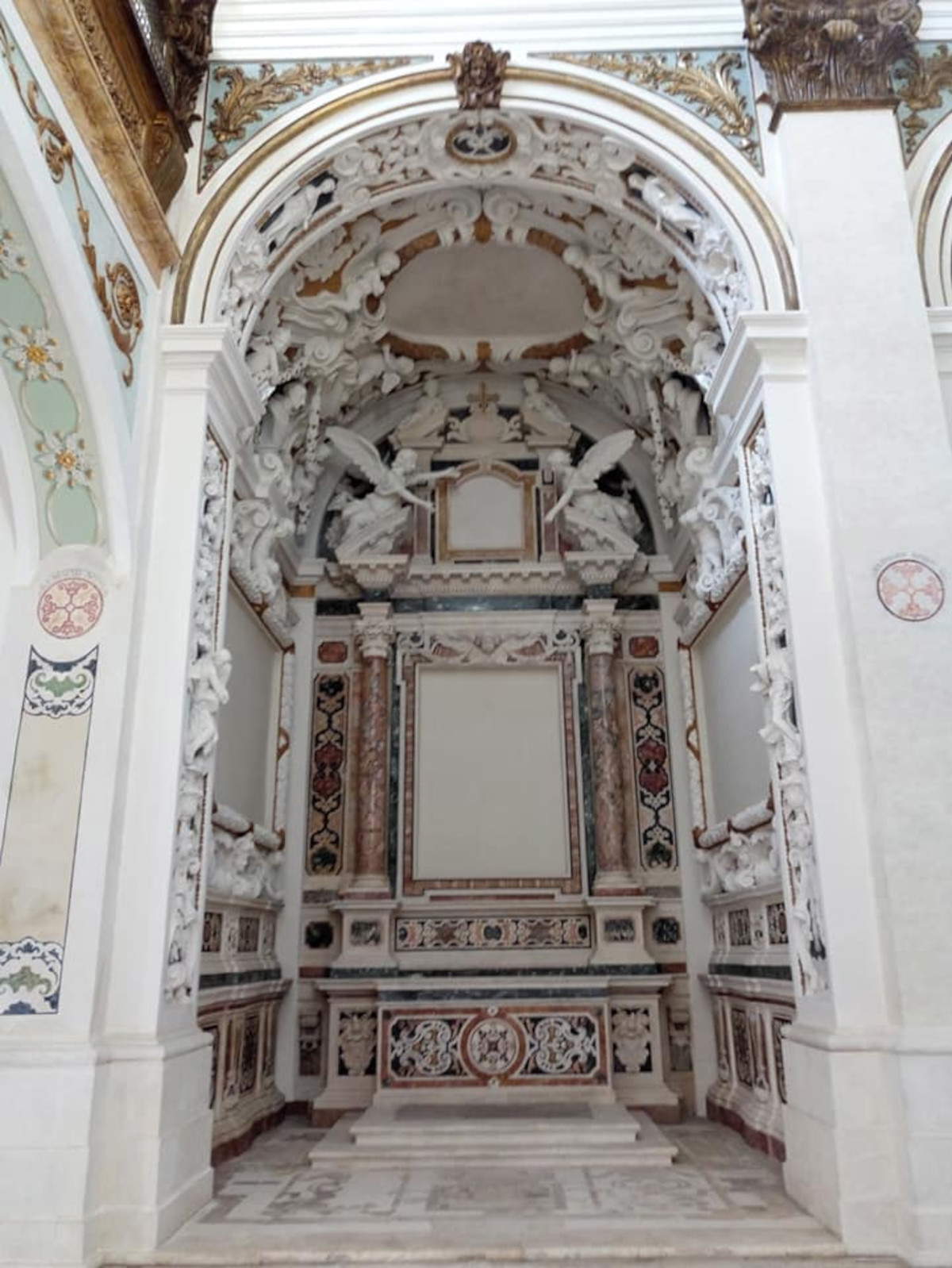
After a complex restoration, the San Filippo Church-Theater in L’Aquila reopens its doors to the city on Friday, April 17, 2026. Built as one of the most interesting spatial experiments in the seventeenth-century L’Aquila area, the Church-Theater represents a unique example of Baroque architecture in L’Aquila. The restoration delved into the nature of the complex and its transformations over time, with the aim of returning it to a balance as close as possible to its original one. The intervention, managed by theformer MiC Regional Secretariat for Abruzzo together with the Superintendence A.B.A.P. for L’Aquila and Teramo, combined the protection of the monument with its use for more than 30 years as a space dedicated to performing arts.
The 2009 earthquake had caused severe damage to the structure: the upper part of the façade had collapsed outward, there had been detachments between the façade and vault and widespread injuries along the side walls. The decorative apparatus was also severely compromised, with a particularly critical situation in the apsidal vault.
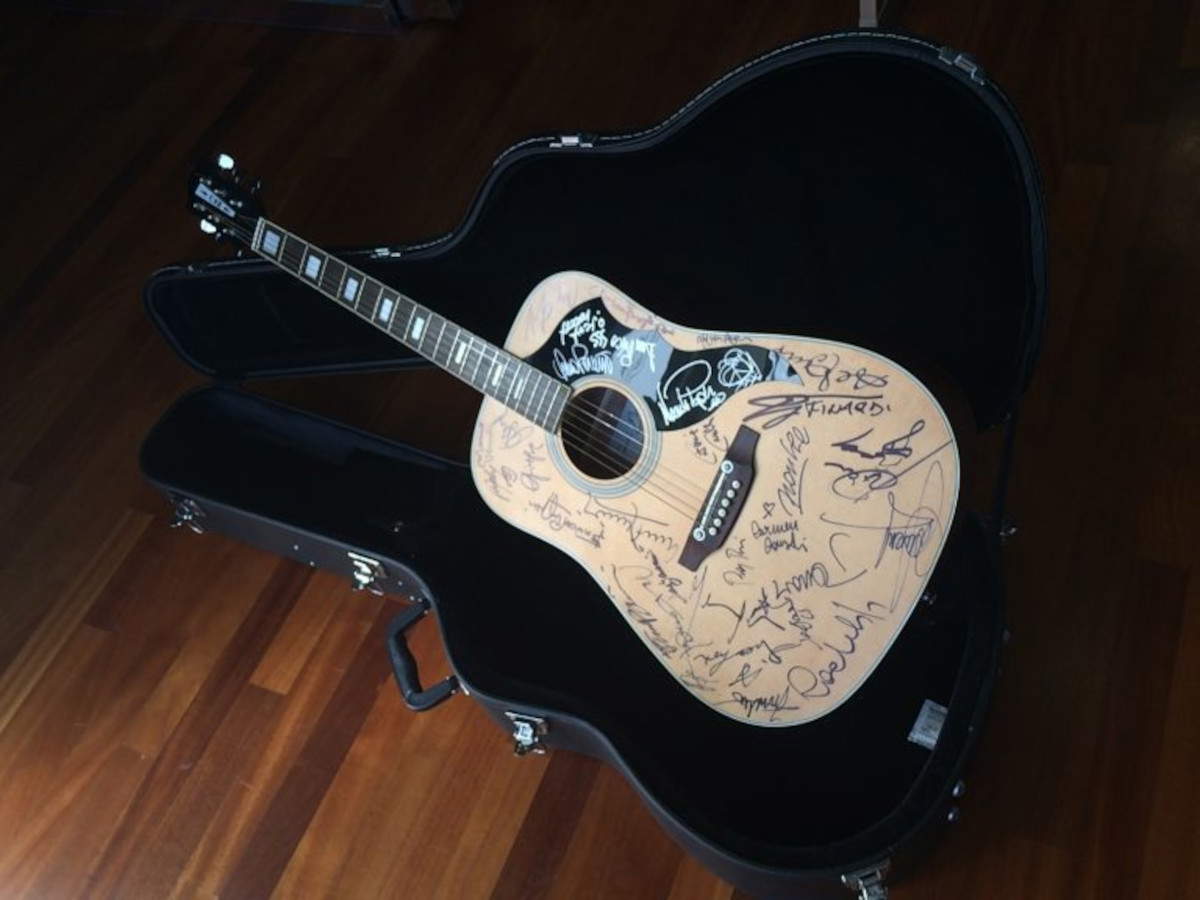
On April 21, 2009, fifty-six Italian music artists gathered at Officine Meccaniche in Milan to record the song Domani 21/04.09. The initiative, promoted by Caterina Caselli’s Sugar Music and Mauro Pagani’s Macù Edizioni Musicali, was aimed at raising funds for the recovery of L’Aquila’s cultural heritage. Proceeds from the sale of the CD, amounting to more than one million euros (1,121,607 euros), were earmarked precisely for the recovery of the San Filippo Church-Theater, supplementing public funding provided by CIPE Resolution 43/2012 (2,405,000 euros).
A key step was signed on Sept. 10, 2012, when an agreement between the Municipality of L’Aquila and the then Regional Directorate for Cultural and Landscape Heritage of Abruzzo entrusted the latter, which later became the Regional Secretariat, with the task of starting the restoration and re-functionalization work, which began in 2013.
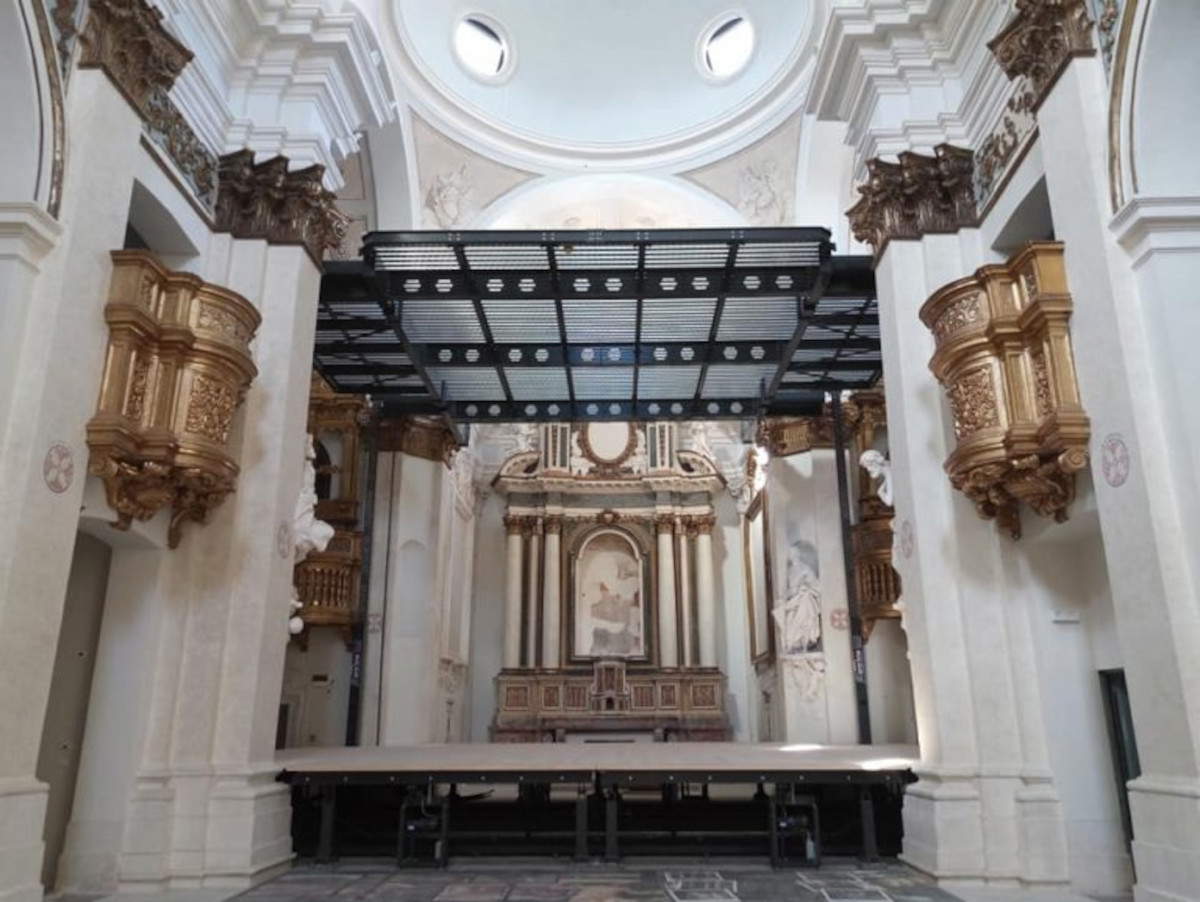
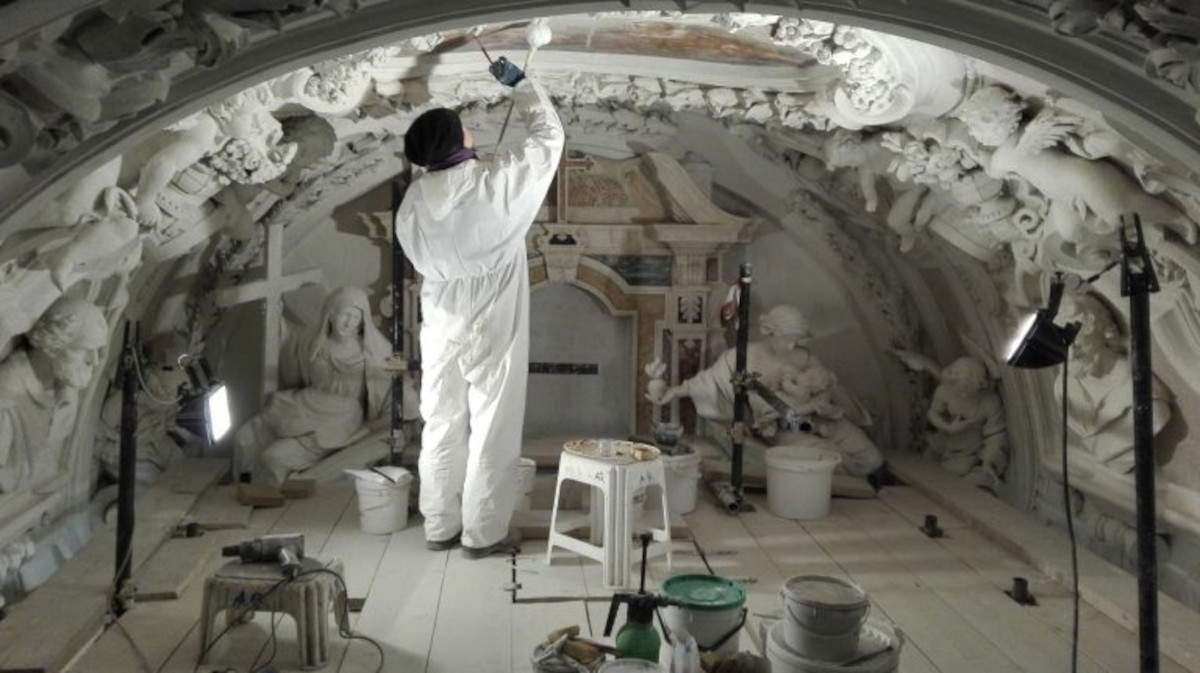
Initial operations focused on structural consolidation and seismic improvement of the building, made particularly complex by the structure’s location adjacent to private buildings. At the same time, work was carried out on the façade, characterized by the typical Aquilan “unfinished”, through several phases of cleaning and surface recovery. Subsequently, work moved to the interior, with the aim of integrating the functional needs of the theater with respect for the history of the building and its decorative apparatus. In particular, as far as the stage is concerned, an advanced technological solution was adopted to temporarily remove the overhead structures of the stage mechanics, making the volumes of the transept and apse readable again. When not in use, the stage is able to “enclose” the lattice and supporting pillars within it, thus preserving the unified perception of the Baroque space.
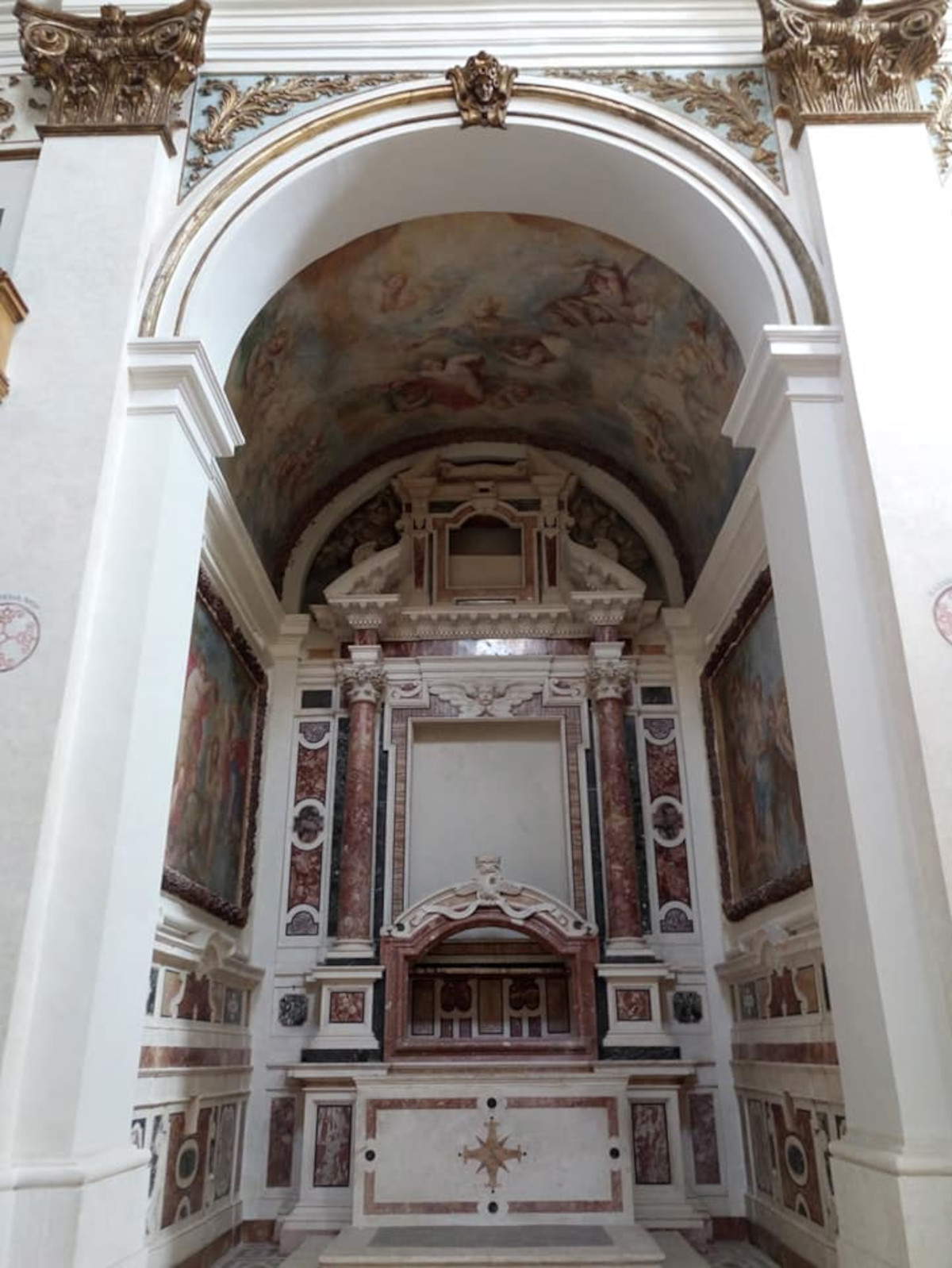
The connection with the offices on the upper floor was also designed in the name of integrating the ancient and the contemporary, through an aerial glass staircase that combines functionality and respect for the historic context. Similarly, the armchairs placed in the side chapels before the earthquake were removed and new, non-impacting and easily removable classroom-platea seating was introduced.
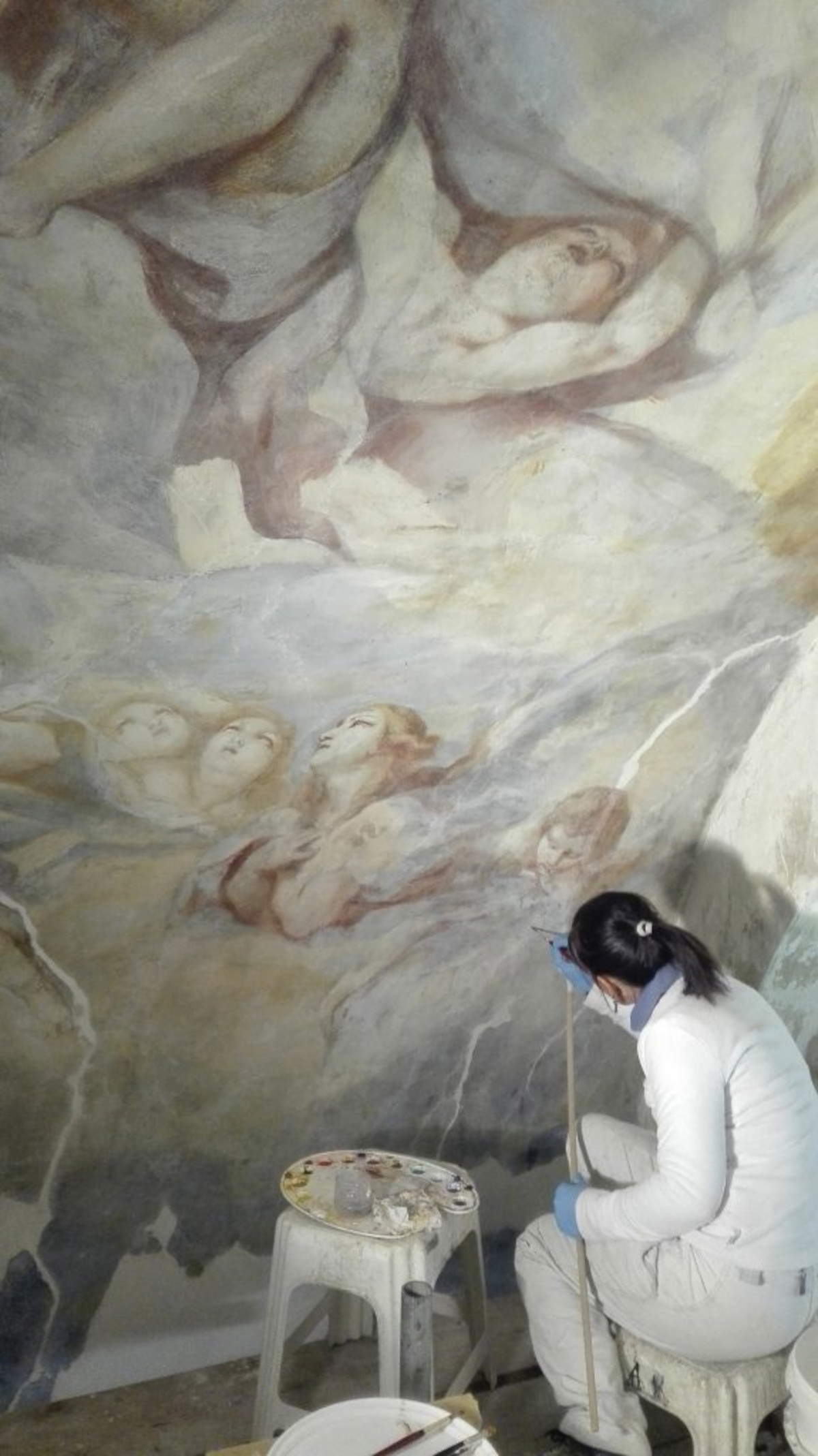
The restoration also involved the decorative elements, restoring value to frescoes and stuccoes that constitute one of the most distinctive aspects of the building.
The restoration of the San Filippo Church-Theater represents a major moment for L’Aquila Capital of Culture 2026. The building, owned by the Interior Ministry’s Worship Buildings Fund, will be managed by the City Council for the next six years under a shared agreement with the Soprintendenza archeologia, belle arti e paesaggio for the provinces of L’Aquila and Teramo.
The April 17 opening day will kick off at 10 a.m. with a meeting inside the theater, moderated by journalist Stefano Dascoli, in the presence of Mayor Pierluigi Biondi, Caterina Caselli and Giuliano Sangiorgi, as well as Culture Minister Alessandro Giuli. During the meeting, the value of the reopening to the city, the work carried out and the role of the 2009 solidarity initiative, which saw SugarMusic and Macù Edizioni Musicali involved in the recording of Domani, the proceeds from which contributed substantially to the recovery of the property, will be explained.
At 11 a.m., the official opening ceremony with ribbon cutting will be held in St. Philip’s Square, followed by a live broadcast on institutional social channels. In the afternoon, CostellAzioni, a festival dedicated to territorial identity that will continue until December, will kick off, involving neighborhoods and hamlets in a wide-ranging program of events including performing arts, music, sports and nature. The first three days will feature a full calendar of free events: it begins on Friday with Federica Camba and Gianluca “Scintilla” Fubelli, followed by Alessio Boni and Roberta Di Mario; on Saturday it will be the turn of Giorgia Fumo and the “Massimo Lopez Show”; on Sunday, space for creativity with Giovanni Muciaccia and, in closing, a reading by Edoardo Leo.
To celebrate the return of this important asset to the community, the theater will also be open to the public for special tours from 11 a.m. to 1 p.m., offering an opportunity to rediscover up close the historical and architectural value of this extraordinary Baroque space.
“The reopening of the San Filippo Theater is an extraordinary signal of rebirth, a key piece in the mosaic of L’Aquila Capital of Culture. That’s why we have imagined three days of looping events. The goal is to encourage maximum participation,” said Mayor Biondi. “Returning it to the territory, in fact, is not only an act of architectural recovery, but the return to a place of the soul where our community recognizes itself, which has been waiting. It is from this stage that our vision of the future restarts, solid and proud of its roots.”
“It is always exciting to participate in the return of a monumental asset to the community after a long journey of restoration,” said Superintendent Massimo Sericola. “But in the case of the San Filippo Theater, a pivotal place for its cultural identity is returned to the city, in which the historical-artistic stratification dialogues with contemporary needs. The San Filippo represents a virtuous model of heritage intervention, capable of combining safety, conservation and innovation, while fully respecting its extraordinary architectural quality and singular function. And it is thanks to the synergy of the institutions - the Prefecture of L’Aquila, the Municipal Administration, the Superintendency - that this important goal has been achieved.”
|
| L'Aquila, San Filippo Church-Theater reopens. Restored thanks in part to proceeds from track Tomorrow 21/04.09 |

Warning: the translation into English of the original Italian article was created using automatic tools. We undertake to review all articles, but we do not guarantee the total absence of inaccuracies in the translation due to the program. You can find the original by clicking on the ITA button. If you find any mistake,please contact us.


























 IT
IT FR
FR DE
DE ES
ES CN
CN


