





The Ministry of Culture has founded a new institute: it is theCentral Institute for Cultural Heritage Risk Management (the acronym is ICRI), designed to structurally strengthen the state’s ability to prevent, monitor and deal with the risks facing Italy’s cultural heritage, which is increasingly exposed to the effects of climate change, calamitous events and the consequences of recurring seismic crises. This is the goal of the measure signed by Culture Minister Alessandro Giuli, which redefines the organizational structure of the ministry through the founding of the ICRI.
The establishment of the Institute, the MiC explains, responds to the need to overcome an approach linked exclusively to emergency management, transforming into ordinary and permanent functions skills that in recent years have proven crucial for the protection of cultural heritage. In particular, the new arrangement originates from the experience gained in managing the areas affected by the August 24, 2016 earthquake, which highlighted the need for stable, coordinated tools capable of operating with a long-term vision.
Headquartered in Rome , ICRI has special autonomy and is hinged within the Department for the Protection of Cultural Heritage of the Ministry of Culture. Its stated objective is to ensure continuity in the research, monitoring, assessment and management of risks that insist on cultural heritage, while ensuring unified coordination of prevention and intervention policies.
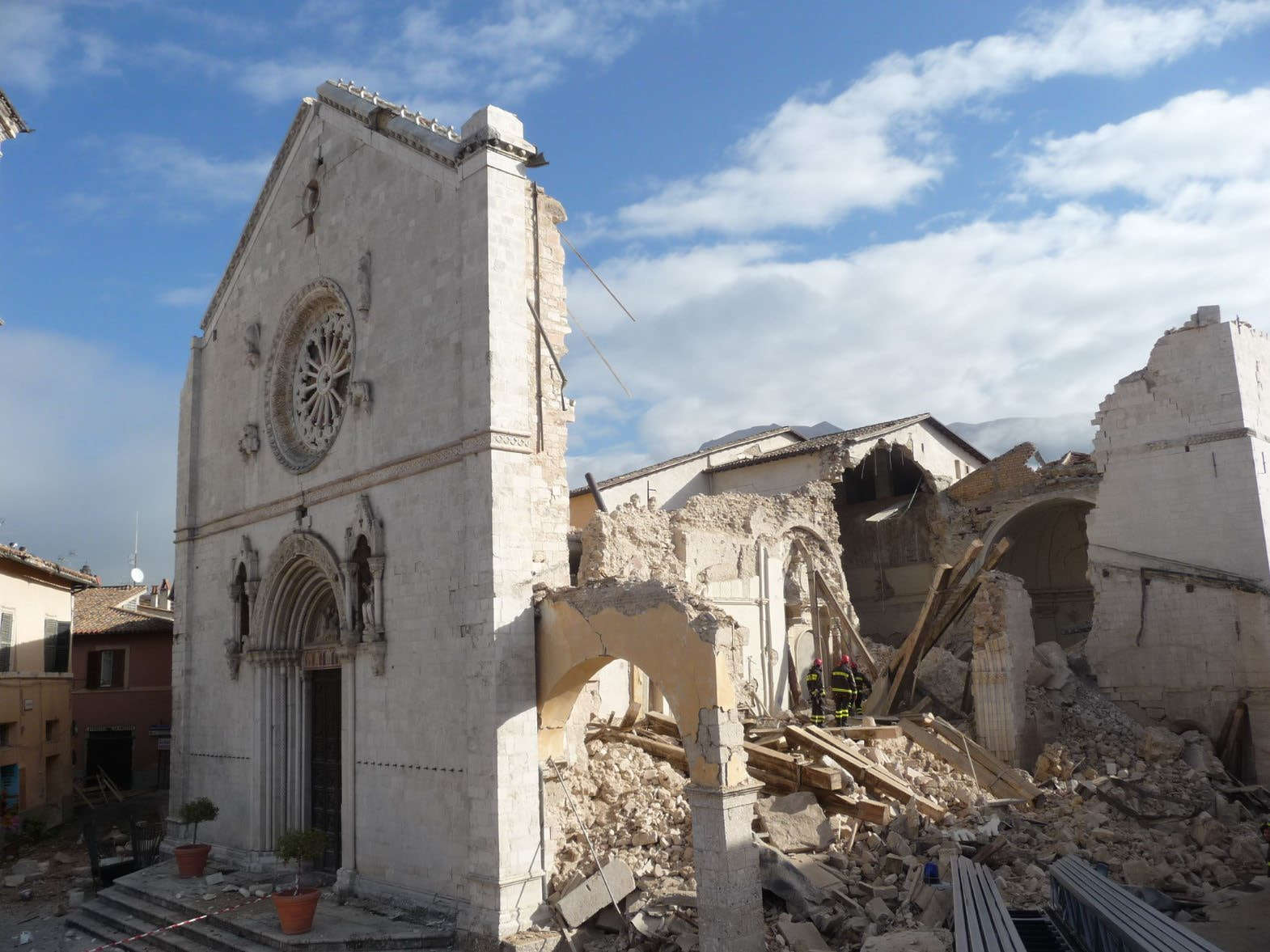
With the establishment of the Central Institute for Cultural Heritage Risk Management, the functions hitherto carried out by the Office of the Special Superintendent for the areas affected by the 2016 earthquake are being integrated into an ordinary and structured arrangement. The idea is to ensure that the experience gained in the field is not dispersed but becomes a stable asset of the administration, helping to build a model of protection capable of dealing not only with emergencies already underway, but also with future risks.
The new Ministry of Culture garrison will play a central role in coordinating monitoring plans, both ordinary and extraordinary, affecting the national cultural heritage. One of the strategic functions entrusted to ICRI concerns the standardization of the documentation necessary to update the Cultural Heritage Risk Map, a fundamental tool for knowledge, prevention and planning of protection interventions. This also includes the development and enhancement of information systems and databases to support public policies on cultural heritage conservation and safety.
The Institute is also called upon to carry out design activities for advanced information systems and to promote technological innovation applied to cultural heritage. In a context marked by increasingly rapid environmental changes and extreme events of growing intensity, the ability to integrate data, technologies and scientific expertise becomes a decisive element in reducing the vulnerability of monuments, archaeological sites, museums and archives.
Another key axis of ICRI’s action is cooperation with universities and research centers, both nationally and internationally. The management of risks that threaten cultural heritage, in fact, requires an interdisciplinary approach and constant comparison with best practices developed in other contexts. Through collaboration with the academic and scientific world, the Institute will be able to contribute to the development of shared methodologies and innovative solutions, strengthening Italy’s role as a point of reference in the field of protection and conservation.
The measure signed by Minister Giuli also confirms the principle offinancial invariance. That is, the new functions assigned to the Central Institute for Cultural Heritage Risk Management are to be carried out without new or increased burdens on public finance, through a more effective reorganization of the resources already available.
|
| Ministry, central institute for cultural heritage risk management established |

Warning: the translation into English of the original Italian article was created using automatic tools. We undertake to review all articles, but we do not guarantee the total absence of inaccuracies in the translation due to the program. You can find the original by clicking on the ITA button. If you find any mistake,please contact us.


























 IT
IT FR
FR DE
DE ES
ES CN
CN


