




by Redazione 16/07/2026



Categories: News / Disclaimer
A new visual identity, updated information displays, a website, and digital tools mark the launch of the promotion project organized by the National Museums of Bologna in collaboration with the University of Bologna’s FrameLAB. The photography exhibition “Views of the Landscape” will also open on July 31.

A new communication system, a new visual identity, updated information panels, and a dedicated website: the Fortress of San Leo in San Leo (Rimini) is launching a comprehensive project to revamp the visitor experience, with the goal of making the monument’s historical, architectural, and cultural complexity more understandable and accessible. The official presentation of the new features is scheduled for Friday, July 31, 2026, at 5:30 p.m., as part of an event organized by the National Museums of Bologna—Emilia-Romagna Regional Directorate of National Museums—in collaboration with the Municipality of San Leo and FrameLAB – Multimedia & Digital Storytelling, a research laboratory of the Department of Cultural Heritage at the University of Bologna.
The project represents the first outcome of a development program designed to support the museum’s evolution in the coming years. The new approach aims to build an integrated system of wayfinding, communication, and visitor experience capable of combining scientific research, digital tools, and accessibility standards, thereby revealing to the public the layered history that has shaped the Fortress over the centuries.
The new visitor experience is based on bilingual communication consisting of concise, narrative texts, orientation maps, and QR codes through which visitors can access in-depth information on the complex’s history. The digital tools will be gradually expanded with new multimedia content, including videos, 3D reconstructions, audio narrations, and photo galleries.


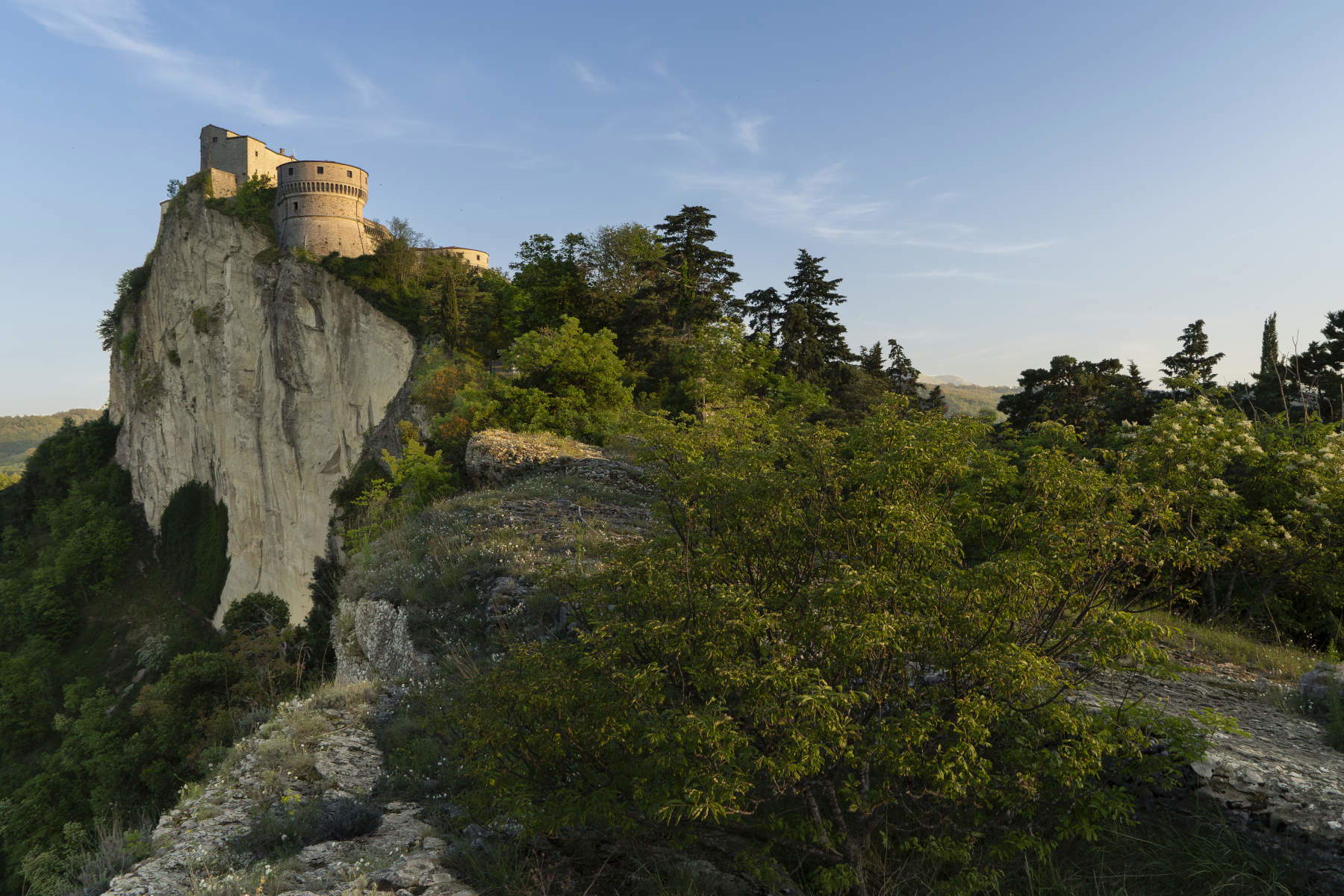
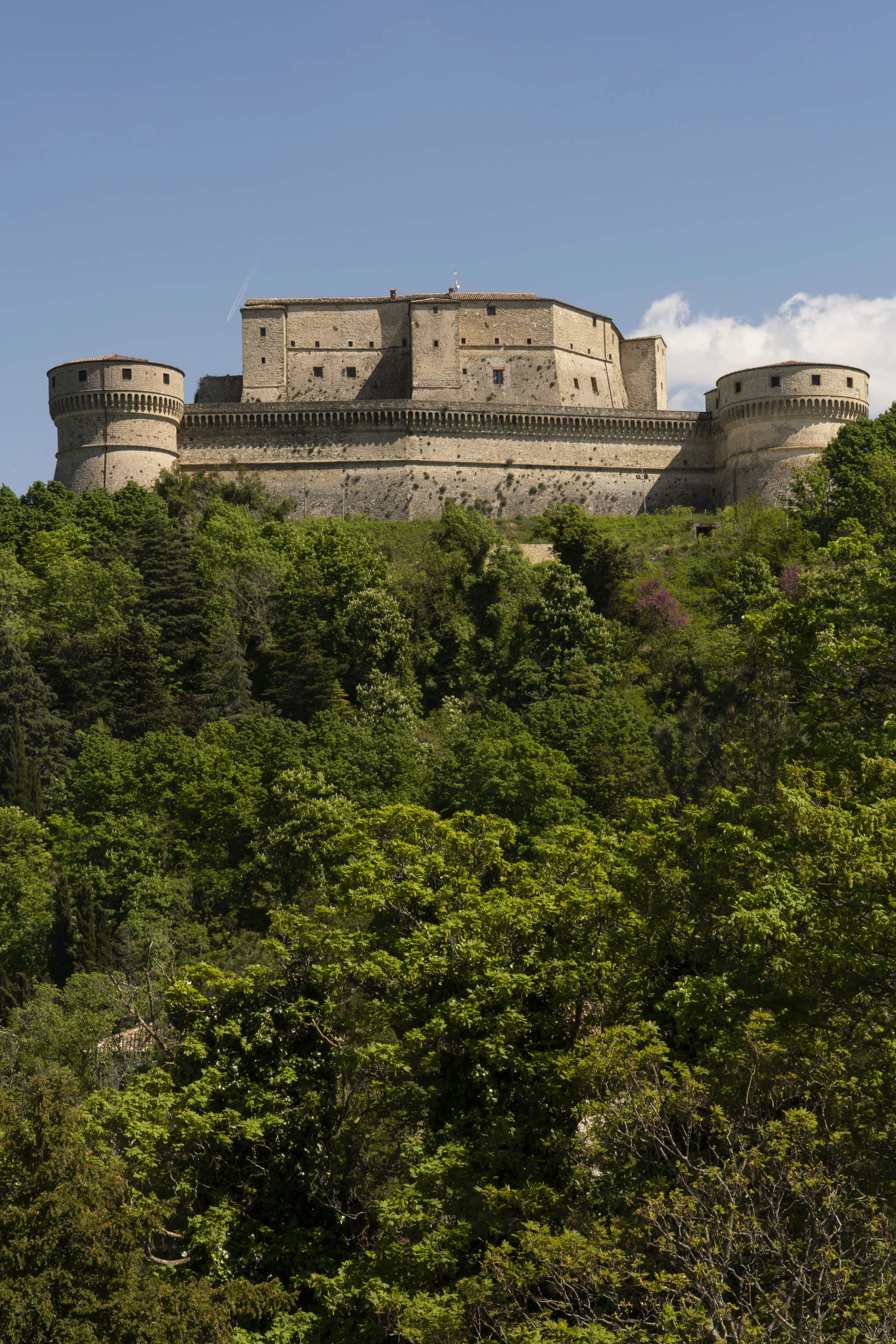
A central role is played by the color scheme introduced on the panels, designed to organize the information into three major thematic areas: Landscape and Territory, History and Architecture, and Notable Figures. Colors, illustrations, and summary boxes help visitors navigate a monument characterized by a multitude of historical, military, architectural, and social themes, guiding them in understanding the different phases of its history: from the earliest early-medieval castle-fortification to the Rocca, through its transformation into a Renaissance fortress, and subsequently into a papal prison.
The new narrative unfolds across the three parade grounds and the various levels of the monumental complex, following a path that connects architecture, memory, and landscape. The first parade ground introduces one of the five observation points through which the surrounding territory becomes a tool for historical understanding. From the second parade ground, visitors access the two towers: one dedicated to Federico da Montefeltro and the innovations introduced by Francesco di Giorgio Martini in military architecture and the art of war; the other to the fragility of the cliff and the reconstruction of the collapsed section of the Fortress, carried out by Giuseppe Valadier in the late 18th century.
The passage to the third courtyard leads to the large multi-level building, the palatium, which was transformed over time to accommodate bishops and emperors, court lords from the 14th to the 16th centuries, castellans, and prisoners of the Papal States. Inside, the exhibition dedicated to witches, torture, and the Inquisition—created in the 1990s—has also been revised, with updated content.
On the upper levels is the MusLeo, a multimedia space dedicated to the history of the monument and the figures who lived there. The tour continues through the papal cells up to the top floor, where the collection of ancient weapons is housed, along with a historical and iconographic reconstruction of the capture of San Leo by the Papal States, carried out by an army led by the de’ Medici family. The same level houses the section dedicated to Cagliostro, the fortress’s most famous prisoner, and a room with sound installations dedicated to the “Sounds and Voices of San Leo.”
The tour concludes with a descent to the cells of Cagliostro and Felice Orsini, offering an in-depth look at the Risorgimento period. The entire tour is complemented by resources designed according to accessibility and inclusion criteria, starting with the Fortress’s new website, available as of the opening day, which for the first time will offer an independent identity within the National Museums network, becoming a go-to source for information, in-depth analysis, and digital content.
A bilingual brochure will also be available at the entrance, featuring maps and infographics detailing the tour routes and museum sections, with the aim of providing visitors with a framework for understanding the monument’s complexity right from the start. The renovation of the Fortress also includes the opening of two galleries for temporary exhibitions, dedicated to contemporary art and themes related to the local area. The first exhibition will be *Sguardi sul paesaggio* (Views of the Landscape), a photography exhibition inaugurated on July 31 alongside the new visitor route.
Sponsored by the Technical-Scientific Committee for the adaptation of the landscape plan to the Cultural Heritage Code—composed of the Ministry of Culture and the Emilia-Romagna Region—the exhibition is dedicated to the protected landscapes of Emilia-Romagna. After its first stop at the National Art Gallery in Bologna, the exhibition arrives at the Fortress of San Leo, continuing its tour through some of the region’s major cultural sites.
The project stems from the photography contest of the same name, organized as part of the efforts to align the Regional Landscape Plan, and features a selection of sixty images chosen from over two thousand submitted photographs. The photographs capture the diversity of Emilia-Romagna’s protected landscapes, from the Apennine Mountains to coastal areas, from historic villages to places transformed over the centuries by the relationship between humans and nature.
Through photographs taken by professional photographers, enthusiasts, and local residents, the exhibition invites visitors to reflect on the historical, cultural, and identity-defining value of the region’s landscapes. Each image is linked, via a QR code on the panels, to the interactive map on Tourer.it, which allows visitors to explore the characteristics of the places depicted and consult itineraries and trails for a firsthand visit.
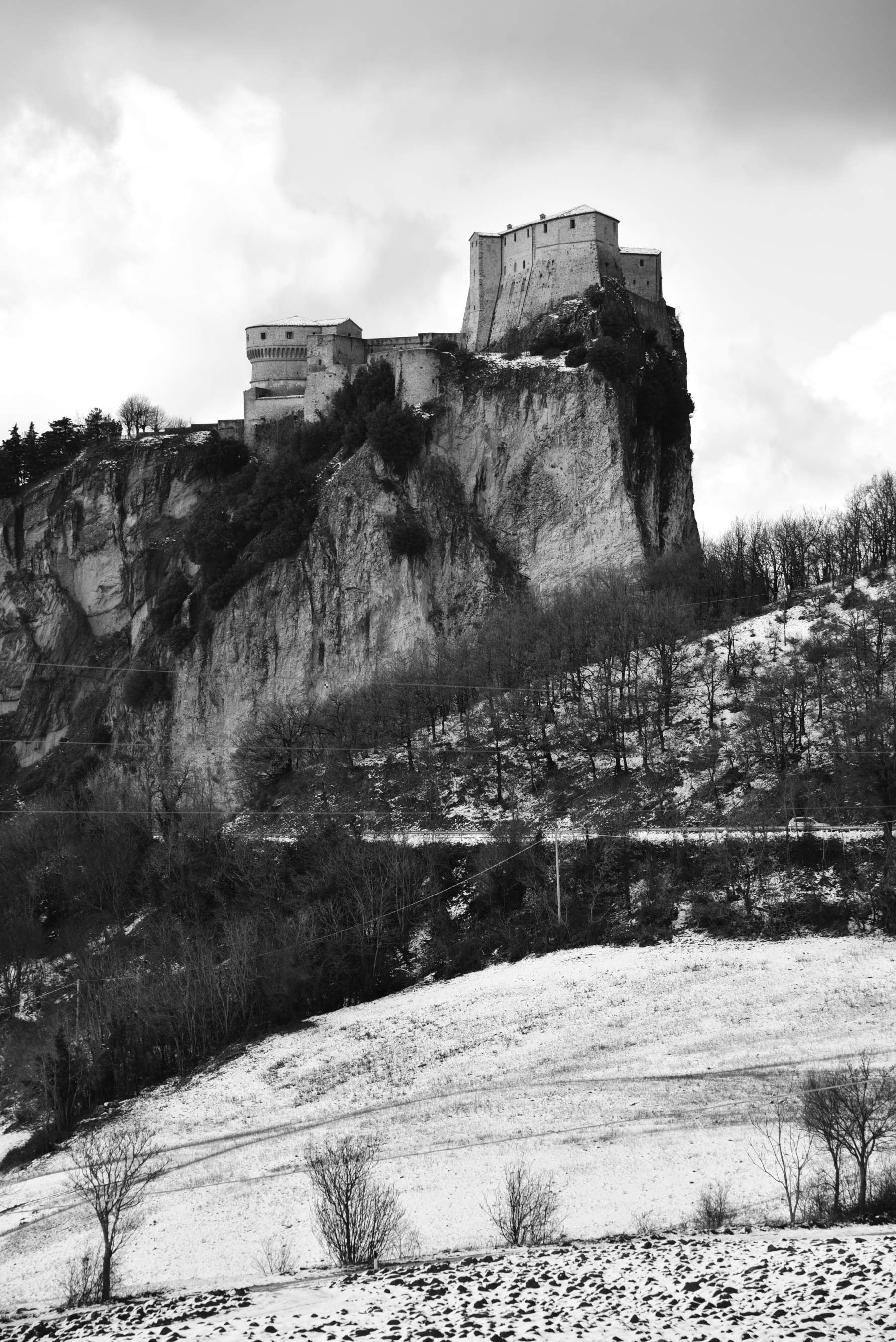
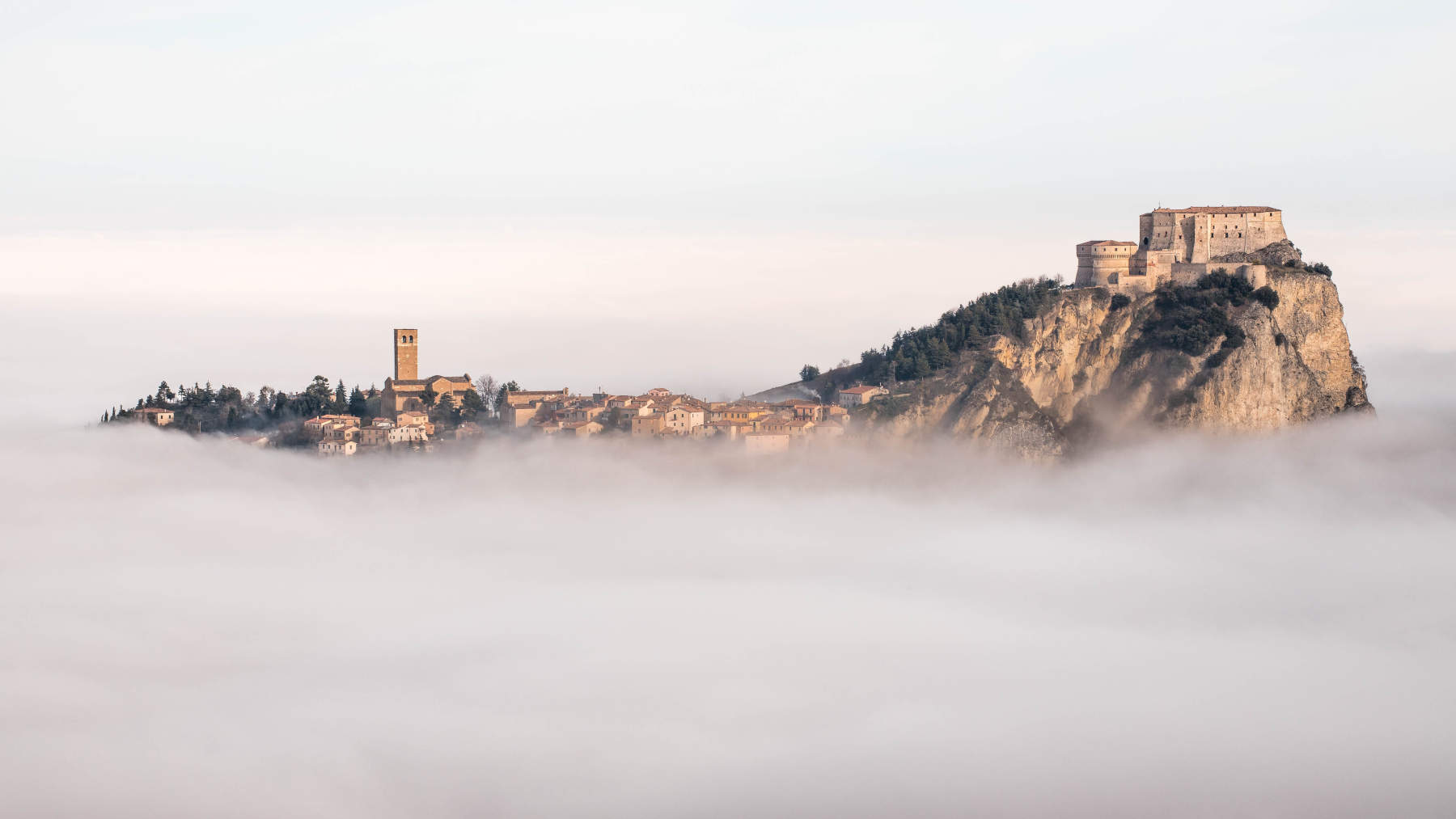
The exhibition thus inaugurates the new galleries dedicated to temporary exhibitions and finds a particularly significant venue in the Fortress of San Leo: the monumental complex itself is, in fact, a protected landscape and one of the most frequently depicted sites in the photographic contest. The relationship between the monument and its surrounding territory is one of the central themes of the new project to promote visits to and enhance the Fortress.
Statements
“With this new museum project, the Fortress of San Leo is taking an important step forward in its development,” comments Luigi Gallo, Director of the National Museums of Bologna – Regional Directorate of National Museums of Emilia-Romagna. “The goal is to transform the visit into an experience that guides the public through the most significant moments in the history of the monument and the surrounding area, offering tools for orientation and interpretation that make this extraordinarily rich heritage more accessible, both culturally and cognitively. The Fortress is one of the most visited monumental complexes in Emilia-Romagna, with over 66,000 visitors in 2025, but its history has accumulated over time without a unified narrative framework. This project stems precisely from the desire to provide visitors with a cohesive narrative capable of highlighting the monument in all its complexity and guiding them in discovering the stories it holds.”
“The project, the first major phase of which is being presented on this occasion,” says Elena Rossoni, Director of the Fortress of San Leo, “has involved close collaboration among the three participating organizations, with the shared goal of making the role of this extraordinary architectural landmark—rich in a history spanning over a millennium—increasingly evident. Having been completed in its first phase—which involved a comprehensive overhaul of the museum displays and visitor support tools— the project will continue with the inclusion of in-depth scientific content—to be delivered in part through digital means—along with tools dedicated to visual accessibility and virtual alternatives for those who, due to mobility issues, cannot navigate the complex pathways of a site that was, in fact, designed to be inaccessible. Furthermore, the project is part of a series of major interventions—including structural ones—that have been carried out at the Fortress at the initiative of the Ministry of Culture in recent years. Among the most significant of these are the seismic retrofitting work, the renovation of the roofs, the planned interventions to achieve CPI certification, and the reconstruction of the access roads—both pedestrian and vehicular—carried out in collaboration with the Municipality of San Leo. “This is an important achievement in making the Fortress a model of excellence in the region, a focal point for local communities, and in establishing it as a site of significance within the National Museum System.”
“This project represents a moment of great importance for our region and confirms the strategic value of San Leo’s cultural heritage,” states Leonardo Bindi, Mayor of San Leo. “The enhancement of the Fortress and the renewal of visitor facilities provide citizens and visitors with a place that is even better equipped to tell its own story, strengthening its role as a cultural and tourist landmark. The path we have embarked upon—thanks to the collaboration between institutions, research organizations, public administration, and Società San Leo 2000 Servizi Turistici—demonstrates how essential it is to work together to protect and promote the places that preserve our collective memory. The focus on accessibility, the quality of the visitor experience, and innovation represents an investment in the future, ensuring that the Fortress of San Leo can be experienced and appreciated by an ever-wider audience. “As the municipal administration, we are proud to support this initiative and contribute to the growth of a site that is part of our region’s history and that today faces the challenges of the modern world with renewed energy.”
“We have sought to visually convey—through texts accessible even to a non-expert audience and graphics enriched with illustrations—a complex and multi-layered body of historical, architectural, and cultural information and knowledge,” states Alessandro Iannucci, Scientific Director of the FrameLAB laboratory at the University of Bologna, “The goal that defines our activities is, in fact, to transfer knowledge and make cultural heritage accessible through forms of co-design, such as the long-standing collaboration with the National Museums of Bologna—Emilia-Romagna Regional Directorate of National Museums.”
 |
| The Fortress of San Leo (Rimini) Gets a Makeover with a New, Accessible Tour Route |
Warning: the translation into English of the original Italian article was created using automatic tools. We undertake to review all articles, but we do not guarantee the total absence of inaccuracies in the translation due to the program. You can find the original by clicking on the ITA button. If you find any mistake,please contact us.