





There has been a first, small breakthrough in the investigation into the theft of Antonello da Messina’s paintings: the van used by the perpetrators of the sensational theft of Antonello da Messina’s works —which took place on the night of Ferragosto at the “Maria Accascina” Regional Museum in Messina—has been recovered. The vehicle, which is believed to have been stolen, was located and impounded by police in a remote area without security cameras, at the point where the route reconstructed by investigators using surveillance footage came to an end. For the Mobile Squad and the Messina District Attorney’s Office, led by District Attorney Antonio D’Amato, that section could be decisive in reconstructing the gang’s escape route and, above all, in determining whether someone aided the thieves or otherwise provided them with information useful for carrying out the heist.
The hypothesis investigators are currently pursuing, according to an article by Francesco Patanè in *La Repubblica* , is in fact that of an inside man. In other words, someone who might have known in detail the museum’s layout, how the security system operated, the location of the artworks, and, above all, the habits and behavior of those in charge of security on the night of August 15–16. At the moment, of course, the case remains open against persons unknown, but the investigation is focusing on a series of clues that could allow investigators to narrow down the field of suspects.
The van was tracked by city surveillance cameras as it traveled from the museum, starting on Viale Annunziata. Investigators from the mobile squad, led by Simone Scalzo, reconstructed the vehicle’s route using available footage up to the point where it disappeared from view. It is precisely in that area—where there are no surveillance cameras—that the search has been concentrated. The discovery of the vehicle has lent credence to the hypothesis that the thieves orchestrated a second phase of their escape, switching vehicles to make identification more difficult and disrupt tracking.
According to the investigators’ reconstruction, in fact, the van was used only for the first leg of the escape. Once they reached an area not covered by video surveillance, the artworks were reportedly transferred to another vehicle—which investigators consider a “clean vehicle”—and the gang continued their escape without being captured on camera along that route. This would, therefore, be the most classic of vehicle changes—a tactic that would have allowed the perpetrators to abandon the vehicle, which was now potentially recognizable, and make their escape in a different vehicle.
The seized van has now been transferred to the forensic police facilities. There, the necessary examinations will be conducted to search for any traces left by the gang members—evidence that could help identify who used the vehicle. Even a seemingly minor detail could prove crucial in linking the vehicle to the gang that stole the artworks from the museum. At the same time, investigators are conducting a thorough analysis of the footage from the museum’s internal security cameras. The footage has made it possible to reconstruct the dynamics of the heist with greater precision and shows the two men who actually carried out the theft. Both were dressed almost identically: they wore black full-face helmets, short-sleeved T-shirts, long pants, and black shoes. The shoes featured the distinctive “tank tread” sole pattern, a detail that could prove useful for further investigations.
The two thieves entered the museum through a side door. It remains to be clarified whether that door was connected to the alarm system and how the system reacted to the intruders’ entry. Once inside, the two made their way to the room where Antonello da Messina’s works were on display, and it was here that they acted swiftly and with a sufficiently precise knowledge of the layout of the space.
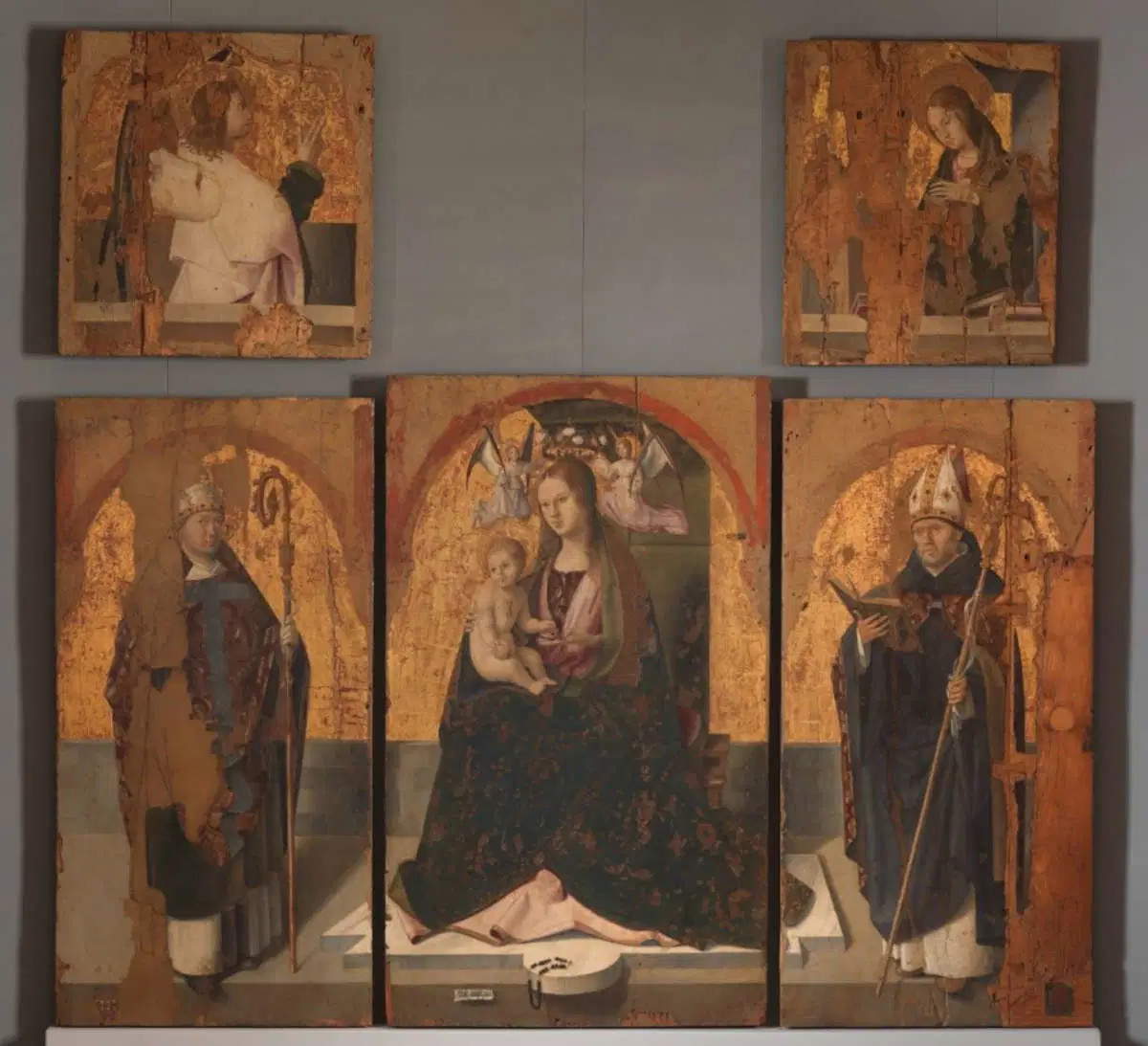
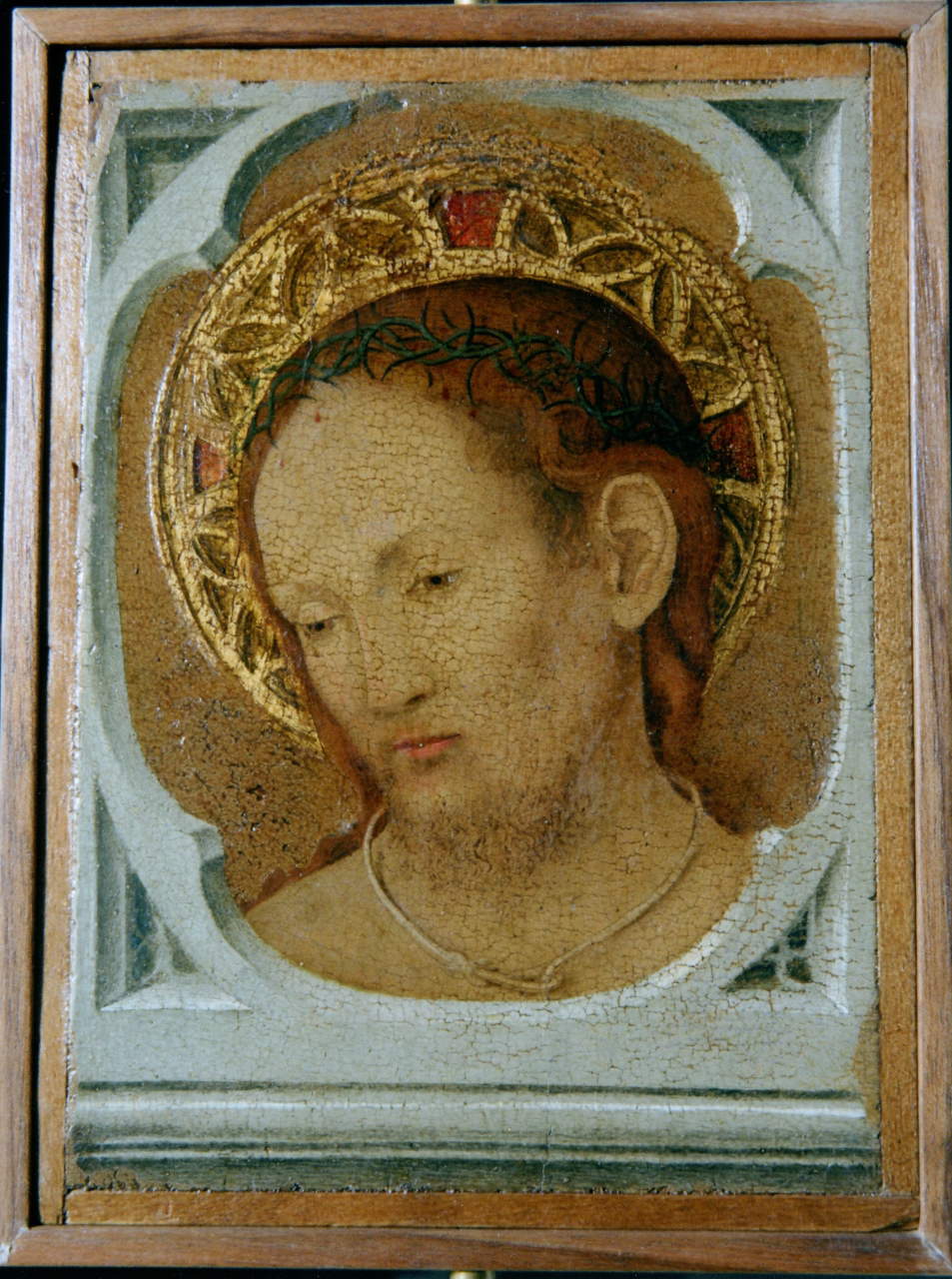
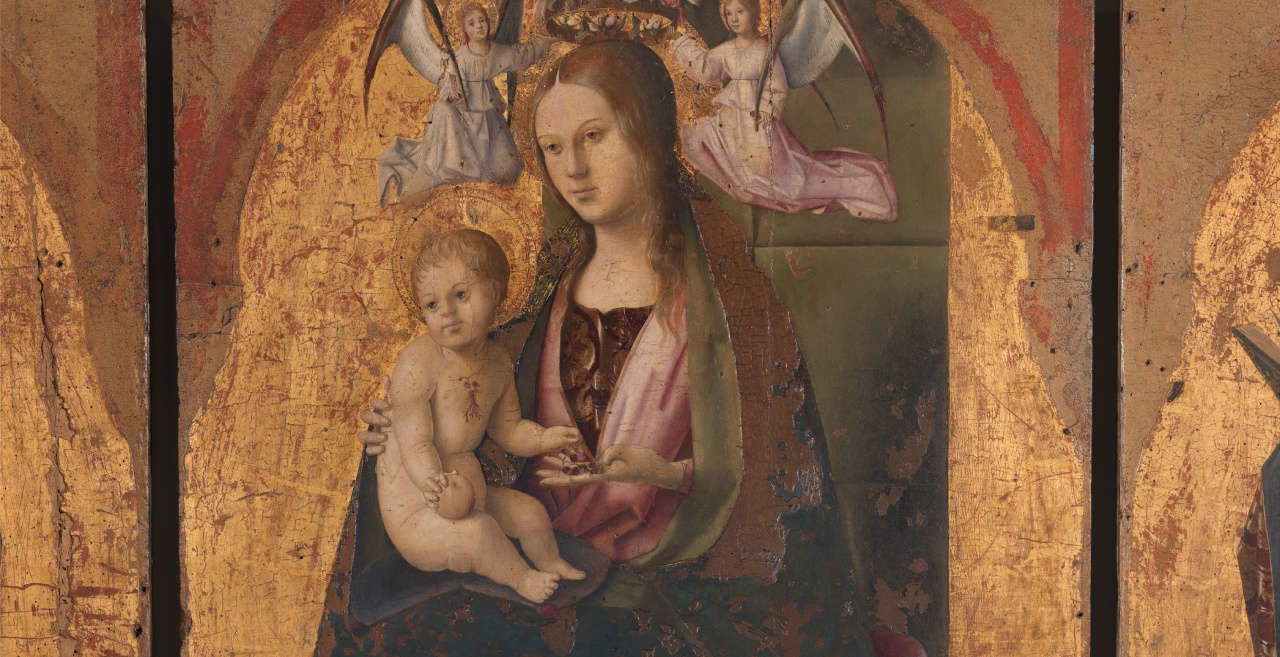
The criminals removed the panels of the San Gregorio Polyptych from the wall and then reached the armored display case that housed the double-sided panel depicting the Madonna on one side and Christ in Piety on the other. The display case was smashed, and this work was also taken. In total, the gang managed to make off with four works: three panels from the Polytic of San Gregorio by Antonello da Messina—two of which were later abandoned during their escape and have already been recovered (the side panels)—and the double-sided panel depicting the Madonna and Christ in Piety. After gathering the works, the two left through the same side door through which they had entered.
In addition to this, investigators are analyzing cell phone tower data. They are attempting to identify suspicious phone numbers or devices that were repeatedly active in the days leading up to the theft in the areas under investigation. This work could help identify connections between individuals who appear unrelated, by reconstructing contacts and movements that may be linked to the planning of the heist.
The “inside man” lead is therefore one of the most important lines of inquiry on which the investigation is focusing. The manner in which the theft was carried out, knowledge of the building and its security systems, and certain behaviors observed on the night of the heist are elements that, according to investigators, make it plausible that assistance was provided by someone with inside knowledge of the museum’s layout.

And it is precisely the functioning of the security measures that represents one of the most controversial aspects of the entire affair. According to investigators, the theft could have been discovered much earlier. The conviction expressed by those working on the investigation, as reported by *La Repubblica*, is that it would have been enough for those tasked with surveillance to have actually done their jobs: “It would have been enough for those tasked with surveillance to have done so,” reads the quote attributed to the investigators. This assessment inevitably calls into question the conduct of the four security guards who were on duty on the evening of August 15.
The four have already been questioned by investigators from the Mobile Squad and by the Carabinieri of the Cultural Heritage Protection Unit. They include two young men who were recently hired and two women with more seniority. Their statements have been compared with what is evident in the footage and with the investigators’ reconstruction of the events. Particular attention was paid to what happened after the alarm was triggered, and it is precisely the deactivation of the alarm that investigators consider one of the most difficult aspects to explain. According to *Repubblica*’s report, , after the system was triggered, the alarm was reportedly turned off without the security guards conducting a patrol inside the museum and without a call being made to 112 to report a possible intrusion. Based on the investigations conducted so far, it does not appear that either of these actions was taken; furthermore, it seems that the four individuals were not in the room housing the video surveillance monitors at the time of the theft. This circumstance makes it difficult to determine what they were watching when the alarm went off and why they did not immediately check the situation. The question posed by the newspaper *Voce di Sicilia* is : How is it possible that the security guards didn’t notice anything? There are several hypotheses: a false alarm, for example, which would explain why they didn’t call 112 or conduct an inspection round. But another hypothesis that has emerged is that the security guards may have been engaged in other activities that distracted them from their duties: this circumstance, of course, still needs to be clarified.
“The theory that they heard the alarm but didn’t take it seriously doesn’t hold up,” observes a police investigator quoted by *La Repubblica*. “It’s hard to believe that no one looked at the monitors when the alarm went off.” Prompt action, after all, could have radically changed the outcome of the incident. In fact, a fortuitous turn of events made it possible to discover the theft relatively quickly: during their escape, the gang abandoned two of the panels on the sidewalk. It was precisely this mishap that helped bring the theft to light and prevented all the works from being immediately transported far from Messina.
Some investigators believe that, without that mistake, the theft might not have been discovered until the following morning. In that case, the time that had elapsed would have made it much more difficult to track down the artworks and reconstruct the perpetrators’ movements. The presence of a security system that was operational but not directly connected to the command centers of law enforcement agencies or security firms constitutes, in this context, a further element at the center of the investigation.
Meanwhile, the incident has also taken on a political and institutional dimension. A roundtable meeting was held in Messina to assess the situation, attended by Mayor Federico Basile, Regional Councilor for Cultural Heritage Francesco Scarpinato, and the museum’s leadership. The mayor himself announced the meeting. “The city deserves answers, and its heritage deserves protection,” Basile wrote in a post on his Facebook page, assuring that the city will continue to do its part.
The case has also reached the Sicilian Regional Assembly. Eleven regional deputies submitted a written question to the President of the Sicilian Region and the Regional Councilor for Cultural Heritage and Sicilian Identity, requesting urgent clarification regarding the theft and the functioning of the museum’s security systems. The motion was signed by Sebastiano Venezia, Calogero Leanza, Michele Catanzaro, Giovanni Burtone, Valentina Chinnici, Antonino Cracolici, Emanuele Dipasquale, Mario Giambona, Dario Safina, Ersilia Saverino, and Tiziano Spada. The inquiry details the break-in that occurred during the night of August 15–16 and notes the theft of four works by Antonello da Messina: three panels attributed to the San Gregorio Polyptych and the double-sided panel depicting the Madonna and Christ in Piety.
The core of the parliamentary initiative concerns precisely the security system’s ability to prevent the intrusion or, at the very least, to detect it and enable a timely response. The deputies are asking the Region to clarify which video surveillance, intrusion alarm, access control, and artwork protection systems were installed in the museum at the time of the incident and whether those systems were actually operational.
Another set of questions concerns the maintenance of the systems. The inquiry asks whether the security systems underwent the scheduled maintenance, inspections, and testing, and whether any anomalies, malfunctions, or other critical issues were reported in the days or weeks leading up to the theft. These issues are bound to be central to the institutional debate, especially in light of the questions raised by investigators regarding the conduct of the security guards and the manner in which the alarm was handled after it was triggered.
However, reassurances regarding the systems’ operation have already been provided by both the museum’s management and Regional President Renato Schifani. Both have assured that the systems functioned normally. It will now be up to the investigative inquiries and institutional reviews to determine with greater precision what happened on the night of the theft, what signals were actually recorded by the system, and how security procedures were handled.
 |
| Theft of a work by Antonello da Messina: The van used in the getaway has been found; the hunt is on for the accomplice |

Warning: the translation into English of the original Italian article was created using automatic tools. We undertake to review all articles, but we do not guarantee the total absence of inaccuracies in the translation due to the program. You can find the original by clicking on the ITA button. If you find any mistake,please contact us.

























 IT
IT FR
FR DE
DE ES
ES CN
CN


