





There is a silent force driving contemporary art—an impulse that goes beyond form, beyond provocation, beyond social commentary—and that seeks to touch upon something that lies beyond the visible, beyond the everyday, beyond the mere image. This “something” might be called transcendence, a concept that does not disappear even in an era dominated by immanence and the rapid consumption of images. But what does it mean today to seek transcendencein contemporary art, and why do so many artists—even those immersed in the most radical practices—continue to question what cannot be seen, what belongs to an “elsewhere” that eludes immediate perception?
On the one hand, critics argue that contemporary art has renounced all transcendence and that its sole reality is to be found in real time and self-reflexivity. In other words, modern and contemporary art is said to be centered on itself, on the market, and on institutions, and little inclined to look beyond the contingent. However, more recent studies show that the transcendent dimension isfar from having disappeared. Contemporary artistic practices can, throughintuition, silence, slowness, and matter, open pathways toward what lies beyond—toward that “other” that the work itself can evoke without explicitly stating it. This is not a matter of returning to sacred iconography or traditional mysticism, but rather a renewed focus on what lies beyond the image, on the threshold of the visible, on that which defies immediate understanding.
The need for transcendence also emerges today as a response to concrete factors of our time. In a world saturated with images and information, where everything is mediated and commented upon, art that limits itself to form risks appearing empty and superficial, while the call to transcendence becomes a desire to escape the apparent banality of reality. At the same time, art responds to the contemporary crisis of meaning, to pluralism and global uncertainty, seeking—in the concepts of dilated time, infinity, matter, and silence—a meaning that transcends the immediacy of everyday experience.
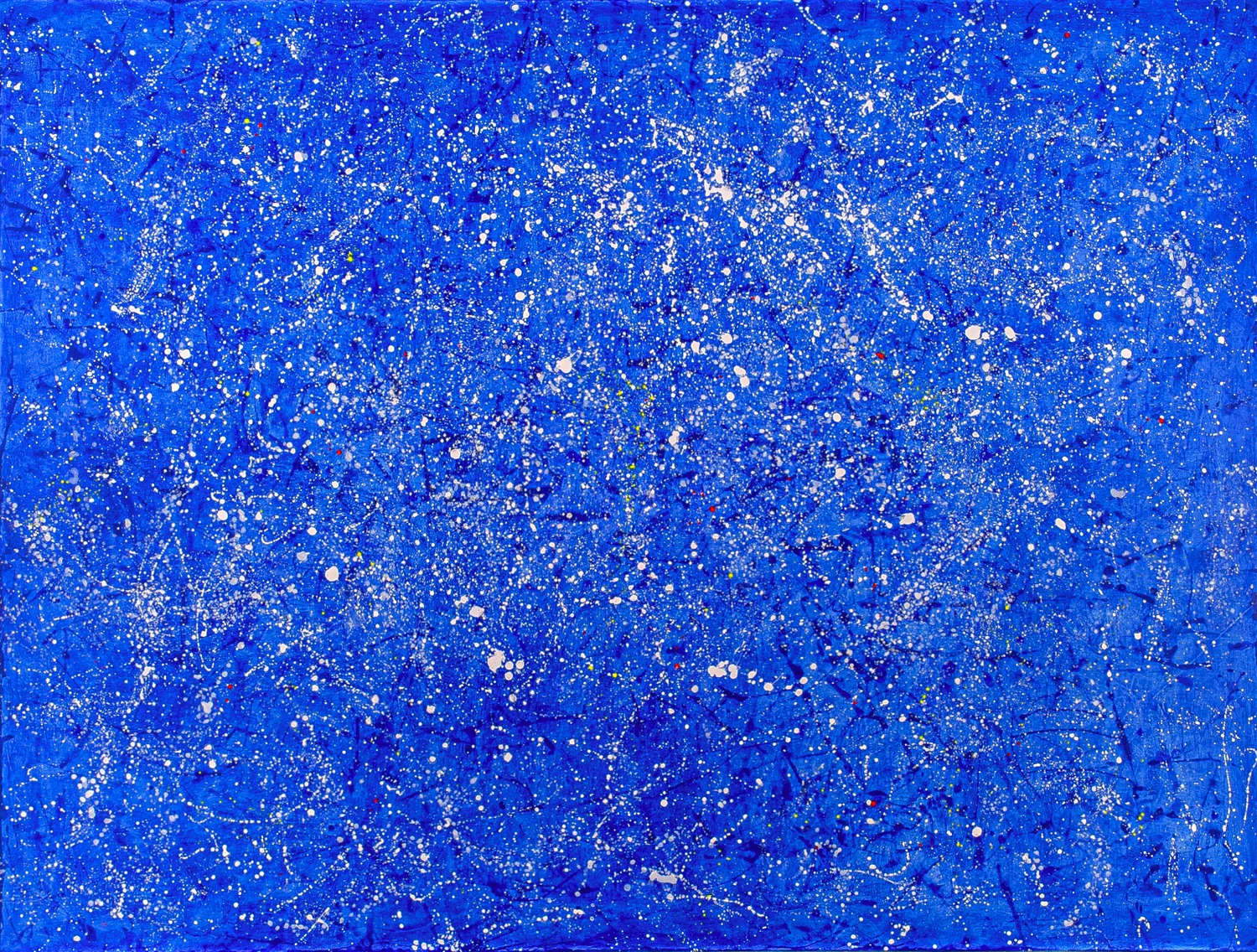
Transcendence is not necessarily lofty or celestial, but can emerge from below, from immanence itself, from the relationship between matter and spirit; and in a post-secular context, it reveals itself as non-religious spirituality, as an aesthetic experience capable of transcending the object. This tension manifests itself in various ways. Sometimes it emerges in silence, in suspension, and in slowness, when the artist stretches time and invites the viewer to do the same. Sometimes it manifests in matter that becomes a threshold, in materials that vibrate or suggest, transforming every gesture into a gateway to another realm.
Traditional iconography is reinvented, deconstructed, and referenced in fragments that evoke the sacred without openly revealing it. Contemporary images often hint rather than show; they leave voids that become open portals, inviting the viewer to complete the passage into the beyond. In many cases, transcendence emerges through participation: the viewer is no longer a mere witness but an active element in an experience that transcends them, leading them beyond mere aesthetic consumption.
This exploration, however, is not without tensions and contradictions. The risk of clichés or artificial sublimity is constant, as is that of the commodification of transcendence, when spiritual or metaphysical inquiry becomes an aesthetic or commercial tool. Yet concrete examples attest that transcendence has not disappeared. Artists such as Joan Moment explore the macrocosm and the concept of “deep time,” evoking the infinite and our smallness in the face of the universe.
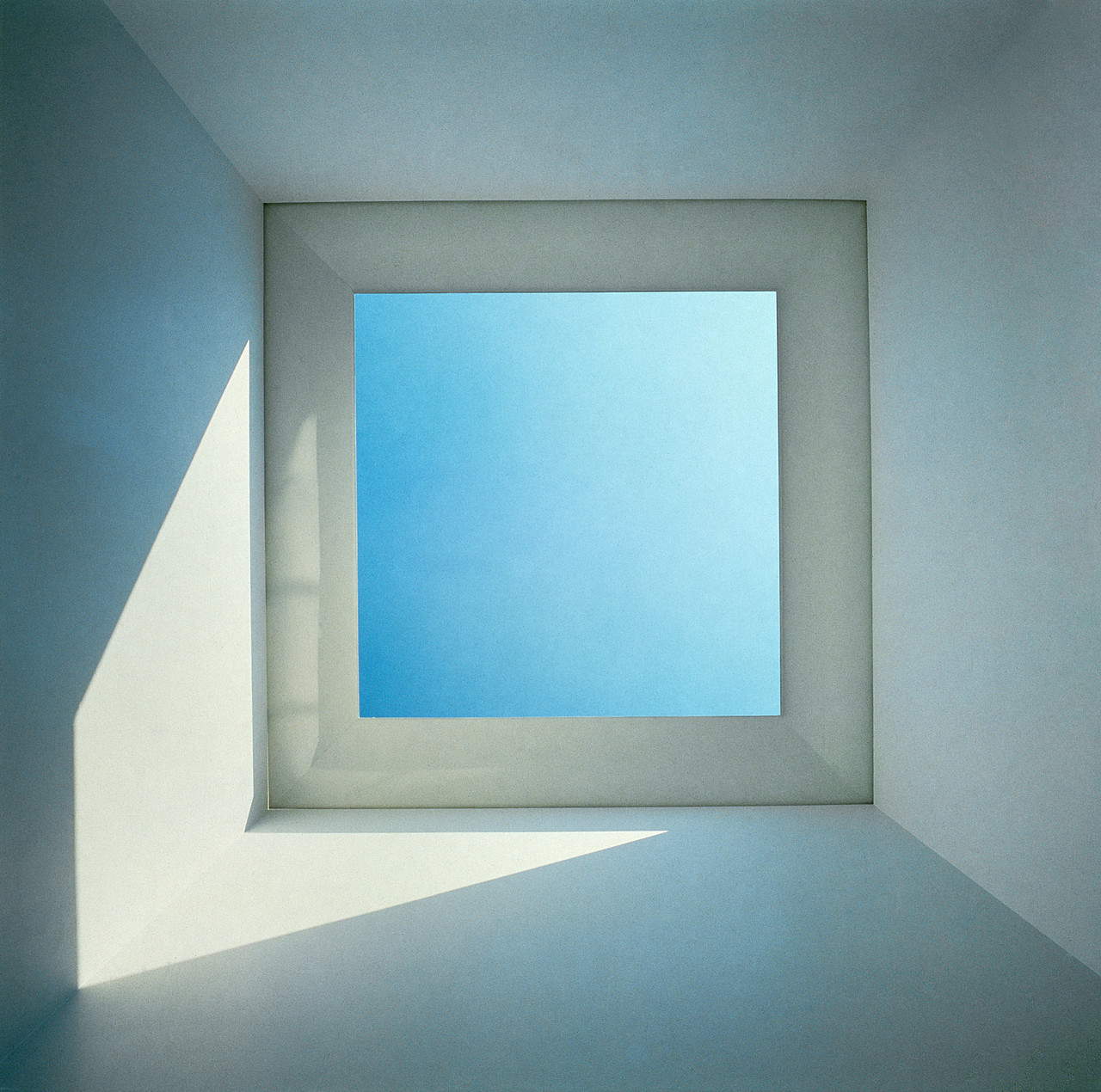
The American artist James Turrell, on the other hand, is known for his installations of light and space that transform the visitor’s perception. Works such as those in the Skyspaces series create meditative environments in which light and space become tools for contemplation: the viewer is invited to observe, perceive, and feel emptiness and luminosity as if they were living entities. His practice suspends time and heightens sensitivity, transforming the visual experience into an encounter with the infinite and the transcendent, making visible what normally eludes immediate perception.
There are recent exhibitions that clearly address the dimension of transcendence. The Wende Museum hosted *Visions of Transcendence: Creating Space in East and West, which brings together works by formerly incarcerated or homeless individuals from the Soviet Union, Western Europe, and the United States, in which individual artists and collectives use artistic expression to create their own visionary and transcendent spaces.
Contemporary exhibitions in urban settings and international museums confirm that spirituality can take unexpected forms, immersed in everyday reality, yet capable of generating that sense of something beyond that makes art alive and meaningful. The need for transcendence in contemporary art is therefore not a rhetorical echo of the past, but a genuine quest that takes on subtle, invisible, and not always immediately recognizable forms. The contemporary artist shapes forms and materials to inhabit them, to allow them to be inhabited by what lies beyond the visible, inviting the viewer not merely to look, but to wait, to perceive emptiness and silence as an integral partof the experience.
In a world that rushes, consumes, and rapidly displays and erases everything, art that aims for transcendence reminds us that beauty is not merely to be seen, but to be inhabited, felt, and experienced deeply.

The author of this article: Federica Schneck
Federica Schneck, classe 1996, è una giornalista specializzata in arte contemporanea. Laureata in Storia dell'arte contemporanea presso l'Università di Pisa, il suo lavoro nasce da una profonda fascinazione per il modo in cui le pratiche artistiche operano all’interno, e in contrapposizione, alle strutture sociali e politiche del nostro tempo. Si occupa delle trasformazioni del sistema dell'arte contemporanea, del dialogo tra ricerche emergenti e patrimonio culturale, del mercato, delle istituzioni e delle fiere internazionali. Alla scrittura giornalistica affianca quella critica, con testi per artisti, gallerie e collezioni private.Warning: the translation into English of the original Italian article was created using automatic tools. We undertake to review all articles, but we do not guarantee the total absence of inaccuracies in the translation due to the program. You can find the original by clicking on the ITA button. If you find any mistake,please contact us.



















 IT
IT FR
FR DE
DE ES
ES CN
CN


