





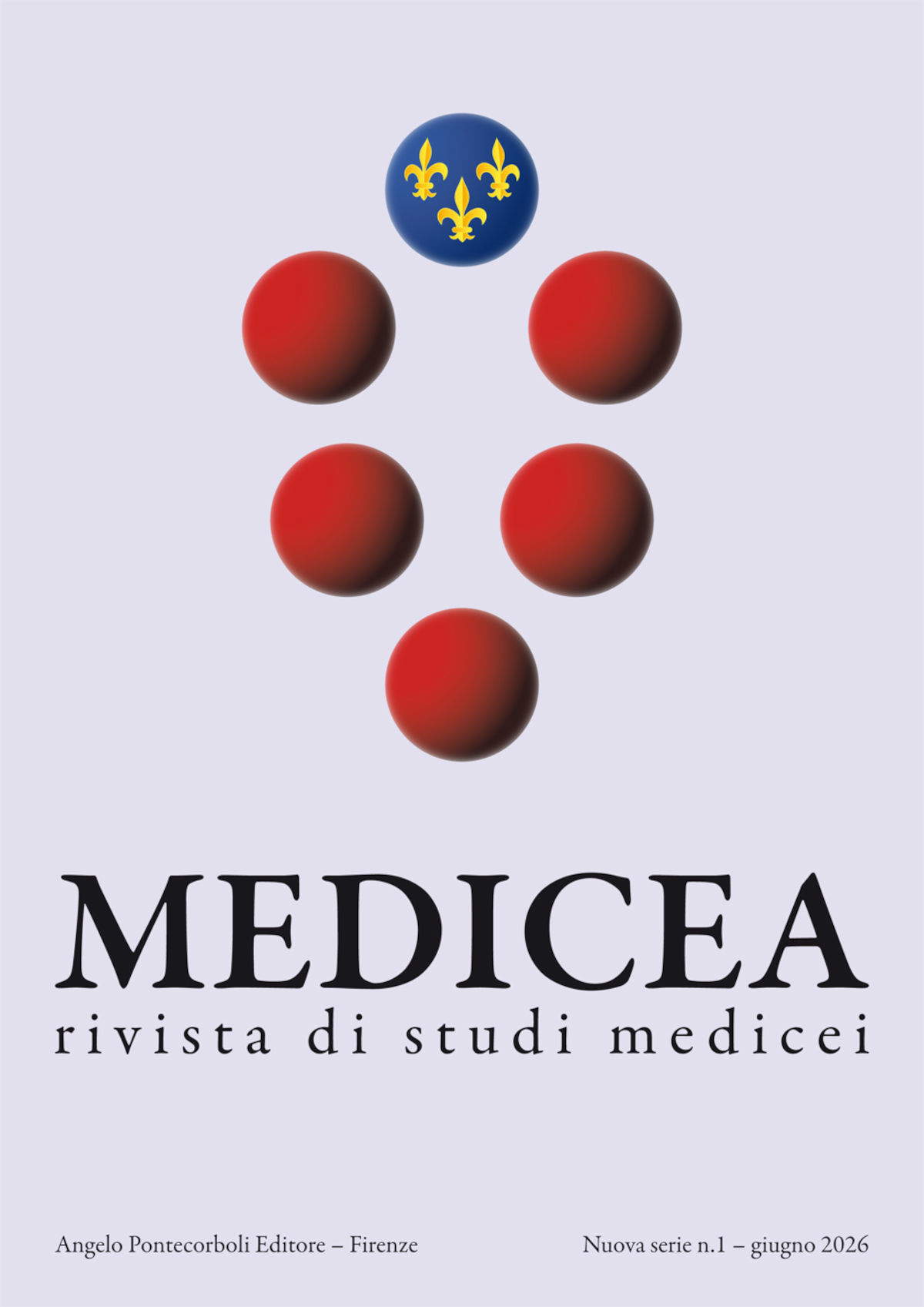
*Medicea: Journal of Medici Studies* returns to the publishing scene in a new digital format, with a new publisher and a revamped structure. Announced on March 25—coinciding with the Florentine New Year’s Day celebrated until 1750—the journal is now available on the Angelo Pontecorboli Editore website at the following link.
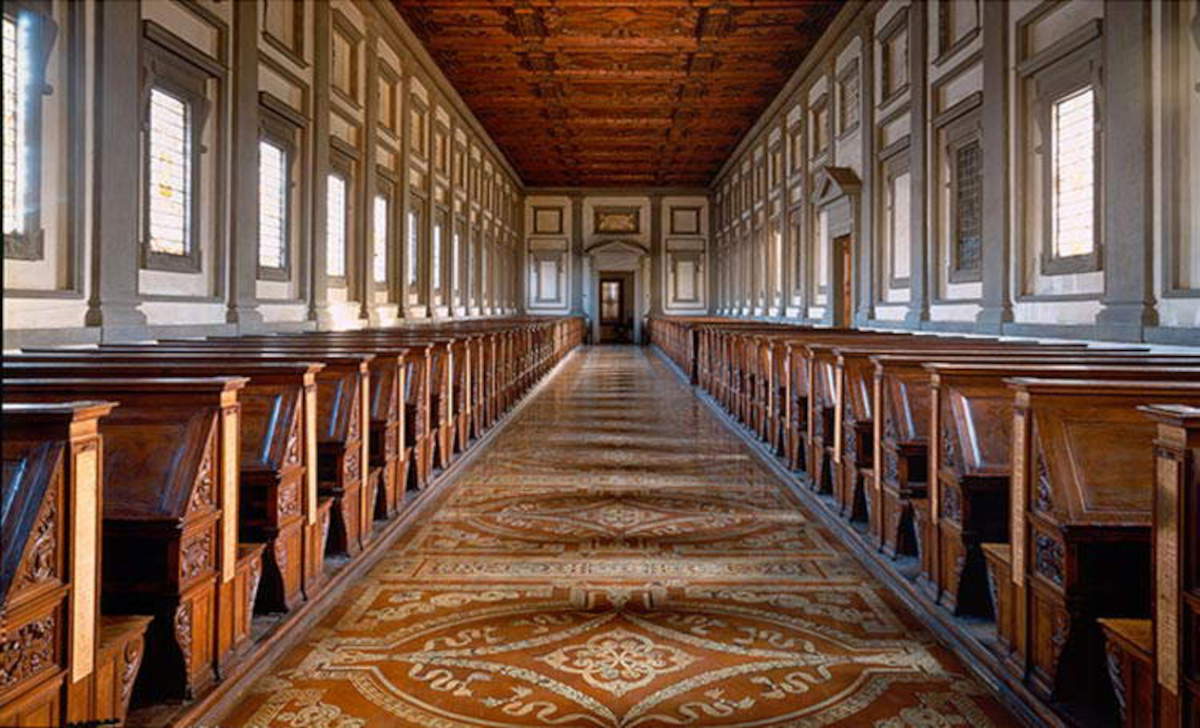
The launch of the first issue of the new digital series took place this morning at the Tribuna d’Elci of the Laurenziana Medici Library in Florence. Speakers included Francesca Gallori, director of the Laurenziana Medici Library; Marco Ferri, editor-in-chief of *Medicea*; Clara Gambaro, the journal’s scientific director; and Angelo Pontecorboli, publisher of *Medicea*.
The journal, conceived and founded in 2008 by journalist and writer Marco Ferri and archaeologist Clara Gambaro, had suspended its print publications in 2012. It is now resuming publication exclusively in an online format, with a new editorial structure and a new scientific committee. The stated approach remains interdisciplinary, featuring contributions from various fields of study, sections dedicated to in-depth thematic analyses, and the publication of documentary sources accompanied by critical apparatus.
The new series will feature two issues per year, published semiannually. Articles will be available via annual subscription or for purchase individually, with the option to access individual contributions. The first issue of the digital series is, however, available for free on the publisher’s website. All information regarding subscription options can be found directly on the publishing platform.
In addition to the regular issues, monographic issues or special sections will be published to mark anniversaries or cultural initiatives, following a model already adopted in the publisher’s previous series. The first of these thematic issues is scheduled for late 2026 and will be dedicated to the 500th anniversary of the death of Giovanni delle Bande Nere.
The first issue of the new series features eight previously unpublished articles. Alessandro Monti analyzes the history and notable figures associated with the Medici Villa in Cafaggiolo between the 15th and 16th centuries. The essays by Federico Berti and Stefania Vasetti address , respectively, the attribution of an altarpiece to Anton Domenico Gabbiani and a study of several 17th-century paintings preserved in the Cathedral of Colle Val d’Elsa, accompanied by supporting documentary material.
Simone Bardazzi ’s contribution focuses on episodes of diplomacy and ceremonial representation, reconstructing the coronation of the King of Hungary in 1572 and the funeral of Maximilian II in 1576 through the accounts of Medici diplomats. Nicoletta Lepri explores forms of public spectacle and entertainment during the reign of Cosimo I, while Gabriele Capecchi examines Giorgio Vasari’s return to Florence in 1554.
Another study, by Patrizia Biscarini, analyzes the decrees issued by Lorenzo de’ Medici, Duke of Urbino, and Pope Leo X regarding the celebrations for Gubbio’s patron saint, Ubaldo. The issue concludes with a collective contribution by Johnica J. Morrow, Dario Piombino-Mascali, Donatella Lippi, and Karl J. Reinhard, dedicated to archaeoparasitological analyses conducted at the University of Nebraska on the viscera of individuals belonging to the last generations of the Medici grand dukes.
The editorial project is also accompanied by a dedicated website, hosted on the publisher’s portal, which features sections providing information on the history and revival of the journal. The complete archive of the first series is also available, accessible free of charge to scholars and readers. The main section is dedicated to current issues, featuring original content consistent with the journal’s interdisciplinary approach.
Looking ahead, the journal also plans to launch social media channels to share short-form content titled “Pillole di Medicea, ” with the goal of broadening access to the articles and reaching a wider audience.
 |
| Medicea Reborn: The Journal of Medici Studies Is Now Online with a New Digital Series |


The author of this article: Noemi Capoccia
Originaria di Lecce, classe 1995, ha conseguito la laurea presso l'Accademia di Belle Arti di Carrara nel 2021. Le sue passioni sono l'arte antica e l'archeologia. Dal 2024 lavora in Finestre sull'Arte.Warning: the translation into English of the original Italian article was created using automatic tools. We undertake to review all articles, but we do not guarantee the total absence of inaccuracies in the translation due to the program. You can find the original by clicking on the ITA button. If you find any mistake,please contact us.



















 IT
IT FR
FR DE
DE ES
ES CN
CN


