



by Redazione 30/05/2026



Categories: Ancient art / Disclaimer
In Venice restored the Madonna del Parto by Jacopo Palma il Giovane, commissioned between 1617 and 1620 by Giovanni Tiepolo and now housed in the church of San Geremia.

The large altarpiece of the Madonna del Parto by Jacopo Palma il Giovane (Jacopo Negretti; Venice, 1549 - 1628), now located in the church of San Geremia in Venice, returns to the center of critical and historical attention after a conservation intervention that has restored its legibility and chromatic depth. The work, among the most significant of the Venetian painter’s output, was originally intended for the convent church of Santa Lucia, which was later suppressed following a Napoleonic decree of July 28, 1806, and finally demolished in 1860 to make way for the construction of the Venice railway station.
The commission for the altarpiece dates to the years between 1617 and 1620 and was given to Palma il Giovane by Giovanni Tiepolo, a figure destined to become Patriarch of Venice in 1619. The work was destined to decorate the high altar of the church of Santa Lucia and is first mentioned by Giustiniano Martinioni in his Aggiunta alla Venetia, città nobilissima, et singolare di Francesco Sansovino, published in 1663. In that text, Martinioni recalls how Tiepolo had financed the erection of the altar in honor of the Madonna del Parto, and Jacopo Palma painted the altarpiece.


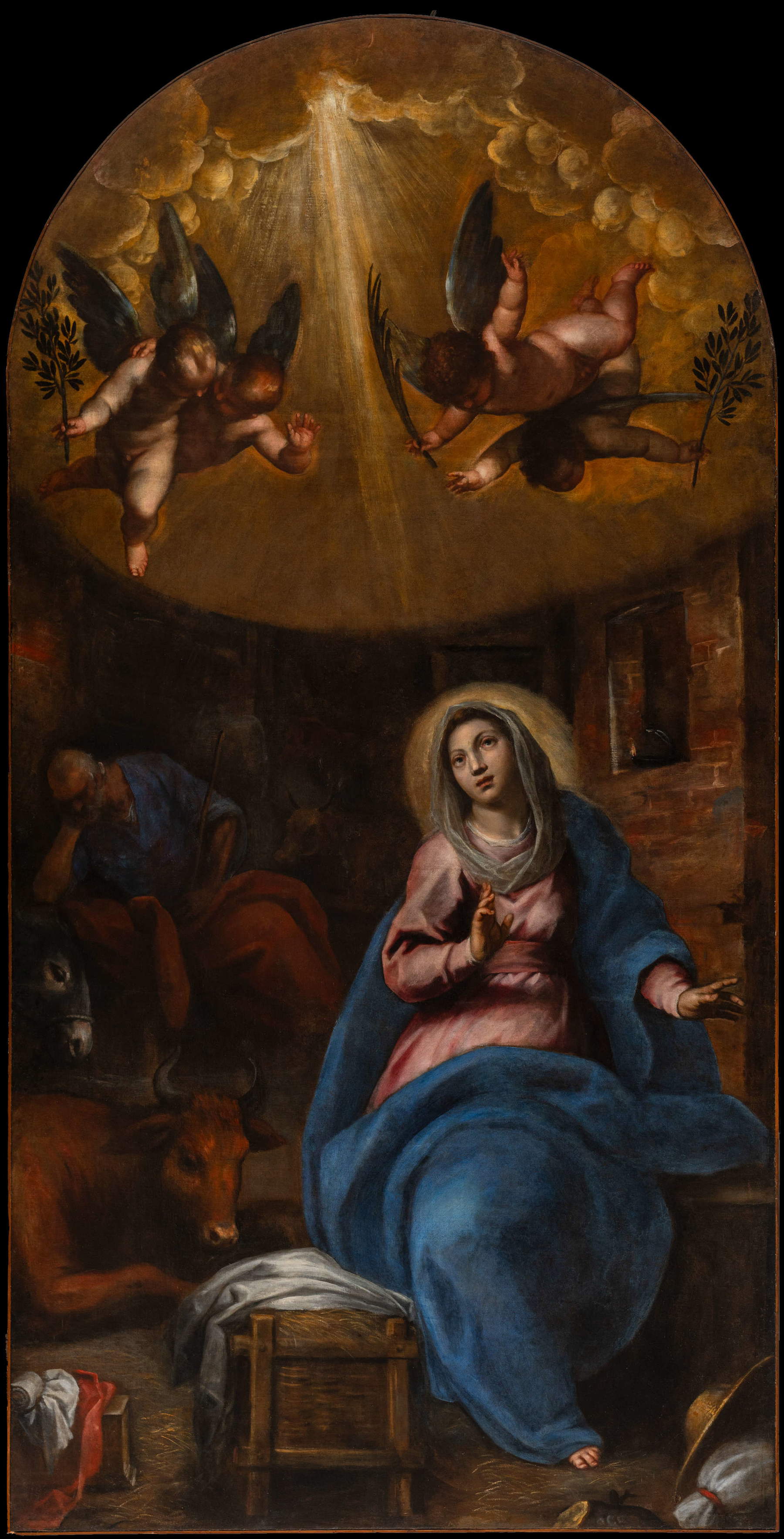
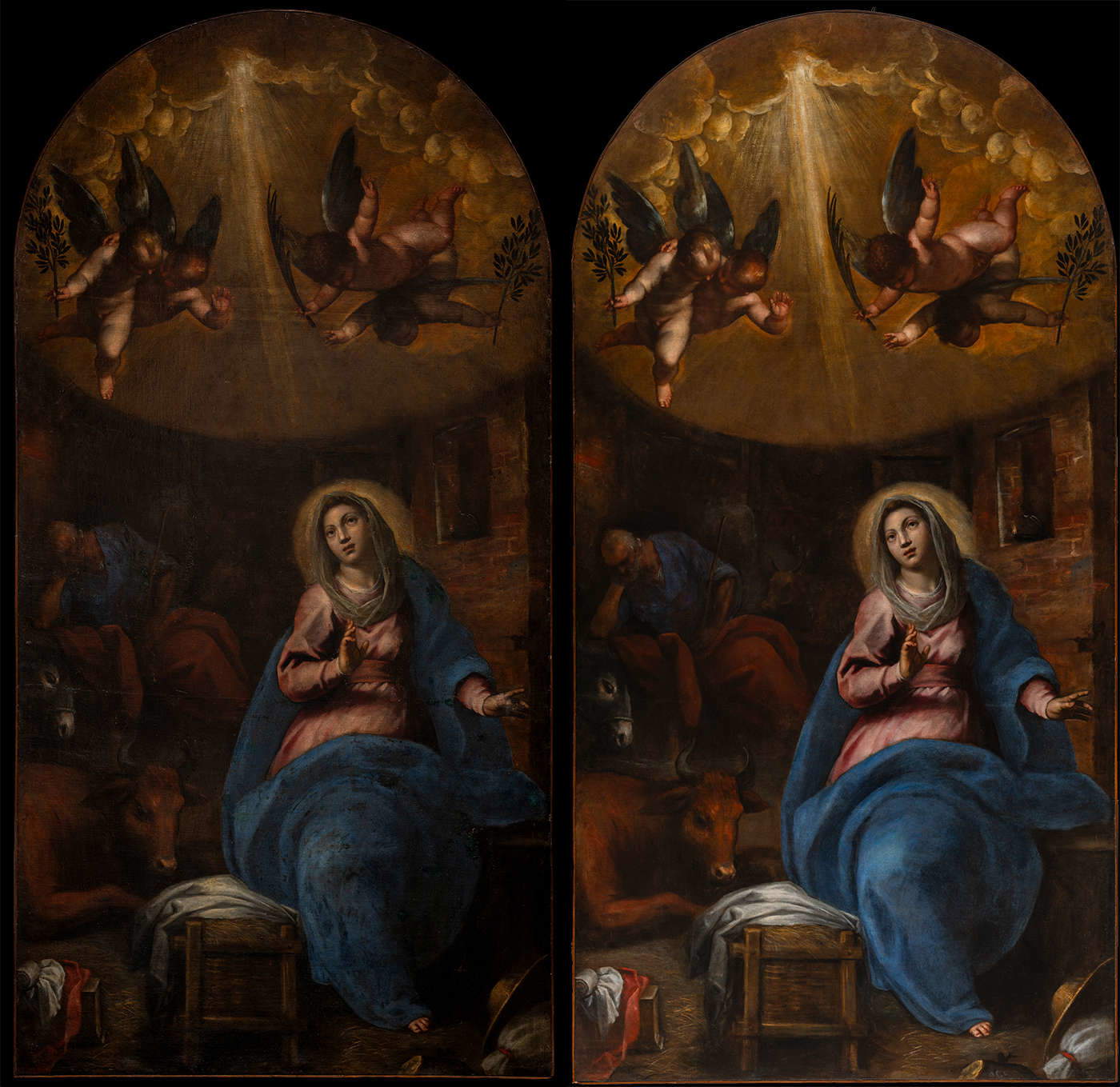
At the time of its creation, Jacopo Palma il Giovane was considered one of the most important painters working in Venice, and the work is distinguished by a rare and highly symbolic iconography, that of theExpectatio Partus, or Madonna of Childbirth. The subject is derived from apocryphal sources, particularly the Gospel of Pseudo-Matteus. The interpretation proposed by Palma focuses on the account of the preparation for Christ’s birth and the miraculous dimension of the event. According to the narrative evoked in the work and its sources, Mary, waiting for the birth, took refuge in a dark place, described as a space “in which there had never been light, but always darkness, since the light of day could not reach it. And when the blessed Mary entered it, it began to shine with such brightness as if it were the sixth hour of the day. The light of God so shone in the cave, that neither day nor night lacked light as long as the blessed Mary remained there. And there she gave birth to a son, and the angels surrounded him as he was born.”
The work fits fully into the theological and iconographic debate related to the doctrine of Mary’s perpetual Virginity, according to which the Virgin would remain so before, during and after the birth of Christ. This theme was particularly present in early 17th-century Venetian religious culture and is also explored in detail in the Treatise on the Image of the Glorious Virgin Painted by St. Luke by Giovanni Tiepolo, published in Venice in 1618, thus close to the commission of the altarpiece.
In the Treatise, Tiepolo insists on the miraculous nature of the divine motherhood and the need to visually represent the theological truth of the Virgin. Painting, according to his vision, possesses a communicative power superior to the written word, capable of engaging and directing the viewer toward understanding the sacred mystery. It is in this cultural context that Palma il Giovane’s Madonna del Parto finds its full place, probably also under the direct influence of the commissioner.
Within the composition, one of the most relevant iconographic elements is the figure of St. Joseph, depicted asleep in the background. This detail, recurring in the Nativity tradition, symbolically emphasizes the virginal nature of the conception. The scene is also dominated by a divine light that envelops the space, anticipating the miraculous birth of Christ and transforming the environment into a dimension suspended between human and supernatural.
According to the critical reading, Tiepolo would not have limited himself to the role of patron, but would have had a decisive influence in defining the iconographic and theological program of the work. It is possible that he also entrusted Palma il Giovane with the design of the organ doors, also the subject of a conservation intervention promoted by Save Venice, on which the Annunciation was depicted, closely connected from a theological point of view to the Madonna del Parto present on the high altar.
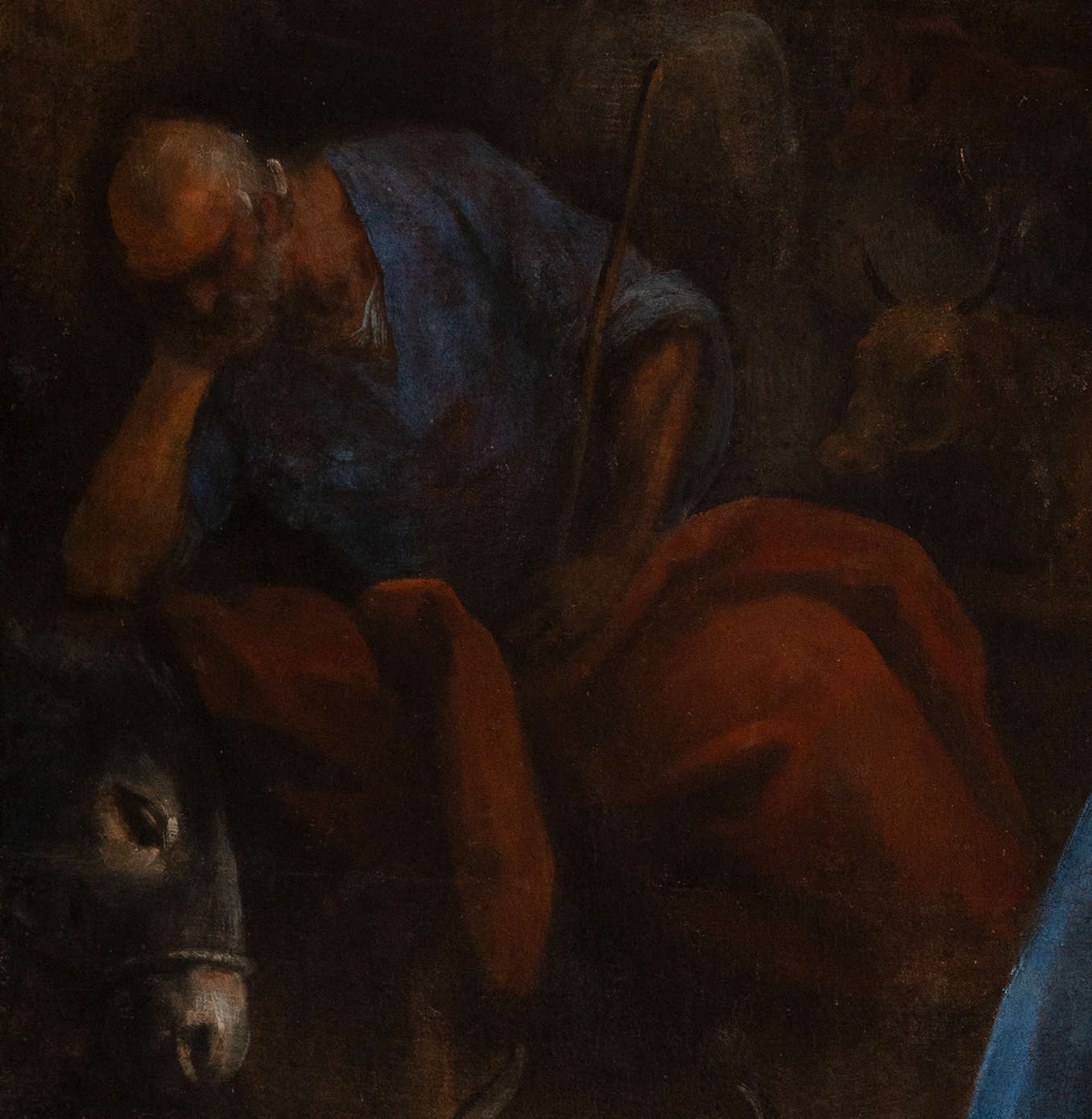
The work was photographed by Matteo De Fina, who documented both the state after restoration and the details of the composition, including the figure of St. Joseph asleep. The images before and after restoration clearly highlight the transformation undergone by the altarpiece over time and the recovery of its original legibility.
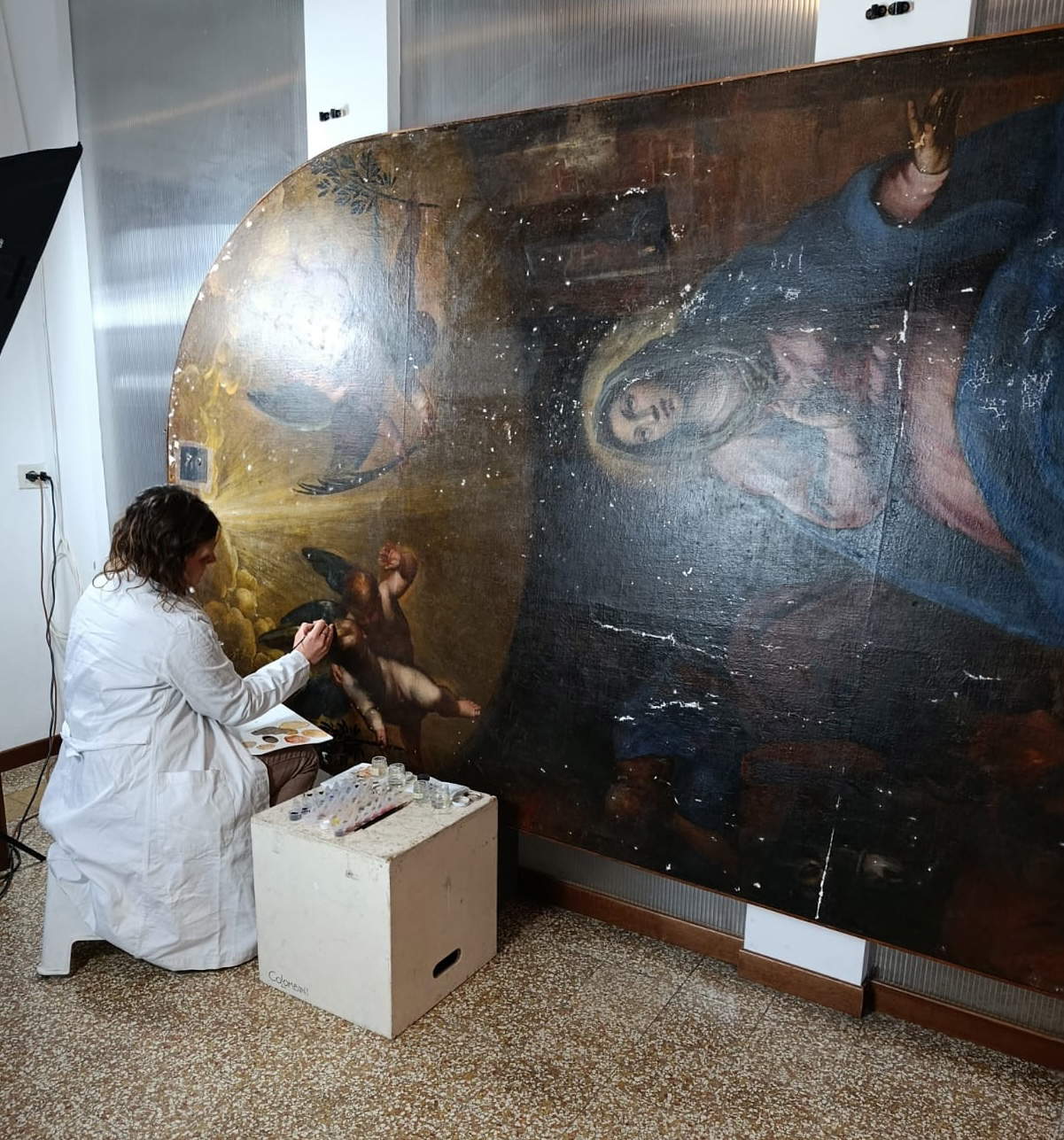
From a conservation point of view, the altarpiece had probably not undergone restoration since 1862. Prior to the recent treatment, the reading of the work was severely compromised by the presence of layers of oxidized, darkened and yellowed paint, as well as significant accumulations of dust and surface dirt. These problems were compounded by localized retouches made in previous interventions, which had undergone chromatic alterations over time, generating a visually uneven and fragmented whole.
The recently completed conservation intervention systematically addressed these problems, restoring coherence and clarity to the composition. The removal of altered varnishes and repainting has made it possible to recover the original luminosity of the pictorial surface, bringing out the richness of Palma il Giovane’s palette. Figures, details and color fields have thus returned to emerge with greater definition, allowing a new reading of the work in its complex formal balance. The result of the restoration is not only an aesthetic improvement, but also allows a deeper understanding of the artist’s pictorial language, highlighting the complexity of his spatial construction and the refinement of his use of light.
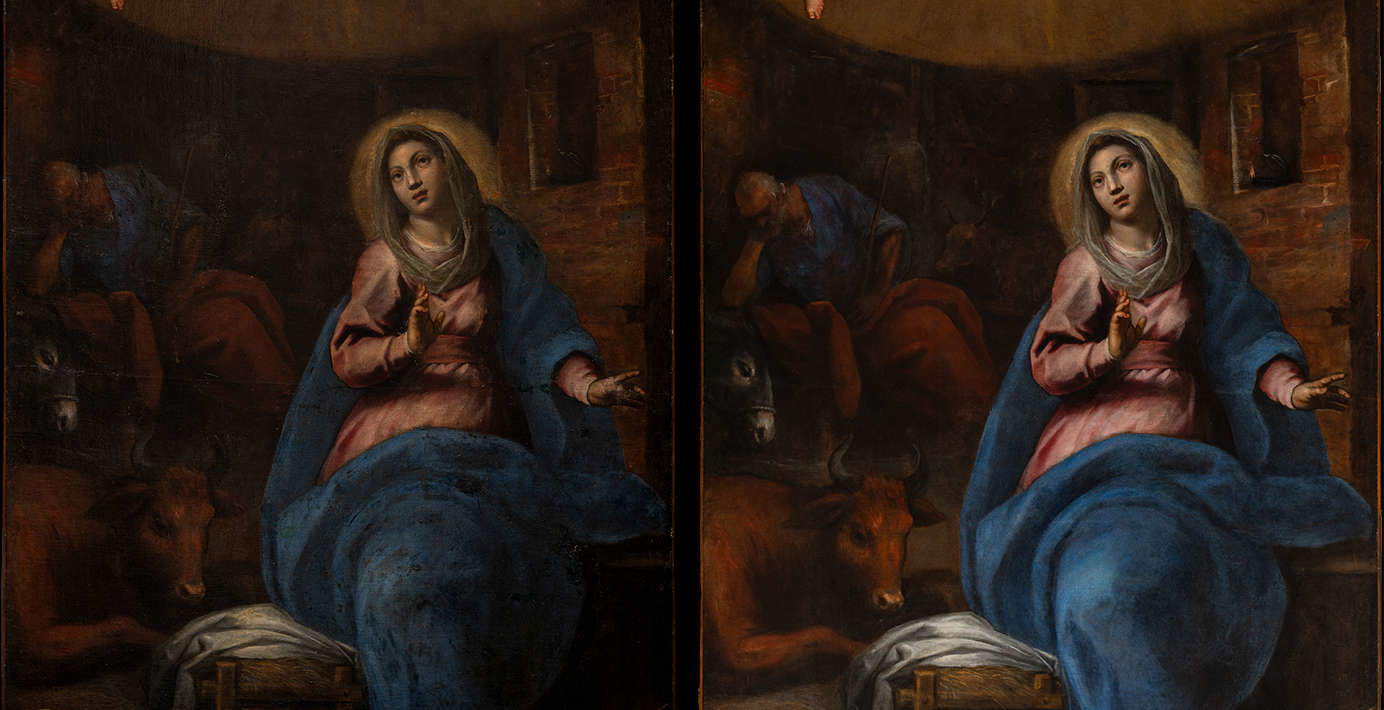 |
| Venice, Madonna del Parto by Jacopo Palma il Giovane restored |
Warning: the translation into English of the original Italian article was created using automatic tools. We undertake to review all articles, but we do not guarantee the total absence of inaccuracies in the translation due to the program. You can find the original by clicking on the ITA button. If you find any mistake,please contact us.