




by Noemi Capoccia 17/04/2026



Categories: Archaeology / Disclaimer
A rare Hellenistic specimen minted in Troy found in Spandau by a student: it is the first Greek-age find in the German capital, in a complex archaeological context.

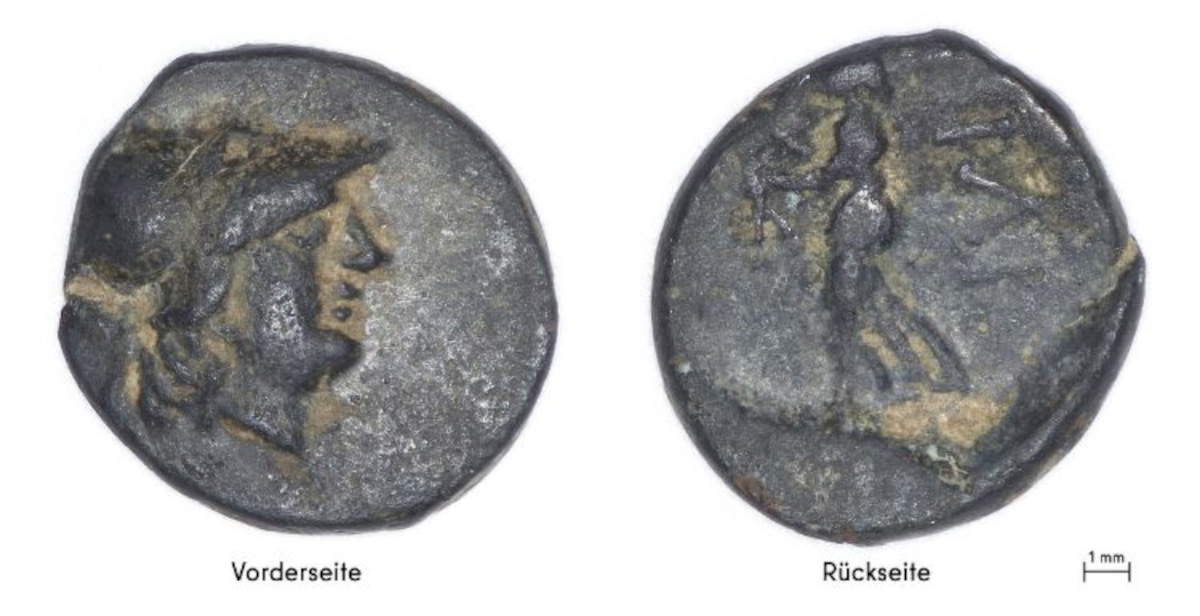
A rare Greek coin from the 3rd century B.C. has been discovered in Berlin’s Spandau district, marking the first Hellenistic-era find within the German capital’s urban area. The small object, about 1.2 centimeters in diameter, was found by a 13-year-old student on farmland. It was made public by the Landesdenkmalamt Berlin - Berlin’s State Monuments Office.

The coin, made of bronze, dates from between 281 and 261 B.C. and was minted in the mint of Ilion, the ancient Troy located in present-day northwestern Turkey. The head of the goddess Athena with Corinthian helmet appears on the obverse, while the reverse depicts Athena Ilias wearing a kalathos (a distinctive headdress), in the act of holding a spear in her right hand and a spindle in her left.
At first it was unclear whether the find belonged to an archaeological context or had been lost in modern times by a collector. Subsequent investigations by specialists, however, revealed evidence of prolonged frequentation of the area as a burial site. The discovery of ceramic fragments, remains of funerary burning, and a double bronze button indicate the presence of a necropolis datable to theBronze Age or early Iron Age. Additional materials, referable to the Roman Imperial Age and later periods, including a knife scabbard element of Slavic scope, attest to a continuity of use of the site.


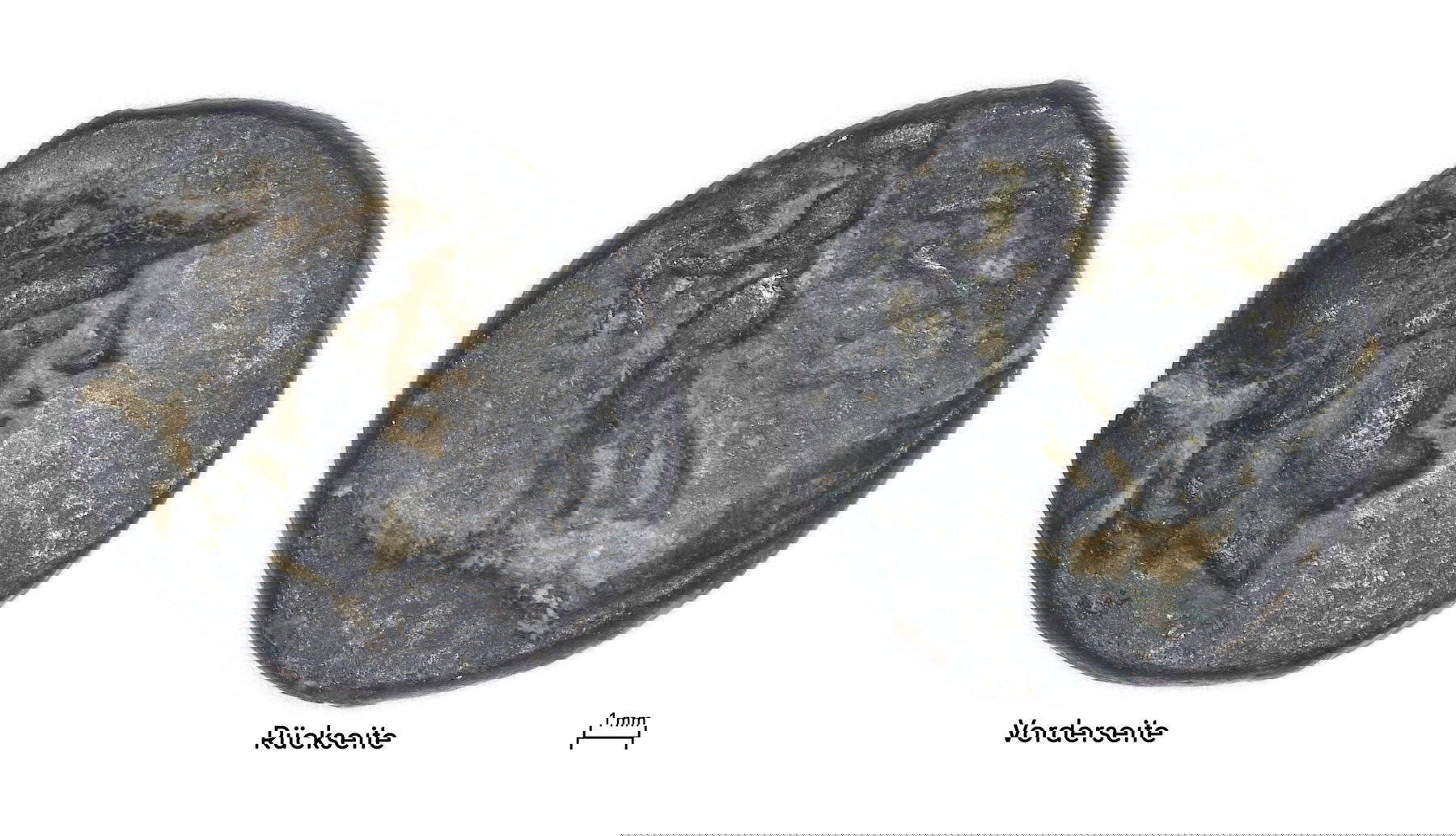
Finds referable to classical antiquity are overall rare in Berlin. If Roman objects emerge sporadically but with some regularity, direct evidence from the Greek world has so far been completely lacking. The discovery thus takes on special scientific significance. The question remains open as to how the coin came to north-central Europe. It is known that already in ancient times there were trade relations between the Mediterranean and the Baltic regions, particularly for the trade in amber, called elektron by the Greeks. The voyage of theGreek explorer Pythias, active around 330 BC, is also sometimes linked to such contacts.
Given the low weight of about seven grams and the low intrinsic value of the material, as well as the context of its discovery, it is speculated that the coin had a symbolic rather than an economic function. The find thus contributes to expanding knowledge about cultural contacts between the Greek world and northern Europe in ancient times. The coin has been on display since April 15 at the PETRI Berlin museum, in the showcase dedicated to recent finds located on the second floor.
 |
| Berlin finds a coin minted in Troy: it is the first Greek find in the city |
Warning: the translation into English of the original Italian article was created using automatic tools. We undertake to review all articles, but we do not guarantee the total absence of inaccuracies in the translation due to the program. You can find the original by clicking on the ITA button. If you find any mistake,please contact us.