





An archaeological discovery described by the researchers themselves as “exceptional” is rewriting the late antique history of Oderzo (Treviso). In the areaof the former fish market, in the southeastern sector of ancient Opitergium, excavations coordinated by the Superintendence of Archaeology, Fine Arts, and Landscape for the Provinces of Padua, Treviso, and Belluno have unearthed a vast early Christian complex featuring polychrome mosaics, monumental masonry, and burials that, according to scholars’ initial hypotheses, may belong to the city’s earliest known Christian church. The announcement came yesterday during a public meeting organized to present the preliminary results of the ongoing archaeological excavation. It was a particularly meaningful moment for the municipal administration as well. “I am absolutely delighted to begin this day because it is truly an incredible surprise for Oderzo,” said Mayor Maria Scardellato as she opened the meeting. The mayor expressed her gratitude to the private client, represented by Luigi Durante, the owner of the area affected by the construction project that led to the discovery. It was precisely the property owner’s cooperation that made it possible to modify the initial plan, including the erection of a large tent to allow archaeologists to work through the winter despite particularly challenging weather conditions.
The area where the discovery was made is located between the canal and Via Pescheria, in a suburban neighborhood already known for significant funerary finds and for the presence—documented as far back as 1883—of a large polychrome mosaic approximately thirty meters long. Although this information had never been fully verified, it nevertheless represented an important clue. The construction project called for the demolition of the existing buildings and the construction of new residential structures supported by deep foundation piles. It was precisely the presence of these particularly invasive works that prompted the Superintendency to require preventive investigations through exploratory trenches.
Initial expectations focused on possible funerary contexts. “We never would have expected to find what we actually found,” admitted the superintendent, Maria Cristina Vallicelli. The discovery, in fact, answers a question that had been open for years among scholars of late antiquity and early medieval history in Oderzo. The area, after all, is located in a region already rich in important archaeological evidence. From the hunting mosaics discovered in the Gasparinetti garden—now on display at the Eno Bellis Archaeological Museum—to the Gellius site in the former prisons, where late antique burials and an important fortified redoubt had been unearthed. These clues tell the story of the city’s transformation following the decline of the Roman imperial center.
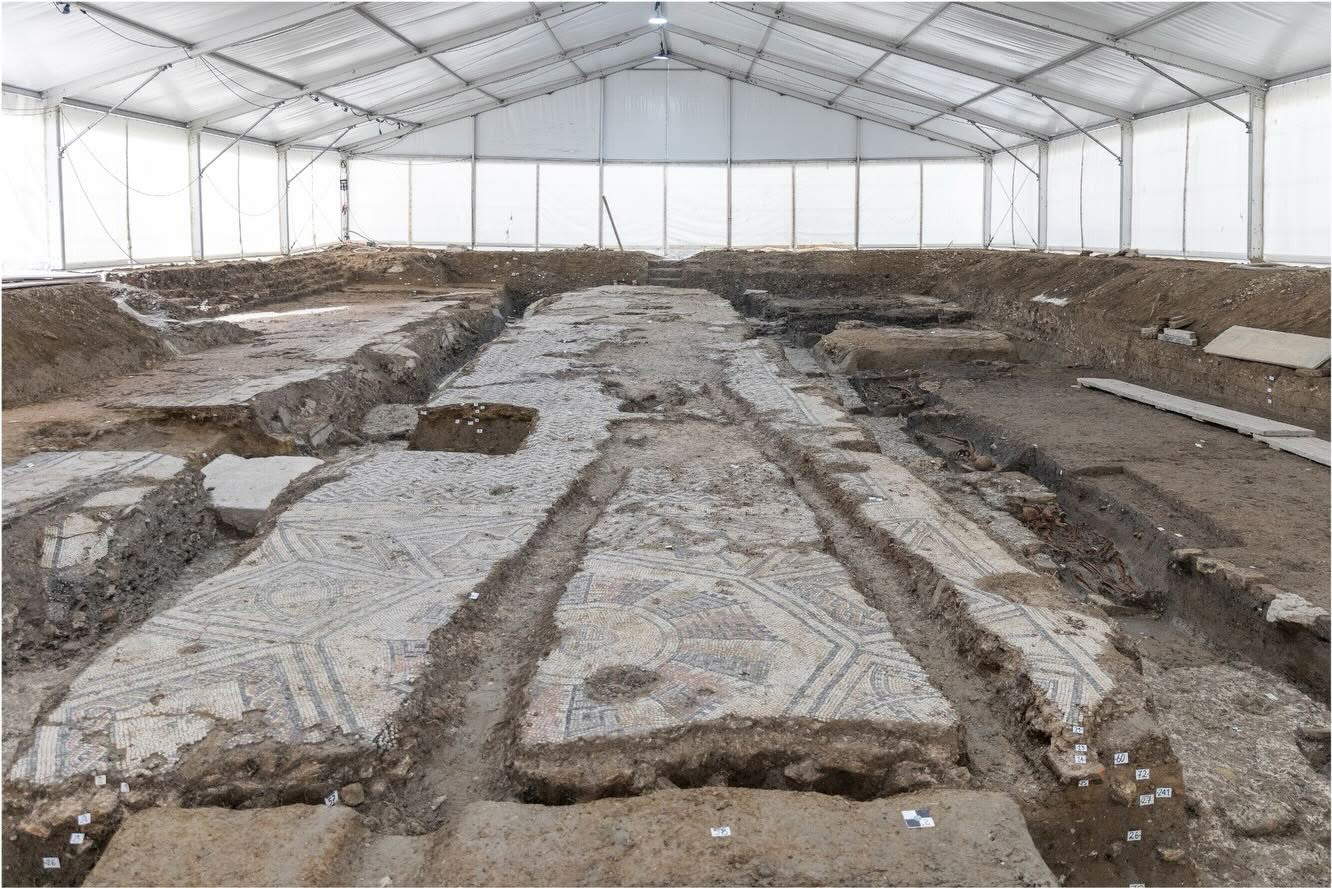
Archaeological investigations began last November with the excavation of several preliminary trenches. “November was a very rainy season,” explained archaeologist Simone Colucciello, the excavation coordinator. “Digging the trenches was very difficult, both because of the proximity to the canal and because of the rainwater.” The first sections had yielded only a few black-and-white tesserae, suggesting a typical Roman context. The situation changed when, as the excavation was expanded, mosaics began to emerge in multiple locations. The area uncovered by the archaeologists measures about fifteen meters wide by thirty meters long, and mosaic floors have emerged almost everywhere. From that moment on, the excavation took on a completely different dimension. Archaeologists have identified imposing masonry structures preserved to a depth of up to three meters below the current street level. Some walls, with foundations up to one meter and twenty centimeters wide, still retain fourteen courses of masonry and feature pilasters that suggest a monumental structure. It was precisely this evidence that led scholars to formulate the most surprising hypothesis: that they were looking at an early Christian basilica with three naves. “We began to think that we were looking at a building, a church,” explained Colucciello. “We still had no idea how big it was.”
The structure’s foundations feature wooden piles driven into the alluvial soil, upon which the walls were built using brick and mortar. This sophisticated construction technique could also provide chronological data thanks to future radiocarbon analyses of the wooden samples. Preliminary dating of the building, based primarily on a stylistic comparison of the mosaics with those at Concordia Sagittaria and Aquileia, places its construction between the late 4th and early 5th centuries AD.
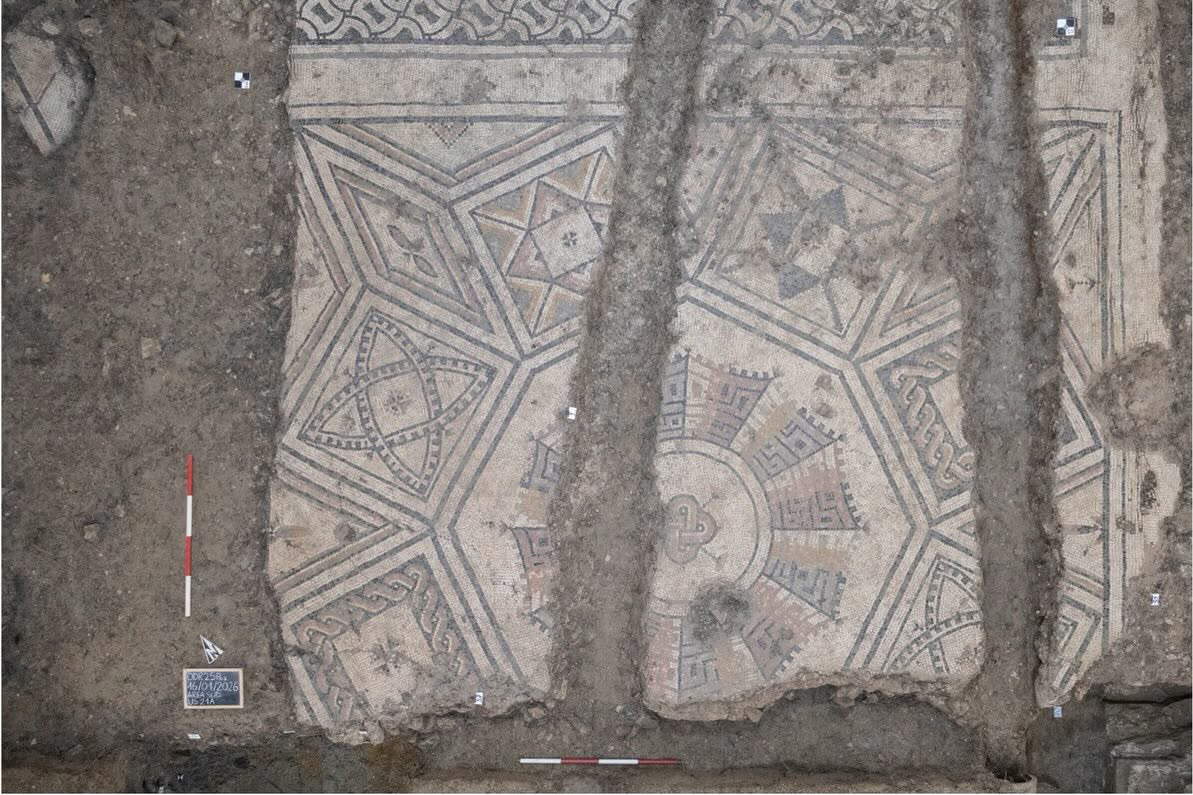
The mosaic floors of the central nave are particularly refined. Archaeologists have already uncovered approximately twenty-four meters of mosaic decorated with polychrome geometric patterns, interlaced octagons, alternating double knots in red and blue, and ivy-like floral motifs. There are also concentric circles and decorations known as “millwheel patterns,” comparable to examples common in late-antique northern Italy.
The southern side aisle is the best-preserved. Here, a large octagon stands out, decorated with a central velarium and the Knot of Solomon, flanked by complex geometric motifs. Unfortunately, part of the mosaic was damaged by modern piping from the 20th-century buildings that occupied the area until their demolition. Archaeologists have also identified the bases of small pillars that may indicate the presence of the presbytery barriers and the altar area. The eastern part of the church, where the apse is believed to have been located, is still under excavation.
Other structures have emerged next to the main building. One of these may have been a production or storage area connected to the basilica’s construction site. Here, archaeologists have recovered enormous quantities of materials: mosaic tesserae, marble fragments, bricks, glass, amphorae, metals, and even a small kiln. Particularly significant is the discovery of glass paste tesserae, elements that attest to the complex’s high decorative standard. A stone fragment has also been uncovered, interpreted as part of a liturgical transenna, likely connected to the presbytery.
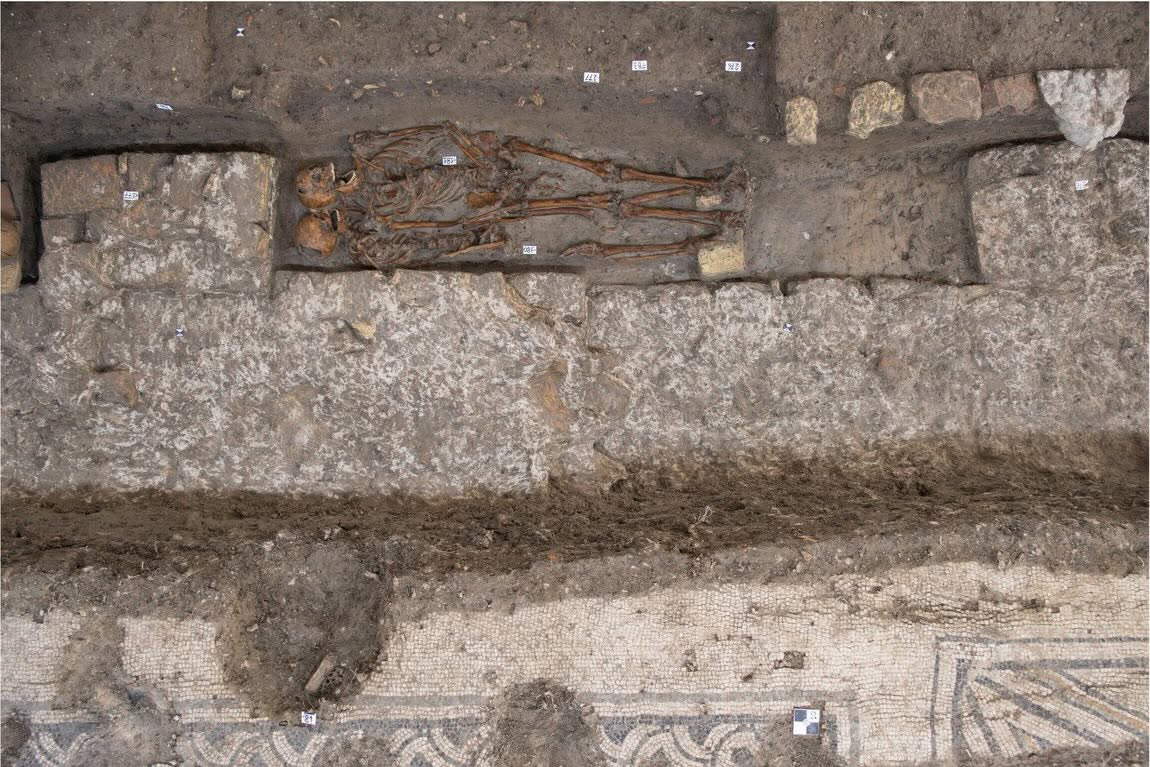
The excavations also revealed four tombs situated among the pilasters of the structure. The condition of the bones is not optimal, but researchers plan to conduct future anthropological, isotopic, and DNA analyses to reconstruct the individuals’ origins and biological characteristics. Only one burial has the bodies oriented toward the east, while the others have their heads facing west. According to archaeologists, the tombs appear to be contemporary and not the result of later reuses. In contrast, a horse burial discovered north of the church—and likely dating to the post-medieval period—is out of context with the basilica.
Investigations are still underway in the northern nave, where new mosaics decorated with double-feather motifs and concentric circles have come to light. Additional wooden posts have been identified in this area, which could definitively confirm the building’s chronology.
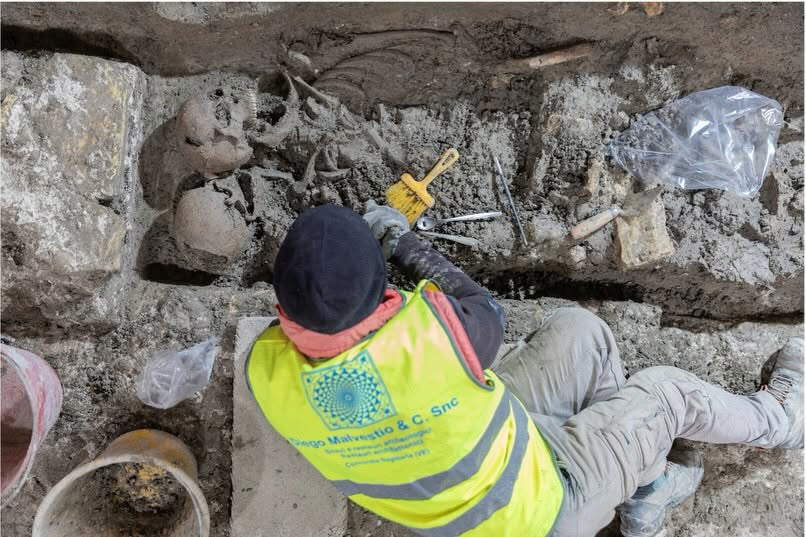
During the excavation, a long plastered wall that had collapsed onto the mosaics was also uncovered. Scholars do not yet know whether it belongs to a later phase of the church or to another building.
According to initial estimates, the basilica is approximately twenty-three meters wide. If these proportions are confirmed, its length could reach forty meters, making it a monumental structure comparable to the early Christian basilica of Concordia. The Superintendency believes it may be an extra-urban cemetery basilica, likely built before the emergence of the Christian center in the area of the current cathedral. This finding could radically alter our understanding of the city’s Christian origins.
“We are writing an important new chapter in the late antique history of Oderzo,” Vallicelli emphasized. “We are presenting what is the first known Christian place of worship discovered in the city to date.” Beyond its scientific significance, the discovery also opens up new prospects for urban and cultural revitalization. The renderings produced by the Tomè+Drusian studio show a project that will allow for the preservation and public access to a significant portion of the basilica, particularly the southern nave and part of the central nave. The archaeological site will also be visible from the spaces above, which will house the municipal tourist office, through openings in the floor that will allow visitors to view the mosaics directly. There are also plans to provide access to the archaeological area from a dedicated basement level.
“After many years, Oderzo will finally have a new archaeological site,” explained the superintendent, expressing her hope that the discovery will revitalize the city’s entire archaeological heritage. Finally, the mayor appealed to business owners and private citizens to support future research through the Art Bonus program, noting that this same initiative had already made possible the restoration of the famous horse harness preserved in the city. Scholars noted that the archaeological investigations represent only the beginning of a long and complex process involving restoration, studies, analyses, and new research campaigns. The excavation will continue in the coming months with further investigations, carbon-14 dating, and analyses of the artifacts and human remains.
|
| Oderzo: A Large Early Christian Basilica Discovered—Mosaics and Tombs from Late Antiquity |

Warning: the translation into English of the original Italian article was created using automatic tools. We undertake to review all articles, but we do not guarantee the total absence of inaccuracies in the translation due to the program. You can find the original by clicking on the ITA button. If you find any mistake,please contact us.
























 IT
IT FR
FR DE
DE ES
ES CN
CN


