





The exhibition project Persistent Notes, with which the Venice Pavilion will participate in the Biennale Arte 2026, was presented at Ca’ Farsetti, headquarters of the Venice City Council. The initiative proposes an investigation of the lagoon city understood as a living organism, traversed by invisible memories, stratifications and vibrations, in dialogue with the exhibition’s overall curatorial concept, In Minor Keys. The presentation was attended by Mayor Luigi Brugnaro, curator Giovanna Zabotti and commissioner Maurizio Carlin, together with the artists involved in the project and representatives of the partner organizations and institutions. The exhibition is curated by Giovanna Zabotti with the participation of Denis Isaia and Cesare Biasini Selvaggi.
The project is developed as a composition in a minor key, building a sensory and narrative experience that crosses different dimensions of the Venetian reality. The Pavilion is conceived as a resonant field between past, present and future, articulated in a sequence of environments that guide the visitor through four symbolic dimensions of the city: submerged, domestic, mythological and collective.
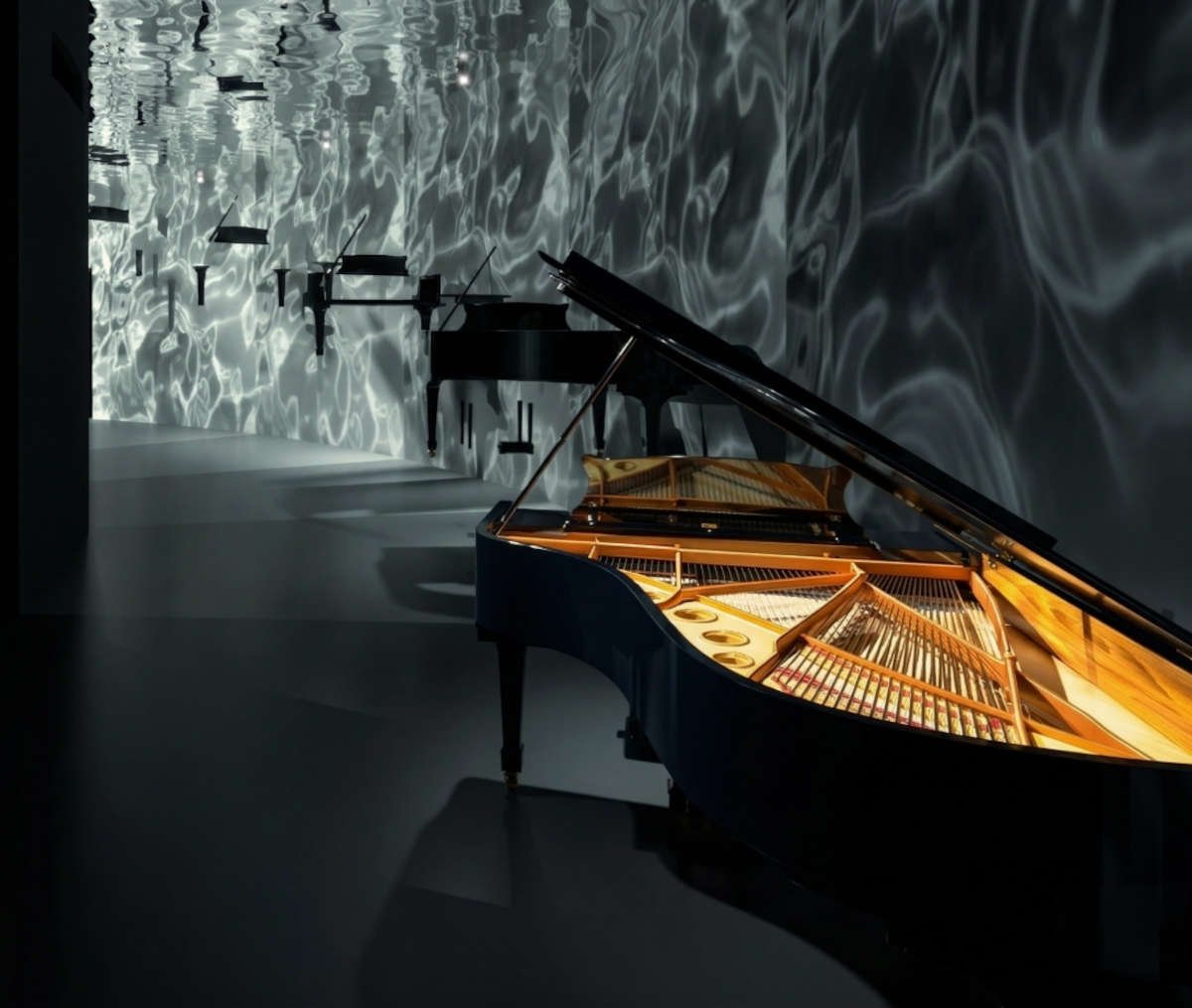
"With Persistent Notes,“ explains curator, Zabotti, ”I imagined the Venice Pavilion as a return to its deepest notes, to what remains. A relational pavilion, in which the works are not just observed, but activate connections between people, stories and perceptions. I tried to look at Venice with different tones, enhancing even more its uniqueness: a mythological, yet real city, perceptible and livable in every dimension. My Venice manifests itself through minimal and poetic signs (the light reflecting from the water on the walls transforming the surfaces, its submerged parts, the intimate memories of those who live it daily) almost imperceptible details that, precisely in their fragility, hold the most authentic essence of the city. Alongside these are other persistent notes: the layering of cultures, signs and historical periods, and the soul of the people who inhabit it, capable of recognizing and loving even the smallest and quietest traces. The Pavilion is thus configured as a collective score, in which artists become channels through which to tune in to the city. A generous and hospitable gesture toward life, inviting listening and sharing."
The exhibition route opens with the submerged dimension, entrusted to the work of Alberto Scodro. His works explore what sustains Venice but remains invisible, emerging only under special conditions, such as during tides. The sculptures, made through processes of fusion and agglomeration of sands, glass, pigments and waste materials, take forms that recall geological concretions and natural sedimentations. The work returns a vision of matter as a process in continuous transformation, making visible the deep dynamics that shape the city.
The mythological dimension takes shape in the project of pianist and composer Dardust, who creates an original composition dedicated to the city. The work takes the form of an immersive installation conceived by set designer Paolo Fantin in collaboration with H-Farm and Cisco. The generative sound system, based on artificial intelligence, reacts to sounds, movements and environmental data, producing a constantly evolving musical landscape. In this way, Venice is interpreted as a living composer, while the audience becomes an active part of the experience.
The domestic dimension is represented by Ilya Kabakov and Emilia Kabakov’s Venetian Diary, a project dedicated to the metropolitan city that continues the exhibition path started at Ca’ Tron. The work stems from an extensive participatory process involving the inhabitants, who are called upon to share objects of daily life from both the historic city and the mainland. The objects, displayed in thematic showcases and accompanied by personal testimonies, compose a collective portrait that crosses generations, trades, communities and social contexts, returning an intimate and choral narrative.
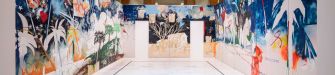
Finally, the path extends to the collective dimension in the space dedicated to the Artefici del Nostro Tempo project, aimed at new generations. The selected works, ranging from painting, video art, photography, sculpture, glass design, public art and street art, contribute to building an articulated landscape of contemporary languages. The space is also conceived as a place for meeting and sociality, with areas dedicated to stopping and conversation, transforming the visit into a shared experience.
The project can count on the support of public and private partners, including BPER Banca and La Galleria BPER, which will accompany the initiative for the duration of the 61st International Art Exhibition. “The partnership with the Venice Pavilion and with a project such as ’Persistent Notes’ interprets the desire to embrace a cultural vision that dialogues with time and memory,” stresses Sabrina Bianchi, head of Cultural Heritage at BPER Banca. “We deeply believe in the ability of art to build connections and speak to new generations, contributing to social growth based on responsibility, inclusion and attention to sustainability. The purchase of Scodro’s work, which will be included in BPER Gallery’s future projects, is also part of this logic.”
“The Venice Pavilion,” says Mayor Brugnaro, "is for the entire municipal administration a source of great pride: in these eleven years it has managed to return to prominence and be an authoritative voice on the international cultural and artistic scene, but not only. It demonstrates and represents what Venice has always been: open, diplomatic and free. This is the City where people choose to be free. And so the Venice Pavilion is now more than ever a garrison of freedom. But this year it is also the place where freely people, Venetians, tell their stories: it is a narrative of many individual subjects that will go to create a collective identity. Because Venice, which has always existed and endured, with its fragilities, is at the same time a non-place, it is an idea: it has always been a cultural reference, an ideal. But the Pavilion also confirms itself as the space of new generations, thanks to the Artefici del Nostro Tempo competition. Young artists will enrich the installation with their languages and works, which again this year will have an exceptional showcase not only at the Pavilion, but also in the symbolic places of the Culture of our City."
“In the Pavilion there is Venice, but not the Venice that is being shown,” stresses Commissioner Maurizio Carlin. “There is a city that speaks in a whisper, like those who know they are heard anyway. The installations cross the exhibition space without declaring it, gradually letting the City emerge. It is not style, it is tone: a vibration that stays with you. Something creeps in the materials, the rhythms, the silences, but the reality does not change: it just shifts, just enough to demand the attention of the visitor who from the entrance will see traces, presences, notes emerge that will follow him through the exhibition path. And in the space of Artefici it hides, stubbornly, a promise.”
|
| Biennale Art 2026, the Venice Pavilion presents "Persistent Notes" |

Warning: the translation into English of the original Italian article was created using automatic tools. We undertake to review all articles, but we do not guarantee the total absence of inaccuracies in the translation due to the program. You can find the original by clicking on the ITA button. If you find any mistake,please contact us.






















 IT
IT FR
FR DE
DE ES
ES CN
CN