





In Germany, specifically in Hanover, a lively controversy has arisen around Crash Pipe, the new installation by Austrian artist and choreographer Florentina Holzinger (Vienna, 1986), inaugurated in public space with a performance that immediately ignited debate among citizens, media and institutions. The work, a large metal structure in the shape of a halfpipe designed to be actively used, is at the center of a controversy that intertwines contemporary art, use of urban space and body representation, due to the fact that it was inaugurated by a number of female skaters performing naked on the rink.
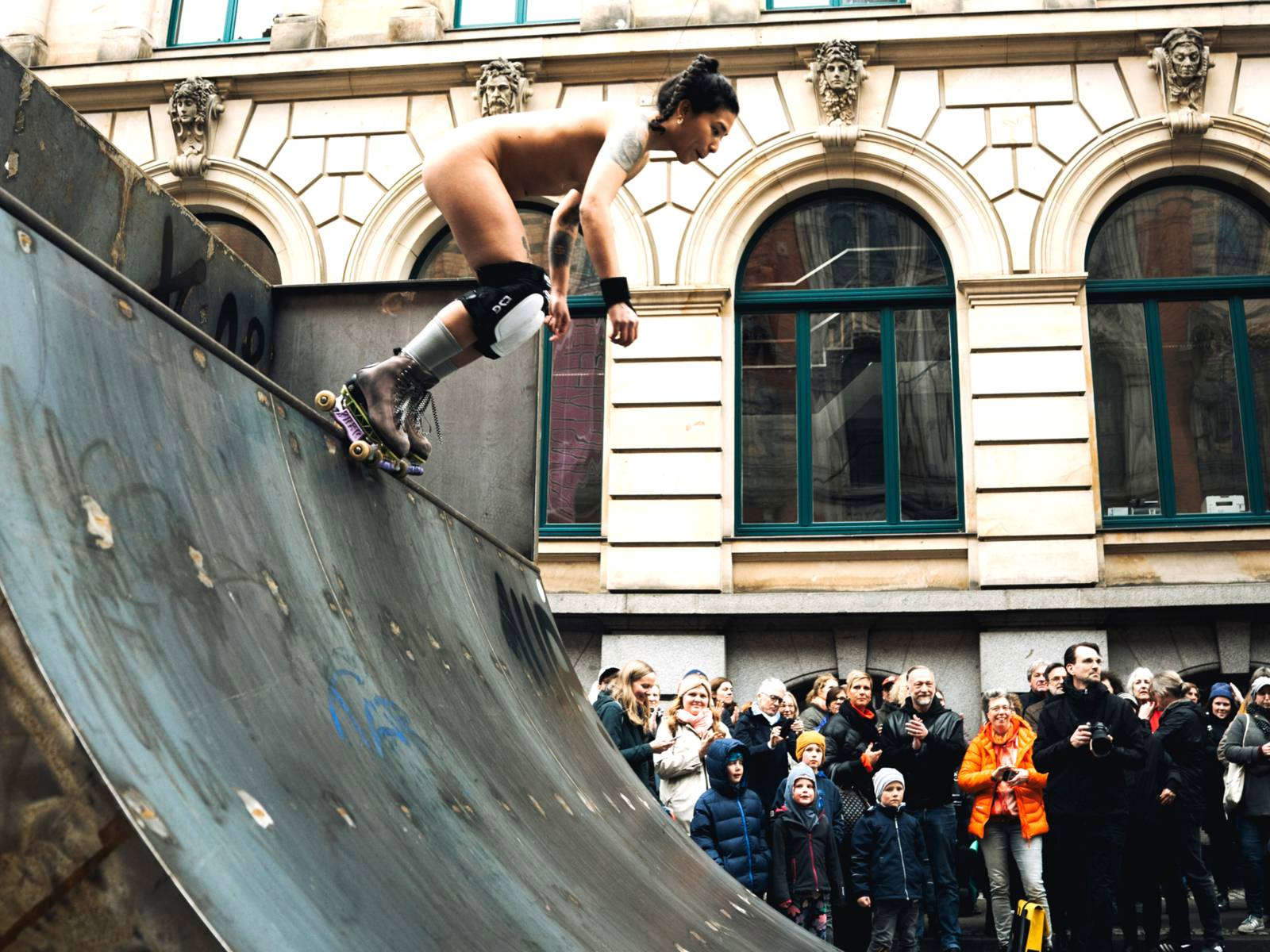
The installation, promoted by Kunstverein Hannover and created in collaboration with the raumlaborberlin collective, was presented as an intervention capable of combining skate culture, performance, and sculpture. Composed of about eight tons of metal and supported by decommissioned cars, Crash Pipe is conceived as a walkable structure, a kind of temporary architecture that invites direct use by the public. Placed initially in Sophienstraße, in the heart of the Kulturdreieck (the “triangle of culture”), in front of the Künstlerhaus, Hanover’s artists’ house, the work is destined to move in the following months to Raschplatz, configuring itself as a traveling project that aims to activate different urban spaces. From its conception, the installation is proposed as a hybrid of art object, sports infrastructure and social platform, in which movement becomes a central element and generator of meaning.
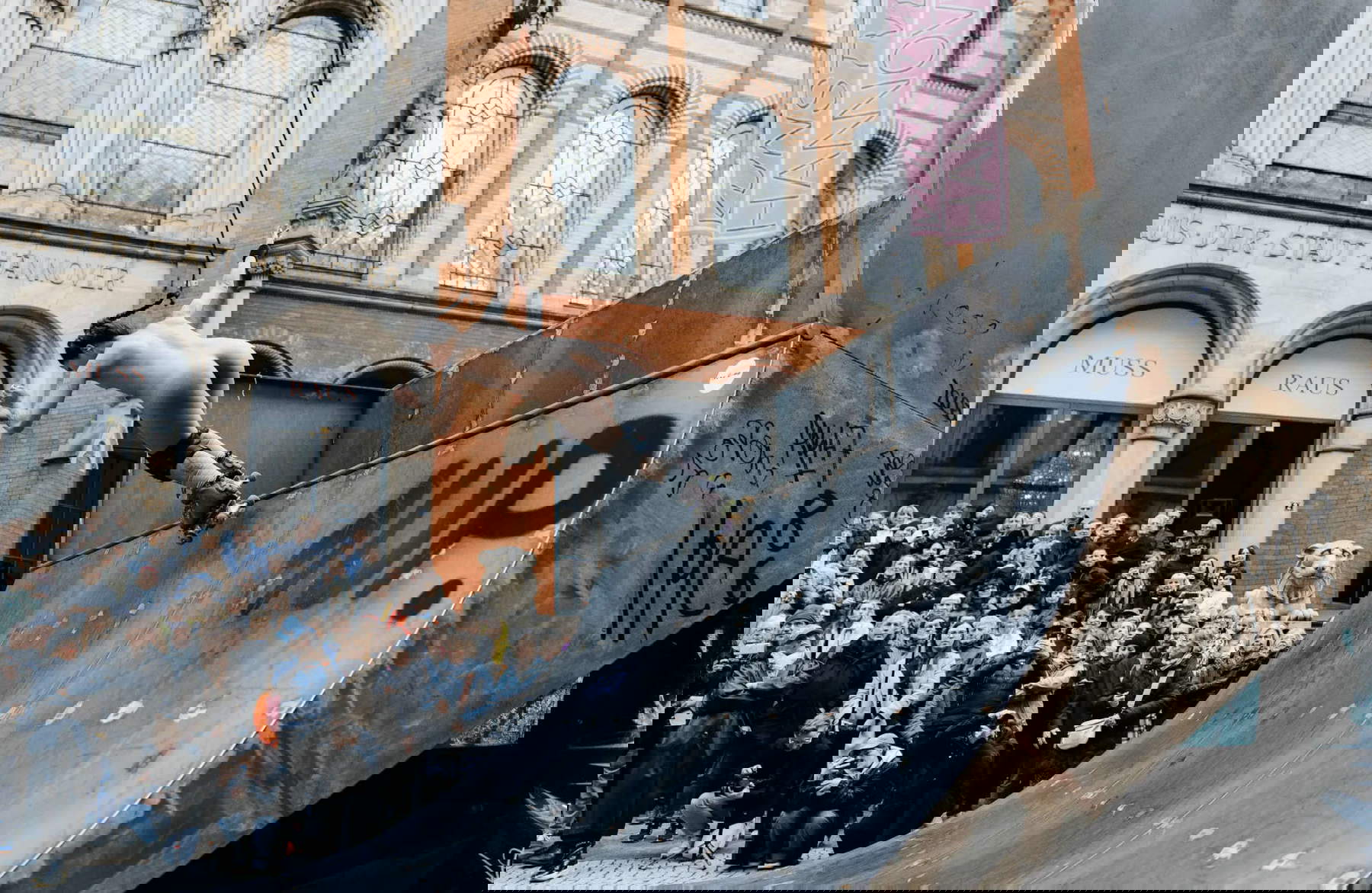
Most of all, however, it was the inaugural performance that took place last March 28 that attracted attention. Three female skaters, in addition to Holzinger herself, used the facility wearing only sports protectors and inline skates, choosing nudity as an expressive element. It was a choice consistent with the practice of the artist, who has long been accustomed to the use of nudity in her artistic and theatrical performances, but this time it drew mixed reactions.
According to reports in the local newspaper Hannoversche Allgemeine Zeitung, the city debate quickly became polarized. While the newspaper initially played down the tone, ruling out the possibility of an actual scandal, numerous letters from readers expressed unease and criticism. Among the most recurring comments were questions about the necessity of nudity (“why do women always have to be naked?” was one of the questions raised by readers), judged by some as a tool for easy provocation or as a form of exposure of the female body perceived as problematic. Some speakers linked the performance to broader issues, such as the issue of women’s representation in public space and the contemporary context marked by the debate on gender-based violence. From this perspective, the artistic choice was even interpreted by some in the audience as inappropriate or contradictory to the demands of women’s rights.
Alongside the ethical and cultural criticisms, practical observations also emerged. Some citizens objected to the use of funds allocated to the project, estimated at around 100,000 euros, believing that these resources could have been used differently. Others criticized the traffic restrictions caused by the installation, considered an intrusion into daily urban life.
The positions of the institutions involved were opposite. Sparkasse Hannover, a city savings bank that figures among the project’s supporters, openly defended the initiative, stressing that provocation was not a guiding criterion and reiterating the importance of creating spaces dedicated to young people, where they can experiment, meet and develop new ideas. In this perspective, Crash Pipe is presented as a work capable of activating the city and fostering participatory cultural practices.
Comparisons with historical precedents were not lacking. The local press itself recalled how even works now considered symbolic, such as Niki de Saint Phalle’s famous Nanas, had initially elicited negative reactions before being fully accepted and integrated into the urban identity.
Beyond the controversy, the project is part of a broader reflection on the role of art in contemporary public space. Indeed, Crash Pipe aims to question the boundaries between work and infrastructure, between passive enjoyment and active participation, proposing a model in which the artistic experience is constructed through the body and movement.
The reaction of the public, divided between enthusiasm and rejection, highlights the intervention’s ability to generate discussion and questioning, confirming how public art continues to be a sensitive and complex terrain. In this sense, the controversy that accompanies Crash Pipe thus does not appear as a marginal element, but as an integral part of the project itself, which finds in the confrontation with the community one of its most significant outcomes.
|
| Naked female skaters inaugurate artwork, controversy ensues: 'why women always naked'? |

Warning: the translation into English of the original Italian article was created using automatic tools. We undertake to review all articles, but we do not guarantee the total absence of inaccuracies in the translation due to the program. You can find the original by clicking on the ITA button. If you find any mistake,please contact us.




























 IT
IT FR
FR DE
DE ES
ES CN
CN


