





Roughly the same reasoning that Giuliano Briganti made for Rubens applies to Van Dyck: given the vastness of his catalog, an exhibition entitled simply “Van Dyck” is unfeasible. It matters little whether one attaches to it, as was done for the exhibition opened a few weeks ago at the Palazzo Ducale in Genoa, one of those open-ended, omnivorous, everything-proof labels (in the case in point, “the European”), or present it as “the biggest exhibition in the last twenty-five years” devoted to Antoon van Dyck, especially if it then falls to the task of circumscribing the playing field. The biggest where, then? In Europe certainly not, there was in 2012 El joven Van Dyck at the Prado, which in terms of number of works, if that is to be the main parameter of the fundamental, electrifying tussle, almost doubled the Genoa exhibition. So no, past Ventimiglia there has certainly been a bigger exhibition in the last twenty-five years. But why dredge up the centimeter? Terribly boring, unnecessarily competitive. Of course: those nostalgic for the comparison might say that yes, the Genoese Van Dyck beats the 2018 Turin Van Dyck by a dozen more works, but they would invoke the intervention of the jury to assess the weight to be given to the superstars in the exhibition (at the Royal Palace there’was Marquise Grimaldi Cattaneo from the National Gallery in Washington ch’is perhaps Van Dyck’s most famous portrait, there was Venus in the Forge of Vulcan from the Kunsthistorisches Museum, there was Jupiter and Antiope) and see if they would give themselves the extremes to take some points away from the winner. But Genoa would respond with just as many masterpieces, celebrated works, sublime works such as the Prado’s Mystic Marriage , or Charles V on Horseback, not to mention the stunning portrait that is the Young Armiger from Dresden and which alone is worth the visit. In short, the talk show would end up with the usual chicken coop in which it is impossible to tell who it is that won, and above all no one would look at a painting that was one.
Would it be better then to avoid getting caught at odds of 1,000 and 6 by competitive cravings and concentrate on substance? One might wonder, at this point, why Antoon van Dyck was given the title of “European” painter. Clearly: because he trained with Rubens, studied and worked in Italy, and experienced triumph in England. If then the label is to serve to summarize the artist’s trajectory, Briganti’s assumption applies. If, on the other hand, we want to consider Van Dyck as a kind of forerunner of Erasmus, at least if we want to take the direction in which the institutional texts that open the catalog push us (regional president Marco Bucci, for example, tells us that the exhibition “restores to the public [...] a history that interweaves art, city and European identity”), then, beyond of the fact that we are immediately taken care of by the apparatus on display to dispel any suspicion (“This exhibition,” we read before we even enter, “tells the fascinating artistic story of Antoon van Dyck by highlighting the decisive role that three extraordinary cities-Antwerp, Genoa and London-had in the formation and evolution of his style.” no reference to any eventual Europeanist impulse of ours), one would rather come to think that we are Van Dyck’s Europeans (but also of Primaticcio, Artemisia Gentileschi, Arcimboldo, Rubens, and all those legions of artists who studied and worked, between the sixteenth and seventeenth centuries, outside the areas where their mother tongue was spoken).
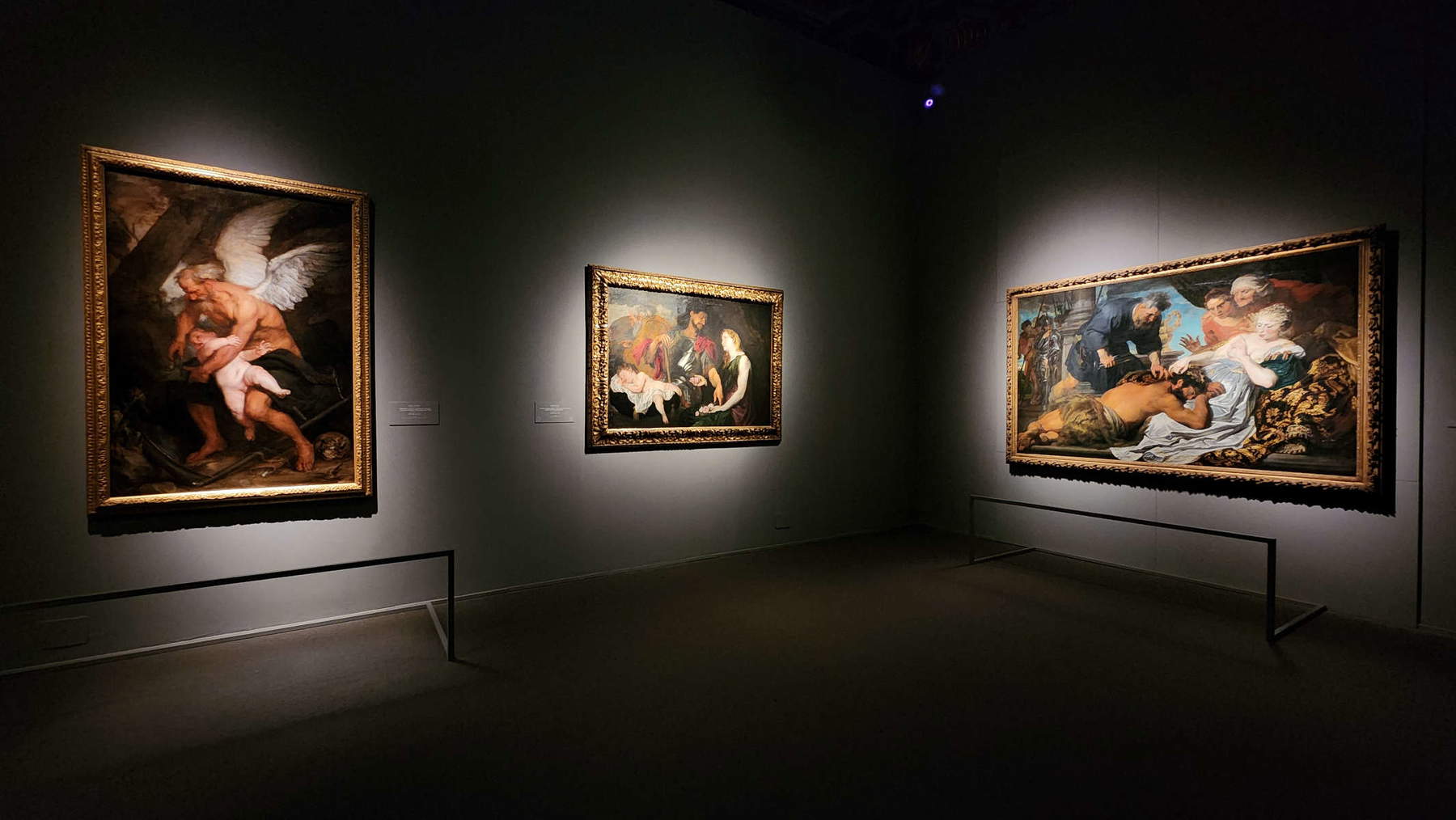
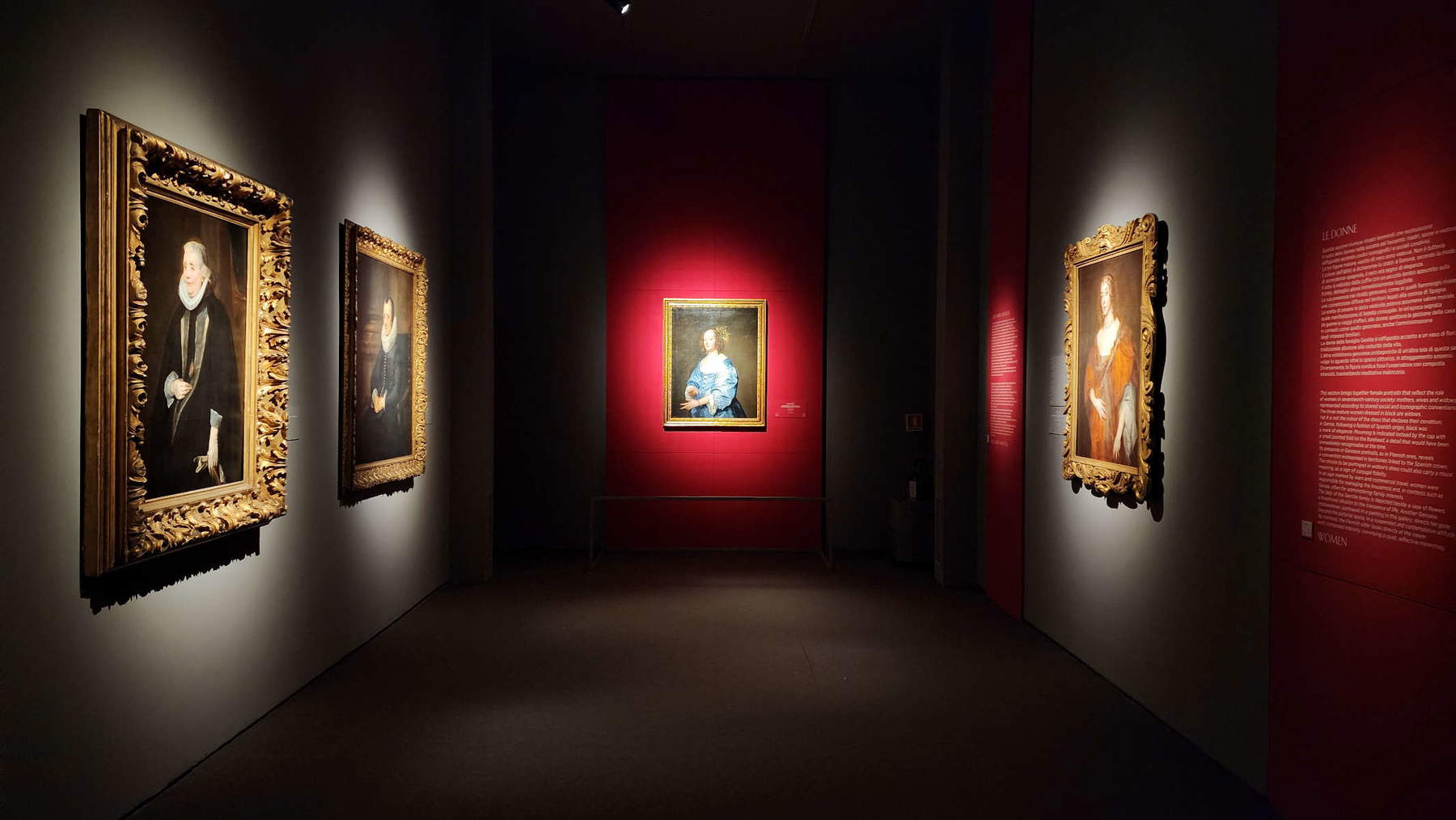
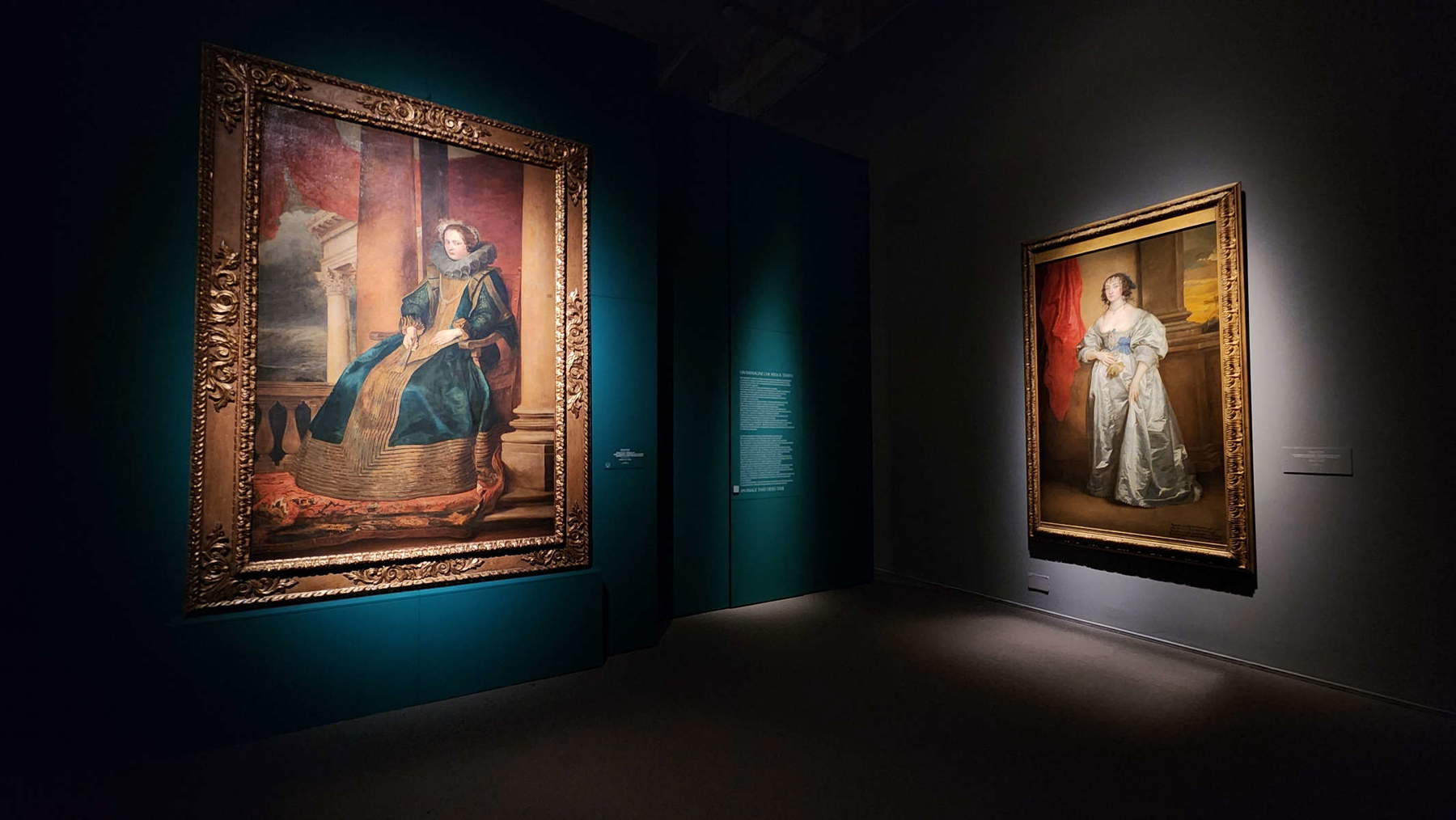
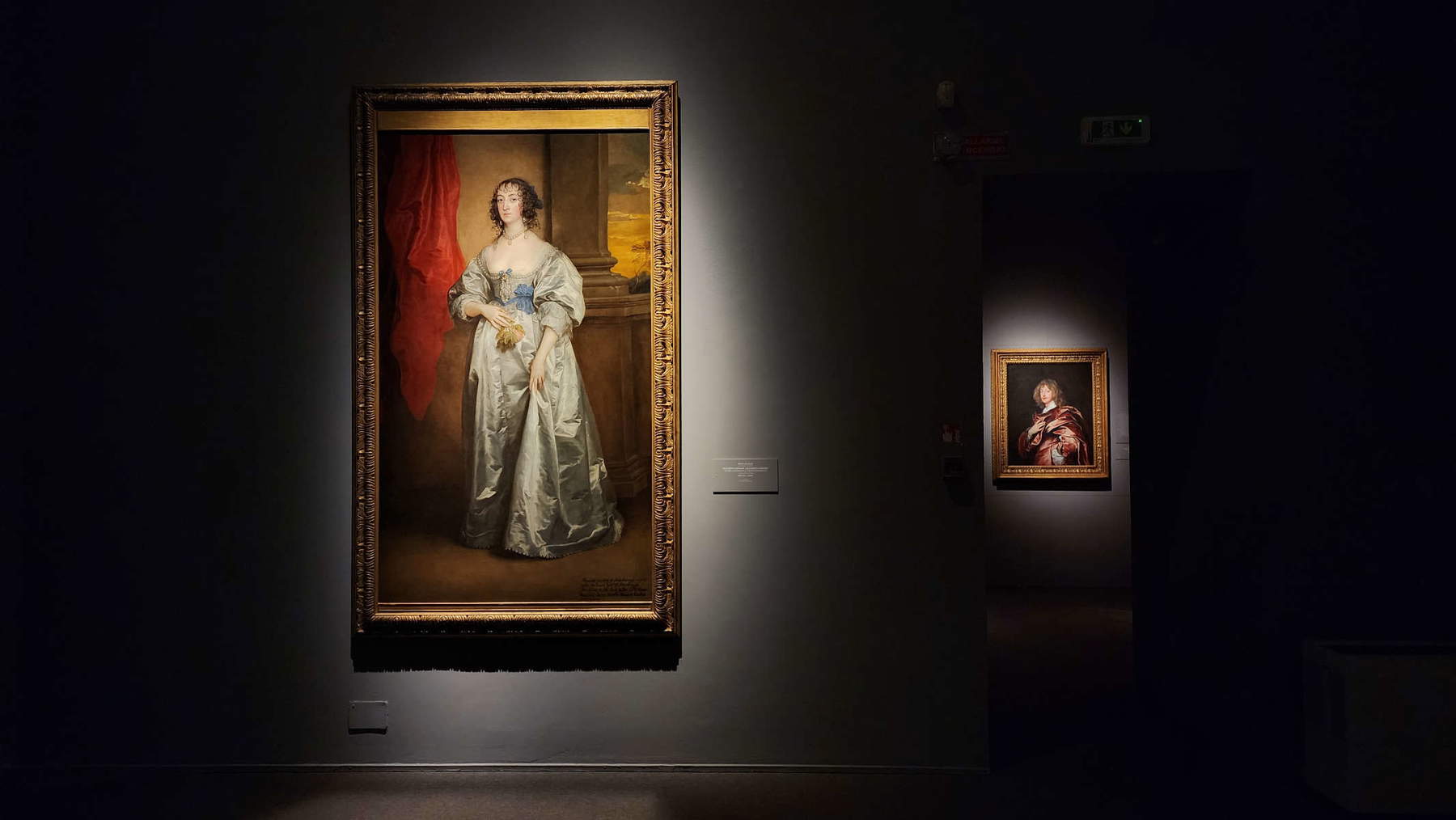
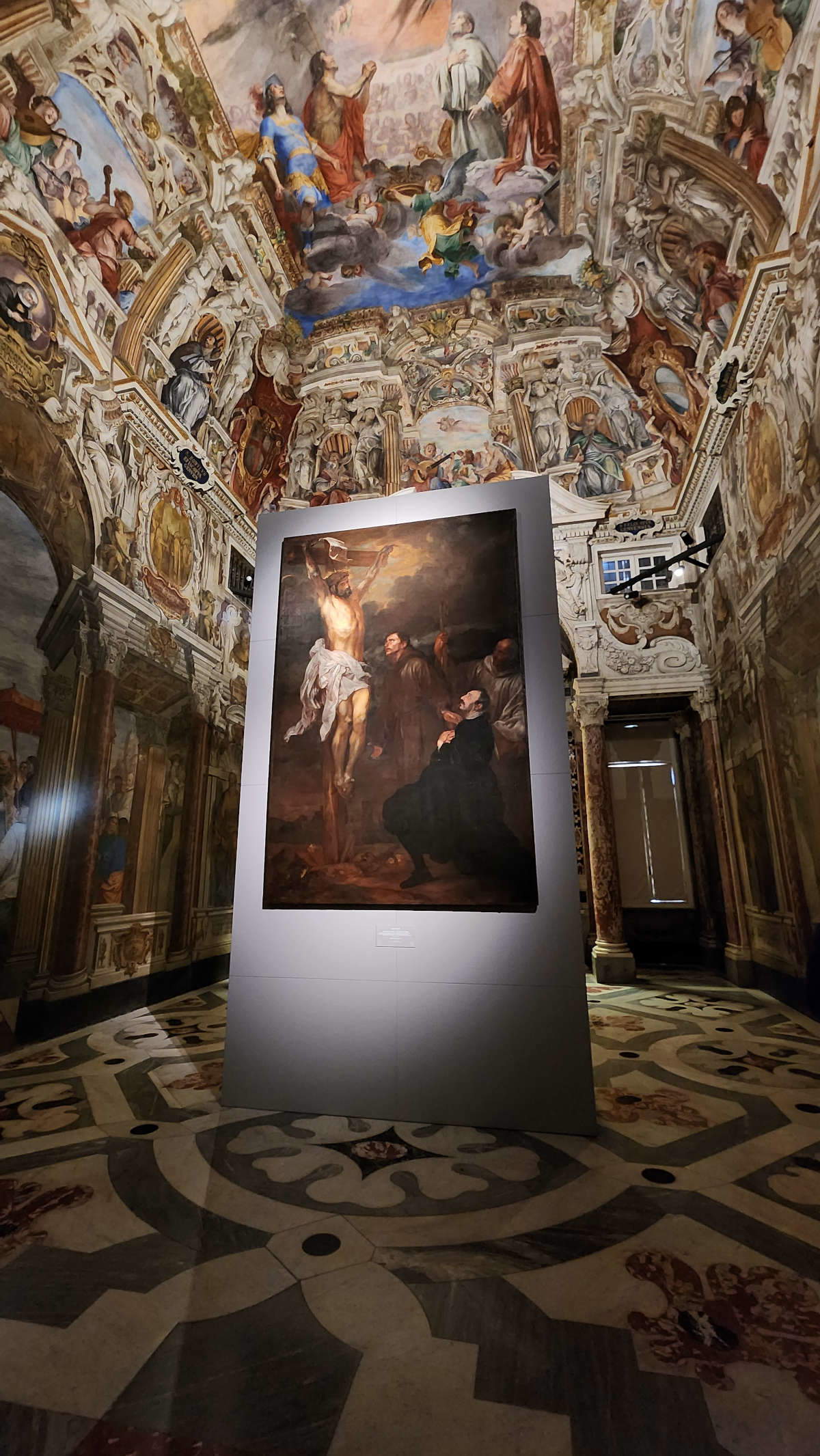
If, therefore, an “all Van Dyck” exhibition seems an implausible undertaking, only two options remain: the targeted lunge, that is, the exhibition with a very precise slant (Genoa itself offered an admirable example in this sense, when years ago Palazzo della Meridiana presented to its public the exhibition on the Genoese Van Dyck, moreover the work of the same curator of the current exhibition, Anna Orlando, on the occasion present at work together with Katlijne van der Stighelen), or the anthological exhibition that does not claim to be exhaustive. The Palazzo Ducale exhibition necessarily moves toward the dimension of the anthology, albeit with the declared purpose of directing the gaze to the three most important cities for the artist’s career, and with the intention of offering, we read in the panel that welcomes us to the exhibition, “a true overview of the complexity and variety of his art.” Legitimate: if, however, we begin to miss, say, the Portrait of Cardinal Guido Bentivoglio (Maria Grazia Bernardini, in the catalog, calls it Van Dyck’s “greatest masterpiece,” an “unsurpassed” painting), or theSelf-Portrait with Sunflower, or theLove and Psyche at Kensington Palace, then it’s a bit like wanting to offer an overview of the Rolling Stones to someone who until now has only been interested in trap music, and not hearing Satisfaction or Route 66 or Let’s spend the night together. Which, of course, does not mean that an interesting and even enjoyable compilation could not result. Van Dyck the European, then, has the genuine flaw of being irresistible. Fifty works by Antoon van Dyck all collected in one place! Is there something missing? We’ll get over it. It is an injection of enjoyment. An orgasm. Could anyone possibly deny that one enjoys listening to Emotional Rescue or Miss you even played on a loop?
There, then perhaps that is the point: why seek a supposed fullness of gaze, why try to embrace that which is difficult to embrace, when it is infinitely better purpose to let go of all superstructure, to avoid ’embark along trajectories that have ambitions of “the overall gaze” and abandon that “journey of discovery of the Van Dyck of ’three homelands’ and ’three distinct seasons’”? For example, where the presentation reiterates that “the visitor will discover, perhaps for the first time, the Van Dyck of sacred works: a mix of theater and pathos, religion and feeling, that will be more engaging than one might think.” Exactly: getting involved without thinking about anything else. Of course, in this regard it may be objected that perhaps we would have better discovered the Van Dyck of sacred works if the Orero Altarpiece, instead of being forced to undergo the removal from its church to be put inside the Doges’ Chapel to close the path (again according to the assumption that the Doges’ Chapel must necessarily be filled with something), had remained in San Michele di Pagana. It may be said that, with all the Van Dycks in the Genoese museums that have not moved an inch because, evidently, they want to encourage tourists to make the effort to go to Palazzo Rosso or Palazzo Spinola, the only Genoese Van Dyck that should have been left where it was has been moved. One will be able to say that it would have been more engaging than one might think to know a sacred Van Dyck in its context, to see the altarpiece in the church for which it was originally intended and to watch the perfumer Francesco Orero adore the Crucifix above its altar, to observe in the midst of those marbles the altarpiece, a necessary offshoot of the dark, dusty, and brackish, feeling the cold of the church on one’s skin, with one’s ears busy getting used to the singing of the undertow. It may then be said that, in order to better discover the artists of sacred works, it is perhaps better to see them in their contexts, given also the current propensity to mend relationships rather than undo them, albeit temporarily, unless it is really necessary. Then it happens that sometimes one prefers to deprive the altarpiece of its silence to offer it to the spotlights of the Doges’ Chapel. San Michele di Pagana, a few hundred meters from the Rapallo waterfront, near Santa Margherita Ligure, near Portofino, that stretch of coastline, in short. At least for this early summer we rescued the Orero Altarpiece from the dogui in strictly sockless Sebago to offer it to tourists at the Ducal Palace: perhaps for this time we have gained. It is, however, the Orero Altarpiece, witness to an interesting progression. In 2015, in Bologna, when Sgarbi proposed to move (and succeeded) Cimabue’s Maestà from the Church of the Servi to Palazzo Fava an appeal was launched that was joined by more than a hundred scholars. Two years ago, when Guercino’s Crucifixion left the Basilica of the Ghiara in Reggio Emilia to go to the exhibition on the Ludovisi papacy at the Scuderie del Quirinale (the work had undergone extraordinary maintenance, so a move to the exhibition before returning to its church made complete sense) a few feeble protests were counted, but nothing more. Now, for the transfer of the Orero Altarpiece, without even a restoration in the way, at least as far as we know, no one has shown up. It is likely that two or three years from now, the sleepy art world will awaken from its torpor to ask churches to lend their works to exhibitions, even when they have little to add to the discourse. Who goes to San Michele di Pagana anyway?
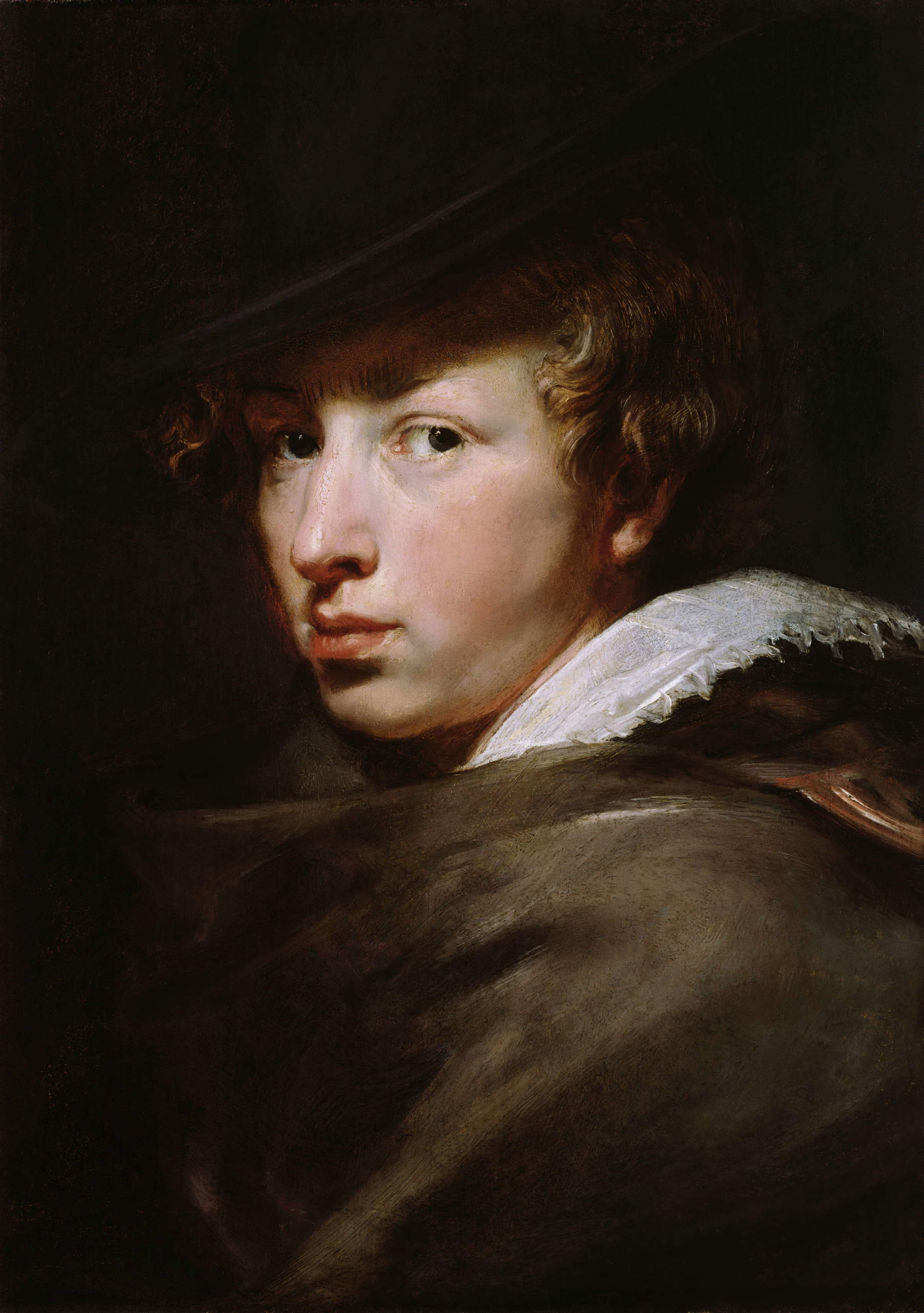
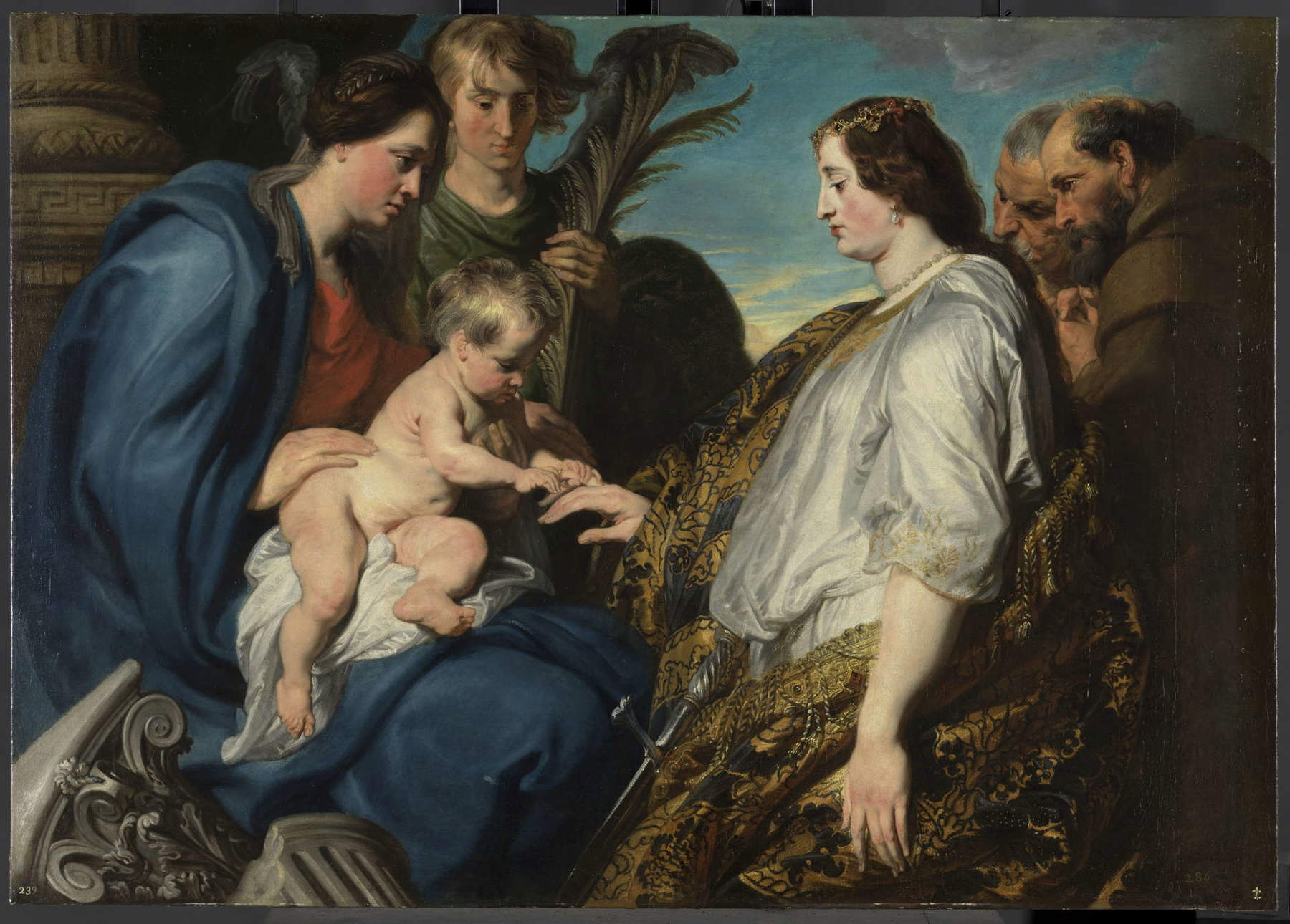
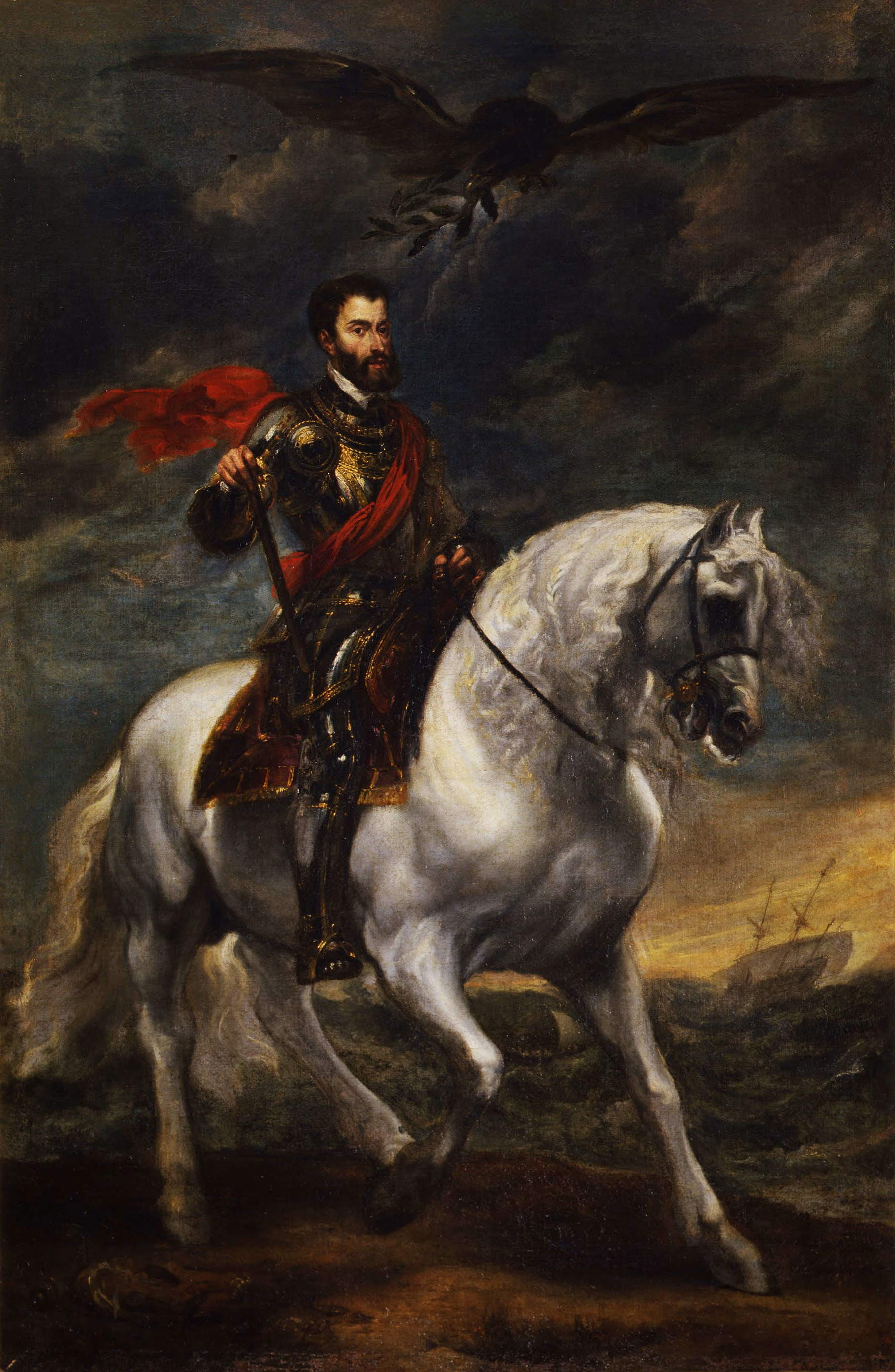
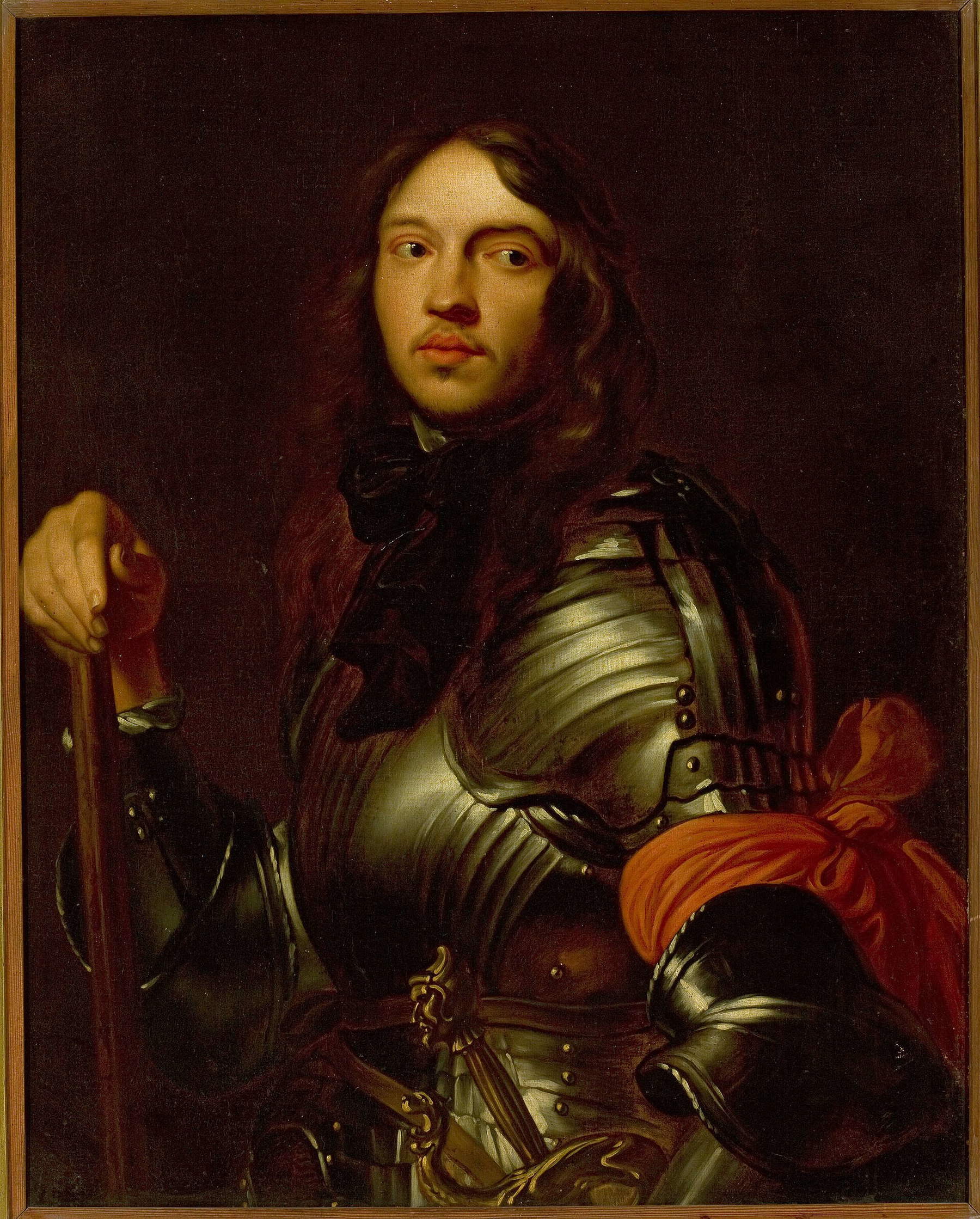
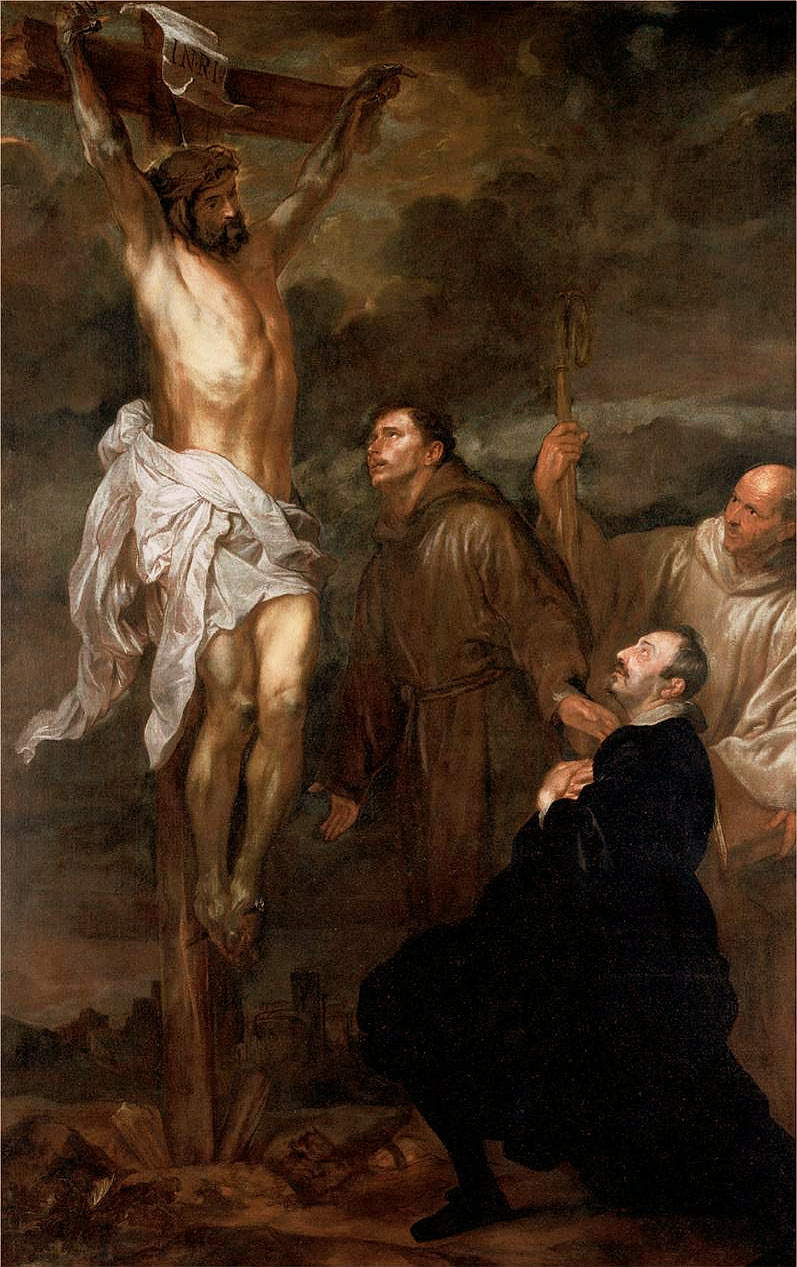
There is, then, the curious circumstance that the exhibition deliberately abdicates a chronological path in favor of a scanning by themes, in the belief that this is the clearest way for the public to understand the maturation of Van Dyck’s art, his ability of adaptation, the spontaneity of that “talent disposed to a beautiful and delightful ease of painting” as Giovan Pietro Bellori had defined him (or, as the exhibition has renamed him on all the panels of the itinerary, “Pietro Bellori”). More useful, in this sense, is the catalog, a good one, where the works are instead ordered from the most distant to the most recent: the rooms, at best, are better suited to let the visitor breathe in the air of Van Dyck’s cities. This is an interesting exercise, not least because of the propensities of the painter, who was above all an inimitable portraitist (and the exhibition has gathered together for the most part portraits, all of the highest quality), with the consequence that observing this passing sampler of the dead, this temporary picture gallery of ghosts, this sequence of faces fixed on canvas, in their sumptuous solitude, when they were already becoming memory and remembrance, perhaps one can smell something of those three cities. It happens especially in the central rooms, as long as one does not linger on the signs.
With the Genoese paintings, in the midst of this little gallery of the merchant aristocracy that ruled the city, one always seems to breathe a heavy, grave, stiff dampness. Look, halfway through, at the so-called Balbi children arriving from the National Gallery, now identified, after various proposals, with the grandsons of Senator Alessandro Giustiniani Longo. Brocades and silks, velvet jackets and crimson tunics edged with gold, feathered captains and gleaming swords on the side. A display heedless of any suntuary law, of any reminder of the moroseness that can be seen, for example, in the Portrait of a Widow in the De Groeve Collection, or even in the Portrait of the de Wael Brothers (where theneed for lightening is, if anything, to be found in the theatrical attitude of Lucas, caught gesticulating behind a more serious, unflappable Cornelis), yet mitigated by all those unmistakable signs of death: the crows, the severed twig, the nightingale clutched in the hands of one of the Giustiniani Longo brothers.
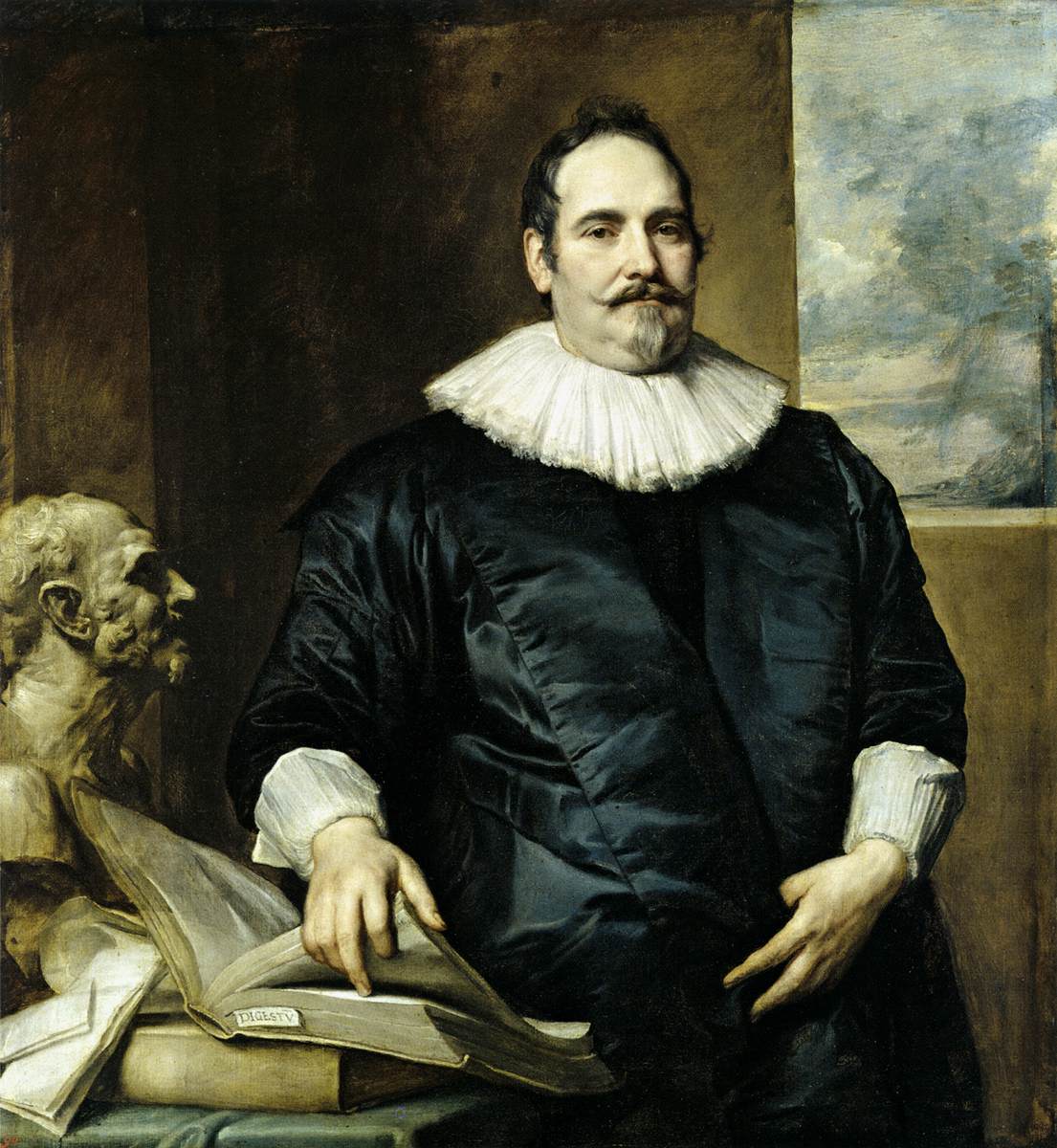
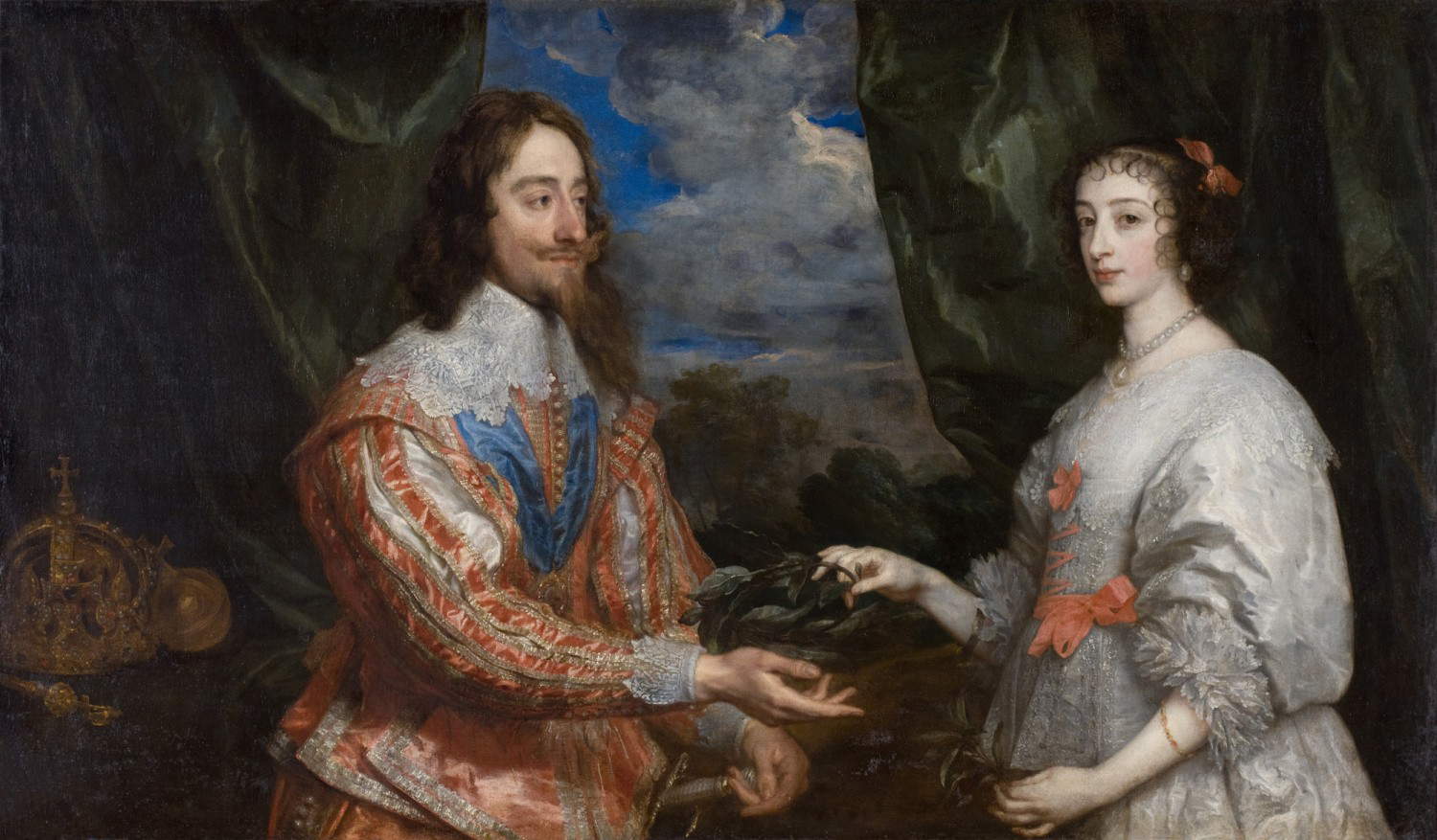
In Antwerp it is cold, freezing, but its inhabitants live. When you look at the portraits of the second Antwerp period, late 1920s and early 1930s, you seem to be dealing with people who are about to say something. To get up from their chairs. To raise an arm. One stops in front of the Portrait of Jacques Le Roy, which arrived from the Thyssen-Bornemisza in Madrid, one of the pinnacles of all of Van Dyck’s portraiture, and waits for that French merchant to move his head, adjust his fur-trimmed robe, begin to nervously unfurl the letter he carelessly holds in his hands. Nearby is a jurist, Justus van Meerstraeten, awkward and strutting as the light draws arabesques on the silk of his jacket, shifts the weight of his body slightly forward to keep the big book he pretends to be flipping through from sliding off the counter. And then in London everything changes. An unusually sunny London, a blue, brisk London. Lady Venetia Digby’s portrait blinds with its iridescence. Elizabeth Howard’s is an affront, an insolence, an act of textile prevarication. The portrait of Charles I and Henrietta Maria, the only portrait in the exhibition of the King of England, is an experiment, it is an official portrait that abandons any officialdom, it is a kind of theatrical play masquerading as a state effigy, without even bothering to succeed. We already know how it will end, that is, Charles I will end up beheaded some fifteen years after this portrait. Evidently the Londoners must have felt that the air in London had become a little too light.
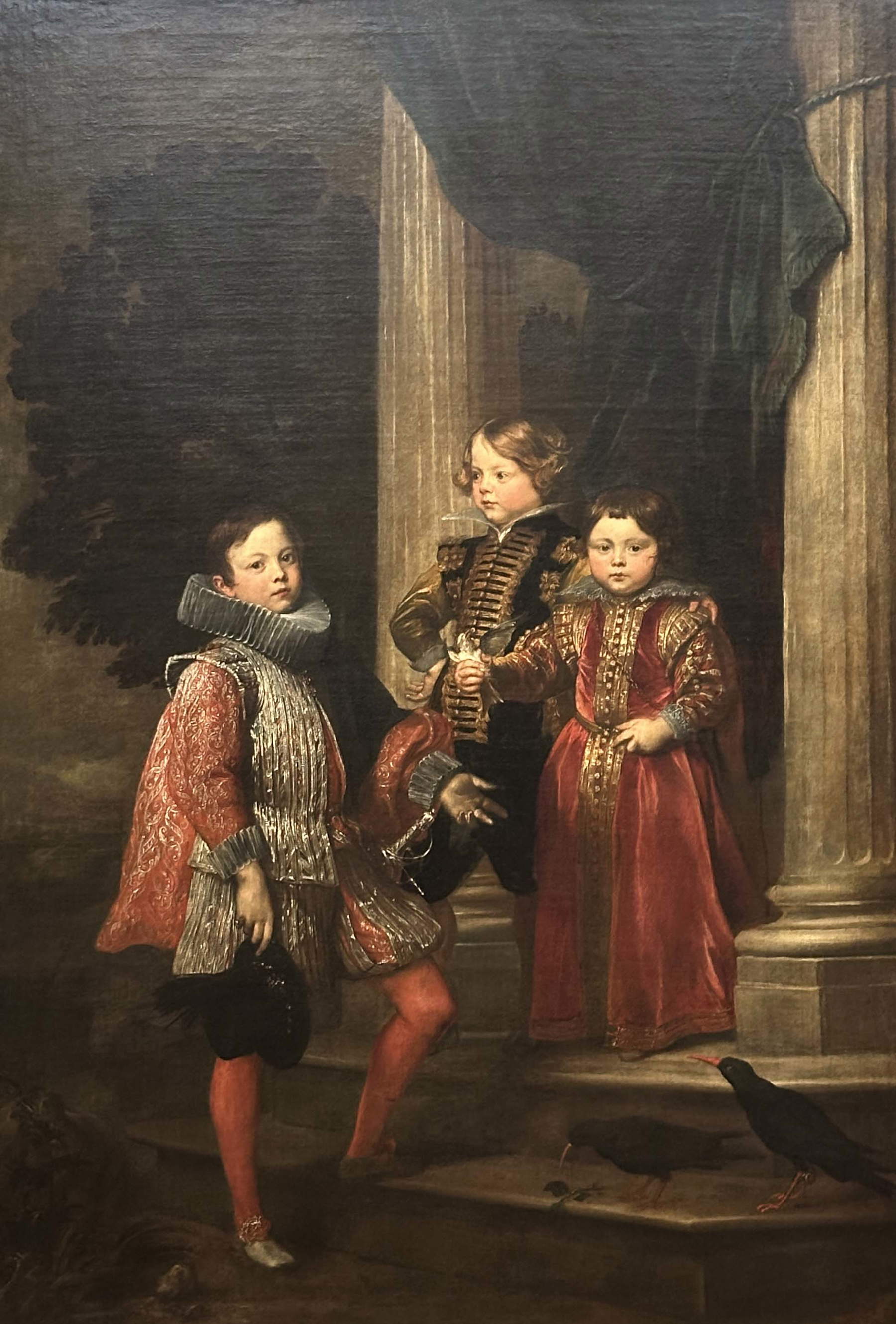
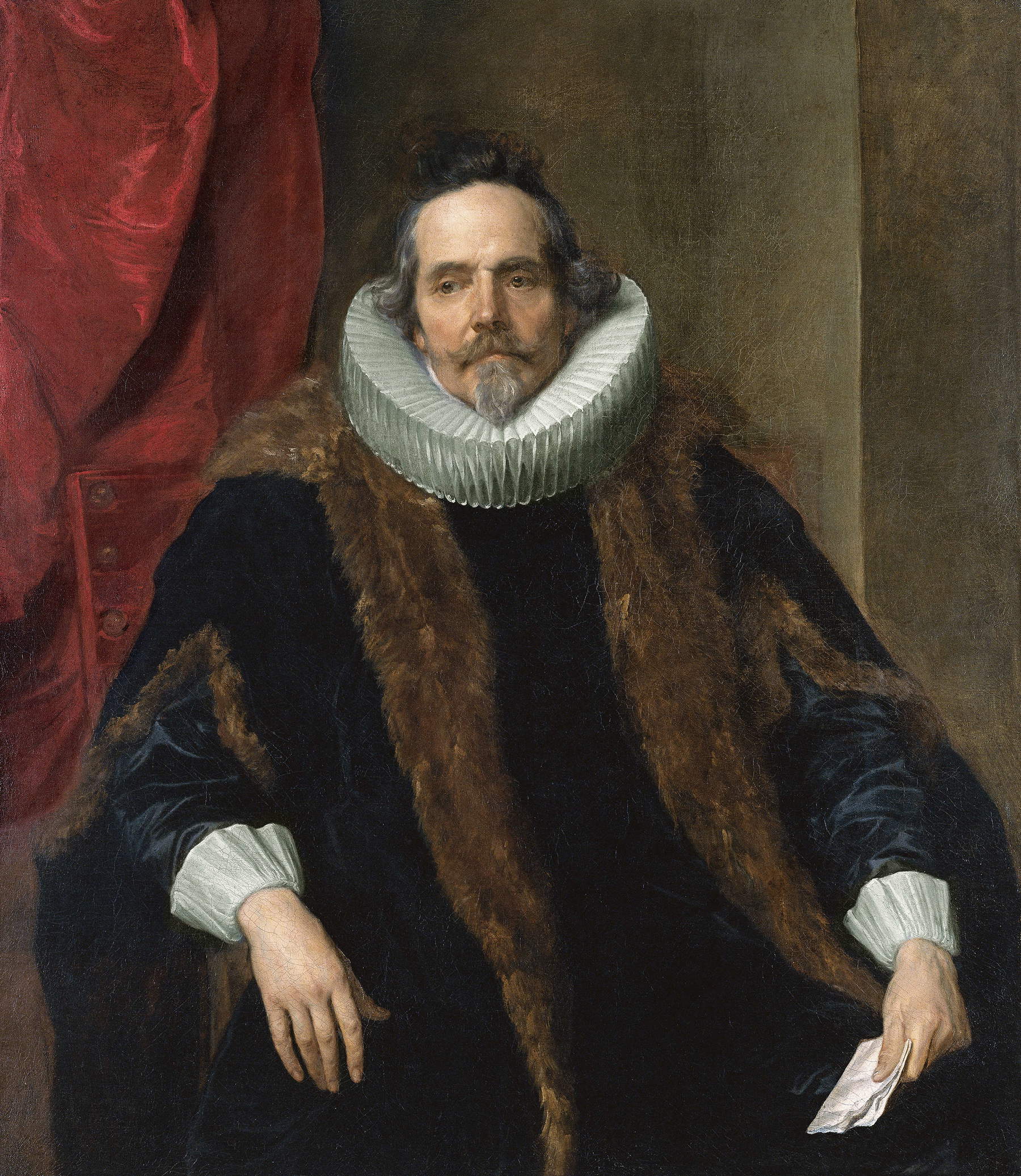
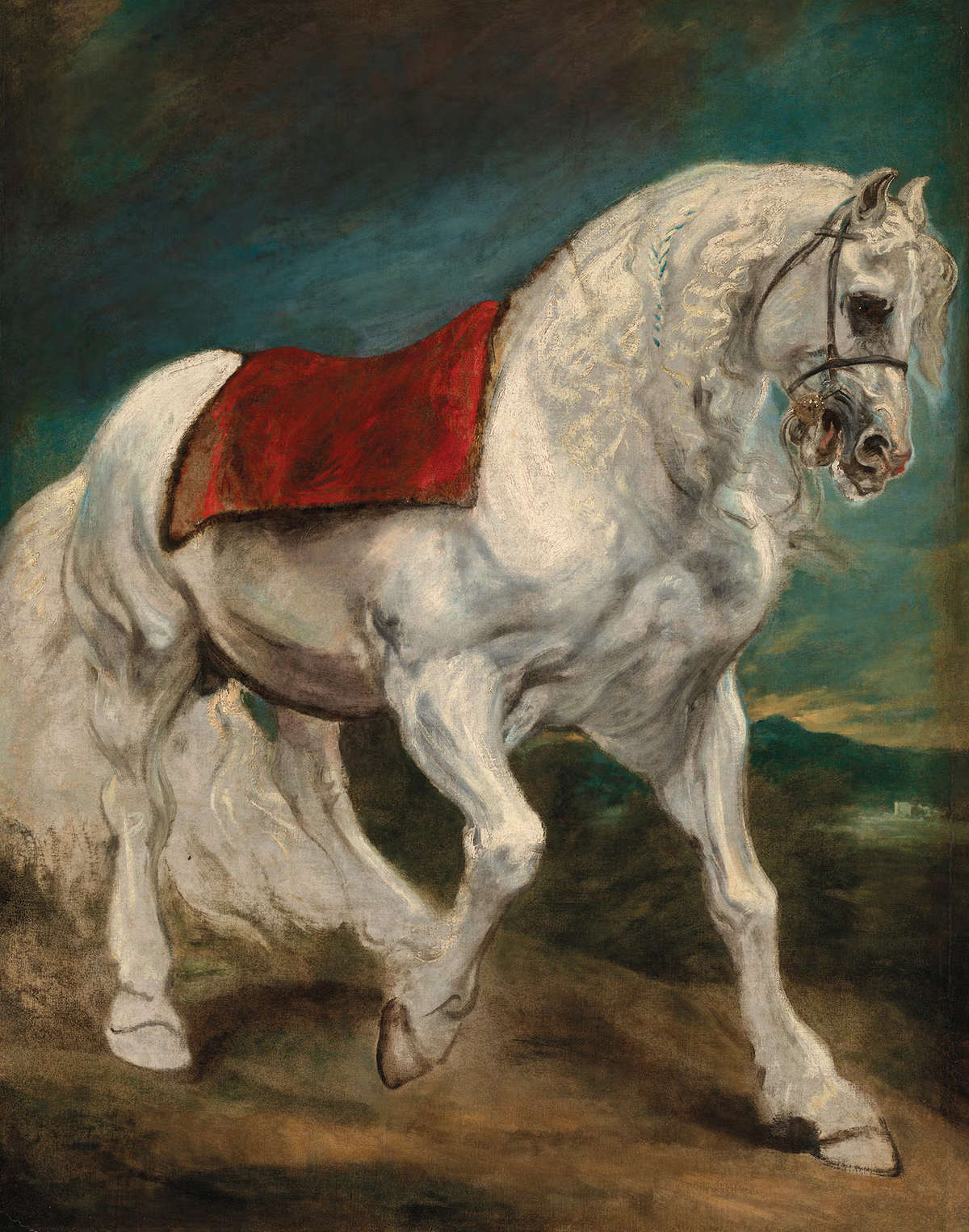
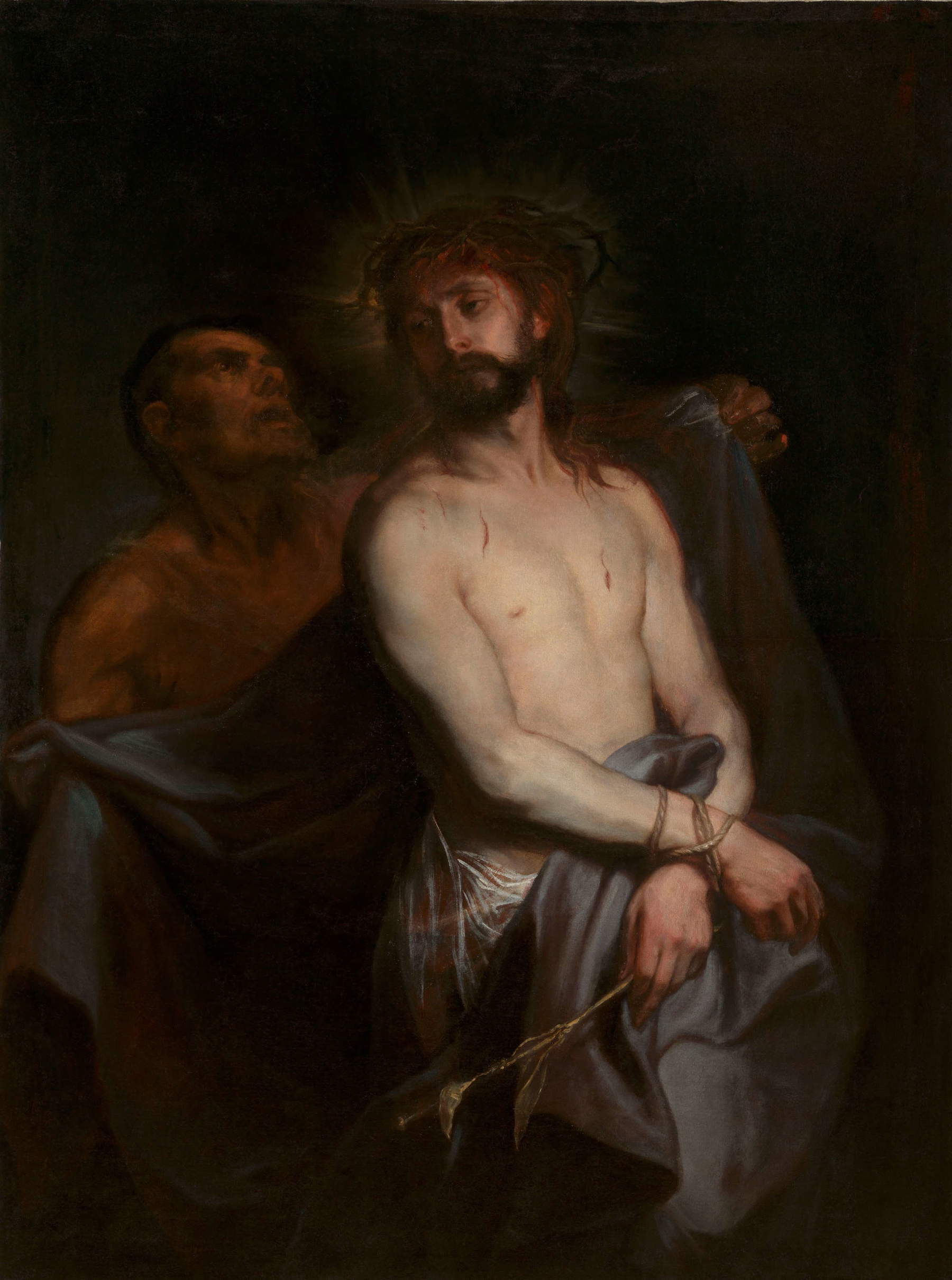
Then there’s also the new, important news: Van Dyck’s horse discovered not even a year and a half ago, sold by Christie’s for three and a half million pounds, and now offered for all to see for the first time, next to that Charles V in the Uffizi riding a steed in the same pose. An Ecce Homo offered as an autograph. An unpublished portrait of a lady lent by the Phoebus Collection, attributed a few years ago to Van Dyck by Susan J. Barnes and Katlijne van der Stighelen and confirmed on this occasion. Proposals for chronological adjustments, also useful in light of the fact that Van Dyck’s last catalog raisonné dates back to 2004, and more than two decades later an update is therefore necessary. One can be sure, however, that the visitor is mainly interested in the fundamentals. On which better to insist, then. Let us say, to be sure, the largest Van Dyck exhibition in the last twenty-five years in Genoa, which is already a very good thing; Genoa is still Genoa, moreover burdened with all the Van Dyck Genoese who have remained there, who are extraordinary, and who in these weeks have brought out their best clothes to welcome the relatives arriving from London, from Edinburgh, from Madrid, from Paris, from Milan (and one cannot emphasize enough the merit of an undertaking such as it is to gather such an assembly here). Come, then, and see the anthology of a seventeenth-century genius. The cellar is stocked with everything you need for a very fine tasting of Van Dyck (you can also get drunk, if you prefer), bottles of great quality, without subsidence. Except, perhaps, for just one: the Madonna and Child in the National Gallery in Parma looks more like a workshop work than a work by the master, but the exhibition rightly and correctly puts us on notice, and especially so towards the end of the tour, when we are already drunk on Krug Grand Cuvée and Palazzo Lana Extrême and will have little difficulty downing a glass of supermarket prosecchino. So embark on your favorite means of transportation and get to Genoa. The exhibition warns, the exhibition entices, the exhibition is worth the trip. Beautifully steamy, like all that gives comfort.

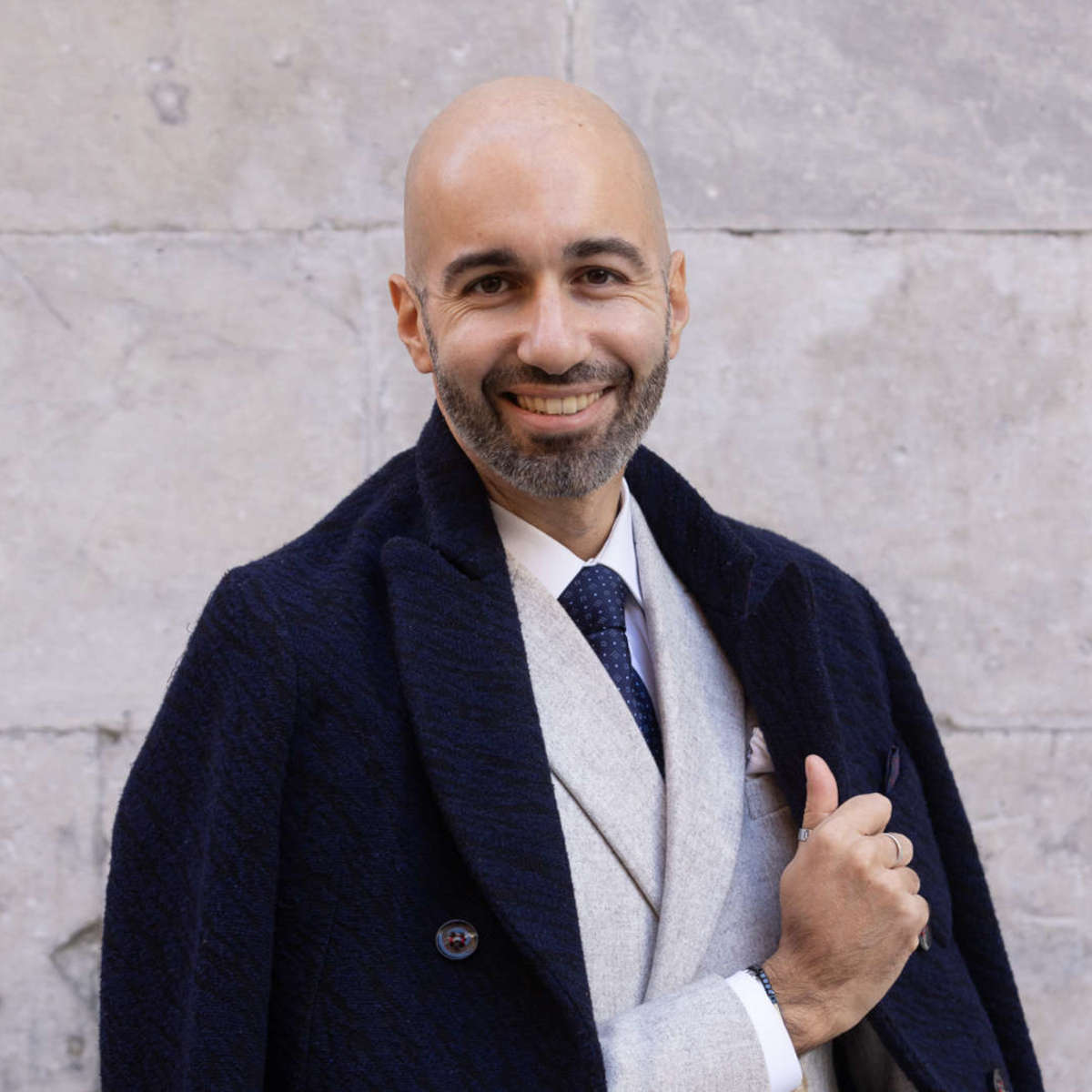
The author of this article: Federico Giannini
Nato a Massa nel 1986, si è laureato nel 2010 in Informatica Umanistica all’Università di Pisa. Nel 2009 ha iniziato a lavorare nel settore della comunicazione su web, con particolare riferimento alla comunicazione per i beni culturali. Nel 2017 ha fondato con Ilaria Baratta la rivista Finestre sull’Arte. Dalla fondazione è direttore responsabile della rivista. Nel 2025 ha scritto il libro Vero, Falso, Fake. Credenze, errori e falsità nel mondo dell'arte (Giunti editore). Collabora e ha collaborato con diverse riviste, tra cui Art e Dossier e Left, e per la televisione è stato autore del documentario Le mani dell’arte (Rai 5) ed è stato tra i presentatori del programma Dorian – L’arte non invecchia (Rai 5). Al suo attivo anche docenze in materia di giornalismo culturale all'Università di Genova e all'Ordine dei Giornalisti, inoltre partecipa regolarmente come relatore e moderatore su temi di arte e cultura a numerosi convegni (tra gli altri: Lu.Bec. Lucca Beni Culturali, Ro.Me Exhibition, Con-Vivere Festival, TTG Travel Experience).
Warning: the translation into English of the original Italian article was created using automatic tools. We undertake to review all articles, but we do not guarantee the total absence of inaccuracies in the translation due to the program. You can find the original by clicking on the ITA button. If you find any mistake,please contact us.





















 IT
IT FR
FR DE
DE ES
ES CN
CN


