





Restoration as an opportunity for learning, research, and participation. This is the spirit behind the “Leggere il marmo” initiative, promoted by the National Archaeological Museum of Venice, part of the National Archaeological Museums of Venice and the Lagoon, which on Monday, July 13, will open its conservation workshop— set up within its own galleries—to the public on an exceptional basis, offering visitors the chance to observe up close the study and maintenance activities involving a selection of works from the archaeological collection. The initiative stems from a collaboration between the Museum and the Veneto Institute for Cultural Heritage (IVBC), an organization accredited by the Veneto Region for professional training that offers a three-year course for technicians specializing in the restoration of stone and stone-based materials, mural paintings, and archaeological artifacts. This is the first joint project between the two institutions, developed following a previous collaboration between the Institute and the Altino Archaeological Park, which also belongs to the National Archaeological Museums of Venice and the Lagoon.
For the occasion, the Cortile dell’Agrippa will be open on an exceptional basis, even though Mondays are usually the museum’s closing day. It is here that the guided tours will begin with a brief introduction by museum staff, followed by presentations by students from the Veneto Institute for Cultural Heritage, who will explain the work carried out on the artifacts directly to visitors. The tours will be divided into four sessions, with tours at 10 a.m. and 12 p.m. in Italian and at 11 a.m. and 1 p.m. in English. The goal is to allow the public to observe the restorer’s daily work up close, in order to understand how scientific research, material analysis, and conservation are indispensable tools for deepening our knowledge of the works and ensuring their preservation for future generations.
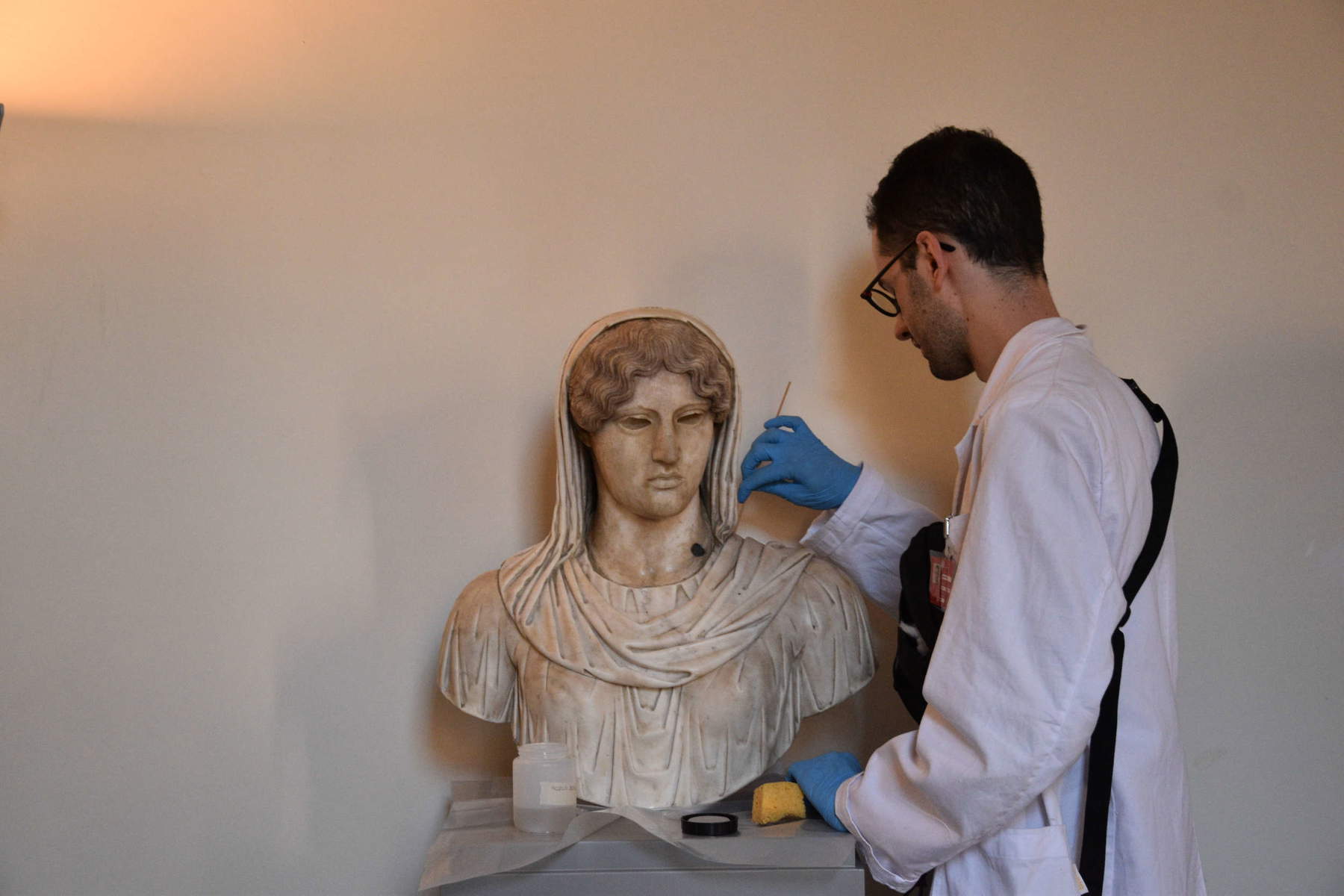
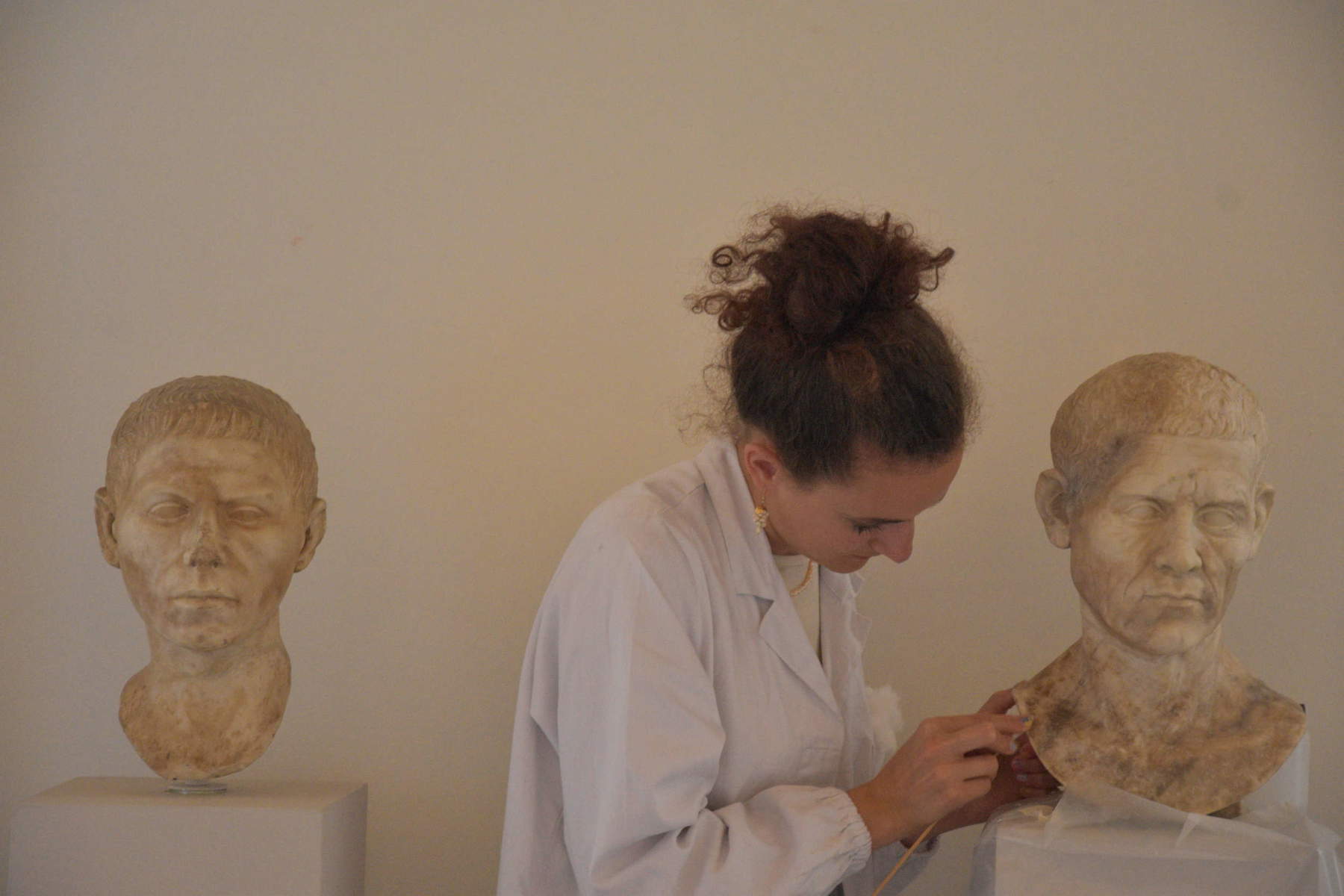
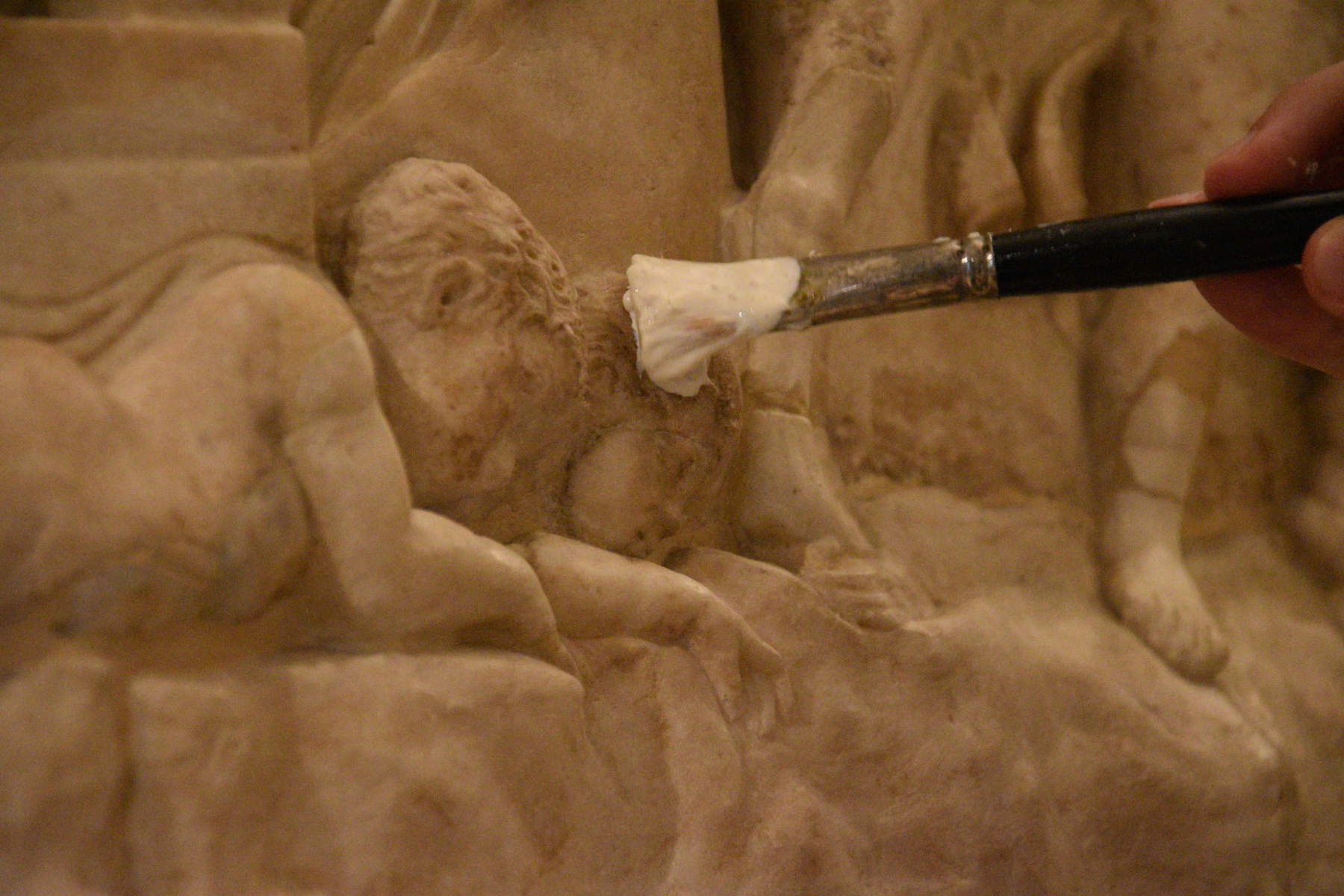
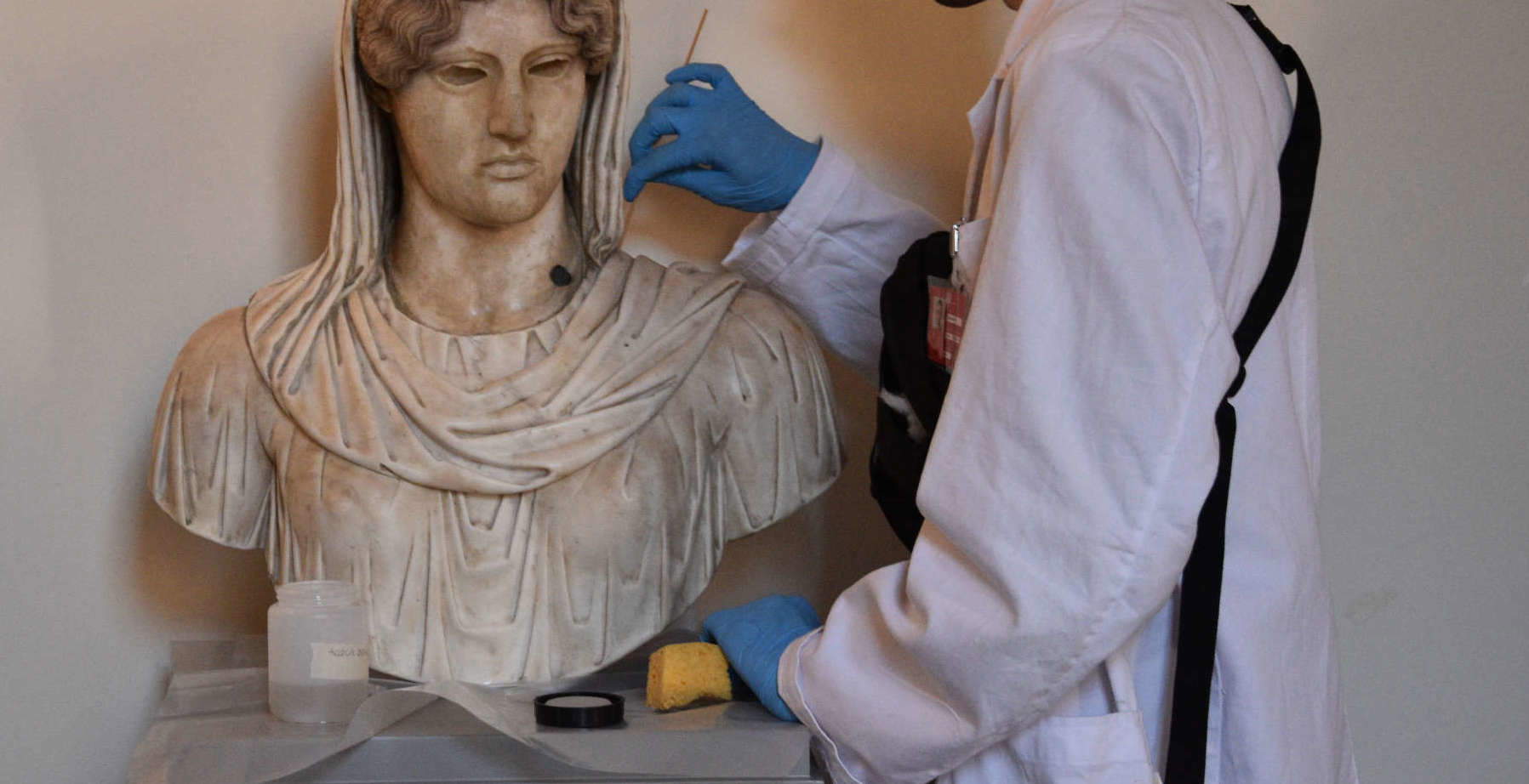
One of the project’s most significant features is the decision to carry out conservation work directly in the galleries open to visitors and during the museum’s regular hours of operation. Restoration is therefore not hidden behind the scenes but becomes an integral part of the visitor experience, allowing museum-goers to observe the work in progress and gain an understanding of the complex efforts involved in preserving our archaeological heritage. At the heart of the initiative are fifteen restoration technology students, engaged in the study and maintenance of twenty-seven Greek and Roman sculptures selected based on their state of preservation and their historical and artistic value within the collections of the National Archaeological Museum of Venice.
The works belong to one of Europe’s oldest public collections, established through the transfer of important Venetian private collections to the public. The museum’s original core collection dates back to a donation made in the 16th century by Domenico and Giovanni Grimani to the Most Serene Republic of Venice, to which were later added bequests from numerous families of the Venetian patriciate. The artifacts involved in the project come mainly from Rome, but also include works originating from Greece,Egypt, and the Near East. These artifacts bear witness to the richness of Venetian collecting and the central role the museum has played in the preservation of ancient art since its founding.
Among the works undergoing restoration are important examples of ancient statuary. One such example isthe Hekateion, dated to the late 1st century BCE, dedicated to the goddess Hecate and characterized by the presence of caryatids surrounding the deity. Also particularly significant is the restorationof the Aphrodite Sosandra of Calamides, a 2nd-century CE copy, on which cleaning operations are revealing probable traces of pigmentation preserved in the statue’s hair. This finding could help enrich our understanding of the polychromy of ancient sculpture, a topic that has long been at the center of international archaeological research.
Much of the project also focuses on Roman portraiture. Restoration work is being carried out on numerous portraits of young people, women, and the elderly; through the controlled removal of deposits that have accumulated over the centuries, these works are gradually regaining the expressive power typical of Roman realism. The conservation work is also providing an opportunity to identify traces of restorations carried out in earlier periods, thereby allowing scholars not only to deepen their understanding of the original works but also to reconstruct the history of their conservation and the various approaches adopted over the centuries.
Among the most interesting cases is the portrait of the young Marcus Aurelius. For a long time, the work was believed to be a 16th-century creation, perhaps attributable to the sculptor Simone Bianco, conceived as an imitation of the ancient original. More recent studies, however, have demonstrated the artifact’s true antiquity, dating its creation to around the middle of the 2nd century A.D. Restoration now serves as an additional tool for scientific investigation. The study of the limestone residues still present on the statue’s surface may, in fact, provide new evidence to refine its dating and shed further light on the artifact’s material history.
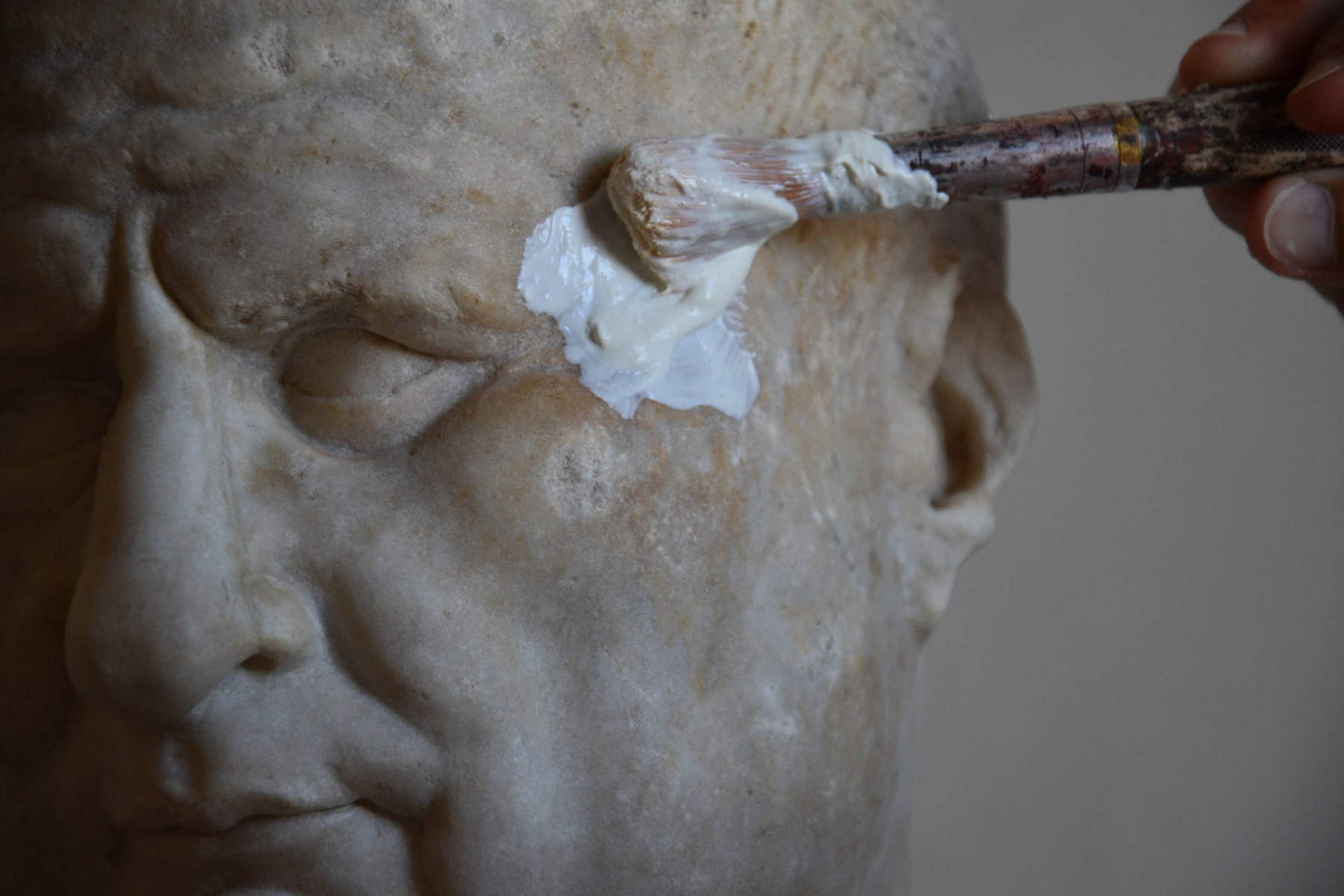
Also of particular significance is the ongoing work on the so-called “Foot of a Colossal Statue,” dating to the 4th century AD. This monumental fragment became part of Venice’s Public Sculpture Collection in 1795 thanks to a bequest by Girolamo Zulian and constitutes a rare example of Roman acroliths—large statues whose bodies were made of wood while the heads, hands, and feet were carved from marble or stone. The research conducted by the students in conjunction with the restoration could also help confirm a hypothesis of particular historical interest. Scholars are, in fact, investigating the possibility that the fragment was restored in the 18th century by Antonio Canova, who may have personally worked on the piece during his career as both a restorer and a sculptor.
The project thus offers a comprehensive overview of the history of the collections at the National Archaeological Museum of Venice, linking the history of collecting with the evolution of conservation techniques. For many of the works involved, this marks the first true conservative maintenance intervention carried out since their entry into public collections. In other cases, however, the surfaces still bear traces of historical restorations, allowing for the reconstruction of the evolution of the methodologies adopted over the centuries. An analysis of the sculptures highlights the transition from the grand Renaissance “in style” completions—often entrusted to artists such as Tiziano Aspetti and Alessandro Vittoria—to contemporary restoration approaches, based on the principle that interventions must be recognizable and distinguishable from the original work.
The conservation work planned as part of the project consists primarily of controlled cleaning of the stone surfaces, aimed both at limiting deterioration and at deepening our understanding of the material history of the artifacts. Among the most innovative aspects of the project is the use of the Arte Mundit methodology, developed by the National Museum of Denmark in Copenhagen. The system employs a special carrier with chelating properties capable of selectively encapsulating and reducing the most substantial surface deposits. The adoption of this technology significantly reduces the use of solvents, ensuring thorough cleaning without altering the nature of the stone material and while respecting its historical and conservation characteristics.
The project thus emphasizes an approach to restoration that does not view deposits, alterations, and traces of time solely as elements to be removed, but also as sources of valuable information about the history of the works and collections. Maintenance activities thus become a journey of discovery in which each intervention contributes to enriching our understanding of the artifacts, providing new insights into both their origins and the conservation history that has shaped them over the centuries.
 |
| At the Archaeological Museum of Venice, restoration becomes an experience open to the public |

Warning: the translation into English of the original Italian article was created using automatic tools. We undertake to review all articles, but we do not guarantee the total absence of inaccuracies in the translation due to the program. You can find the original by clicking on the ITA button. If you find any mistake,please contact us.
























 IT
IT FR
FR DE
DE ES
ES CN
CN


