





One hundred cast-iron male figures facing the sea horizon, scattered across two miles of a beach in Merseyside (Another Place, 1997, Crosby Beach, Liverpool). Solitary figures—like the previous works, replicas of the artist’s own body—perched atop prominent buildings along London’s South Bank (Event Horizon, 2007, a traveling installation; one of them appeared in 2008 at the beginning of the first episode of the British television series Ashes to Ashes). A crowd composed of thousands of small anthropomorphic terracotta figures saturating the floor of a room (Field, 1991–2003, various international venues), barely contained by the perimeter walls, in which the idea of a sculpture capable of taking over the architectural space in which it exists explodes, refusing to be a single object, thrown before (ob-iectum) the gaze, according to Heideggerian etymology. These are some of the most iconic works by Antony Gormley (London, 1950), who was awarded the Turner Prize in 1994 precisely for *Field for the British Isles* (1993), a manifesto of sculpture grounded in a radical exploration of the relationship between the human body and space. With compelling consistency, over the course of more than four decades, the artist has explored the body as a habitat of space and architecture as the primary shaping force of our individual and collective experience. The common thread running through the various expressive registers he employs—ranging from the figurative, such as human casts, to a modular abstraction that draws equally on both fullness and emptiness—is the fact that all his sculptures, regardless of their appearance, can be traced back to a predefined set of fundamental positions of the human body, which he has synthesized to be reimagined in an infinite number of different configurations.
Gormley does not make sculptures: he constructs situations in which the human body measures the world, following the principle that to be alive means to perceive oneself as a cell within an infinite cosmos, which in turn harbors a vertigo of infinities. Sculpture, therefore, is both an anatomical analysis of reality and, at the same time, an infinite body that breathes in space. It is no small feat to entrust to a discipline usually associated with impressions of weight and limited bulk the task of materializing the infinite—which, by definition, is manifold and immeasurable. And then, there is the challenge of taking up the mantle of the minimalist language at a time when it was at its zenith, embracing its seriality, its preference for industrial materials, and the idea of the artwork as a perceptual activation of space. But, at the same time, to subvert its founding principles—first and foremost, the radical evacuation of the subject from the work carried out by the masters of historical Minimalism, from Andre to Judd to LeWitt—in favor of a form that refers to nothing external to itself, refractory to autobiography and intimacy, anti-expressive by principle. Gormley, on the contrary, employs those same formal and spatial tools to restore centrality to the phenomenological subject with the aim of investigating the enigma of the spiritual and ethical dimension inherent in its pervasive osmosis with a world that transcends the boundaries of the human. All these ideas take on a striking concreteness when visiting *What Holds Us*, the new exhibition that Galleria Continua is dedicating to the British artist at its historic location in San Gimignano: if you arrive by train, at the Poggibonsi station, be sure to look down the platform of the outermost track, where the sculpture *Fai Spazio, Prendi Posto* (*Making Space, Taking Place*), 2004, blends in with the comings and goings of travelers.
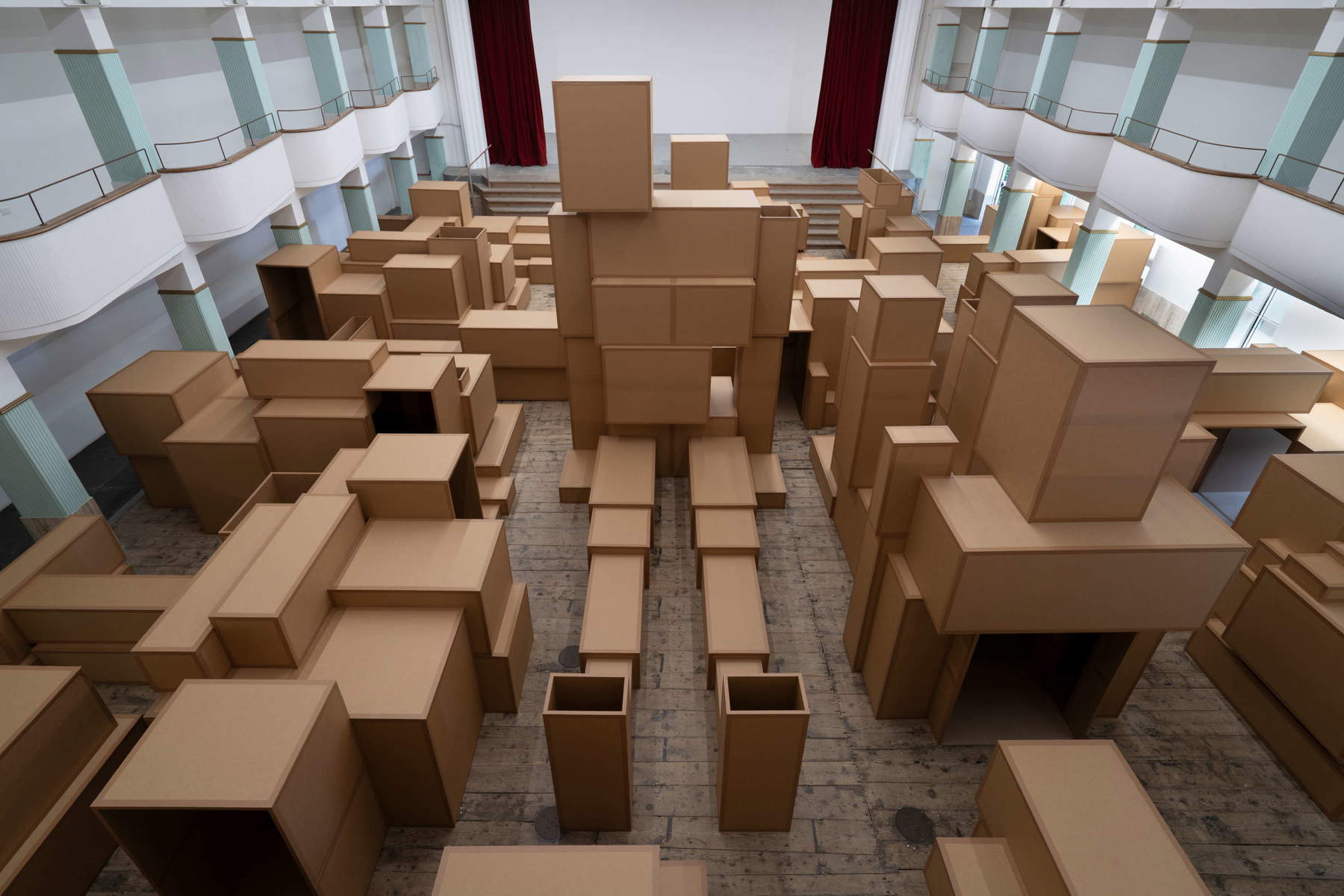
At the heart of this new exhibition project is the environmental installation *Innercity* (2026), composed of fifteen gigantic anthropomorphic buildings constructed from modular cardboard parallelepipeds that occupy the entire auditorium space of the former 1950s movie theater that now houses the gallery. Entering through the side entrances, the first impression is that of facing walls that are difficult to navigate around, unsettling due to their uniform color (the natural light brown of packing cardboard) and the unexpected solidity felt upon touching them, which contrasts with their precarious and “poor-art” appearance. Then, quite naturally, you find your way (in reality, there are many entry points, as you discover on your second tour) and venture into what seems like an urban labyrinth of an unspecified era, where you would surely get lost if each composition of modules towered over you. But here, everything is on a scale so mysteriously familiar that the initial sense of disorientation turns into confidence and curiosity, prompting us to explore every branch of the main path—assuming there even is one. Passing through narrow passages, open spaces, and sharp turns, you reach the opposite side of this urban configuration and can climb onto the stage of the old Cinema Teatro Nuovo to observe it from an elevated perspective. The topography becomes easier to read, and along with it, it also becomes clear that all the modules comprising the installation—which at first glance evoke a sense of solidity—are in fact hollow and dotted, especially in the lower section, with openings that from a distance appear as dark conduits.
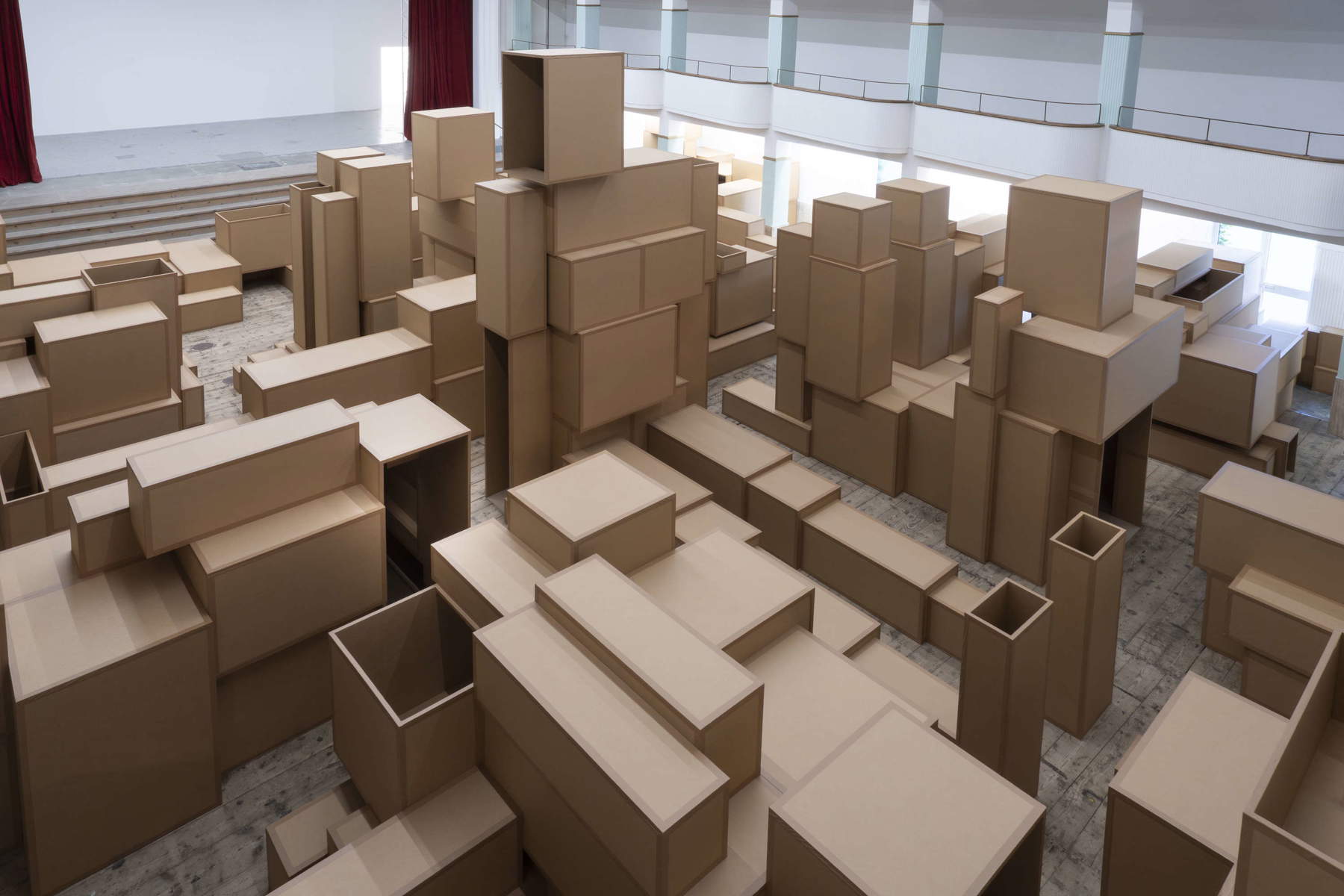
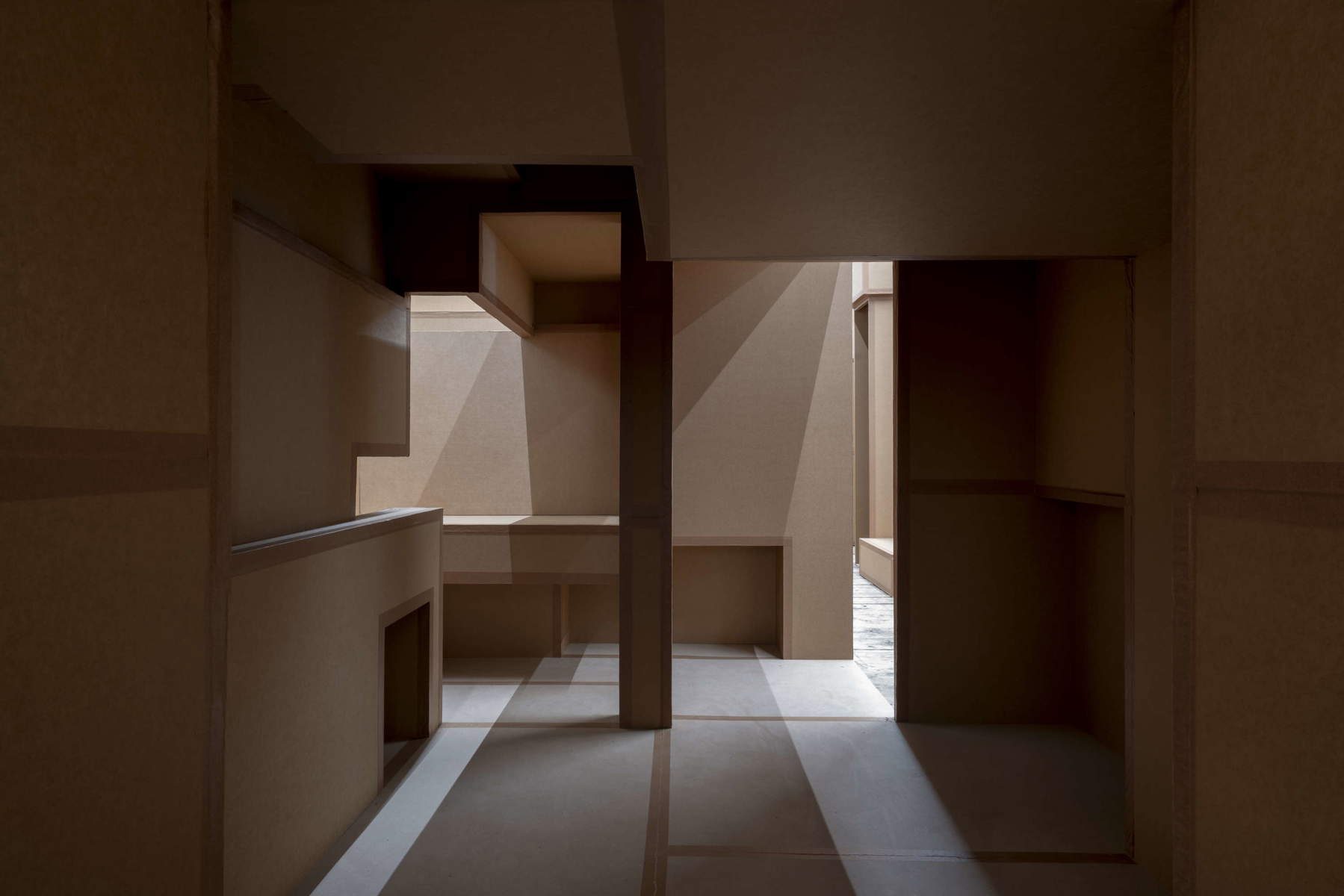
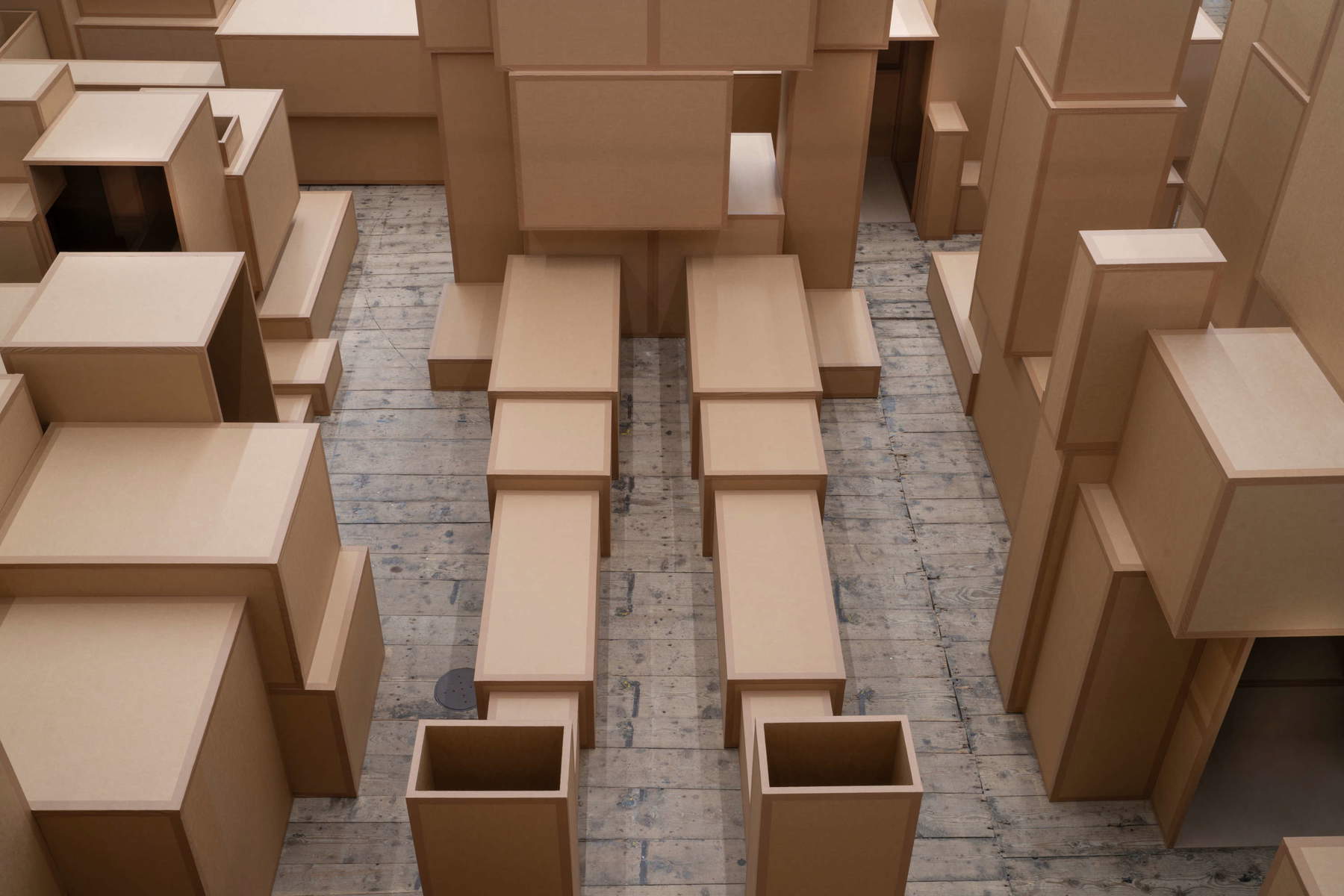
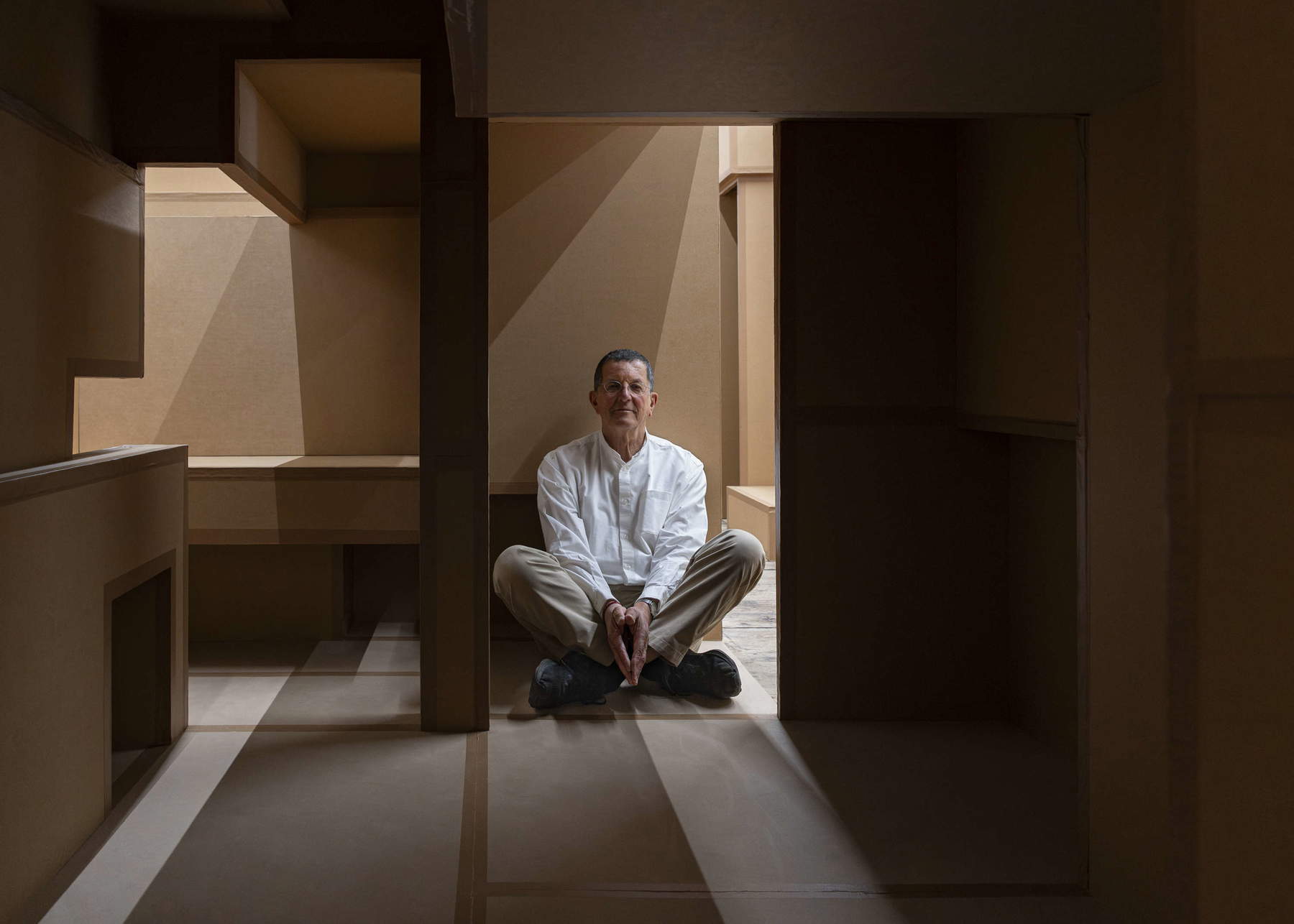
So let’s step back into the cardboard city to explore its structure from the inside as well, physically probing every opening (some will always elude us) and following the cavities it reveals through the postures of our bodies—at times bent, crouched, curled up, or even lying down postures of our bodies. We pass through dimly lit openings, tunnels that sometimes block our path (a smaller being, however, might continue), but direct our gaze toward unexpected ground-level windows. Some face outward, framing a portion of the architectural landscape as a sculptural composition; others, however, face toward yet another interior, in the labyrinthine depths of which the darkness prevents our gaze from penetrating further, but where we are now certain other subsections of a space with ceaseless potential for expansion reside, in both the micro and macro dimensions.
The ambiguous sensation of welcome and tension experienced while hiding in the depths of this large sculptural body reawakens in the visitor a foundational experience for the artist’s poetics, a childhood memory he himself has recalled as the wellspring of his approach to sculpture, which the environmental work installed in San Gimignano reproduces with extreme sensory fidelity. It refers to his parents’ habit of forcing him to rest every afternoon in a very bright room, where he would lie down with his eyes closed: in the half-awake state of a child reluctant to be forced to stop playing, that space—initially perceived as claustrophobic, hot, and “red” due to the light filtering through his eyelids—expanded in his perception until it grew darker and cooler. This embryonic sensitivity to the living, ever-changing nature of space connects directly to the artist’s characteristic conception of his installation works as integrated environments designed to generate physical and psychological experiences in which the individual is at one with the environment that hosts him.
One final perspective is now necessary to fully grasp the rationale behind the work (though not to exhaust the suggested spatial variations, which remain elusive to an exact numerical assessment). Climbing onto the balcony located on the opposite side of the former cinema’s stage to observe *Innercity* from above, everything becomes crystal clear: at the center of the composition, a giant is clearly visible, seated with his legs stretched out before him, surrounded by the other corporeal buildings which, starting with that one, are gradually perceived by the eye as such. Delicate, spatially porous, filled with emptiness as much as with substance (even in the empty spaces, in fact, we could distinguish just as many bodies in negative form), these sculptural organisms—created as regular increments of the same matrix cell—highlight the consequences of the other foundational experience from which Gormley’s poetics draws its inspiration: his youthful journey to the Himalayas, where he was initiated into Vipaśyanā meditation practices connected to breathing. From these practices, the artist draws the idea of transmuting the anatomical body into a mutable aggregate of cells interconnected by interstices through which space and matter circulate between the interior and exterior, keeping them alive and in communication with one another. And it is precisely in this breath—which erases the boundary between the individual sculpture, the space that houses it, and the human beings who pass through it—that the essence of his art lies: namely, the proposal of a sculpture to be inhabited as a space for meditation, accepting the invitation to become aware of the body as a receptive vessel for infinite other spaces and bodies.
If these reflections dissolve the division between us and things, envisioning a human being connected to, immersed in, traversed by, and substantiated by space, it is inevitable to extend them to the architectural dimension, understood as a second body—as the protective skin of a being without fur—and, for Gormley, as an urban-scale replica of his own proportions. And from here, in an escalation analogous to that which leads the artist to construct multiple organisms by systematizing a repeated human module, arises the temptation to test this configuration by applying it to realms seemingly unrelated to human presence—such as the pixel-based architectures of digital images or the automated warehouses of e-commerce, evoked here by packing cartons—to discover their structural affinities. And so we ask ourselves: if architecture can be “music materialized in space”—as Gormley hints at with his minimalist reintroduction of the body—could perhaps even the sterile non-places that constitute the new infrastructure of our contemporary world be redesigned according to the same organizing principle? And in this way, integrate into the “whole” with which they now contend for space without belonging to it, returning to inhabit the same scale on which the human body moves and thus ceasing to loom over us as architectures of a disproportion that does not belong to us?
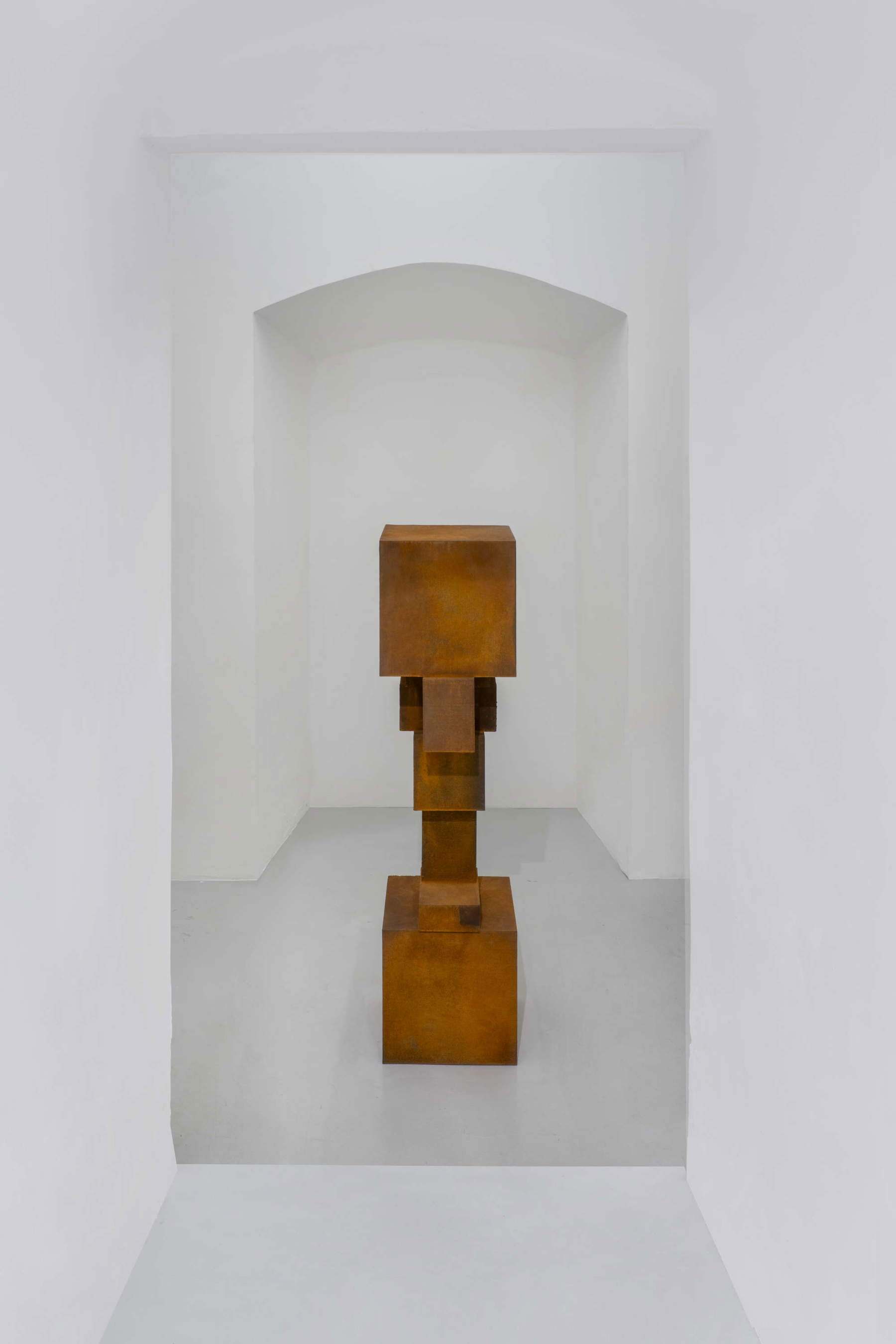
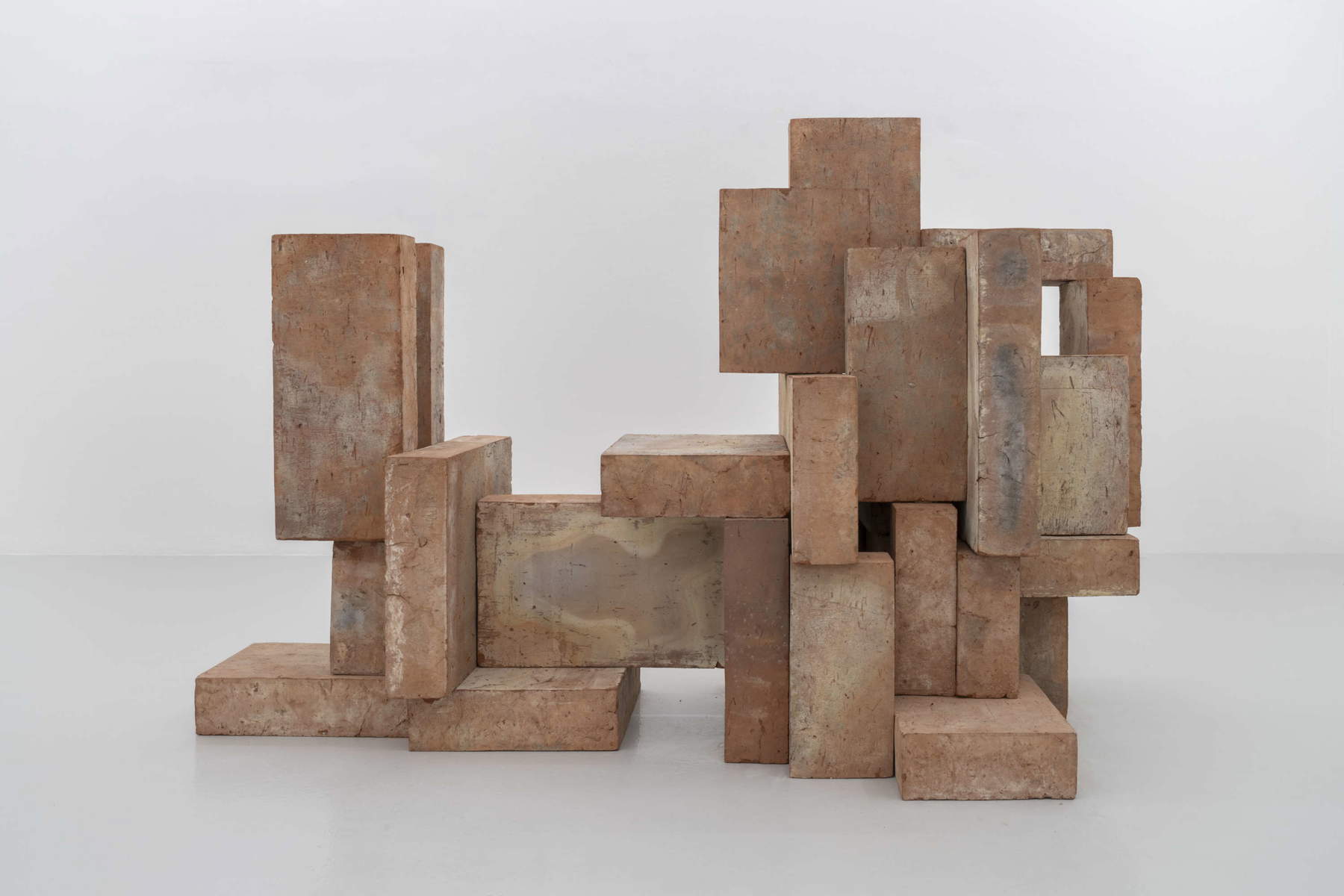
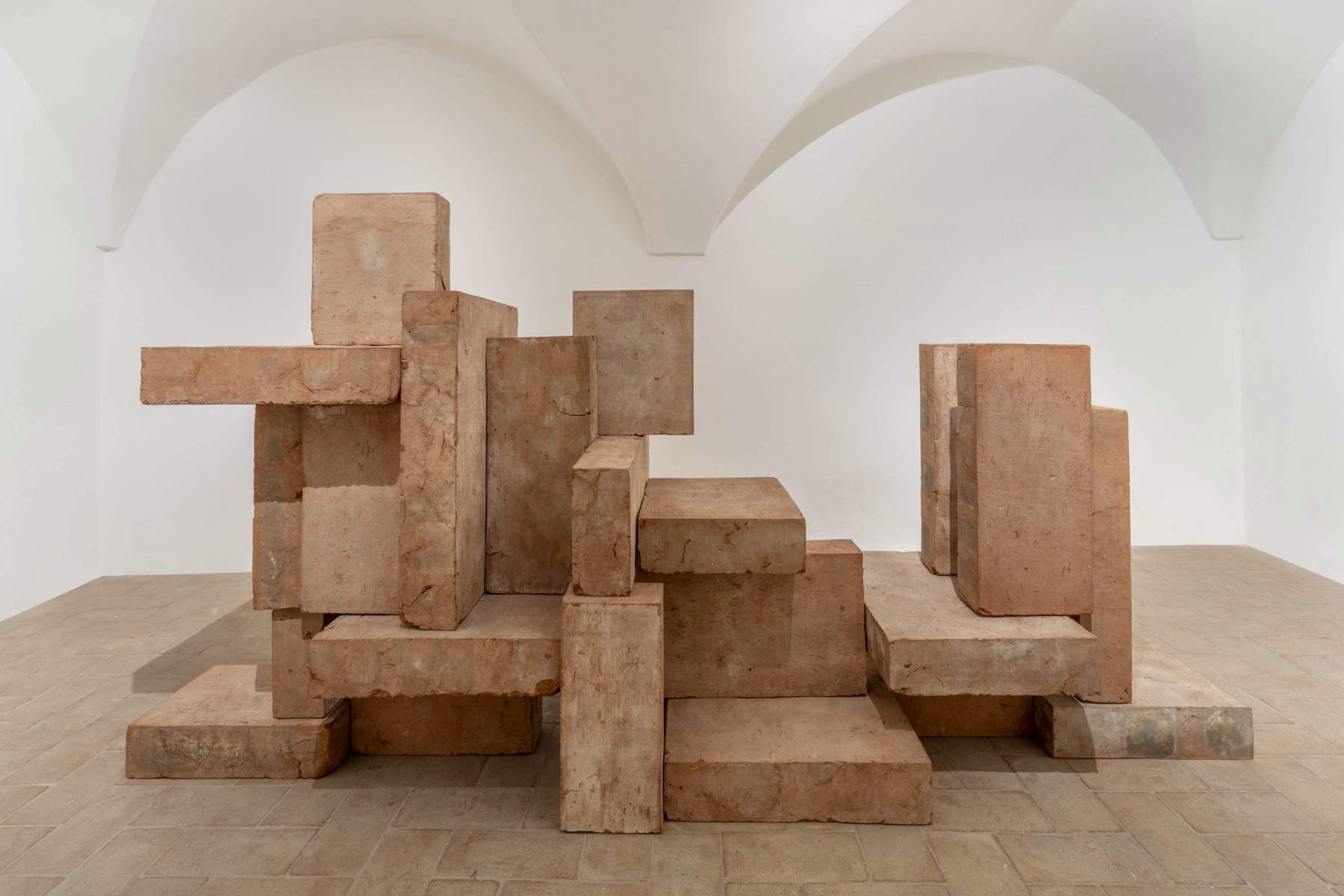
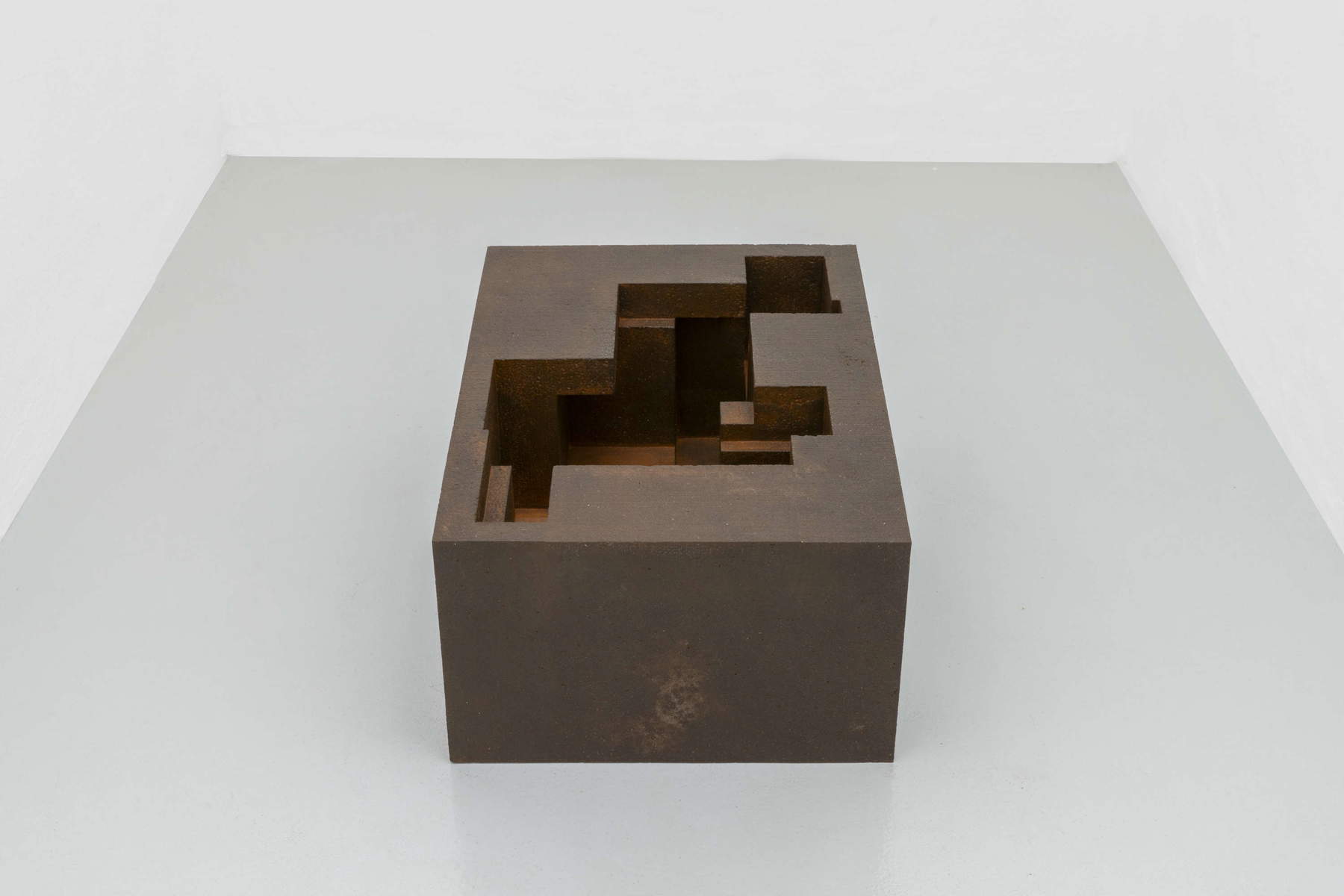
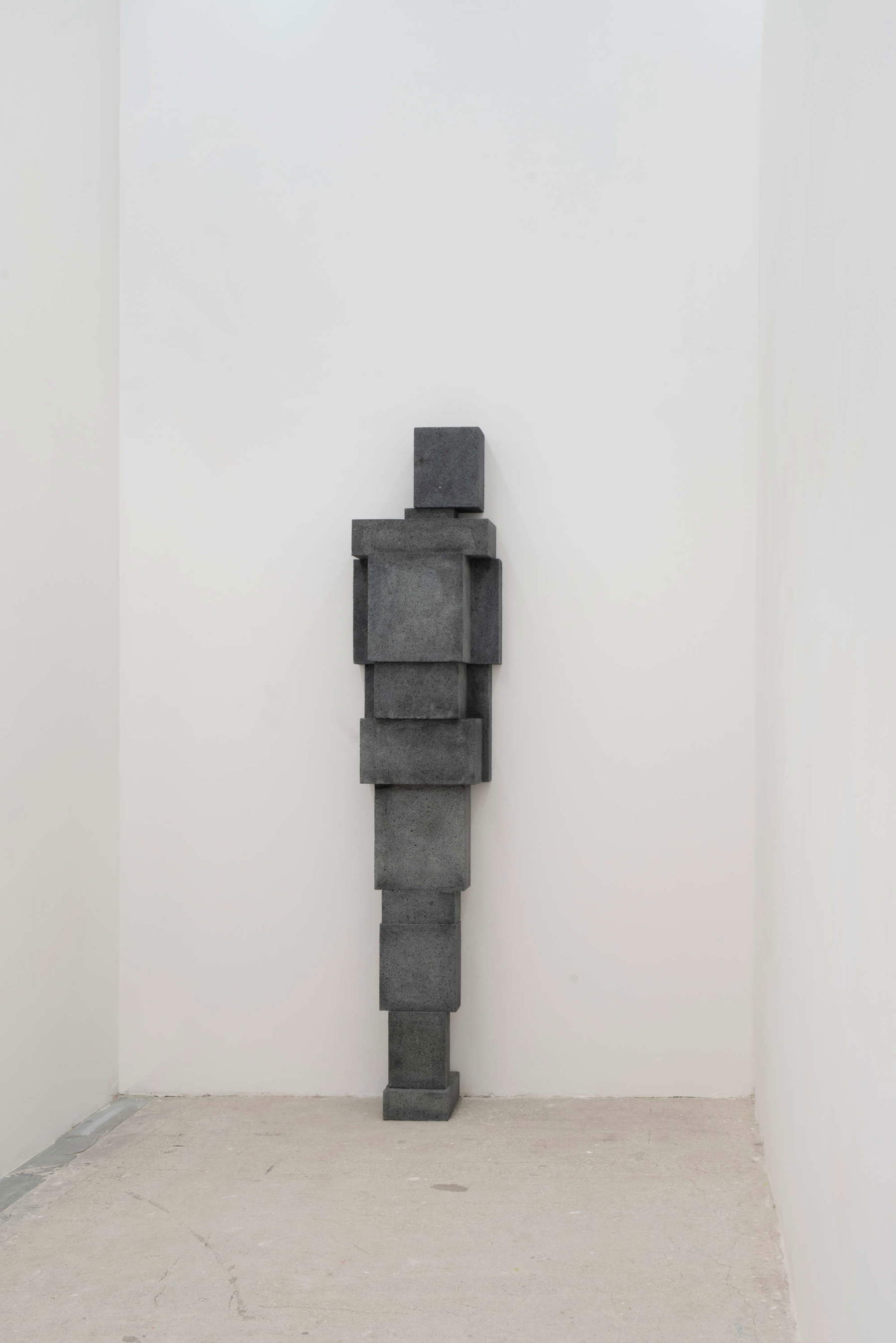
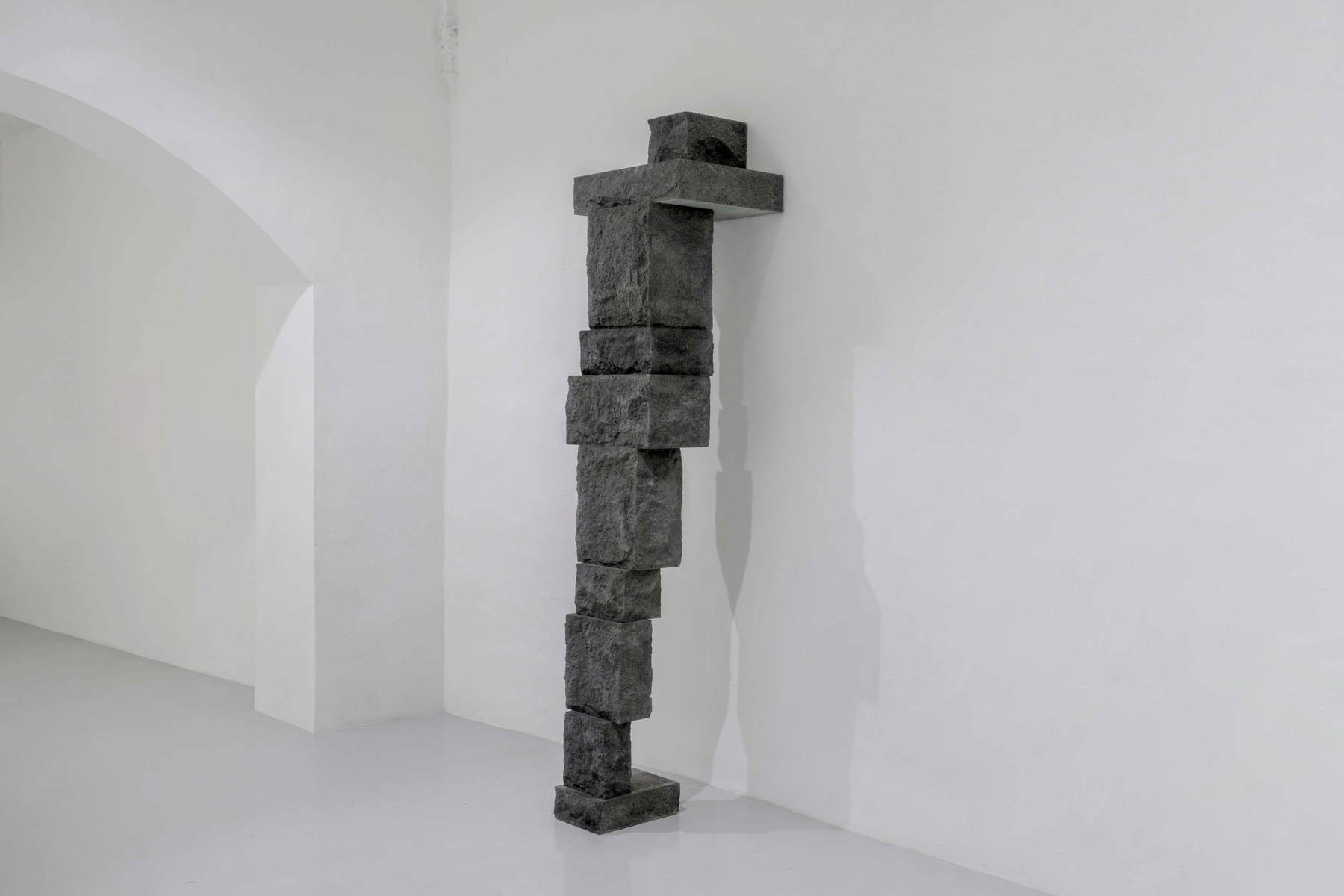
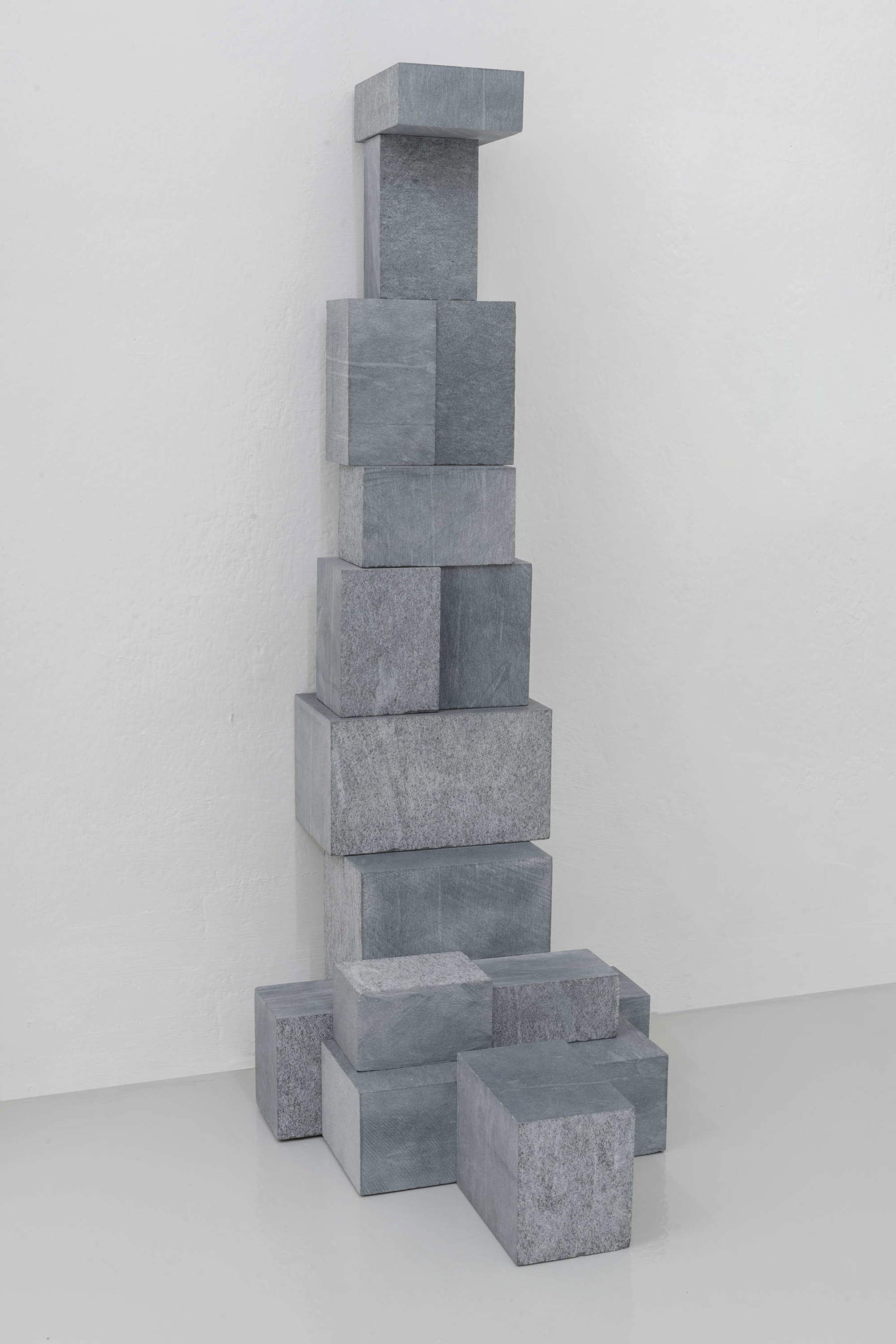
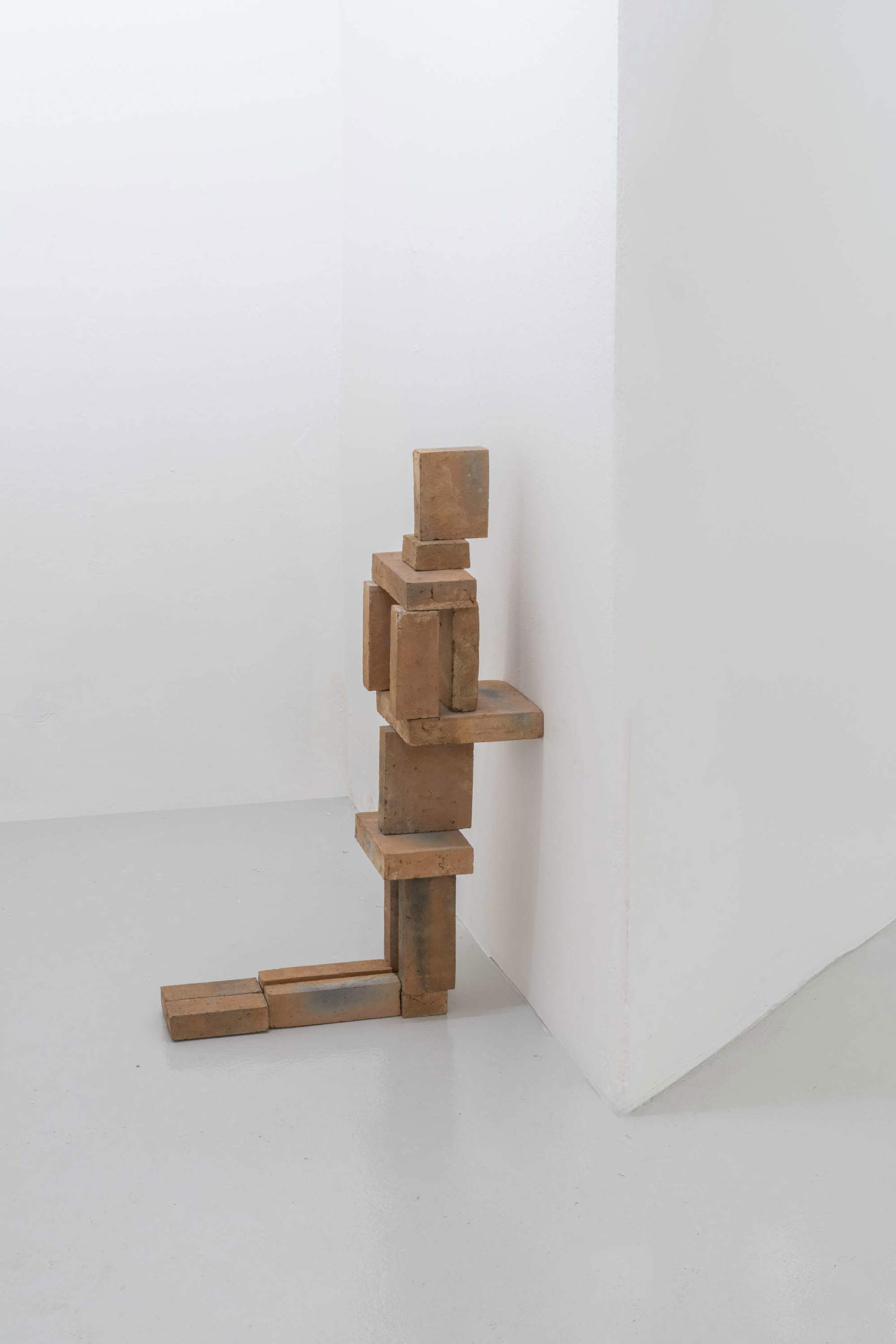
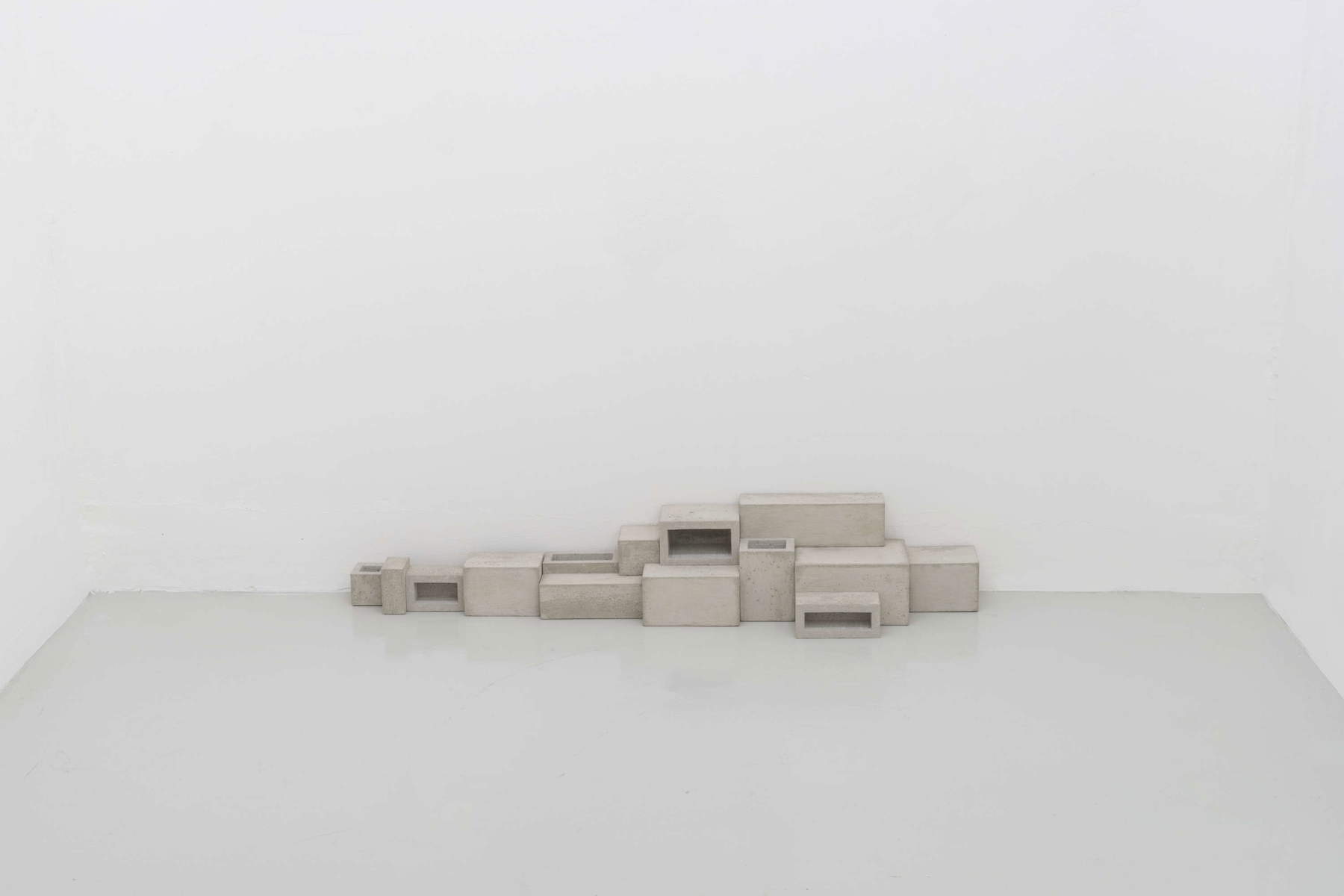
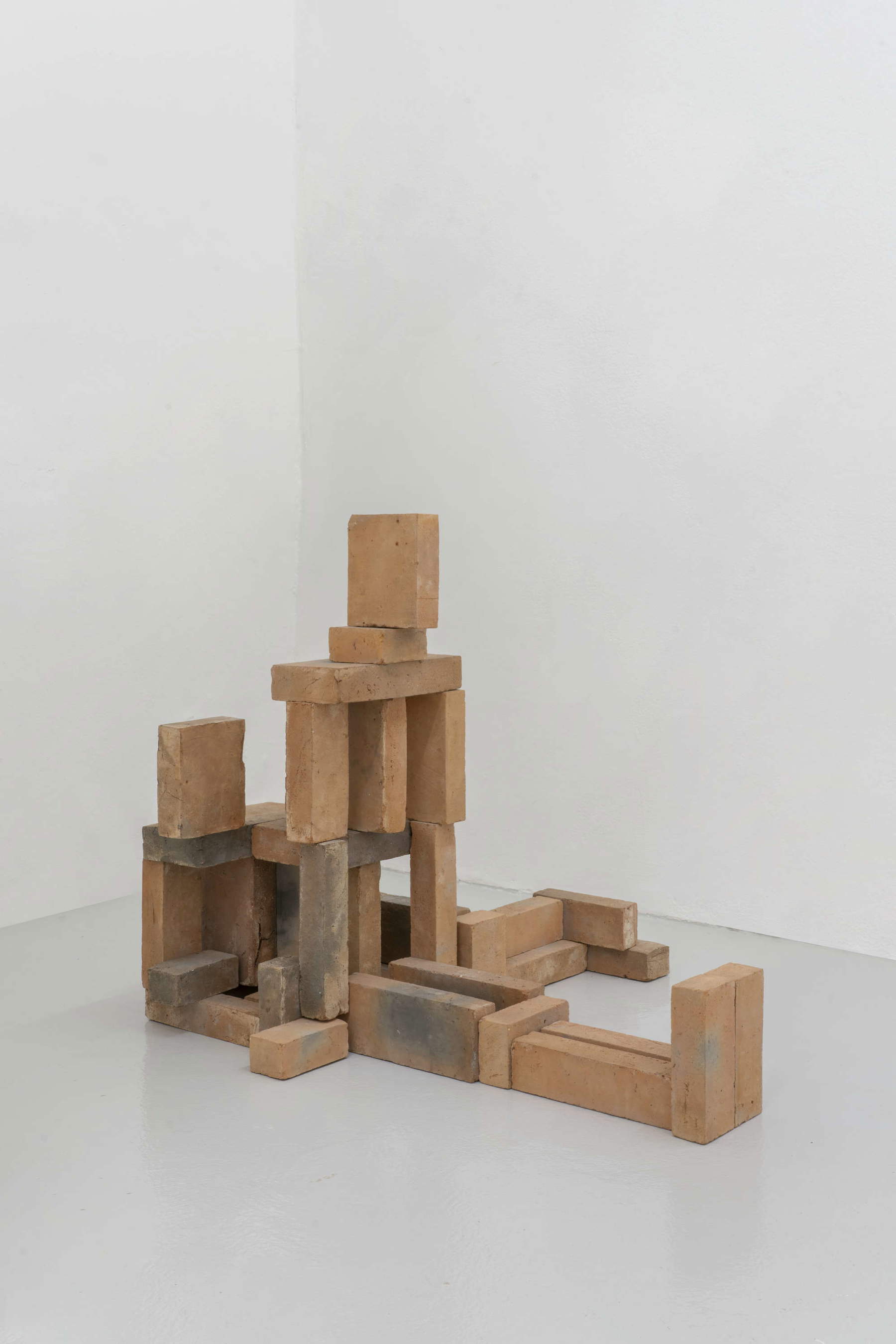
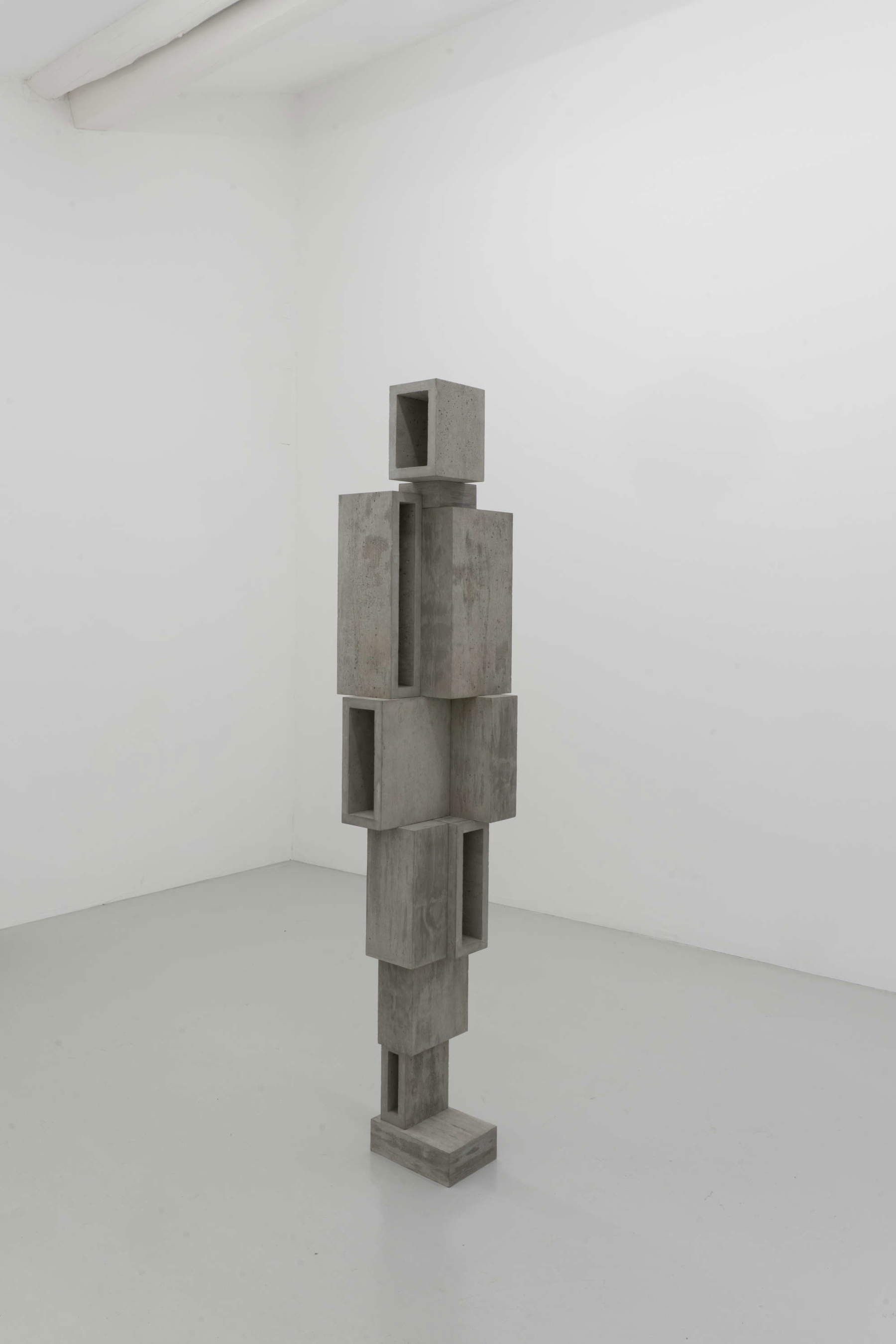
Speaking of Gormley, one might refer to “humanist post-minimalism”—an apparent contradiction in terms that encapsulates the dual path (conceptual and expressive) pursued by the British artist as a matter of faith. The same sense of tenderness that pervades us when we recognize the fragile central giant from above is, in fact, reflected in all the sculptures that follow along the exhibition route, scattered throughout the other rooms of the gallery—which now spontaneously come to be seen as displaced emanations of the inner cavities of the main installation. Whether made of clay, sandstone, basalt, concrete, or cast iron—whether fixed in their individual components or in temporary juxtapositions— these modular anthropomorphic sculptures resonate immediately with our existential fragilities, dissolving the rigidity of minimalist intransigence to present themselves as archetypal emotional configurations. In the isolated bodily postures that Gormley uses as the foundation of his sculptural vocabulary, the theoretical aspect of interpreting and manipulating (ever-infinite) space on a human scale is inseparable from the desire to bridge the distance between the observing subject and the body objectified by the gaze, to the point of achieving a higher spiritual unity. Rather than as positions intended to measure, therefore, his sculptures—curled up in a fetal position, leaning against a wall, kneeling, or nearly disjointed in structure—lay bare themselves as fundamental human attitudes, uncertain in their surrender to space and appealing to the empathy of those who encounter them.
These postures are chosen for their universality: they are the gestures with which the body responds to gravity, cold, fatigue, and loss; everyone recognizes them, having adopted them themselves. “What Holds Us,” the question evoked by the title of this exhibition, precisely encapsulates the ambition of Gormley’s work: to demonstrate through sculpture that space is not the absence of matter, but the living, particulate substance of which we are made. Leaving the Continua gallery, still carrying the sensation of having lost and then found ourselves within something greater that resembles us, one has the impression of carrying with oneself—imprinted in the experience—a different sensibility in perceiving the possibility of relating to the world.

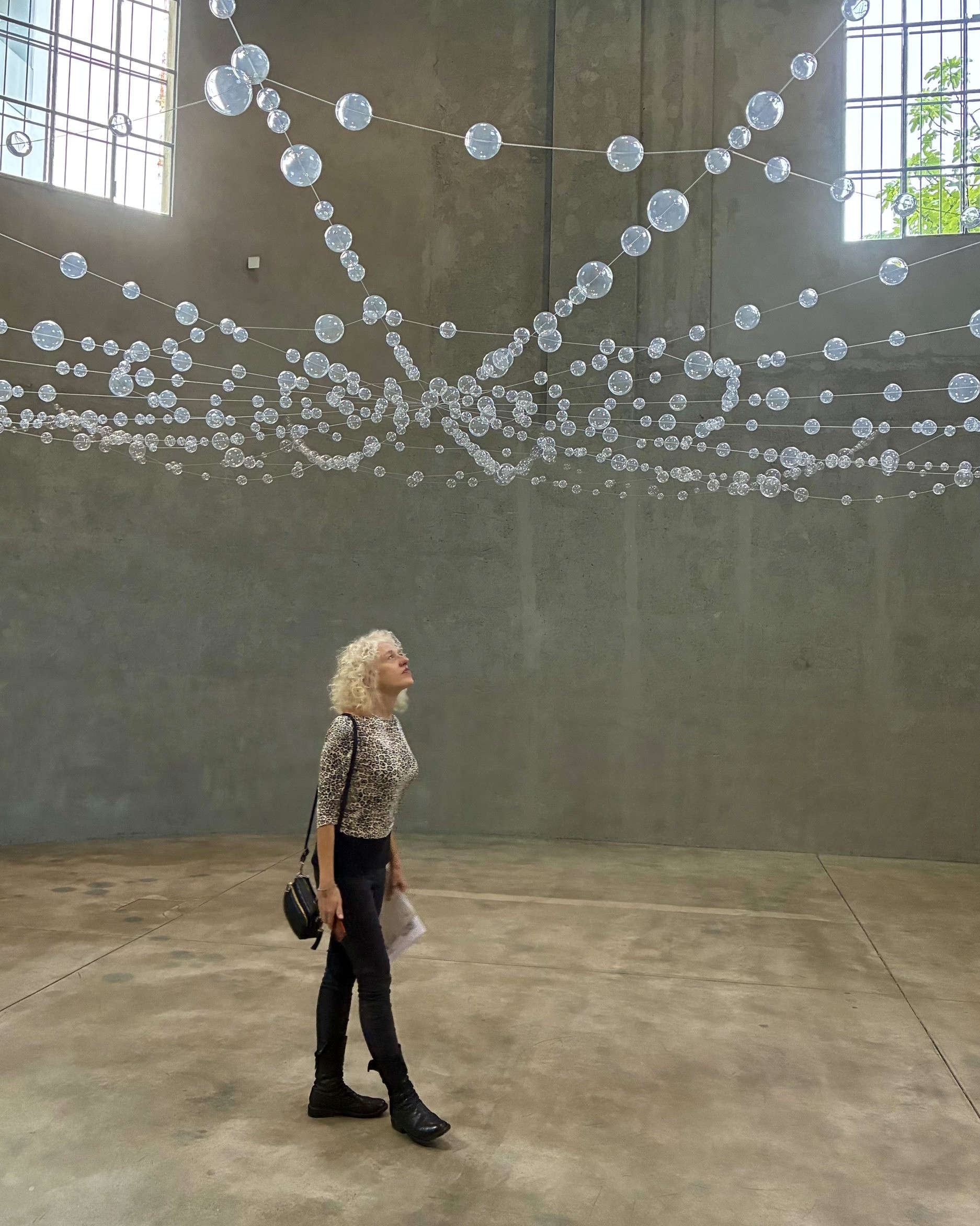
The author of this article: Emanuela Zanon
Laureata in Discipline dell’Arte, della Musica e dello Spettacolo all’Università di Bologna, città dove ha continuato a vivere, si è specializzata in Beni Storico Artistici all’Università di Siena. Curiosa e attenta al divenire della contemporaneità, crede nel potere dell’arte di rendere più interessante la vita. È direttrice editoriale di Juliet Art Magazine online.Warning: the translation into English of the original Italian article was created using automatic tools. We undertake to review all articles, but we do not guarantee the total absence of inaccuracies in the translation due to the program. You can find the original by clicking on the ITA button. If you find any mistake,please contact us.




























 IT
IT FR
FR DE
DE ES
ES CN
CN


