





From June 19 to September 27, 2026,the Imago Museum in Pescara will host the temporary exhibition *The Face of the Invisible. Manoppello and the Mystery of the True Icon, organized by the Pescarabruzzo Foundation and curated by art historian Marco Bussagli, in collaboration with scholars from various academic disciplines. The exhibition focuses on one of the most complex themes in the Christian tradition: the search for the face of Christ and the history of the Holy Face of Manoppello, preserved in the Capuchin sanctuary in Abruzzo and the object of devotion and study for centuries.
The exhibition offers an interpretation that weaves together art history, theology, devotion, and scientific research. At the heart of the investigation is the so-called “True Icon,” along with the tradition of the Veronica and the development of images of Christ’s face in European culture from the Middle Ages to the modern era. The project stems from a research initiative that involved art historians, archivists, physicists, and specialists in diagnostic technologies applied to cultural heritage.
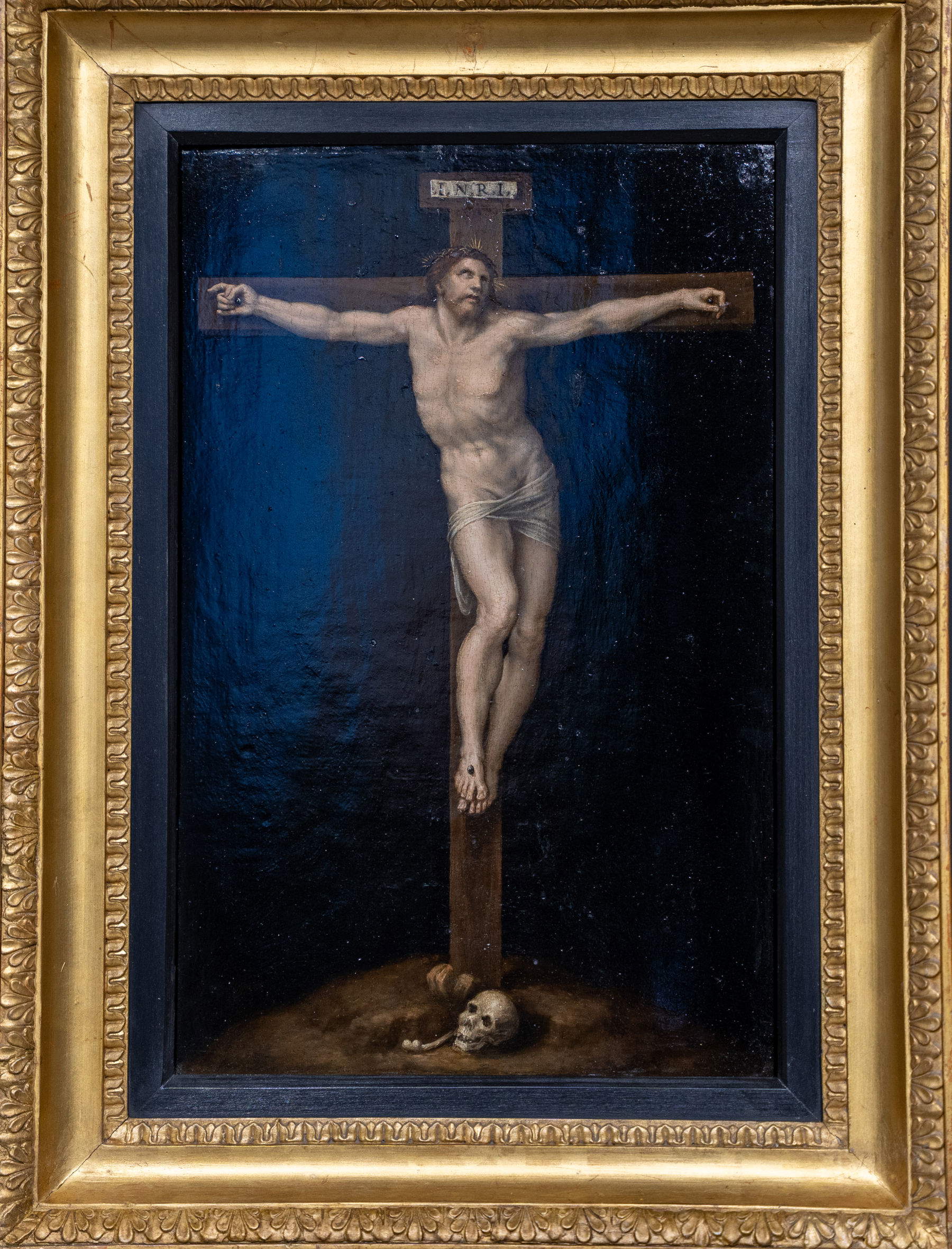
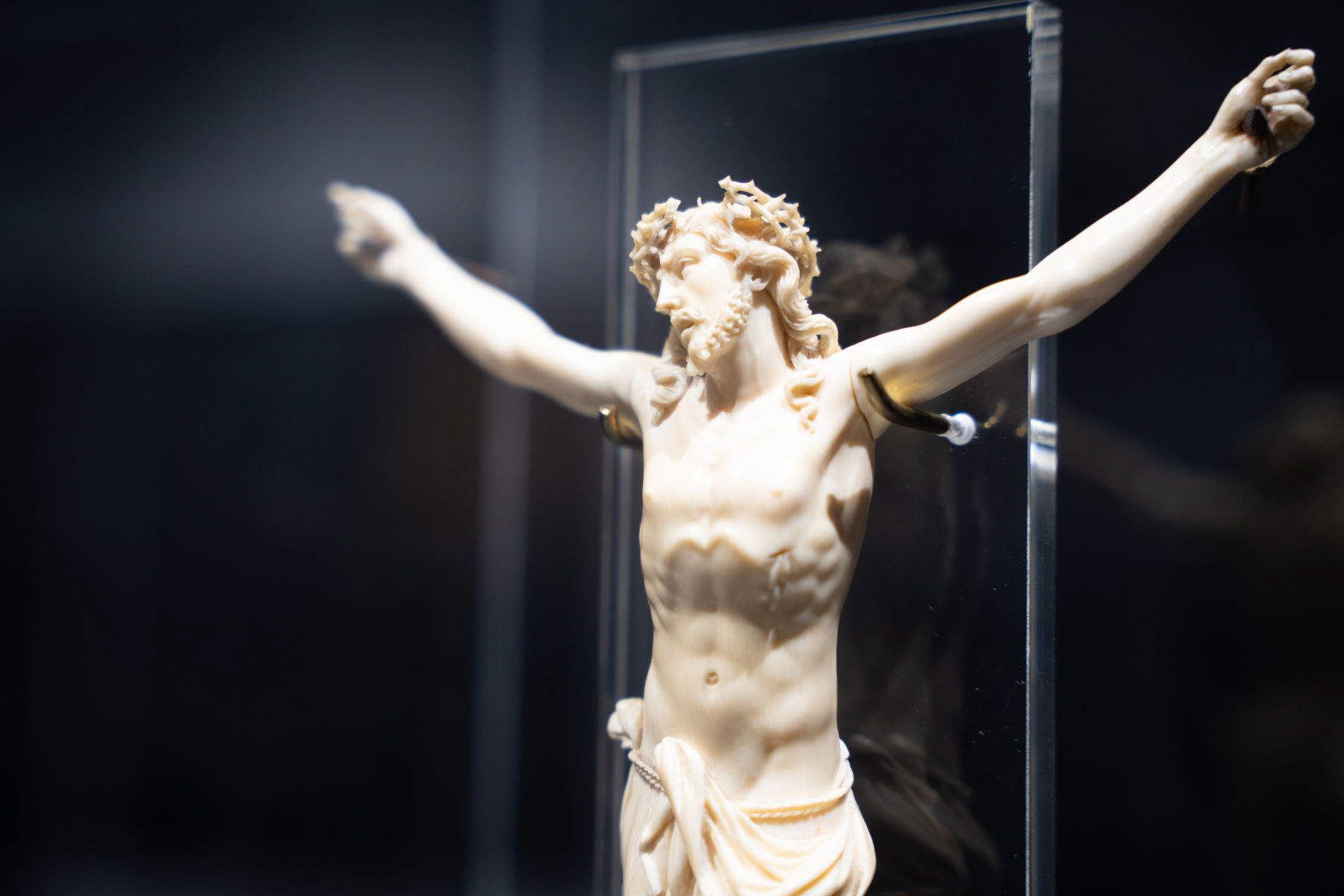
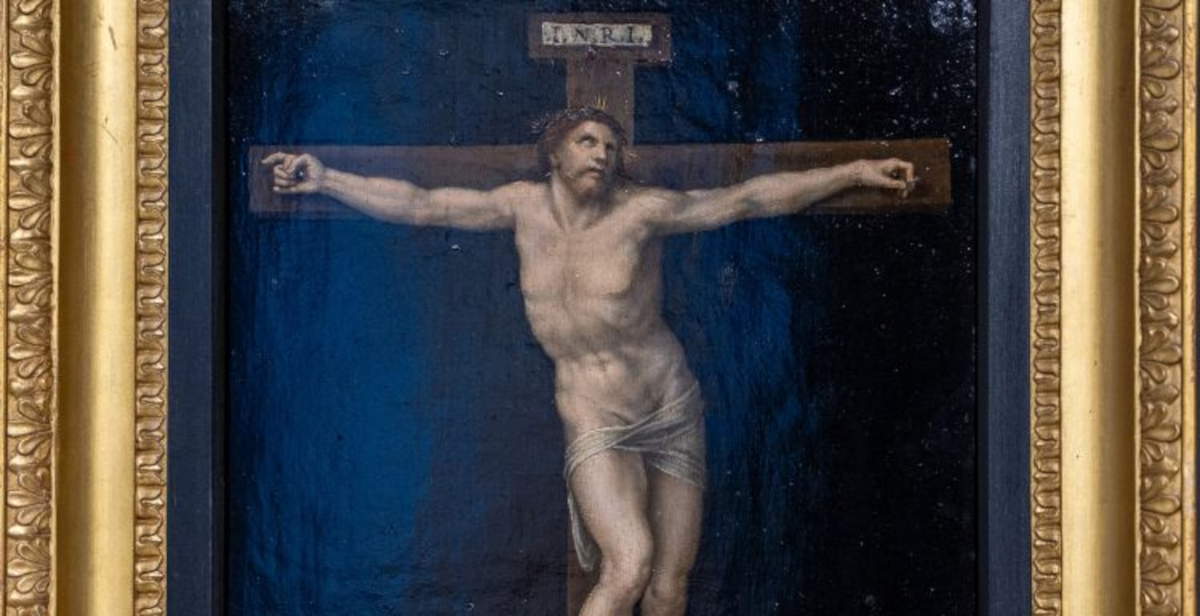
The exhibition features historical documents, manuscripts, paintings, sculptures, and works from public institutions and private collections. Among the materials is the 17th-century manuscript *Relatione historica d’una miracolosa immagine del volto di Christo* by Father Donato da Bomba, considered a significant source for reconstructing the history of the relic. The exhibition also includes works that document the iconographic evolution of the Veronica and depictions of the face of Christ between the 15th and 17th centuries. One of the central focal points of the exhibition is the Crucified Christ attributed to Michelangelo Buonarroti, attributed to the artist in 1964 by Deoclecio Redig de Campos, then director of the Vatican Museums, and housed at the Accademia Carrara in Bergamo. The work is interpreted as a testament to Michelangelo’s reflection on the Passion and occupies a central position in the exhibition.
Alongside the artistic heritage, the exhibition explores the relationship between science and faith. The catalog, currently in press and scheduled for a launch event, brings together up-to-date contributions on research related to the Holy Face. These include a contribution by Veronika Seifert, a Church historian and archivist, dedicated to the major Christian relics, and studies by physicist Paolo Di Lazzaro, a former research director at ENEA, on the applications of physical technologies to the study of sacred images and historical artifacts. The project also fits within the context of reflections related to the Jubilee and explores the historical connections between the Holy Face of Manoppello, the Veil of Veronica preserved in the Vatican, and the events following the Sack of Rome in 1527, a turning point in the history of Christian relics.
The exhibition explores the theme of the value of images in Western culture. The face of Christ thus becomes a point of intersection between memory, art, spirituality, and research. According to the curator’s thesis—developed over thirty years of study—two elements emerge from the Veil of Manoppello that are believed to have influenced the iconography of Christ’s face: the so-called central tooth, or mesiodens, attested to as early as the 11th century and present in numerous medieval and Renaissance depictions, and the inverted eyebrow, noted by Raffaella Zardone and identified by Bussagli in the Veronica painted by Lucas Cranach the Elder in 1528 for Cardinal Albert of Brandenburg. The work, now in a private collection in Cologne and reproduced in the exhibition, features both elements, similar to the Veil of Manoppello.
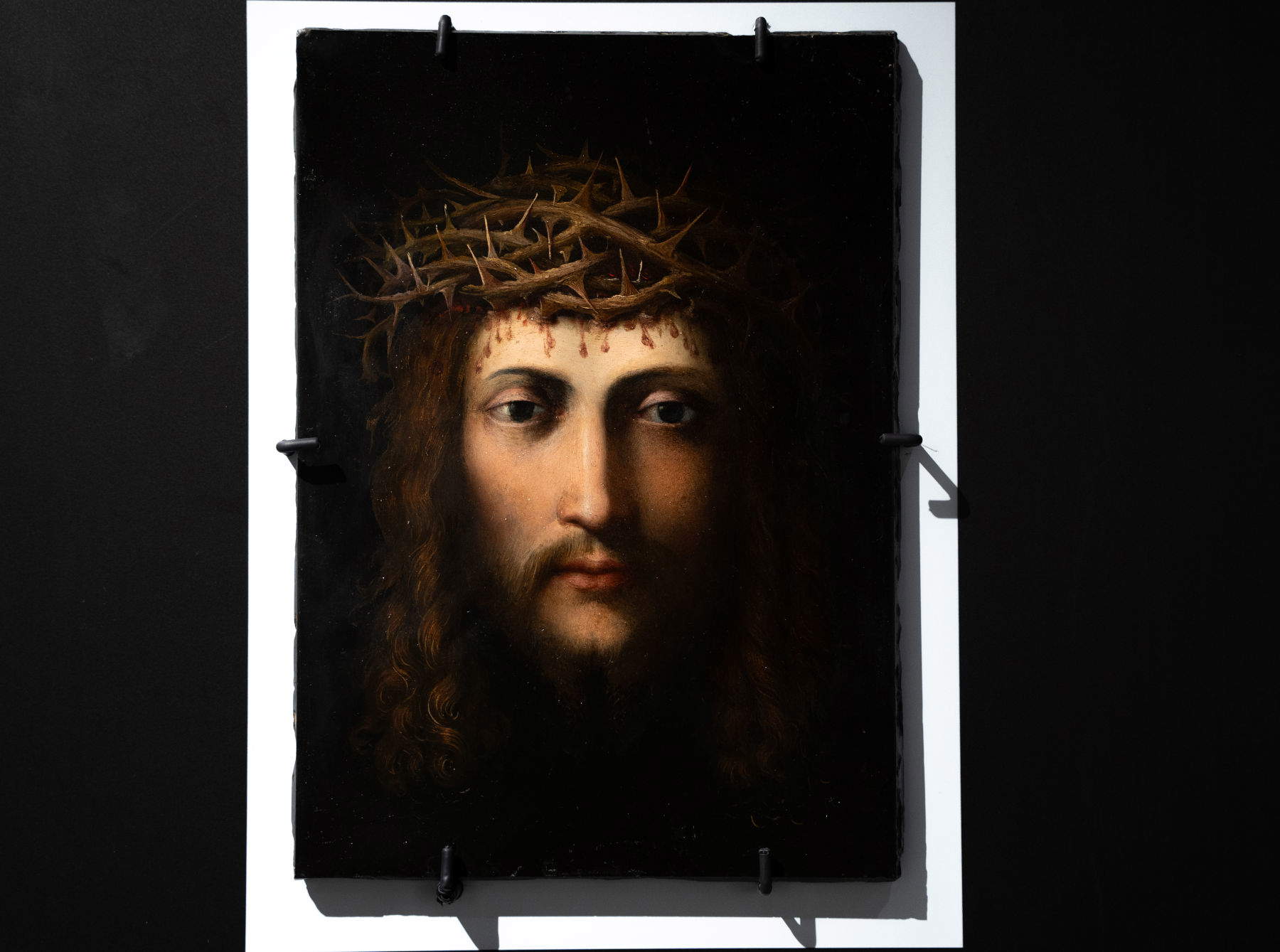
According to this reconstruction, the Veil would have been displayed during the Jubilee of 1525 as the Veil of Veronica, considered one of the principal relics of Roman Christianity. The distinction between the Veil of Veronica and the Holy Face is further highlighted through references to the works of Ugo da Carpi and their placement in St. Peter’s Basilica.
Following the opening remarks by Nicola Mattoscio, president of the Pescarabruzzo Foundation, the press preview featured speeches by Carlo Masci, mayor of Pescara; Fra Antonio Gentili, rector of the Basilica and Sanctuary of the Holy Face in Manoppello; and Marco Bussagli, curator of the exhibition. The exhibition is organized in collaboration with the Sanctuary of the Holy Face in Manoppello, the Seraphic Province of the Immaculate Conception of the Capuchin Friars Minor of Central Italy, the Archdiocese of Chieti-Vasto, the Accademia Carrara Foundation of Bergamo, and various public and private lending institutions.
“With this exhibition, the Foundation aims to offer the public an opportunity for cultural and scientific exploration of one of the most enigmatic and fascinating images in the Christian tradition,” states Nicola Mattoscio, president of the Pescarabruzzo Foundation. “The Holy Face of Manoppello represents not only a testimony of faith but also a historical, artistic, and cultural heritage of exceptional significance for Abruzzo and for the history of European civilization.”
 |
| An exhibition in Pescara explores the Holy Face of Manoppello and the tradition of the True Icon |

Warning: the translation into English of the original Italian article was created using automatic tools. We undertake to review all articles, but we do not guarantee the total absence of inaccuracies in the translation due to the program. You can find the original by clicking on the ITA button. If you find any mistake,please contact us.
























 IT
IT FR
FR DE
DE ES
ES CN
CN


