




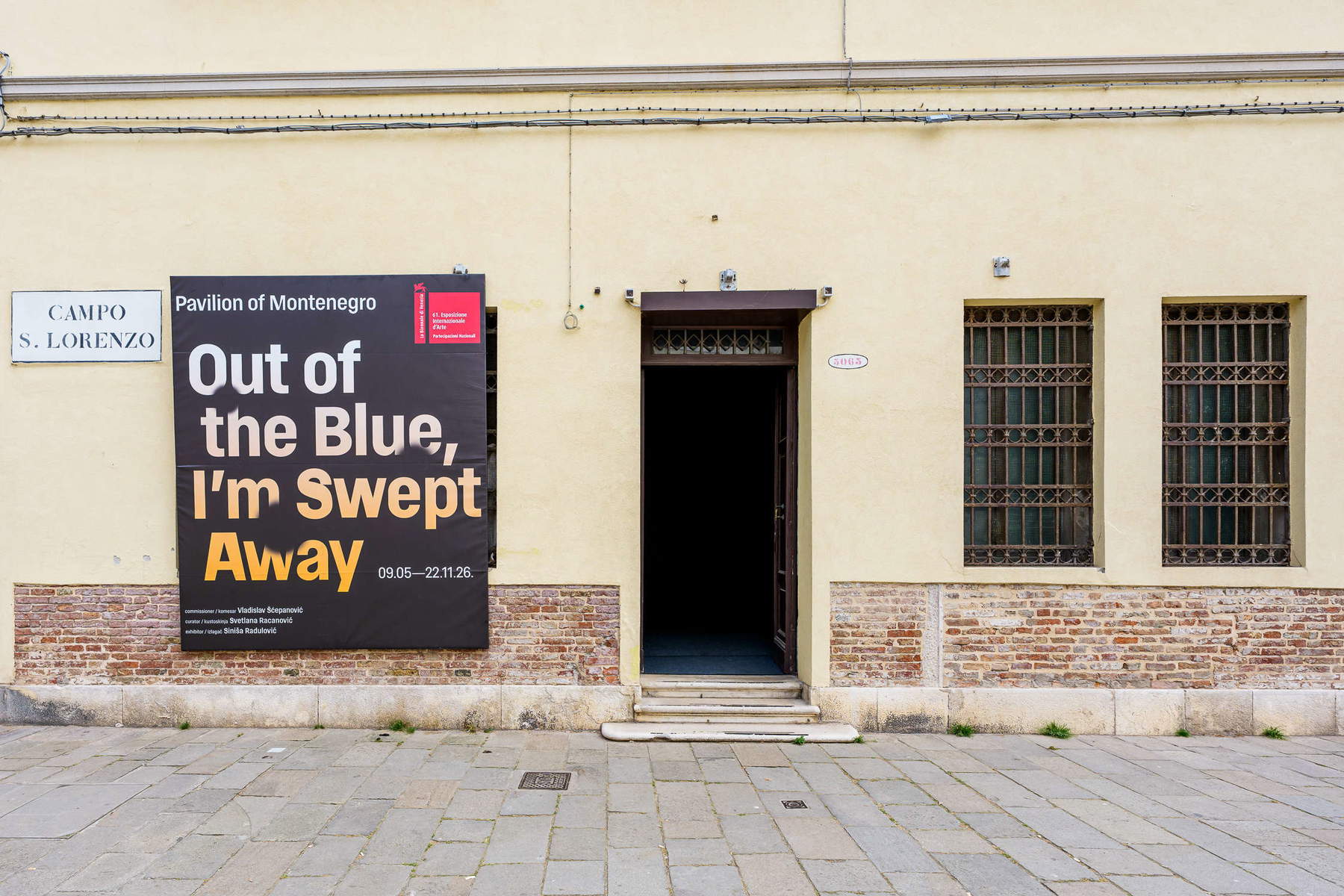
An environment suspended between matter and image, between architecture and perception, between control and the possibility of transformation. This is the dimension that greets visitors to the Pavilion of Montenegro at the Venice Biennale 2026, where artist Siniša Radulović (Podgorica, 1983) presents Out of the Blue, I’m Swept Away, a project selected to represent the Balkan country as part of the international event running until Nov. 22 in the spaces of ArteNova. Commissioned by Vladislav Šćepanović and curated by Svetlana Racanović, the project is organized by the Museum of Contemporary Art of Montenegro and offers an articulated reflection on the way images, spaces and systems of organizing contemporary life influence the perception of existence and the construction of identity.
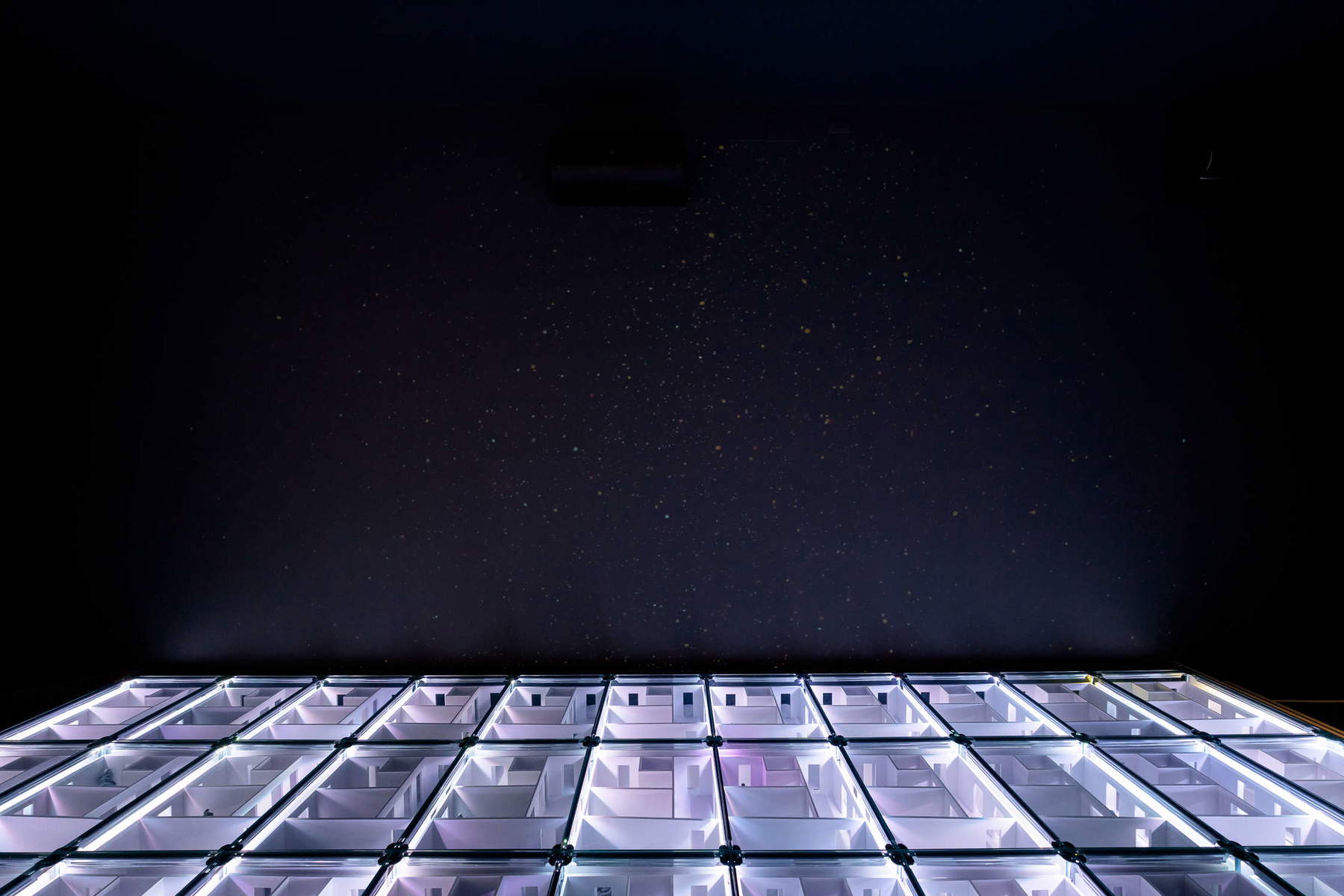
The installation takes off from a theoretical reflection that recalls the thought of philosopher Peter Sloterdijk and in particular his essay Rules for the Human Park, in which contemporary societies are described as systems of domestication and control, “anthropogenic greenhouses” governed by programs of social regulation. It is precisely within this condition that Radulović constructs his visual journey, imagining an environment that questions the boundaries between natural and artificial, between lived life and representation. The work develops through two distinct but deeply interconnected levels. In the lower part, a space takes shape that recalls an underground environment, almost a mental and architectural basement. Here the artist uses the floor plan of his own home as a matrix, transforming it into a repeated module that progressively multiplies until it generates a complex and suffocating structure. The serial repetition of the housing element produces an architectural landscape characterized by a strong sense of uniformity. Spatial cells follow one another according to a modular logic that eliminates any trace of individuality, constructing a reality devoid of spontaneity and progressively detached from human experience. The environment thus takes on the contours of an almost dystopian vision, in which architecture no longer represents a living space but a system of organization and control.
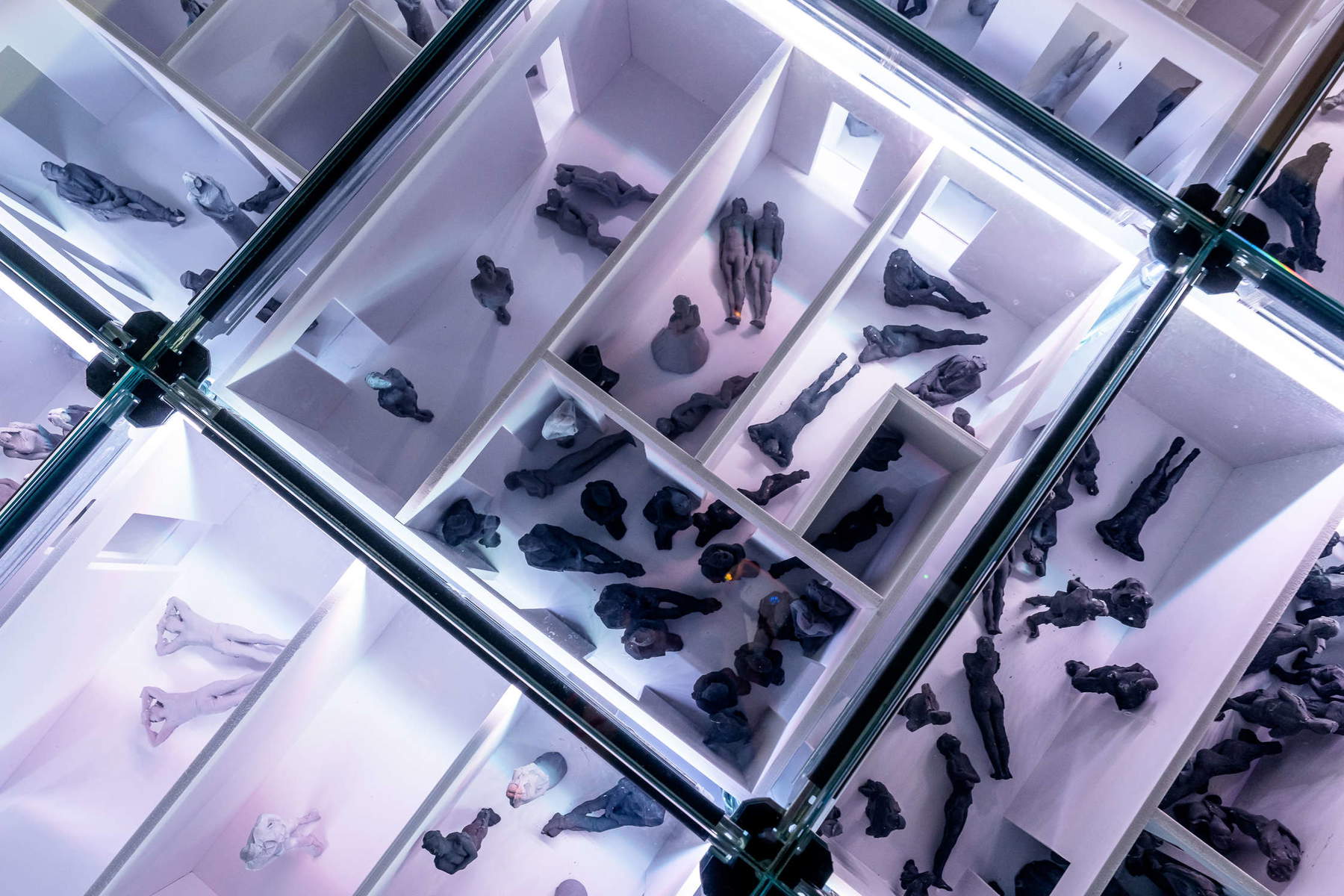
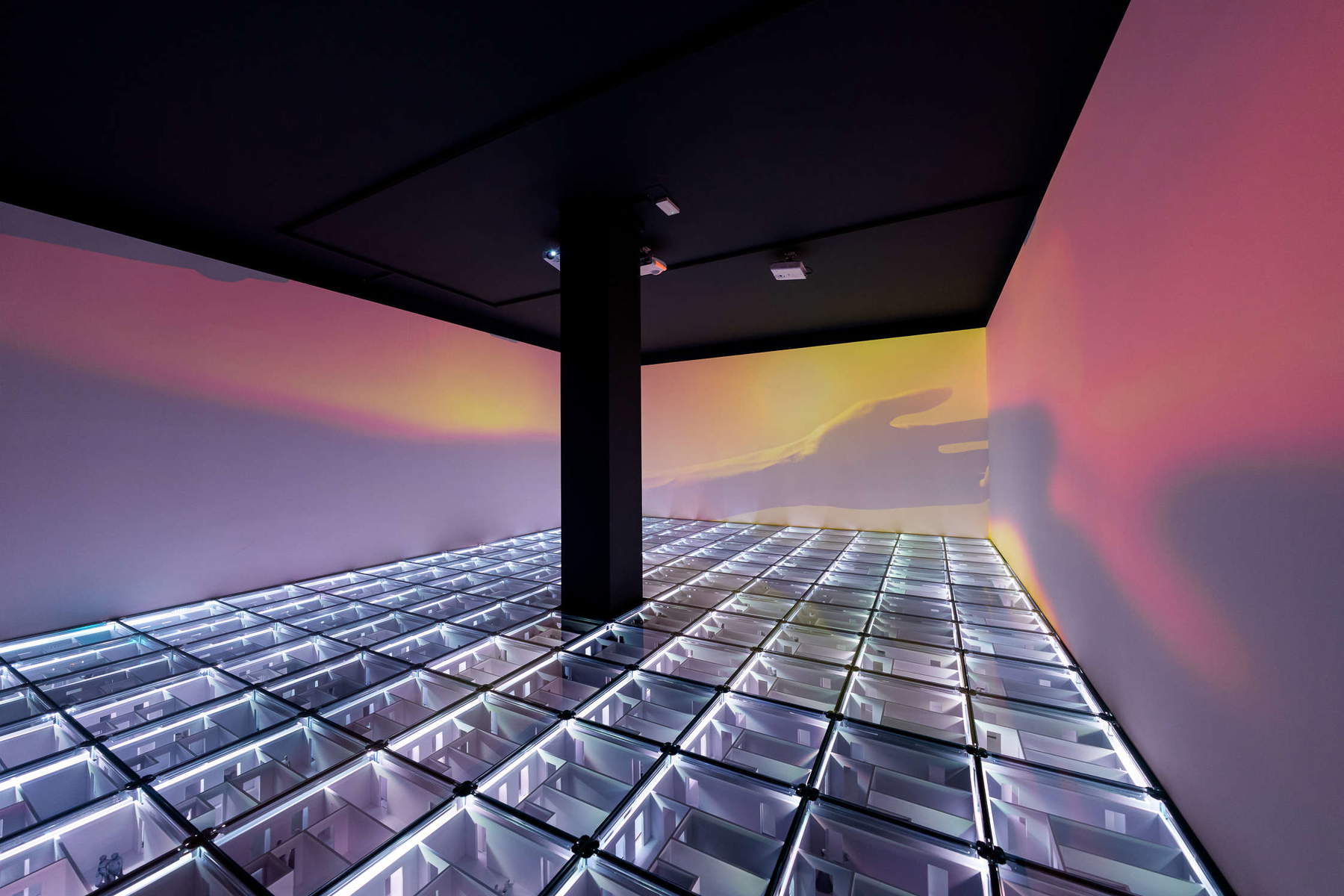
Within this structure find place human figures that are also replicated serially. Men and women appear as immobile presences, devoid of individual identity and incapable of generating authentic relationships. They are not families, communities or social groups, but isolated entities that seem to belong naturally to this artificial universe. Their characteristics evoke the figure of the replicant or automaton, suggesting a reflection on the standardization of contemporary existence and the loss of differences.
According to the reading proposed by the artist, this microcosm functions as a kind of symbolic laboratory in which visitors recognize fragments of their own daily experience. Indeed, the repetition of housing structures and human figures returns a condensed version of the dynamics that characterize contemporary life, raising questions about the relationship between individual and system.
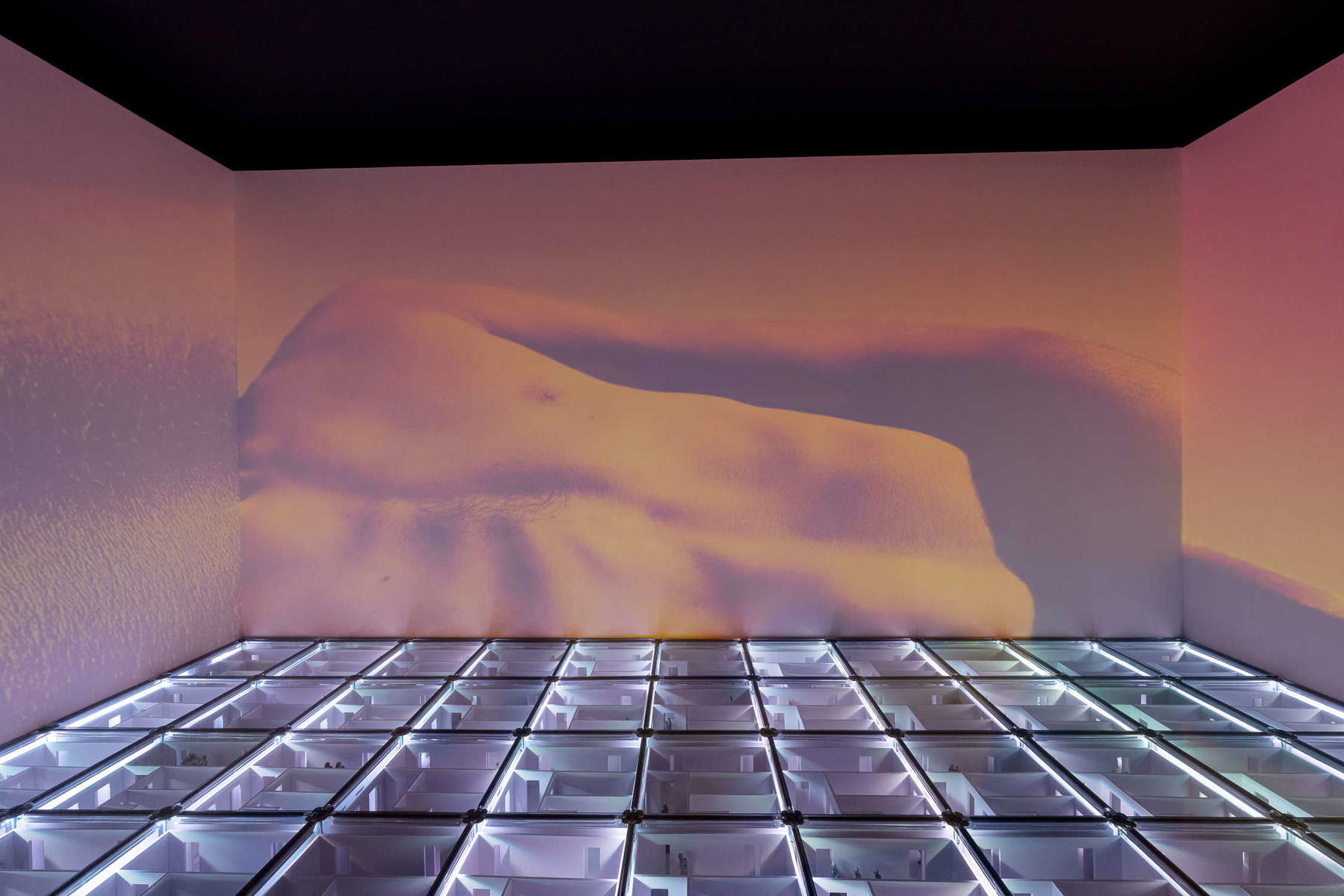
Above this rigorous and ordered dimension opens a second area of the installation, radically different in its nature. Through a glass surface that acts simultaneously as threshold, mirror and connecting element, the gaze is guided to a horizon line where moving images appear. In this upper environment, rigidity gives way to fluidity. Body fragments emerge and disappear within a diffuse, soft light. A hand, a lock of hair, a part of a leg or a barely noticeable contact become elements of a presence that never allows itself to be fully defined. The body constantly appears and dissolves, oscillating between material consistency and dematerialization.
The choice to avoid a stable and recognizable representation underscores the artist’s interest in the transitory dimensions of experience. Memory or linear narrative do not prevail in this space, but the immediate perception, the fleeting sensation, the fragment destined to transform continuously. The visitor is invited to be transported by this suspended condition, experiencing a form of visual drift that interrupts the logic of control present in the space below.
The entire installation is shot through with a reflection on the nature of images and their role in contemporaneity. Radulović observes how the incessant proliferation of visual content is progressively changing the way individuals perceive themselves and the world. In a reality dominated by the production and circulation of images, human beings increasingly tend to translate themselves into images, to construct their presence through representations that replace direct experience.
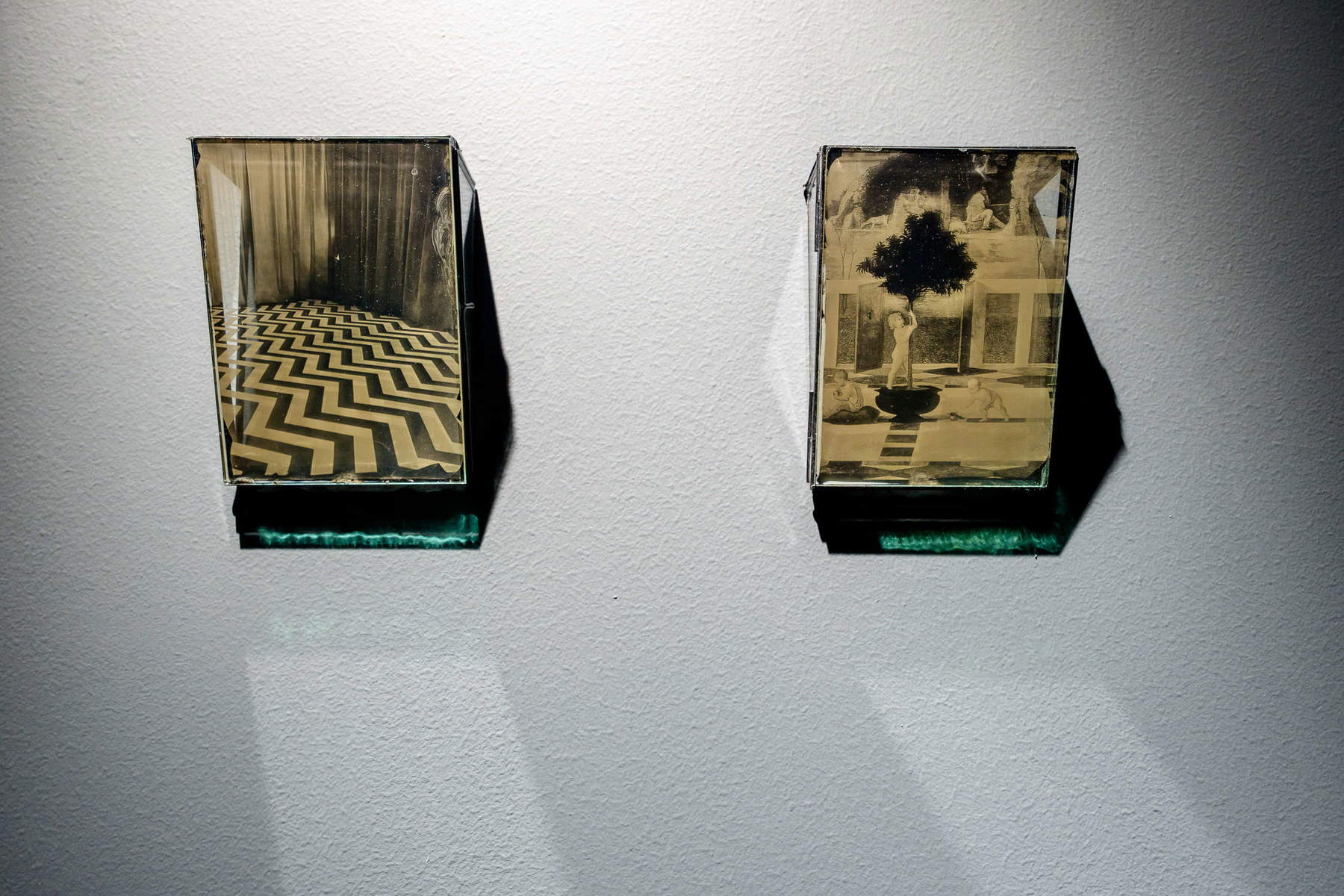
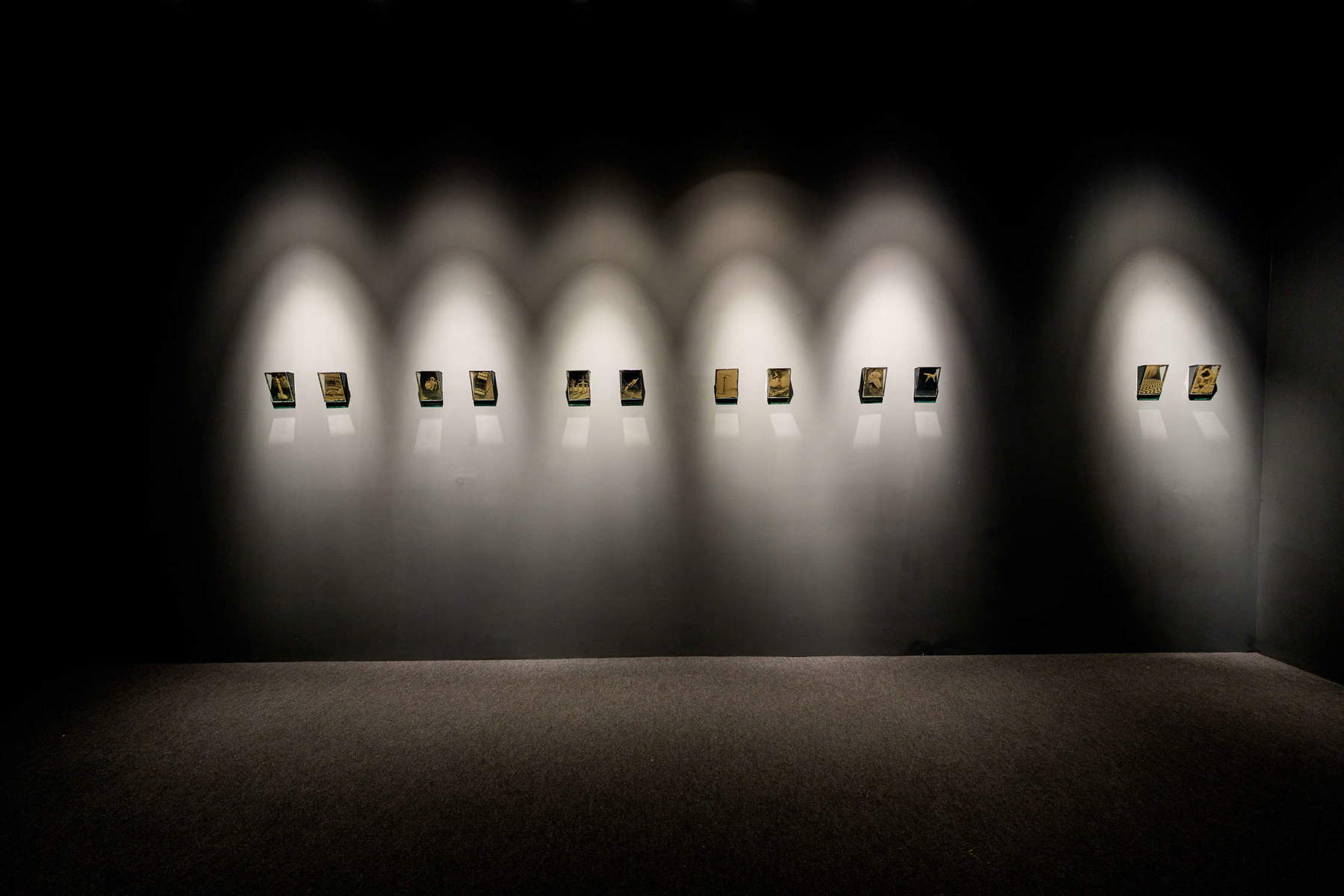
From this awareness comes one of the central questions of the project: what images can still offer a space of refuge and resistance? Rather than focusing on the loss of the original or the authenticity of representation, the artist questions the possibility of constructing new forms of symbolic habitation through the images themselves. This theme finds particular expression in the series of photographs presented in a separate section of the installation. Made on glass plates through the ancient analog wet collodion process, the images take the form of unique and unrepeatable objects. In a context dominated by digital reproducibility, these photographs reaffirm the value of uniqueness and material presence.
The objects depicted seem suspended between different possible identities. They can be toys, souvenirs, personal relics, models or fragments of memory. Their ambiguous nature makes them connecting elements between the two dimensions of the installation. On the one hand they recall the solid and structured world of the lower zone, on the other hand they open up to the fluidity and indeterminacy of the space of moving images.
The analog component also emerges in the sound construction of the work. Indeed, the environment is traversed by a texture of sounds that mixes familiar noises and more distant, indefinable presences. Frequencies oscillate between White Noise and Pink Noise, generating a soundscape characterized by continuous movements of approaching and receding. This sound fabric contributes to building a feeling of temporal suspension, accompanying the visitor in an experience that is not limited to the visual dimension but involves the entire perceptual body. The effect is that of a constant but never invasive presence, making the exhibition space an immersive and ever-changing environment.
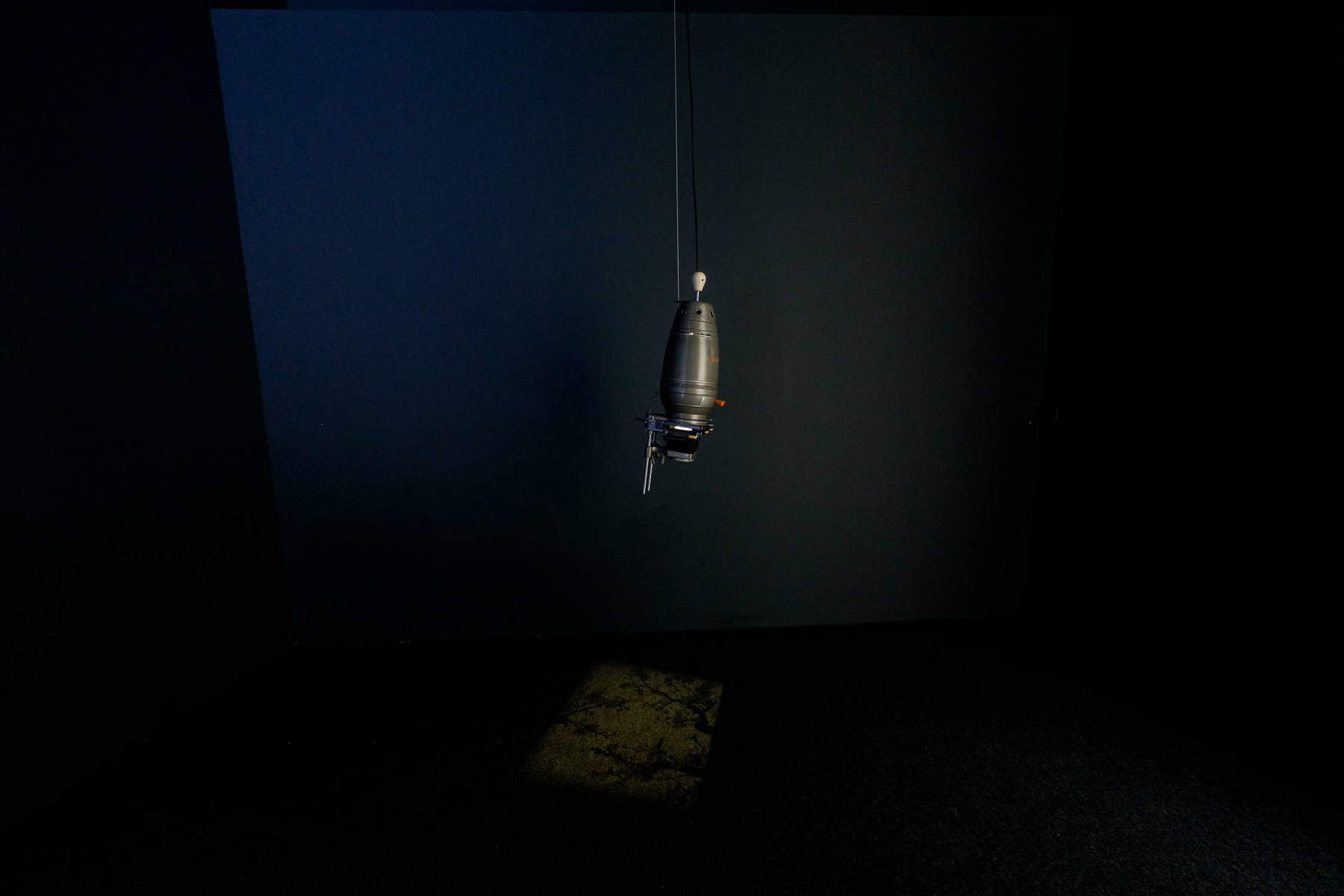
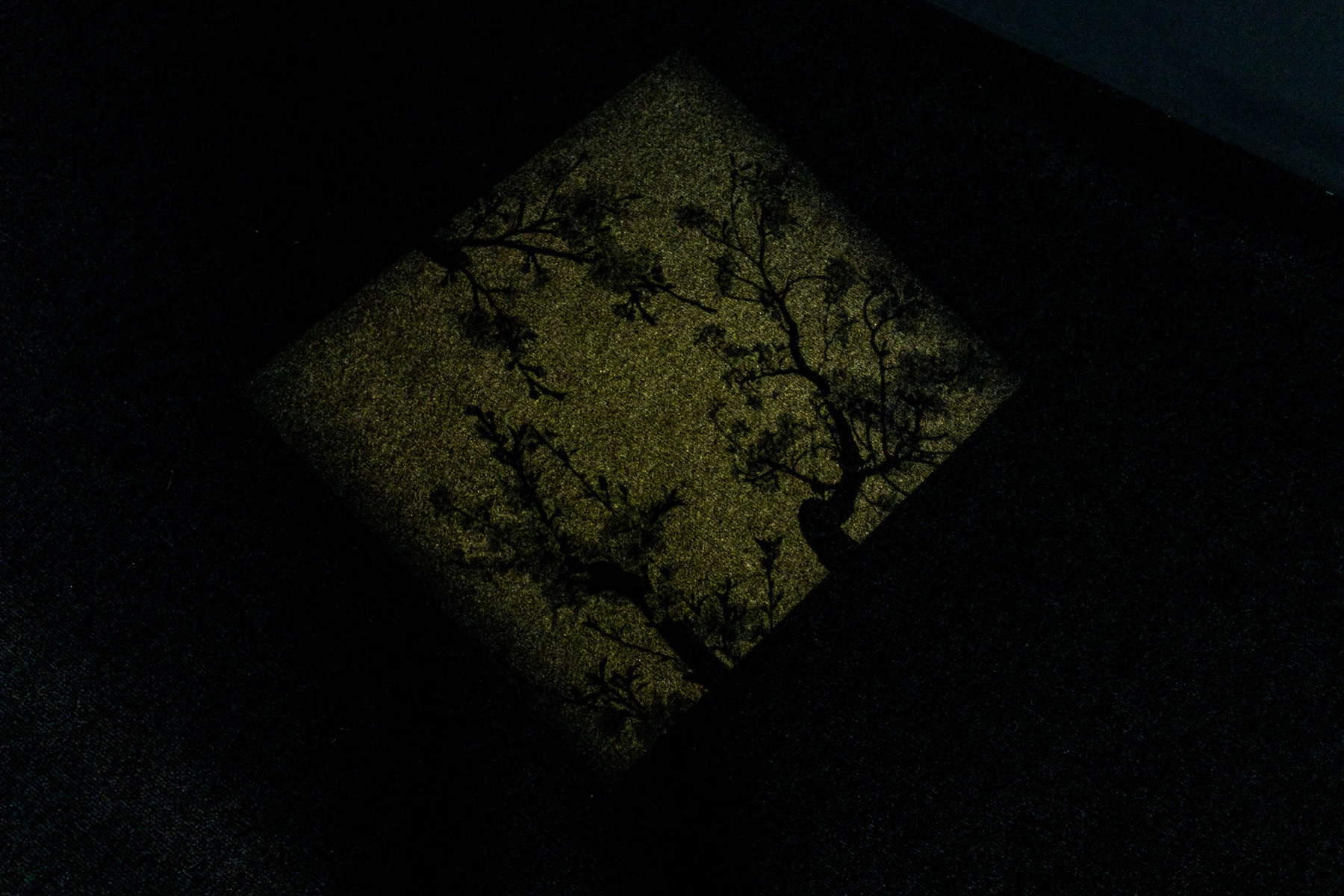
Among the elements of the project also appears a vintage photo enlarger suspended in space. The object, seemingly at odds with contemporary technologies, takes on the role of a poetic device. A transparent image depicting a cherry blossom branch is projected from the device. The slight movement of the enlarger produces the impression that the branch itself gently sways in the air. The cherry blossom represents one of the most significant symbols of the entire installation: its presence recalls the theme of the transience and fragility of existence, becoming the starting point and at the same time the arrival point of the path imagined by Radulović. Indeed, the image of the flowering branch summarizes the reflection on the value of ephemeral moments and the possibility of recognizing the sublime in the most ordinary manifestations of reality.
With Out of the Blue, I’m Swept Away, the artist attempts to construct a crossing between seemingly opposite dimensions. Digital and analog, artificial and natural, rigidity and fluidity, control and freedom coexist within the same experience. Images become tools through which to reconstruct relationships, create spaces of sharing, and develop a new visual ecology. In this process, the visitor is called upon to actively participate, constructing his or her own path through fragments, perceptions and personal connections. Between serial architectures, analog photographs, suspended sounds and moving images, Out of the Blue, I’m Swept Away builds a perceptual landscape that aims to interrogate the relationship between the individual and the contemporary world and to ask an essential question: how can we still inhabit images without being completely absorbed by them.
|
| Biennale, Montenegro Pavilion investigates the relationship between images and reality |

Warning: the translation into English of the original Italian article was created using automatic tools. We undertake to review all articles, but we do not guarantee the total absence of inaccuracies in the translation due to the program. You can find the original by clicking on the ITA button. If you find any mistake,please contact us.



















 IT
IT FR
FR DE
DE ES
ES CN
CN


