





A new key to interpreting the work of Caravaggio (Michelangelo Merisi; Milan, 1571 - Porto Ercole, 1610): this is what will be offered in a year’s time, from March 21 to July 18, 2027, by a major exhibition at the Detroit Institute of Arts, entitled Caravaggio’s Models: Friends, Lovers, Rivals. The Detroit exhibition aims to offer for the first time a systematic survey of the real people who inspired some of the Lombard master’s most famous paintings. The exhibition presents itself as an unprecedented project in that it is the first exhibition entirely devoted to the “real” models behind the figures depicted in Caravaggio’s canvases. The aim is to shift the gaze from traditional iconography to the concrete identity of the subjects portrayed, reconstructing their personal histories, their ties to the artist and the social context in which they lived.
Through a corpus of about 25 paintings, a number therefore of significance for an exhibition on Caravaggio, comparable to that of the recent exhibition at Palazzo Barberini, the show stands as the most extensive presentation of Caravaggio’s work in North America in recent decades. A significant number of works (there is, however, still confidential as to which ones will be) allows not only to retrace the milestones of his career, but also to take a close look at the complexity of his pictorial research, based on a revolutionary use of light, realism and narrative theatricality.
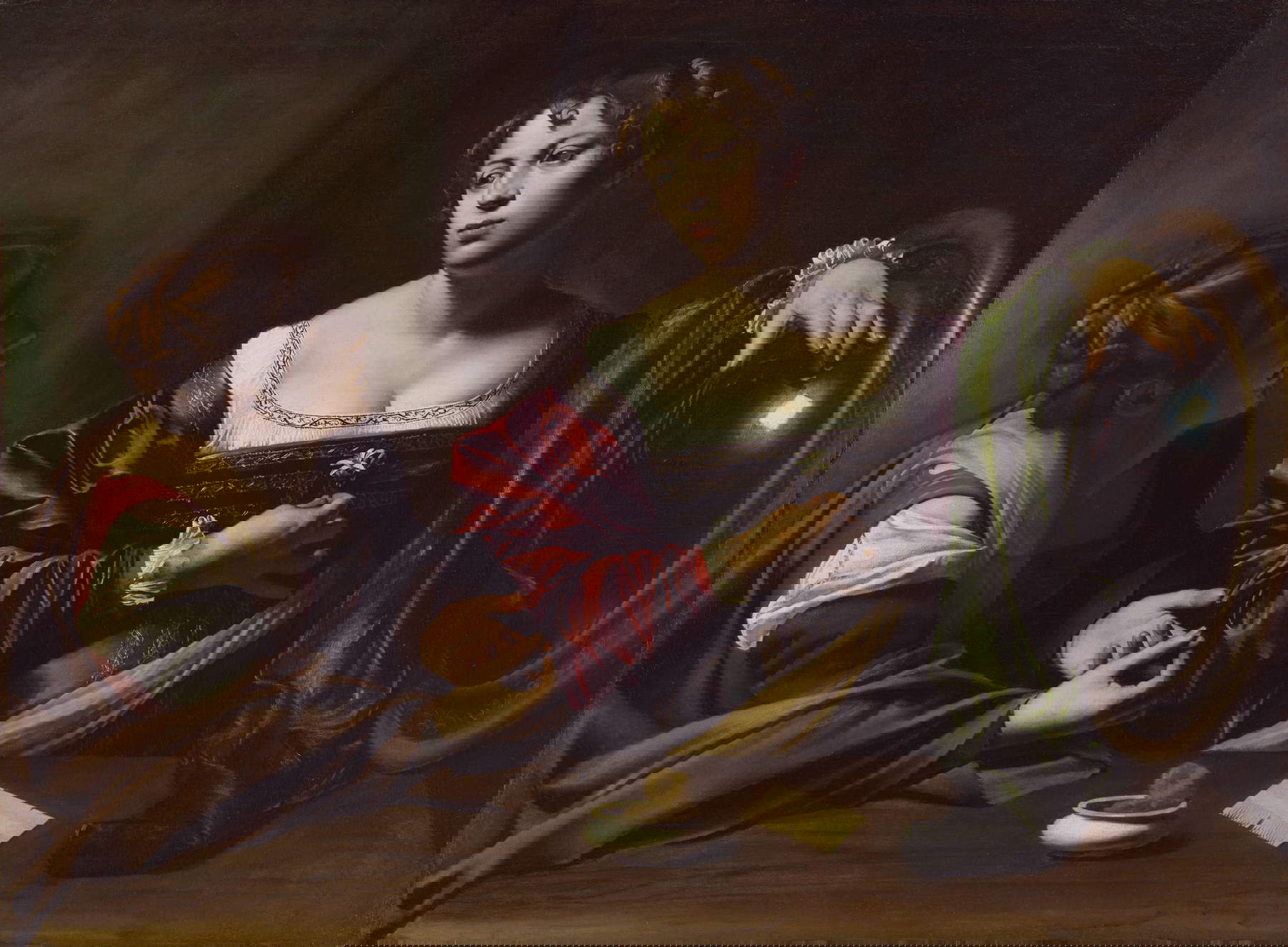
The starting point of qeusta exhibition is the observation that Caravaggio, throughout his short but very intense career, often chose as models people from his closest circle. Friends, lovers, life companions, and other artists thus became the protagonists of his works, transforming themselves into sacred or mythological figures through a process of artistic transfiguration that cancels the distance between real life and representation. Many of these individuals were situated on the margins of the society of the time and, in several cases, their existence is now known almost exclusively through Caravaggio’s painting. The exhibition is therefore also intended as a historical and anthropological investigation, which seeks to restore voice and identity to figures who often remain in the shadows of art history, but central to the construction of the artist’s visual imagination. The exhibition is organized as a series of case studies that relate the paintings to the possible identities of the models represented. Each section analyzes how Caravaggio was able to interweave biblical and mythological themes with an extremely realistic and psychologically intense rendering of faces and bodies, transforming sacred scenes into moments of strong emotional immediacy.
The curatorial approach of the exhibition thus focuses on the human dimension of the works, highlighting how Caravaggio’s narrative power derives not only from the composition and use of light, but also from the concrete presence of real individuals, with their personal stories, relationships and contradictions. In this sense, the artwork becomes a kind of living archive of social and emotional relationships. One of the salient aspects of the project is precisely the desire to bring art and biography into dialogue, reconstructing the ties between Caravaggio and the people who posed for him. Friendships, sentimental relationships and artistic rivalries emerge as fundamental elements for understanding the construction of the images, offering a reading that goes beyond the traditional distinction between artistic subject and personal context.
The path of the exhibition progressively leads toward a particularly significant moment, in which the focus shifts to the presence of Caravaggio himself within his own work. Indeed, the artist would also use his own image in some of his compositions, indirectly inserting himself into the painted scenes and thus contributing to a broader reflection on the author’s role within the representation. This final element of the exhibition will attempt to read the entire Caravaggesque production as a complex system of relationships between observer, model and artist, in which the boundaries between reality and fiction become progressively thinner. Painting thus becomes not only a sacred or mythological narrative, but also an instrument of self-reflection and identity inquiry.
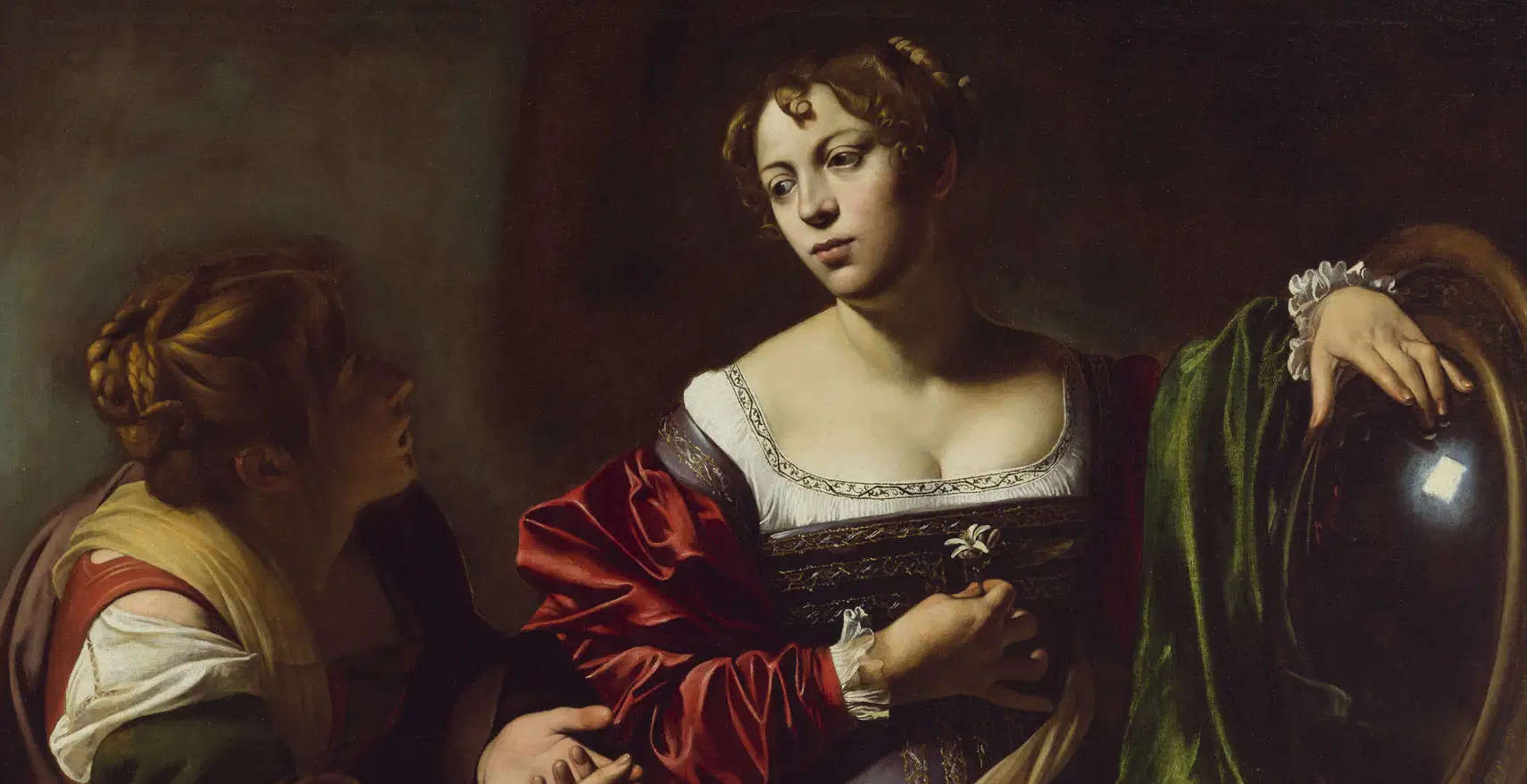 |
| Caravaggio, a major exhibition in Detroit in 2027 on his relationship with models: 25 works |

Warning: the translation into English of the original Italian article was created using automatic tools. We undertake to review all articles, but we do not guarantee the total absence of inaccuracies in the translation due to the program. You can find the original by clicking on the ITA button. If you find any mistake,please contact us.

























 IT
IT FR
FR DE
DE ES
ES CN
CN


