





At the end of an important phase of extraordinary maintenance work, carried out thanks to funding from the European Community and destined for the sites under its jurisdiction, the Cerveteri and Tarquinia Archaeological Park (PACT) is presenting two exhibitions dedicated to the Etruscan civilization and the vast historical-archaeological heritage that testifies to its greatness.
The first exhibition will be hosted in Cerveteri. Starting June 4 until October 31, 2026, the Cerite National Archaeological Museum will welcome visitors with the exhibition Seeing Greek in Etruria. The Hydrias of Cerveteri. The project, curated by director Vincenzo Bellelli and Patrizio Fileri, features the collaboration of major national and international museum institutions, including the Louvre, the British Museum, the Vatican Museums, the National Etruscan Museum of Villa Giulia and the Capitoline Museums, as well as numerous other Italian lending institutions.
The exhibition aims to highlight the leading role played by Cerveteri during the Archaic period and its relationship with the Greek-Eastern world. Through a rich selection of Ionian imported ceramics and artifacts that testify to their influence on local production, the exhibition will illustrate the lively cultural and artistic exchanges of the period. Relations with the Greco-Eastern world emerge clearly both in the decoration of vessels and in the ornamental terracottas used in architecture. Indeed, in the second half of the 6th century BCE, Cerveteri established itself as one of the main centers of importation and, at the same time, as a place of elaboration and dissemination of new artistic trends.
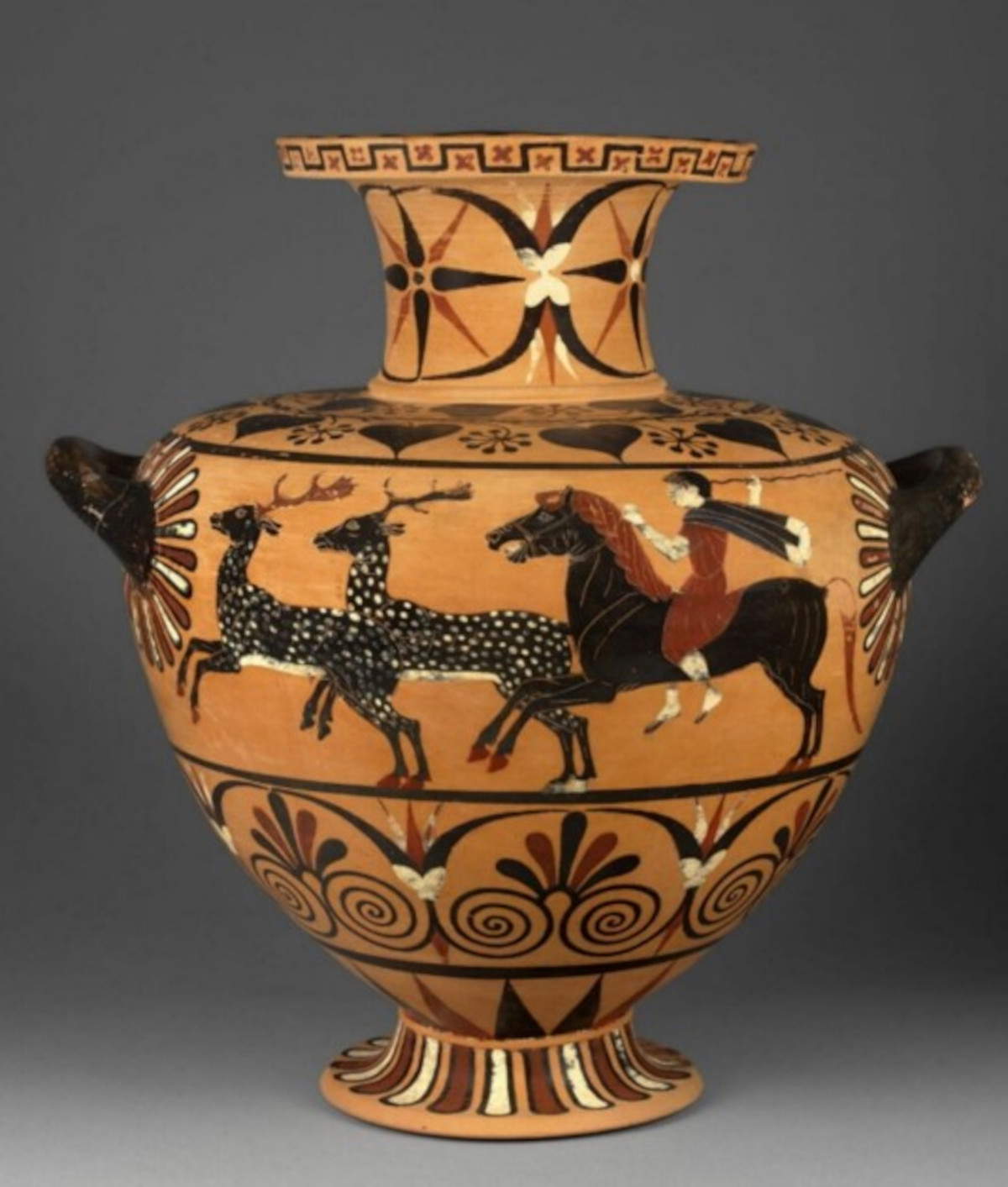
Particular attention will be paid to the Ceretan hydriai, containers intended for transporting water that constitute one of the most refined and rare ceramic productions of antiquity. Although characterized by a style that can be traced back to the Greco-Eastern environment, these works have been found exclusively in Cerveteri.
For the first time, the most important existing nuclei of Ceretan hydriai will be brought together in a single location: the prestigious collection of the Louvre Museum, from the collection of Marquis Campana, and that of the National Etruscan Museum of Villa Giulia. It will also be possible to admire together the famous Hydria della Polledrara, kept at the British Museum, and theHydria Ricci, considered one of the most extraordinary examples of an Ionic vase found in Etruria. The exhibits also include the earliest known example of a Ceretan hydria of known provenance, preserved in London and decorated with a scene of combat between warriors, as well as numerous little-known or hitherto unpublished materials that will provide insight into the local artistic context and its relationship to these figured vases.
The display will be enriched by important evidence of painting on terracotta of architectural use, which will allow a direct comparison between different forms of expression. In this way the public will be able to better understand the stylistic features and figurative imagery of archaic Cerveteri.
The initiative promoted by PACT is held under the patronage of the Lazio Region, the Municipality of Cerveteri, the Accademia Nazionale dei Lincei and the National Institute of Etruscan and Italic Studies.
Hours: Tuesday through Sunday from 9 a.m. to 7:30 p.m. Closed Mondays.
Tickets: A surcharge of 2 euros will be added to the regular rates for visiting the exhibition.
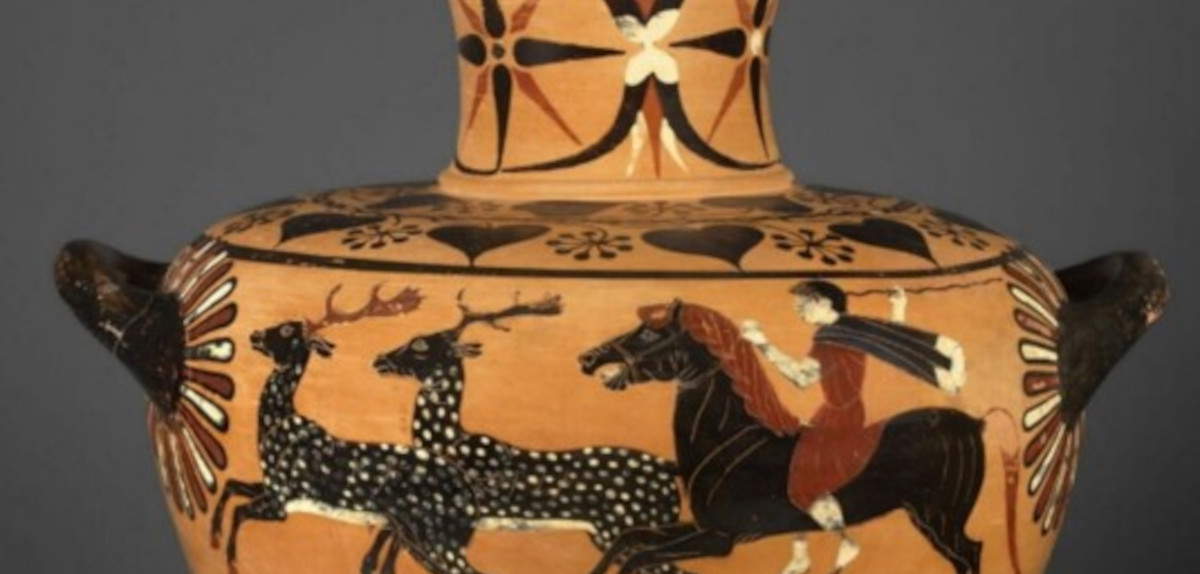 |
| Cerveteri and the Greco-Eastern world: exhibiting the most important cores of extant Ceretan hydriai |

Warning: the translation into English of the original Italian article was created using automatic tools. We undertake to review all articles, but we do not guarantee the total absence of inaccuracies in the translation due to the program. You can find the original by clicking on the ITA button. If you find any mistake,please contact us.





















 IT
IT FR
FR DE
DE ES
ES CN
CN


