





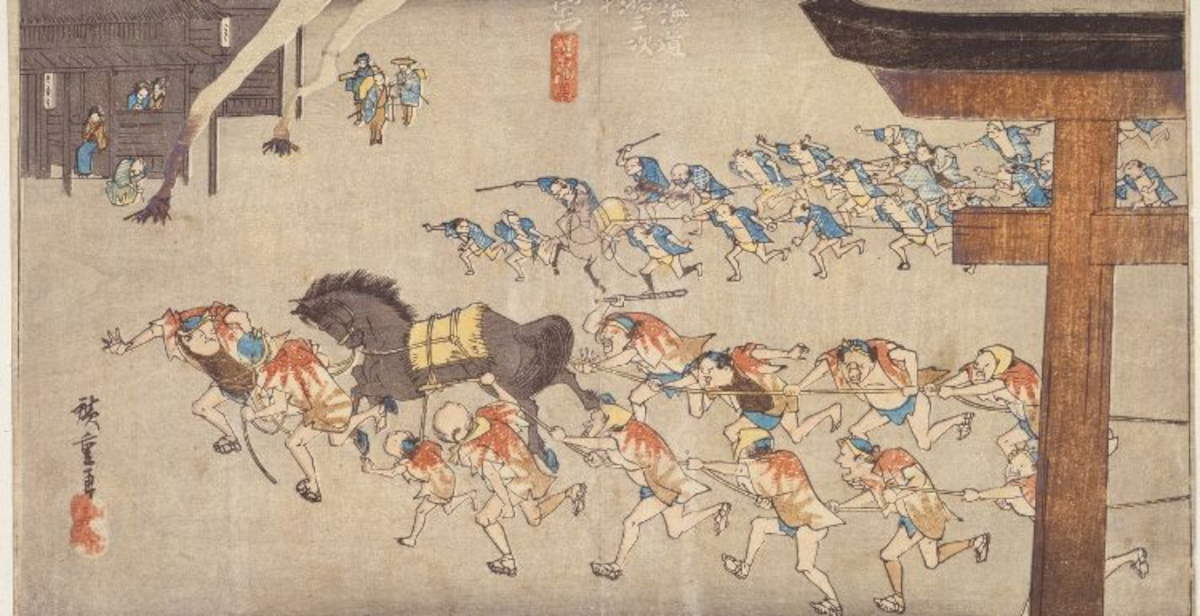
From July 24 to Nov. 29, 2026, the MAO Museum of Oriental Art in Turin presents the exhibition Dreamscapes / Dreamscapes, dedicated to Utagawa Hiroshige’s famous series The 53 Stations of Tōkaidō, considered one of the pinnacles of 19th-century Japanese art and part of UniCredit’s collections. The exhibition project focuses on a selection of 36 prints with the aim of restoring the visual and narrative complexity of the work, constructed as a story in images of the journey along one of the main arteries of pre-modern Japan.
The exhibition’s itinerary is part of the second phase of an investigation already begun by MAO in 2025 and is being developed under the curatorship of Laura Vigo, Conservator for Asian Art and Archaeology at the Montreal Museum of Fine Arts (MMFA), in collaboration with the Royal Museums of Turin. The museum project’s approach also includes specific attention to how content is mediated, through an approach inspired by Visual Thinking Strategies, with the aim of making the works’ interpretive levels and historical complexity more accessible.
A central element of the exhibition concerns the choice of an exhibition model with reduced environmental impact. By virtue of the collaboration with the Museum of Fine Arts in Montréal, and considering that the series preserved at MAO is identical to those in the Canadian museum’s collections, the project avoids moving the works. Rather, it is the curatorial perspective that travels, along with the interpretive tools and educational content developed for the 2024 presentation. The focus is also on the original dimension of these prints, conceived as publishing products intended for wide circulation and not as museum objects.
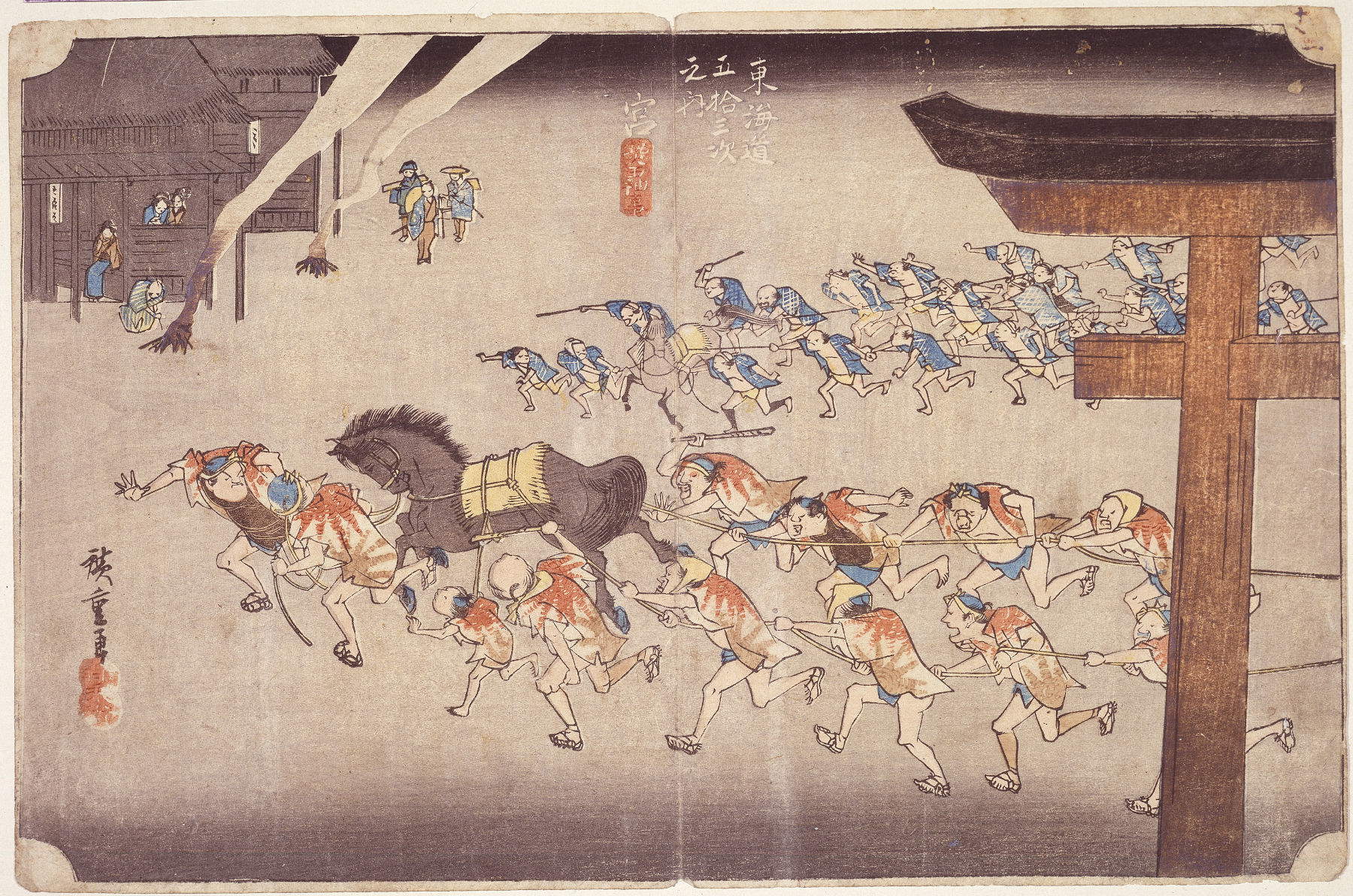
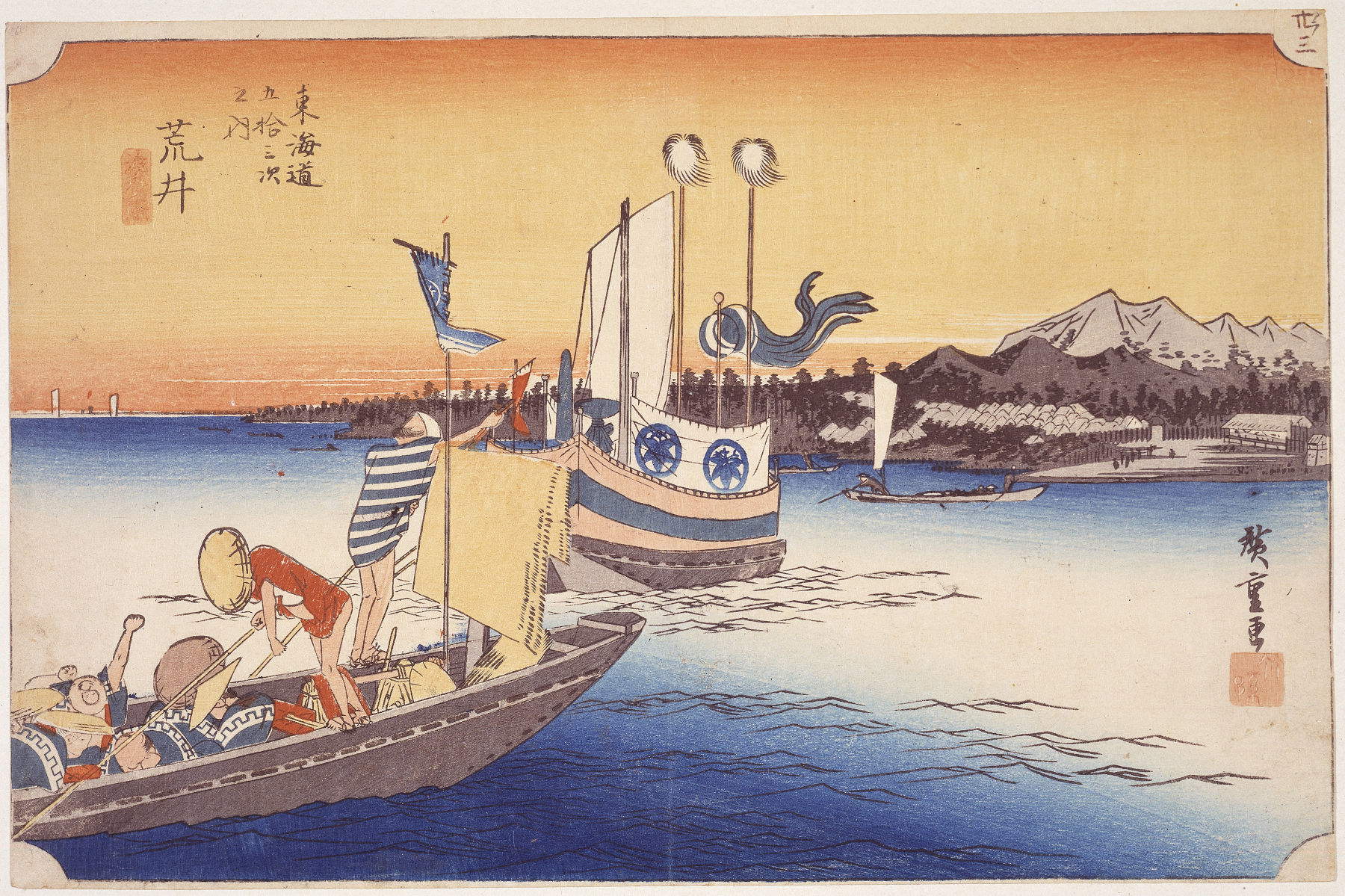
The 53 Stations of Tōkaidō series was first published in 1833 by Takenouchi Magohachi’s Hōeidō publishing house and was an immediate commercial success. The print run exceeded 15,000 copies, making the prints accessible to a wide audience in the Edo era. The cost of individual images was comparable to that of a bowl of ramen, an element that helps define the popular and widespread nature of the publishing phenomenon. Only at a later stage, in the second half of the 19th century, were these images rediscovered in the West and gradually recognized as works of art.
The role of the publisher Takenouchi Magohachi also emerges as decisive in defining the overall visual design. The series appears to be constructed as a sequential narrative, likened to a form of storyboard ante litteram, designed to intercept a wide audience and to respond to a growing demand for images capable of evoking experiences of travel and imagination.
At the center of the project is the figure of Hiroshige, an artist from a samurai family, who transforms an itinerary already widely known in the Japanese imagination into an articulate visual construction. The Tōkaidō, some 490 kilometers long, connected Edo (present-day Tokyo) to Kyoto and was one of the five great arteries of the Tokugawa period, established in 1601. It was traveled by daimyo, pilgrims, merchants and ordinary travelers, and articulated into a network of post stations that offered lodging, refreshments and services.
In this context Hiroshige and his team develop a visual language that blends observation of reality and imaginative construction. The prints incorporate elements of the Japanese artistic tradition while welcoming Western influences, such as the use of central perspective, shading and horizontal format, as well as the use of synthetic blue. The result proposes a reinterpretation that transforms each scene into an image built on evocative atmospheres and narrative dimensions.
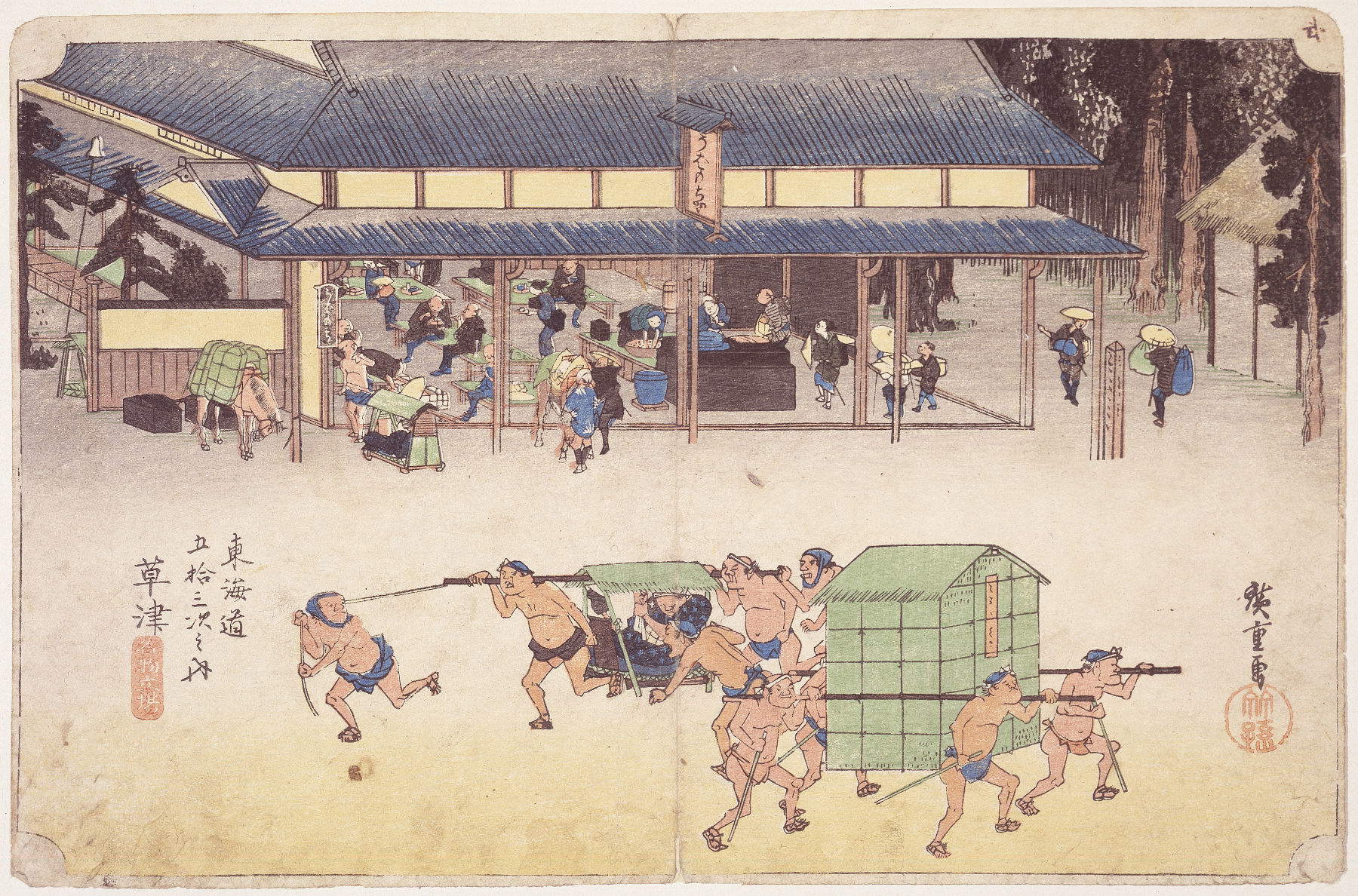
Tōkaidō stations thus become places of transit and observation, where daily activities, encounters and social dynamics are intertwined. The images render the variety of movement along the arterial road and the changing character of the landscape, helping to construct a representation of Japan in transformation. The ordinary dimension is reworked visually, taking a form that combines chronicle and imagination.
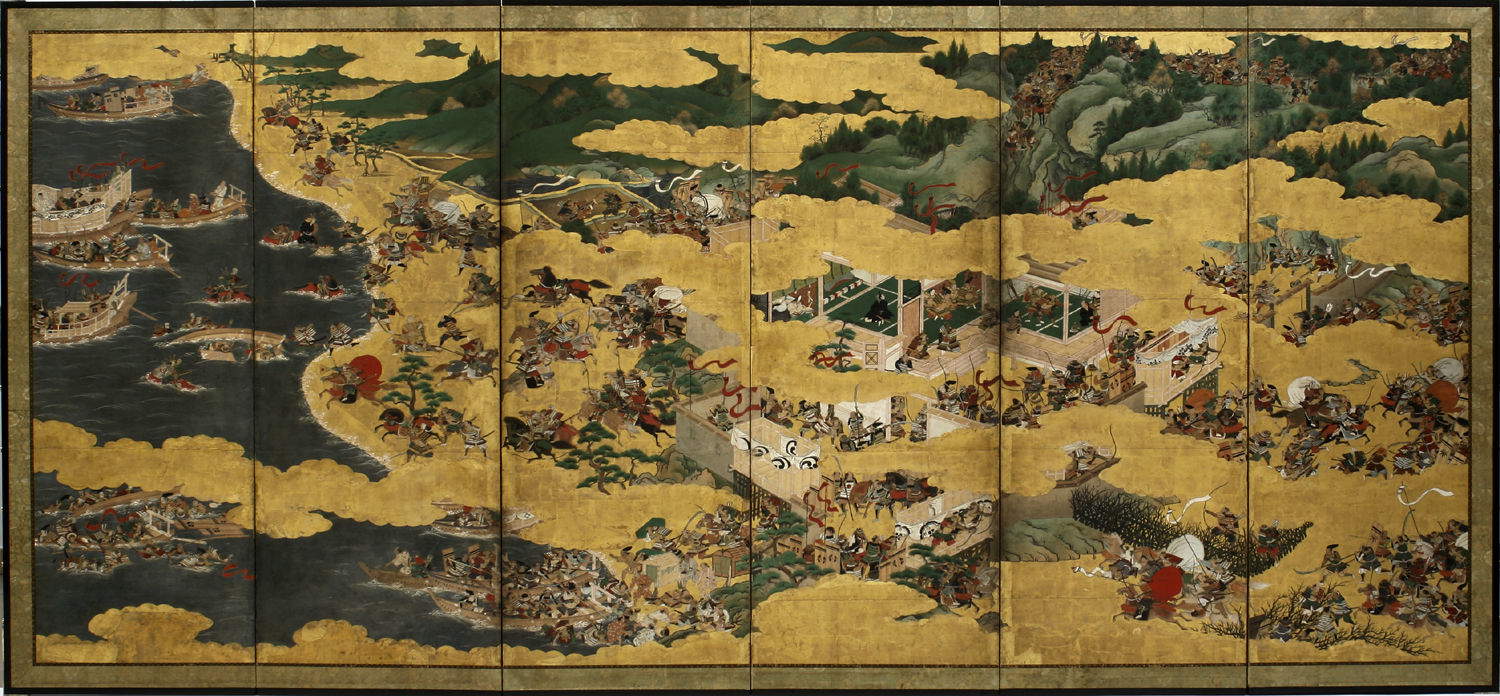
Parallel to the exhibition of prints, two groups of screens are also presented in the Japan 1 gallery. The first belongs to the series Rakuchū rakugai zu (Views of the Capital and its Surroundings), on loan from the Compagnia di San Paolo Foundation. The second depicts episodes from the 12th century Genpei War, featuring the battles of Ichinotani and Yashima, and comes from the MAO collections. Both cores have been recently restored.
The screens offer a different declination of visual representation, built on an encyclopedic and narrative dimension. In the case of the views of the capital, the Kanō school depicts Kyoto through an articulated composition, in which scenic locations and seasonal celebrations are interwoven within an urban vision punctuated by golden clouds. Scenes include Emperor Go-Mizunoo’s procession for the 1626 Gion festival, along with views of Fushimi Castle and different areas of the city, in a depiction that alternates between the public sphere and everyday life. In contrast, the second group of screens deals with the historical narrative of the Genpei War between the Minamoto and Taira clans.
The scenes show episodes of combat with horsemen, boats and war devices, embedded in a visual construction that emphasizes the epic dimension of the conflict. These representations are used as tools for reinterpreting the warrior past and the continuity of samurai power.
 |
| Dreamscapes at the MAO of Turin: on display the 53 stations of Hiroshige's Tōkaidō |

Warning: the translation into English of the original Italian article was created using automatic tools. We undertake to review all articles, but we do not guarantee the total absence of inaccuracies in the translation due to the program. You can find the original by clicking on the ITA button. If you find any mistake,please contact us.














 IT
IT FR
FR DE
DE ES
ES CN
CN


