





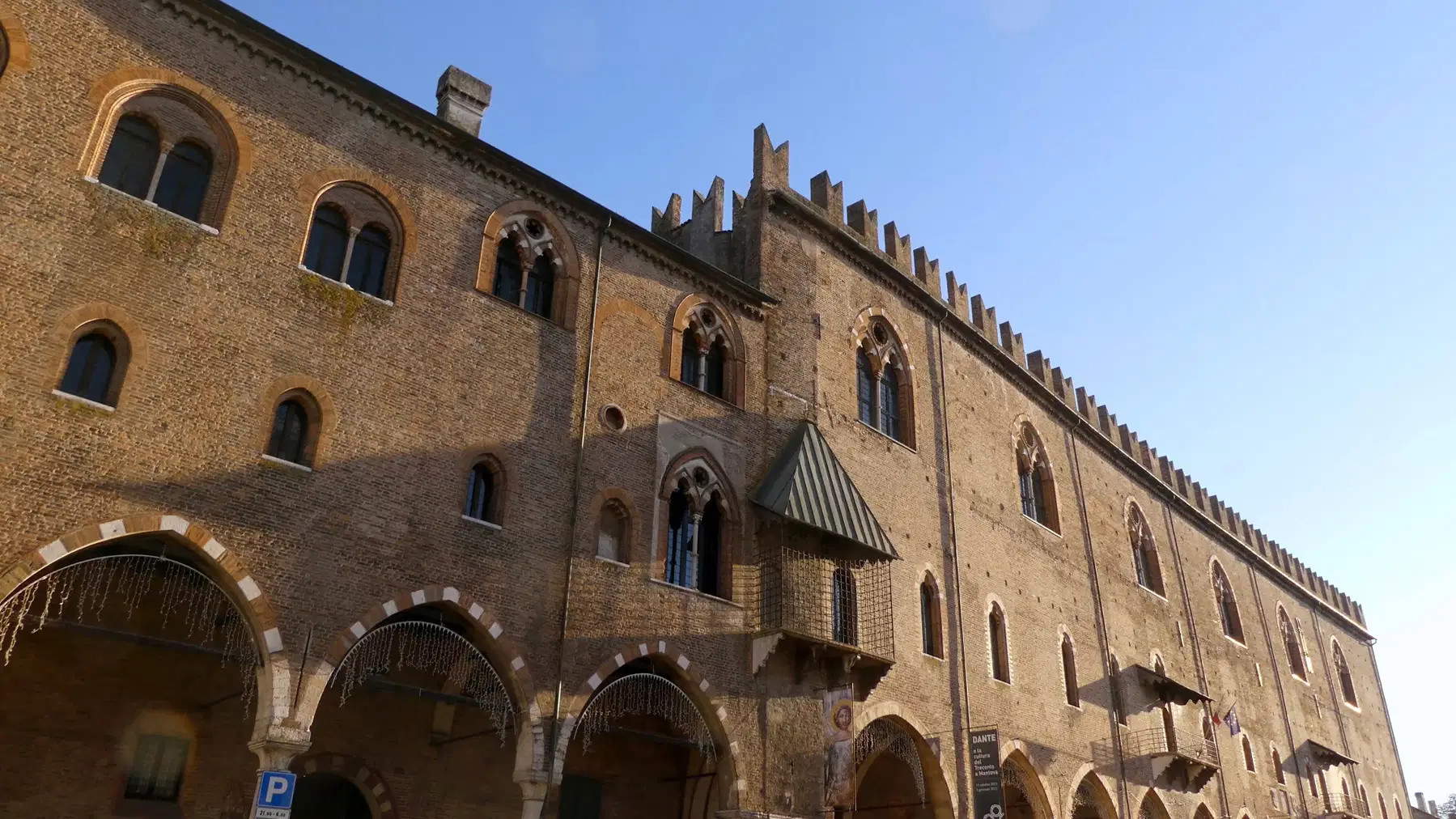
To mark the 400th anniversary of Ferdinando Gonzaga’s death, the Ducal Palace in Mantua is dedicating a major exhibition to the duke titled *Sole mirabile per luce propria. Ferdinando Gonzaga: Patron and Duke (1587–1626)*. The exhibition, scheduled from October 10, 2026, to January 10, 2027,in the Santa Croce Apartment, aims to shed new light on the personality of a refined collector and patron, a leading figure inthe final great era of the Gonzaga family’s patronage of the arts. The exhibition seeks to explore Ferdinando Gonzaga’s role in the cultural life of the Mantua court and to understand the artistic choices that characterized the years of his reign.
The second son of Vincenzo I Gonzaga and Eleonora de’ Medici, Ferdinando was initially destined for a career in the Church. In 1607, he was appointed cardinal and spent several years in Rome, where he had the opportunity to come into contact with important artists and cultural circles. His life changed in 1612 when, following the death of his brother Francesco IV, he assumed the rule of the Duchy of Mantua and Monferrato. The education and experiences he gained in Rome profoundly influenced his taste: Ferdinando distinguished himself through his particular interest in contemporary art and his unique approach to collecting, focused primarily on artists active in the Bolognese and Roman art scenes. His court became an important center for artistic production and collecting, attracting some of the leading figures in the visual arts of the time.
The exhibition brings together some forty works from prestigious Italian and foreign institutions and from important private collections. Among the Italian museums participating are the Uffizi Galleries in Florence, the National Art Gallery of Bologna, the National Galleries of Ancient Art in Rome, the Magnani Rocca Foundation in Mamiano di Traversetolo, the Civic Museums of Rimini, and the Civic Museums of Treviso. In addition, there are international loans from, among others, the Kunsthistorisches Museum in Vienna, the Gemäldegalerie in Dresden, the Musée du Louvre, and the Museum of Decorative Arts in Paris. The selection includes works by leading figures such as Peter Paul Rubens, Frans Pourbus, Alessandro Algardi, and Bartolomeo Manfredi, along with numerous other artists who helped shape the cultural and artistic landscape of Ferdinand Gonzaga’s Mantua. Among the most important loans is Guido Reni’s *Nexus and Deianira*, exceptionally loaned by the Musée du Louvre. The work stands as one of the most significant testaments to the magnificence achieved by the Mantuan court during the final years of the Gonzagas’ great artistic era.
The exhibition focuses on a particularly important moment in the dynasty’s history, immediately preceding the dispersal of the ducal collections in 1628–1629 and the dramatic Sack of Mantua in 1630–1631. The works brought together at the Palazzo Ducale allow us to reconstruct the wealth of a court that, precisely during Ferdinando’s reign, continued to invest in art and culture despite political and economic difficulties.
A special section is devoted to sculpture, offering new insights into the relationship between Alessandro Algardi and the Mantua court. The exhibition offers a fresh perspective on the presence and work of the Bolognese sculptor in Mantua, before his career led him to establish himself as one of the leading figures in European Baroque sculpture. This exploration deepens our understanding of Ferdinando Gonzaga’s strategies as a patron, highlighting his ability to recognize and support artists destined to play an important role in art history.
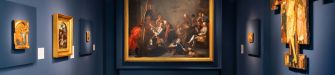
The exhibition is housed in the Santa Croce Apartment, but the project extends beyond the rooms directly featuring the works. The tour ideally encompasses the entire museum itinerary of the Ducal Palace, guiding visitors through the spaces that Ferdinando Gonzaga had designed, decorated, or modified during his reign. This itinerary thus allows visitors to connect the exhibited works with the historic rooms of the Mantua palace, offering a broader understanding of the figure of Ferdinando Gonzaga and his role as patron, collector, and duke. Four centuries after his death, the exhibition aims to restore prominence to a key figure of the Gonzagas’ final great artistic era.
|
| Ferdinando Gonzaga, Patron and Duke: A Major Exhibition in Mantua Marking the 400th Anniversary of His Death |

Warning: the translation into English of the original Italian article was created using automatic tools. We undertake to review all articles, but we do not guarantee the total absence of inaccuracies in the translation due to the program. You can find the original by clicking on the ITA button. If you find any mistake,please contact us.






















 IT
IT FR
FR DE
DE ES
ES CN
CN


