



by Redazione 16/07/2026



Categories: Exhibitions / Disclaimer
From July 16 to October 16, the Forte Belvedere in Florence will host “No Heroes,” an exhibition dedicated to Marino Marini and curated by Sergio Risaliti. Five of the artist’s bronze sculptures engage in a dialogue with the works of Paolo Canevari in the second act of the project “Drama: Four Acts.”

From July 16 to October 16, the Forte Belvedere in Florence will host “No Heroes,” an exhibition dedicated to Marino Marini that constitutes the second chapter of “Drama: Four Acts,” an exhibition project conceived and curated by Sergio Risaliti. Sponsored by the City of Florence and organized by the Mus.e Foundation, with scientific coordination by the Museo Novecento, the initiative continues the series launched on June 24 with Paolo Canevari’s solo exhibition, *God Year*, offering a dialogue between works from the historic Novecento movement and contemporary art.
Conceived as a narrative divided into four acts spread throughout the summer season, *Drama: Four Acts* connects different artists, artistic languages, and periods, using the spaces of Forte Belvedere as a meeting place where contemporary art, historical heritage, and the landscape converge. With *No Heroes*, a selection of five bronze sculptures by Marino Marini enters into dialogue with the works of Paolo Canevari, shaping an exhibition that explores the themes of memory, history, and the human condition.
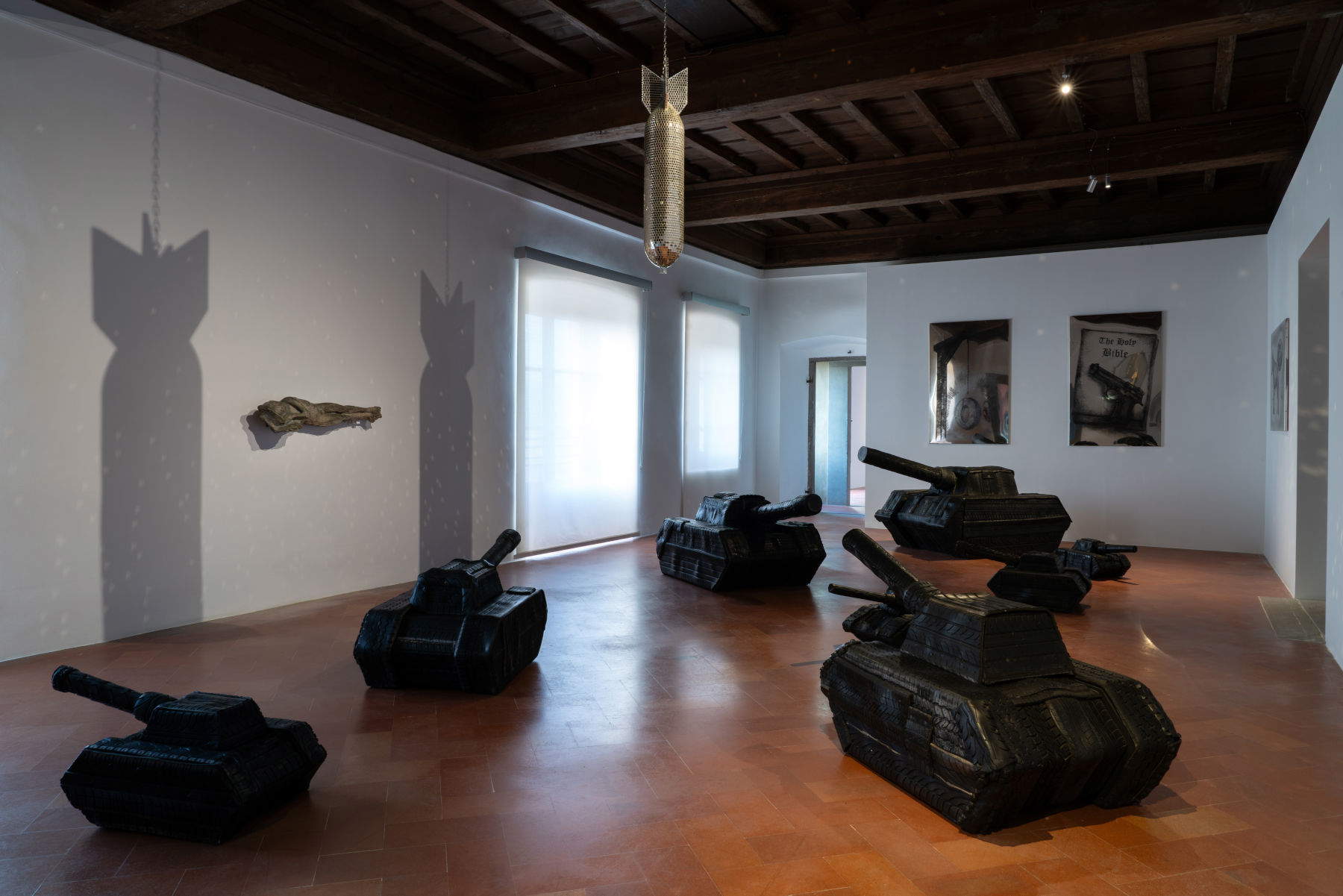
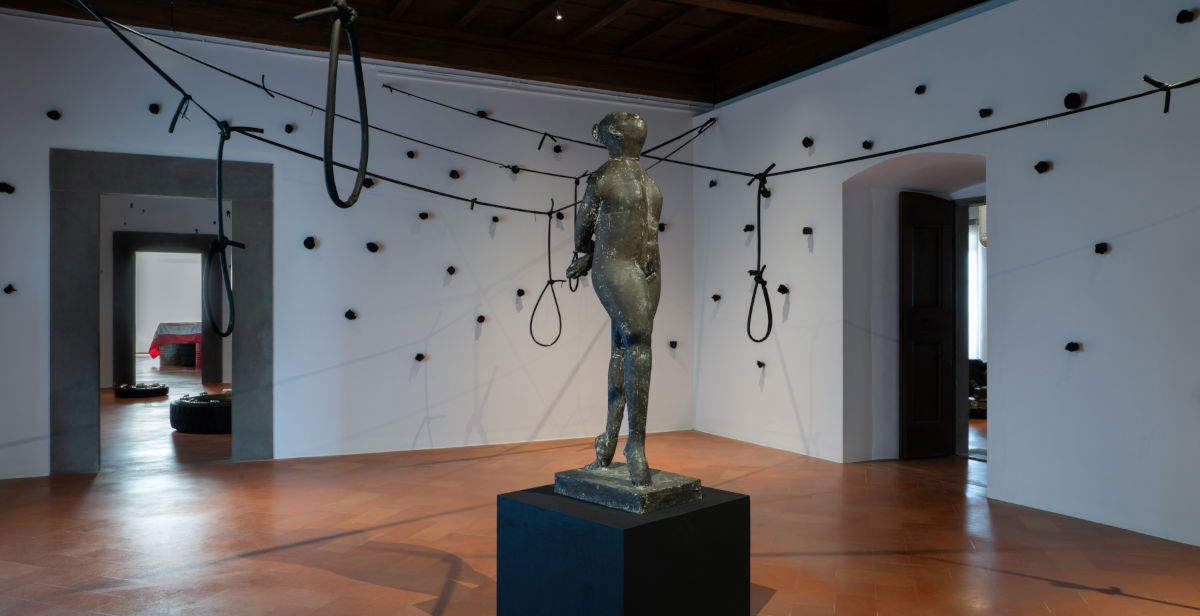
The exhibition is located on the first floor of the Palazzina at Forte Belvedere, where the comparison between Marino Marini and Paolo Canevari focuses on an analysis of the transformations of humanistic civilization and the tensions spanning the 20th century and the present. On one hand, Marini’s works, characterized by a constant reflection on the human figure and its archetypes; on the other, Canevari’s contemporary language, based on the use of industrial and recycled materials to evoke historical, social, and political conflicts.


At the heart of Marino Marini’s artistic exploration lies the theme of the horse and the rider, which he addressed throughout his career as a metaphor for the relationship between the individual, nature, and history. While the works created in the 1930s still retain a monumental balance and a sense of classical influence, the events of World War II, the Holocaust, and the prospect of a nuclear apocalypse profoundly altered the sculptor’s artistic language. The figures take on rigid, angular forms, while the horse rears up to the point of unseating the rider in the famous *Miracoli* series. The loss of balance thus becomes an image of the crisis of contemporary man, incapable of controlling the violence generated by history.
In the interpretation presented by the exhibition, the motif of the horse and rider also serves as a critique of technological and industrial society, which Marini held responsible for processes of dehumanization, conflict, and destruction. This tragic sentiment runs through his later works, such as the *Gridi* and *Miracoli* series, where the figures appear shattered, distorted, screaming, or slumped, translating into sculptural forms the anxieties of an era marked by war and the nuclear threat.
“Humans,” the artist wrote regarding nuclear energy, “have discovered something greater than themselves, something they can no longer control, which has become dangerous to humanity [...], the artist feels all of this as keenly as—and a hundred times more than—others […] so it becomes tragic, absolutely tragic. That is why my sculptures are selected forms, architectures of an enormous tragedy […]. The horsemen and the horse, in my latest works, have become strange fossils, symbols of a vanished world—or rather, of a world that I believe is destined to vanish forever.”
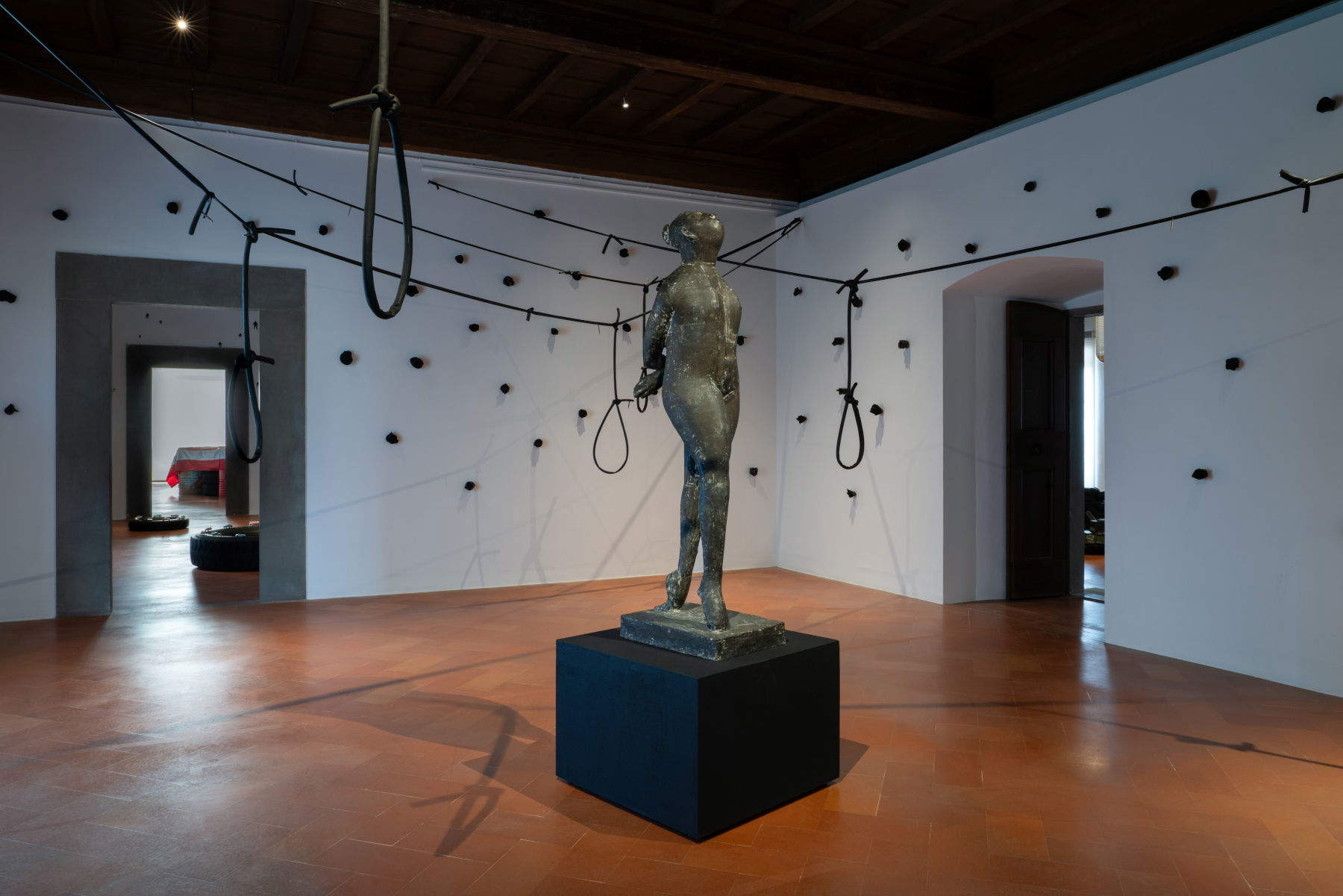
Also connected to this theme is *The Prisoner*, considered one of the finest examples of his minimalist modeling, in which the human figure takes on the role of a defenseless victim of history, sacrificed to progress and the destructive ambitions of power.
Among the works on display is also a *Bagnante*(*Bather*), whose crouching posture recalls Michelangelo’s famous *Adolescent *. In Marini’s sculpture, however, a sense of introspective melancholy, despondency, and dejection prevails, reflecting the evolution of his artistic exploration following the tragedies of the 20th century.
Rounding out the core group of five sculptures is the Dancer, located in a room featuring the tire-based sculptures created by Paolo Canevari. Like the Tightrope Walker, the dancer also belongs to the world of the circus, a universe that held a strong fascination for the artist. Acrobats, street performers, and dancers become, in the final phase of Marino Marini’s work, alternative figures to the traditional myth of the hero. Following the dissolution of the image of triumphant humanity—marked by wars and the prospect of a new technological catastrophe— these characters take on the meaning of symbols of creativity, imagination, play, and irony, evoking a primal dimension of human experience that, in the sculptor’s vision, can still stand against the processes of dehumanization.
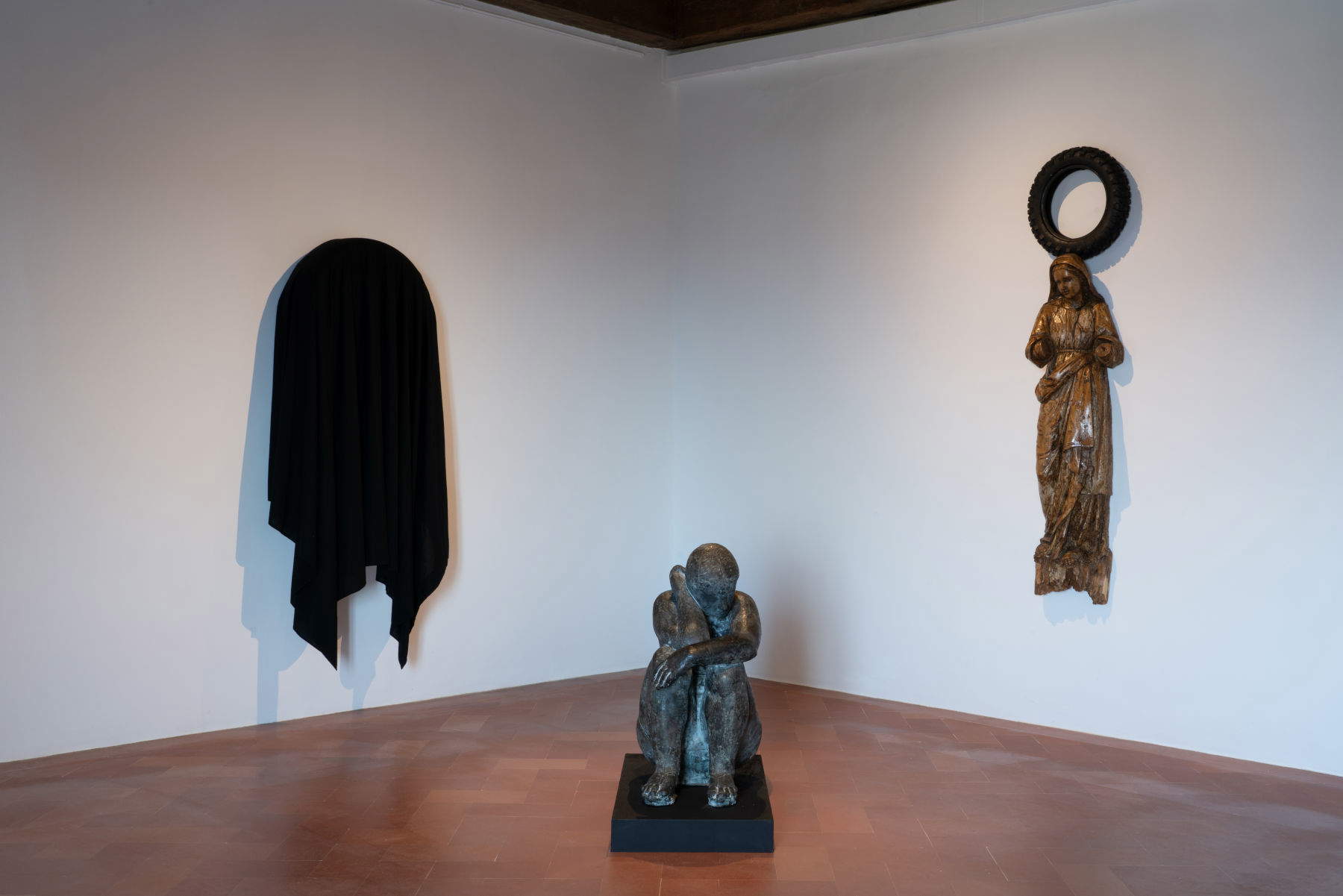
“I lived behind the theater, because behind it lies, for the imagination, a formidable world: form blends with colors, blends with the character that transforms itself; the false becomes true, the true becomes false; there, the world of imagination opens up,” Marino said regarding his fascination with the circus and its figures. “It is a world of jugglers, where there is no longer male or female: colors and shapes that change, become flat, become full; the entire lived and imagined world lies behind a theater backdrop. This world made a profound impression on me and was of great importance for a certain period—that of the jugglers and dancers—after 1950.”
With *No Heroes*, the *Drama: Four Acts* series continues, using Forte Belvedere as a space for dialogue between works from different eras, fostering an ongoing conversation between historical memory and the present. The project will continue in September with the third exhibition, *Oscuro Abbagliante*, a site-specific installation by Norwegian artist Per Barclay.
Statements
“With *No Heroes*, Forte Belvedere once again becomes a place of research, dialogue, and experimentation, where historical heritage meets the great figures of modern and contemporary art,” said Giovanni Bettarini, councilor for culture. “The juxtaposition of Marino Marini’s work with that of Paolo Canevari offers the public an experience of extraordinary intensity, capable of connecting different eras through universal themes such as human fragility, conflict, memory, and hope. This is the essence of the *Drama: Four Acts* project: to highlight one of the city’s iconic landmarks through a high-caliber cultural initiative that invites citizens and visitors alike to experience the Fort as a space open to dialogue, reflection, and discovery. I would like to thank Sergio Risaliti, the Museo Novecento, the Department of Culture, the MUS.E Foundation, and everyone who made this project possible—a project that further enriches the cultural offerings of the “Estate Fiorentina.”
“The juxtaposition with Paolo Canevari offers a surprisingly contemporary interpretation of Marino Marini’s work,” says Sergio Risaliti, director of the Museo Novecento. “The exhibition is driven by a dramatic structure that emphasizes contrast and even a reversal of meaning. The subjects undergo a shift in meaning, so that the Bather becomes a woman in mourning, a woman at the foot of a Calvary, a figure prostrate before the ineffable and before pain, reinforcing the contrast between vitality and pessimism, between irony and nihilism, between creative energy and destructive forces, power and innocence. While Canevari confronts the viewer with the contradictions and violence of the present through industrial materials transformed into unsettling images, Marini explores the very fragility of humanity through the timeless power of sculpture and the archetypal figures of the Horse and Rider, as well as those of the Dancer or the Prisoner. The dialogue between the two artists thus transcends the chronological distance and highlights a continuity of questions regarding the fate of humankind, conflict, and dehumanization, making the Fortress of San Giorgio the place where past and present meet.”
 |
| Florence, Marino Marini at Forte Belvedere: Five Sculptures in Dialogue with Paolo Canevari |
Warning: the translation into English of the original Italian article was created using automatic tools. We undertake to review all articles, but we do not guarantee the total absence of inaccuracies in the translation due to the program. You can find the original by clicking on the ITA button. If you find any mistake,please contact us.