




by Redazione 18/07/2026



Categories: Exhibitions / Disclaimer
The GAM in Turin is organizing a major traveling exhibition dedicated to Antonio Fontanesi, which will be held in Kyoto, Tokyo, and Nagoya. The project celebrates the 160th anniversary of diplomatic relations between Italy and Japan (and the 170th anniversary of Fontanesi’s stay in Tokyo) and further advances the Torino Musei Foundation’s internationalization efforts.


Antonio Fontanesi, one of the great figuresof 19th-century Italian and European art, returns to Japan 150 years after moving to Tokyo, where he went to teach at the local Technical School of Fine Arts. The Fondazione Torino Musei is dedicating an exhibition to Antonio Fontanesi (Reggio Emilia, 1818 – Turin, 1882), who was also a central figure in the development of modern Japanese painting. Through the GAM—Turin’s Civic Gallery of Modern and Contemporary Art— the foundation will bring a major traveling exhibition to three of Japan’s leading museums between 2026 and 2027, in part to strengthen cultural dialogue between the two countries as part of the celebrations marking the 160th anniversary of diplomatic relations between Italy and Japan. The initiative represents a new chapter in the sixth cultural pillar of the Fondazione Torino Musei, dedicated to international activities, and constitutes one of the most significant cultural diplomacy projects promoted by the Turin-based institution in recent years.

The exhibition, titled “Antonio Fontanesi. Transcending Landscape. A European Artist at the Opening of Japan, ” will be hosted between 2026 and 2027 by three museums: the National Museum of Modern Art in Kyoto, the Mitsubishi Ichigokan Museum in Tokyo, and the Nagoya City Art Museum, the result of a scientific and institutional collaboration involving some of the most important Italian and Japanese cultural institutions. The exhibition is produced by the GAM – Turin Civic Gallery of Modern and Contemporary Art and the Fondazione Torino Musei in collaboration with the National Museum of Modern Art in Kyoto, the Mitsubishi Ichigokan Museum in Tokyo, and the Nagoya City Art Museum.


The project is supported by the Ministry of Foreign Affairs and International Cooperation through the Directorate General for Growth and Export Promotion, with special collaboration from the Italian Embassy in Tokyo and the Italian Cultural Institutes in Tokyo and Osaka, and in partnership with the Turin Chamber of Commerce. Curated by Elena Volpato and Alessandro Botta, the exhibition offers a new interpretation of Antonio Fontanesi, highlighting his role not only as a leading figure in 19th-century European landscape painting but also as the architect of one of the most significant encounters between Western artistic culture andMeiji-era Japan. The project holds particular symbolic significance because, as mentioned, it comes exactly 150 years after the artist’s stay in Japan and nearly 50 years after the historic exhibition *Fontanesi, “Ragusa and Japanese Art in the Early Meiji Period,” held in Tokyo and Kyoto in 1977 and 1978. The goal is to reexamine the role played by Fontanesi in Japan’s artistic modernization, where, between 1876 and 1878, he was invited to teach at the Kōbu Bijutsu Gakkō, the art school founded during the Meiji period with the aim of introducing Western artistic techniques to the country.
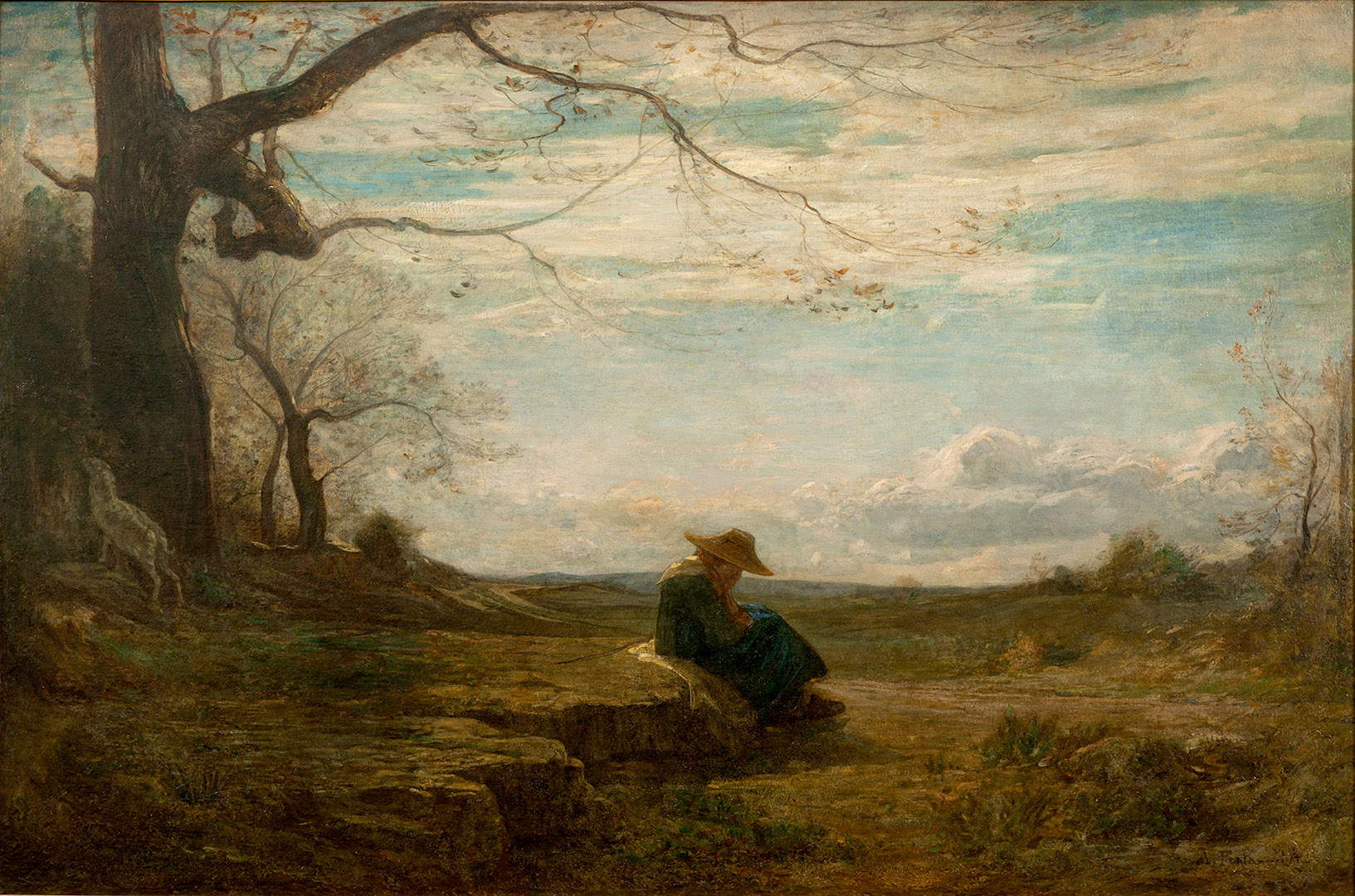
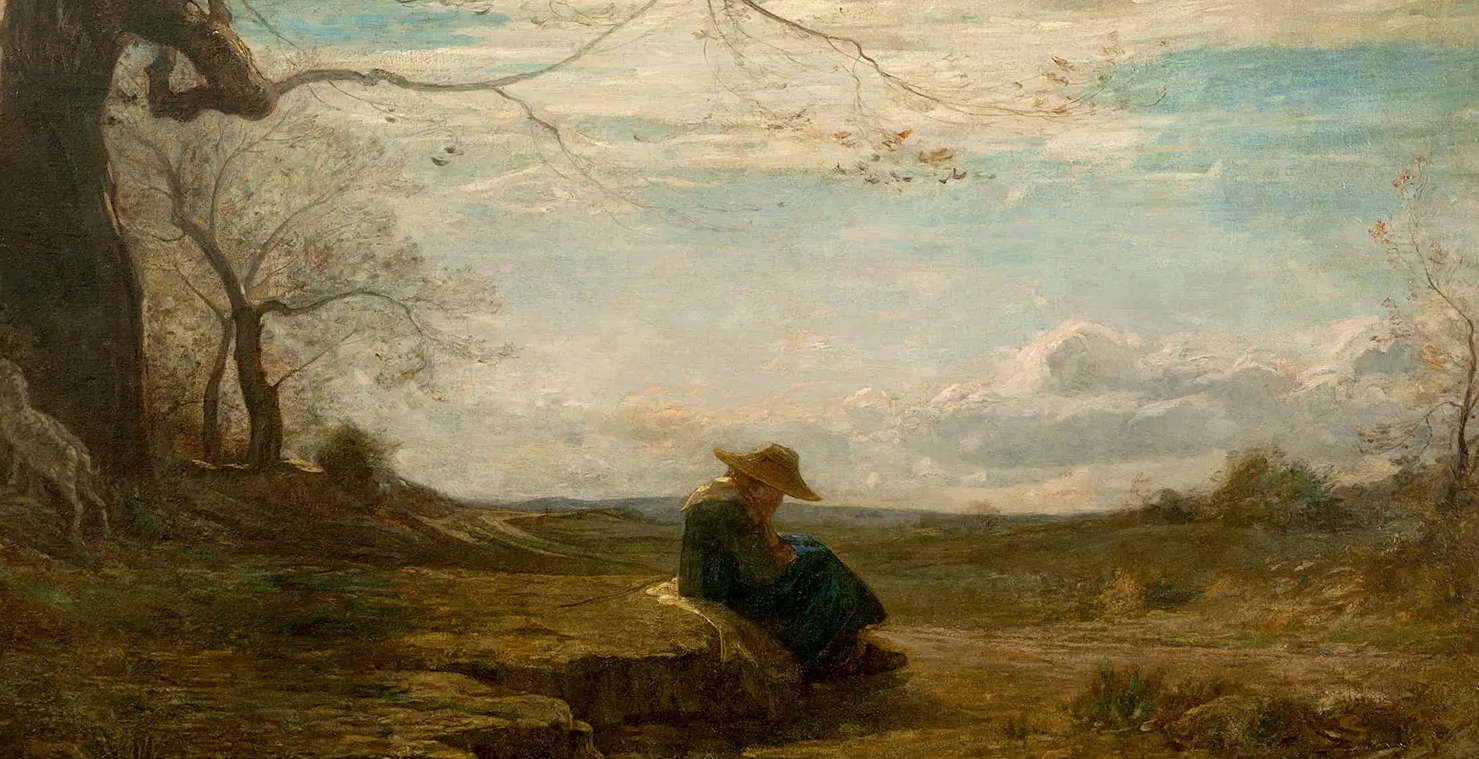
Fontanesi’s contribution was decisive for the formation of the modern Japanese school of painting. Through his teaching—basedon direct observation of nature and the practice of painting from life—the Italian master introduced a new way of depicting the landscape, one that was destined to profoundly influence several generations of Japanese artists. The exhibition brings together over two hundred works from Italian and Japanese collections, offering what is presented as the most comprehensive survey dedicated to Fontanesi’s artistic work and his cultural legacy organized in recent decades. The exhibition features paintings, drawings, and prints, and showcases some of the artist’s major masterpieces, including *La quiete*, *Novembre*, *Aprile*, and *Le nubi*.
The exhibition itinerary traces the various phases of Fontanesi’s career, beginning with his formative years and moving through his time in Switzerland, his experiences in France and England, his return to Italy, and the final developments in his artistic exploration. The exhibition is organized into eight thematic sections that allow visitors to trace the evolution of his conception of the landscape, which gradually transformed from a simple representation of nature into an expression of moods, atmospheric perceptions, and inner tensions. The exhibition also highlights his connections with some of the major figures of 19th-century European painting, shedding light on his relationships with the artistic traditions of John Constable, William Turner, Jean-Baptiste-Camille Corot, and the Barbizon School.
Significant attention is also given to Fontanesi’s interest in the changing effects of light, the relationship between humans and nature, agricultural work, and the urban landscape— elements that help define the profile of an artist who was deeply European yet at the same time capable of anticipating sensibilities that would come to characterize modern painting. One of the central sections of the exhibition is dedicated to his stay in Japan and the artistic dialogue he fostered with his students during the years he spent in the country.
Alongside the works created by Fontanesi during his time in Japan, the exhibition will feature paintings and drawings by the artists who trained under his guidance, as well as works now housed in Japanese museums that document the critical acclaim and enduring reception of his artistic vision. The concluding section, on the other hand, exploresthe legacy left by Fontanesi between the late 19th century and the early decades of the 20th century, highlighting his influence on Italian artists such as Daniele Ranzoni, Tranquillo Cremona, Leonardo Bistolfi, Medardo Rosso, Felice Casorati, and Carlo Carrà.
The GAM in Turin plays a fundamental role in this project, as it houses the most significant collection of works by Antonio Fontanesi. The core of the collection became part of the museum’s holdings in 1905 thanks to a bequest from Giovanni Camerana, the artist’s friend and executor. Building on this collection, the GAM has developed over the years a comprehensive research program dedicated to Fontanesi and his ties to Japan, gradually laying the scholarly groundwork that has made this current international project possible.
 |
| Fontanesi Returns to Japan: Turin’s GAM Brings Over 200 Works to Three Major Museums |
Warning: the translation into English of the original Italian article was created using automatic tools. We undertake to review all articles, but we do not guarantee the total absence of inaccuracies in the translation due to the program. You can find the original by clicking on the ITA button. If you find any mistake,please contact us.