





From July 31 to October 7, 2026, the Gigi Guadagnucci Museum at Villa Rinchiostra in Massa will host *Astratto Organico*, an exhibition dedicated to abstract-organic sculpture of the late 20th century, organized to mark the 40th anniversary of Henry Moore’s death. Curated by Mirco Taddeucci, with critical essays by Kevin McManus, the exhibition brings together works by Henry Moore, Augustín Cárdenas, Antoine Poncet, Alberto Viani, Alicia Penalba, and Maria Papa Rostkowska, offering a journey that explores the relationship between form, nature, and abstraction through the work of six leading figures in international sculpture.
This initiative is part of a program launched by the Massa City Administration following the 2025 exhibition *Gigi Guadagnucci and Gio’ Pomodoro: A Conversation on Nature*, with the goal of developing a long-term cultural strategy. With this in mind, the Gigi Guadagnucci Museum and Villa Rinchiostra aim to consolidate their role as a center dedicated to the study and promotion of 20th-century sculpture.
The selection of the participating artists also stems from the connection many of them had with Tuscany and, in particular, with the Apuan-Versilian region. Gigi Guadagnucci, first in France and later in Italy, came into contact with some of the leading sculptors of his time during a period characterized by intense artistic vitality, which found one of its main focal points in the Apuan Alps thanks to the tradition of marble working. In addition to their connection to the region, the artists share a conception of form that takes nature as the origin of the creative process, transforming organic elements into essential volumes, sculptural tensions, cavities, and abstract rhythms.
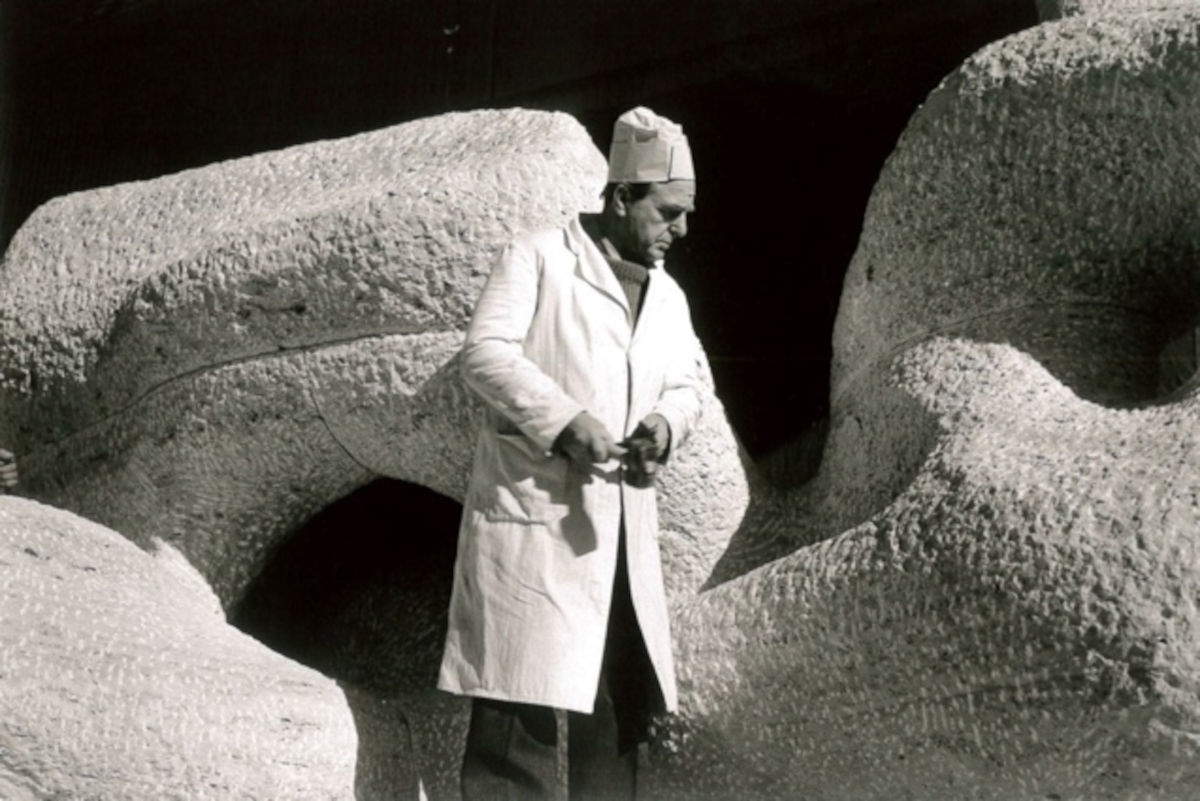
Henry Moore occupies a central position within the exhibition. In 1956, he was commissioned to create *Reclining Figure* for the UNESCO headquarters in Paris, and the following year he arrived in Versilia, beginning a relationship that would continue in the years to come through his work at Henraux, his collaboration with *Il Bisonte* in Florence, and the exhibition held at Forte Belvedere in 1972. The exhibition also commemorates the 70th anniversary of the commission for the UNESCO work, highlighting the bond the artist forged with Tuscany.
Alongside Moore are Antoine Poncet, who identified Apuan marble as the most suitable material for an artistic exploration grounded in the balance between abstraction and the purity of form; Alicia Penalba, creator of a sculpture characterized by volumes inspired by the plant world and dynamic structures; Alberto Viani, who developed a progressive synthesis of the human figure into biomorphic forms; Augustín Cárdenas, whose work in the Versilia workshops gave rise to a language in which nature and imagination merge; and Maria Papa Rostkowska, a member of the Nouvelle École de Paris and one of the first women to establish herself in postwar marble sculpture in Versilia, whose work is based on the organic synthesis of forms.
The exhibition features a total of 33 works, four of which have never been shown before. The exhibition brings together artists from diverse geographical backgrounds—from the United Kingdom to Argentina, from Switzerland to France, from Italy to Cuba and Poland—highlighting how different artistic languages and cultures have developed shared reflections on the relationship between matter, space, and nature. Alongside the sculptures are plaster sketches, paintings, collages, and preparatory drawings—materials that allow visitors to trace the various stages of the creative process and observe the genesis of the works before their final realization.
The title *Abstract Organic* evokes precisely the idea of an abstraction that preserves the essential structures of reality. Curves, cavities, and surfaces traversed by light and shadow thus become the elements of a shared language that runs through the entire exhibition, connecting different artistic experiences united by a shared interest in organic forms.
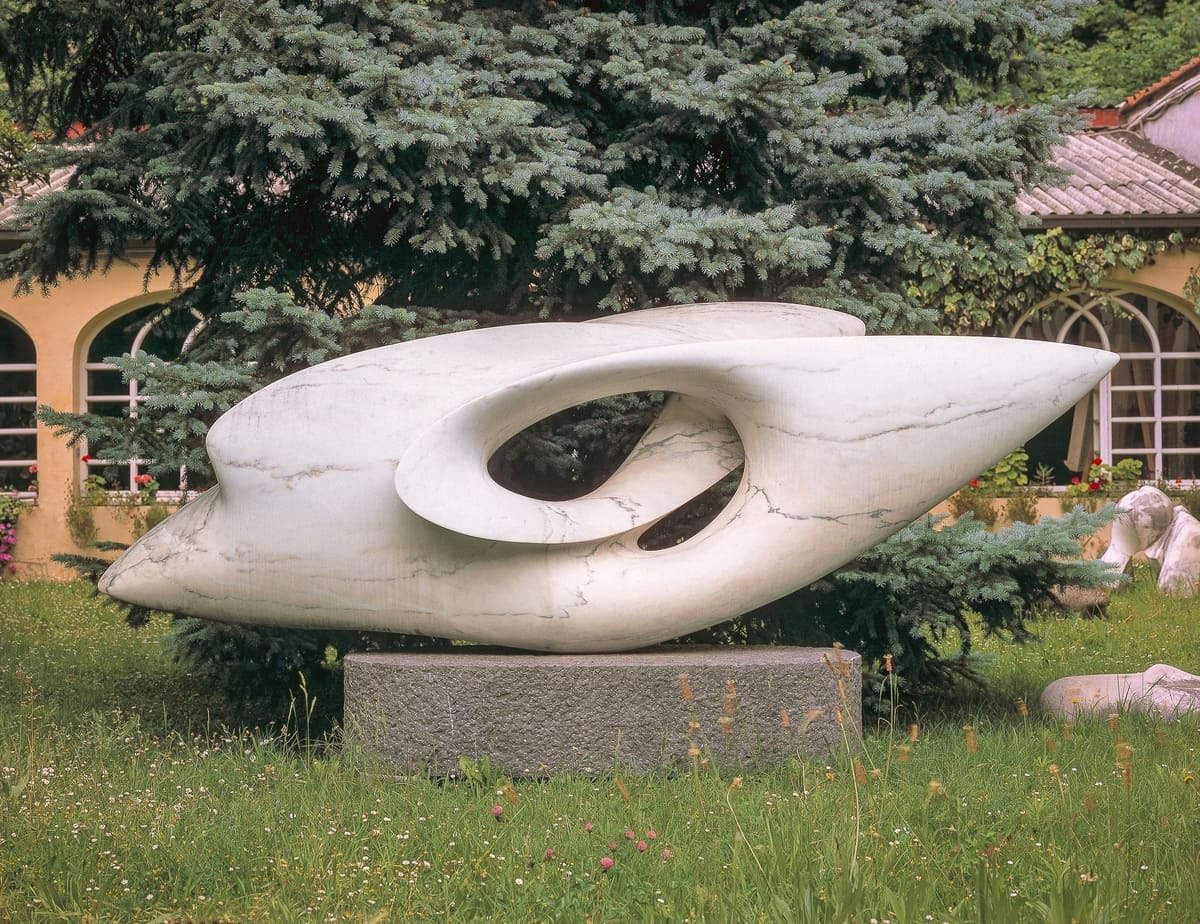
The exhibition begins outside Villa Rinchiostra with *Fugue Lacustre*, a monumental sculpture in pink marble by Antoine Poncet, situated in front of the building in a chromatic dialogue with the villa’s façade. The work introduces some of the exhibition’s main themes: the reduction of natural form to an essential plastic structure, the continuity of surfaces, and the relationship between mass and dynamism.
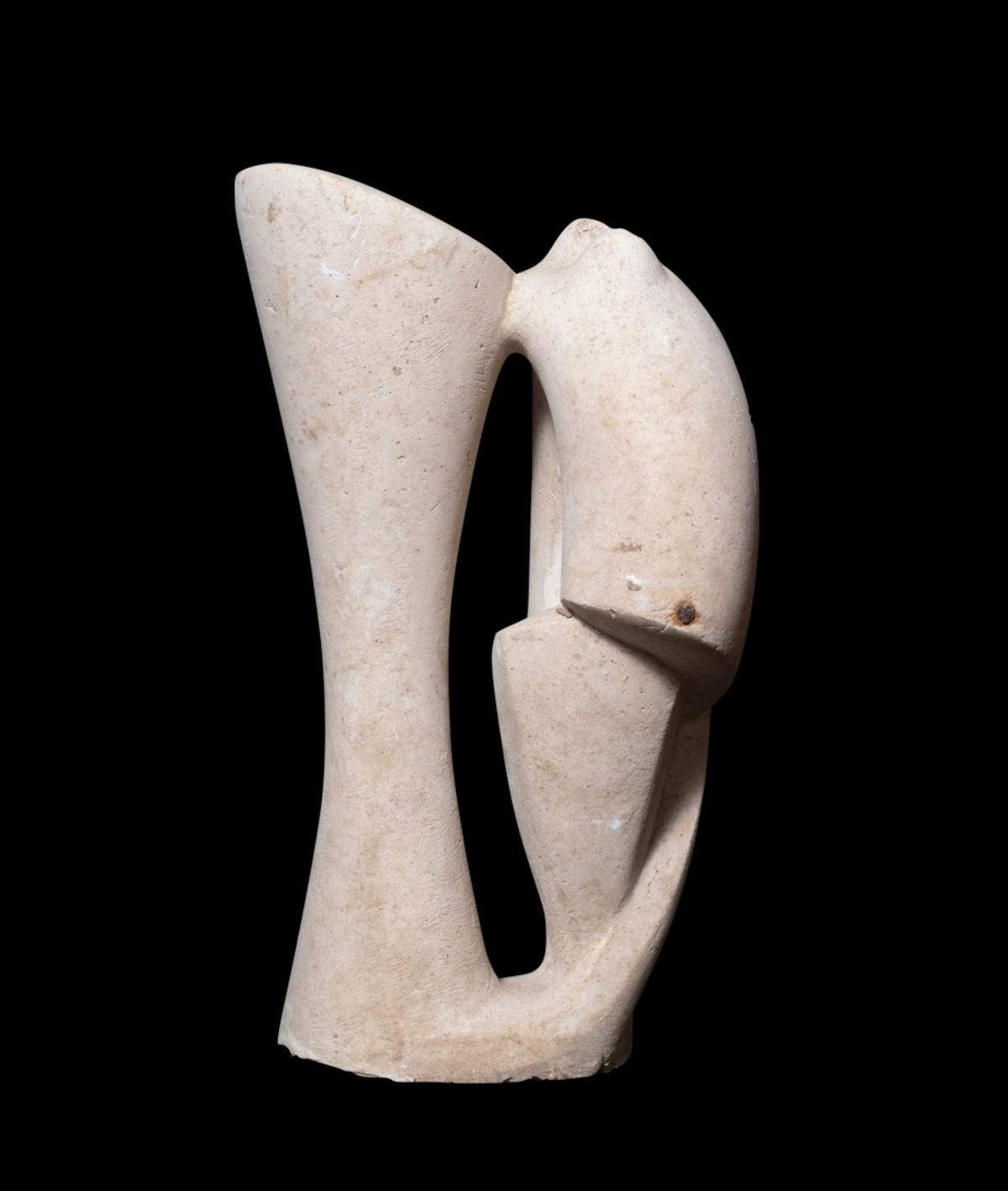
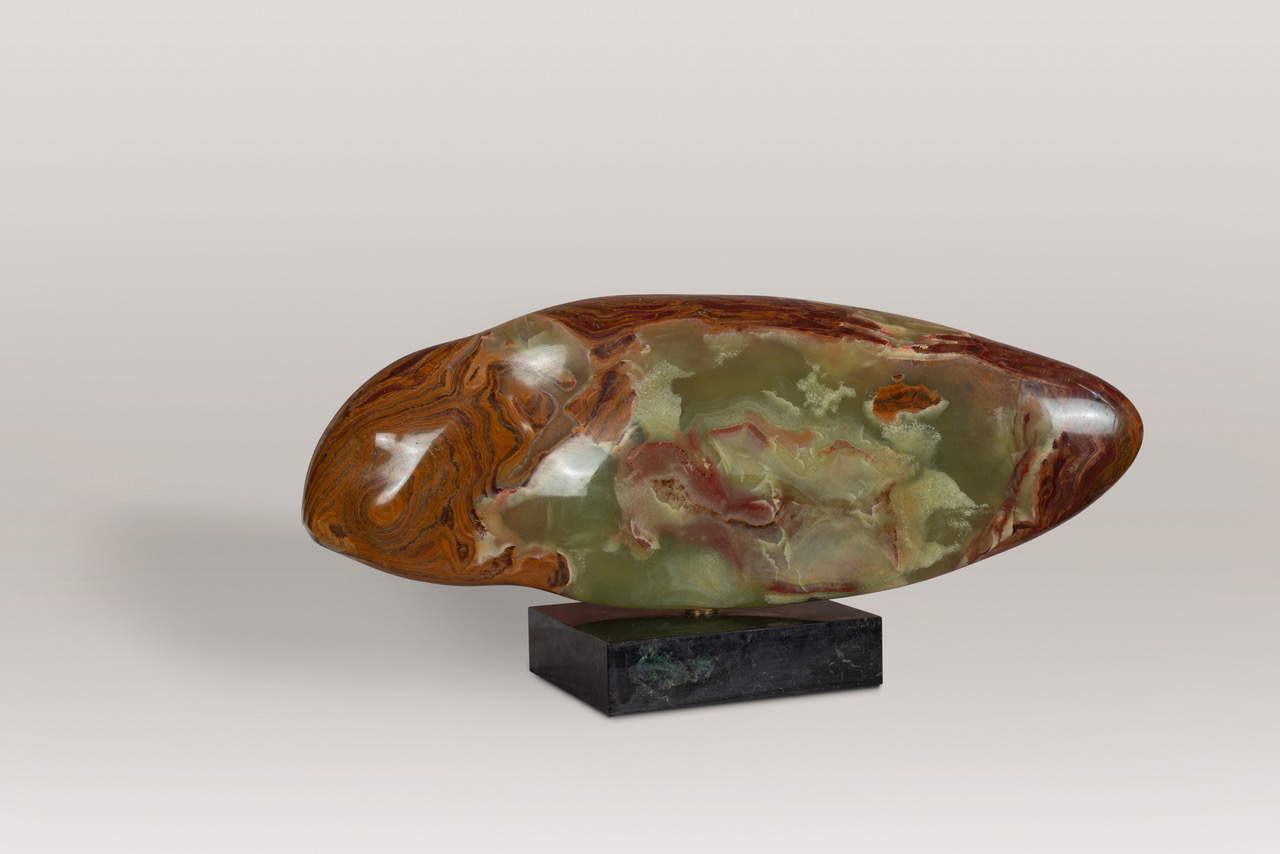
Inside, the exhibition is organized by thematic clusters rather than chronologically. The first rooms are dedicated to the transformation of natural forms into autonomous structures. Alicia Penalba’s sculptures, such as *Cinq Ailes*, display a vertical articulation inspired by the motif of the wing, interpreted not as a descriptive element but as a constructive principle. Alongside them is *Poisson* by Maria Papa Rostkowska, in which the animal figure is synthesized into a compact and essential presence.
Penalba’s works also include a collage and a small bronze sculpture that have never been exhibited before. Maria Papa Rostkowska, meanwhile, has a canvas on display that has never been shown to the public, which broadens the understanding of her work beyond her sculptural output and documents another aspect of her artistic exploration.
The section dedicated to Alberto Viani explores the theme of the human figure as a starting point for progressive abstraction. In his nudes and torsos, the body retains its recognizability while transforming into an autonomous sculptural form. The work *Nude in the Sun* represents one of the most significant examples of this exploration, achieved through the continuity of surfaces, the balance of volumes, and the dialogue with the surrounding space.
The largest section of the exhibition is dedicated to Henry Moore. Preparatory drawings, studies on paper, and sculptures—including *Draped Reclining Figure*—document the recurring themes of his work: the human figure, the relationship between masses and voids, and the connection between anatomy and landscape. The graphic studies allow visitors to trace the design process leading up to the creation of the sculptures, while the bronzes illustrate the three-dimensional translation of the forms developed on paper.
The final section of the exhibition is dedicated to Augustín Cárdenas. Born in Havana and active in Paris from the mid-1950s onward, the artist developed a body of work in which organic references, totemic elements, and natural imagery are condensed into essential forms. The plaster casts on display, including a previously unseen sketch, document the design phase preceding the creation of the works in marble, bronze, or wood. The exhibition thus concludes with Cárdenas’s reflection on nature as the generative principle of sculptural form.
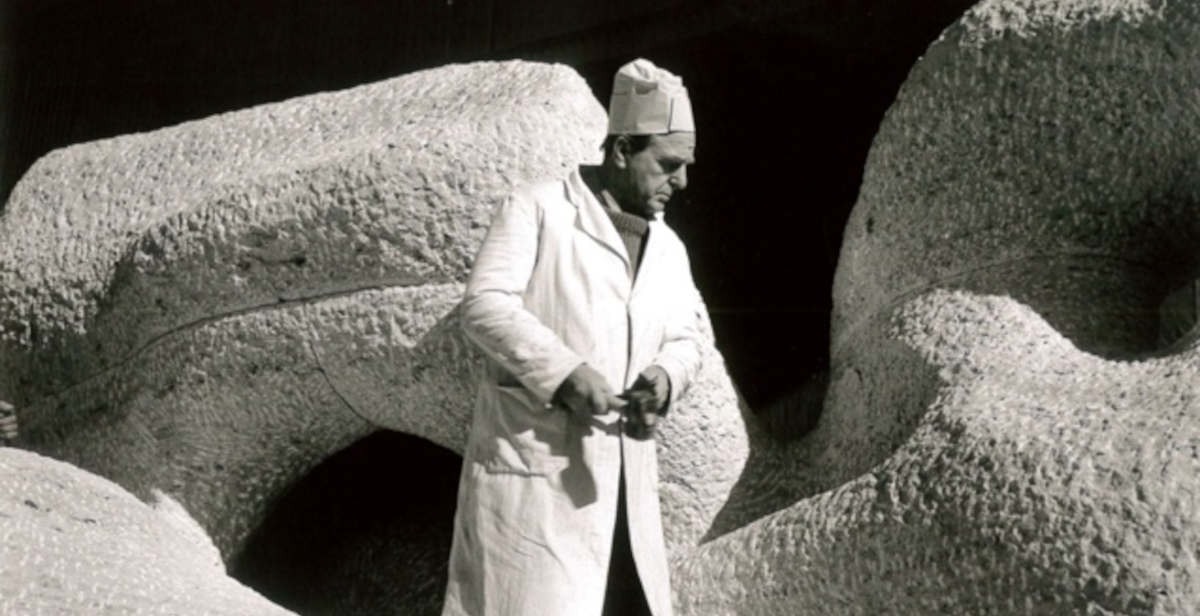 |
| Henry Moore on display at the Guadagnucci Museum in Massa to mark the 40th anniversary of his death |

Warning: the translation into English of the original Italian article was created using automatic tools. We undertake to review all articles, but we do not guarantee the total absence of inaccuracies in the translation due to the program. You can find the original by clicking on the ITA button. If you find any mistake,please contact us.



















 IT
IT FR
FR DE
DE ES
ES CN
CN


