




by Redazione 03/06/2026



Categories: Exhibitions / Disclaimer
At the Museum of the Twentieth Century in Milan, an exhibition dedicated to Pablo Picasso's Homme assis reconstructs the story of the artist's first painting to enter Milan's civic collections: the work tells us about anti-Francoist commitment, international solidarity and cultural memory.

A work of art that recounts not only the creative journey of one of the greatest protagonists of the 20th century, namely Pablo Picasso (Malaga, 1881 - Mougines, 1973), but also a season of civil commitment, international solidarity and political mobilization. This is the starting point of the exhibition The First Picasso in Milan. A Musketeer between Revolution, Antifrancoism and International Solidarity, on display from today until Sept. 27 on the ground floor of the Museo del Novecento and dedicated to the story of Homme assis, the first painting by Pablo Picasso to enter the Milanese civic collections in 1972.
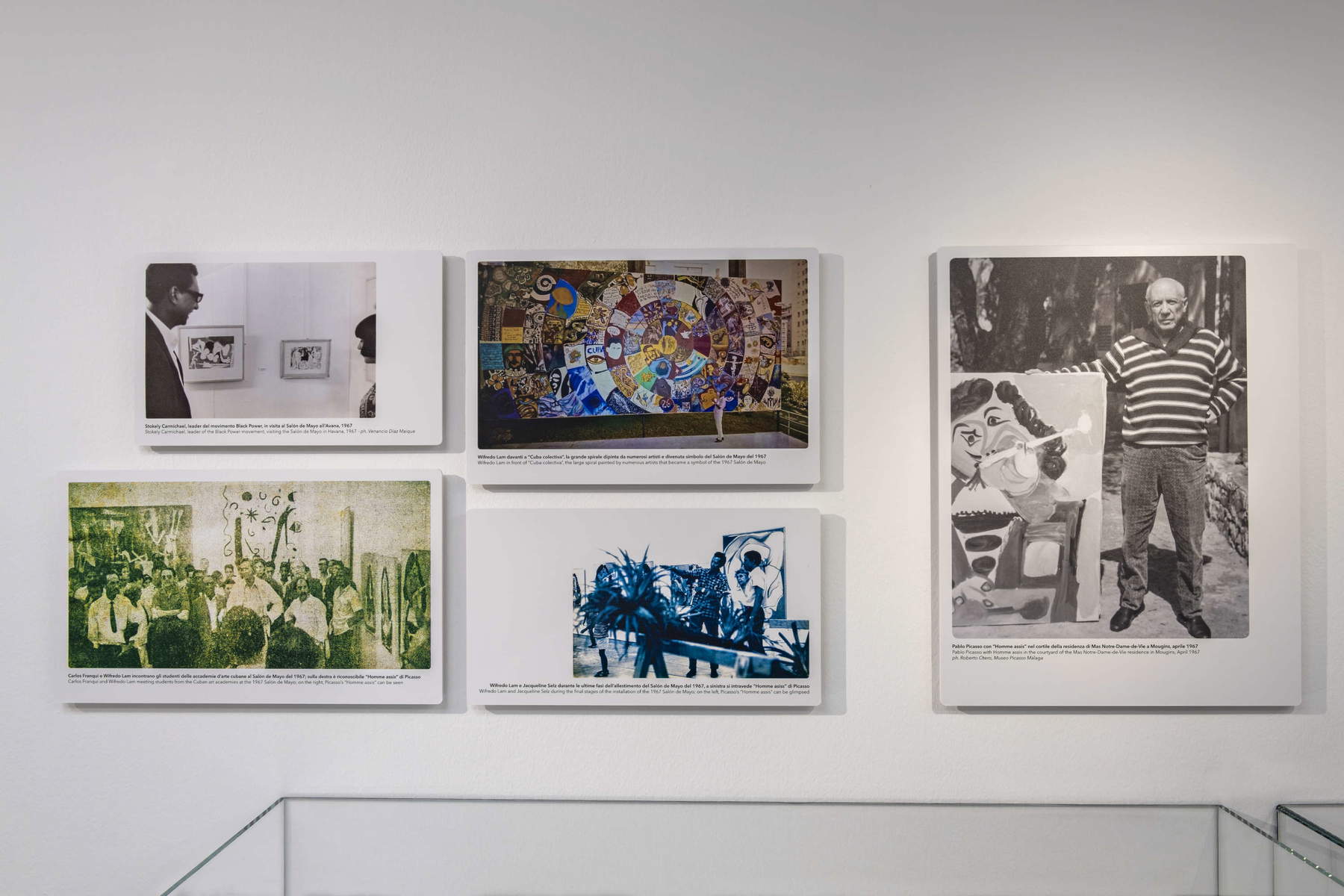
Curated by Roberto Pini, the exhibition project proposes a historical-critical rereading of the work, going beyond its strictly artistic dimension to reconstruct the complex international journey that brought it from Paris toHavana and finally to Milan. Through documents, period photographs and audiovisual materials, the focus in fact addresses the relationship between art, politics and cultural institutions in the second half of the 20th century, restoring to the public the historical context in which the painting was produced, exhibited and finally acquired by the City of Milan.


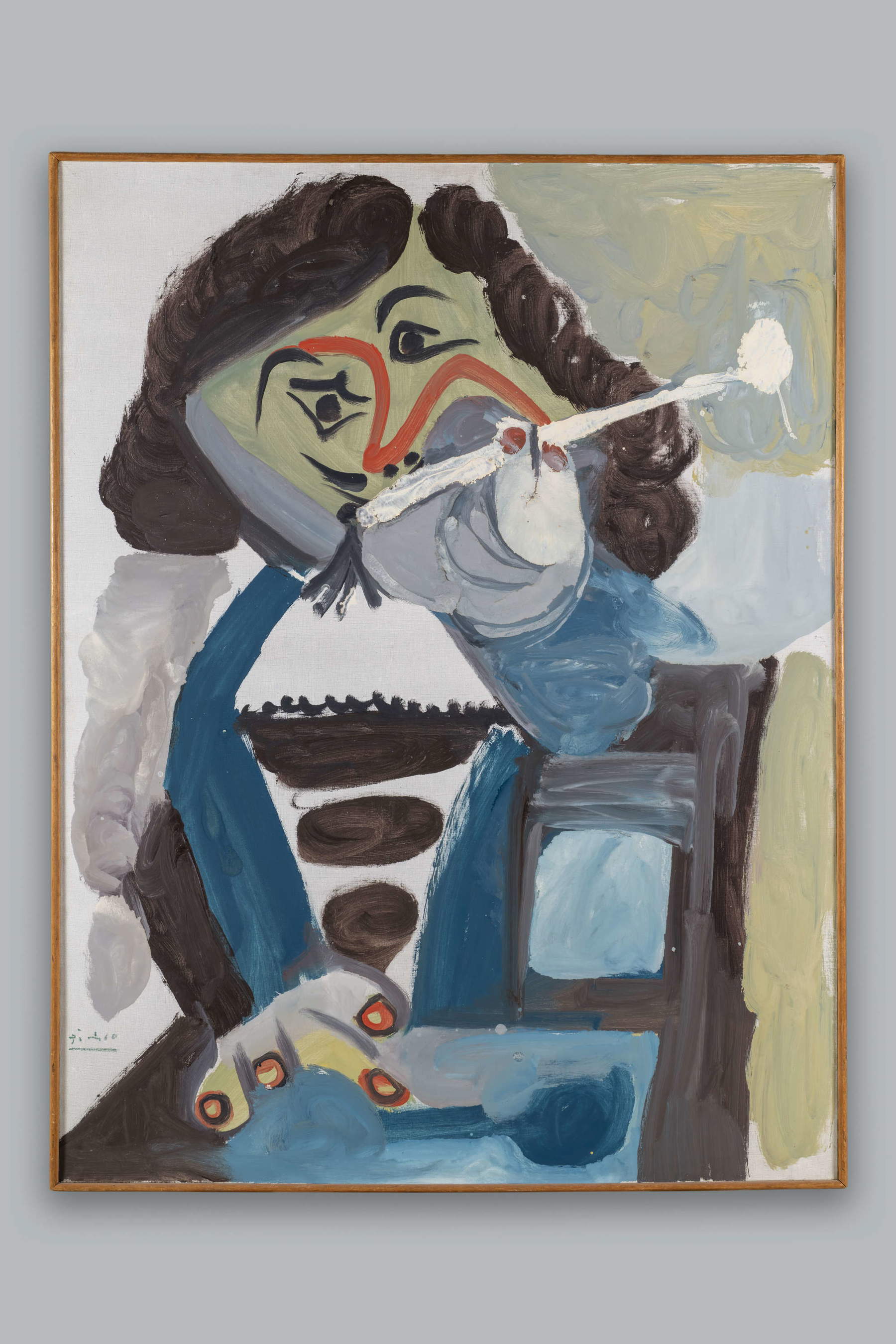
Created in 1967, Homme assis belongs to the famous Musketeers series, one of the most significant cycles of Picasso’s last creative phase. The works in this series have traditionally been interpreted by critics as imaginary projections of the artist himself, figures through which the Spanish master reflected on his own identity, memory and the passage of time. However, the Museo del Novecento’s new focus proposes a broader perspective, placing the painting within the different cultural and political contexts that accompanied its public circulation in the late 1960s and early 1970s. This was a period characterized by profound social transformations and a strong international mobilization on issues of civil rights, political freedom and solidarity among peoples. In this painting, Homme assis takes on a meaning that goes beyond a simple iconographic reading, becoming evidence of a precise historical season and a commitment that directly involved Picasso.
Before arriving in Milan, the painting was in fact the protagonist of an important international journey. The work was initially exhibited at the Salon de Mai in Paris, one of the main French art exhibitions after World War II, and then reached the Salón de Mayo in Havana. On the latter occasion it was Picasso himself who sent the painting, turning it into a symbol of his own political commitment and his adherence to the values of international solidarity.
The work’s arrival in Milan came at a particularly significant moment in the city’s cultural and civic history. In March 1972, in fact, Milan hosted in the halls of the Palazzo Reale the exhibition Amnistia. Que trata de España, set up in the historic Sala delle Cariatidi. The exhibition was born on the initiative of the CGIL, CISL and UIL labor organizations with the aim of supporting Spanish workers and promoting the demand for amnesty for political prisoners held by the Franco regime. The initiative represented one of the most significant moments in the cultural and political mobilization of those years. The exhibition brought together works by some of the major protagonists of 20th-century international art, transforming Milan into a point of reference for European cultural and democratic debate. Among the artists featured were Joan Miró, Alexander Calder, Antoni Tàpies, Franco Angeli, Renato Guttuso, Carlo Levi, Emilio Vedova, Giulio Turcato and Toti Scialoja.
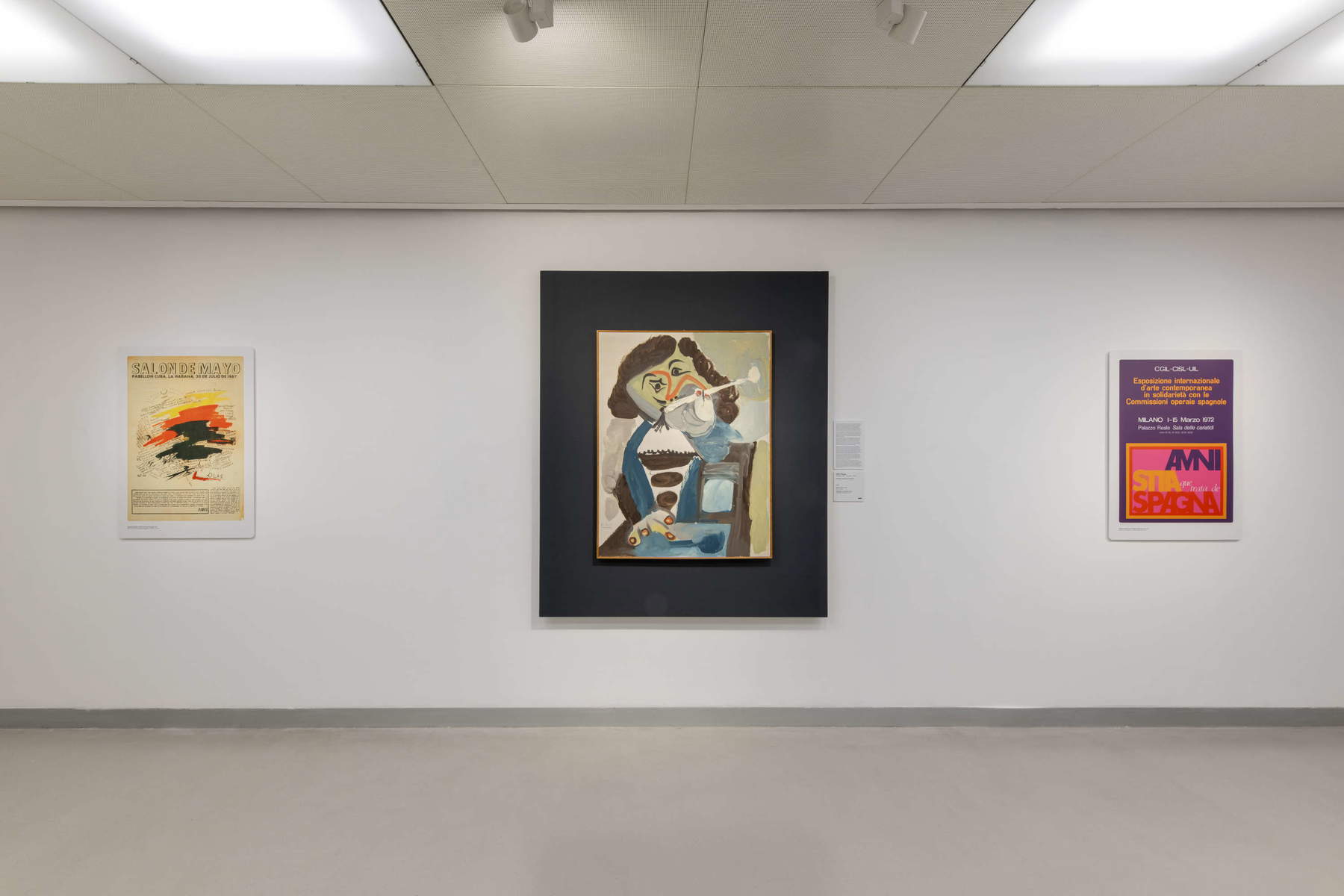
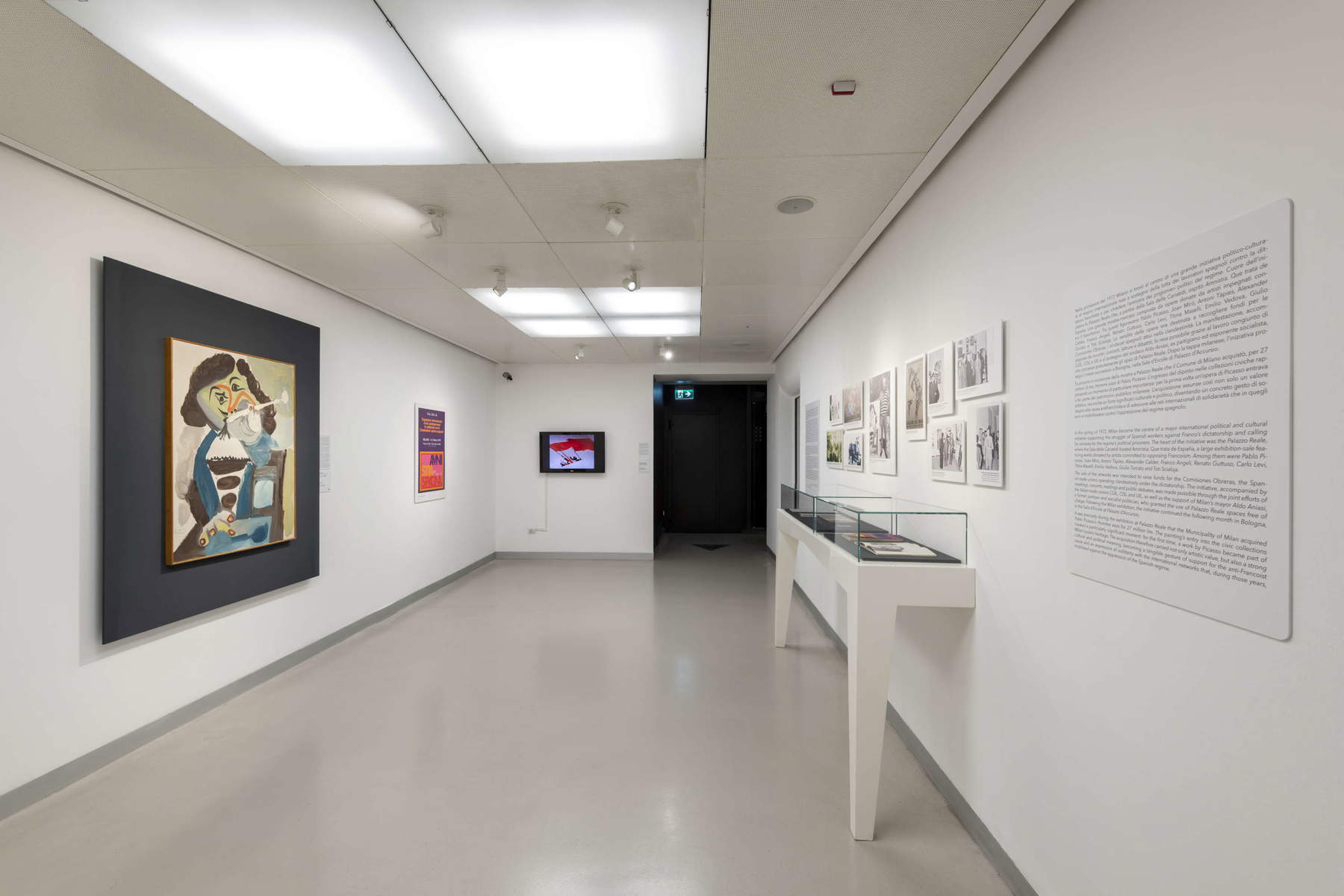
Among all the works on display, Homme assis occupied a special position. It was in fact the only work acquired by the municipal administration, thanks to the will of the then mayor Aldo Aniasi. The acquisition not only represented an important enrichment of Milan’s civic collections, but also took the form of a choice with a strong symbolic and political value. Through that gesture, the city concretely affirmed its closeness to the democratic demands and principles of international solidarity that animated the mobilization against Francisco Franco’s regime.
It is precisely this interweaving of art and civil commitment that constitutes the core of the exhibition proposed today by the Museo del Novecento. The objective is not only to enhance a fundamental work of civic heritage, but also to reconstruct the events that determined its critical fortune and historical significance. Through the materials on display, visitors can follow the painting’s path between different geographical and cultural contexts, observing how its interpretation has gradually transformed over time.
The exhibition is also part of a larger research project that the Museo del Novecento has been carrying out for some years on its heritage. This is a systematic work of reconnaissance, study and cataloguing of the collections that aims to reconstruct the history of the works preserved by the museum, delving into their conservation, exhibition and collecting histories. This research process will reach an important milestone during 2026, when the catalog of the museum’s collections will be shared online. The initiative will make a vast documentary and scholarly heritage accessible to scholars and the public, fostering new readings of the works and new connections between the history of art and that of the city.
According to Milan City Council Culture Councillor Tommaso Sacchi, this exhibition “tells in an exemplary way the work of research, study and enhancement that our museums carry out every day on the civic heritage. Through the story of the first Picasso to enter the Milanese collections, the Museo del Novecento gives back to the public not only the story of an extraordinary work, but also the role of Milan as an open, democratic city deeply linked to the values of culture and international solidarity.”
In the case of Picasso’s painting, this operation takes on even greater significance. More than fifty years after it entered Milan’s public collections, Homme assis in fact continues to tell a story that goes beyond the boundaries of art. Its story intertwines the path of one of the greatest artists of the twentieth century with that of a city that in the 1970s was able to take an active role in processes of international solidarity and in the defense of democratic values.
|
| Milan's first Picasso on display at the Museo del Novecento |
Warning: the translation into English of the original Italian article was created using automatic tools. We undertake to review all articles, but we do not guarantee the total absence of inaccuracies in the translation due to the program. You can find the original by clicking on the ITA button. If you find any mistake,please contact us.