





From April 2 to May 31, 2026, the Museo di Roma in Trastevere is dedicating an exhibition to Annabella Rossi, tracing the work of the pioneer of Italian visual anthropology, who used photography and video as tools for social and scientific analysis. Annabella Rossi. The Poetics of Reality is promoted by Roma Capitale - Assessorato alla Cultura and Sovrintendenza Capitolina ai Beni Culturali and is curated by Stefania Baldinotti, Massimo Cutrupi and Francesco Quaranta of theCentral Institute for Intangible Heritage (ICPI) of the Ministry of Culture, in collaboration with the Museum of Civilizations (MuCIV).
The exhibition is developed through a selection of images, many of them unpublished, from the Annabella Rossi Fund kept at ICPI-MuCIV. The display proposes a choral narrative that starts from the 1959 expedition to Salento, carried out together with the anthropologist and philosopher Ernesto de Martino, to arrive at the extensive investigations conducted in the Mezzogiorno on the themes of popular religiosity and traditional festivals. Among these, the research on Carnival, developed between 1972 and 1976 with the direct involvement of the students of the Cultural Anthropologycourse at the University of Salerno, transforming fieldwork into a shared educational experience, takes on particular importance.
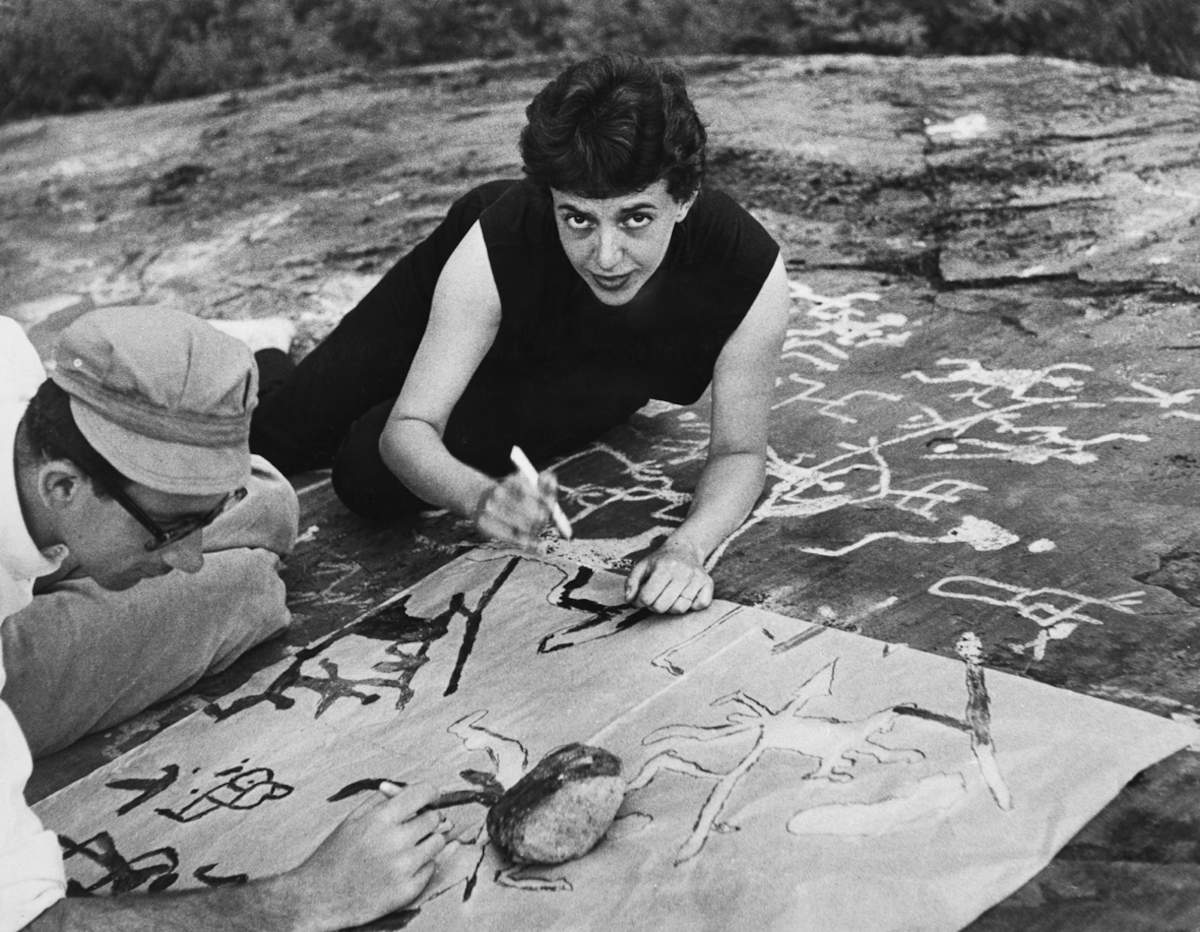
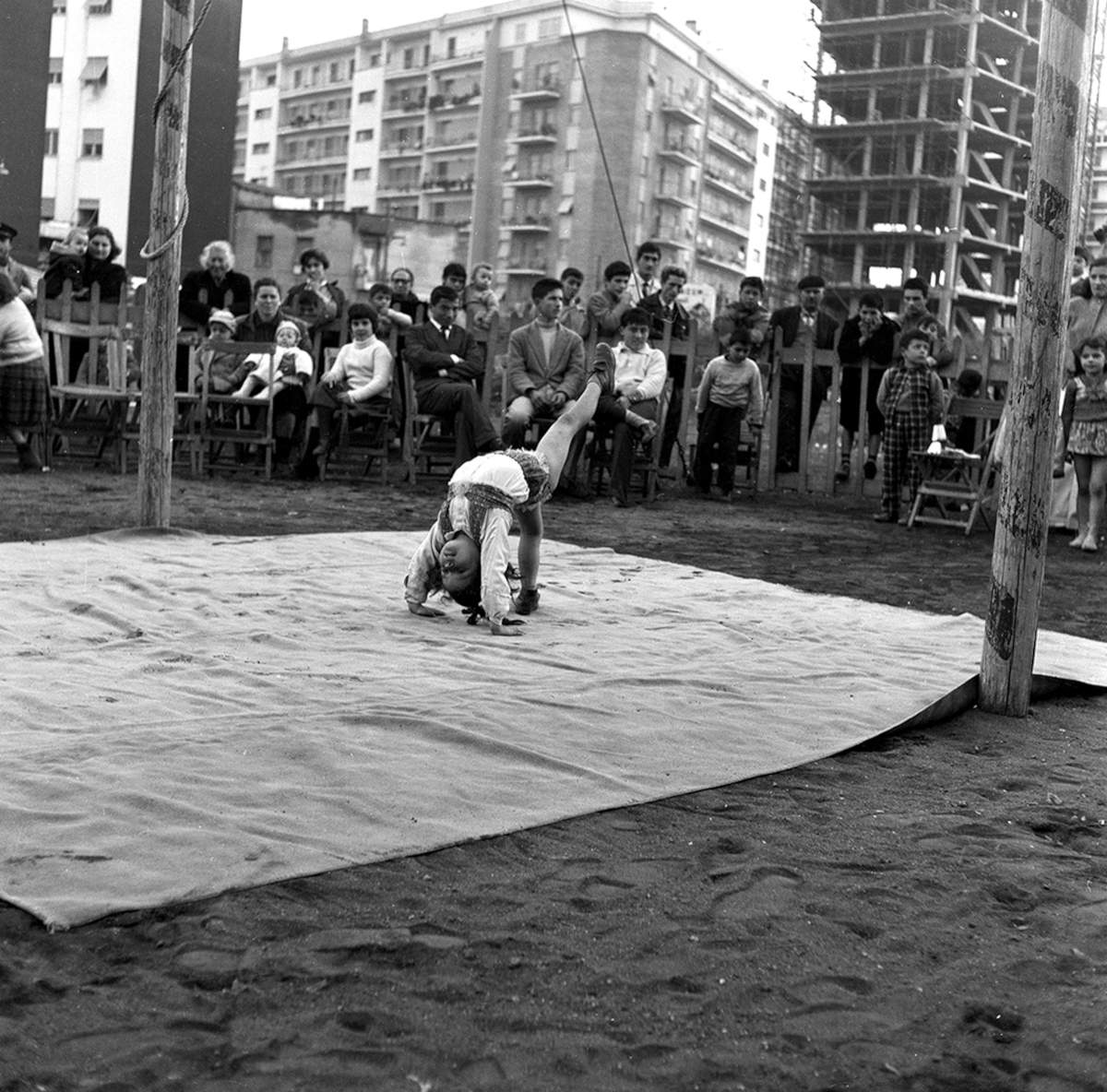
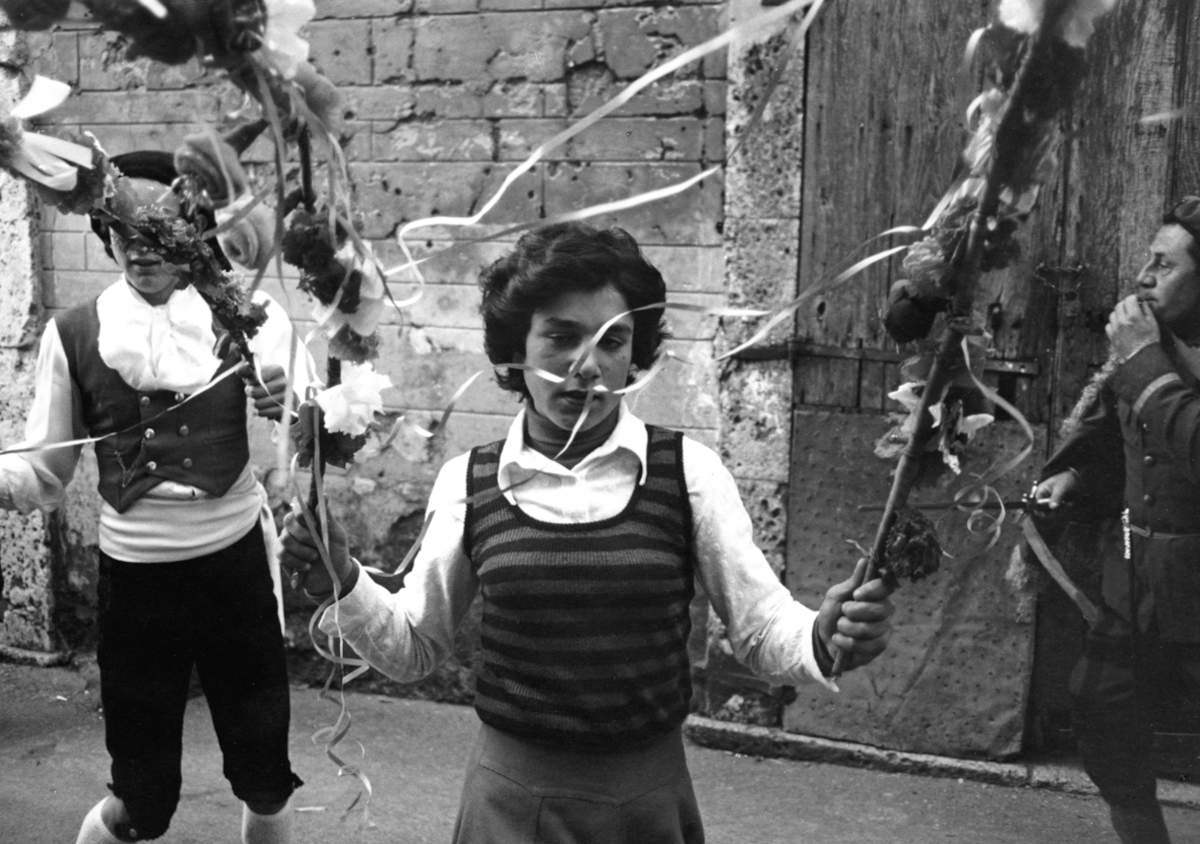
Annabella Rossi’s gaze also extends to suburban Rome in the late 1950s and to the everyday life of the Trastevere neighborhood, carefully documenting the expressions of popular and marginal cultures. Through her work, she restores visibility and dignity to a humanity marked by fatigue but traversed by a profound authenticity. In the photographic portraits, emotional participation becomes a central element, transforming the document into an expressive form close to art.
Rounding out the exhibition is Francesco De Melis’s photorithmic film Serenata d’arte varia: a composition for voice and piano built on the street images collected by the scholar, which animates the photographs, transforming them into a dynamic flow and restoring the rhythm of a past dimension, populated by street artists and miscellaneous art numbers.
An ethnologist and photographer, Annabella Rossi was a breakthrough figure in the panorama ofItalian anthropology of the second half of the 20th century. A student and close collaborator of Ernesto de Martino, she participated in 1959 in the historic expedition to Salento to study tarantism, an experience that profoundly marked her field research methodology. Her work, carried out as part of the National Museum of Folk Arts and Traditions where she worked from 1961, was distinguished by her pioneering use of audiovisual media-photography, sound recordings and videotapes-understood not as mere aids, but as primary and complementary tools of scientific inquiry. At the center of her research, conducted for about two decades in central-southern Italy, is the so-called “culture of misery”: Annabella Rossi documented with a militant gaze religiosity and beliefs, tarantism, labor and everyday life, denouncing the stigma of poverty of a humanity marginalized by the economic boom. His seminal works include Le feste dei poveri (1969), Lettere da una tarantata (1970) and Carnevale si chiamava Vincenzo (1977), the latter the result of extensive research in Campania carried out with Roberto De Simone and with the involvement of students at the University of Salerno, where he taught Cultural Anthropology from 1971. Her legacy is now housed in the Annabella Rossi Fund at the Central Institute for Intangible Heritage (ICPI) and the Museum of Civilizations (MuCIV) in Rome.
|
| Museo di Roma in Trastevere dedicates exhibition to Annabella Rossi, pioneer of Italian visual anthropology |

Warning: the translation into English of the original Italian article was created using automatic tools. We undertake to review all articles, but we do not guarantee the total absence of inaccuracies in the translation due to the program. You can find the original by clicking on the ITA button. If you find any mistake,please contact us.






















 IT
IT FR
FR DE
DE ES
ES CN
CN


