





Nino Migliori (Bologna, 1926) turns 100, and Aosta is celebrating this significant milestone with a major retrospective dedicated to one of the most influential and original figures in 20th-century Italian photography. From October 10, 2026, to March 7, 2027, the Saint-Bénin Center in Aosta will host *La dialettica del reale* (The Dialectic of Reality), an exhibition curated by Mauro Zanchi and organized by the Department of Education, Culture, and Identity Policies of the Autonomous Region of Valle d’Aosta. The project brings together 160 images and offers a fresh interpretation of the Bolognese artist’s long-standing body of work, connecting his famous photographs from the 1950s with the most recent developments in a body of work that has never ceased to explore the possibilities of the photographic medium.
The exhibition coincides with the 100th anniversary of Migliori’s birth—he was born in Bologna on September 29, 1926—and focuses on one of the fundamental themes of his work: the dialectical relationship between reality and interpretation. The title *The Dialectic of Reality* evokes a conception of photography in which the document does not simply coincide with what the lens records. In Migliori’s images, reality becomes the starting point for a broader inquiry capable of examining the human condition, memory, matter, and the photographic language itself.
The exhibition begins with his most famous series from the 1950s—at the height of the Neorealist movement—and traces the evolution of the artist’s work through to his most recent projects. This approach allows viewers to engage with Migliori’s photography beyond a purely documentary interpretation. His images, in fact, depict an Italy marked by poverty and reconstruction, yet at the same time they reveal how the photographer’s gaze transforms photojournalism into a reflection on existence.
The exhibition thus focuses on a decisive period in Italian history—the postwar era—when the country underwent a profound transformation: on the one hand, conditions of poverty persisted, along with the traditions and rhythms of a society still strongly tied to an archaic world; on the other, signs of modernization and new economic development began to emerge. It is within this contradiction that Migliori constructs his own visual language, observing people, environments, and situations without limiting himself to merely documenting events.
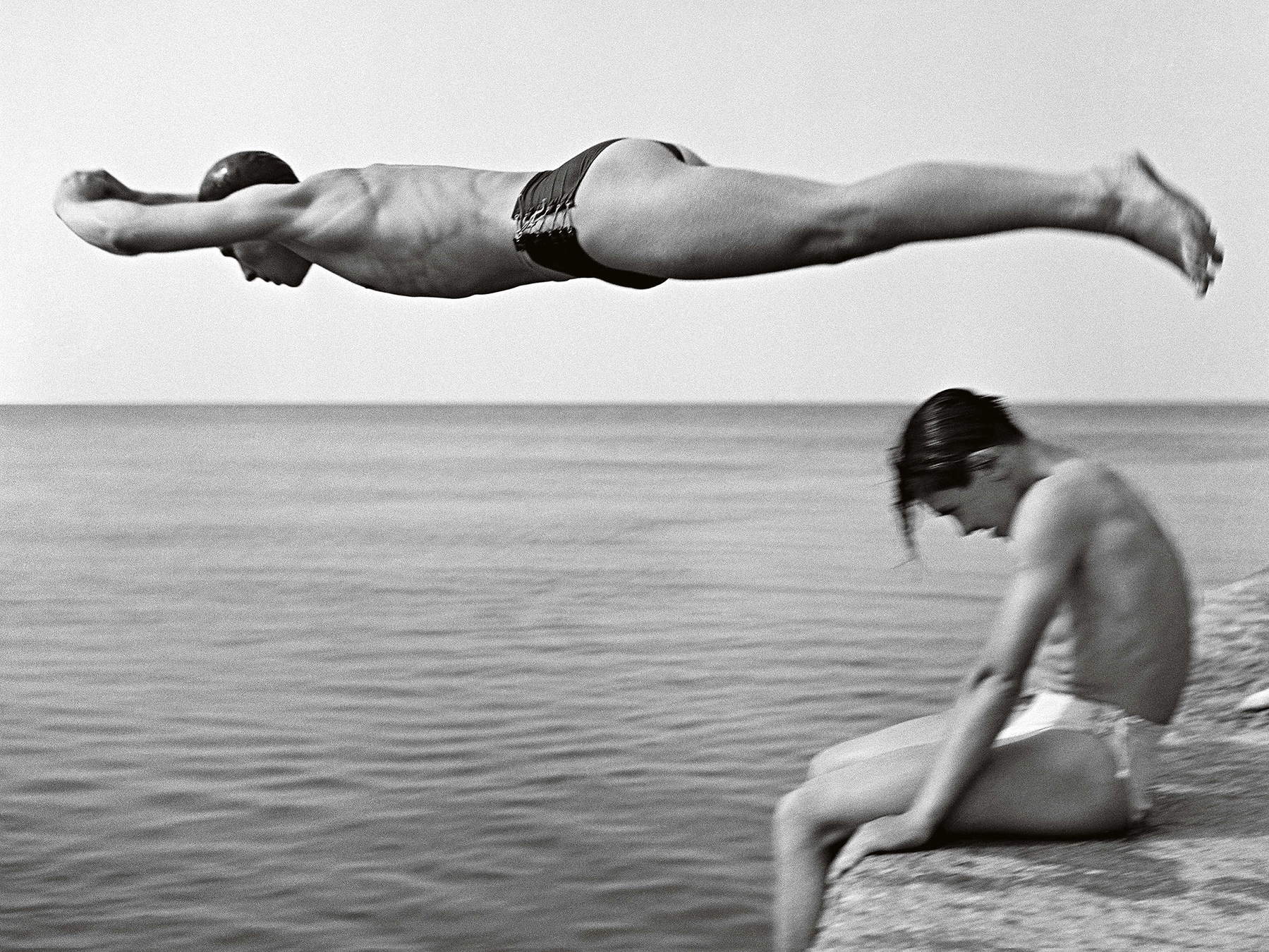
The 160 images brought together in Aosta thus present a photographic narrative in which social reality becomes a subject for reflection. The dignity of poverty, the sense of waiting, and the relationship between archaic Italy and the Italy moving toward modernity are some of the themes at the heart of the retrospective. But alongside this documentary dimension, a growing focus on the materiality of the image and its expressive possibilities emerged as early as the 1950s.
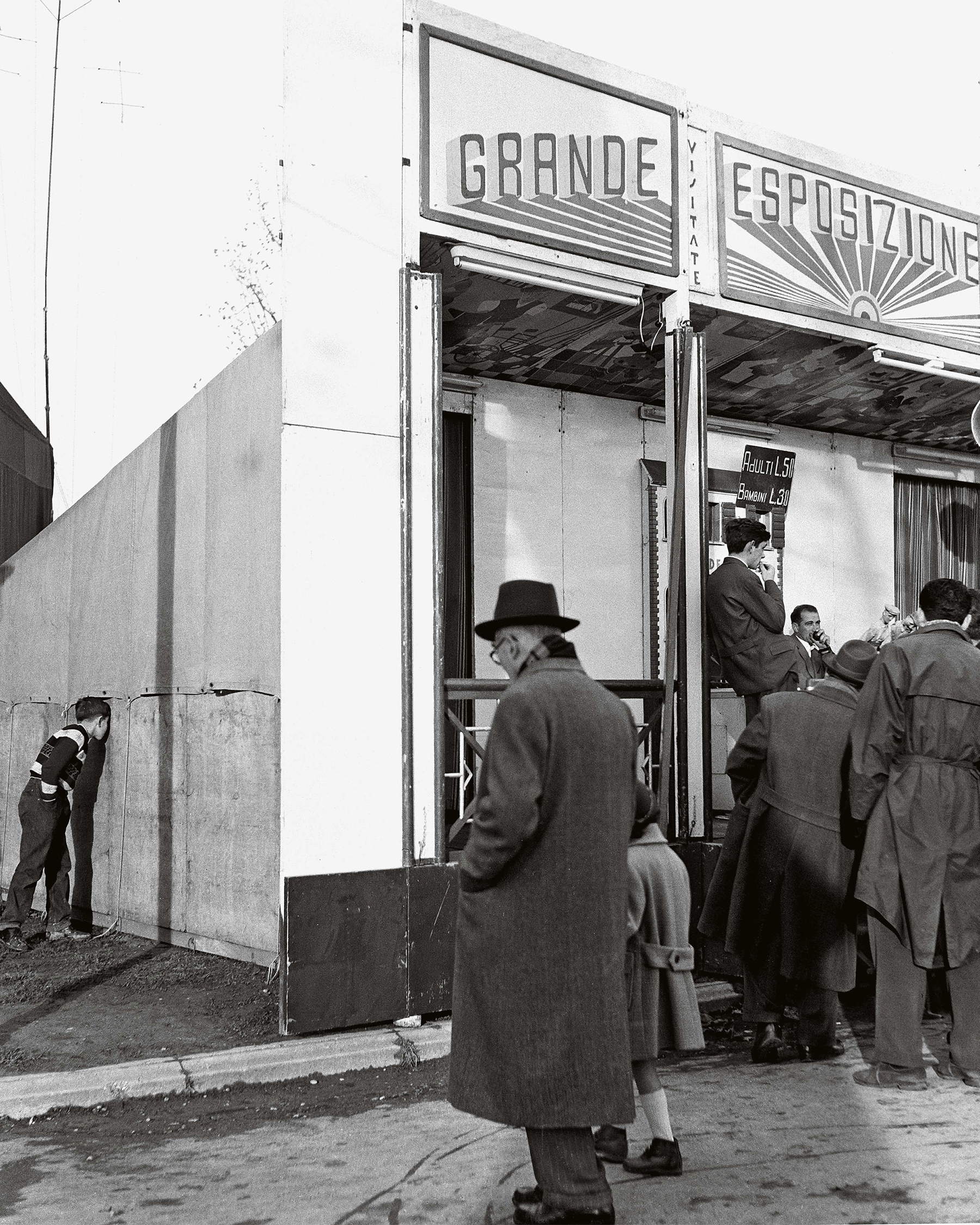
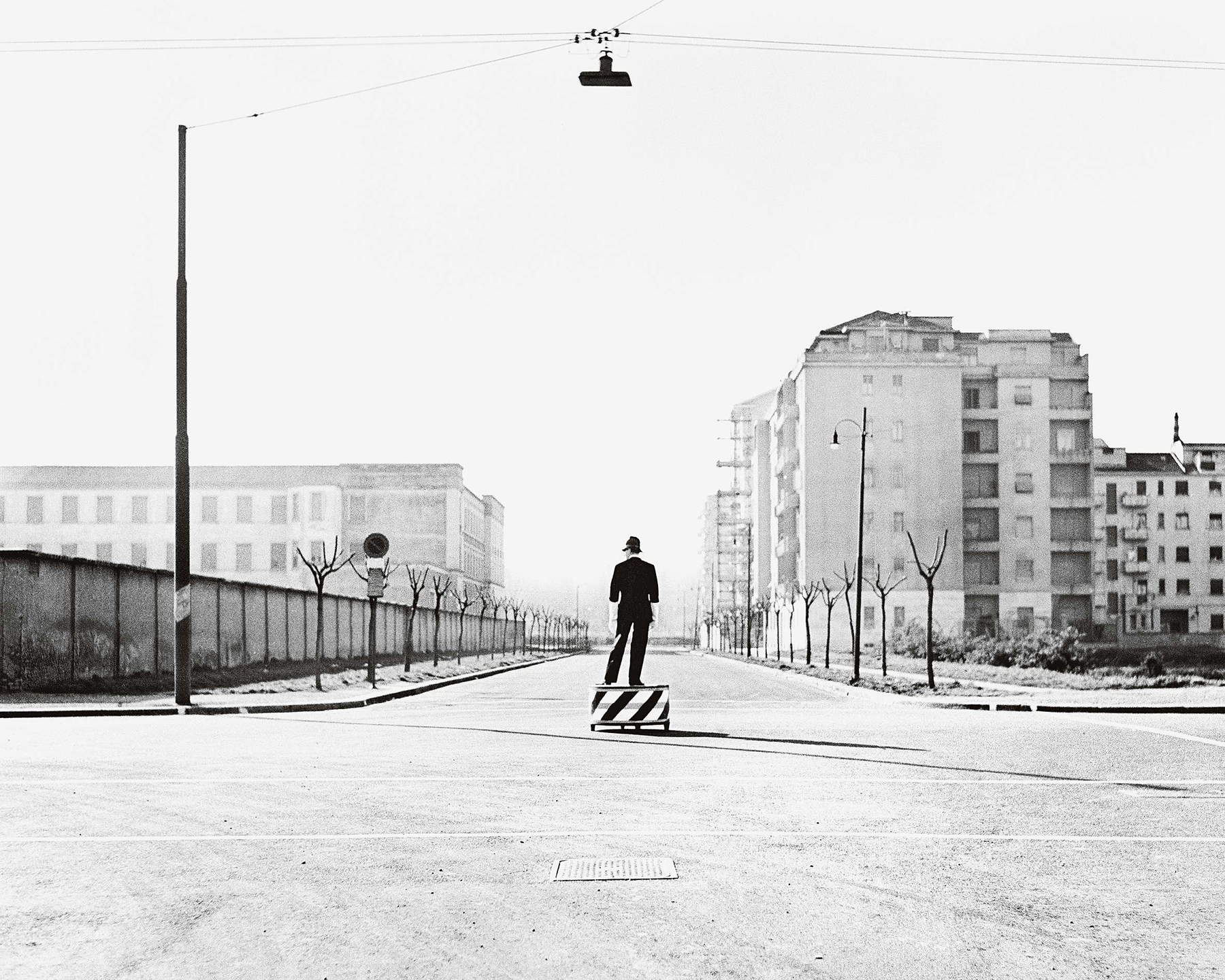
The Neorealist period forms the core of the retrospective. It is the moment when Migliori became an interpreter of the contradictions of postwar Italy, suspended between poverty and reconstruction. The photographer observes a society in transformation and develops a visual language capable of reconciling the concreteness of situations with a more profoundly existential dimension. Photography shows what is happening, but at the same time seeks to understand what those images mean. The period spanning 1950 to 1959 coincides with the height of Neorealism, but also with the gradual crisis of that era. It was a decade in which Italian photography engaged particularly intensely with the country’s social reality, but in which new avenues of exploration also began to emerge. Migliori fits squarely into this transition, employing a realistic language without sacrificing experimentation. His photographs from the 1950s are therefore not merely images of a poor, rural, or working-class Italy: they are the result of a gaze that seeks to capture the complexity of people and places, the hopes, relationships, and tensions running through a society still marked by the consequences of the war and, at the same time, projected toward a different future.
It is from this perspective that the famous series *Gente dell’Emilia*, *Gente del Sud*, *Gente del Nord*, and *Gente del Delta* take on particular significance. These series belong to a fundamental phase of Migliori’s work and document a constant interest in Italian reality and its territorial and social differences. Italy is observed through its multiple identities, via people and communities who live different experiences but are united by the transformation underway.
The relationship with memory constitutes another important element. The images are not merely testimonies to a historical moment but become tools through which it is possible to preserve and reinterpret a specific experience of the country. Photography captures a moment, but in Migliori’s work, time continues to shape the image and its meaning.
This focus on time would become even more evident in the artist’s subsequent work. Migliori began photographing in 1948 and, from the very beginning, developed a practice that oscillated between realistic images and continuous experimentation with photographic materials and processes. His work was therefore never limited to photography in its most traditional sense, but rather explored the possibilities offered by materials, chance, and the artist’s intervention. This gave rise to series such as *Ossidazioni*, *Pirogrammi*, *Cellogrammi*, *Lucigrammi*, and *Idrogrammi*. Through these experiments, Migliori investigates the reactions of matter and challenges the conventional relationship between photographer, instrument, and image. The photographic process itself becomes the subject of research, and a photograph can emerge from transformations, reactions, and interventions that reveal the behavior of matter.
A significant turning point in Migliori’s career occurred in 1982, when the artist founded Abrecal—the Global Perception Research Group. The group brought together artists from various creative fields, united by a desire to transcend pre-established languages and frameworks. This experience, too, reflects Migliori’s approach to photography and art: not viewing artistic languages as closed systems, but as tools to be continually put to the test. His research continued in 1998 with *Trasfigurazioni*, a series in which Migliori digitally reworks residual images derived from instant photographs. Technology introduces new possibilities for intervention and further alters the relationship with the photographic image. Here, too, the artist starts with what already exists—a residual trace—to transform it and give it a new form.
In 2005, the artist also invented the Kaleidoscope for Portraits, a new tool through which he once again explores the relationship between image, device, and perception. The idea of the kaleidoscope introduces a dimension in which the portrait can be broken down and reassembled, once again calling into question the stability of representation. In 2006, the “Lumen” series—created by candlelight and inaugurated with *Terra Incognita*—also began. Light once again becomes a fundamental element of his work, but no longer simply as a necessary condition for photographic capture. Instead, it becomes a medium through which to construct the image and experiment with new possibilities of perception.
In 2018, the Maison Européenne de la Photographie in Paris dedicated a major solo exhibition to him, recognizing the artist’s role among the leading figures of contemporary photography. This recognition comes at the culmination of a long career in which Migliori has continued to explore the language of photography and its possibilities.
All of this research demonstrates just how difficult it is to categorize Migliori within a single definition. He was one of the leading figures of Italian neorealist photography, but his work has also spanned abstraction, experimentation with materials, the role of chance, new technologies, and the invention of tools designed to alter the perception of the image. His place in the history of Italian photography stems precisely from his ability to bring these diverse aspects together: on the one hand, there are photographs that reveal the social reality of postwar Italy; on the other, works in which reality is almost dematerialized and reduced to its fundamental components: light, matter, surface, mark, and time.
|
| Nino Migliori Turns 100: A Retrospective in Aosta on the Dialectics of Reality |

Warning: the translation into English of the original Italian article was created using automatic tools. We undertake to review all articles, but we do not guarantee the total absence of inaccuracies in the translation due to the program. You can find the original by clicking on the ITA button. If you find any mistake,please contact us.






















 IT
IT FR
FR DE
DE ES
ES CN
CN


