



by Redazione 22/05/2026



Categories: Exhibitions / Disclaimer
From May 29 to November 1, 2026, the Fortress of Bard is hosting the exhibition Metamorphosis of the Gaze. The Imaginative Alps, promoted in the cross-border project DAHU (Développement et Adaptation des occupations HUmaines en montagne) with institutional partners between Italy and France.

The Fortress of Bard is hosting the exhibition Metamorphosis of the Gaze. The Imaginative Alps, scheduled from May 29 to Nov. 1, 2026 in the spaces of the Museum of the Alps. The opening is set for Thursday, May 28, at 6 p.m. The exhibition is part of the DAHU (Développement et Adaptation des occupations HUmaines en montagne) project, which involves the Autonomous Region of Valle d’Aosta, Municipality of Issime, Fortress of Bard, Department of Haute-Savoie and Community of Municipalities of the Chamonix Mont-Blanc Valley. The initiative analyzes the relationship between climatic variations, landscape and human communities in the cross-border alpine territory between Italy and France, starting with material and immaterial evidence.
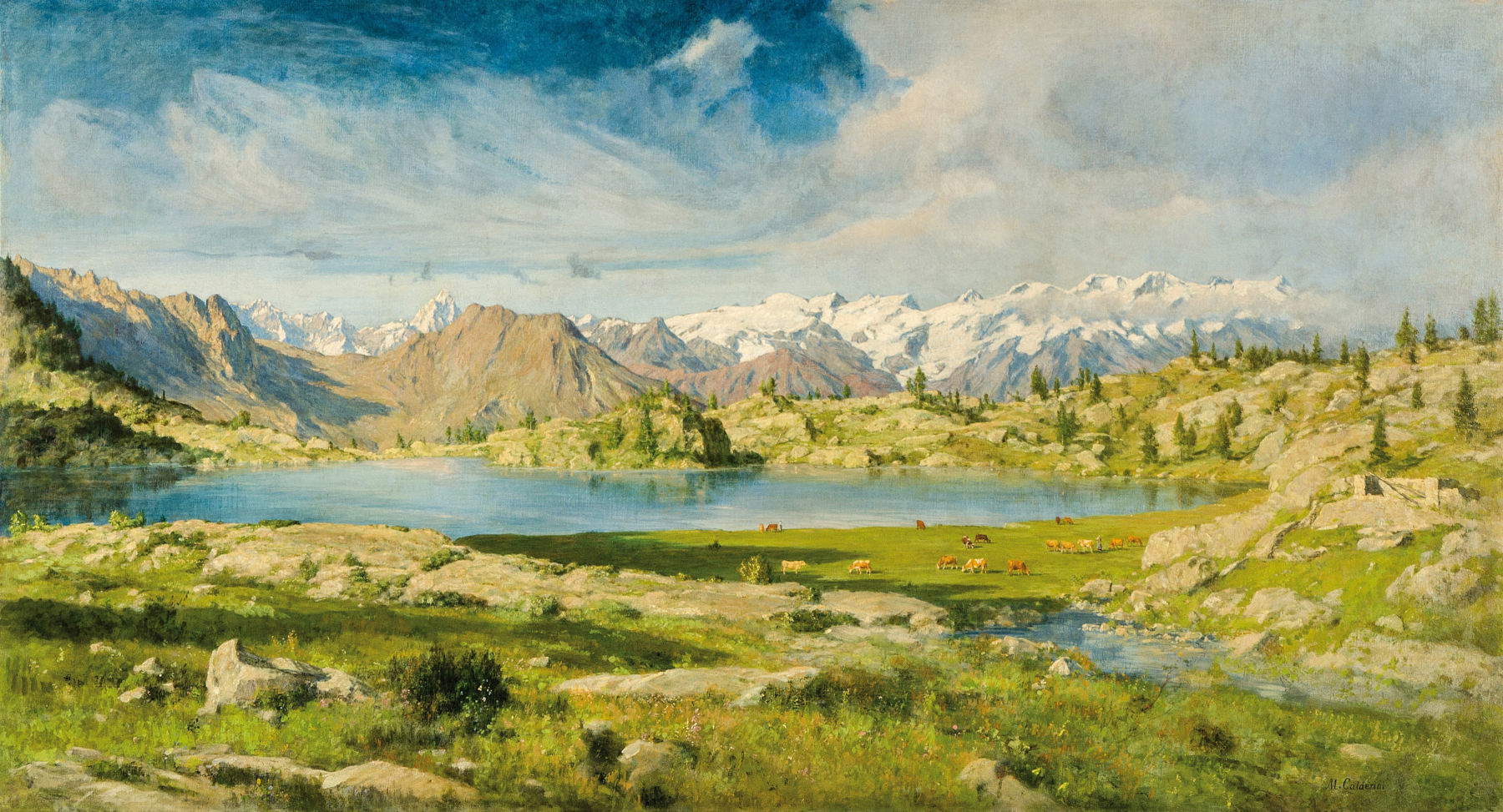
The exhibition, curated by Aldo Audisio, aims to propose a reading of the evolution of the mountain landscape between the late 18th and mid-20th centuries, with an approach that integrates art history and archaeology. The exhibition is divided into six sections and brings together more than 70 heterogeneous works including paintings, drawings and posters. The core of works renders a narrative of the Alpine world that develops from iconographies related to pastoral life and natural elements to the transformations associated with the rise of tourism and winter sports. The ensemble also highlights the climatic and landscape changes that have affected the area over the decades. The exhibition is accompanied by a bilingual volume in Italian and French.


Statements
“This project and this exhibition,” explains the Regional Councillor for Education, Culture and Identity Policies, Erik Lavevaz, “give us the opportunity to reflect on what it means to inhabit the mountains as a real and distinctive place: not a postcard territory, but a physical space that emphasizes a relationship between spaces and those who inhabit them that cannot but be profound. Those of us who care about the future of the Aosta Valley, understood as a territory as much as a community, cannot fail to question the future of the alpine environment by trying to move away from rhetoric and alarmism, but by developing a consciousness that can still be authentic. These lands are clearly an open-air laboratory where culture is not an intellectual frill, but a fundamental way to understand ourselves and project ourselves forward.”
“The theme of the project has been at the center of the Fortress of Bard’s attentions over the past few years, through projects that have had the ambition of contributing to the dissemination of knowledge and understanding of how fragile the mountain world is and how important it is to deepen our understanding of it,” comments Forte di Bard Association President Ornella Badery. "The exhibition Metamorphosis of the Gaze. The Imaginative Alps, the result of a mighty research conducted in the public and private archives of the Aosta Valley and the Chamonix Valley, shows how the evolution of the landscape of the highlands has taken place over the centuries and how the changes have been influenced by the presence of man. Thanks are due to the institutions that were able to seize the opportunity to insist on directing cross-border planning toward the theme of the consequences of global warming, which is recurrent in public debate and at the center of political, social and economic reflections today."
“The exhibition itinerary,” notes curator Aldo Audisio, “analyzes the change of the territory, with a specific focus on the Aosta Valley and the Chamonix Valley, through the plurality of gazes of artists, scientists and mountaineers who have documented its transformations. The project stems from an extensive iconographic research that spanned a precise time frame that led to the identification of more than 400 works belonging to public institutions and private collectors; a work conducted by a team of researchers that will also become the basis for further studies.”
Practical information
Hours: Tuesday to Friday 10 a.m. / 6 p.m.; Saturday, Sunday and holidays 10 a.m. / 7 p.m.; Closed Monday
Fees: Admission included in the Fortress of Bard entrance fee.
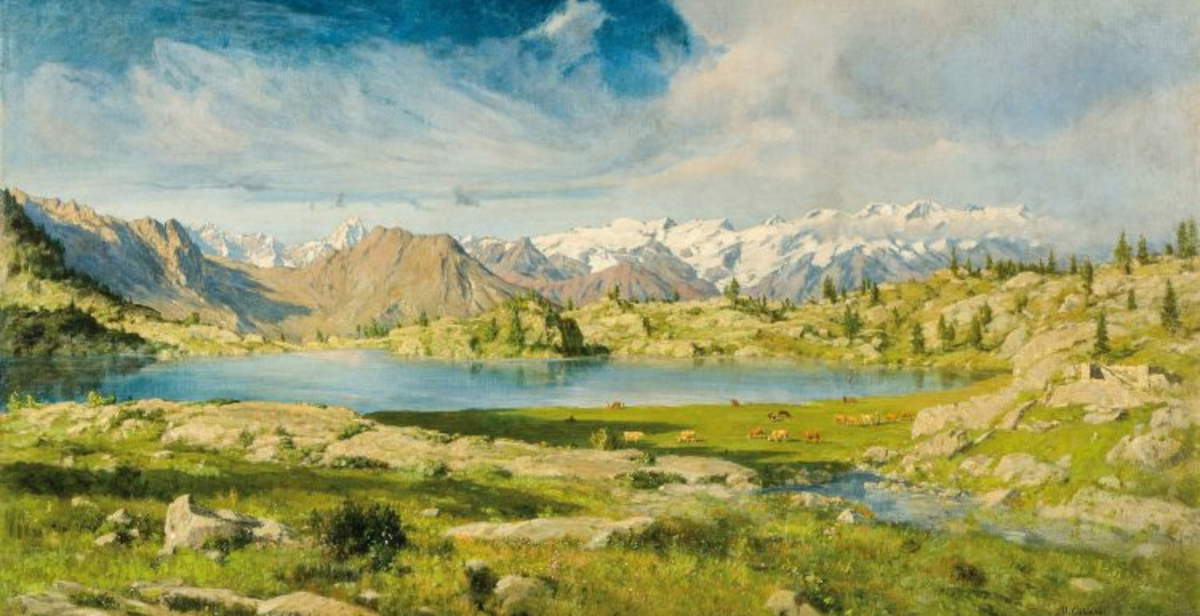 |
| The Fortress of Bard chronicles the evolution of the mountain landscape through paintings, drawings and posters |
Warning: the translation into English of the original Italian article was created using automatic tools. We undertake to review all articles, but we do not guarantee the total absence of inaccuracies in the translation due to the program. You can find the original by clicking on the ITA button. If you find any mistake,please contact us.