




From May 9 to June 8, 2026, theformer Church of Saints Cosmas and Damian on the island of Giudecca in Venice will host As Above , So Below, a collateral event of the 61st International Art Exhibition of the Venice Biennale. Sponsored by One Ocean Foundation and ZEITGEIST19 and curated by Elizabeth Zhivkova and Farah Piriye Coene, the exhibition presents itself as an interdisciplinary research platform bringing together artists, scientists and researchers around the theme of ocean ecosystems and ongoing environmental transformations.
The project is set in a context marked by increasing ecological instability and proposes the ocean as a living system through which planetary transformation becomes perceptible. The exhibition addresses the sea as an active and dynamic archive: a generative force capable of guarding deep time, sustaining biodiversity and reflecting the delicate balance between technological acceleration and ecological limits. The architecture of the former church, now home to Factory H3, is reinterpreted as a space for contemporary contemplation, in which the curators intend to highlight the urgency of a transdisciplinary approach to the planet’s most vital natural systems.
The title of the exhibition takes its cue from the Hermetic principle of correspondence As Above, So Below, which suggests a mirror relationship between cosmic and terrestrial dimensions. The project thus investigates the interdependence between cosmos and Earth, atmosphere and abyss, human and more-than-human. Just as celestial movements influence the tides, so the state of the ocean is interpreted as a sensitive indicator of planetary imbalances. This perspective is developed within the exhibition space through the interweaving of scientific observation, cultural memory, and historical stratifications.
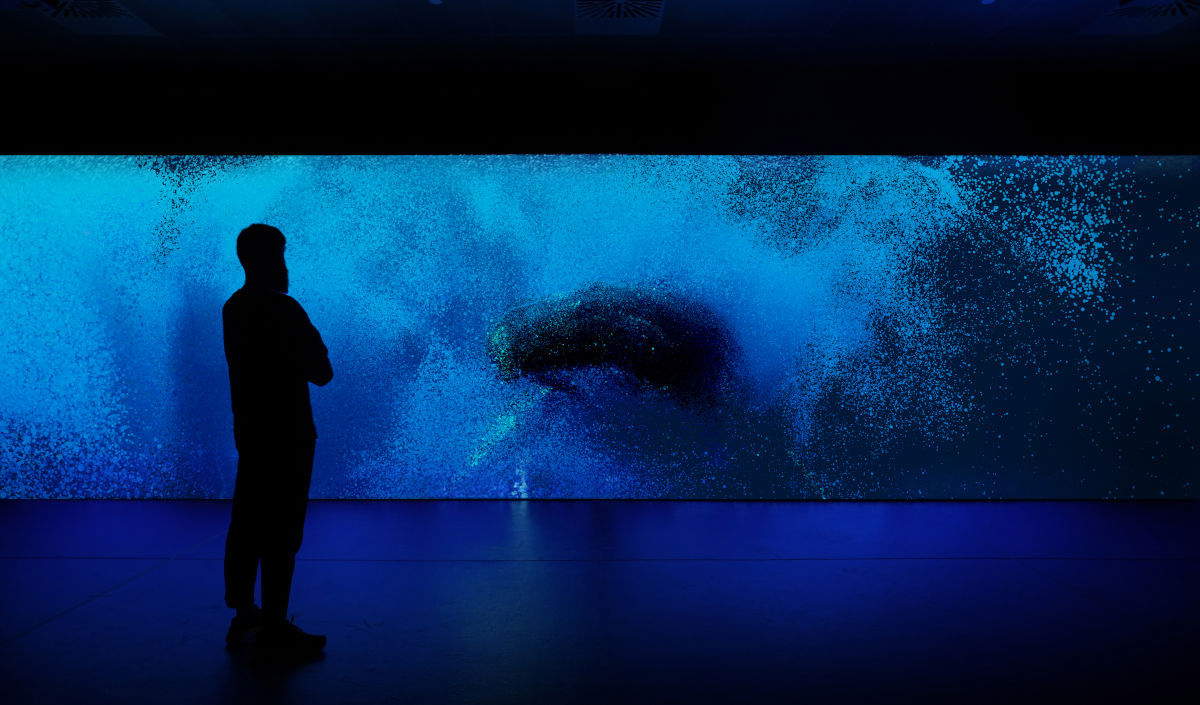
The installation activates the architecture of the former Church of Saints Cosmas and Damian through an environment built with sound, light and computational systems. The space is thus transformed into a resonance and listening device designed to encourage reflection on ecological relationships and the perception of natural systems. The exhibition brings together seven international artists and collectives, Marshmallow Laser Feast, Yoko Shimizu, Antoine Bertin, Almagul Menlibayeva with Suad Gara, Andrea Crespi, Elnara Nasirli and Orkhan Mammadov. Their research spans installation, sound, moving image and artificial intelligence, building a collective investigation on the border between art, science and technology.
Among the works presented is Seeing Echoes in the Mind of the Whale by Marshmallow Laser Feast, an audiovisual installation developed from whale vocalizations and bioacoustic research. The work invites the audience to engage with the sensory world of cetaceans, reflecting on forms of communication and orientation that lie beyond the human dimension.
Composer and sound artist Antoine Bertin presents Fish String Theory, a project that explores forms of marine intelligence through the acoustic landscapes of the Venetian lagoon and the sound, which has long remained mysterious, produced by the Mediterranean stonefish. The work was developed as part of a residency initiated by One Ocean Foundation and ZEITGEIST19 and enhanced by further research conducted at Auckland University of Technology. Yoko Shimizu’s installation also stems from an As Above, So Below residency conducted aboard a research vessel. The project takes inspiration from the phenomenon of bioluminescence and plankton, interpreted as a fragile indicator of planetary balance and interdependence among ecosystems.
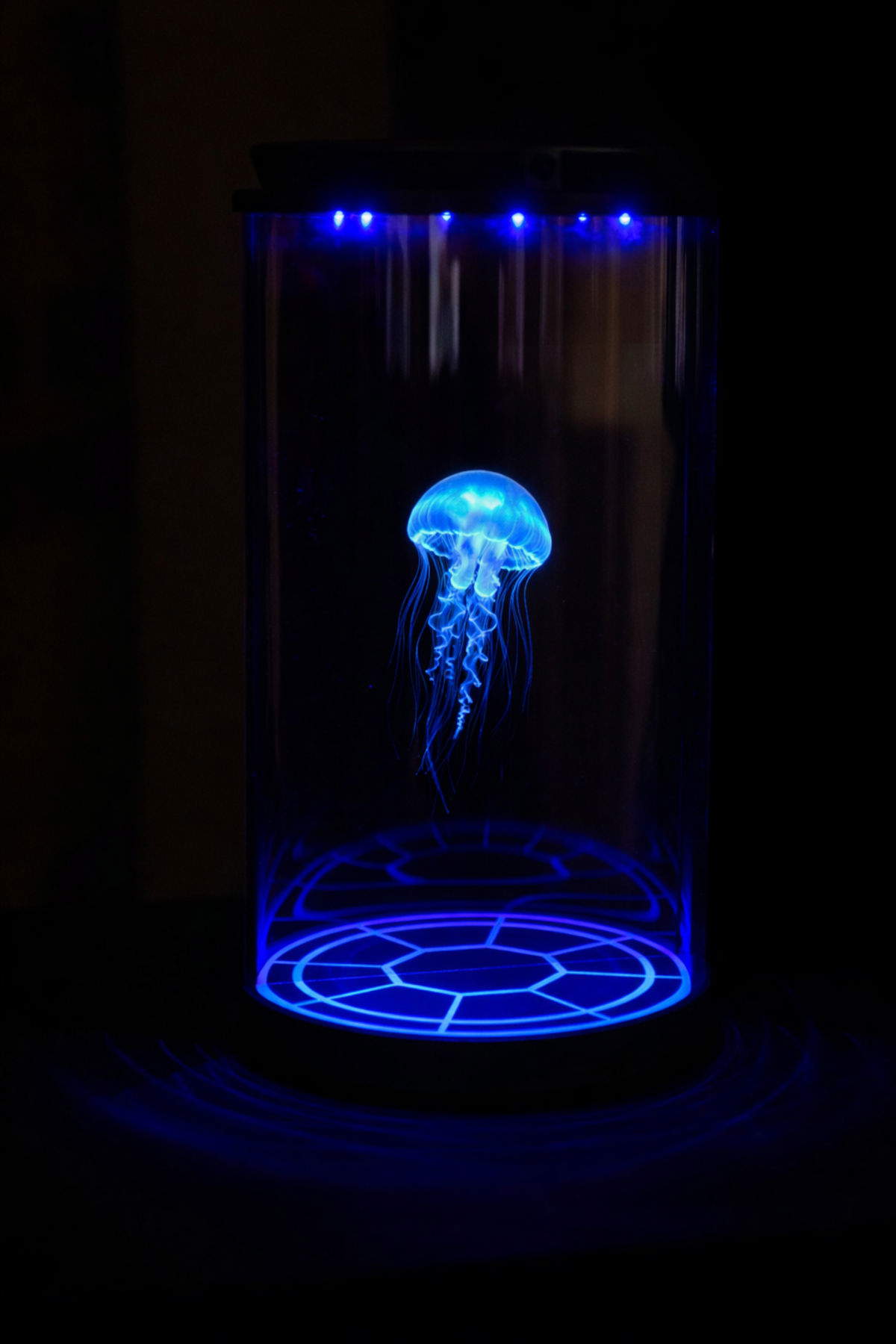
A section of the exhibition is dedicated to the works of Almagul Menlibayeva and Suad Gara. The multimedia project Water Older Than the Sun (Caspian), accompanied by an original soundtrack by Reinhold Heil, addresses the ecological collapse of the Caspian Sea. Also presented alongside it is Suad Gara’s short documentary film Requiem for the Caspian, produced by ZEITGEIST19. The two works offer a reflection on the environmental and cultural vulnerability of the Caspian region. Two new commissions further expand the exhibition. Andrea Crespi presents a holographic vitrine that evokes the figure of Thetis within a primordial jellyfish, constructing a perceptual threshold between natural datum and mythical archetype. Orkhan Mammadov, on the other hand, uses artificial intelligence systems to map fungal networks above and below the ground surface, making perceptible subterranean forms of communication linking different levels of the ecosystem.
Elnara Nasirli ’s work Whispering Forest introduces a dimension related to terrestrial intelligence into the path. The work translates the bioelectric signals of an olive tree into sound through human contact, focusing on the reciprocal relationships between living organisms and natural environments. Conceived as a long-term research platform, As Above, So Below extends beyond the exhibition dimension through a series of parallel activities. The project includes curated talks, podcasts, public programs and artist residencies involving artists, filmmakers, marine scientists, researchers and scholars. The goal is to explore themes related to biodiversity, sustainability, and the relationship between cultural and natural systems.
The initiative is recognized as UN Ocean Decade Action and is part of theUNESCO Blue Thread, an international network of projects dedicated to the protection of marine ecosystems. Within this context, the exhibition proposes an approach that interweaves poetic dimension and scientific research, addressing ecological instability as a concrete condition of interdependence between species and environments.
The collateral event will open on May 9, 2026, and will be accompanied by a public program of talks and conversations alongside the exhibited works. The schedule will include talks with international artists, marine scientists, researchers and scholars, offering additional perspectives on the relationship between biodiversity, sustainability and cultural systems. The exhibition will conclude on June 8, 2026, coinciding with World Oceans Day, strengthening the link between the curatorial project and the global debate on the protection of marine ecosystems.
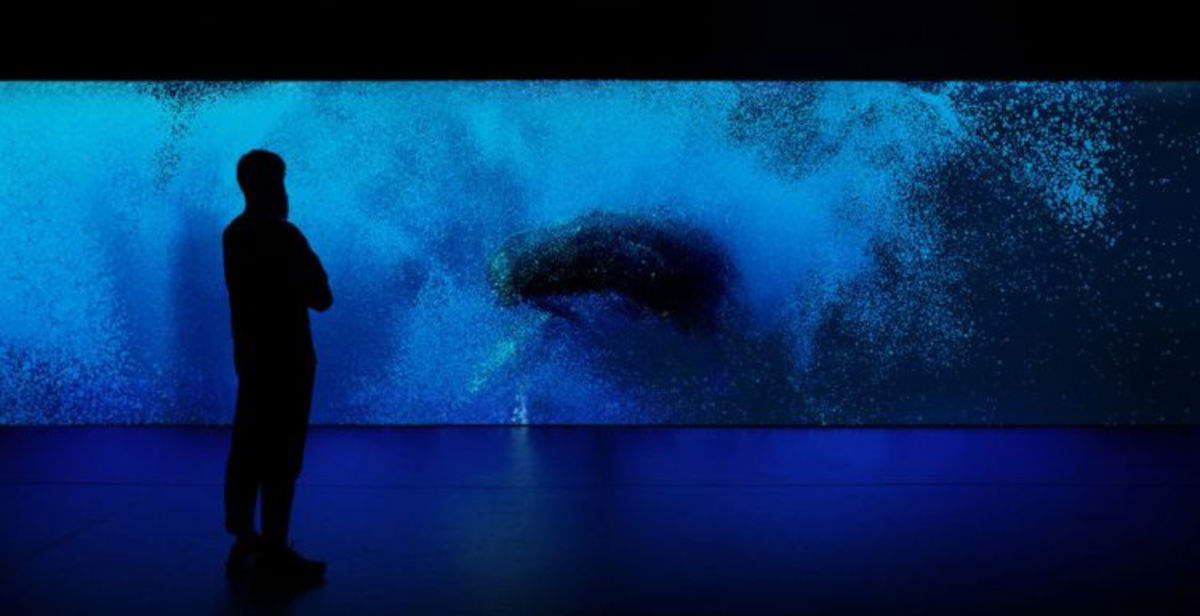 |
| Venice Biennale 2026, the ocean at the center of the As Above, So Below exhibition at Giudecca |

Warning: the translation into English of the original Italian article was created using automatic tools. We undertake to review all articles, but we do not guarantee the total absence of inaccuracies in the translation due to the program. You can find the original by clicking on the ITA button. If you find any mistake,please contact us.






















 IT
IT FR
FR DE
DE ES
ES CN
CN


