




by Redazione 10/04/2026



Categories: Exhibitions / Disclaimer
From May 7-24, 2026, on the occasion of the opening of the Venice Biennale, the Giancarlo Ligabue Foundation will open the Palazzo delle Arti e delle Culture on the Grand Canal. The permanent exhibition "Collecto" presents more than 400 works and artifacts between paleontology, archaeology and art.
From May 7-24, 2026, on the occasion of the opening of the Venice Art Biennale, the Giancarlo Ligabue Foundation will open its historic headquarters on the Grand Canal to the public, transforming it into the Palazzo delle Arti e delle Culture. This is a new exhibition and research space that brings together scientific and popular activities and a permanent itinerary dedicated to the Ligabue Collection. The initiative marks an important stage in the journey of the Venetian institution, which celebrates ten years since its founding by presenting Collecto, an itinerary through more than four hundred works and artifacts from different fields, from paleontology to archaeology to ancient and contemporary art.
The exhibition project proposes a journey through the natural and cultural history of humankind extending from the origins of the Earth to the present. The path weaves together materials, objects and works belonging to different civilizations and geographical contexts, with the aim of relating distant cultures and historical periods and highlighting themes, archetypes and symbols that traverse the human imagination across geographical and temporal boundaries. The exhibition narrative does not follow a strictly chronological scan, but is structured through thematic nuclei that address some of the great questions of human history, such as birth and death, beauty, prestige and power, and the relationship with ancestors and the divine.


The opening of the Palace of Arts and Cultures also represents the culmination of a journey that began over fifty years ago with the cultural activities promoted by Giancarlo Ligabue and continued through the Ligabue Study and Research Center. The Foundation, initiated by Inti Ligabue, has gradually broadened its scope by consolidating collaborations with international institutions and museums and developing an articulated program of exhibitions, publications and public meetings. Twelve temporary exhibitions have been organized in recent years between Venice, other Italian and European cities, with the participation of scholars and experts from different disciplinary fields and with loans from museums such as the Musée du Louvre and the Muséand du Quai Branly in Paris, the British Museum in London, the National Archaeological Museums in Florence and Naples, the Biblioteca Ambrosiana, the Pinacoteca di Brera and the Castello Sforzesco in Milan, the Ashmolean Museum in Oxford, the Museo Arqueológico Nacional in Madrid, the Cyprus Museum in Nicosia, and the Staatliche Kunstsammlungen in Dresden.
Alongside the exhibitions, the Foundation has developed an intense publishing and scholarly activity that includes catalogs, publications, and the Ligabue Magazine, a bilingual semi-annual cultural and scientific journal now in its eighty-eighth edition. These initiatives are complemented by the cycle of the Foundation’s Dialogues, meetings open to the city that have already exceeded ninety editions and will continue in 2026 involving international scholars, researchers and popularizers.
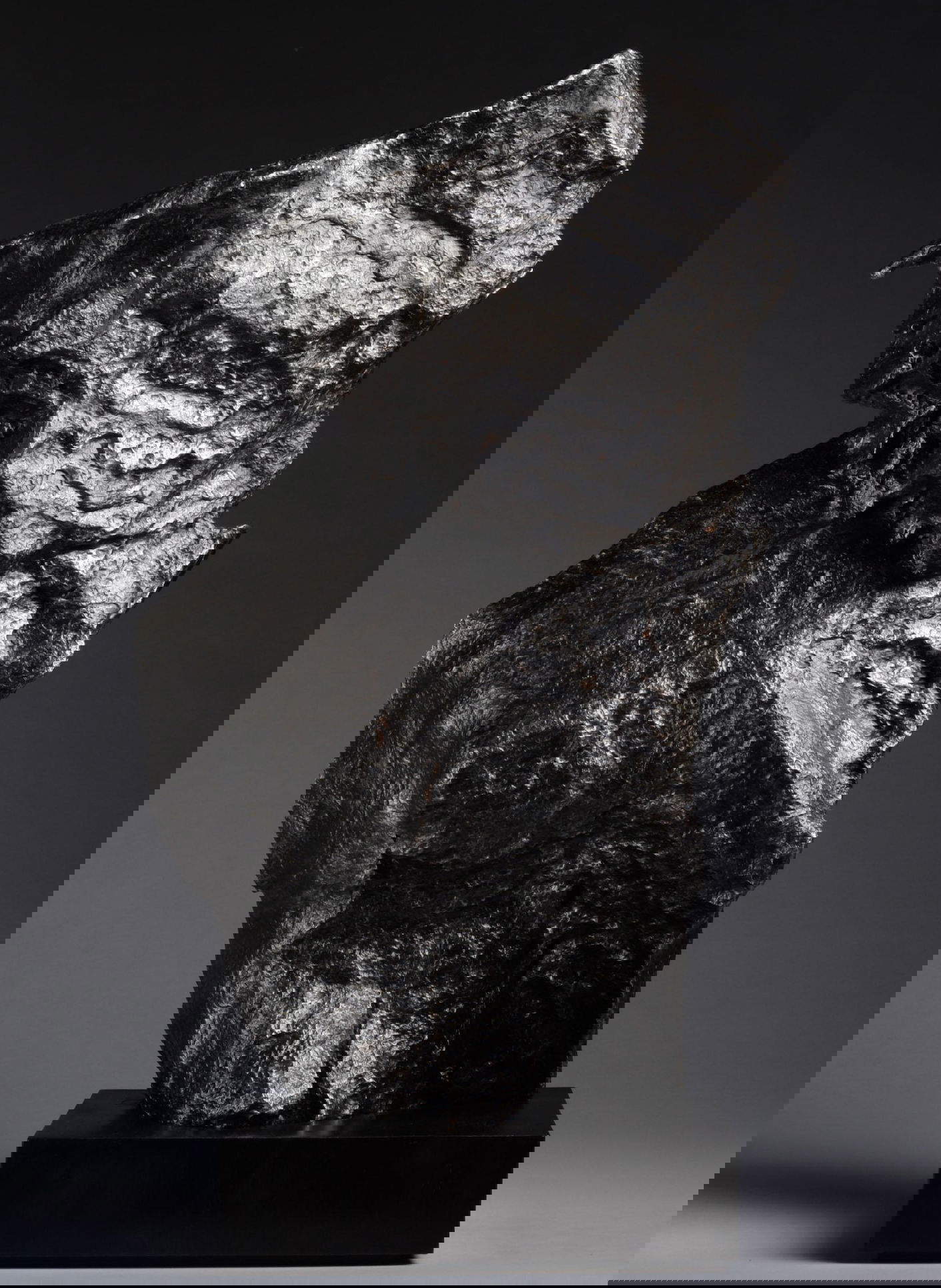
The new permanent Collecto itinerary takes its name from a neologism that recalls the collection’s origins and at the same time suggests an open look at new areas of research. Indeed, in recent years the collection has expanded its interests to include tribal art, modern and contemporary art, and photography. The exhibition itinerary opens with a pallasite meteorite, among the rarest known, a mass of iron and nickel that traversed some 160 million kilometers before being captured by the Earth’s gravitational field and that represents one of the starting points of the narrative dedicated to the formation of the universe and the Earth, some 4.5 billion years ago.
The tour continues with some evidence of the earliest stages of human presence on the planet, including a fossilized crinoid from the Lower Jurassic and theLigabue Amygdala, a quartzite axe datable between 1,200,000 and 600,000 years ago that is considered one of the earliest man-made artifacts. These finds are complemented by Domingo Milella ’s photographs dedicated to prehistoric cave paintings, which document the presence of images and signs in humanity’s earliest artistic manifestations. Also in the same section are the large celestial globe made in 1698 by Venetian cosmographer Vincenzo Coronelli, Nico Vascellari ’s decomposed Nest and Edmondo Bacci ’s 1958 painting Avvenimento No. 317.
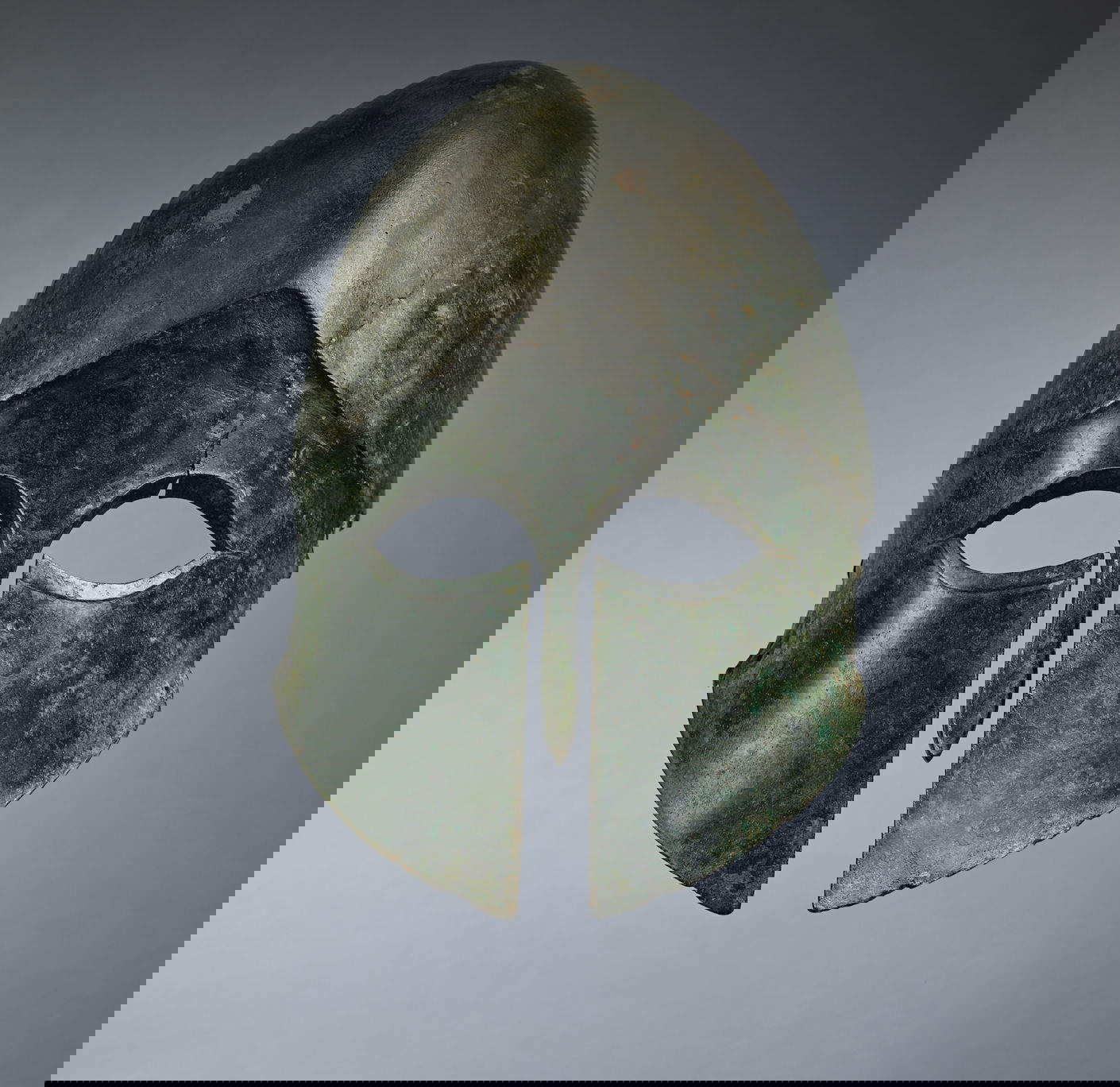
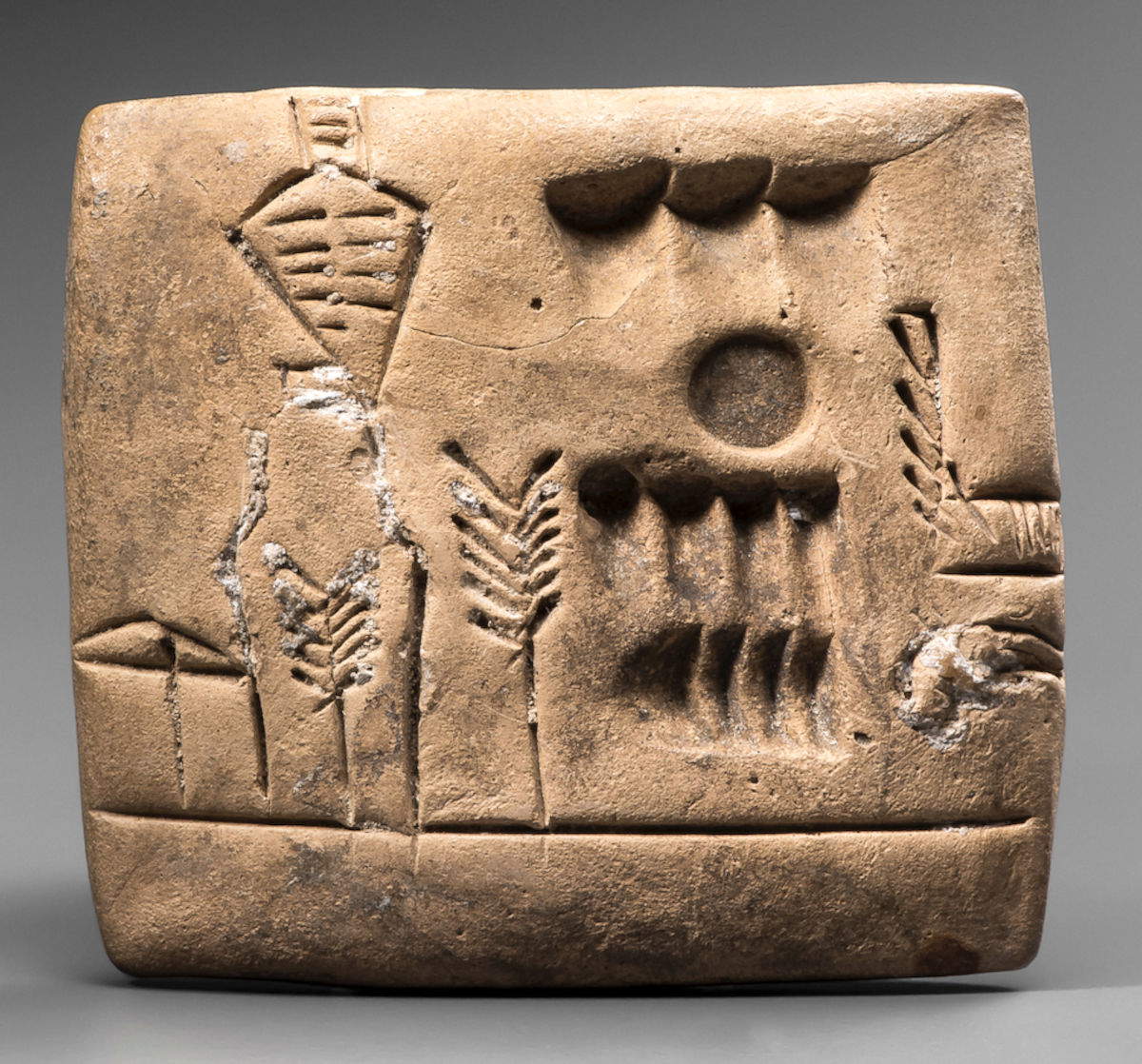
One of the central sections of the exhibition is devoted to Mesopotamian civilization and the origins of writing. Presented here is a collection of about one hundred and fifty works including bas-reliefs, statues, clay tablets, and cylinder seals from the Sumerian, Assyrian, and Syrian cultures. Displayed alongside these materials are numerous classical antiquities, including a 9th-8th century B.C.E. polychrome terracotta pyx decorated with horses in the round, cups(kylix) and Attic amphorae, Etruscan artifacts, a bronze shield from the late Villanovan period, and a Corinthian helmet. In dialogue with these finds appears Mimmo Jodice ’s photograph dedicated to the Athletes of the Villa of the Papyri.
Another relevant nucleus consists of the selection of idols belonging to different cultures and dated between 3900 and 1800 B.C., including a Cycladic violin idol in white marble and a female figure known as Venus Ligabue, an example of protohistoric art from the Oxus civilization, made with body and hair in steatite and head and limbs in white limestone. The name by which the work is known in the international scientific community recalls the studies and research conducted by Giancarlo Ligabue on this civilization.
The section devoted to pre-Columbian art presents artifacts from various Mesoamerican and South American cultures, including Mayan vases and sculptures, a polychrome female figure from the Chupícuaro culture dated between 400 and 100 B.C., statuettes from the Mezcala culture, and male figures from the Veracruz culture. A funerary mask from the Lambayeque culture of Peru, made of tumbaga, an alloy of gold and copper, also appears among the best-known pieces.
The tour also includes a section devoted to oceanic art, with ritual objects and sculptures from the Pacific Rim. These include staffs of command, a slit-gong from northern Vanuatu nearly four meters high, and two anthropomorphic Aripa sculptures from New Guinea associated with the ritual sphere of hunting. In this part of the exhibition the works dialogue with contemporary works, including Vera Lutter ’s large photograph Group of Ceremonial Figures III, Giuseppe Santomaso ’s 1961 painting Secret Tale, and a sculpture by Arcangelo Sassolino made in 2024.
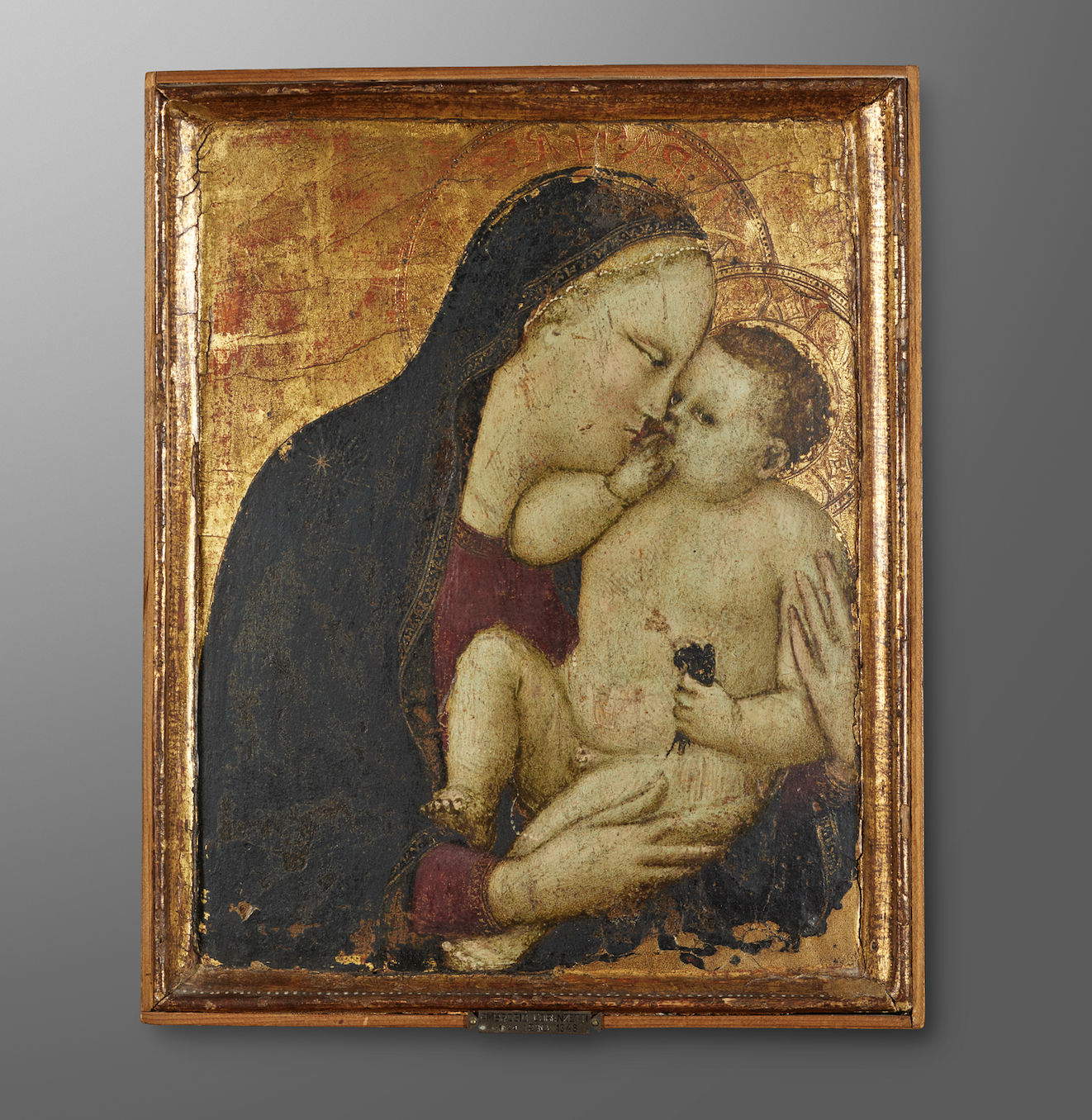
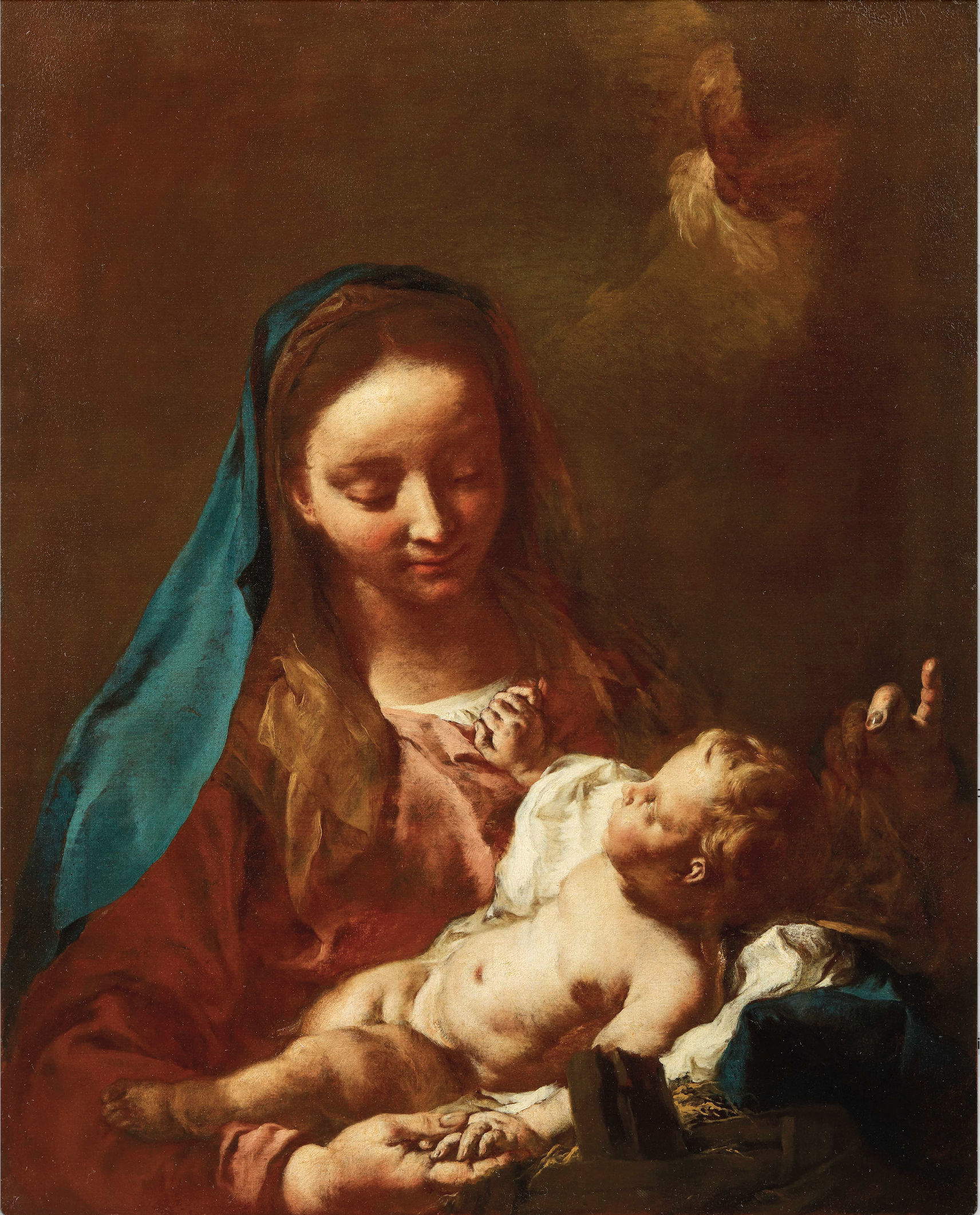
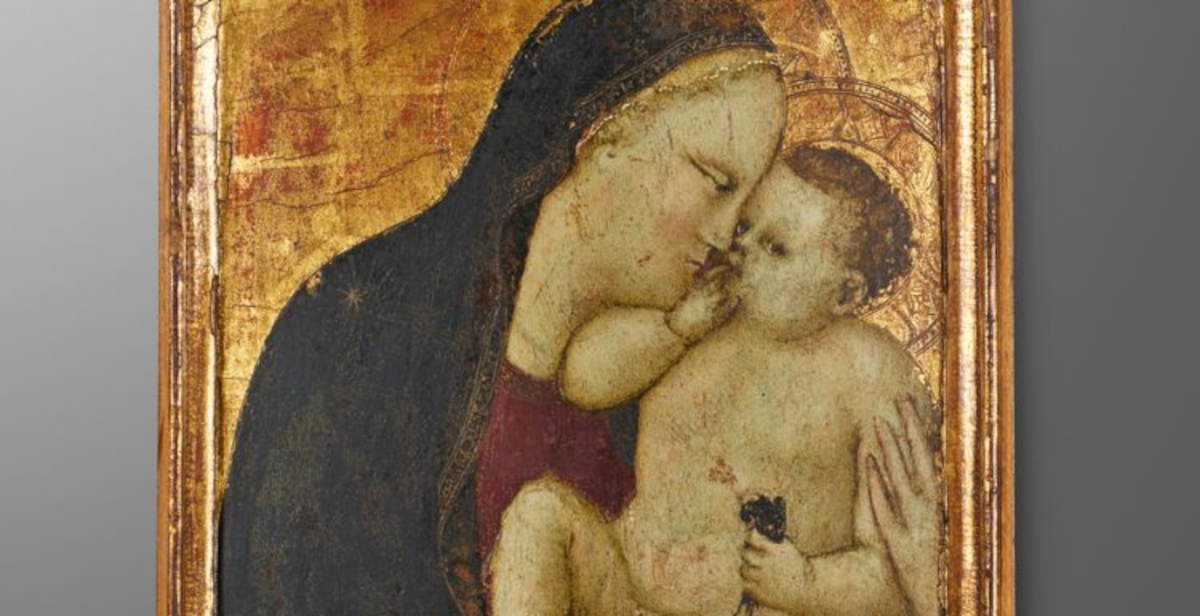
The final part of the tour is devoted to Western art and takes the form of a studiolo that brings together paintings and drawings from the 14th to the 17th centuries. Among the themes addressed appear motherhood and the representation of beauty, with works by Ambrogio Lorenzetti, Jacopo del Sellaio, and Giovanni Battista Piazzetta. Alongside these works are drawings reflecting on aesthetic canons and their variations, including the Head of an Old Woman attributed to Leonardo da Vinci and some caricatures by Giandomenico Tiepolo.
To mark the opening of the new exhibition space, the Foundation invited artist Marta Spagnoli to develop a project-in-residence in collaboration with Galleria Continua. Born in Verona in 1994, the artist won the first prize Artissima for Vinitaly, the second prize ex aequo at the 102nd Collettiva Giovani Artisti della Fondazione Bevilacqua La Masa in Venice (2019) and was a finalist at the 21st edition of the Cairo Prize (2022). The project created for Venice includes a monumental canvas, five drawings and three smaller-format works that enter into dialogue with Collecto’s path.
Spagnoli’s research focuses on archetypal forms and signs capable of resurfacing over time. His works weave organic, mythological and anthropomorphic elements through a process of overlapping pictorial layers in which erasures and rewrites generate a layered visual surface. In the Venetian project, the artist found a reference in the forms and signs of Mesopotamian works in the collection, which become a narrative code reactivated through painting.
The opening of the Palace of Arts and Cultures will be accompanied by two weeks of free admission (May 7-24, 2026), coinciding with the opening of the Venice Art Biennale. During this period, visits will be possible by reservation and with guided accompaniment. Thereafter, the space will reopen with paid visits, again by reservation and with a guide, from September 17 through December, before returning to public access the following spring. Meanwhile, the Foundation’s activities will continue, including the Foundation Dialogues, meetings with the international scientific committee and research projects that have accompanied the Venetian institution’s cultural initiatives for years.
Statements
"Collecto," explains Inti Ligabue President of the Foundation, “is for us a reflection of a profound path, that of a spirit that is built over time and that, to use an image dear to Hegel, takes shape through history itself, in the cultures, experiences and visions that Humanity has expressed and continues to express. At a time in history when geographic, cultural and ethnic divisions seem to increasingly define our present, the Ligabue Foundation chooses to go in a different direction: to relate these differences and value them as part of a common history. The exhibition we envisioned stems from a simple but profound idea: the origin of humanity is shared, and it is in this common root that our strength and identity lie. At the ’Palace of Arts and Cultures,’ this narrative takes shape through a collection that spans time in a broad and layered way. It starts from the origins of the Earth, with a 4.5-billion-year-old meteorite, tracing more than 20,000 years of human history: from the earliest artistic expressions of the genus Homo to the earliest artifacts, from prehistoric Venuses-symbols of birth and life-to the origins of writing and great civilizations. It is a journey that touches different but interconnected worlds: from Greek and Roman culture to civilizations on the other side of the world, such as the Olmec and Teotihuacan, to the figurative arts, Venetian and otherwise, and tribal art, where power, the memory of ancestors and the link between life and death are expressed. Finally, the project opens up to the contemporary, with artists interpreting the present and bringing it into dialogue with this long stratification.”
 |
| Venice, the history of the world in 400 works: the Ligabue Foundation Palace of the Arts is born |
Warning: the translation into English of the original Italian article was created using automatic tools. We undertake to review all articles, but we do not guarantee the total absence of inaccuracies in the translation due to the program. You can find the original by clicking on the ITA button. If you find any mistake,please contact us.