





In 1909, Francis Picabia (Paris, 1879–1953) was thirty years old and had already established a solid reputation within the art world. At that very moment, however, the artist decided to reevaluate the path he had taken up to that point: he sold his older paintings and began experimenting with a style of painting that moved further and further away from naturalistic representation. It is within this transition that the pastel Landscape, created in 1909, finds its place; it will be on view at Villa Medici in Rome from October 9, 2026, to January 18, 2027. The painting arrives in the historic halls of the French Academy in Rome to coincide with the major retrospective dedicated to Picabia, which is being held simultaneously at the Palazzo Reale in Milan: *Picabia. Opening the Doors of the Night, curated by Anne Berest Picabia, writer, the artist’s granddaughter, and curator of the Milan exhibition. This loan allows for a focus on a particular moment in Picabia’s career—one in which forms begin to expand, color fields gain greater autonomy, and his painting moves closer to the explorations that would soon lead the artist toward abstraction.
“Landscape” belongs, in fact, to a turning point in the work of Francis Picabia, one of the figures most difficult to categorize within a single art movement of the early 20th century. Born in Paris in 1879, Picabia—a painter and poet trained at the École des Arts Décoratifs—explored Impressionism, Cubism, Fauvism, Dadaism, and Abstract Art throughout his life, changing his artistic language repeatedly and constantly questioning his own artistic achievements. His artistic journey is characterized precisely by his rejection of any fixed definition, a stance the artist summed up in a phrase that has remained emblematic: “To have clear ideas, you have to change them like you change your shirts.”
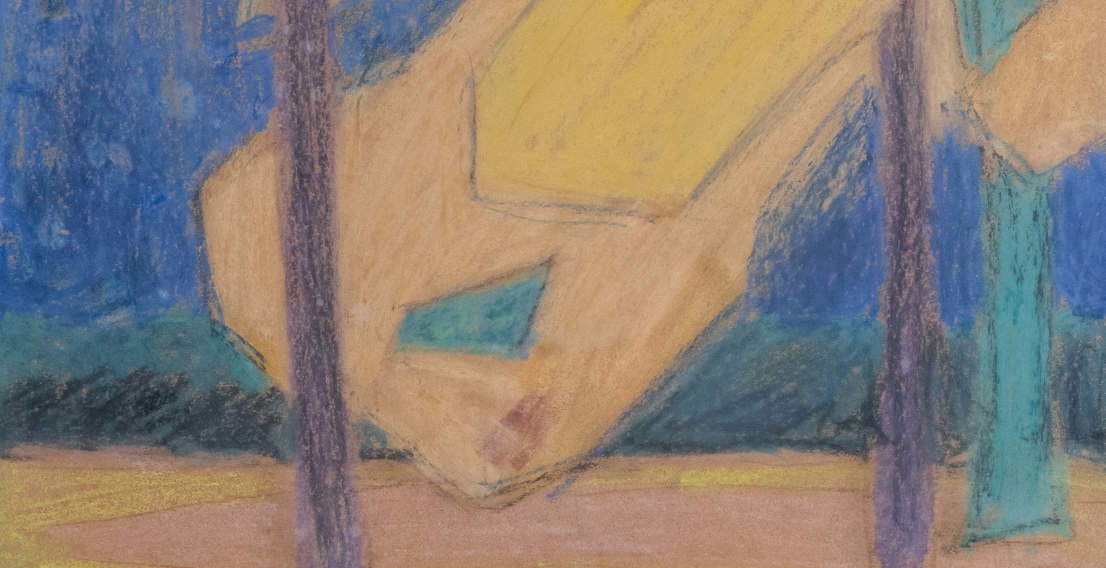
In 1909, this principle took concrete form. Picabia had achieved a certain degree of fame thanks to his Post-Impressionist painting, but he decided to abandon that established position and embark on a new artistic exploration. *Landscape* stands at the center of this transformation. The subject remains recognizable, but the composition of the image gradually moves away from a depiction of natural reality; the forms expand, and the color tends to organize itself into broad swaths of color, foreshadowing the process that would lead Picabia to question the very relationship between painting and visible reality.
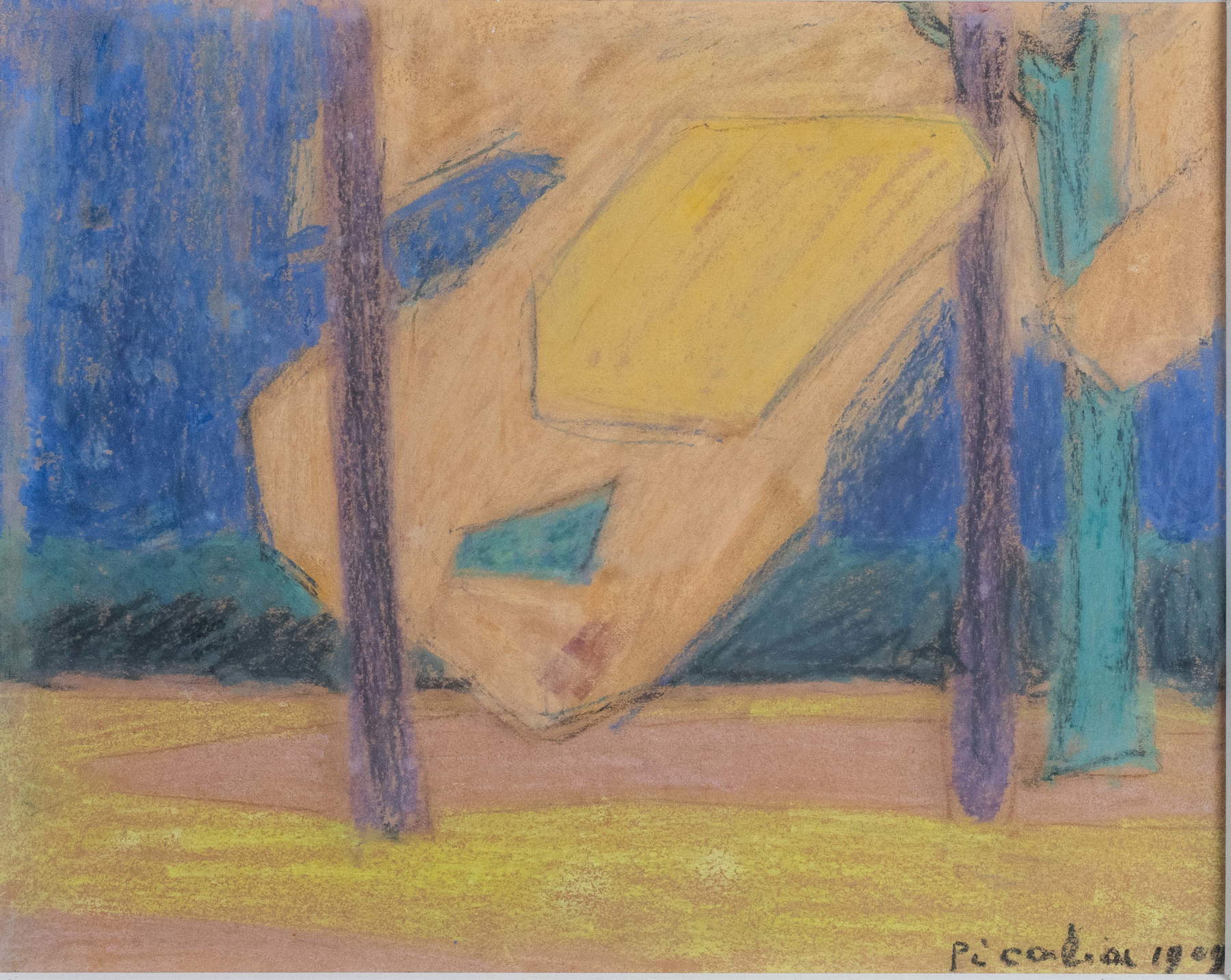
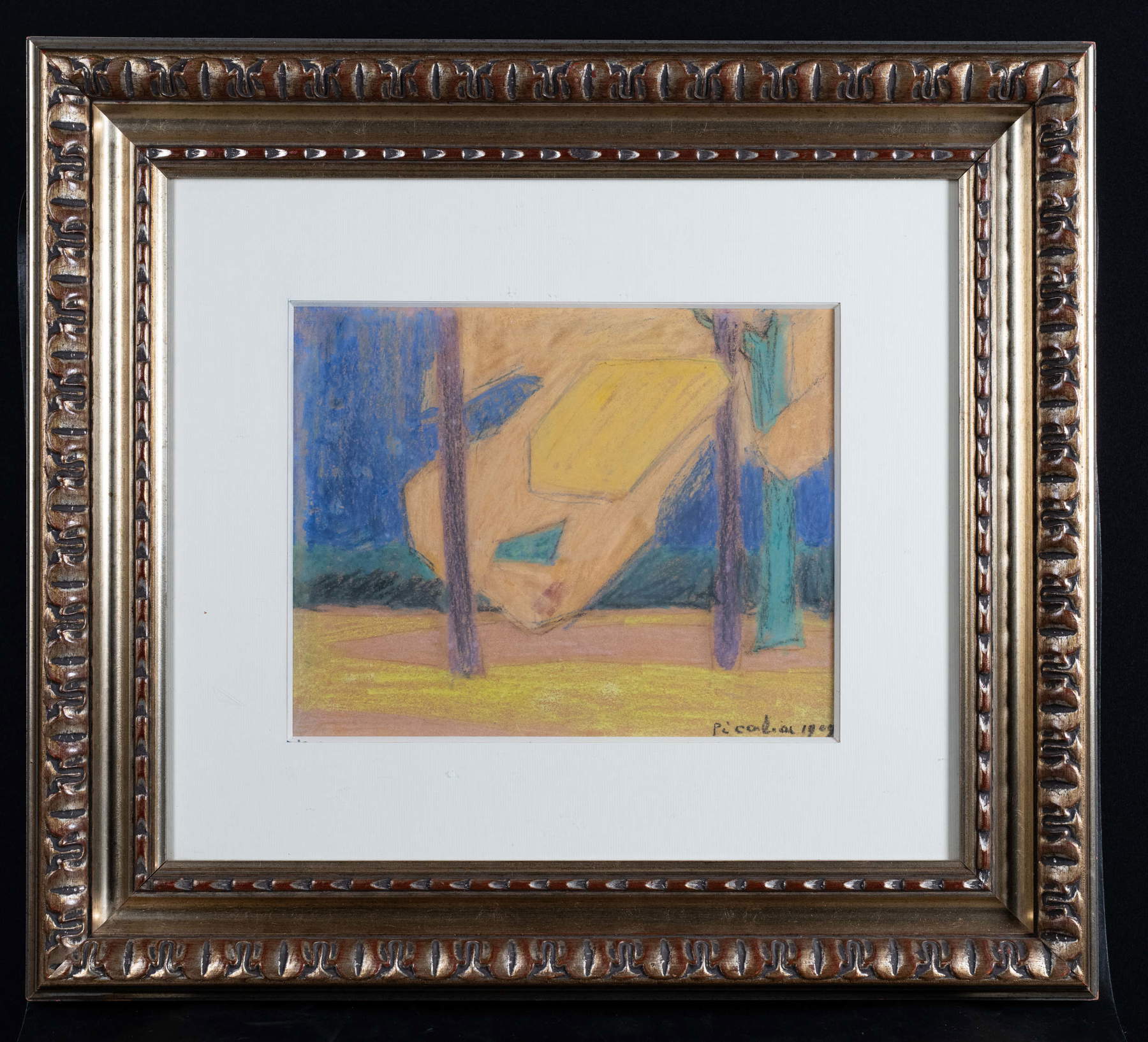
The fact that the work is executed in pastel helps to underscore the experimental nature of this phase: *Landscape* precedes *Caoutchouc* by only a short time; the latter is considered one of the seminal works in the early history of abstraction, alongside the explorations conducted during the same years by artists such as Wassily Kandinsky, František Kupka, Kazimir Malevich, and Robert Delaunay. Thus, 1909 became a decisive moment in Picabia’s career: not yet a complete abandonment of figuration, but the beginning of an exploration that would open up very different possibilities for painting.
The decision to exhibit the painting at Villa Medici is part of a tradition already established by the French Academy in Rome, which has long showcased works from major international collections and institutions. In 2024, Édouard Manet’s *The Lemon* , painted in 1880, was presented in the halls of the Camera degli Elementi, on loan from the Musée d’Orsay as part of the celebrations marking the 150th anniversary of Impressionism. With Picabia, however, the focus shifts forward by several decades and leads toward one of the great transformations in 20th-century painting: the gradual emancipation of the image from the representation of the visible world.
The exhibition in Rome will, as mentioned, engage in a dialogue with the exhibition to be held at the Palazzo Reale in Milan from October 9, 2026, to January 24, 2027. In Rome, the focus will be on “Landscape” and “The Threshold of Abstraction.” In Milan, however, the exhibition will take a broader approach, tracing Picabia’s long and varied artistic career through the motif of night. The Roman program will also feature an event dedicated to another leading figure in 20th-century abstraction. On Tuesday, October 13, Villa Medici will host a discussion with Anne Berest Picabia and Arnauld Pierre, an art historian, professor at Sorbonne Université, and author of studies on Francis Picabia. The topic will be the relationship between Picabia and François Morellet, an artist to whom Villa Medici will in turn dedicate an exhibition in the fall of 2026.
The discussion takes its starting point in a statement made by Morellet himself, who liked to call himself Picabia’s “son.” Their artistic explorations belong to different periods and do not coincide in their outcomes, but they share a particular focus on irony, playfulness, and the absurd. Morellet built much of his body of work through geometric abstraction grounded in principles of neutrality and rigor, while continually challenging the apparent seriousness of these rules through ironic and paradoxical elements. This dual event—featuring “Landscape” and the exhibition dedicated to Morellet—thus brings two distinct moments in the history of abstraction to Villa Medici and suggests a continuity that does not stem from belonging to the same movement, but rather from a freedom from rules and definitions.
 |
| Rome: A 1909 landscape by Picabia, on the cusp of abstraction, arrives at Villa Medici |

Warning: the translation into English of the original Italian article was created using automatic tools. We undertake to review all articles, but we do not guarantee the total absence of inaccuracies in the translation due to the program. You can find the original by clicking on the ITA button. If you find any mistake,please contact us.
























 IT
IT FR
FR DE
DE ES
ES CN
CN


