





Less than four months after taking the helm at the Louvre, the new president and director of the French museum, Christophe Leribault, paints an extremely troubling picture of the state of the world’s largest museum institution. Appearing before the French Senate’s Culture Committee, Leribault sounded an alarm that leaves no room for interpretation: “We can say this in no uncertain terms: despite its grandeur and despite the daily dedication of its staff, the Louvre is on its last legs.” These remarks, made on June 17 during his parliamentary hearing, come just a few months after one of the most traumatic episodes in the museum’s recent history: the theft of the Crown Jewels last October. This incident exposed serious vulnerabilities in the institution’s security systems and also had managerial consequences, culminating in the end of Laurence des Cars’s tenure; she had led the Louvre for five years.
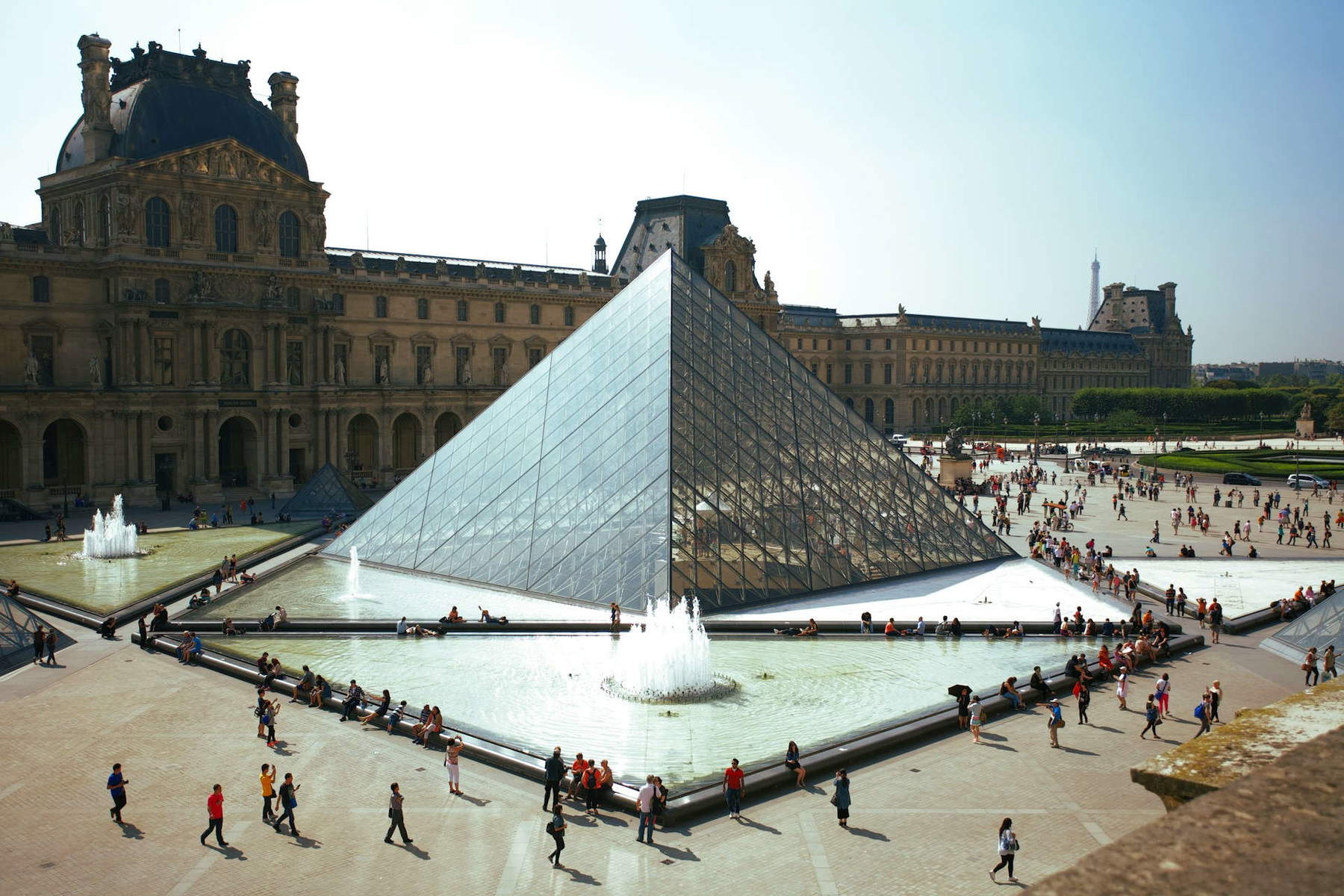
Her successor chose to address the issue immediately, outlining a complex situation in which security problems represent only part of the challenges facing the museum. According to Leribault, in fact, the Louvre is currently facing an infrastructure crisis. “The equipment and infrastructure have reached the end of their life cycle. We are at a crossroads, and urgent construction needs are piling up,” he explained to the senators. The director highlighted how the Grand Louvre project of the 1980s—symbolically represented by the famous pyramid designed by architect Ieoh Ming Pei—has, over the years, ended up obscuring the true state of preservation of the monumental complex. The technical installations built during that period now show clear signs of wear and tear, while numerous historic parts of the building require significant structural repairs.
Among the most critical situations are the buildings surrounding the Cour Carrée and certain sections ofthe Sully Wing facing the Seine. It is precisely in this area that structural problems have emerged, which have already had significant operational consequences. Leribault noted that the fragility of the second-floor beams forced the museum to evacuate the offices of two departments in November. The Campana Gallery was also closed as a precautionary measure, and it became necessary to relocate and secure more than 10,000 Greek vases held in the collections. According to the president-director, this situation is a concrete example of the numerous urgent improvements the museum requires. This issue was at the center of the parliamentary hearing, during which there were several tense moments.
Senator Max Brisson of Les Républicains openly criticized the museum’s new director, accusing him of essentially continuing the previous administration’s approach. “You talk about hospitality, promotion, and image as if nothing had happened,” said the senator, arguing that he expected a more decisive change following the theft that shocked the French and international public. Leribault rejected the accusations, assuring that he did not intend to downplay the institution’s difficulties and emphasizing that improving the visitor experience and resolving structural issues are closely linked objectives.
On the security front, the director announced the introduction, starting in January 2027, of a new perimeter video surveillance system. Following last October’s theft, the museum has already installed several additional cameras in areas considered most vulnerable, but the Louvre director clarified that it is not possible to rebuild an entire monitoring network without simultaneously upgrading the technical infrastructure that supports it.
Among the planned measures is the relocation and expansion of the security operations center. In addition, the new position of security coordinator—created specifically in response to the theft of the Crown Jewels—has been entrusted to Olivier Goupil, a former French police commissioner and former head of security at RATP, the company that manages public transportation in Paris. While acknowledging the seriousness of the incident that struck the museum, Leribault urged people not to focus all their attention exclusively on the issue of theft prevention. “The theft was a tragedy, but we must not forget the risks posed by water leaks, malfunctioning glass roofs, and the fire hazard associated with the enormous influx of visitors,” he said.
Initial estimates indicate that approximately 160 million euros will be needed to address the most urgent priorities related to safety, heating systems, and air conditioning. These improvements are expected to be funded through the museum’s new tiered pricing system. However, to date, only 15 million euros from ticket sales have actually been allocated to these needs.
The situation has inevitably fueled the debate surrounding the “Louvre Nouvelle Renaissance” project, announced in January 2025 by President Emmanuel Macron. It is a transformation plan designed to redefine the museum’s future and its relationship with the public. The project has a total value of over one billion euros, a figure that, according to a report by the French Court of Auditors, is actually an underestimate of the actual costs. Of this amount, 660 million euros are earmarked for the creation of a new entrance and the opening of new exhibition spaces, with the aim of alleviating pressure on the most congested visitor routes. The remaining 460 million are to be invested in the technical modernization of the museum’s various departments.
Although Leribault had not initially taken a definitive stance on the project, after months of closely observing the institution’s conditions, he became convinced of its necessity. “Today, like everyone at the museum, I truly believe in the absolute necessity of a major renovation project to address these challenges and adapt the Louvre to the demands of the 21st century,” he stated. According to the director, the museum’s current visitor experience falls short of its international prestige and ultimately damages its image. The long lines that form daily at the base of the pyramid—often in the rain or under the intense sun—are one of the most obvious signs of a system that is now nearing capacity.
One of the most significant elements of the “Louvre Nouvelle Renaissance” project is the creation of a new dual entrance at the Grande Colonnade, along rue de l’Amiral de Coligny. Leribault described the area as a space that is currently underutilized, characterized by sandy surfaces, heavy vehicular traffic, and the presence of historic buildings such as the Church of Saint-Germain-l’Auxerrois and the former arrondissement town hall, which are partly hidden and marginalized.
The project aims to transform this area into a large urban esplanade in the heart of Paris, restoring the original role of the Colonnade, which was designed in the 17th century by architects Claude Perrault and Louis Le Vau at the behest of Louis XIV and Minister Jean-Baptiste Colbert. Originally conceived as the main entrance to the Louvre, the structure lost its central importance after the court moved to Versailles in 1682 and was further marginalized during the 19th century as the center of power shifted to the Tuileries Palace. The winning design, by STUDIOS Architecture Paris and Selldorf Architects and officially unveiled on May 18, features two stone ramps integrated into the walls of the moats flanking the Colonnade. The entrances will be located to the north and south of the façade, respectively, allowing for a redistribution of visitor flows.
Thanks to online reservation systems, it will be possible to direct visitors to different museum entrances based on the collections they wish to view. Those wishing to see the Mona Lisa will be directed to the new entrance at the Colonnade, while other routes will continue to center around the Pyramid.
The Mona Lisa itself is one of the central focal points of the museum’s future reorganization. Leonardo da Vinci’s masterpiece will be moved to a new gallery designed specifically to showcase the work and enhance the visitor experience. Its current location in the Salle des États, which has housed the painting since 1966, is now considered unsustainable due to excessive crowding. The goal is not only to better manage tourist flows but also to provide the public with a deeper understanding of the work’s historical and artistic significance. The new presentation will aim to explain the Mona Lisa’s role in the history of the Renaissance, its importance in the development of portraiture, Leonardo’s artistic journey, and the reasons why the painting came to France in the artist’s wake during the reign of Francis I.
The final design of the new gallery has not yet been made public in detail. Leribault clarified that a phase of consultation is now beginning with the architects, the museum teams, and the Police Prefecture, leaving open the possibility of further modifications.
Finally, the question of funding for the entire program remains unresolved. The 660 million euros needed to build the new spaces and access points will have to be raised through private philanthropy, as announced by President Macron. This is a challenge that Leribault himself describes as daunting. Currently, approximately 300 million euros are expected to come from the partnership with Abu Dhabi, while the remaining 360 million will need to be raised in the coming months through contributions from major corporations and private donors. “It’s enormous pressure,” admitted the director of the Louvre, aware that a significant part of the future of the world’s most-visited museum will depend on the success of this fundraising effort.
 |
| Louvre: Director Sounds the Alarm: “The Museum Is on the Brink; Urgent Investment Is Needed” |

Warning: the translation into English of the original Italian article was created using automatic tools. We undertake to review all articles, but we do not guarantee the total absence of inaccuracies in the translation due to the program. You can find the original by clicking on the ITA button. If you find any mistake,please contact us.


























 IT
IT FR
FR DE
DE ES
ES CN
CN


