




by Redazione 17/07/2026



Categories: Museums / Disclaimer
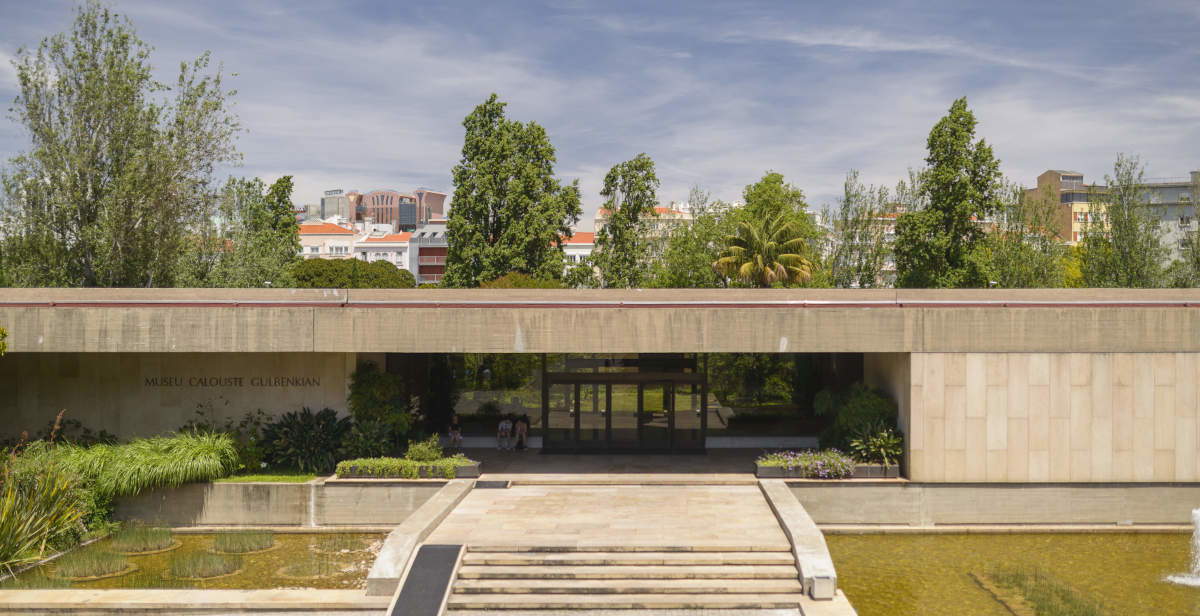
After eighteen months of construction, the Calouste Gulbenkian Museum in Lisbon will reopen on July 18, 2026, following a renovation project that restores the original 1969 modernist design, refurbishing spaces, materials, and exhibits, and strengthening the connection between the collections, the architecture, and the garden.

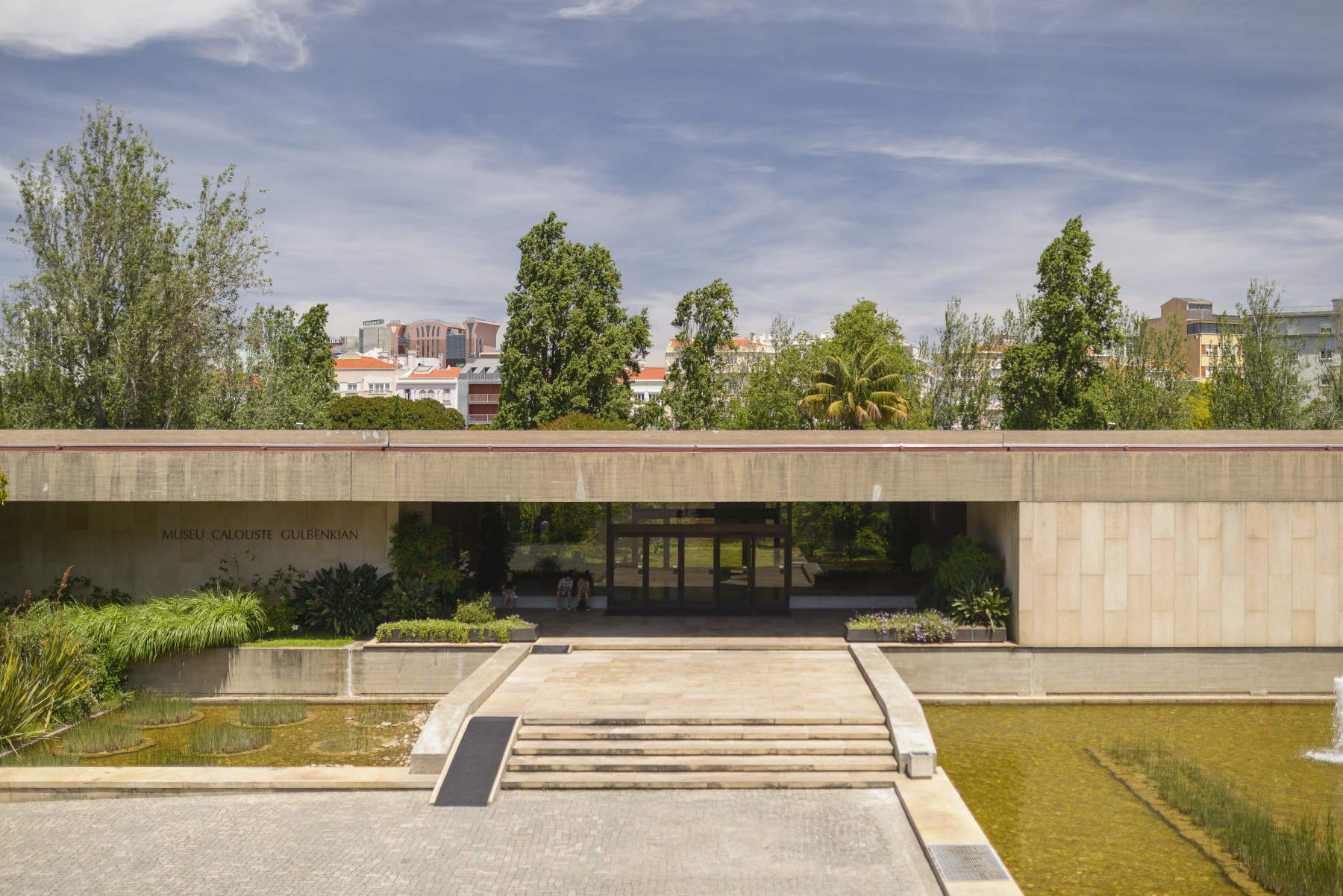
The Calouste Gulbenkian Museum in Lisbon will reopen to the public on July 18, 2026, following eighteen months of restoration work on one of the most important buildings of Portuguese Modernism. The project coincides with the 70th anniversary of the Calouste Gulbenkian Foundation and was conceived not as a transformation of the museum, but rather as a return to the original vision that guided its design and opening in 1969. The main objective was to restore the balance between architecture, works of art, and nature that had made the complex an international benchmark for contemporary museography.

The museum was designed by architects Ruy Jervis d’Athouguia, Pedro Cid, and Alberto Pessoa, with contributions from internationally renowned consultants, including French museologist Georges-Henri Rivière and Italian architect Franco Albini. From the moment of its inauguration, the project stood out for the close relationship established between the exhibition spaces and the surrounding garden, conceived as an integral part of the visitor experience. Over the decades, however, numerous interventions had altered this approach, changing some of the installations and replacing the original materials and finishes.


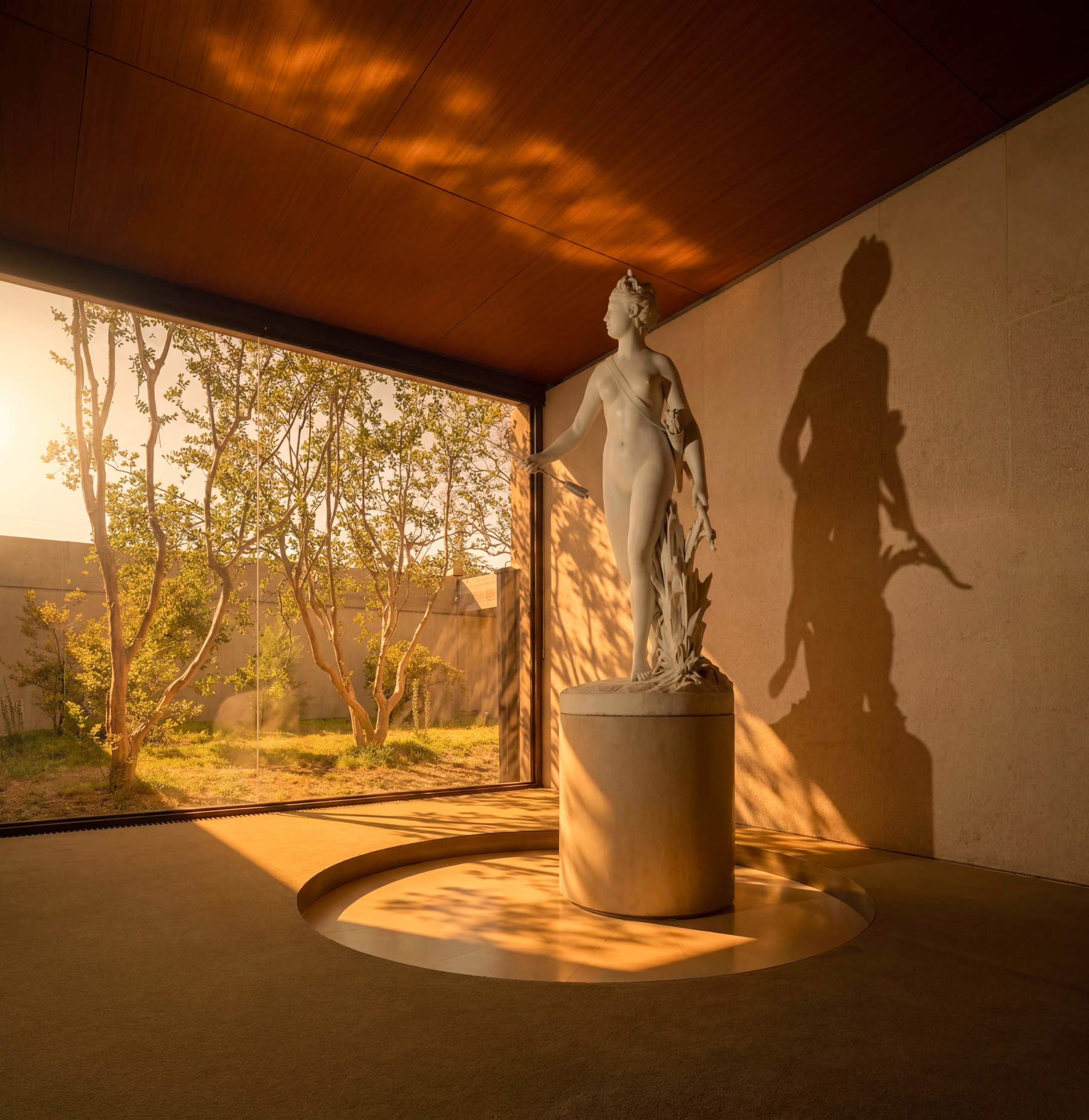
The new restoration project, designed by architects Frédéric Ladonne and Teresa Nunes da Ponte, sought to bring this original concept back to the forefront. Alongside the modernization of the technical infrastructure—essential for meeting contemporary museum standards— the project included extensive restoration of original elements—from silk upholstery to wooden surfaces, from bronze to glass, and even the textile floor coverings—restoring the spaces to the atmosphere that characterized the museum in the late 1960s.


The institution’s history is closely linked to the figure of Calouste Sarkis Gulbenkian (1869–1955), a collector and philanthropist born in Istanbul to an Armenian family. Guided by the conviction that “only the best is good enough for me,” Gulbenkian built up an encyclopedic collection over the course of his life, intended to be housed in a single museum. After his death, the Foundation established in accordance with his will carried out this project, creating a museum capable of bringing together works from different cultures and historical periods.
Today, the collection comprises over 6,000 works, ranging from Egyptian antiquities to Islamic art, from Chinese porcelain to paintings by the great European masters, as well as ceramics, jewelry, decorative arts, and archaeological artifacts. It is one of the most important collections of the 20th century, often cited as an example of an encyclopedic collection.
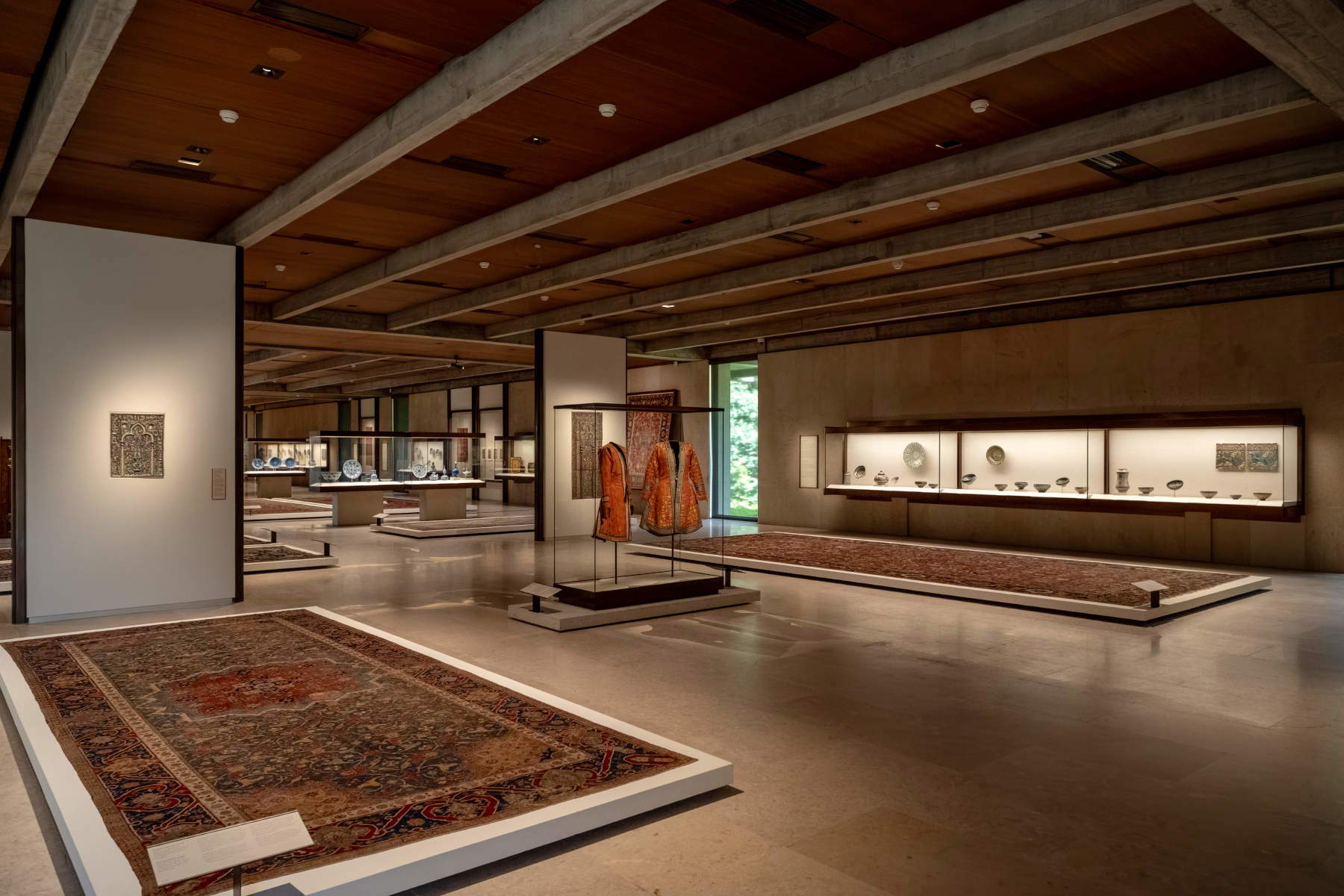
The museum is located on the campus of the Gulbenkian Foundation, a multidisciplinary complex nestled within approximately seven hectares of parkland in the heart of Lisbon. The garden, designed by Gonçalo Ribeiro Telles and António Viana Barreto, is one of the fundamental elements of the entire architectural project. It was precisely this dialogue with the landscape that served as one of the main starting points for the restoration.
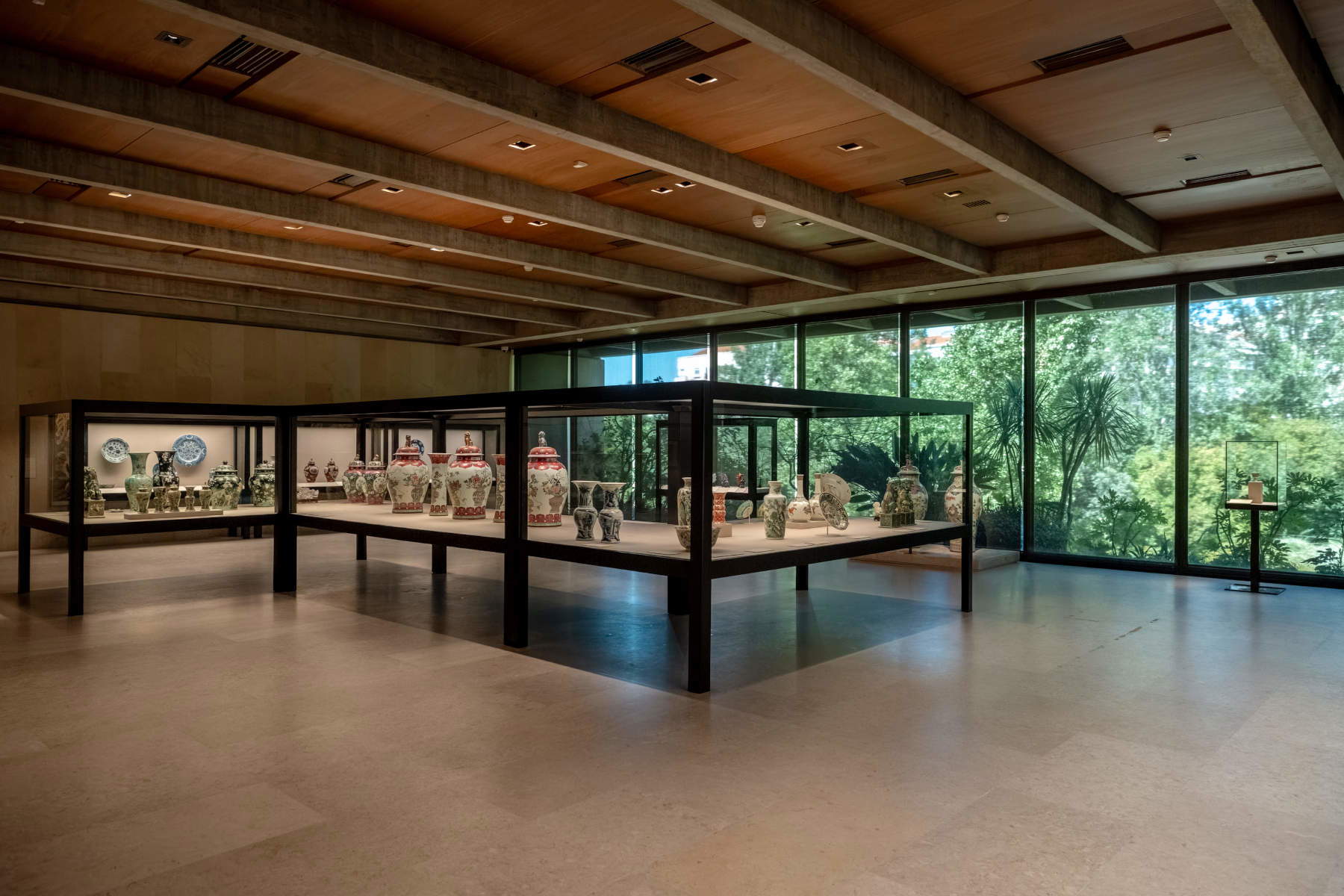
Most of the curtains, screens, and blinds that had over time obstructed the view of the inner courtyards were removed and replaced with filtering films applied to the large glass surfaces. This solution protects the artworks from direct sunlight without interrupting the visual continuity with the surrounding greenery. The result is that the garden is once again an integral part of the museum experience, as envisioned in the original design.
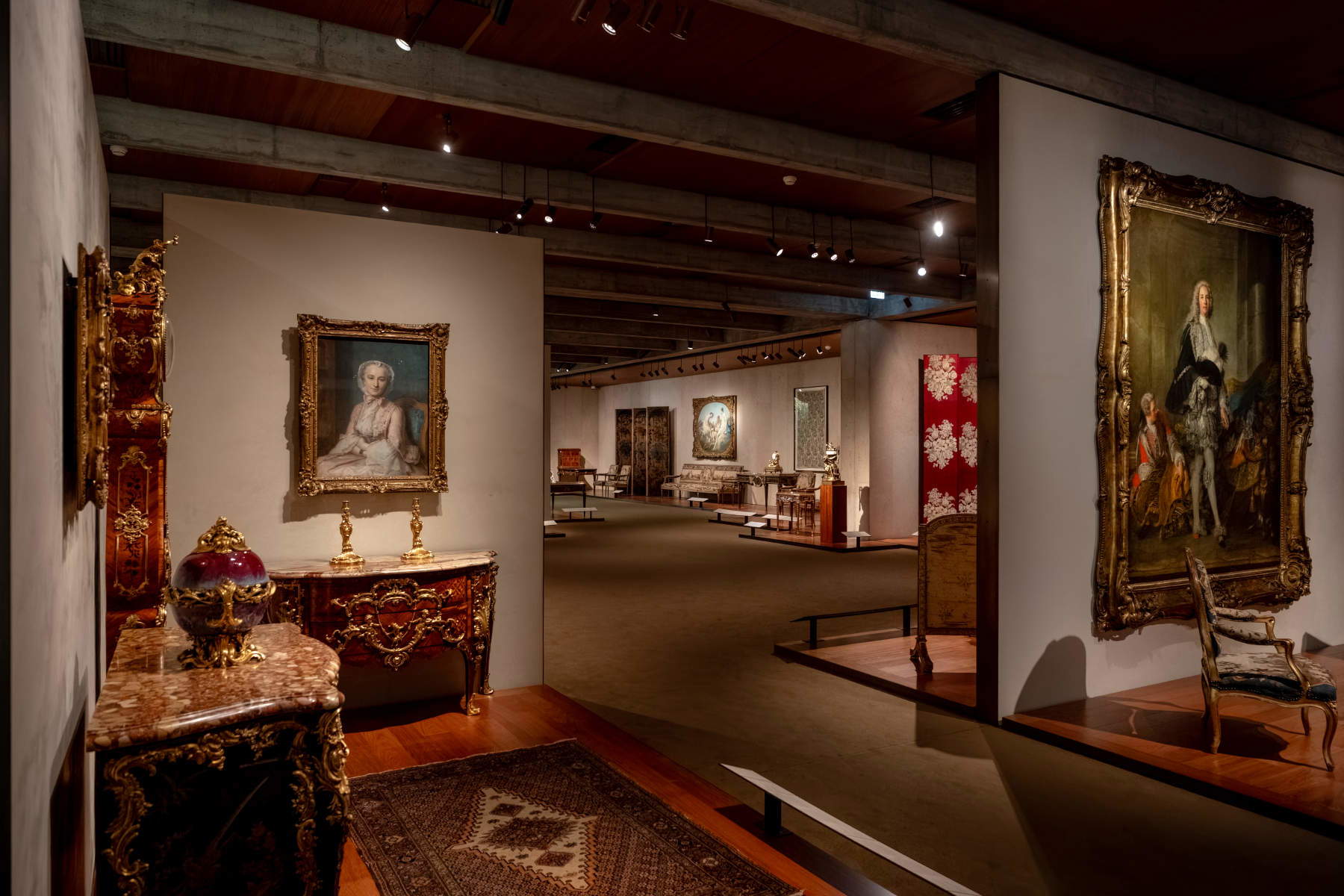
At the same time, new lighting systems were installed, designed to recreate a warm light similar to that of the museum’s opening. All display cases and vitrines have been fitted with state-of-the-art protective and anti-reflective glass, improving both the conservation conditions of the artworks and their visibility. The interior spaces have also regained numerous lost elements. In the galleries dedicated to European art, the carpet—made according to the original 1969 design—has been reinstalled, replacing the wooden floor introduced in 2000. In addition, several partition walls added in the 2000s have been removed, restoring the spatial fluidity envisioned by the architects and allowing for a different perception of the galleries.
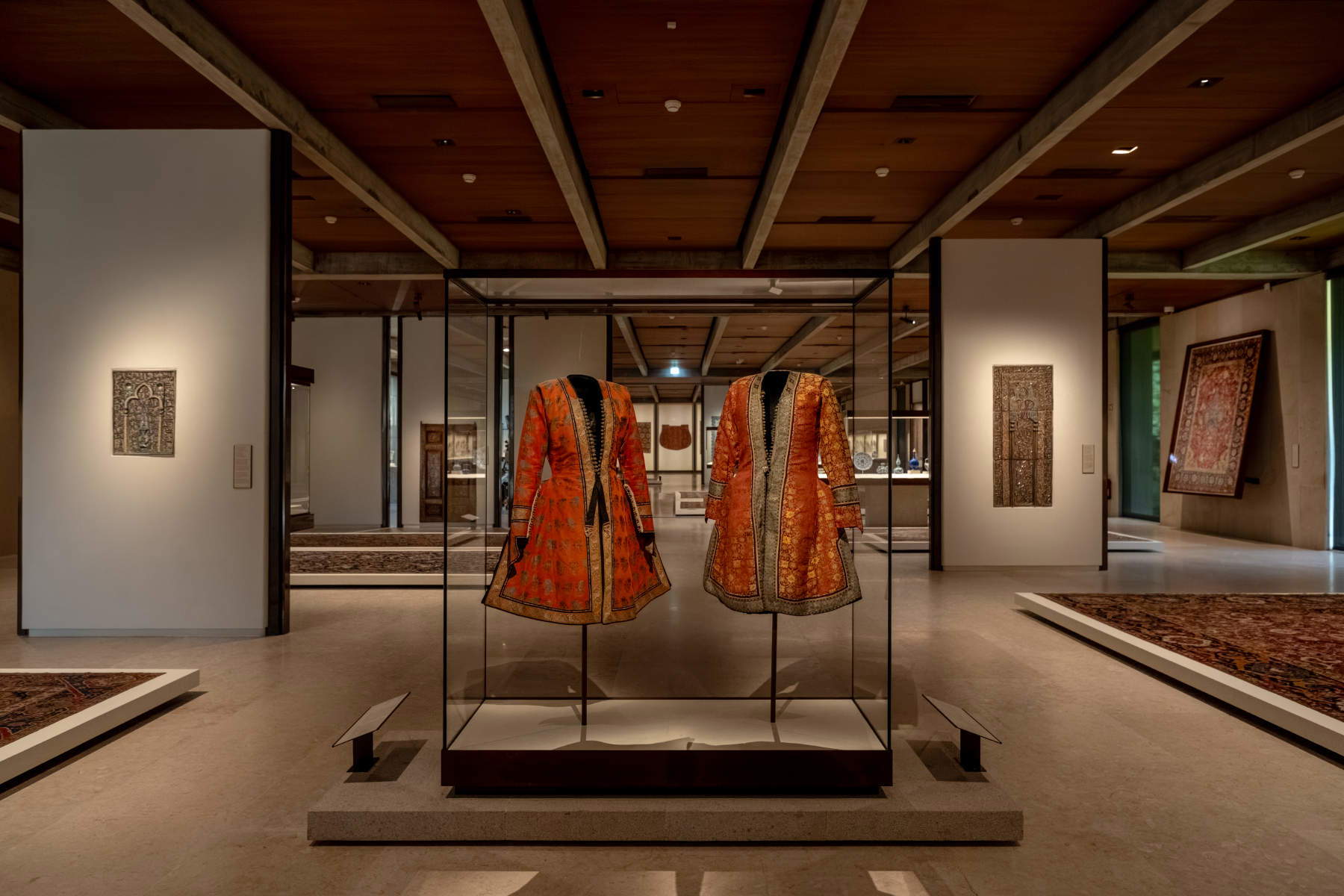
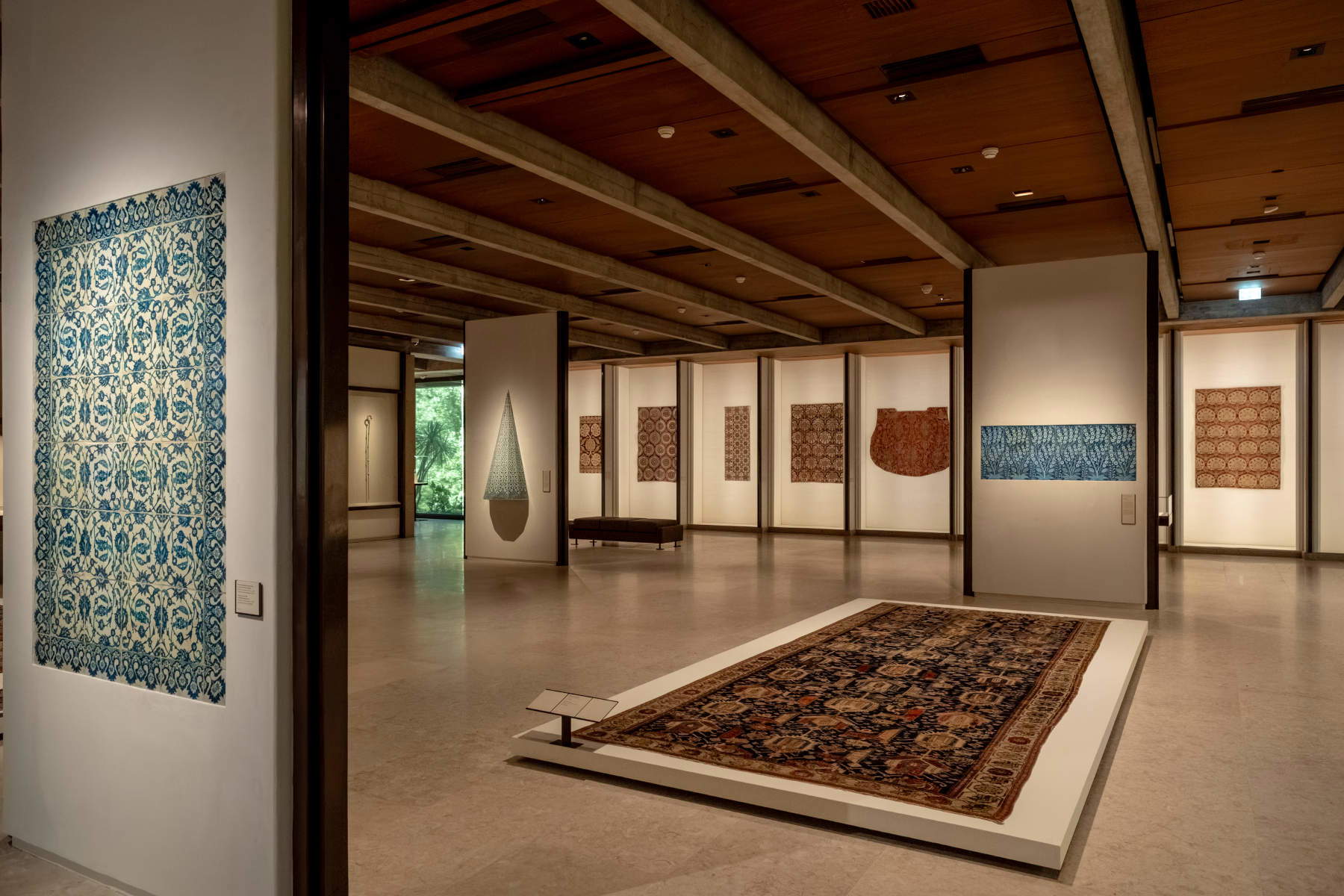
One of the central aspects of the project involves reestablishing a dialogue with the landscape. In collaboration with landscape architects, the seasonal behavior of the vegetation was studied, evaluating the positioning of the trees and their ability to naturally filter light. This work made it possible to control the natural lighting of the exhibition spaces and to strengthen the visual connection with the courtyards and the garden.
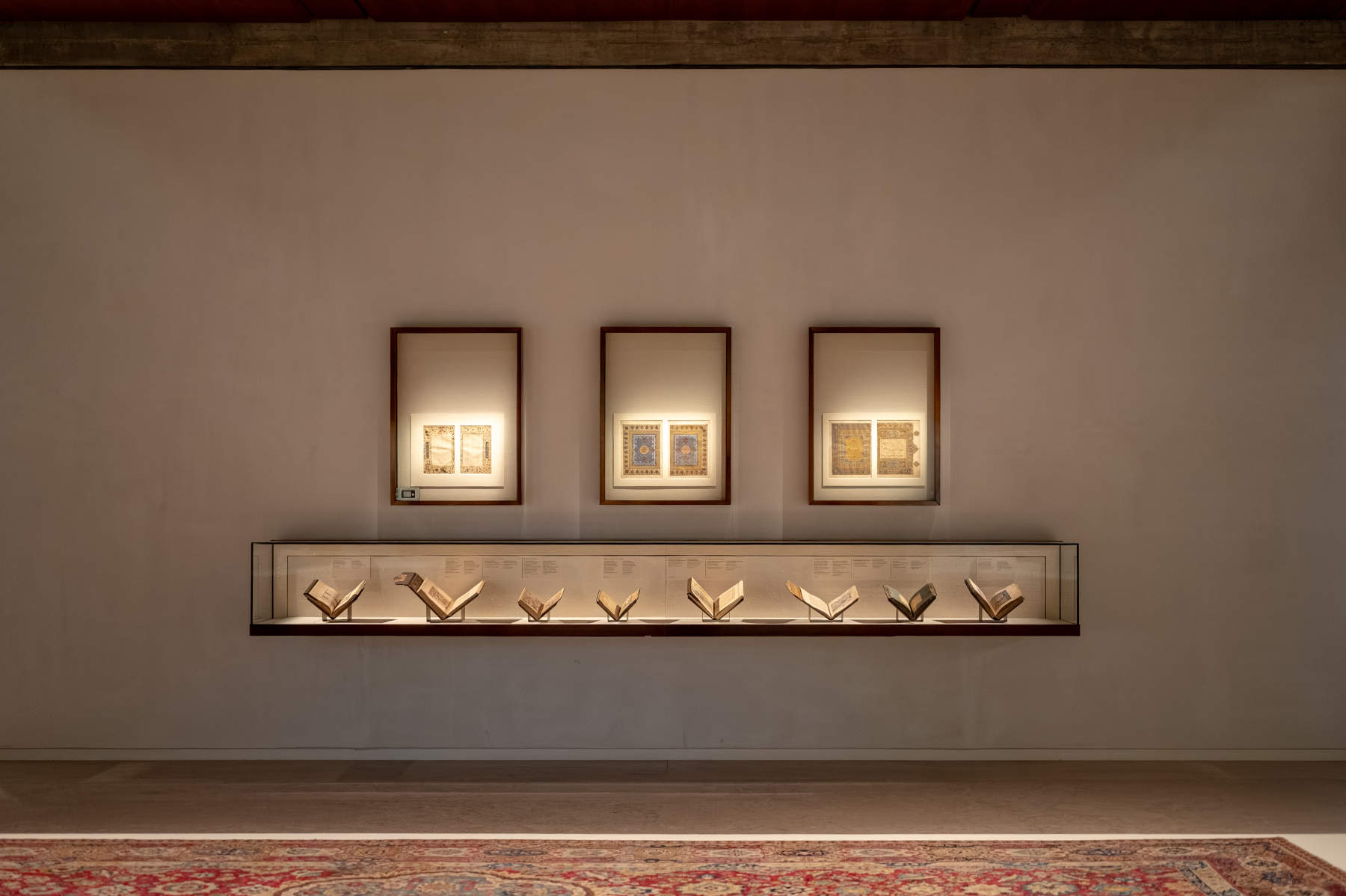
In the gallery dedicated to Armenia and the Islamic world, the openings to the outside were enlarged, intensifying the connection between the floral motifs on the carpets and ceramics and the surrounding vegetation. The section dedicated to mosque lamps has also regained its visual connection with the courtyard thanks to the removal of opaque screens and the installation of transparent protective films.
Another significant intervention concerns the passageway between the gallery dedicated to China and Japan and the one dedicated to European art. Here, the original slatted structure—which had been replaced over the years by a solid wall—has been reconstructed. The new solution, made of metal and wood, restores the depth of the space and reestablishes the original visual perspectives, offering views of several particularly notable works, including Rembrandt’s *The Old Man with a Cane * and *Pallas Athena *, as well as Peter Paul Rubens’ *Portrait of Helena Fourment *.
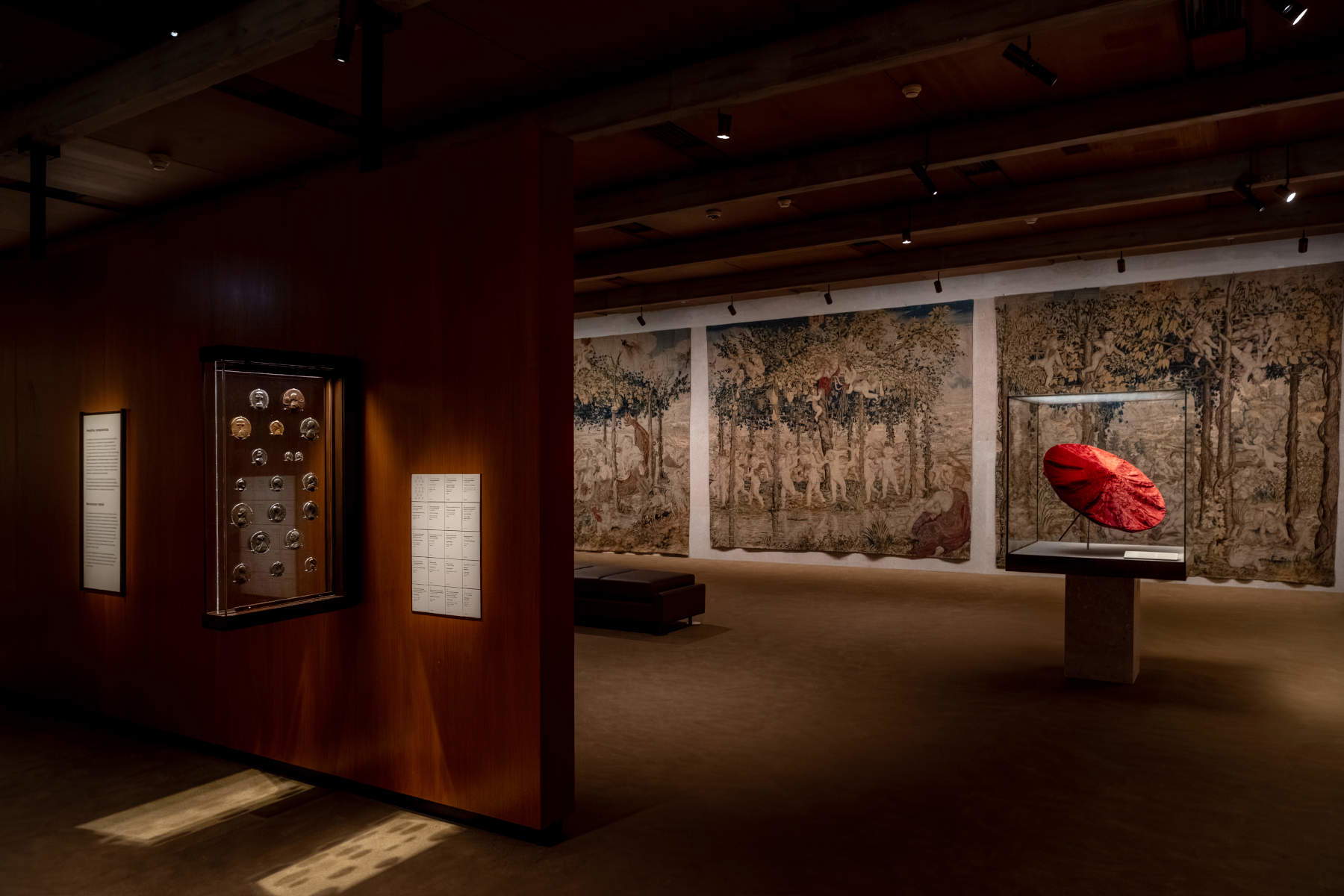
In the European galleries as well, the green carpet specified in the original design has been reinstalled, helping to reinforce the visual continuity between the interior spaces and the garden. The silk wall coverings have also been restored, returning the rooms to their original character.
Although primarily focused on restoring the existing structure, the project also introduces a new museum space. A numismatic gallery has been created in a former service area adjacent to the Greco-Roman gallery. The new exhibition layout showcases the collection of ancient coins that belonged to Gulbenkian—an exhibition that has never been presented since the museum’s opening. The display includes Greek coins, Roman medals, and the gold medallions of Abukir, highlighted by an intimate space that encourages close observation.
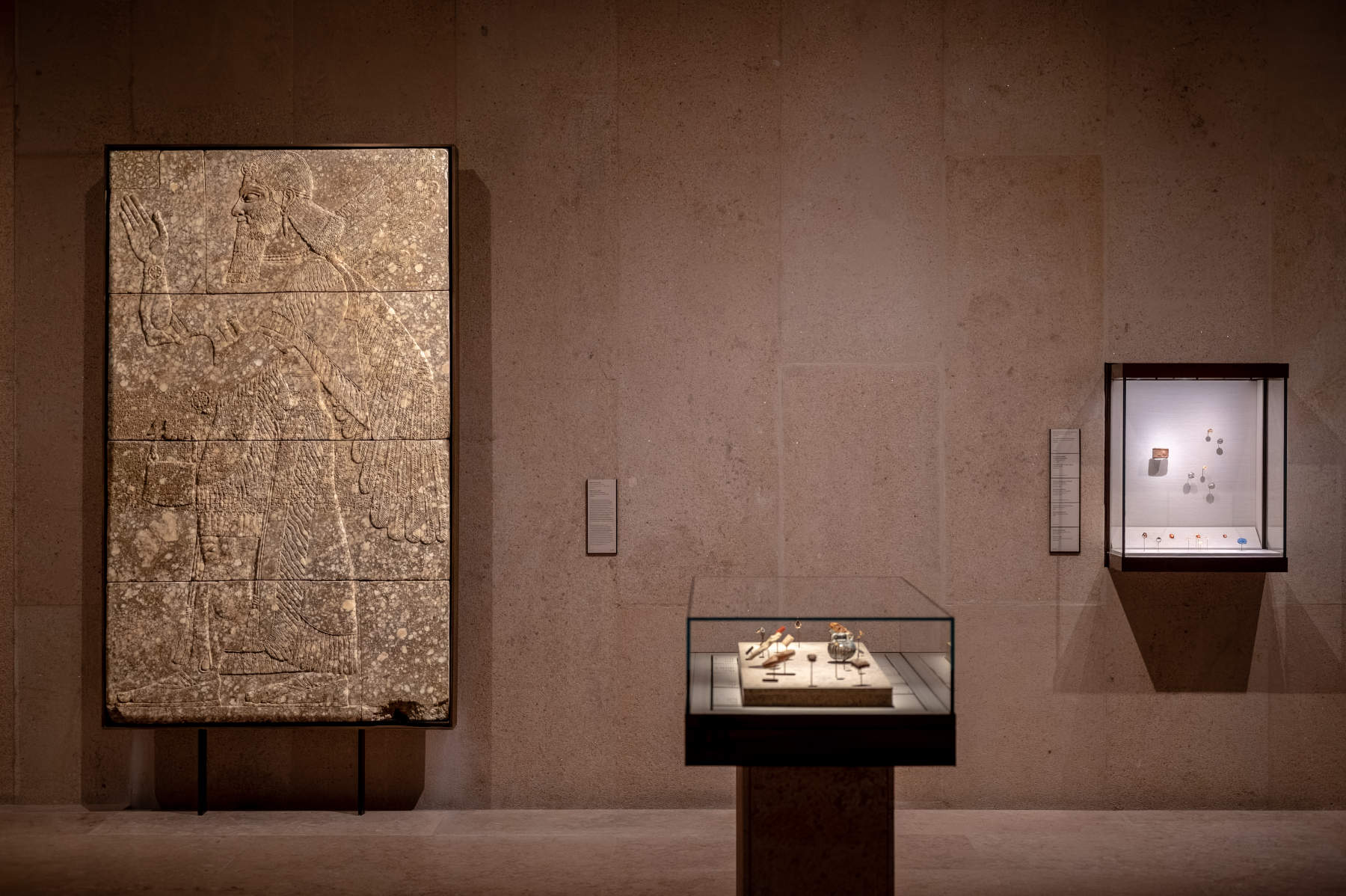
A major conservation project was also carried out on the large Assyrian bas-relief, which has been relocated to a more central position in the Mesopotamian section. The restoration removed layers of wax that had deteriorated over time, revealing the original alabaster surface.
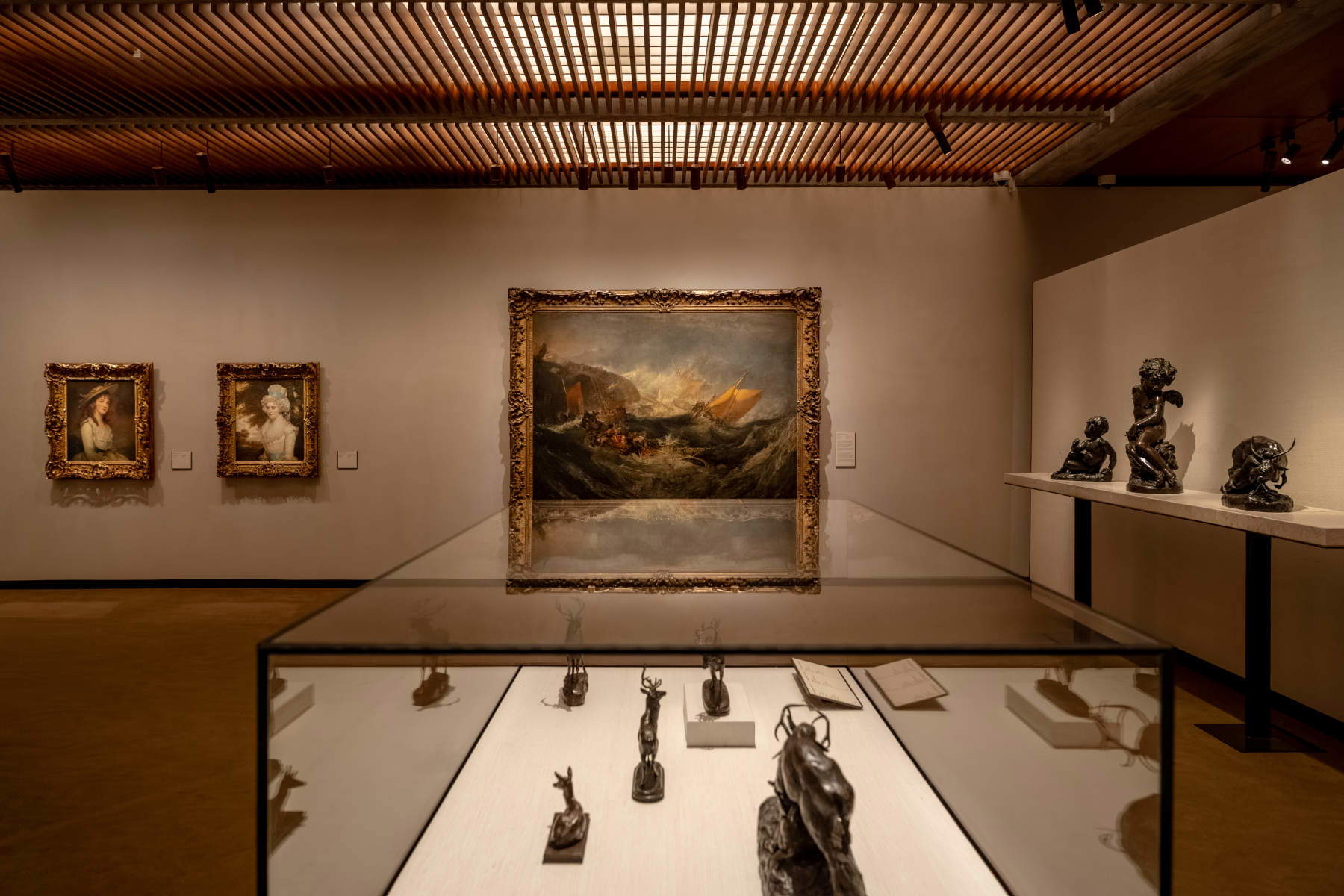
Several works previously held in storage have been reintroduced into the exhibition layout. As a result, a number of Japanese prints, gold boxes, medals, sculptures, and the famous Venetian parasol from the collection are once again on view. The distinctive Z-shaped display case for Chinese porcelain has also been faithfully reconstructed according to the original design, though it now incorporates anti-reflective glass and other contemporary technological features.
A similar restoration has been carried out on the 14th-century Mamluk mosque lamps. After more than twenty years spent inside a large shared display case, the works are once again on display individually in separate display cases equipped with anti-reflective glass, allowing for a more detailed examination of each piece.
The only section of the museum that does not fully adhere to the principle of philological restoration is the Lalique Room, dedicated to the most important collection of jewelry and decorative objects by René Lalique held outside of France. In this case, the project proposes a contemporary reinterpretation of the space, while retaining certain elements that characterized the original layout. The new curved glass display cases are inspired by the original designs, while the walls have been repainted in the shade of green that distinguished the room when it first opened.
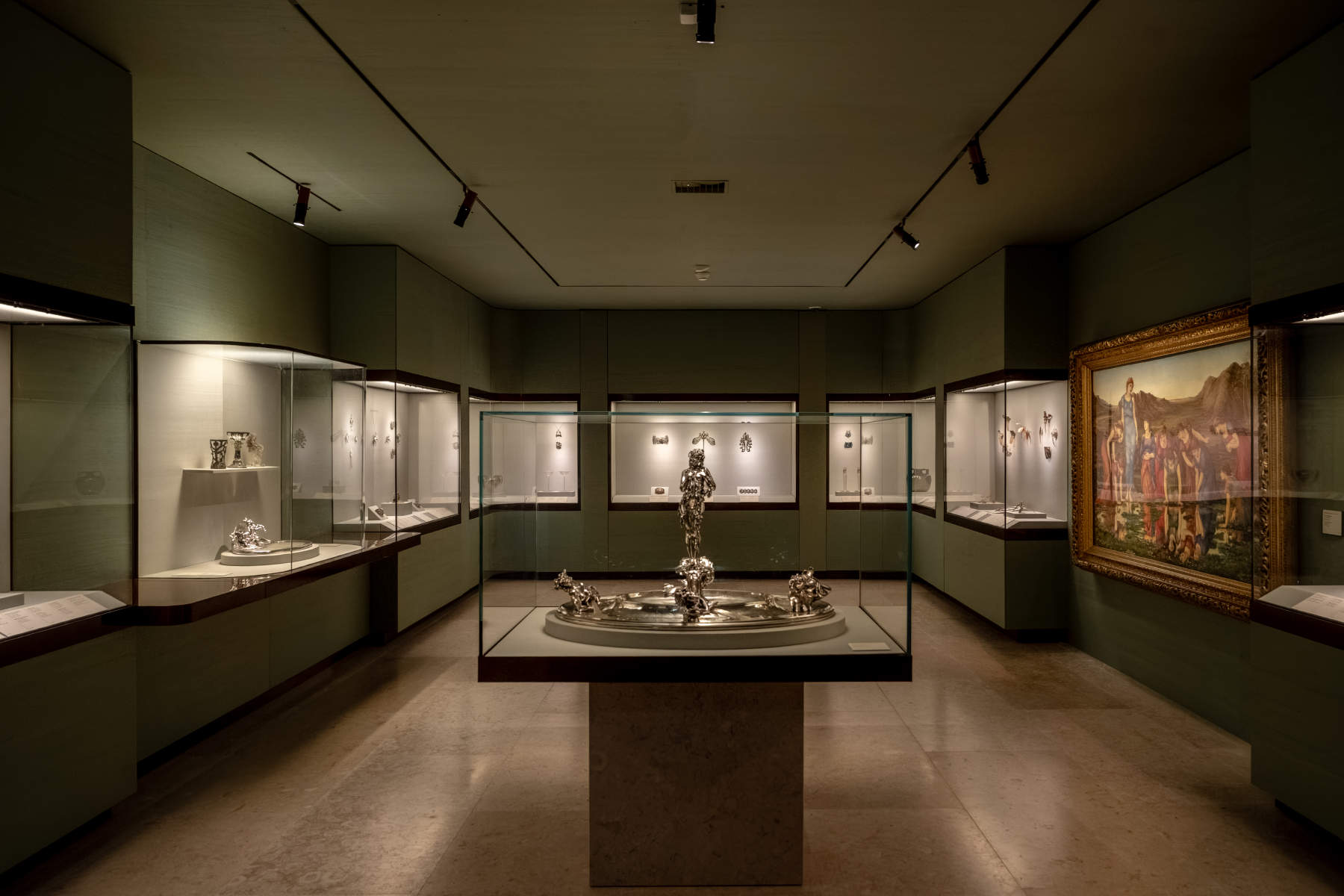
The exhibition design has also been reimagined to establish a dialogue with paintings by Edward Burne-Jones and John Singer Sargent, broadening the artistic context in which Lalique’s creations are presented. Each display case is dedicated to one of the materials favored by the French artist—horn, glass, enamel, and ivory—highlighting the works in which each material plays a central role.
To mark the reopening, the museum will be open to the public free of charge on July 18 and 19. On Saturday, July 18, the museum will remain open until midnight, while on Sunday, July 19, hours will be extended until 8:00 p.m. The reopening is also one of the events planned to mark the 70th anniversary of the Calouste Gulbenkian Foundation, an institution founded in 1956 in accordance with the wishes of the Armenian collector and now active in the fields of art, education, scientific research, and social welfare.
In addition to the Calouste Gulbenkian Museum, the foundation’s campus is home to the CAM—Centro de Arte Moderna Gulbenkian, an orchestra and a choir, an art library, and the archives. The institution also supports research programs, scholarships, and cultural and social projects in Portugal, the United Kingdom, France, Portuguese-speaking African countries, and Armenian communities, promoting initiatives dedicated to education, reducing inequality, sustainability, and the preservation of Armenian cultural heritage.
Statements
“This renovation does not aim to reinvent or expand the Gulbenkian Museum, but rather to rediscover it,” explains Xavier Francesco Salomon, director of the Calouste Gulbenkian Museum. “By returning to the architects’ original vision from 1969, we have restored the intimate relationship between the collection, the architecture, and the gardens—a relationship that has always defined the museum: an extraordinarily contemporary idea that reflects Calouste Gulbenkian’s global vision, 130 years after his birth.”
“By removing the later additions from the 1980s and early 2000s, we are restoring the museum’s original relationship with light and materials. “Our team has worked to return the museum to the ideas that made it so exceptional from the very beginning,” say Frédéric Ladonne and Teresa Nunes da Ponte.
 |
| The Calouste Gulbenkian Museum in Lisbon reopens following a restoration that brings it back to its 1969 design |
Warning: the translation into English of the original Italian article was created using automatic tools. We undertake to review all articles, but we do not guarantee the total absence of inaccuracies in the translation due to the program. You can find the original by clicking on the ITA button. If you find any mistake,please contact us.