





One of the most significant restoration and enhancement projects carried out in recent years within the Miramare Castle complex is nearing completion. Thanks to European Union funding under the PNRR – NextGenerationEU program, the Miramare Castle Historical Museum and Park has restoredthe old carriage road, a historic route that will soon be accessible again after years of closure.
Work is scheduled to be completed by the end of June, though the timeline set by the PNRR project still allows for a couple of months to finalize the last details. However, to fully appreciate the results of the project, it will be necessary to wait for the newly planted vegetation to take root and grow, as it will help restore the route’s original landscape.
The project was recently presented in the Throne Room of Miramare Castle by museum director Guido Comis, who outlined the main projects carried out with PNRR funds in the region’s state museums. Architect Giorgia Ottaviani, the sole project manager, together with the technicians and designers involved, presented the various phases of the restoration in detail (Architects Moira Morsut and Ramon Pascolat, Studio MOD.LAND Architetti Associati, architectural design; Dr. Ivan Snidero, design and construction supervision for the maintenance of the botanical heritage; Eng. Mario Mazzolini, safety, monitoring, and testing; Eng. Matteo Comis da Ronco, IGS s.r.l., structural design and construction supervision; Dr. Davide Marussich, topographic monitoring; Dr. Ambra Saottini and Dr. Elisa Piga, BIA s.r.l., communication and reporting).
Developed over a three-year period, the plan involved an area of particular historical, environmental, and landscape significance. The work focused on the restoration of the historic tunnels, masonry structures, and original pathways, with the goal of restoring safety and continuity to an infrastructure conceived in the 19th century as an integral part of the landscape design envisioned by Archduke Maximilian of Habsburg.
Alongside the architectural and structural restoration, the project included significant work on the botanical heritage, considered the most extensive new planting campaign ever undertaken in the Park. The goal was to preserve the historic landscape design and make it legible once again.
The construction work required a multidisciplinary approach, involving architects, engineers, botanists, conservators, archaeologists, and specialized technicians. Through surveys, monitoring, consolidation, and environmental restoration efforts, it was possible to address issues that had accumulated over the years, maintaining a balance between the preservation of the built heritage and the protection of the natural environment. Particular attention was paid to biodiversity and the enhancement of the landscape, aspects that are fundamental to the identity of Miramare Park. The restoration of the historic structures was, in fact, accompanied by targeted interventions on the green spaces, aimed at restoring continuity and coherence to a route of great cultural and environmental value.
The reopening of the historic carriage road will mark a new chapter in the Park’s history, offering visitors the chance to once again explore views, trails, and historical sites that have long been inaccessible.
“The presentation of this important project provides an opportunity to highlight other key projects nearing completion thanks to funding from the National Recovery and Resilience Plan: the energy efficiency upgrades and the underground utility network in Miramare, as well as the ‘talking trails’ project, which will allow even the visually impaired to enjoy the paths in the Park and the Castle; and at the Archaeological Museum of Cividale, the redevelopment of the outdoor areas and the construction of an educational classroom,” said Guido Comis, Director of the Miramare Castle Historical Museum and Park – Friuli-Venezia Giulia Regional Directorate of National Museums. “The conference provided an opportunity to highlight the profound difference between a purely infrastructural project and an initiative that combines accessibility with respect for the site’s historical traces and heritage. The project on the Antica Strada Carrozzabile required meticulous analysis and design work, aimed at preserving the original materials and the historical characteristics of the route. The goal was to balance preservation and public access, while ensuring maximum consistency with the Park’s identity and its evolution over time.”
"The project began during the pandemic through the National Recovery and Resilience Plan (PNRR) in February 2022. For us in Miramare, it was a strategic opportunity to reopen the only area of the Park that was still closed. The route winds from sea level up to the Miramare station on the Trieste–Vienna railway line, built in the second half of the 1800s by Maximilian of Habsburg himself to transport construction materials for the castle. It is a topographical road built in the finest Habsburg tradition. It passes through two hairpin turns and two rustic tunnels, built—like other parts of the park—to blend nature and human craftsmanship, achieving the very natural look that the Archduke always sought in his vision for Miramare Park. This area covers a couple of hectares out of the park’s total of 22. “Once opened, a loop trail will be accessible within the park,” explained Giorgia Ottaviani, Architect and Official at the Historical Museum and Miramare Castle Park and Project Manager (RUP) for the PNRR project to redevelop and enhance the park’s historic carriage road. “It was significant to realize Massimiliano’s dream—comprising formal gardens and woodland, a very lush Mediterranean scrub—while preserving the original essence of the landscape park: a forest that, however, adapts to climate change. Therefore, it was important to protect the inherited plant heritage while ensuring that future visitors will encounter a living, healthy park by replacing the large, old trees with new ones. To this end, 320 conifers were planted. Safety measures were implemented for the tunnels and retaining walls. The complex system of structures will also need to be monitored to ensure the safety of what has been built. During these years of interesting and challenging work, one of the most significant elements—and one that certainly added value to the project—was the cohesion within the work team, a group of professionals to whom I extend my thanks.”
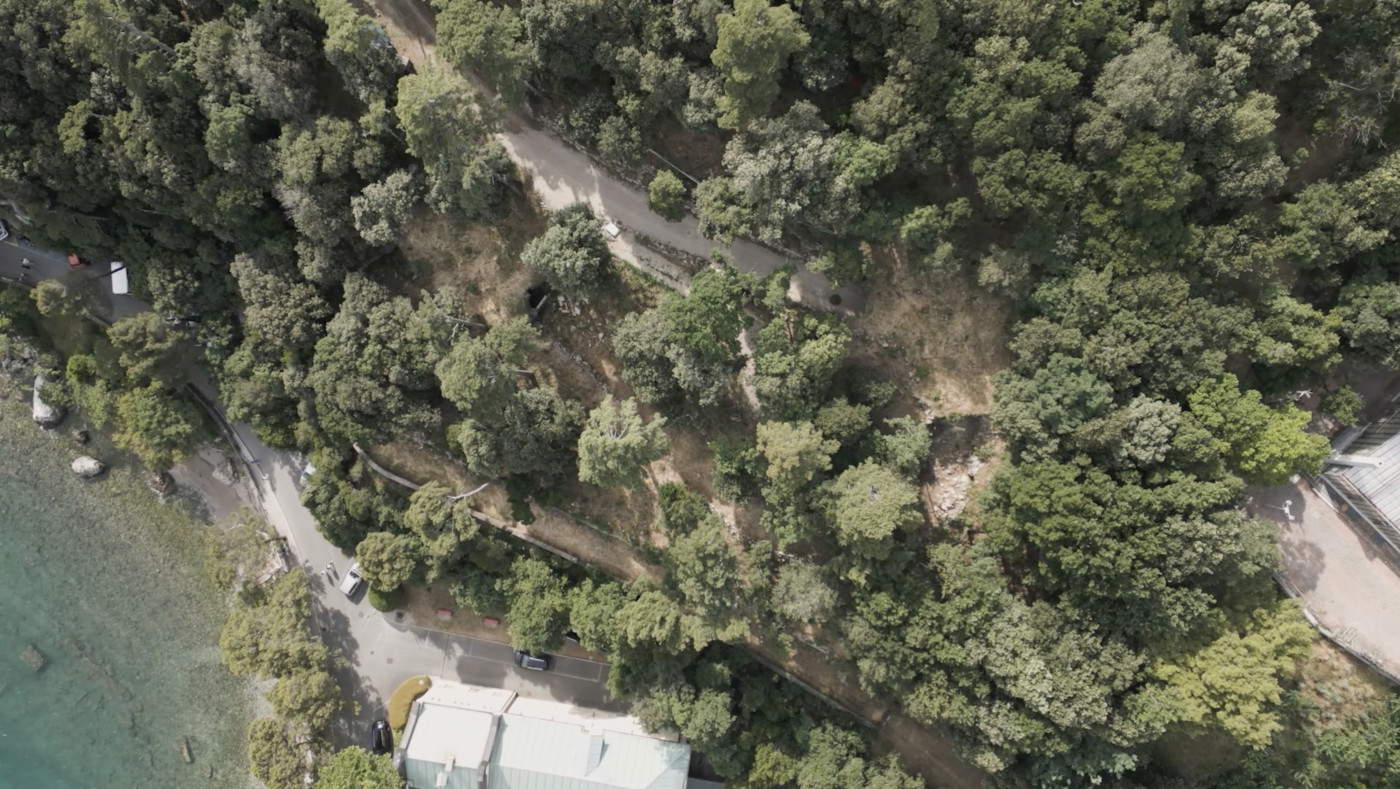 |
| Miramare: The historic carriage road has been restored. It will soon be open to the public again after years of closure |

Warning: the translation into English of the original Italian article was created using automatic tools. We undertake to review all articles, but we do not guarantee the total absence of inaccuracies in the translation due to the program. You can find the original by clicking on the ITA button. If you find any mistake,please contact us.


























 IT
IT FR
FR DE
DE ES
ES CN
CN


