





An important work housed at the Musée d’Orsay in Paris, *Hôpital Saint-Paul à Saint-Rémy-de-Provence*, a painting created by Vincent van Gogh in 1889, is the subject of a restitution claim filed by 98-year-old Klaus Kallmann, a descendant of the German collector Felix Kallmann: He is convinced that the painting was part of the family collection that was dispersed following the anti-Semitic persecutions that began with the rise of the Nazis to power. The story is recounted in an article in the French daily Le Monde by Roxana Azimi and Cécile Boutelet. The newspaper reports that the case is now under review by the Commission pour l’indemnisation des victimes de spoliation (CIVS), the French body responsible for evaluating claims for the restitution of property seized from victims of anti-Semitic persecution. The case is expected to be discussed starting in September following a lengthy preliminary investigation involving historians, archivists, and specialists in tracing the work’s provenance.
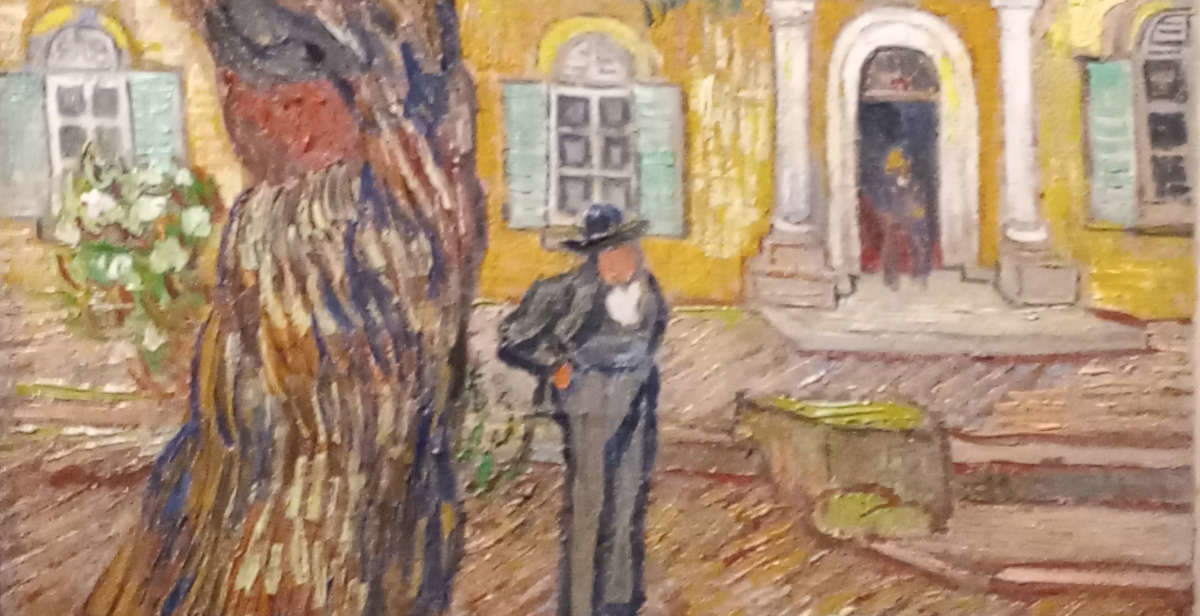
Klaus Kallmann, who now resides in the United States, claims to have a personal memory of the painting, which he saw as a child at his grandfather’s villa in Berlin. The painting depicts Dr. Théophile Peyron, the physician who treated Van Gogh during his stay at the Saint-Paul-de-Mausole psychiatric hospital in Saint-Rémy-de-Provence during the final years of the Dutch artist’s life. For nearly a decade, Kallmann has been pursuing a claim for restitution, arguing that the painting was lost in the context of the persecution suffered by his family. However, the case presents an element that makes its assessment particularly complex: investigations have in fact confirmed that the Kallmann family was certainly a victim of anti-Semitic persecution and suffered numerous instances of dispossession. A crucial question, however, remains unresolved: determining whether that particular painting was sold voluntarily or transferred under conditions dictated by persecution.
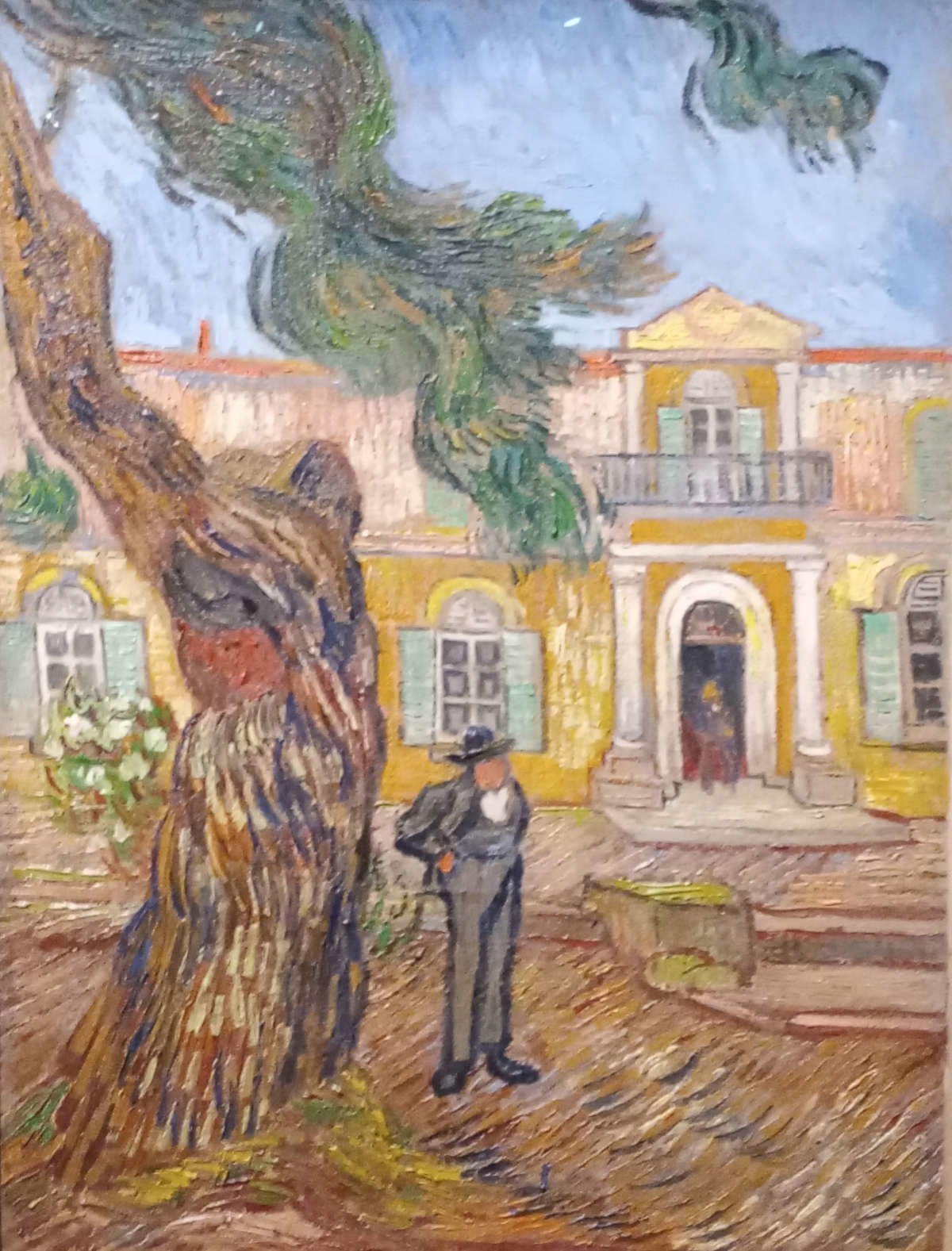
Research has in fact identified a significant gap in the documentation regarding the work’s history, spanning the period from June 1932 to February 1934. Prior to this period, there are documents attesting that Felix Kallmann had attempted to sell the painting to the Staatsgalerie in Berlin, which, however, declined the purchase, having already expanded its collection of Van Gogh works in previous years. After that, all traces of the painting disappear until it reappeared in the Paris gallery of the renowned art dealer Paul Rosenberg.
It is precisely this gap in the documentation that lies at the heart of the story. It has not been possible to ascertain whether the painting was sold before Adolf Hitler came to power on January 30, 1933, or afterward, when the persecution of German Jews had already begun to profoundly affect their ability to retain property and assets. The timing is of crucial importance because it could alter the legal classification of the sale. However, according to the experts tasked with the research, the case represents a situation that is, in part, unprecedented for France, as it raises questions about the significance of sales made by German Jewish citizens in the early months of 1933, at a time when discrimination was rapidly turning into systematic persecution.
To understand the scope of the controversy, it is necessary to reconstruct the history of the Kallmann family. Felix Kallmann was a prominent Berlin lawyer and art collector belonging to the German upper middle class. He had built a prestigious villa in the Westend residential neighborhood and, throughout his career, had headed leading companies in German industry, including Deutsche Gasglühlicht—known for manufacturing Osram light bulbs—and the film company Universum Film AG. Felix Kallmann died in November 1938, a few days after Kristallnacht, the pogrom that marked an escalation of anti-Semitic violence in Nazi Germany. His son, Hartmut Kallmann, managed to avoid deportation by marrying a woman classified as Aryan under the racial laws of the time, and after the end of World War II, he emigrated to the United States with his family.
In the postwar period, the Kallmanns focused primarily on recovering their confiscated properties and seeking recognition of the damages they had suffered. In 1953, Germany acknowledged that the sale of the family villa had taken place under duress and granted financial compensation. It was not until many decades later that the heirs began to systematically piece together the history of the art collection as well.
Research has established that the painting now housed at the Musée d’Orsay was purchased by Felix Kallmann in 1914 at the Paul Cassirer Gallery in Berlin, along with a second Van Gogh, now housed at the Thyssen-Bornemisza Museum in Madrid. The two works followed a similar path at least until the early 1930s, when they were both acquired by Paul Rosenberg at a time that is not precisely documented. According to one hypothesis put forward by scholars, the works may have been transferred through the Cassirer Gallery’s commercial network, which at that time was moving part of its collection to Amsterdam to protect it from the risk of Nazi confiscation. However, no archival document has yet made it possible to definitively verify this reconstruction. Subsequently, the painting changed hands several times. Beginning in 1936, it passed through various owners until it was donated to the Louvre by the art dealer Max Kaganovitch, who was also Jewish and persecuted by the Nazis. With the founding of the Musée d’Orsay in 1986, the work became part of the new museum’s collection, where it remains to this day.
The family’s position remains firm at this time: Klaus Kallmann maintains that his grandfather’s collection was still intact when Hitler came to power and that the subsequent dispersal of the works was a direct consequence of the persecution. His attorneys believe that the case fully falls under the concept of spoliation as defined by the 1998 Washington Principles—which France has also signed—calling on states to consider sales made under the pressure of anti-Semitic persecution as involuntary. The sale could therefore be equated with an involuntary transfer of ownership when it is influenced by a context of persecution: an approach, explains *Le Monde*, that has found further confirmation in French case law, with a decision by the Court of Cassation handed down in November 2025 regarding the collection of attorney Armand Isaac Dorville.
The case is now in the hands of the CIVS’s reporting magistrate, who must complete the preliminary investigation before the commission—which also includes representatives from the French Ministries of Culture and Foreign Affairs—reviews it. The commission’s president has already designated the case as a priority.
 |
| The grandson of a Jewish collector is asking the Musée d’Orsay to return a Van Gogh |

Warning: the translation into English of the original Italian article was created using automatic tools. We undertake to review all articles, but we do not guarantee the total absence of inaccuracies in the translation due to the program. You can find the original by clicking on the ITA button. If you find any mistake,please contact us.






















 IT
IT FR
FR DE
DE ES
ES CN
CN


