




by Redazione 02/07/2026



Categories: News / Disclaimer
Ten years after Umberto Eco’s death, the University of Bologna is inaugurating the Eco Library, which houses over 32,000 volumes from his home and study in Milan. This cultural treasure reflects the scholar’s working methods and will be accessible by appointment.

Ten years after Umberto Eco’s passing, Bologna is opening its doors to one of the most important collections of an author’s works in the contemporary world. The Eco Library has been inaugurated—a project that makes the personal collection of the semiotician, writer, and professor available to the academic community, students, and the public. Eco profoundly shaped the cultural history of the University of Bologna and international research in the fields of semiotics and communication sciences.
The library’s opening comes just a few weeks after the conclusion of the major international conference that the Alma Mater dedicated to Umberto Eco—an event that drew hundreds of scholars, researchers, and experts from around the world. The inauguration of the collection thus represents another step in the University’s efforts to celebrate the intellectual legacy of one of its most influential professors, offering a new space dedicated to the study, research, and promotion of his legacy.
The Eco Library was established thanks to a donation from the scholar’s heirs and, in this initial phase, houses over 32,000 volumes from his home and study in Milan. This is a collection of extraordinary value which, once completed with the transfer of the books housed in his country home in Monte Cerignone, in the Marche region, will constitute one of the most significant contemporary author libraries.


The importance of the project lies not only in the sheer size of the book collection but, above all, in the opportunity to reconstruct Umberto Eco’s working method through his personal library. The books, in fact, trace the scholar’s intellectual journey, documenting his sources, the cultural interests that accompanied his scholarly and literary work, and the intellectual relationships that fueled decades of research.
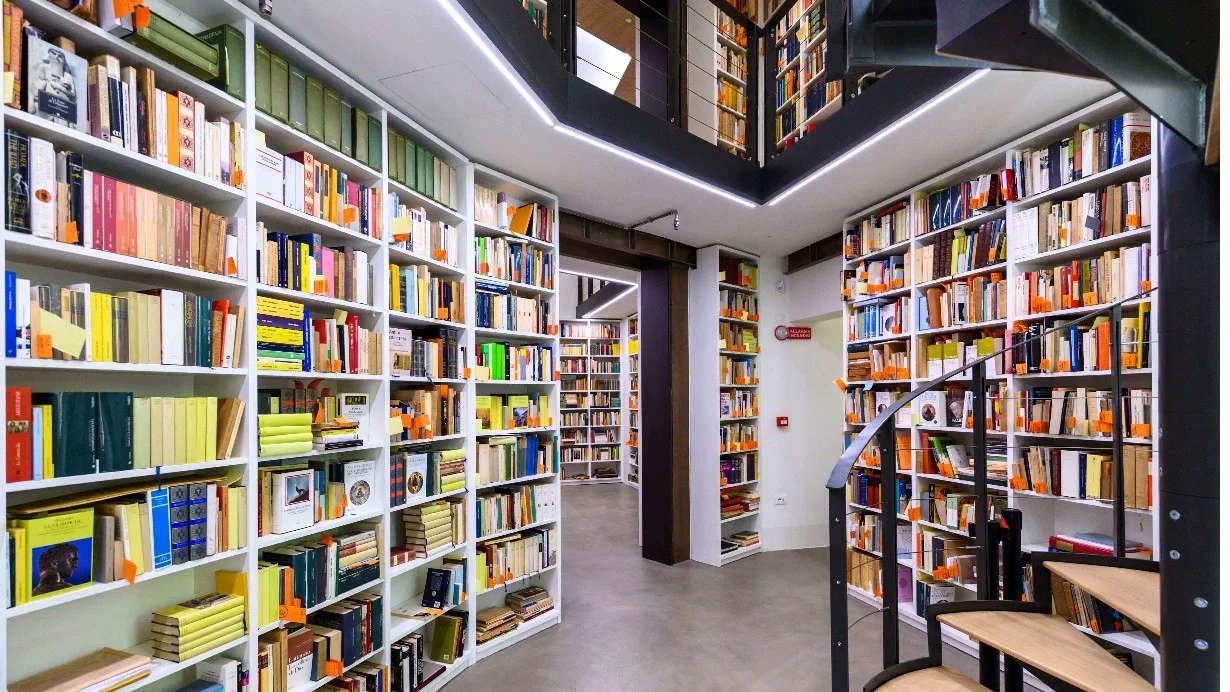
Each volume represents a piece of a mosaic that allows us to understand how Eco constructed his thought, approached various disciplines, developed connections between different fields of knowledge, and fostered a constant dialogue with international culture. The collection thus serves as a direct testament to his work as a scholar and constitutes an invaluable resource for anyone wishing to explore his interdisciplinary approach in greater depth.
The relationship between Umberto Eco and Bologna is one of the central elements of the initiative. It was, in fact, at the University of Bologna that the semiotician spent a fundamental part of his academic career, contributing to the education of generations of students and researchers and consolidating the role of the Alma Mater as an international center of excellence for semiotics and the communication sciences.
Throughout his academic career, Eco made a decisive contribution to the development of a research environment capable of attracting scholars from numerous countries, fostering dialogue between different disciplines and promoting an innovative approach to the study of languages, media, and cultural phenomena. The arrival of his library at the University thus represents the natural continuation of a bond forged over the years and destined to endure through the public access to the collection.
The decision to bequeath the library to the University of Bologna carries significance that goes beyond the simple transfer of a collection of books. Thanks to the donation by his heirs, in fact, a working tool that accompanied the scholar’s entire career becomes a shared resource, intended to support new research, new studies, and new opportunities for in-depth exploration.
For the university community and the city, this marks the acquisition of a cultural heritage of extraordinary importance, one that preserves not only the material value of the books but, above all, their intangible value—represented by the connections, reading paths, and relationships between authors and disciplines that characterized Eco’s daily work.
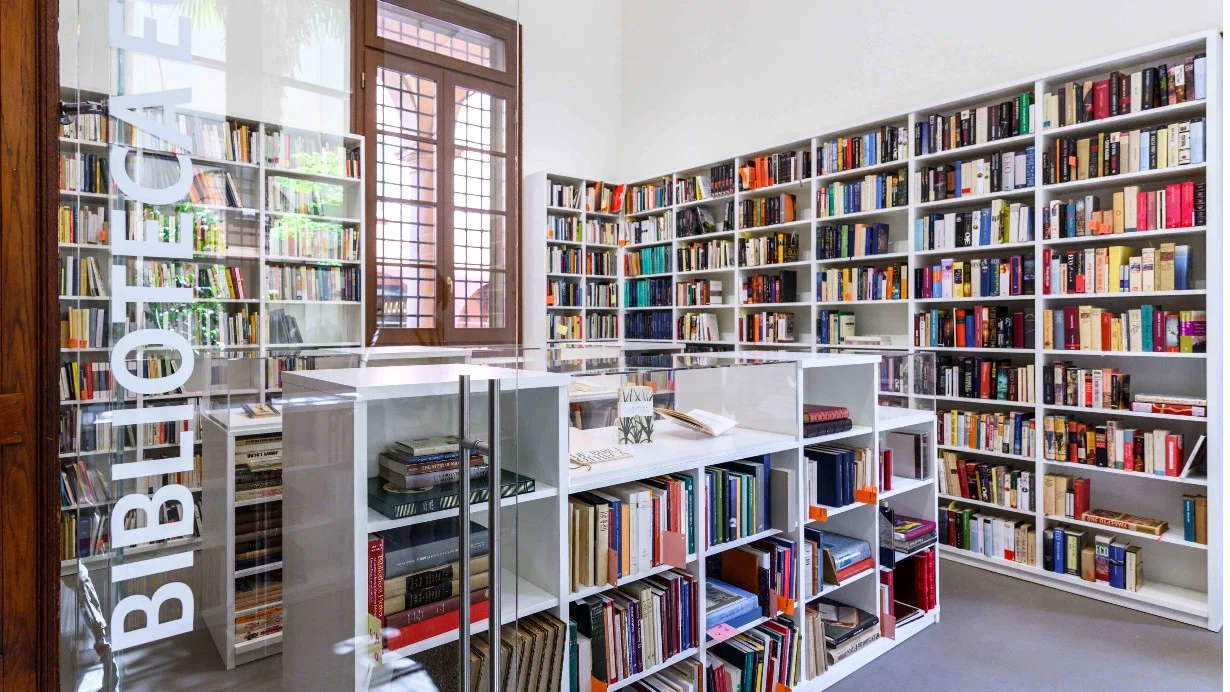
The new home of the Eco Library is located in the 20th-century wing of Palazzo Poggi, with access from Piazza Puntoni 2. Although situated in a different context than the scholar’s private residence, the collection has been organized while retaining much of the original conceptual framework that characterized Eco’s personal library.
The layout of the spaces was, in fact, designed to respect the logic that guided the organization of the books in the scholar’s home. The library unfolds through a series of thematic rooms that allow visitors and researchers to explore the main strands of his thought, offering a framework for interpretation that goes beyond simple bibliographic classification.
The arrangement of the volumes is not the result of conventional cataloging but represents a faithful reconstruction of the system developed over the years by Umberto Eco to organize his own universe of cultural references. To achieve this result, a comprehensive study and documentation of the original library was carried out.
In fact, the entire collection was surveyed shelf by shelf, precisely recording the location of each volume, the thematic sequences, and the connections between authors, topics, and disciplines. This complex undertaking made it possible to transfer to the new location not only the books themselves but also the system of relationships that defined their significance within their owner’s scholarly experience.
This reconstruction effort made it possible to preserve the author-based organizational criteria that characterized the original library. Of particular importance among these is the “good neighbor” principle, theorized by Aby Warburg and endorsed by Umberto Eco himself, according to which the physical proximity of books on the shelves fosters the emergence of unexpected connections, suggests new avenues of research, and stimulates dialogue between different disciplinary fields.
Alongside this principle, the library also preserves the network of interdisciplinary relationships, cross-references between texts, and thematic affinities that were an integral part of the scholar’s working method. In this way, the library’s collection is not presented as a mere collection of volumes, but as a concrete representation of Umberto Eco’s intellectual workshop.
The ability to maintain this organizational structure offers scholars a valuable tool for understanding not only which books Eco read and consulted, but also how he connected different authors, disciplines, and cultural traditions. The library thus becomes a living record of his intellectual journey and his research activities.
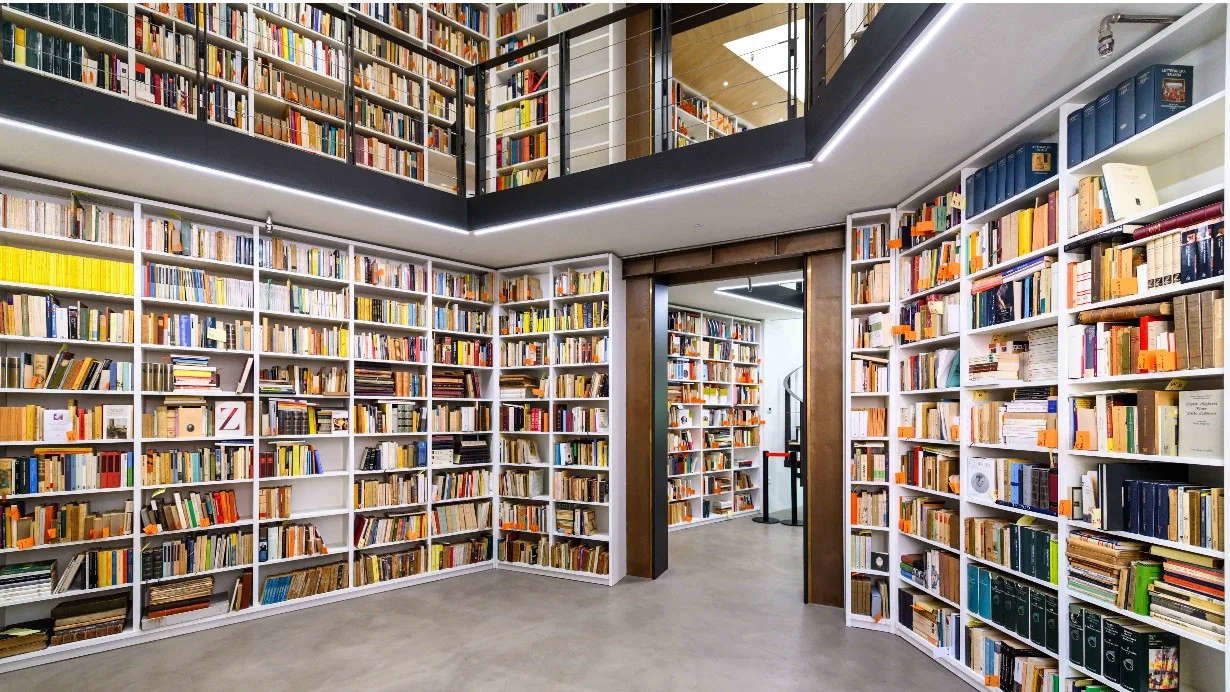
Its opening to the public also marks a significant change in the history of the collection. Originally established as a private library for the personal use of one of the leading Italian intellectuals of the 20th century and the early years of the new century, today it takes on a new public role, transforming into a shared cultural heritage.
Students, researchers, and scholars will thus have access to a collection that for decades accompanied Eco’s daily work and that serves as direct evidence of the sources he used for his research and his scholarly and literary output. At the same time, the interested public will also be able to gain a closer insight into one of the less visible aspects of the scholar’s life, by experiencing the place where ideas, intuitions, and connections took shape—ideas destined to become essays, novels, and academic contributions.
The inauguration of the Eco Library also reaffirms the University of Bologna’s role in preserving and promoting contemporary cultural heritage. The decision to preserve not only the volumes but also the original organization of the collection conveys an authentic sense of Eco’s intellectual work, offering a study experience that preserves the complexity of his method.
With the arrival of the volumes preserved at his home in Monte Cerignone, the library will be further expanded, enriching a collection already considered one of the most important contemporary author’s libraries. The entire collection will serve as a resource to fuel new research and new perspectives on study, keeping alive the dialogue with Umberto Eco’s thought and work.
The Eco Library will be accessible both for consulting the volumes and through guided tours. Access will be by reservation only; please send a request to the email address bibliotecaeco@unibo.it.
|
| The Umberto Eco Library opens in Bologna, featuring over 32,000 volumes from his home and study |
Warning: the translation into English of the original Italian article was created using automatic tools. We undertake to review all articles, but we do not guarantee the total absence of inaccuracies in the translation due to the program. You can find the original by clicking on the ITA button. If you find any mistake,please contact us.