





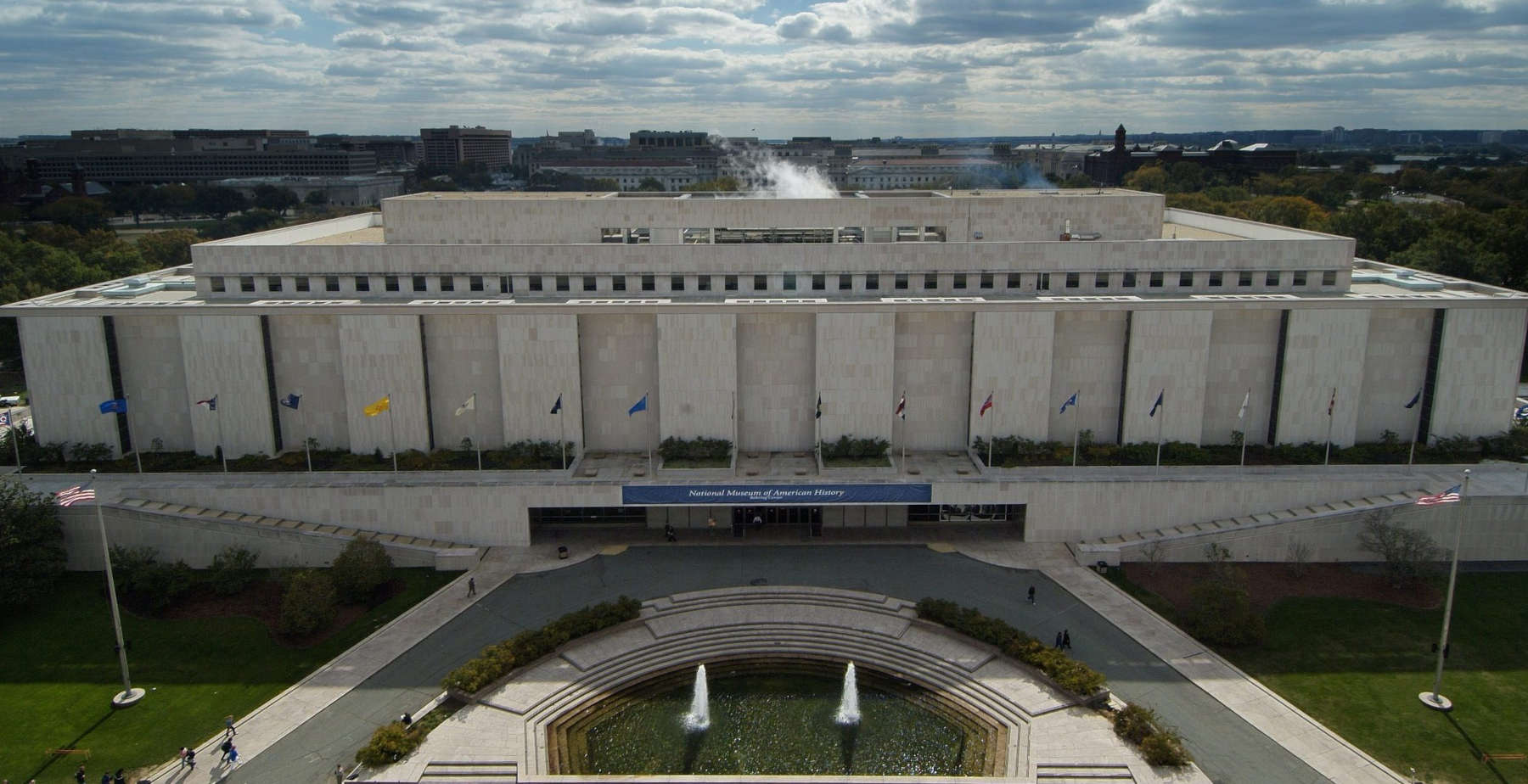
In the United States , the Donald Trump administration has launched a new attack against the Smithsonian Institution, the country’s largest museum complex. On July 4, a substantial 162-page report titled *Saving America’s Story*, drafted by the White House Domestic Policy Council, was published on the White House website—symbolically released on the 250th anniversary of Independence. The document asserts that the institution—and in particular the National Museum of American History (NMAH)—has fallen victim to an ideological drift that has transformed the teaching of history into a tool of political division. According to the Trump administration’s report, the museum deliberately portrays the United States as a nation irreparably compromised from its very origins, founded by deeply flawed figures and still governed today through mechanisms of systemic oppression. The White House’s central criticism concerns the alleged shift from rigorous academic research to extreme political activism, which it claims defines the American experience primarily through the lenses of white supremacy, slavery, and social injustice.
The investigation conducted by the administration emphasizes that this shift in direction was driven by the museum’s current leadership, explicitly citing Director Anthea M. Hartig. The report highlights public statements in which the leadership defines history not as an objective discipline, but as a primary tool for social justice. A crucial passage in the report concerns the change to the NMAH’s mission statement, where references to the infinite richness of American history have been replaced by language focused on empowering visitors to create a more just future. According to the report, this decision was made to move away from a “America First” mindset in historical narrative. This vision reportedly includes a desire to shift scholars’ focus away from what is considered an Anglo-centric approach to the founding of the United States.
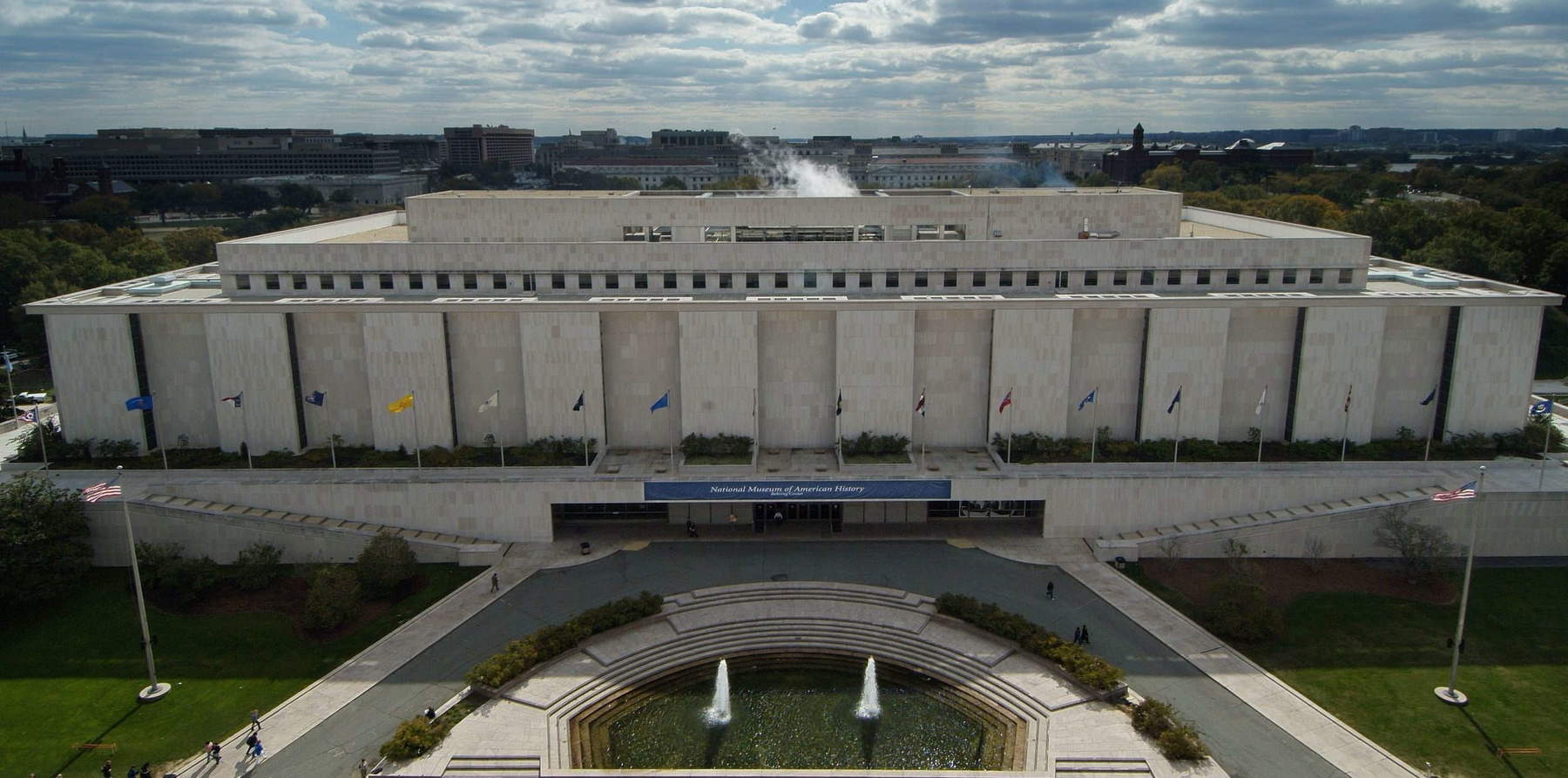
The allegations go into detail about specific exhibits currently open to the public, which, according to the White House, demonstrate an intent to indoctrinate. The report cites the exhibition *Many Voices, One Nation*, which traces national history exclusively through the lens of migration and immigration, arguing that there is no single American culture or narrative. Within this exhibition, the report harshly criticizes the fact that the only mention of Benjamin Franklin concerns his alleged ambivalent views toward immigrants, omitting his central role in the creation of the republic. Similarly, monumental figures such as George Washington and Abraham Lincoln are presented without substantial information about their achievements or why they are considered national heroes; instead, they are mentioned only in educational contexts that highlight their flaws or their ownership of slaves. The report also criticizes the disappearance of traditional patriotic ceremonies, such as the flag-folding ceremony, and the lack of special programs for Independence Day in 2025 and 2026, even though the museum is regularly open on those dates.
Another contentious issue raised by the report concerns the exhibition *Girlhood (It’s Complicated)*, which is accused of promoting a gender ideology aimed at minors. The document notes the presence of materials that describe gender as fluid and not biologically inherited, and include narratives about young girls who wish to change their bodies. The White House objects to the inclusion of content deemed “sexually suggestive” in family-friendly areas, such as videos of drag queens and references to sexual practices that the administration deems inappropriate for a child audience. These curatorial choices are reportedly part of an interpretive framework that “requires staff,” as the report states, “to link every theme covered in the museum to a series of ‘fundamental issues of our time,’ including racial identity, sexuality, climate change, migration, technological change, economic inequality, and globalism.” According to the report’s authors, this agenda forces history within the confines of a single ideological viewpoint that views American institutions as inherently oppressive.
The report also examines in depth the role of the Center for Restorative History (CRH), an internal Smithsonian initiative accused of actively supporting the activism of undocumented immigrants. The report reveals collaborations with political organizers who allegedly worked to influence local elections and opposed the enforcement of federal immigration laws. It describes digital platforms and videos aimed at middle and high school students that portray as heroic the actions of those calling for the abolition of border control agencies, such as ICE. Furthermore, the Smithsonian is accused of training thousands of American teachers through programs that promote the idea that the country is built on land stolen from Indigenous peoples and that Western institutions inherently privilege whiteness at the expense of other cultures. The report also mentions the use of materials from the Southern Poverty Law Center, an organization that the administration considers biased and unsuitable to guide national school curricula.
The issue is not purely cultural but takes on significant economic and legal dimensions. The Smithsonian receives over $1 billion annually in funding from American taxpayers and is overseen by a Board of Regents that includes the Chief Justice of the Supreme Court and the Vice President of the United States. The report emphasizes that the public has the right to expect that these funds be used for the faithful and impartial stewardship of the nation’s historical heritage, rather than for ideological campaigns. This position is directly linked to Executive Order 14253, signed by the president in March 2025 and titled “Restoring Truth and Sanity to American History,” which even then aimed to remove narratives that would foster a sense of national shame. The White House has repeatedly threatened budget cuts if the Smithsonian did not grant full access to internal documents for a content review—a demand that has caused significant tension with Secretary Lonnie Bunch III.
Bunch himself sought to defend the museum network’s autonomy while making the materials transparent to avoid financial retaliation. In an official statement, a Smithsonian spokesperson noted that for over 180 years, the institution has served the American public with unbiased and independent scholarship, reaffirming its commitment to continuing on this path. However, the report *Saving America’s Story* concludes that, under the current leadership, the Smithsonian is no longer worthy of the trust necessary to honestly tell the nation’s history in an “inspiring and unifying” way. The document therefore calls on the President, the Chief Justice, and Congress to undertake the necessary reforms to “restore the museum’s integrity,” arguing that it is the duty of the state to protect “shared American values from being degraded or fragmented along racial or ideological lines”.
The conflict reflects a deep divide over how the United States should view its past as it approaches a pivotal historical anniversary. On the one hand, the administration is pushing for a narrative defined as patriotic, one that celebrates the nation’s technological, scientific, and moral advances as drivers of global freedom. On the other, museum curators defend the need to explore historical complexities and injustices in order to include the voices of communities that have long been marginalized in the official narrative. The report cites examples in which objectivity and individualism are described in Smithsonian documents as oppressive traits linked to the culture of white supremacy—a view that the White House calls radical and rooted in theoretical Marxism applied to history.
In this climate, the fate of museum leadership appears uncertain, with instances of forced resignations already having occurred, such as that of National Portrait Gallery Director Kim Sajet, following direct attacks on social media by Trump. The battle over American history is now being waged in the corridors of power in Washington and the museum’s exhibition halls, with the Smithsonian serving as a battleground for the nation’s future identity. While the report concludes that the institution has fallen prey to an ideology fundamentally opposed to the nation’s noble narrative, the Smithsonian reaffirms its role as an impartial guardian of knowledge, leaving it to the public and lawmakers to decide which version of history should be preserved for future generations.
 |
| Trump Attacks the Smithsonian Again: 162-Page Dossier Against the Institution Published |

Warning: the translation into English of the original Italian article was created using automatic tools. We undertake to review all articles, but we do not guarantee the total absence of inaccuracies in the translation due to the program. You can find the original by clicking on the ITA button. If you find any mistake,please contact us.

























 IT
IT FR
FR DE
DE ES
ES CN
CN


