





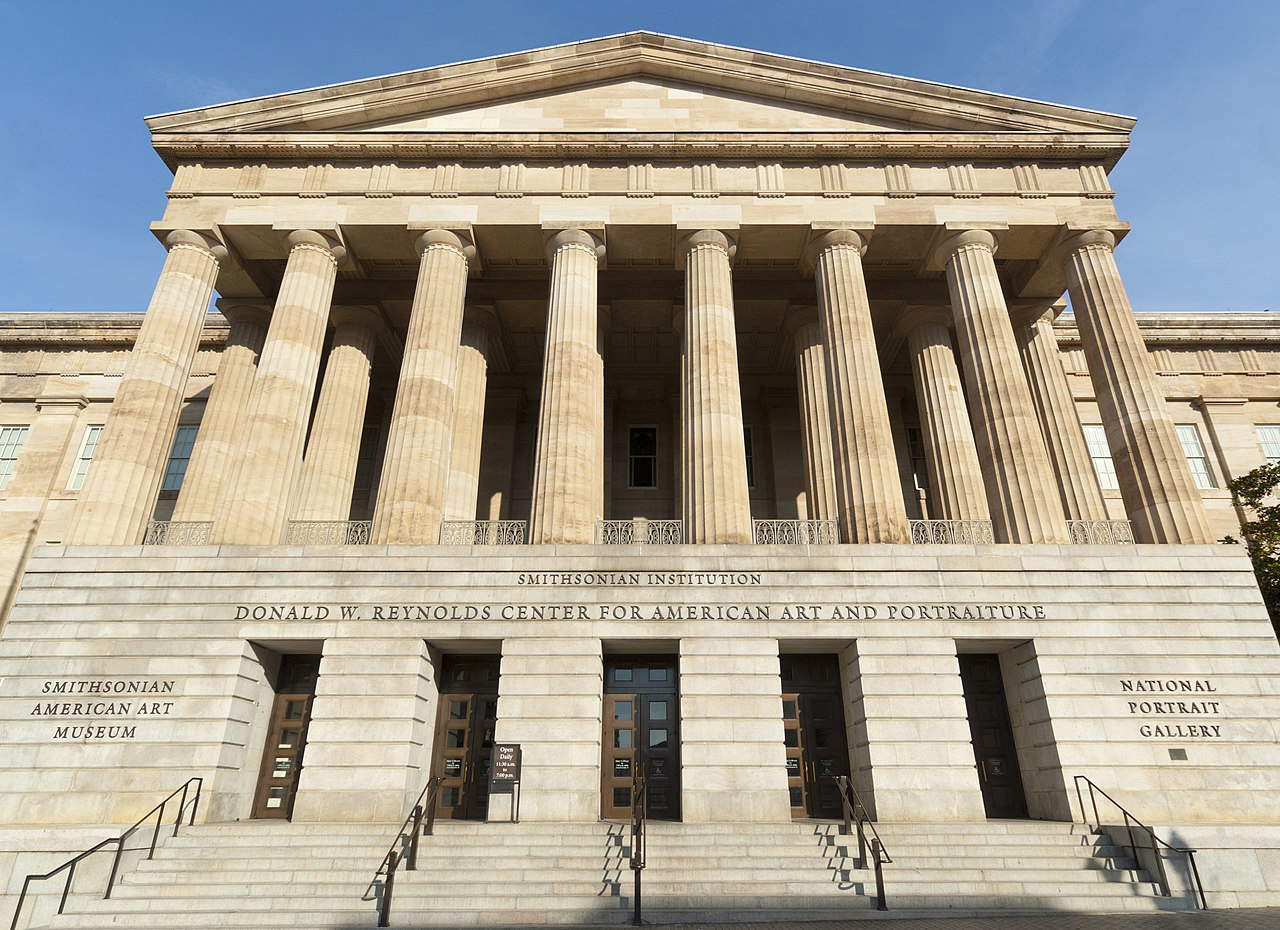
The White House could suspend funding to the Smithsonian, the largest museum complex in the United States of America, if the institution decides not to abide by the strict rules that were imposed last summer by theTrump administration. That, in a nutshell, is the content of a letter sent last Dec. 18 by two aides to President Donald Trump, Vince Haley and Russel Vought, to Lonnie G. Bunch III, secretary of the Smithsonian. The missive also contains a date: Jan. 13 is, for the administration, the deadline for the Smithsonian to comply with the directives.
In August, the administration had informed Bunch of its intention to conduct a “comprehensive internal review of certain Smithsonian museums and exhibits” based on an executive order signed by Donald Trump last March, number 14253, Restoring Truth and Sanity to American History (“Restoring Truth and Sanity to American History”): that order gave Vice President J.D. Vance the mandate to ensure that the museum complex’s programs are not “divisive” and reflect supposed “traditional values.” In the summer letter, the Trump administration mandated that the Smithsonian conduct a comprehensive review of all its content: exhibition texts, room panels, websites, educational materials, social and digital content “to assess tone, historical context, and alignment with American ideals,” it said. In addition, oversight was also being established on the curatorial process, exhibition planning, uses of the collection, and narrative standards. The Smithsonian was thus asked to submit a range of materials and documents, as well as lists of existing collaborations with outside personnel (e.g., artists, historians, nonprofit organizations), copies of grant applications and funding agreements, and more. Finally, a maximum timeframe of 75 days was given for submitting complete materials and an additional 120 days within which the Smithsonian was to begin “making corrections to the content where necessary, replacing divisive or ideological language with unifying, historically accurate, and constructive descriptions on signs, educational wall panels, digital displays, and other public-facing materials.”
As the deadline approaches, therefore, comes the administration’s letter, which in its opening complains about a partial and late submission of materials: “Although we received a partial production of materials from your office on September 18, no other materials have been produced to us by your office in the more than 90 days since that September date. While we appreciate the receipt of initial documentation, this submission fell well short of what was requested and the vast majority of the requested documents are still outstanding.” Meanwhile, according to a memorandum sent as an attachment to the letter, content on current and future exhibitions would be missing (the Smithsonian has not sent wall displays, educational panels, captions, exhibition catalogs, and resolutions approving allocations for any of the currently ongoing exhibitions). Nor did the Smithsonian send drafts and content on programming for the 250th anniversary of independence, limiting itself to “brief descriptive statements,” the memo says. What’s more, no submission of indexes, proposals, planned programs or preliminary budgets for exhibitions planned between 2026 and 2029, no documents with organizational charts, curatorial manuals, exhibition approval protocols or related internal guidelines, complete digital files of all educational materials, governance documents, names, titles, brief professional biographies, updated CVs and direct contact information for the various museums’ contact persons.
The letter, while granting an extension, takes a very stern tone: “Current texts and captions, proposals and budgets for exhibitions, object checklists for future programming, internal governance manuals and chain-of-command records for content approval are not unclear archival requests. These are the documents that every accredited museum is required to maintain and produce without delay, as they form the basis for responsible stewardship of important national collections and compliance with the rigorous standards of transparency mandated by federal law, Smithsonian guidelines, and museum industry professional standards.”
Recalling the provisions of the March executive order, Trump’s two aides say they want to ensure “that none of the Smithsonian’s museum leaders are confused about the fact that the United States has been among the greatest positive forces in the history of the world. The American people will have no patience for any museum that mistrusts America’s founding or is uncomfortable conveying a positive vision of American history, a vision that is justly proud of our country’s achievements and accomplishments.”
Completion of the submission of the requisite documents is therefore requested. “We look forward to receiving the completed materials as soon as possible, hopefully no later than Jan. 13, 2025,” the two aides write, reminding what will happen to the Smithsonian should it fail to comply: “As you may be aware, the funds allocated to the Smithsonian Institution are available only for use in accordance with Executive Order 14253, ’”Restoring Truth and Sanity to American History,“ and for the fulfillment of the requirements outlined in our letter of August 12, 2025. [...] We are confident that you share our view that the Smithsonian Institution should set a good example in terms of research, presentation, and accountability. The upcoming 250th anniversary of our nation’s founding provides a unique opportunity to justify confidence in the activities of America’s leading cultural institutions. We look forward to working together to make the Smithsonian Institution’s contribution to America’s 250th triumphant.”
The New York Times reports that so far Secretary Bunch, an experienced professional with strong diplomatic skills, has maintained a cautious profile and has been able to count on the support of the Smithsonian Board, but this support could wane if the White House succeeds in installing its preferred candidates on the museum complex’s board of directors: several terms are in fact expiring this year. Nominees are proposed by the current board, but appointments are up to Congress and the president.
The not-so-subtle threat of funding suspension is likely to put the Smithsonian, which is 62 percent dependent on funding that comes from the federal government, in serious trouble. And it has already happened under the Trump administration that the White House withheld funds that had, moreover, already been approved by Congress. At the moment, however, the Smithsonian has not yet commented on the issue.
|
| White House threatens Smithsonian: no funding if it does not conform to Trump's lines |

Warning: the translation into English of the original Italian article was created using automatic tools. We undertake to review all articles, but we do not guarantee the total absence of inaccuracies in the translation due to the program. You can find the original by clicking on the ITA button. If you find any mistake,please contact us.


























 IT
IT FR
FR DE
DE ES
ES CN
CN


