





For the first time this year, the works by the artists exhibiting at the Venice Biennale will have from May through November 2026 to take root, spark discussion, radiate their aesthetic power and cultural significance, and be seen by the widest possible audience. The Golden Lion for each edition should be awarded to the work that, over this entire period (seven months), proves to be the most beloved and memorable—in short, the one that fosters the greatest collective attachment.
The award system in place up to this edition— which was determined in advance of the exhibition’s opening—did not allow sufficient time for the works to take root culturally and was, scientifically speaking, premature. A rapid award ceremony is more akin to a promotion, as it highlights the winning artists from the very start of the exhibition. Forms of live art (performances, happenings, processions), which are often concentrated during the pre-opening days and are (not aesthetically) favored in Biennales with rapid award ceremonies, should be moved to the “Theater” section of the Biennale; otherwise, they will continue to be outshone in immediacy by unscheduled flash mobs such as the one staged by Pussy Riot in front of the Russian Pavilion during the Biennale’s pre-opening. A slower awards process, held after the fact or at the close of the exhibition, on the other hand, would restore balance to the competitiveness of the visual arts in their diversity and aesthetic longevity. After all, the goal is to consign works and artists to history (or at least to try) and to the market. This 61st Biennale effectively forces the art system to slow down, giving us time to think, as is vaguely evoked in the exhibition title *In Minor Keys*, chosen by curator Koyo Kouoh.
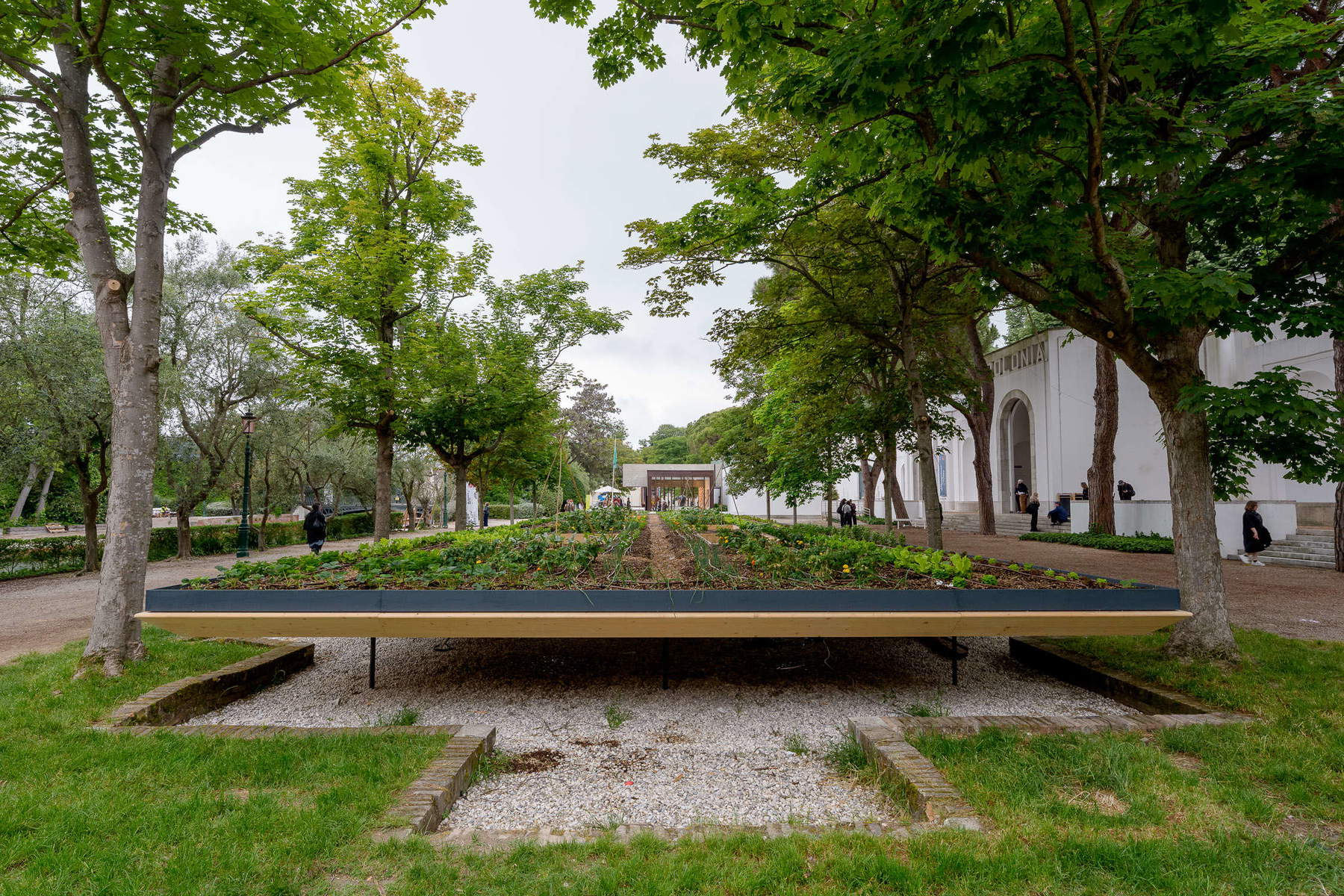
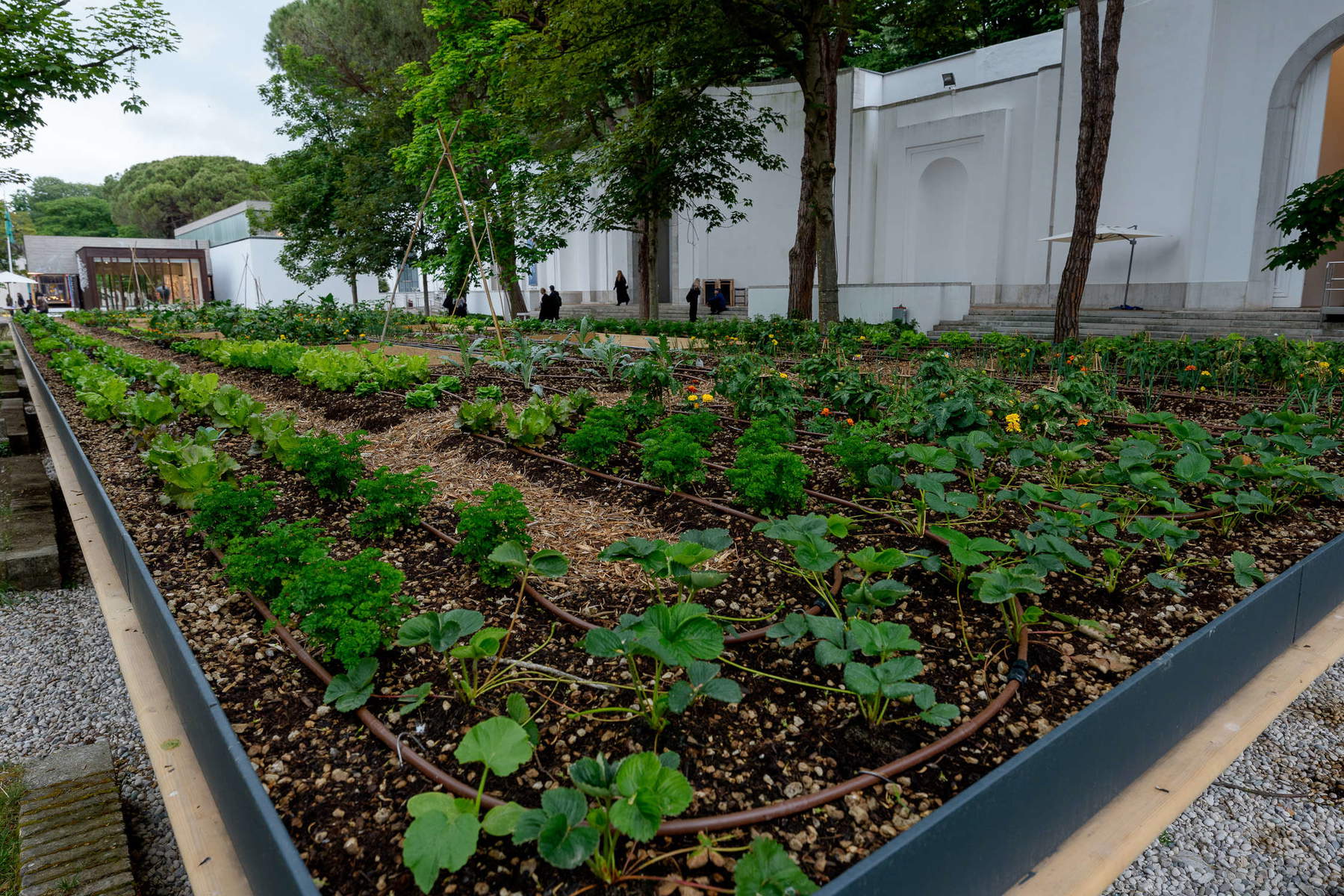
Nearly two months after opening to the public, what resonates most strongly in this edition—especially when monumental— —those that do not imitate the organic but are living—resonate most strongly in this edition, particularly when monumental. Foremost among them is the garden-art installation titled *Still Life*, worthy of gold, by the American artist Linda Goode Bryant, grandly staged on a platform suspended at arm’s height to facilitate harvesting in the most ethical way possible. Three (seasonal) harvests are planned throughout the duration of the exhibition, not to mention the daily maintenance and care required to keep this work constantly alive—an advantage in terms of both physical presence and aesthetic scope, unlike works such as performances, robots, or other contraptions, which are occasional and subject to schedules and shifts.
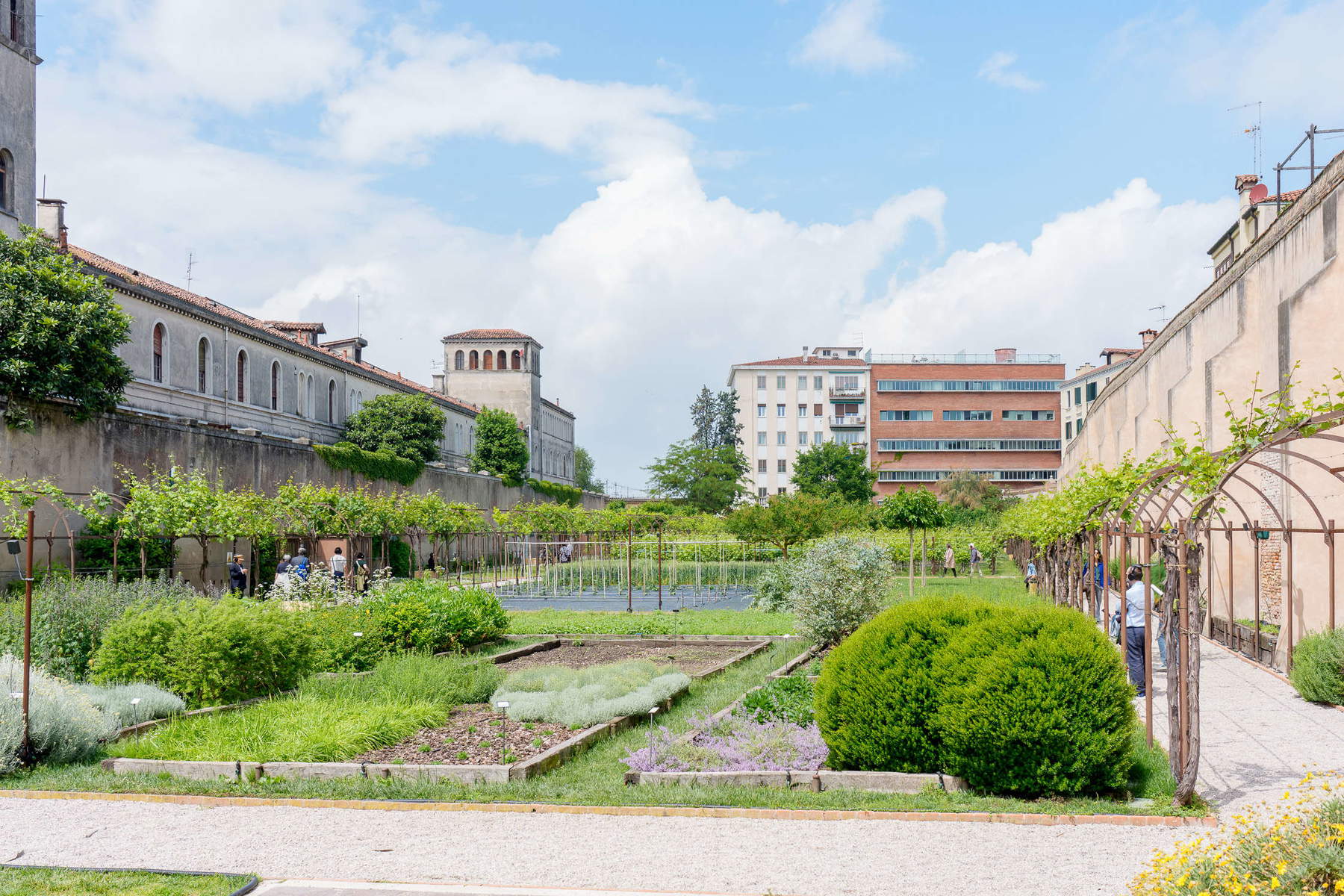
The aesthetic of Linda’s garden is not to be found solely in its organic components or its sustainability, nor should it be confused with a landscape artwork. First and foremost, it was conceived from the outset as the Biennale’s garden, and as such it is already a total work of art—a small-scale demonstration of an economic system based on a resource alternative to money. Turning a garden into a long-lasting, far-reaching ethical and social model is the work of an artist—a work of art. A work capable of interacting—even more than simply engaging in dialogue—with the historical and botanical diversity of the Giardini: you’ll find it in front of the pavilions of Greece, Romania, Poland, and Brazil, among the olive trees that line the bustling Rio del Giardini canal. All of it is incredibly integrated into the setting—a true concert played softly, epic, humanistic, scientifically oxytocin-inducing, and alive—where one can also experience oneself within a post-anthropocentric and gentle society, the polar opposite of the raucous and dehumanizing punk spectacles of the Austrian circus just a few steps away, still reeling from Viennese Actionism.
The walk-through installation in the mystical garden of the Holy See Pavilion failed to reach the aesthetic level of the vegetable garden (though the intent to align with the overarching aesthetic identified by Koyo was commendable). Headphones and songs are superfluous—and even overstimulating for a hypersensitive and diverse audience: nourishing nature walks need no additional soundtracks.
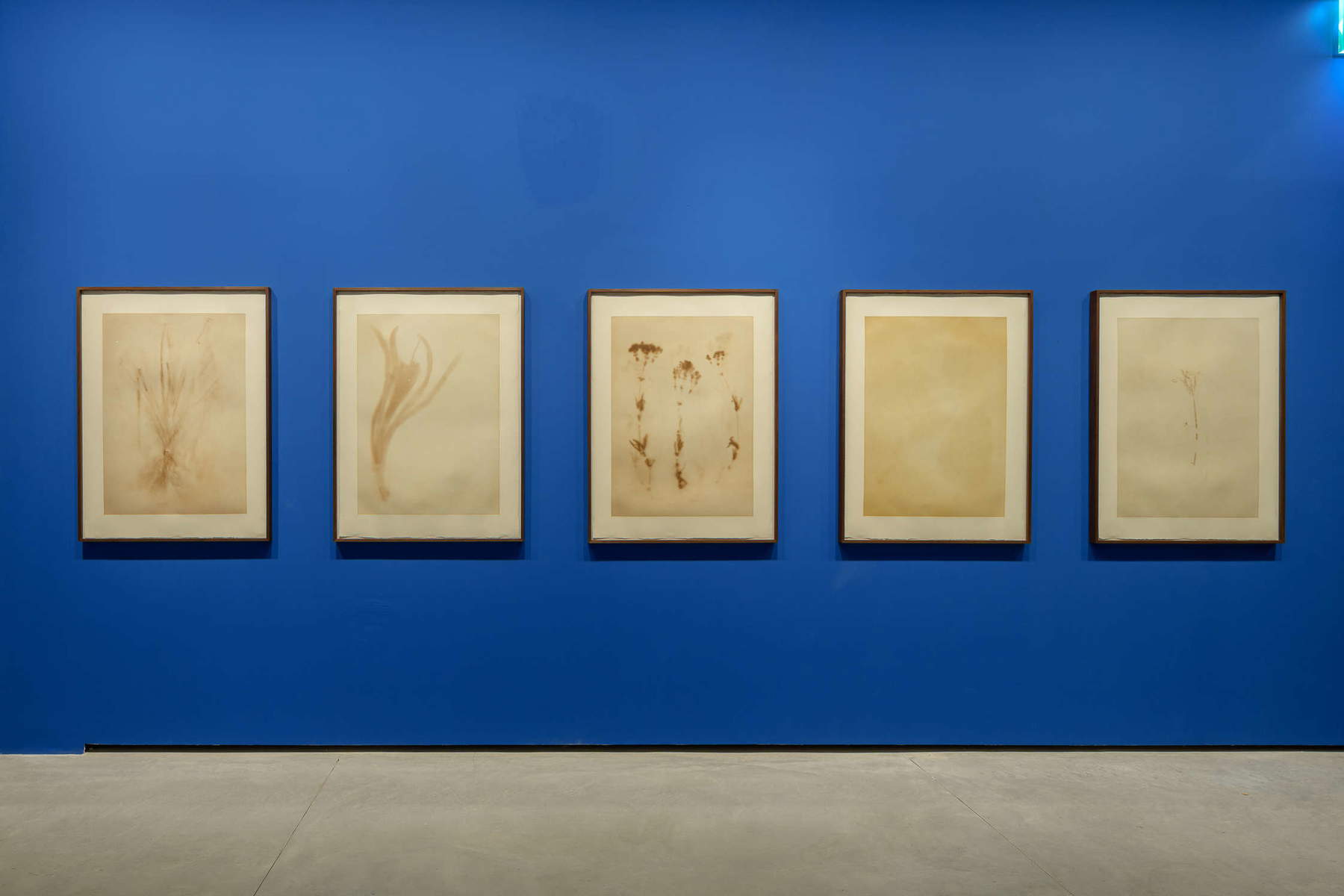
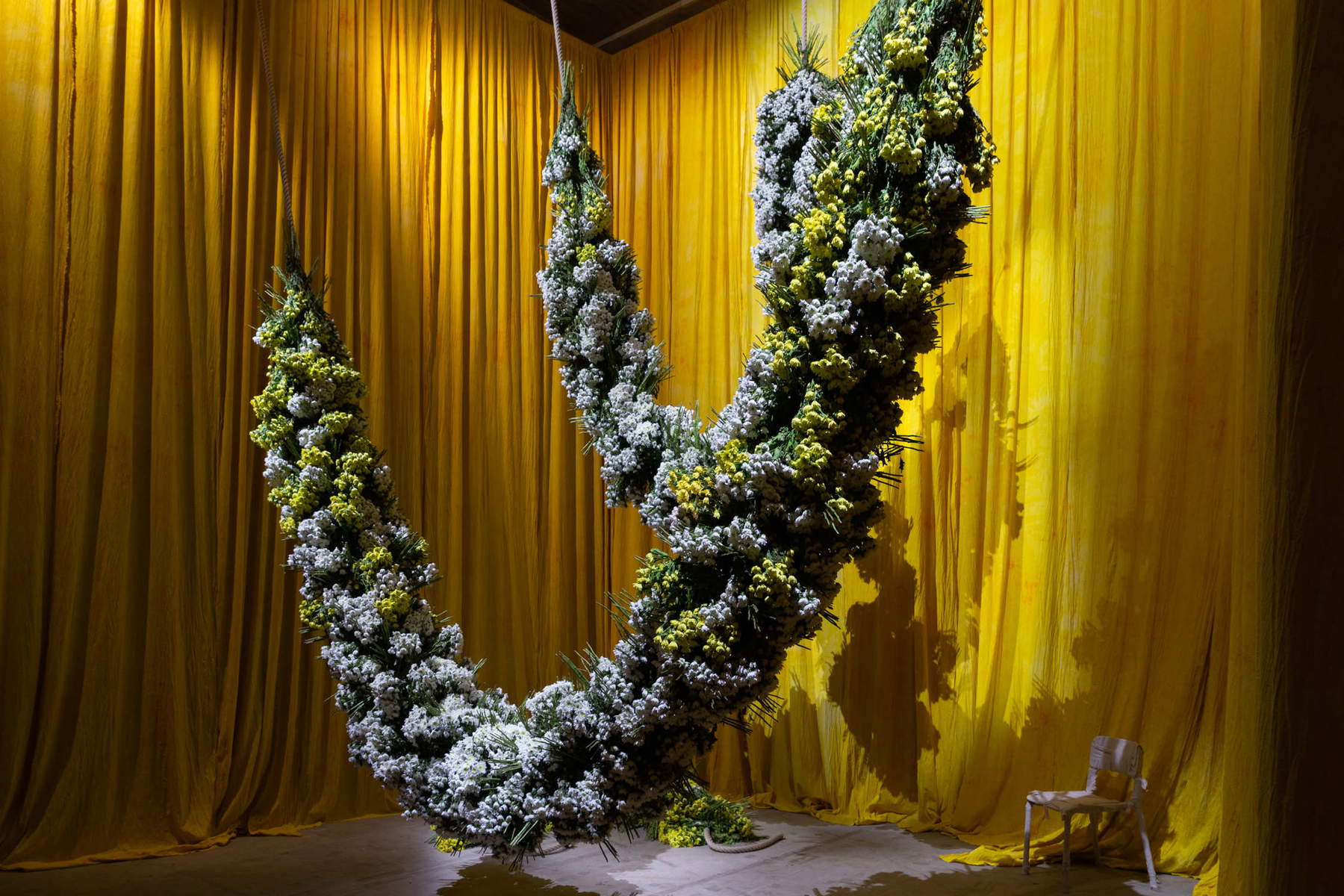
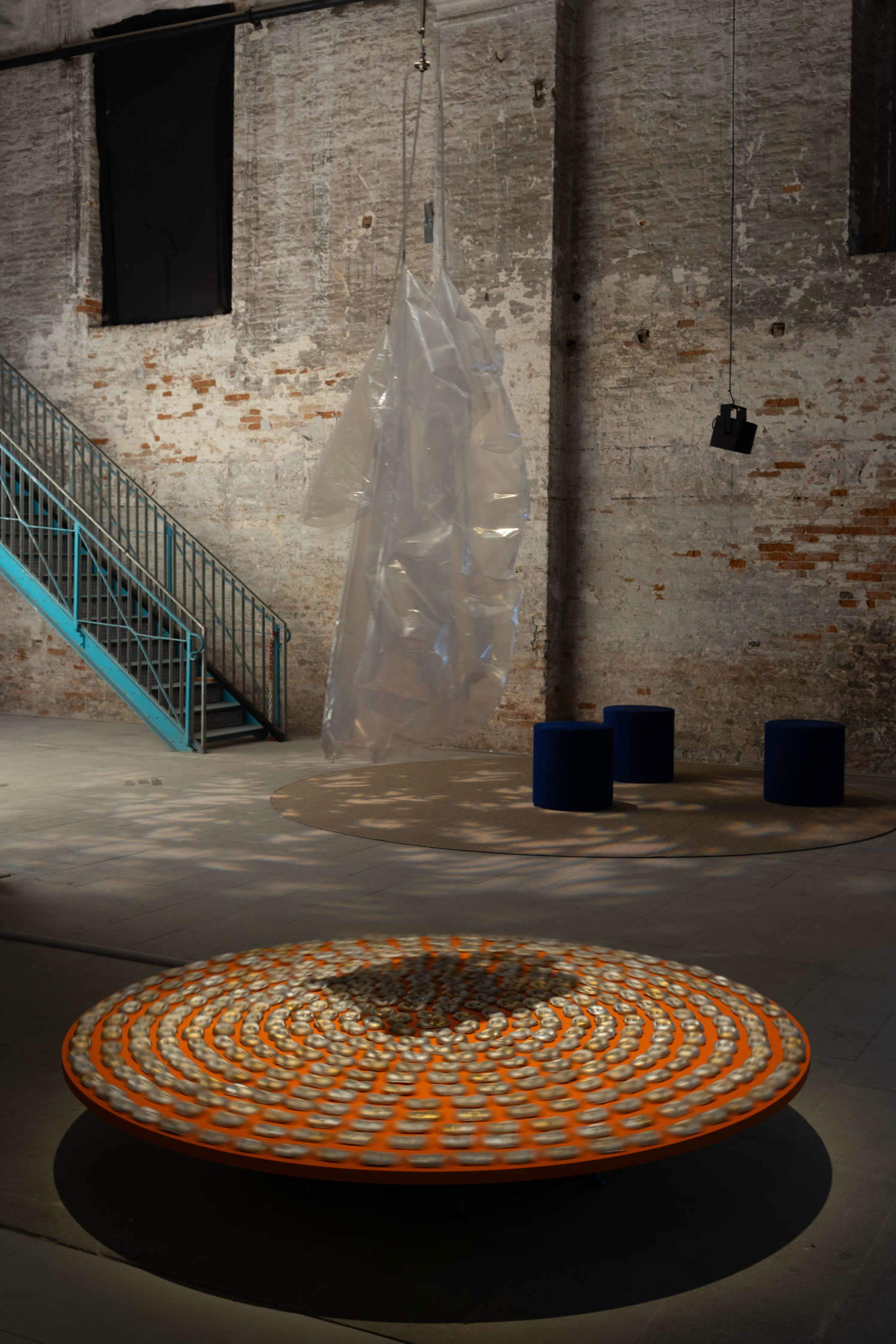
Instead, they serve as a counterpart to Bryant’s garden—though they are, in a way, subsumed by it—along with all the green initiatives, the ecological concerns of other artists in the exhibition—such as the botanical maps and herbariums by the Swiss artist Uriel Orlow, as well as the large, fragrant installation of wilting flowers, a silent explosion of almost innate olfactory satisfaction that is never invasive— by the German artist Dan Lie at the Arsenale , in keeping with the power of Kounellis’s iconic immersive installations featuring the scent and presence of coffee from 1969 and 1992—the master of organic and living installations.
The ideal underlying the exhibition curated by Koyo Kouoh is clearly an aesthetic of the living, where works that connect us to life in all its forms—to the fact of being alive together, of feeling—predominate. It’s a shame, however, that she did not theorize and articulate this more explicitly and scientifically, providing a clear direction for her project and the market.
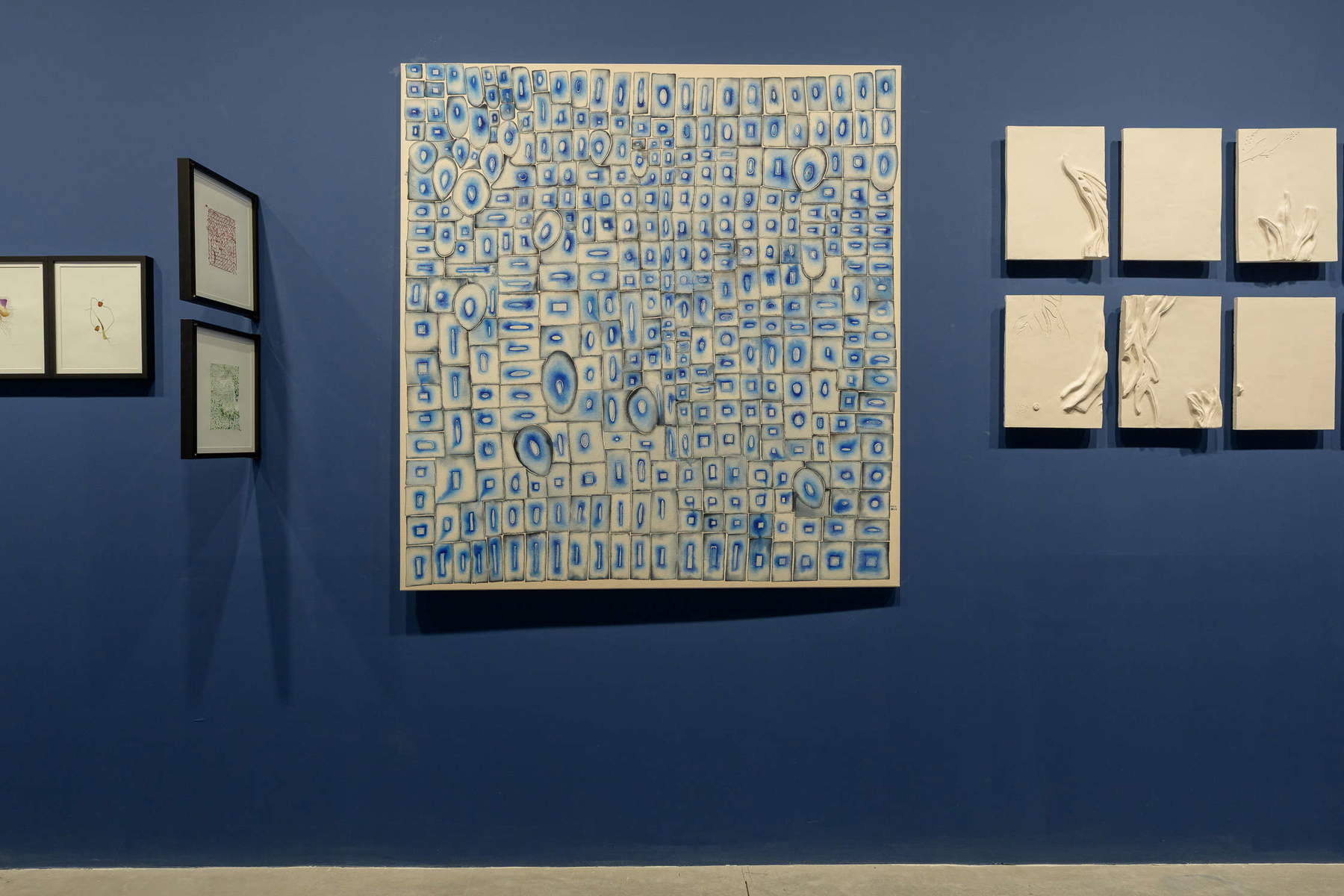
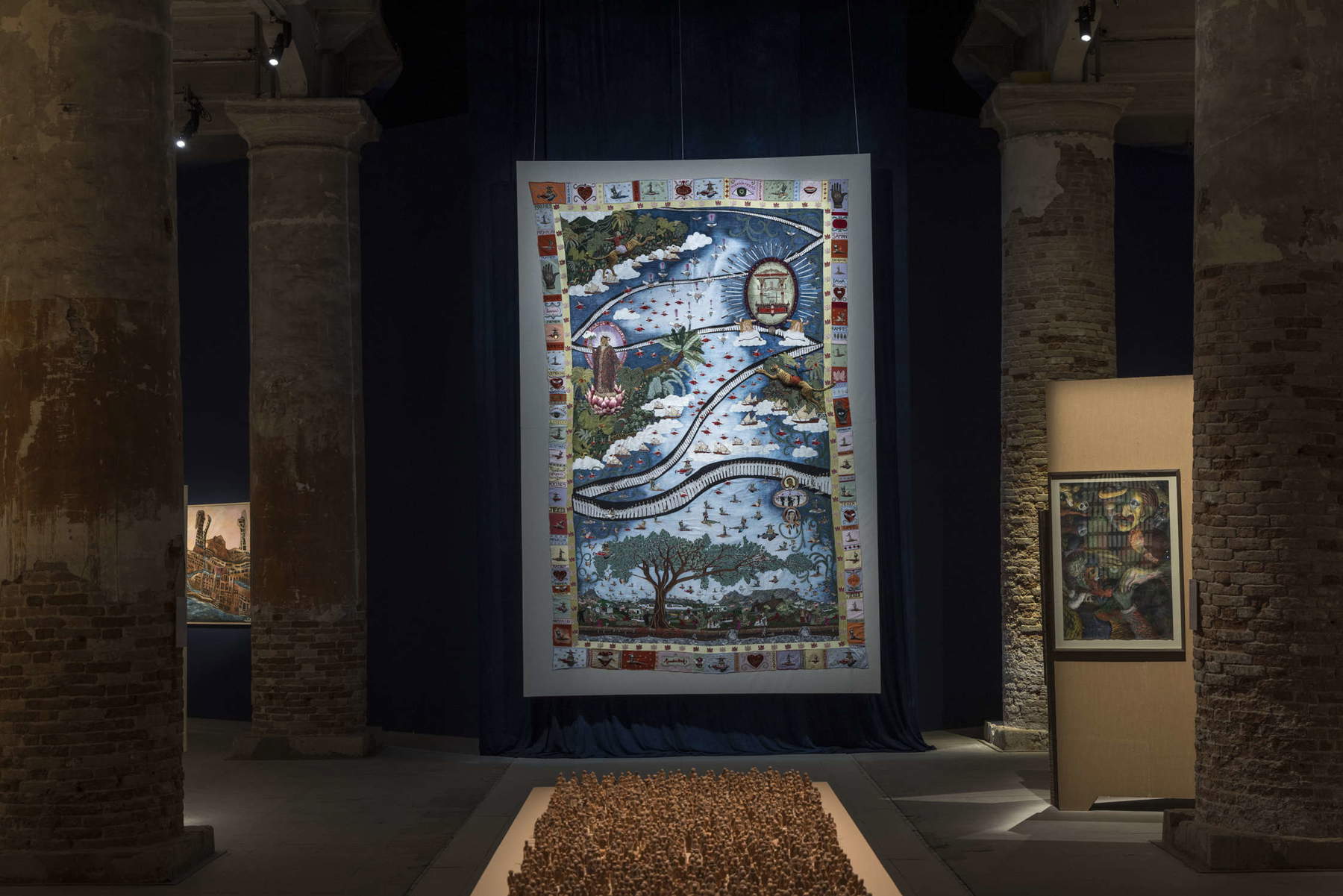
Immediately following natural art in this ranking—due to its prominence at this Biennale—is textile art and, more broadly, artisanal art, featuring works that emphasize craftsmanship or labor, the artist’s dedication, as well as raw materials such as stone, clay, wool, silk, and so on. Many pavilions adhere to this aesthetic, which has supplanted painting—such as France’s, and more authentically, those of Morocco and India—with artistic explorations expressed through refined or spectacular craftsmanship that is often more sophisticated than innovative. In any case, the delicacy of Sumakshi Singh’s embroidered war ruins in the Indian pavilion surpasses Yto Barrada ’s somewhat didactic exploration of color matching and natural fabric fairs in the French pavilion. The key with these materials, which evoke affection and comfort, is to remember that they are mediums and that the artist’s task is to create something with them.
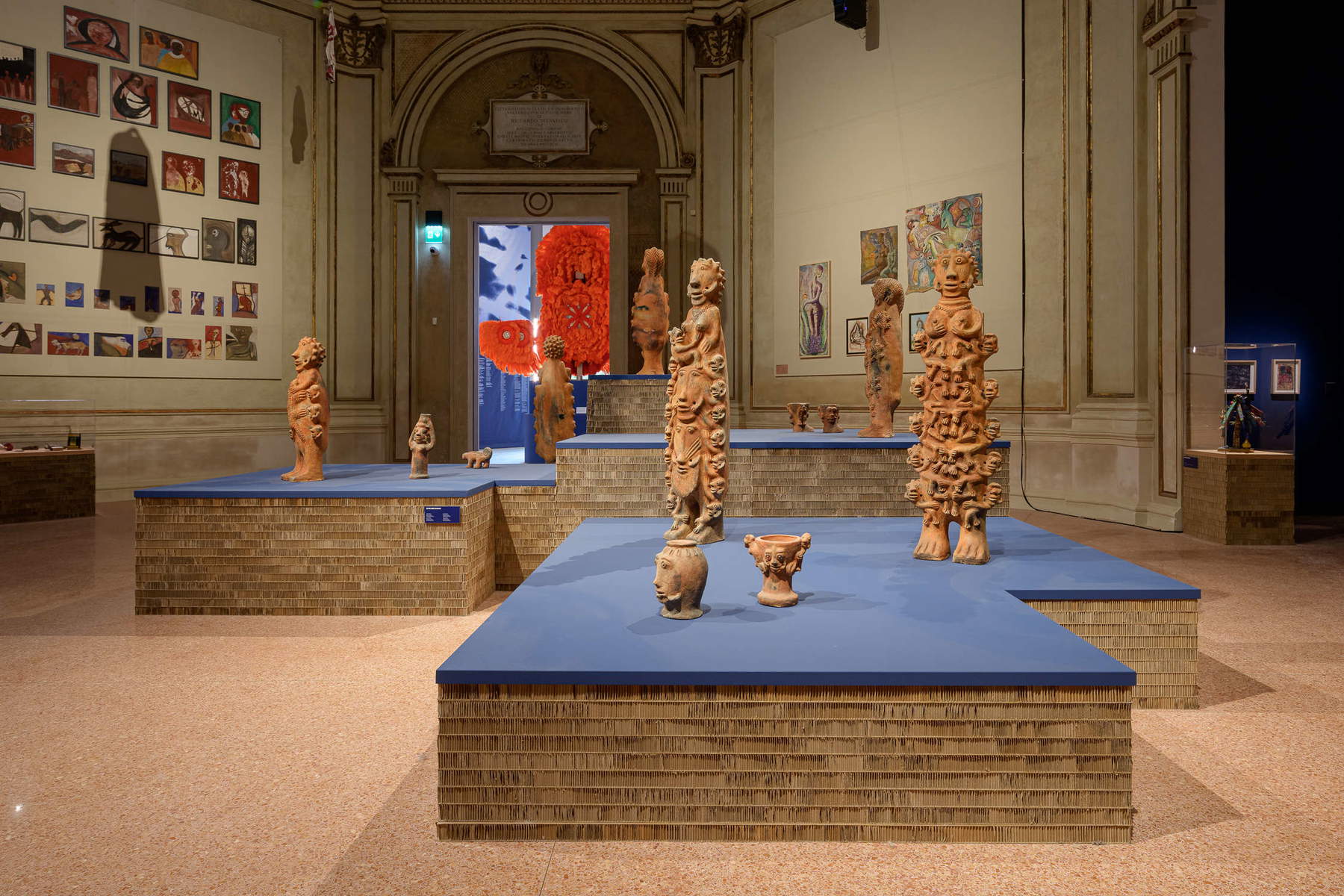
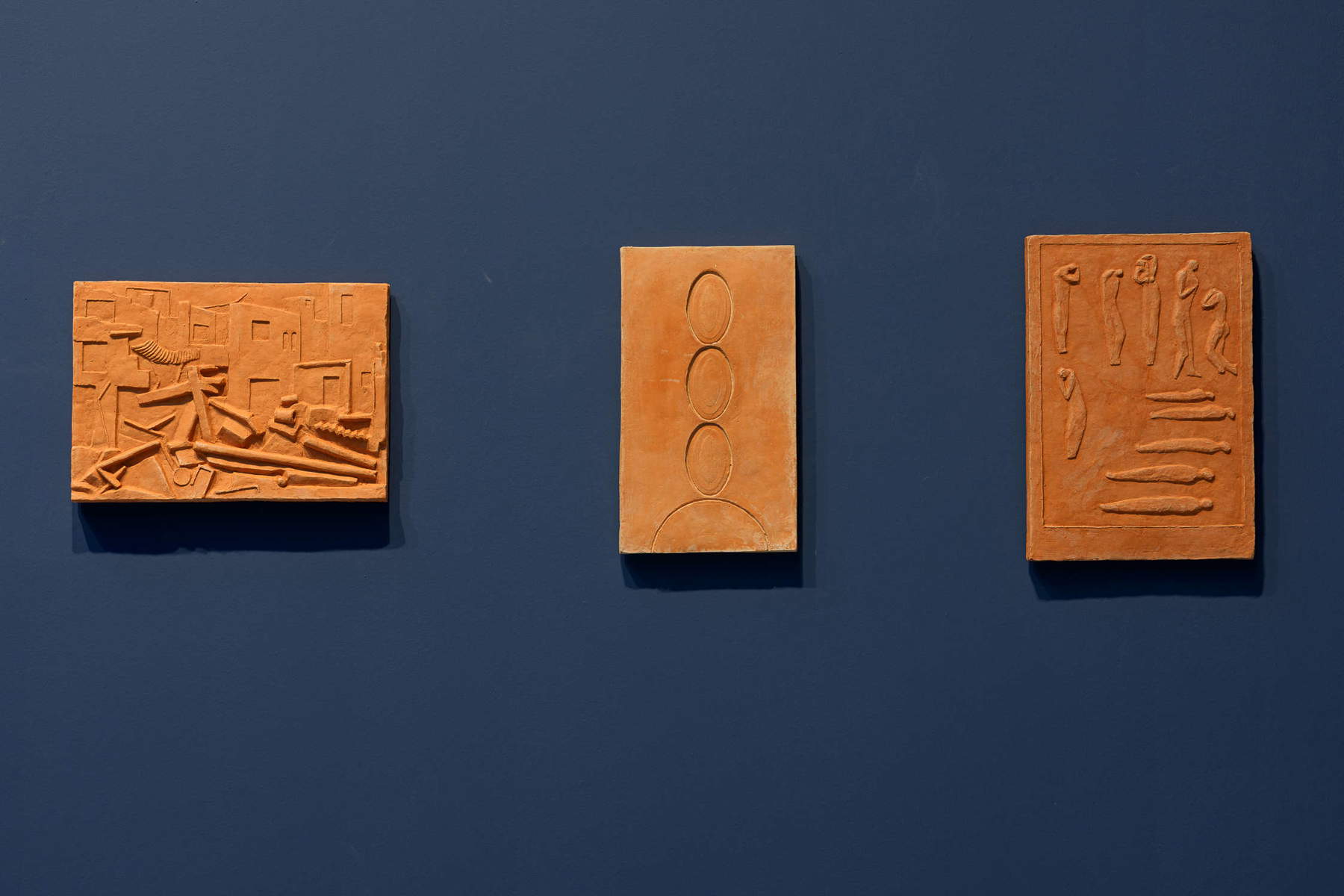
In the Chini Hall of the Central Pavilion, complete with its octagonal dome and restored frescoes, the Koyo masters—who have passed away and are therefore ineligible for any award other than the Lion of Honor, which, as one might guess, would have gone to the Senegalese ceramicist Seyni Awa Camara, are honored here and rightly and definitively enshrined as artists on the same level as the titan of Euro-American Western art, Marcel Duchamp. As an aside, I recommend taking a long look at the section dedicated to him on the side, which documents an extremely detailed analysis of his still indecipherable, unclassifiable, and morbid posthumous installation (or guilty confession) *Etant Donné*, housed at the Philadelphia Museum of Art—a veritable cold case of contemporary art. Awa Camara’s terracotta idols immediately ground spirituality in primordial human needs and can be linked to the terracotta bas-reliefs by the Belgianartist Philip Aguirre y Otegui, further into the exhibition, which immortalize—as artifacts from an archaeological excavation—scenes of war, bombings, and destruction—all of which have become tragically familiar to various regions of the globe.
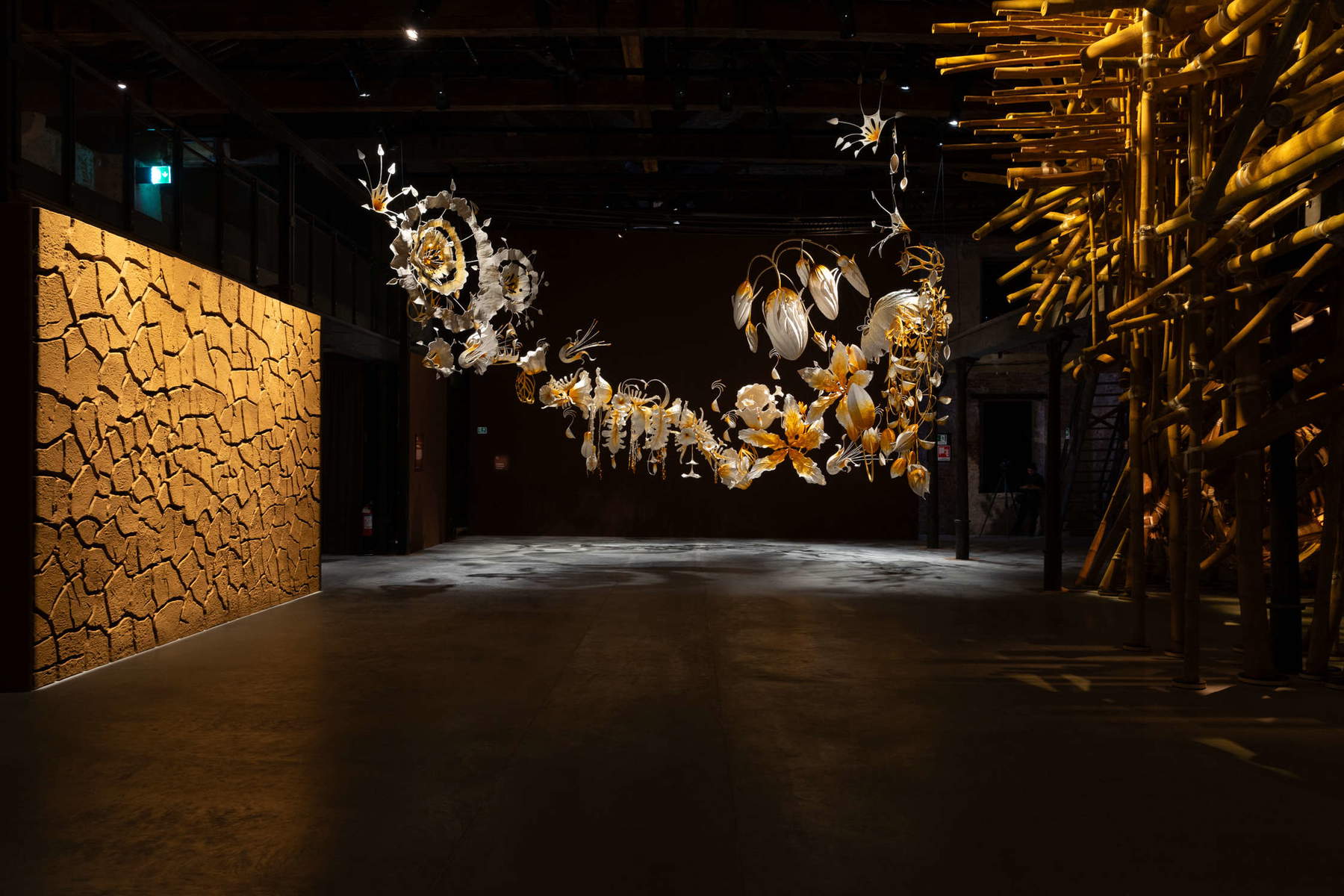
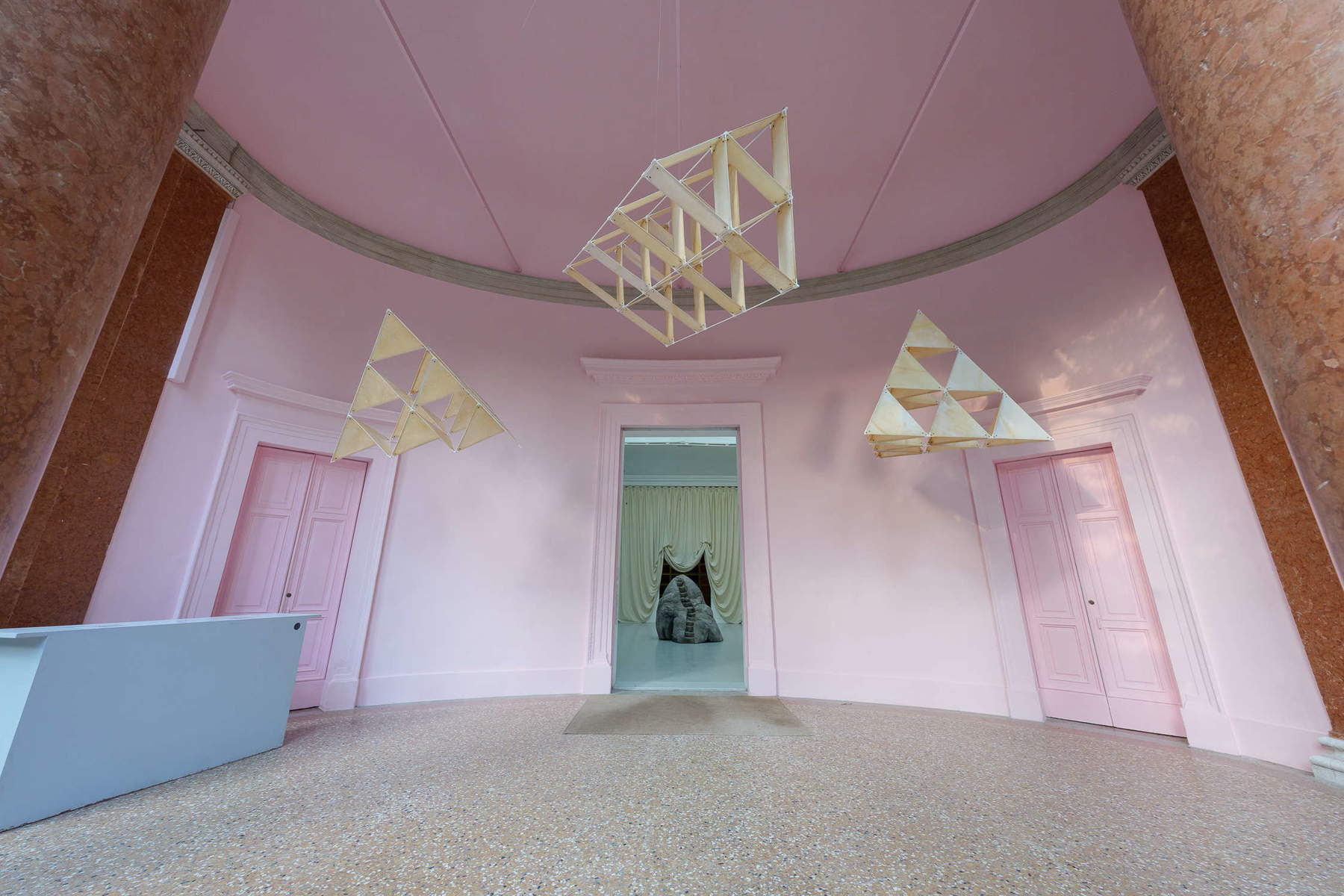
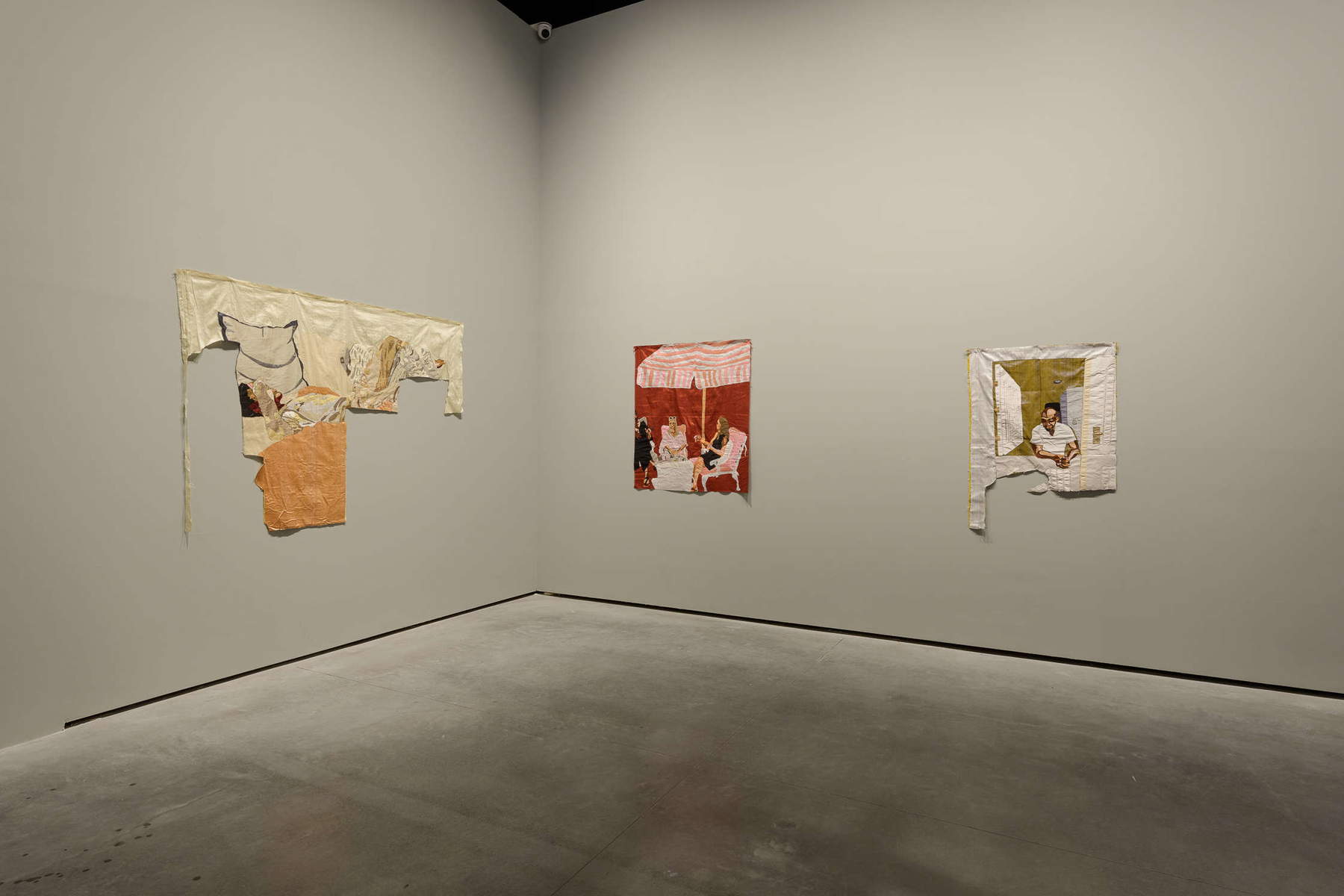
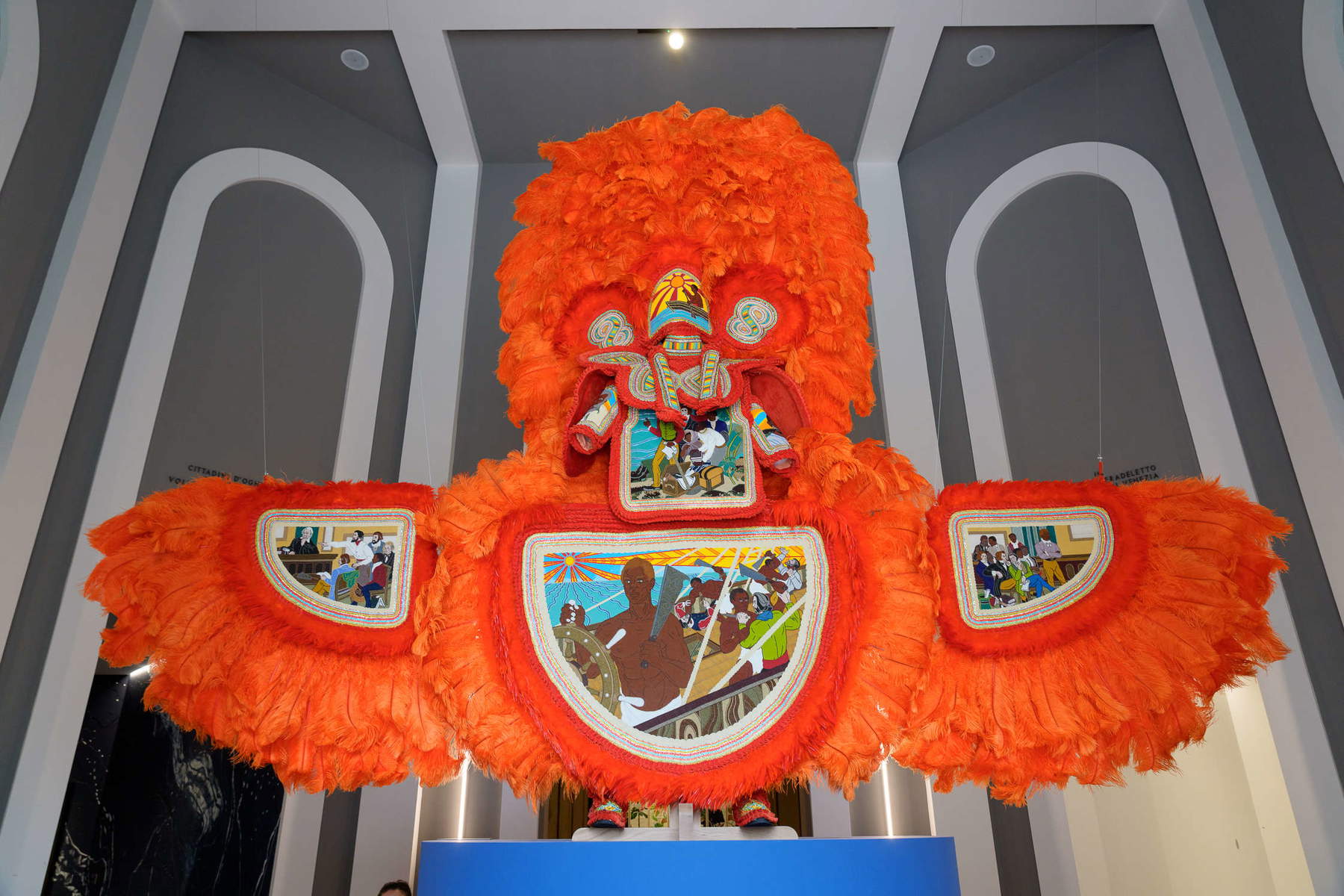
From Ramallah, the textile collages (though it would be better to call them ethereal sculptures of veil and pastel) by the Palestinian artist Vera Tamari defy genre and double their abstract presence. Tamari deserves a shared Silver Lion alongside Billie Zangewa’s sublime figurative stitching and Thania Petersen’s mystical pop embroidery— three “ ” artists free from the reappropriationist references of Big Chief Demond Melançon’s costumes, which hold a place of honor in the Central Pavilion. Following Koyo Kouoh’s Biennale, we can officially add the new anti-technological anthropological-artisanal media—brought by emerging or developing countries of the Global South—and their new markets to the major disciplines of the fine arts. At the Arsenale, you’ll also find Vera Tamari’s transparent, rotating inflatable installation called *Mantra*, which—under the guise of the seed of a plant symbolic of Palestinian identity—elevates a vulva like a tribal totem, a hypnotic and ironic feminine symbol that restores a sense of sacredness to Annette Messager’s assertive uteruses; both are precursors to the latest discoveries on female sexuality, as illustrated by the 3D map of the clitoral nerves created by researchers at the Amsterdam University Medical Center.

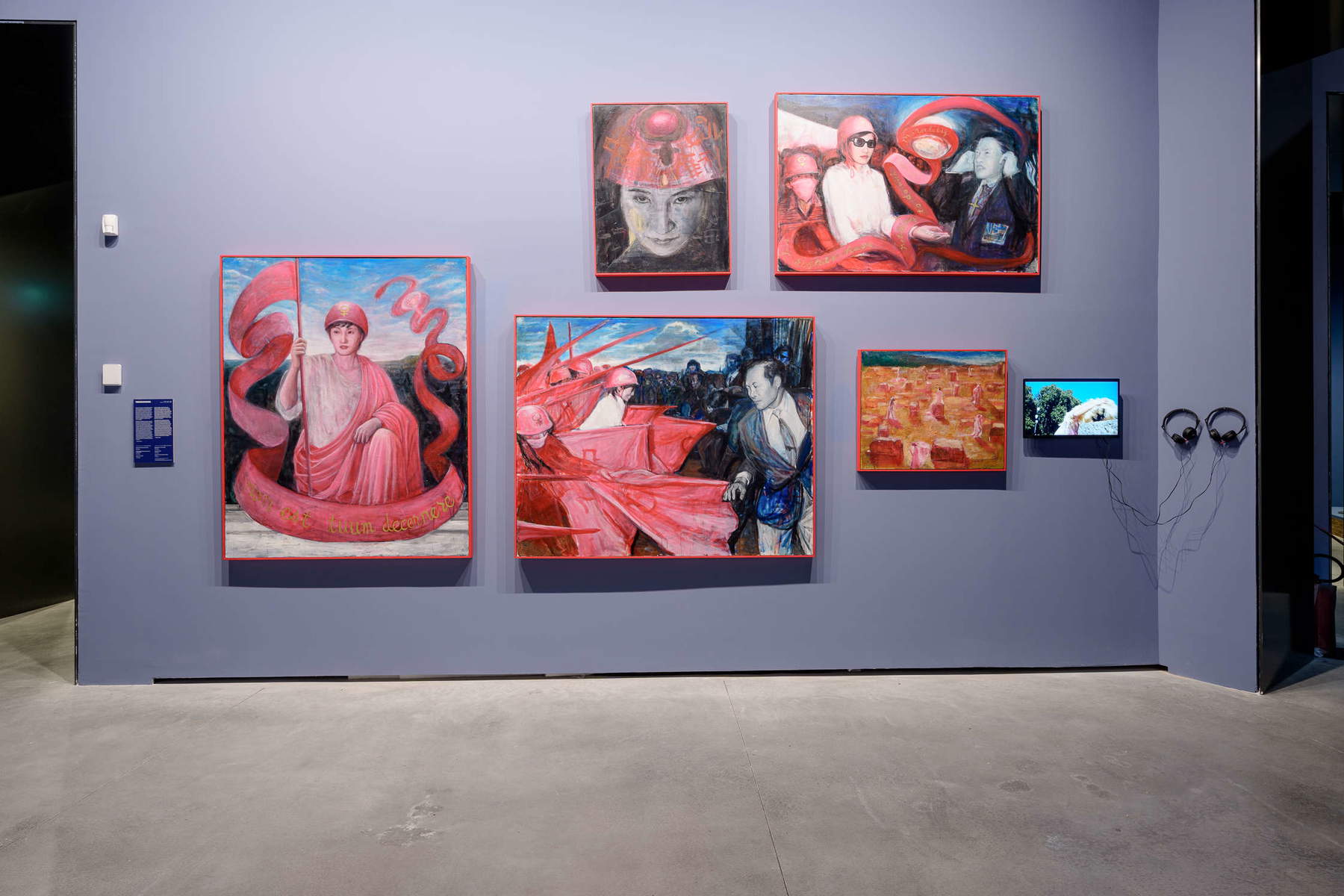
I conclude this ranking with a looktoward the Far East, which takes a back seat in Koyo’s necessary effort to definitively put an end to the Western primitivist view of art from Africa and, more broadly, the Global South: A special mention at this Biennale could easily go to the Japanese activist-artist Yoshiko Shimada, if only for the large pink banner in which the art of traditional calligraphy blends with a Zen aesthetic of protest and demands that extend beyond feminism.
What is missing from this window onto global art—the Biennale—is an aesthetic “coming out” from the Asian side to establish, within an official Asian avant-garde, a presence of the caliber of Thai artist-chef Rirkrit Tiravanija (a descendant of the New Realist master Daniel Spoerri, from his “tableaux-pièges” to his “Eat Art Gallery”)—who is temporarily stationed in the Qatar Pavilion while awaiting reinforcements. What is needed—hopefully as early as the next few Biennales—is an initiative like Koyo’s applied to Asia, with the political and institutional support of the Chinese, Korean, Japanese, Taiwanese, and Thai governments—and so on, all the way to India and Central Asia—which are still slow to officially recognize all those leading artists who remain in exile, such as Ai Weiwei.

Warning: the translation into English of the original Italian article was created using automatic tools. We undertake to review all articles, but we do not guarantee the total absence of inaccuracies in the translation due to the program. You can find the original by clicking on the ITA button. If you find any mistake,please contact us.























 IT
IT FR
FR DE
DE ES
ES CN
CN


