




Let’s set aside the reason why, twenty-four years after we started paying for ice cream with copper coins instead of bills bearing the image of Marconi or Montessori, the ECB has decided that the design of the euro must be changed, and that it falls to us citizens—called upon to fulfill this lofty and burdensome duty—to choose between migratory birds and famous figures. One might wonder who felt the need to abandon those bridges, those architectural masterpieces that were so perfectly conceived as to convey a sense of permanence—as if they’d always existed and as if they’d always been universally accepted— even those who still haven’t come to terms with it and, if it were up to them, we’d go back to the lira the day after tomorrow (never mind if they’d then be forced to choose between buying ice cream or a wheelbarrow to go buy it—what’s that compared to national monetary sovereignty?). But that would be an idle question, just as idle as wondering whose idea it was to let the public vote on the design via televoting (we’re no longer even capable of properly choosing a Eurovision winner, let alone what priceless masterpieces will be selected through these polls): still, it’s better that these democratic scruples be reserved for the design of the euro rather than for slightly more serious matters. So let’s set aside the superstructures, because the only question worth asking the ECB should have to do with their artistic choices and their ideas about what criteria to apply when a society decides to represent itself through an image.
Now, however questionable the unoriginal idea of printing the faces of famous people on money may be, however intrinsically kitsch the banknote may be, and however grotesque it may be to imagine that a piece of paper used to pay for prosciutto could turn into a portable museum, it must be said that, at least in Italy, the designers hired by the State Printing Office knew how to choose the works from which to derive the portraits for the banknotes: on the fifty-thousand-lire note, for example, there was Bernini’s self-portrait from the Borghese Gallery; on the five-hundred-thousand-lire note, Raphael’s; and on the one-hundred-thousand-lire note, Ottavio Leoni’s Caravaggio stood out, and when the best available portrait wasn’t all that great, they made up for it in other ways (on the reverse side of the 1,000-lire note, to compensate for the image of Montessori taken from a dull photograph snapped by who knows whom, they opted for one of Armando Spadini’s finest works). Granted, then, that Leonardo da Vinci is an adequate representative of “European culture” (I’m using the ECB’s expression, and in this regard I’ll venture to assume that, for a Swede or a Lithuanian, an Adenauer or a De Gasperi— let’s say, would be more foundational and relatable figures than a Leonardo da Vinci—but let’s leave that aside), why are all the designs to be submitted for the voters’ judgment based on an anonymous 18th-century portrait stored in the Uffizi’s archives, one so insignificant, in fact, that it isn’t even on display, and with the added aggravating factor of having likely served as the model for a troublesome host of unworthy imitations?
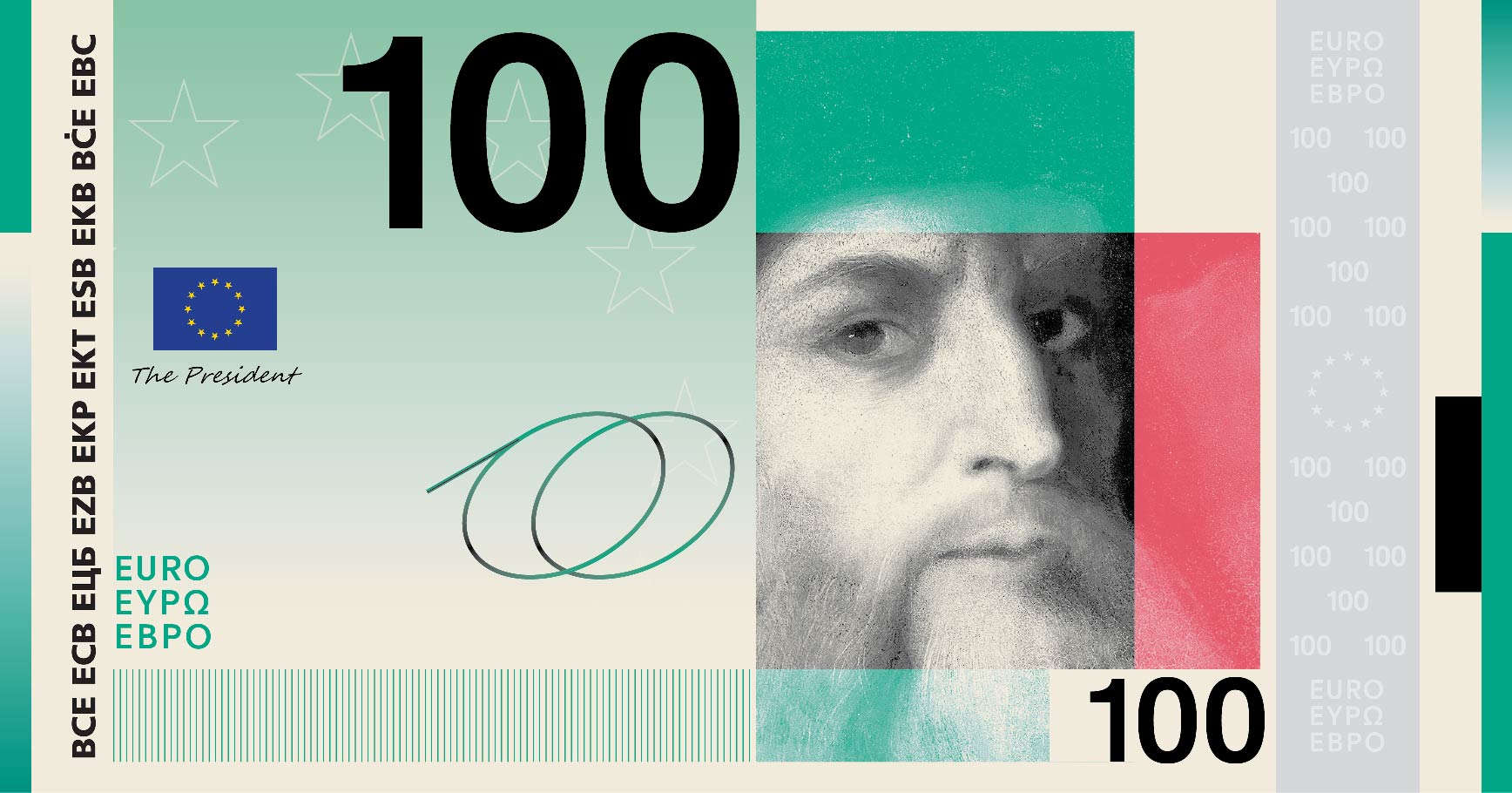
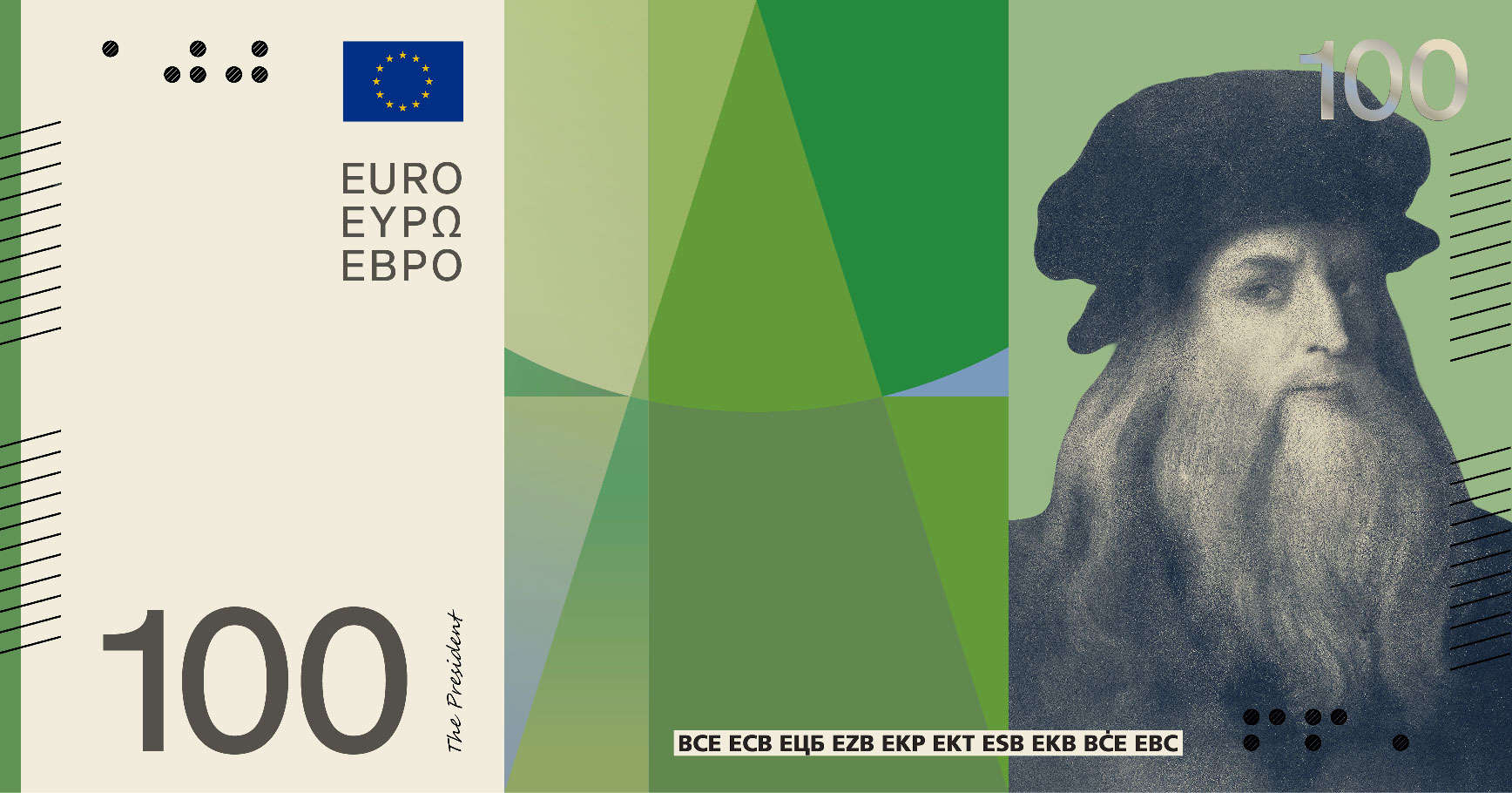
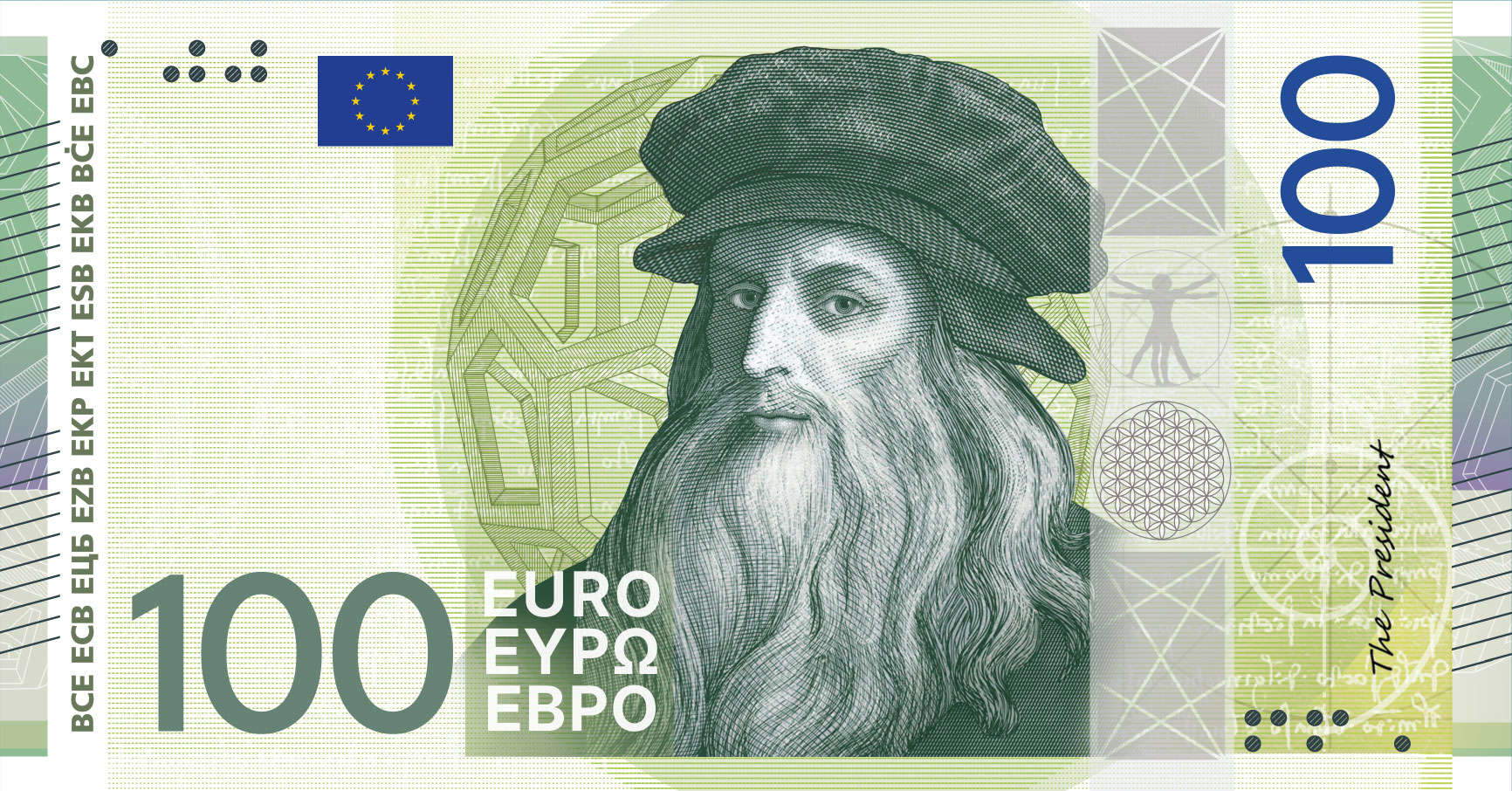
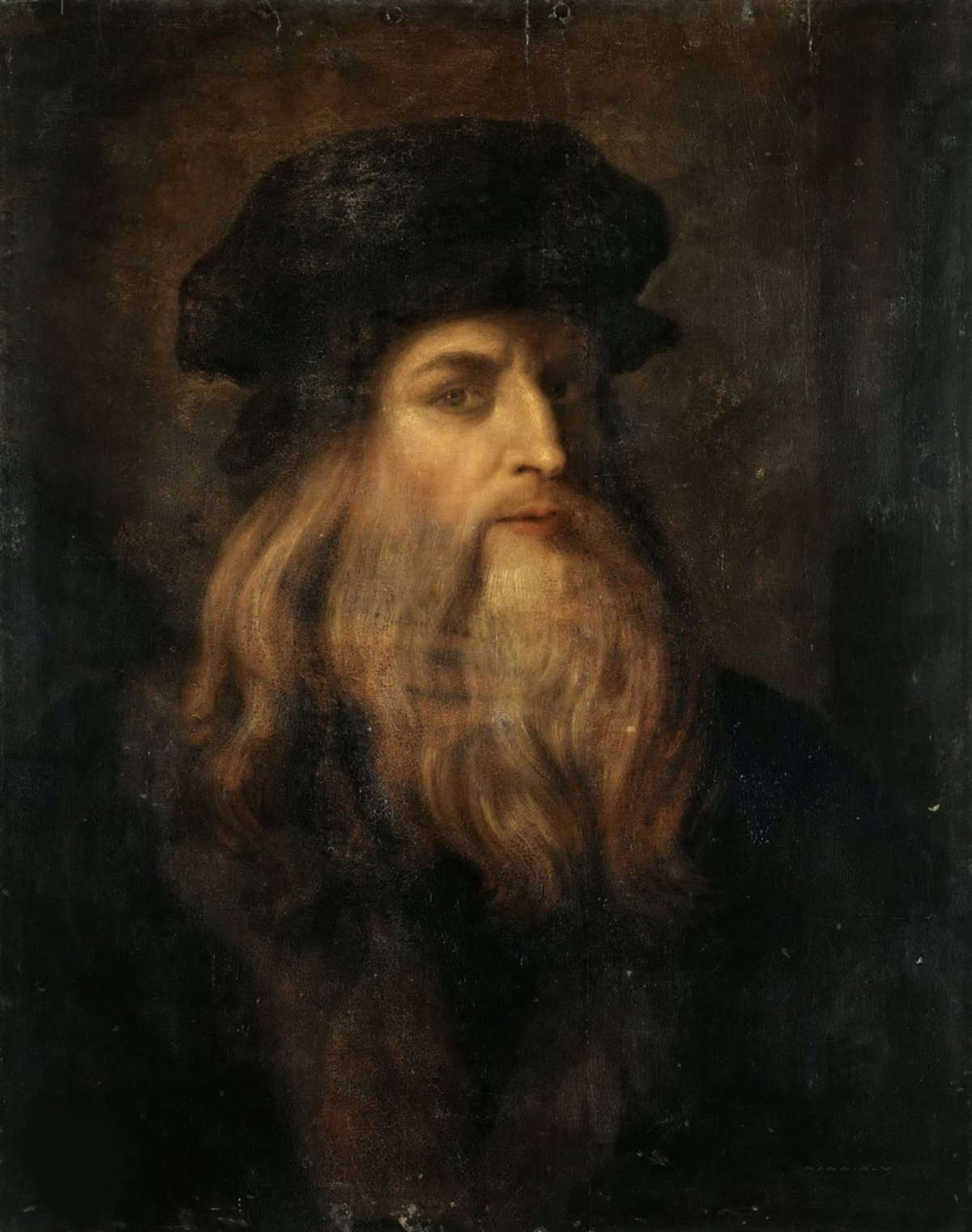
It is true, of course, that the portrait in the Uffizi has enjoyed a certain degree of popularity in the past (since 1715, it has been listed in the collection of self-portraits: evidently, centuries ago, some well-meaning amateur must have mistaken it for an autograph), and it deserves at least the credit of having inspired two rather famous sculptures: namely, the ideal full-length portrait of Leonardo that Luigi Pampaloni sculpted in the 19th century for the Uffizi loggia, and the one that Pietro Magni placed to crown the monument in Piazza della Scala in Milan (among the less commendable consequences, we should also mention that painting from Acerenza that, a few years ago, dominated the Italian tabloids for months: “a comical self-portrait of Leonardo,” as Vittorio Sgarbi called it, “clearly of late-nineteenth-century workmanship, vacuously illustrative, and resembling a caricature of the actor who played Leonardo in Renato Castellani’s television miniseries, Philippe Leroy”).
Now, then, the Leonardo of the new euro coins has also joined the ranks of these imitations. The ECB and its designers must have forgotten that they had a wide selection to choose from: the so-called Turin Self-Portrait (yes, we’re aware of the counterargument—namely, that we’re not certain it’s actually a self-portrait—but a presumed self-portrait drawn by Leonardo is still better than a no less fanciful self-portrait painted, moreover, by an unknown artist), the one drawn by Francesco Melzi, the two idealized portraits mentioned earlier, or, at a stretch, the one by Cristofano dell’Altissimo—which, however unattractive, is still a fragment of a story, that of the “Giovian” series, which has far more in common with “European culture” than the anonymous portrait in the Uffizi. This is also because we do not know exactly what Leonardo actually looked like, and the image of the old man with a white beard is a filtered and mediated construct rather than a true likeness: it would therefore be natural to believe that, if one were to provide a representation of him, one would be tempted to prioritize the idea over the caricature. Of course, it seems unlikely that the ECB’s designers intended to pay homage to the anonymous panel because of its status as a figurative source for some 19th-century monumentalist, or because of the detrimental role it played in helping to solidify the shared image of Leonardo da Vinci: it’s more likely, if anything, that they simply settled on one of the first photographs they came across and went with that. Nothing particularly surprising, though: it’s well known that with the internet we have access to boundless libraries and endless image databases, but we always end up recirculating the same things, because we no longer even make the effort to go to page two of the results—and because, after all, the algorithm does the thinking for us.
It’s probably too late now to suggest to the ECB that it allocate the banknote featuring Leonardo da Vinci to places that, compared to our wallets, are less prestigious but more suitable; however, since even the choice of a banknote has, like everything else, become a matter of fan bases and opposing camps, we can at least count on a couple of additional options: root for the birds, knowing that the Eurasian nuthatch is still better than a fake Leonardo, or take comfort in the fact that we now pay for our coffee with a debit card anyway—so how often are we ever going to find an imaginary Leonardo painted by an anonymous 17th-century artist in our pocket?

The author of this article: Federico Giannini
Nato a Massa nel 1986, si è laureato nel 2010 in Informatica Umanistica all’Università di Pisa. Nel 2009 ha iniziato a lavorare nel settore della comunicazione su web, con particolare riferimento alla comunicazione per i beni culturali. Nel 2017 ha fondato con Ilaria Baratta la rivista Finestre sull’Arte. Dalla fondazione è direttore responsabile della rivista. Nel 2025 ha scritto il libro Vero, Falso, Fake. Credenze, errori e falsità nel mondo dell'arte (Giunti editore). Collabora e ha collaborato con diverse riviste, tra cui Art e Dossier e Left, e per la televisione è stato autore del documentario Le mani dell’arte (Rai 5) ed è stato tra i presentatori del programma Dorian – L’arte non invecchia (Rai 5). Al suo attivo anche docenze in materia di giornalismo culturale all'Università di Genova e all'Ordine dei Giornalisti, inoltre partecipa regolarmente come relatore e moderatore su temi di arte e cultura a numerosi convegni (tra gli altri: Lu.Bec. Lucca Beni Culturali, Ro.Me Exhibition, Con-Vivere Festival, TTG Travel Experience).
Warning: the translation into English of the original Italian article was created using automatic tools. We undertake to review all articles, but we do not guarantee the total absence of inaccuracies in the translation due to the program. You can find the original by clicking on the ITA button. If you find any mistake,please contact us.
























 IT
IT FR
FR DE
DE ES
ES CN
CN


