




by Redazione 15/04/2026



Categories: Policy / Disclaimer
Law No. 40/2026 amending the Cultural Heritage Code has been approved by the Senate: the Digital Registry is created, art lending simplified, and important innovations for the art market introduced. Here's what the law that recently went into effect provides.


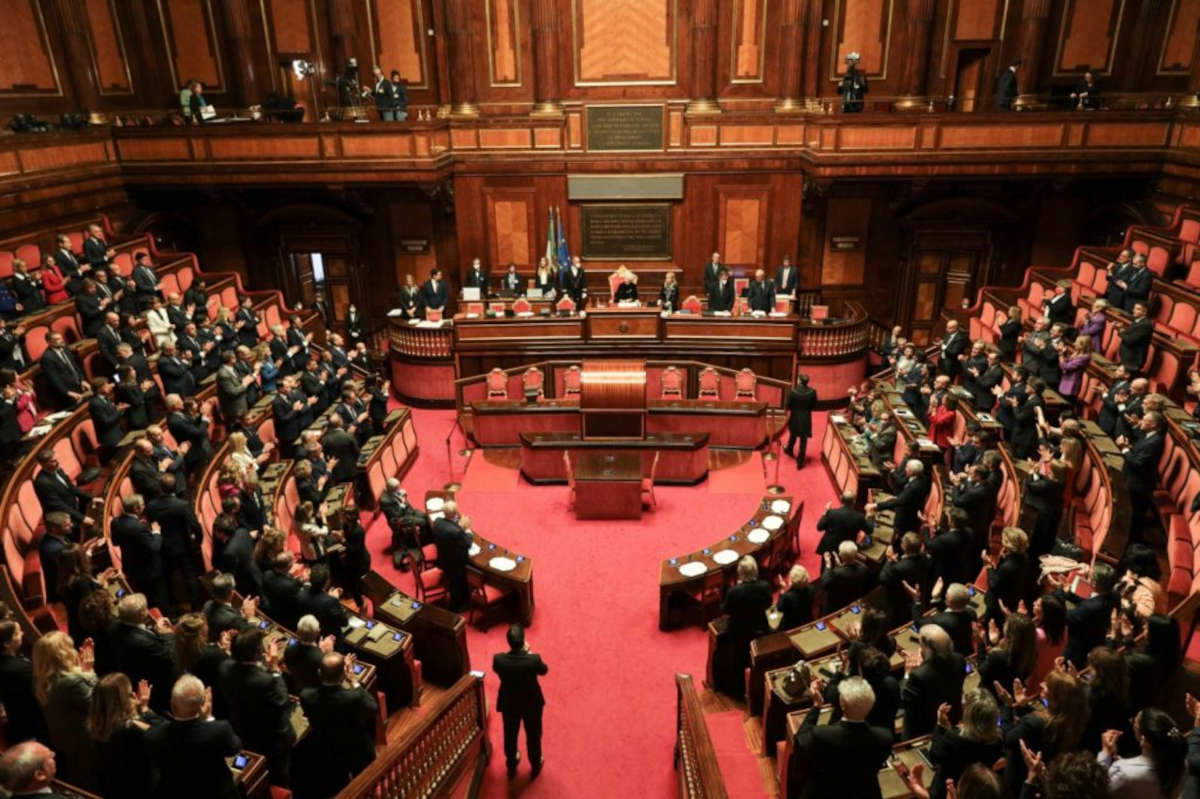
What are the changes introduced by the recent law that revised the Cultural Heritage and Landscape Code? On March 11, the Senate gave final approval to the “Subsidiary Enhancement of Cultural Heritage” law, an initiative born in 2023 at the proposal of the chairman of the culture committee in the House, Federico Mollicone (FdI) and finally merged into Law No. 40 of March 17, 2026, published in the Official Gazette on March 30. The measure was presented by Mollicone as a turning point: the stated goal is to encourage the autonomous initiative of citizens, both individual and associated, in the enhancement of cultural heritage and the development of cultural and creative enterprise. Heritage is thus interpreted not only as an element of identity and history, but also as a lever for economic growth and the reduction of territorial and social gaps.
The most discussed measure concerns the art market front: in fact, the reform modifies Article 65 of the Cultural Heritage Code by going to revise the economic thresholds that determine the obligation of authorization for export. The limit, in particular, is raised from the previous 13,500 euros to the new threshold of 50,000 euros. The stated goal is to make the Italian system more competitive and aligned with European standards, while also facilitating the circulation of works. Another change stipulates that for works by foreign authors the certificate of free circulation cannot be denied if the specific relevance of such works to the history of culture in Italy is not established. Again, another novelty concerns the possibility of withdrawing the complaint for the certificate of free circulation before the notification of the final measure, introducing more flexibility for operators. At the same time, the temporal validity of declarations related to the circulation of works is extended, aligning it with the duration of the certificate itself.


Novelties are also introduced on the front of art lending. Specifically, it is established that authorization for the loan of works must be issued within 90 days of the request. The role of supervisory authorities in ensuring transparency and sustainability in the insurance market related to lending works is also strengthened.

Another of the pillars of the reform is the introduction of new digital tools for mapping and monitoring public heritage. A Digital Registry of Institutes, Places of Culture and Publicly Owned Cultural Property is established at the Ministry of Culture. This is a database designed to collect detailed information on the nature of the assets, management methods, quality levels of enhancement, and conditions of accessibility, efficiency and economic sustainability. The Registry will also include data on disused properties, with information on their state of preservation, ownership, location and possible rehabilitation projects.
The system is designed as a tool aimed not only at transparency but also at evaluating forms of management and the possible introduction of alternative models. All public institutes and places of culture, along with administrations that hold cultural property, will be required to constantly update the data. Operating procedures will be defined by ministerial decree within eighteen months, ensuring integration with existing state and territorial databases.
Alongside the Registry, theDigital Register of Horizontal Subsidiarity, a section dedicated to private entities interested in the indirect management of public cultural property, will also be created. The stated goal is to make the concession system more accessible, transparent and competitive, encouraging the participation of qualified operators. Registered entities will be able to express interest in concession procedures and will be involved in the definition of strategic plans for cultural development. Again, requirements and methods of access will be established by ministerial decree, after consultation with the Competition and Market Authority and the National Anti-Corruption Authority.
The reform also introduces a national strategy called “Italy on Stage,” to be defined within twenty-four months by the Ministry of Culture on the basis of the data collected by the Registry and with the involvement of those registered in the Register. The program aims to ensure greater accessibility of cultural heritage, with special attention to inland areas, small villages and mountain municipalities. Planned actions include the promotion of live performances and historical re-enactments, the strengthening of communication initiatives, including digital, and the development of public-private partnerships capable of ensuring economic sustainability and quality of management.
A significant chapter is devoted to the enhancement of works not on display in state museums. The law provides for the creation of a list of works suitable for temporary circulation in the national territory, as they are free of critical conservation issues. Municipalities will be able to request the temporary transfer of such works, provided they have adequate facilities, a museum with an appointed director and a cultural project integrated with the tourism, food and wine or sports offerings of the territory. All costs will be borne by the requesting entities.
The reform also intervenes in the internal organization of the Ministry of Culture, providing uniform criteria for determining the compensation of members of boards of directors of offices with special autonomy. The new rules will have to ensure proportionality, transparency and consistency with the complexity of assignments, without generating new burdens for public finance.
Financially, the law authorizes an expenditure of 500,000 euros annually starting in 2026 for the implementation of measures related to the Registry and Digital Register, and 4.5 million euros annually for the “Italy on Stage” strategy. The resources are found through the reduction of funds already provided in the budget of the Ministry of Economy and Finance, without affecting new appropriations.
|
| Cultural heritage, what changes the recently passed law has made |
Warning: the translation into English of the original Italian article was created using automatic tools. We undertake to review all articles, but we do not guarantee the total absence of inaccuracies in the translation due to the program. You can find the original by clicking on the ITA button. If you find any mistake,please contact us.