








Hitting and destroying art, in and out of museums: vandalism in art, whether it occurs with a hammer, acid, edged weapons or simply with bare hands, is a phenomenon that spans eras and contexts, leaving marks not only on the surfaces of paintings and sculptures, but also in collective memory. From this awareness comes a podcast dedicated to vandalism in art: it is entitled Outrages. Stories of art and vandalism, is conceived and narrated by art historian Giovanni Sassu, current director of the Civic Art Gallery “Il Guercino” in Cento, and is available from April 22 on all major streaming platforms. The series represents the first title of Minerva Vox, Edizioni Minerva’s new audio project designed to develop original content dedicated to culture, sports, biographies and territory. The project marks an expansion of the publishing house’s editorial strategies, with the aim of placing new forms of storytelling alongside the book.
Outrages does not intend to be limited to a collection of news episodes, but aims to be an articulate investigation that interweaves history, psychology and sociology. The podcast explores the motivations that drive individuals or groups to target art and analyzes how these gestures affect the way heritage is perceived, protected, and communicated. In an age dominated by social media, where visibility is often immediate and global, striking a work of art becomes a gesture capable of generating attention and debate.
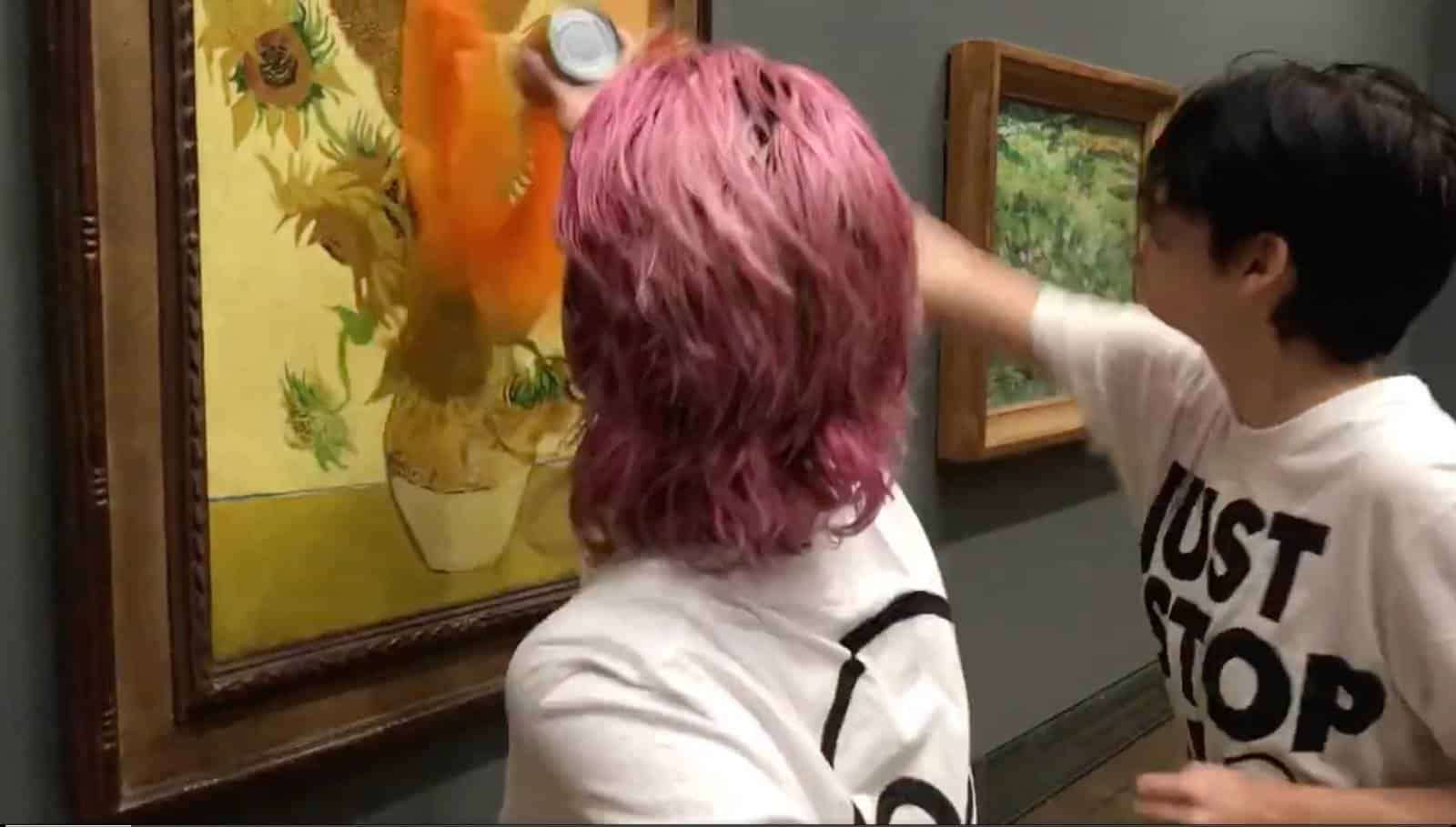
In recent years, actions led by activist groups such as Just Stop Oil or linked to movements such as #MeToo have brought the issue back to the center of public debate. However, as the series highlights, the use of art as a target is not a recent phenomenon. A red thread connects contemporary actions to iconoclastic acts of the past, between political protests and individual gestures that are often difficult to interpret.
Among the cases analyzed emerges the defacement of Diego Velázquez’s Venus in the Mirror in 1914, carried out by a suffragette as an act of political protest. Alongside this episode, the series recalls the 1972 attack on Michelangelo’s Pieta, when László Tóth hit the sculpture with a hammer. Different events, but united by their ability to become symbols of social, political or personal tensions.
The podcast consists of six episodes, preceded by a trailer released on April 8. The first episode, available from April 22, addresses the fundamental question: why target a work of art (the title of the episode is “Why? Why a podcast like this? Why target works of art?”). This is followed, on April 29, by an account of the attack on the Pieta (“Christ am I Rome, 1972: László Tóth hits Michelangelo’s Pieta with a hammer. Individual Madness or Messianic Delirium?”), while the third episode, available from May 6, 2026, focuses on the acid attacks perpetrated by Hans-Joachim Bohlmann between Germany and Holland (“Acid and Madness From Germany to Holland: Hans-Joachim Bohlmann’s Obsession and the Acid Attacks that Marked Museum History”). The fourth, available from May 13, 2026, delves into the museum as a site of political and social conflict (“The Museum as Crime Scene Suffragettes, Revolutionaries, Protesters: when the iconoclastic gesture becomes political and social struggle”).
The fifth episode, airing from May 20, 2026, broadens the perspective, addressing cases in which it is the artists themselves who destroy their own works, from Claude Monet to Banksy, transforming the destructive gesture into a creative act (“My Best Work From Monet to Banksy: Artists who destroy what they have created and make the most irrational gesture their most important work”). The last episode (“Paint and Smartphones Activists and the Media: Why is daubing a painting today the fastest way to be heard?”, from May 27, 2026), focuses instead on the relationship between activism and contemporary media, highlighting how paint and smartphones have become tools of communication and protest.
Giovanni Sassu’s voice, gained from more than two decades of experience in Italian museums as conservator and director, guides the listener through a journey that relates creation and destruction. Alongside the main narrative, the series features interventions by specialists, including art historians, restorers, and journalists, who help enrich the narrative with different perspectives.
The project also anticipates the release of a book of the same name, building a multi-layered publishing experience from the page to listening. It is precisely this integration between formats that characterizes Minerva Vox, as publisher Roberto Mugavero points out. “Minerva Vox,” he explains, “was born from the conviction that today a story can live on multiple levels. The book remains our starting point and our main corporate mission, but the podcast will allow us to develop other levels of storytelling. More immediate, more dialogic, often even more experimental. The idea is not simply to bring books to audio, but to open a space where new stories can be born directly for listening, but always then aimed at being collected in a publication.”
Outrages thus fits into a context in which reflection on cultural heritage is intertwined with contemporary communication dynamics. Recounting acts of vandalism against art means questioning not only the causes of these gestures, but also their impact and how they influence the collective perception of beauty and its protection. A narrative that, in the authors’ intentions, serves to understand, remember, and perhaps prevent.
|
| Outrages, the podcast chronicling vandalism in art history, begins |

Warning: the translation into English of the original Italian article was created using automatic tools. We undertake to review all articles, but we do not guarantee the total absence of inaccuracies in the translation due to the program. You can find the original by clicking on the ITA button. If you find any mistake,please contact us.





















 IT
IT FR
FR DE
DE ES
ES CN
CN