Six hundred - Finestre sull'Arte

123...77Page 1 of 77


Caravaggio's Wine: What Does the Goblet Offered by the Uffizi's Bacchus Signify?

Caravaggio's Wine: What Does the Goblet Offered by the Uffizi's Bacchus Signify?

One could almost say that Caravaggio’s*Bacchus* (Michelangelo Merisi; Milan, 1571 – Porto Ercole, 1610), now housed in the Uffizi Gallery, is a 20th-century painting: for more than three centuries, in fact, the painting depicting the Ro...
Read more...
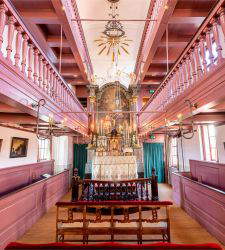
The Rijksmuseum in Amsterdam receives a rare book of 17th-century drawings as a gift

The Rijksmuseum in Amsterdam receives a rare book of 17th-century drawings as a gift

The Rijksmuseum in Amsterdam is expanding its Print Room Collection with an exceptional and rare work: the Van Eeghen Drawing Book, a book of drawings from the early 17th century that has remained in the same family for more than three hundred years....
Read more...
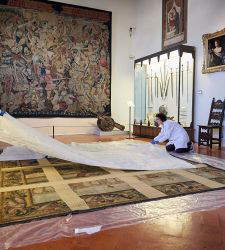
Ferdinando Gonzaga, Patron and Duke: A Major Exhibition in Mantua Marking the 400th Anniversary of His Death

Ferdinando Gonzaga, Patron and Duke: A Major Exhibition in Mantua Marking the 400th Anniversary of His Death

To mark the 400th anniversary of Ferdinando Gonzaga’s death, the Ducal Palace in Mantua is dedicating a major exhibition to the duke titled *Sole mirabile per luce propria. Ferdinando Gonzaga: Patron and Duke (1587–1626)*. The exhibition,...
Read more...
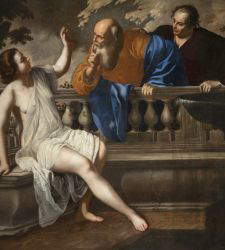
An exhibition in Florence on Artemisia Gentileschi and her time in Florence

An exhibition in Florence on Artemisia Gentileschi and her time in Florence

From October 21, 2026, through April 4, 2027, the Museo degli Innocenti in Florence will host a monographic exhibition entirely focused on the Florentine period of Artemisia Gentileschi (Rome, 1593 – Naples, after 1564). The exhibition aims to...
Read more...
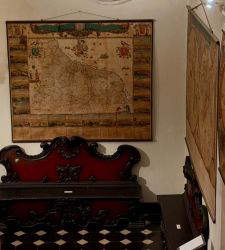
Cento is hosting the first major solo exhibition dedicated to Marcello Provenzale, the 17th-century mosaic genius

Cento is hosting the first major solo exhibition dedicated to Marcello Provenzale, the 17th-century mosaic genius

In 1616, Pope Paul V Borghese officially bestowed an exceptional honor upon Marcello Provenzale, describing him—in the Rome of the nascent Baroque era—as the inventor of “a new style of mosaic-making that is quite different from and far more beautifu...
Read more...
Watermelon in 17th-Century Painting: The Story of a Fruit in Tuscan Still Lifes

Watermelon in 17th-Century Painting: The Story of a Fruit in Tuscan Still Lifes

A fruit that symbolizes summer, the watermelon has always been associated with the idea of freshness and refreshment during the hottest months of the year. Its presence on our tables, however, tells a much older story, linked to the places and cultur...
Read more...
Giovanna Garzoni’s Cabinet of Curiosities: Fruit, Porcelain, and Miniatures

Giovanna Garzoni’s Cabinet of Curiosities: Fruit, Porcelain, and Miniatures

We tiptoe into the Medici villa at Poggio Imperiale, on the hill of Arcetri, a quarter-hour’s ride on horseback from the Pitti Palace. It is the spring of 1768, and the sumptuous residence, after three decades of neglect, is bustling with activ...
Read more...
The Trojan Horse in 7 Works of Art History

The Trojan Horse in 7 Works of Art History

It is one of the most famous deceptions in history, and for over two thousand years it has continued to intrigue artists, scholars, and—why not?—even audiences: the Trojan Horse, a symbol of cunning and betrayal, has become one of the most powerful i...
Read more...

123...78Page 1 of 78