




by Andrea Laratta 31/05/2026



Categories: Tourism / Disclaimer
Mayor Jaume Collboni announces the end of licenses for tourist apartments by 2028. Goal: bring more than 10 thousand homes back to the residential market and counter a housing crisis that the first citizen says is fueling social inequality.


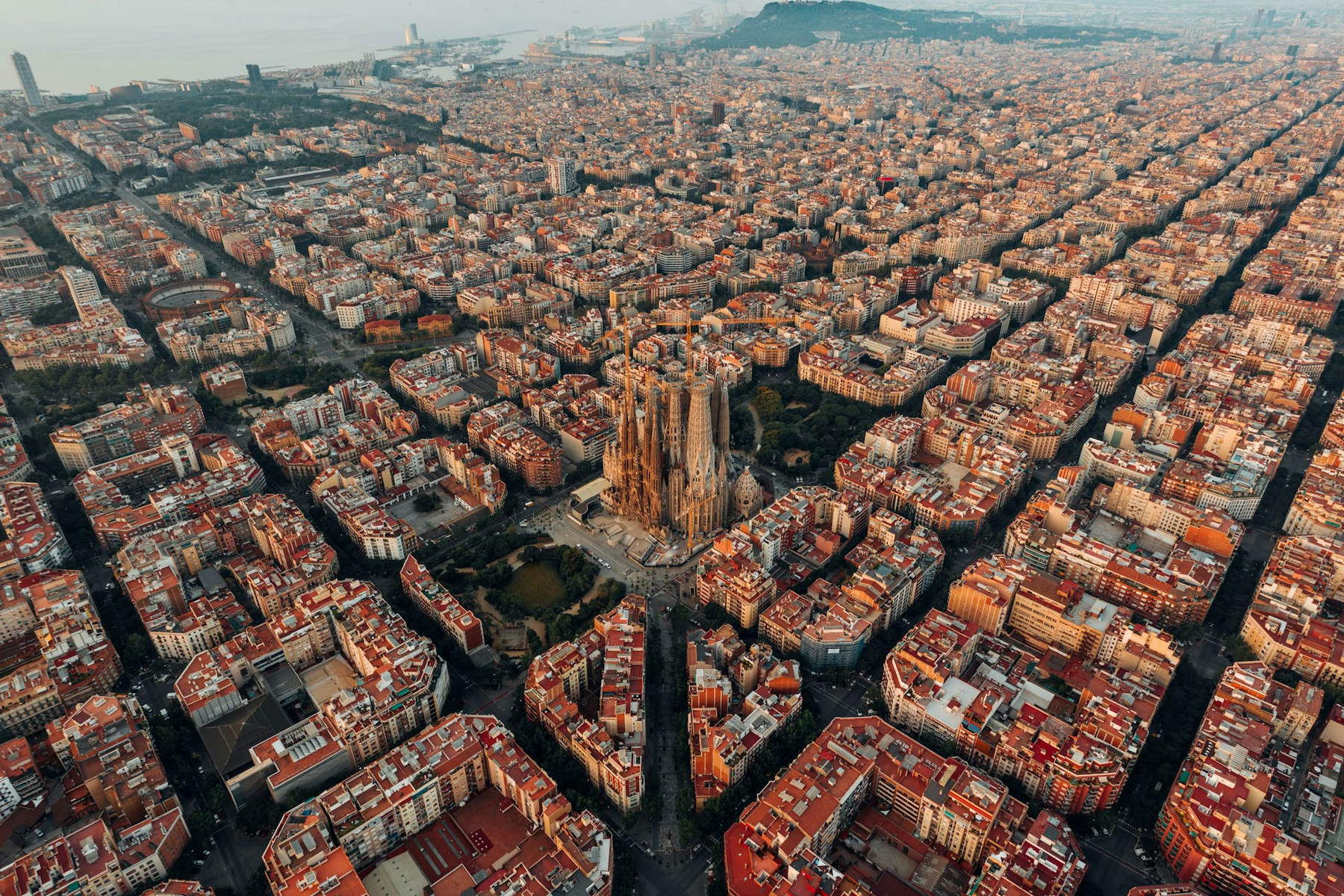
“Tourism must be at the service of the city, not the city at the service of tourism,” which is why “tourist [house] rentals will disappear by 2028.” This sentence alone would be enough to restore the political sense of the position of Barcelona’s mayor, Jaume Collboni, a socialist, who in an interview with the National Newspaper addresses one of the decisive issues of the urban present of European cities of art, that of the increasingly conflicting relationship between tourism and residents. In a city among the queens of world tourism that closed 2025 with about 16 million visitors, the mayor announced that when B&B licenses expire they will not be renewed in order to return to residents the more than 10,000 propertiesused today for tourists, calling for new housing policies also in the European forum: in fact, Collboni defines the “housing crisis” as “the main source of today’s social inequality.”

The interview talks about Barcelona, but describes a fracture common to many art cities: the balance now defined by many as fragile between tourism, real estate rents and the daily lives of residents. The issue is close to the forefront of debates even in many Italian art cities or small tourist resorts where cries of alarm are being raised about rent pressure on tourists with the fear of seeing historic centers transformed into mere consumer space.


“In Barcelona,” says Collboni, “we are changing the rules of the game to guarantee the right to housing. We are focusing on two fronts: short-term regulation to mitigate the impact, and long-term construction to generate future alternatives.” The mayor claims concrete results. According to the interview, rents in Barcelona had grown 70 percent in ten years, but the new rules would have already produced a 2.7 percent drop between March 2024 and December 2025. Collboni also claims that the number of residential contracts continues to increase (“there are currently 1,370 more contracts in Barcelona than before the regulations came into effect”) and that the average rent is now 1,160 euros per month. “I sincerely believe that we are succeeding,” claims the first citizen, but the politically strongest passage concerns tourist apartments: “they will disappear from Barcelona by 2028” with the expectation of the return to the residential market of the more than 10,000 homes now used for tourist purposes. In parallel, he adds, the city has doubled its production of public housing.


In Collboni’s speech, tourism is subordinated to a precise hierarchy: first the right to housing, then the rest. It is here that the interview takes on a value that goes beyond Barcelona and touches on Florence, cited as a city moving in the same direction(we discussed it here): “Tourism is and continues to be a necessary economic activity for our city. But tourism must be at the service of the city, not the city at the service of tourism. What cannot happen, in any case, is that tourism has an extraordinarily negative impact on a fundamental right of citizens, such as the right to housing. We believe that the European Union has to play a key role in finding solutions to the housing crisis,” he acknowledges that a European Commissioner for Housing has been established for the first time and that therefore “progress is being made, but we need funding, regulatory capacity and decision-making power to ensure that the EU is an ally in the fight against the housing crisis. In Barcelona we are very pleased to have Florence and its mayor at our side in this housing battle we are waging at the European level, and I am also very pleased to see that the measures we are taking in Barcelona are serving as an inspiration to address the crisis in other cities.”
TheBarcelona Tourism Observatory (OTB) calculated that in 2025 Barcelona city welcomed 16 million tourists, as anticipated, confirming it as one of the most visited urban destinations in Europe, with a direct economic impact of tourism spending estimated at 14 billion euros. The hotel sector concentrated 12.9 million visitors and 32.4 million overnight stays, while the non-hotel sector weighed increasingly heavily: habitatges d’ús turístic, that is, “dwellings for tourist use” in Catalan and which are abbreviated to HUT, which would be B&Bs for us, generated 13 million overnight stays, or about a third of the municipal total. In a city where accommodation supply remains vast and tourism continues to grow, pressure on the housing market remains one of the most sensitive issues for the mayor.
Collboni recognizes tourism as a necessary economic activity, but refuses to let it become the sovereign criterion of urban organization that affects the fate of historic places: that - we could summarize - they are not just scenery to visit but spaces to inhabit. A clampdown on tourist rentals in Italy was also given by the government with the Budget Law 2026 by changing the rules of the game for operators: in fact, the limit for operating as a private person renting to tourists for periods of less than 30 days drops from 4 to 2 properties. From the third it becomes like a business activity and a VAT number must be taken.
|
| Barcelona declares war on tourist rentals: stop B&Bs to bring residents back downtown |
Warning: the translation into English of the original Italian article was created using automatic tools. We undertake to review all articles, but we do not guarantee the total absence of inaccuracies in the translation due to the program. You can find the original by clicking on the ITA button. If you find any mistake,please contact us.