




by Giorgio Dellacasa 16/07/2026



Categories: Travel / Disclaimer
Overlooking Genoa’s Duomo and built as part of a project linked to Vincenzo Scamozzi, Palazzo Sinibaldo Fieschi is one of the most recognizable symbols of “La Superba”: a residence of the Rolli that houses extraordinary frescoes by Domenico Piola and Sebastiano Galeotti. An article by Giorgio Dellacasa.

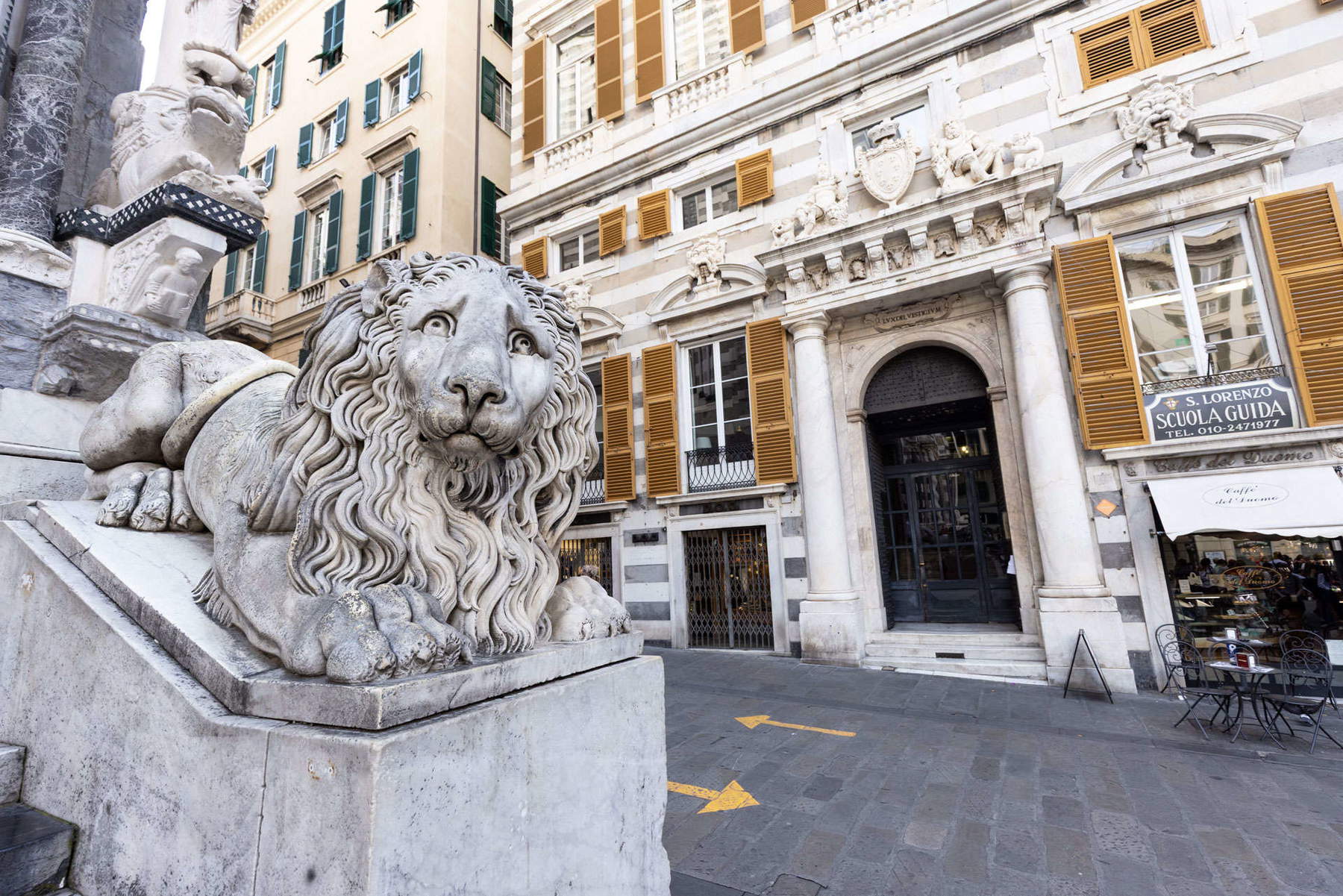
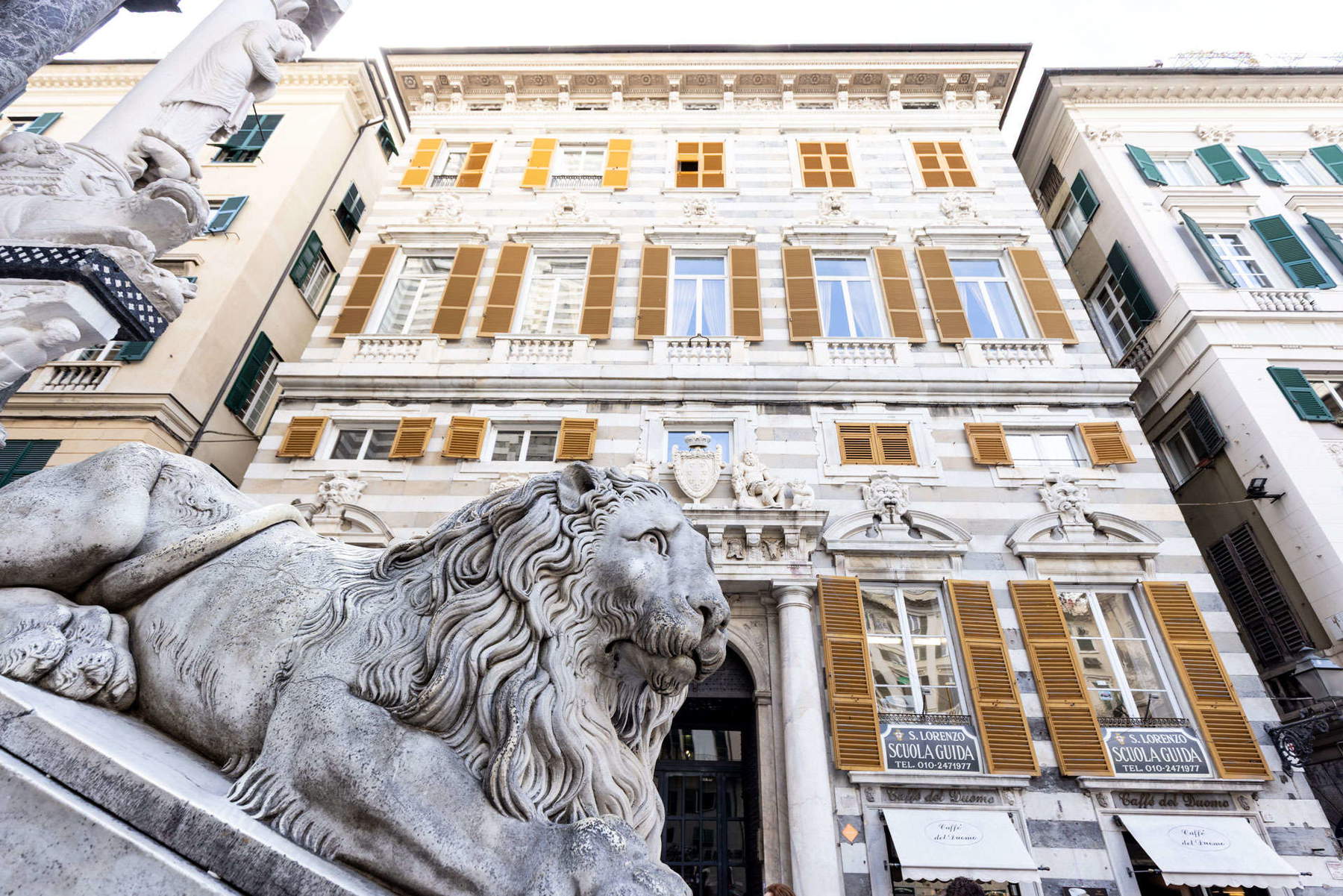
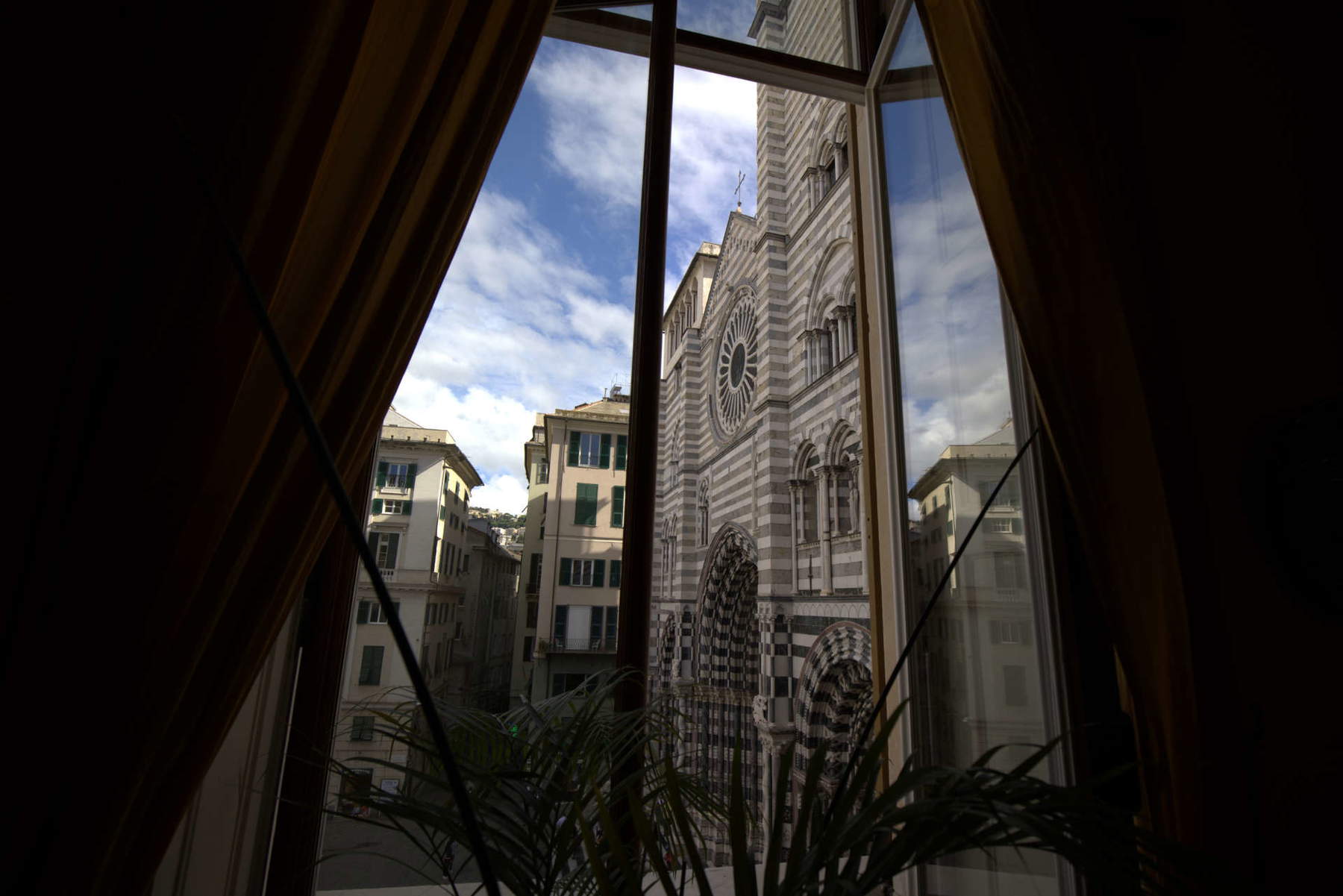
Right in the heart of Genoa, along that noble street that, starting in the first half of the 19th century, was known as “Strada carrettabile Carlo Alberto”—and is now called Via San Lorenzo—stands one of the most famous, representative, and iconic buildings in the entire urban fabric of Genoa: Palazzo Sinibaldo Fieschi. With its two-tone banded façade, perfectly in keeping with the decorative style of the neighboring Cathedral of San Lorenzo, this residence has marked the daily lives of Genoese and visitors alike for more than four centuries, etching itself firmly into the memory of every passerby. In fact, it would be difficult—even with a hypothetical time machine—to find anyone who, since the 1620s, while gazing at the city’s cathedral, has not also turned their gaze toward the palace right next door. Indeed, as we approach the present day, there is no painter or photographer who, intent on capturing the artistic and decorative beauty of the Cathedral, has not depicted—sometimes indirectly—the façade of Palazzo Fieschi.
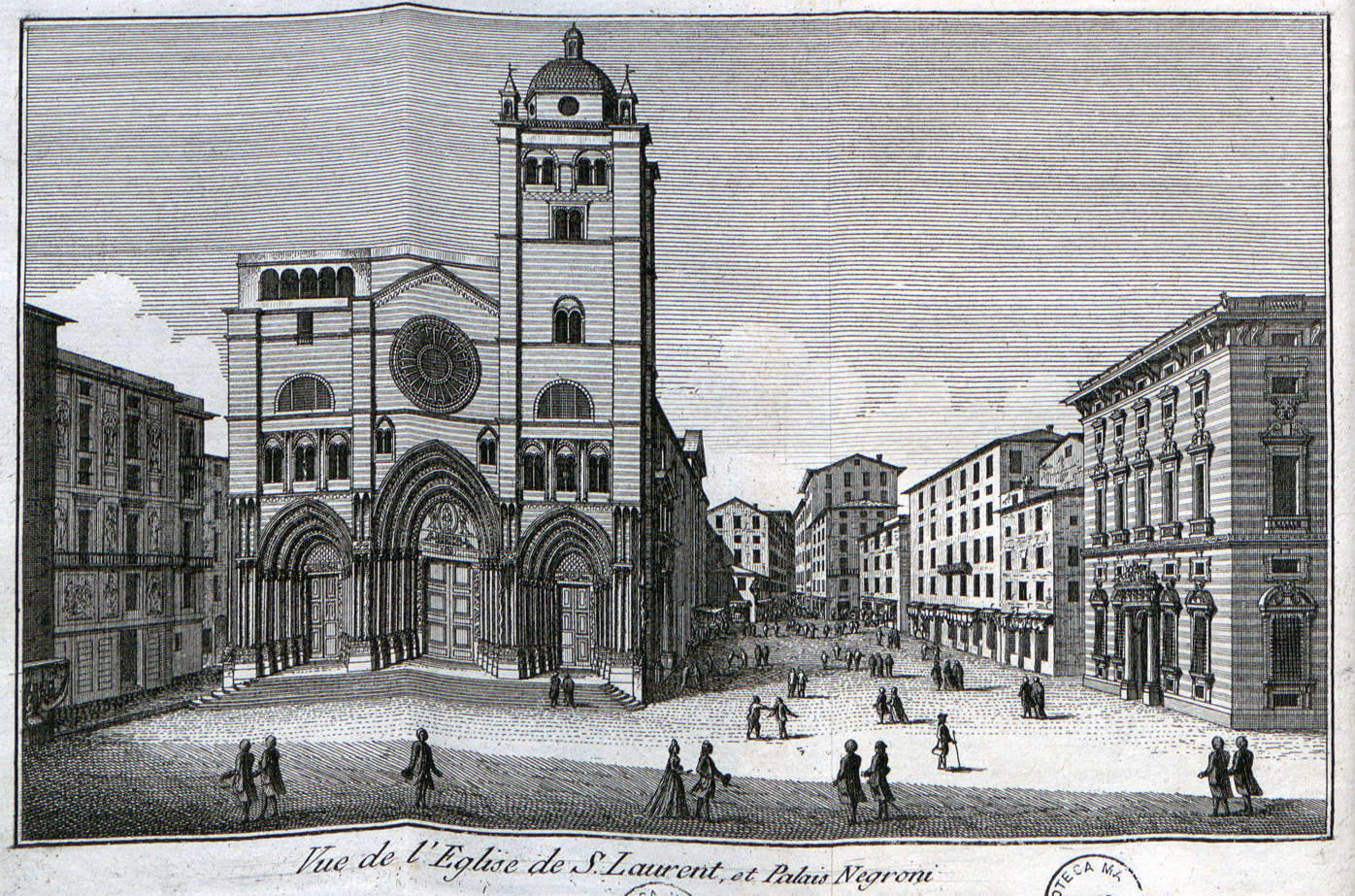
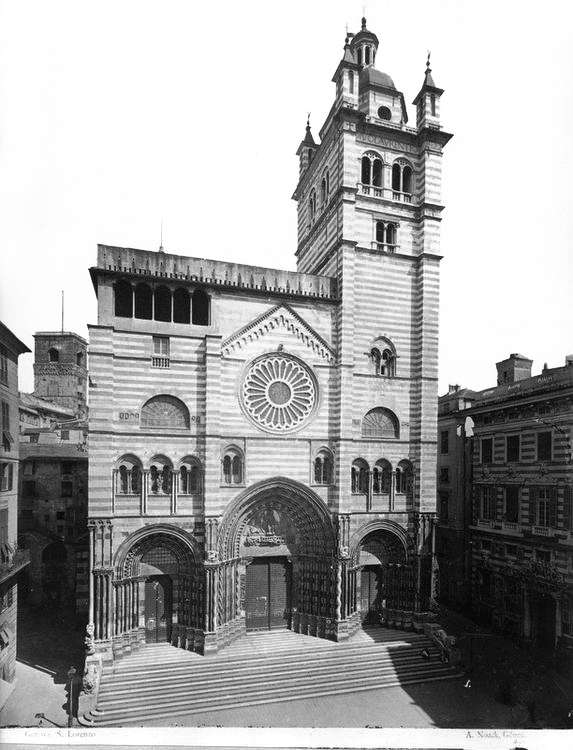
By way of example, a valuable account is provided by *Description des beautés de Gênes*, which was first published in Genoa in 1761 (conceived by Giacomo Brusco and Carlo Giuseppe Ratti); in describing the artistic beauties of “La Superba,” features a refined engraving titled *Vue de l’Eglise de S. Laurent, et Palais Negroni*, in which the area around St. Lawrence and the palace in question are clearly recognizable. Even more emblematic, as the centuries progressed, is the extraordinary photograph by Alfred Noack, a global pioneer of photography, who, around 1880, while capturing the facade of the Cathedral on film, immortalized Palazzo Fieschi “by osmosis.”


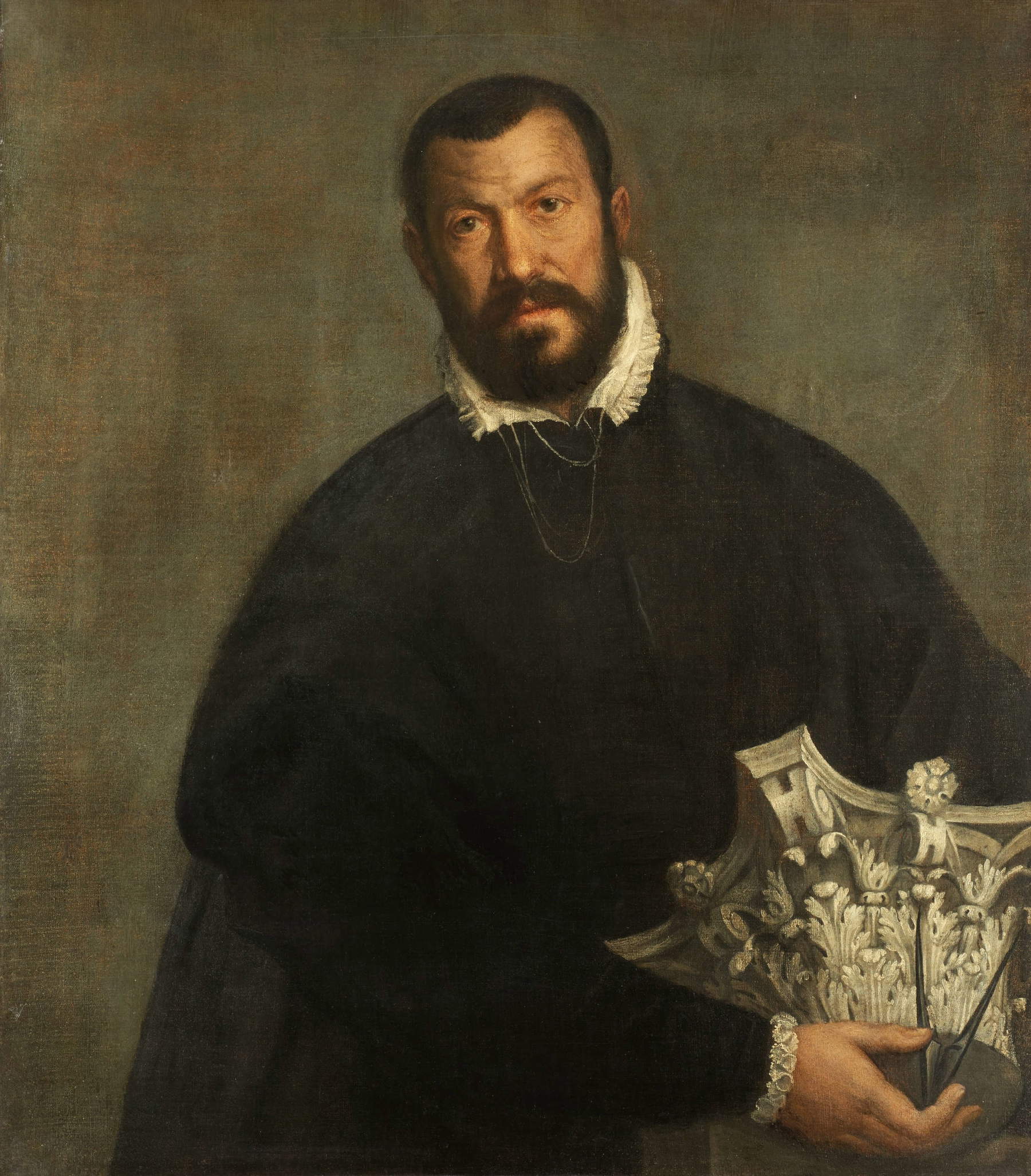
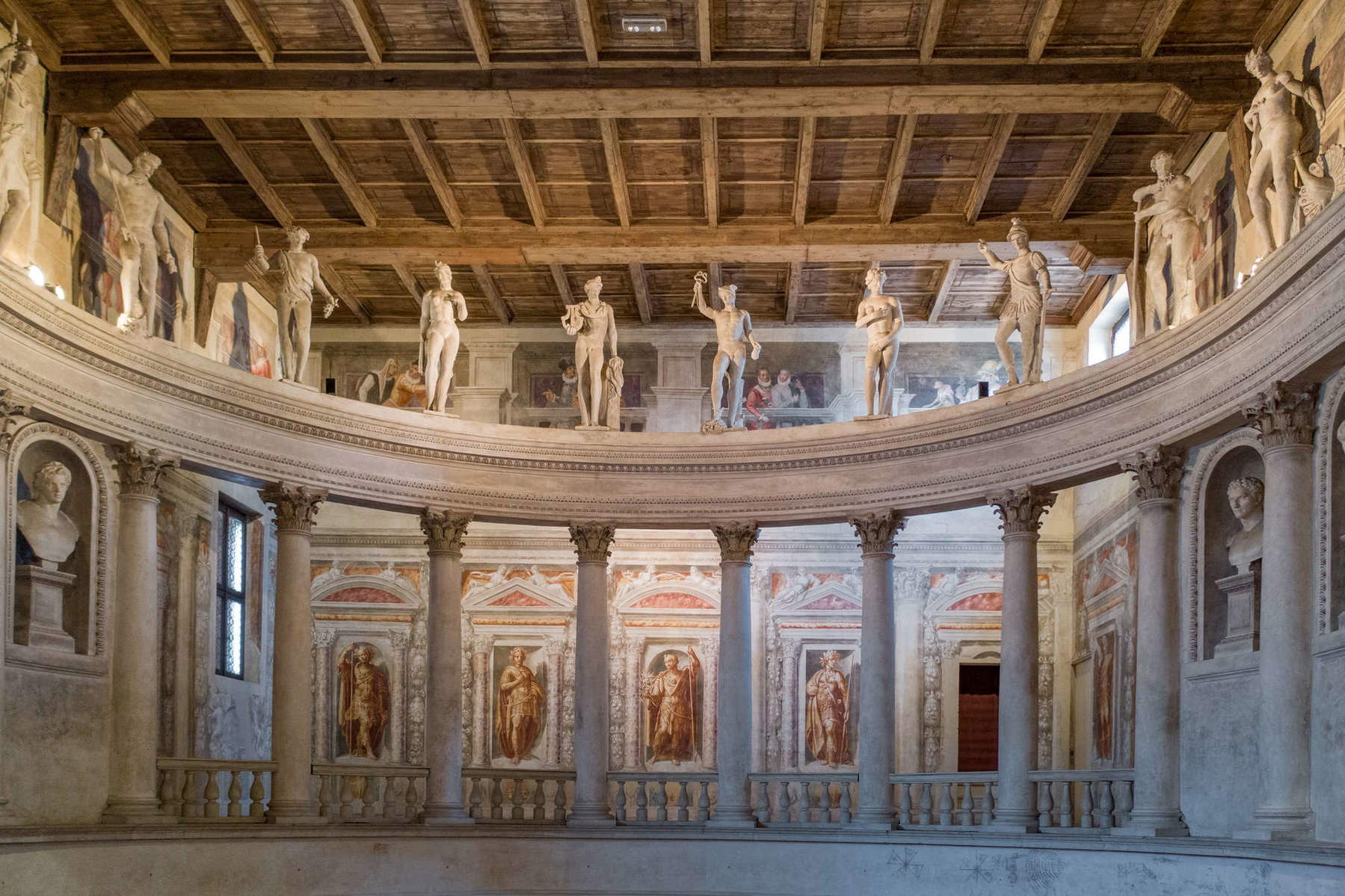
Built around 1612 and owned by Count Francesco Fieschi, a Genoese nobleman stationed in Paris, the palace—though still nearing completion— was already listed in 1614 in the Rolli, the register of residences belongingto the Genoese aristocracy that were dedicated to “hosting” distinguished figures on diplomatic or commercial visits to the city of Genoa. In short, a fantastic collaboration between the private and public sectors in the service of the common good: the Republic and, consequently, its own “interests.” In 1618, Palazzo Fieschi was completed by the architect Bartolomeo Massone, who—well-known in local circles—carried out a project conceived by none other than Vincenzo Scamozzi (Vicenza, 1548 – Venice, 1616). It is worth noting that this famous Italian architect and set designer—portrayed by Veronese—is responsible for projects such as Villa Pisani in Longino but, above all, the Teatro all’Antica in Sabbioneta, as well as the set designs for the Teatro Olimpico in Vicenza. Furthermore, following the death of Andrea Palladio (one of the founding fathers—if not perhaps the foremost—of 16th-century Italian architecture), he completed projects such as Villa “la Rotonda, ” also known as Villa Almerico Capra, one of the finest examples of 16th-century Italian architecture. Indeed, in the famous treatise *L’Idea della architettura universale*(The Idea of Universal Architecture), published in Venice in 1615, Scamozzi outlines the design of Palazzo Fieschi, identifying it as “delli Signori Ravaschieri,” a reference to the role played by Manfredo Ravaschieri, the half-brother of Sinibaldo Fieschi, the palace’s owner.
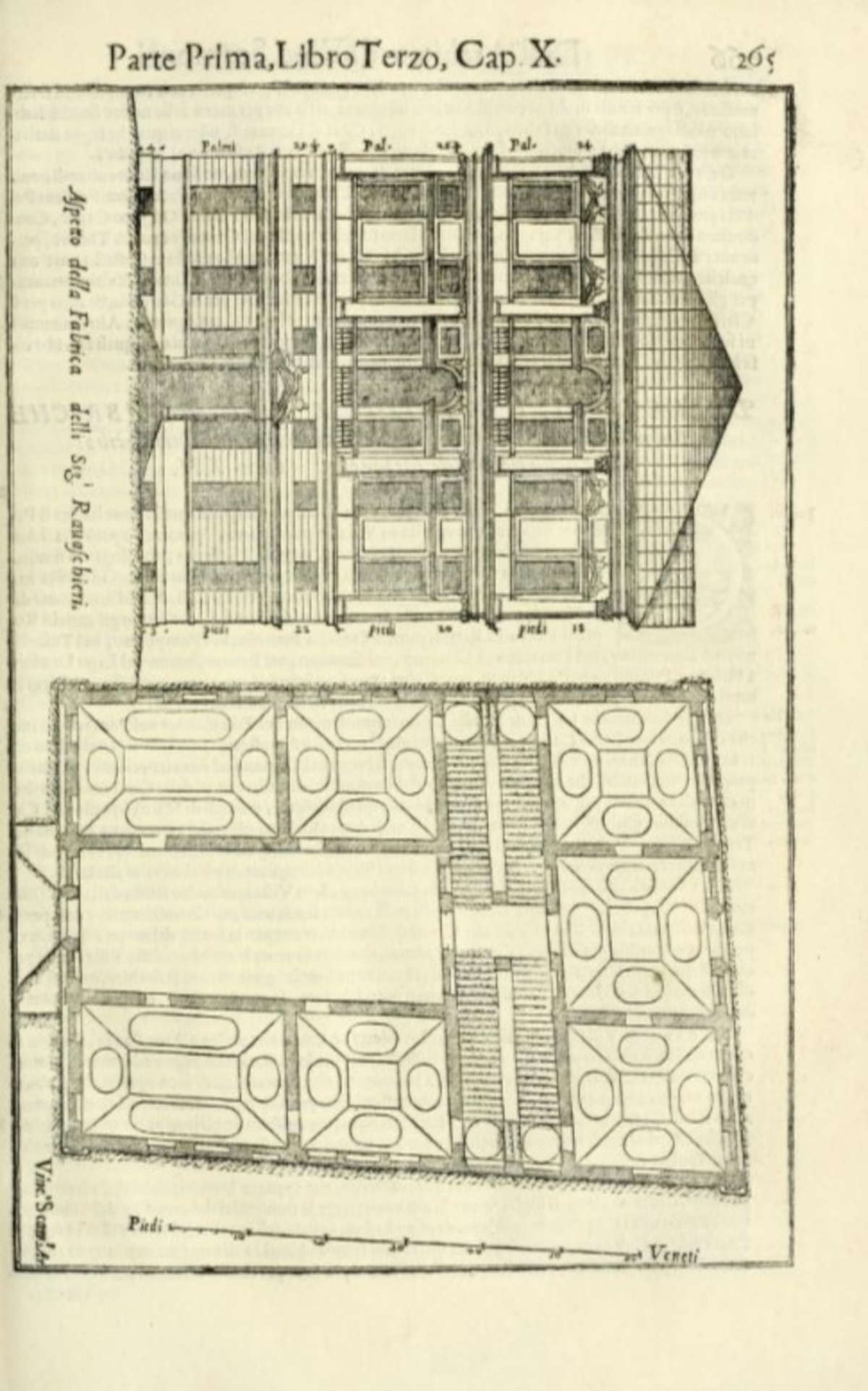
Thus, the residence remained in the Fieschi family’s possession until the 18th century, when, following the marriage of Teresa Fieschi—daughter of Sinibaldo Jr.—to Giovanni Battista Negrone, Negrone’s family acquired ownership of it. A series of intricate and complex family and inheritance matters led to the palace being referred to in *La descrizione della città di Genova* (compiled by the “famous” Anonymous, who decided to catalog the main artistic features of “La Superba”), the palace was referred to as “formerly Negrone, now De Mari,” and was then, in 1879, sold to Tommaso De Ferrari, an ancestor of the palace’s current owners.
The nineteenth century was, therefore, a period for the palace certainly marked by various changes in family ownership, but perhaps the most emblematic—and at the same time fascinating—aspect concerned the work on the city’s New Urban Master Plan. In fact, beginning in the first decade of the nineteenth century, Genoa—due to growing industrial development and a corresponding increase in population—felt the urgent need to modernize and “revolutionize” its road network. Against this backdrop, in 1818, Carlo Barabino—a leading figure in Genoa’s cultural scene and beyond—was appointed “City Architect” with the task of overseeing this urban development. Following Barabino’s death in 1835, the projects were continued and developed by Giovanni Battista Rescasco, his student. In the climate of renewal that had taken hold, there were numerous projects worthy of mention; however, in this context, it seems appropriate to highlight the construction of the new “Carrettabile Carlo Alberto.” Starting in 1835, in fact, at the height of industrial development , it became essential to connect Genoa’s three main “hubs”: Piazza Caricamento, Piazza De Ferrari, and Via Giulia (today’s Via XX Settembre). During the construction of this thoroughfare, therefore, demolitions and modifications were carried out to facilitate and complete the project: among these interventions, the facade of our building was set back a few meters, thus allowing the street to have greater width for the passage of carriages in both directions. Fortunately, decorative elements such as the facade masks—which rise above the window entablatures on the first two floors—as well as the monumental marble entrance door, with its Carlonesque features, were preserved and properly restored to their original positions.
However, what perhaps more than any other aspect distinguishes the palace as a treasure trove of some of the city’s finest 17th- and 18th-century paintings are the extraordinary frescoes that adorn the palace’s piano nobile. In fact, thanks in part to their excellent state of preservation, these frescoes offer insight into the taste and sensibility of the aristocratic patrons of the time, among whom were Giovanni Battista Negrone, the father, and Ambrogio Negrone, the son. Both sets of decorations, in fact—though executed in completely different periods—can be attributed to the Negrone family, which, as noted, retained ownership of the residence between the 17th and 18th centuries.
Toward the end of the 1680s, Giovanni Battista commissioned Domenico Piola—the most illustrious painter and fresco artist on the local scene, a figure ever-present in every secular or religious commission of the time and, not surprisingly, whose works can be admired today in any museum or church in the city—to work on the palace. With his subdued Baroque style—characterized by dynamic poses, animated drapery, and rich colors, yet never imbued with the liveliness and power typical of seventeenth-century taste— Piola perfectly captured the tastes of the Genoese patrons of the time, who were eager to align themselves with modern stylistic trends without ever losing sight of the classical sensibility so dear to them.
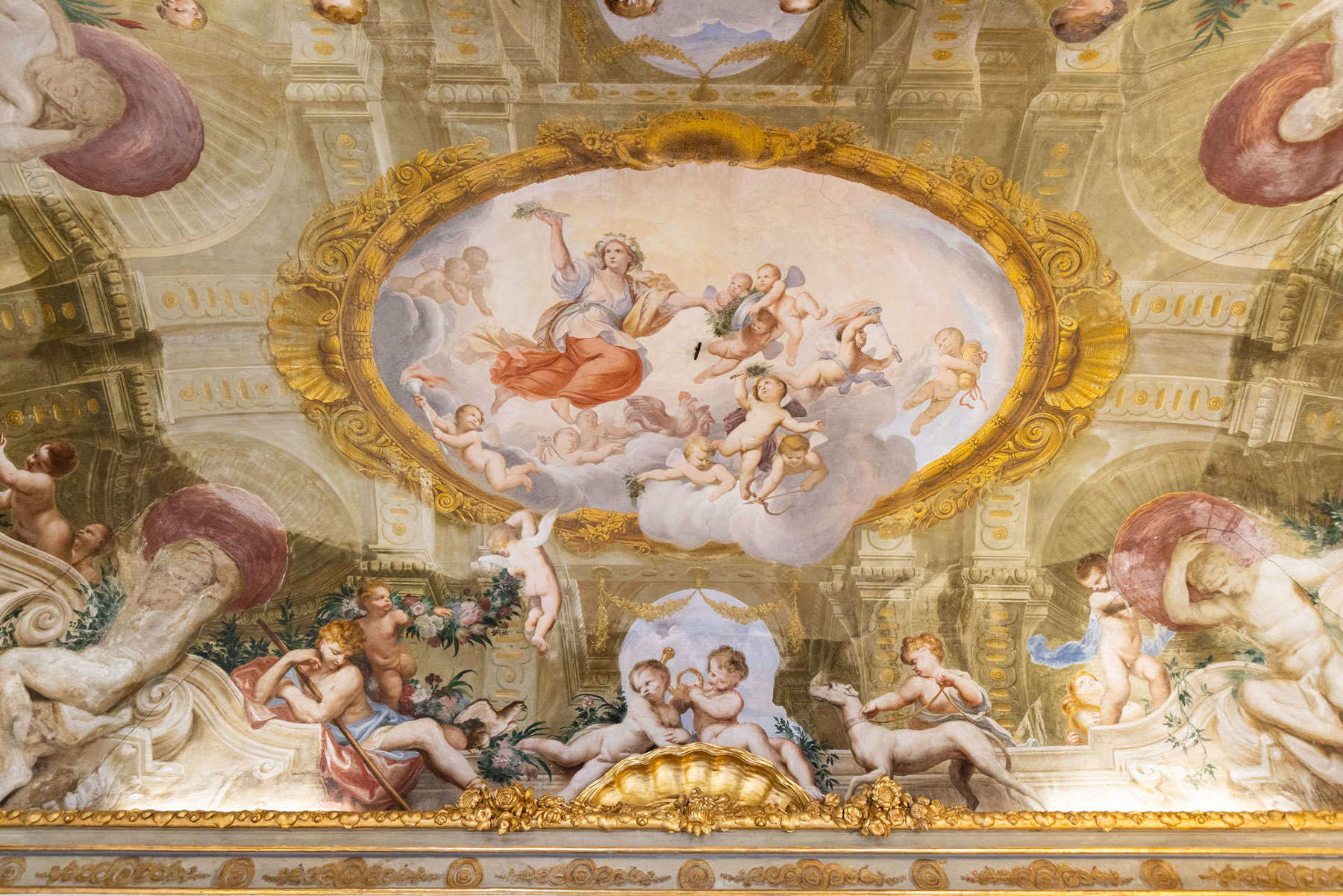
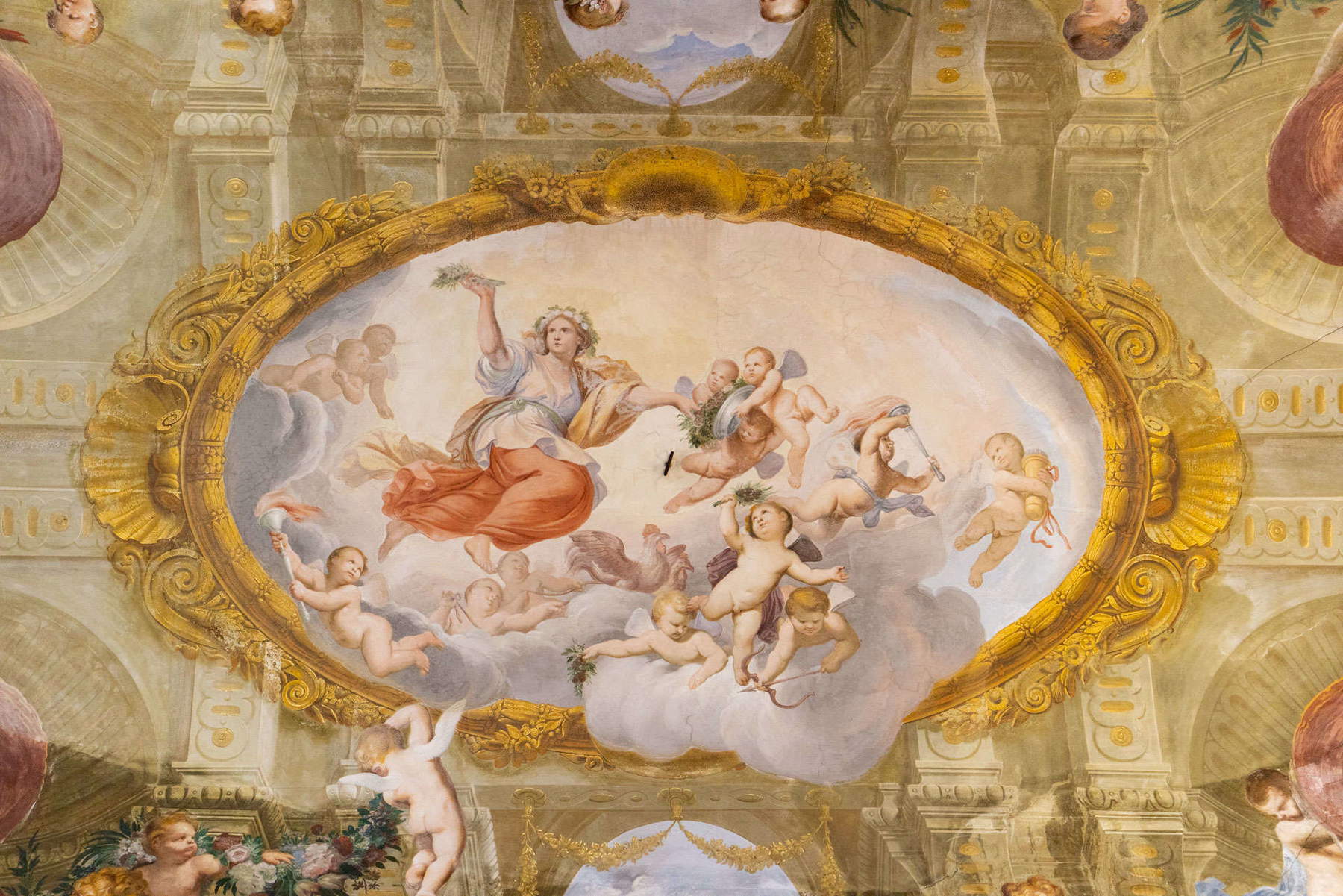
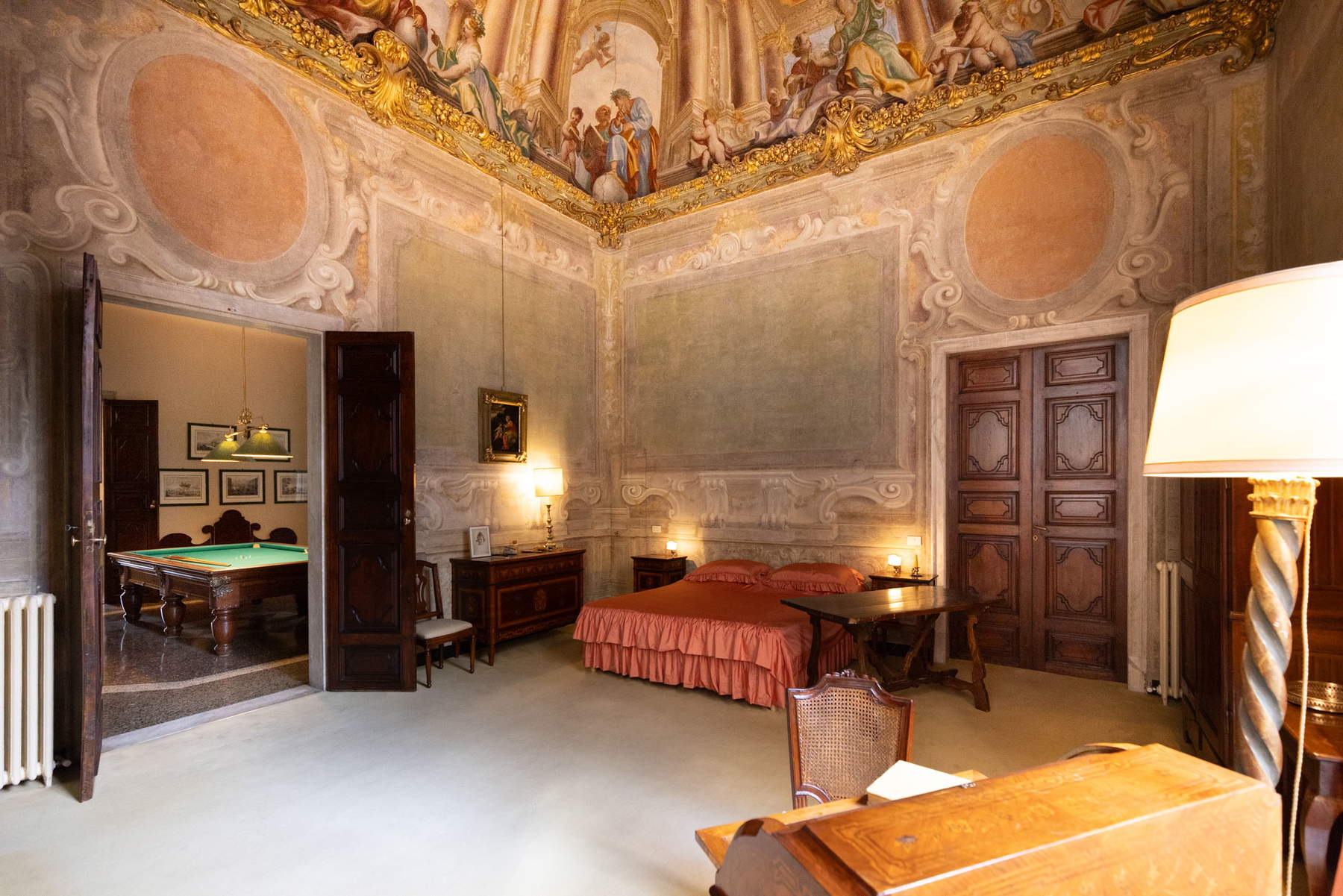
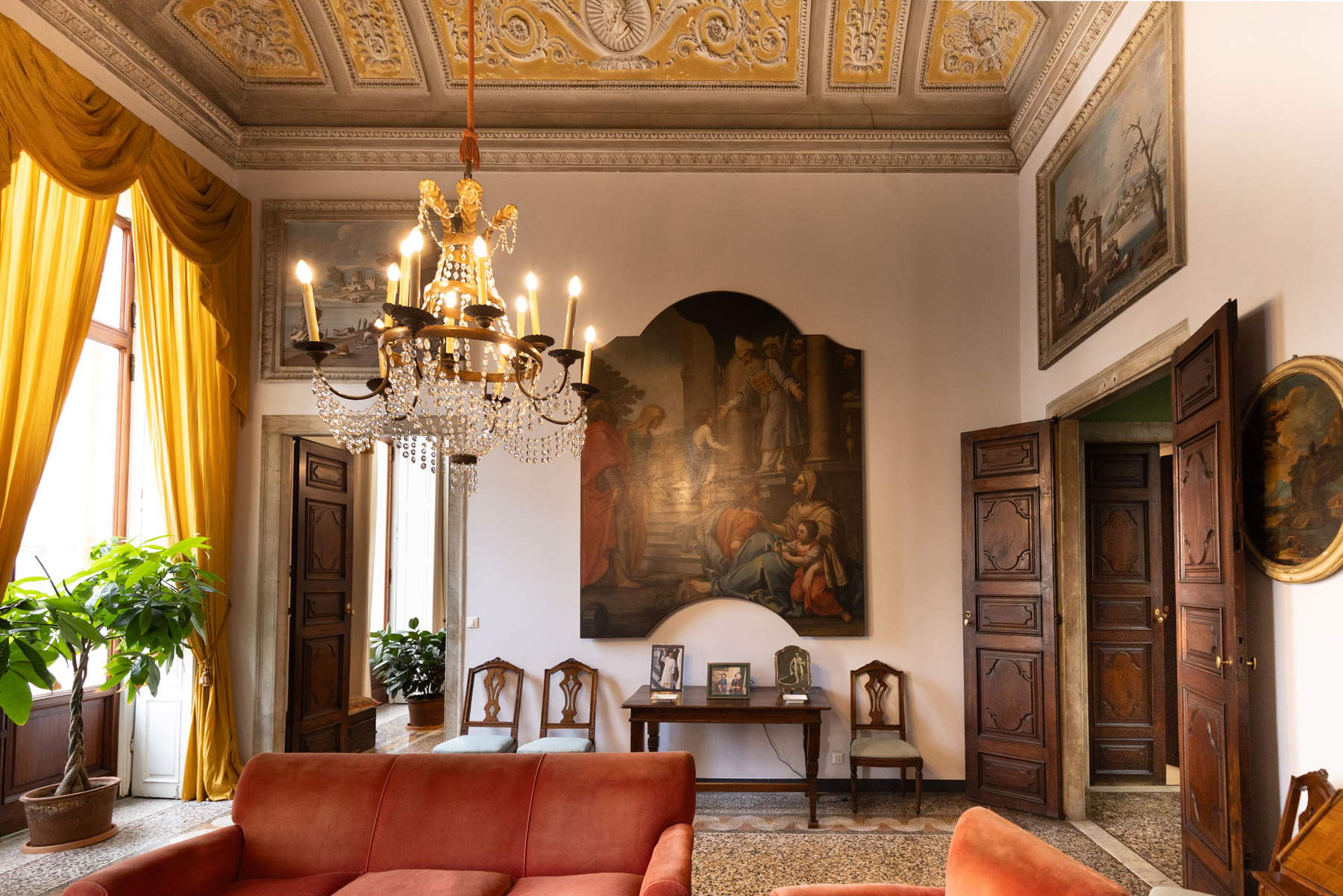
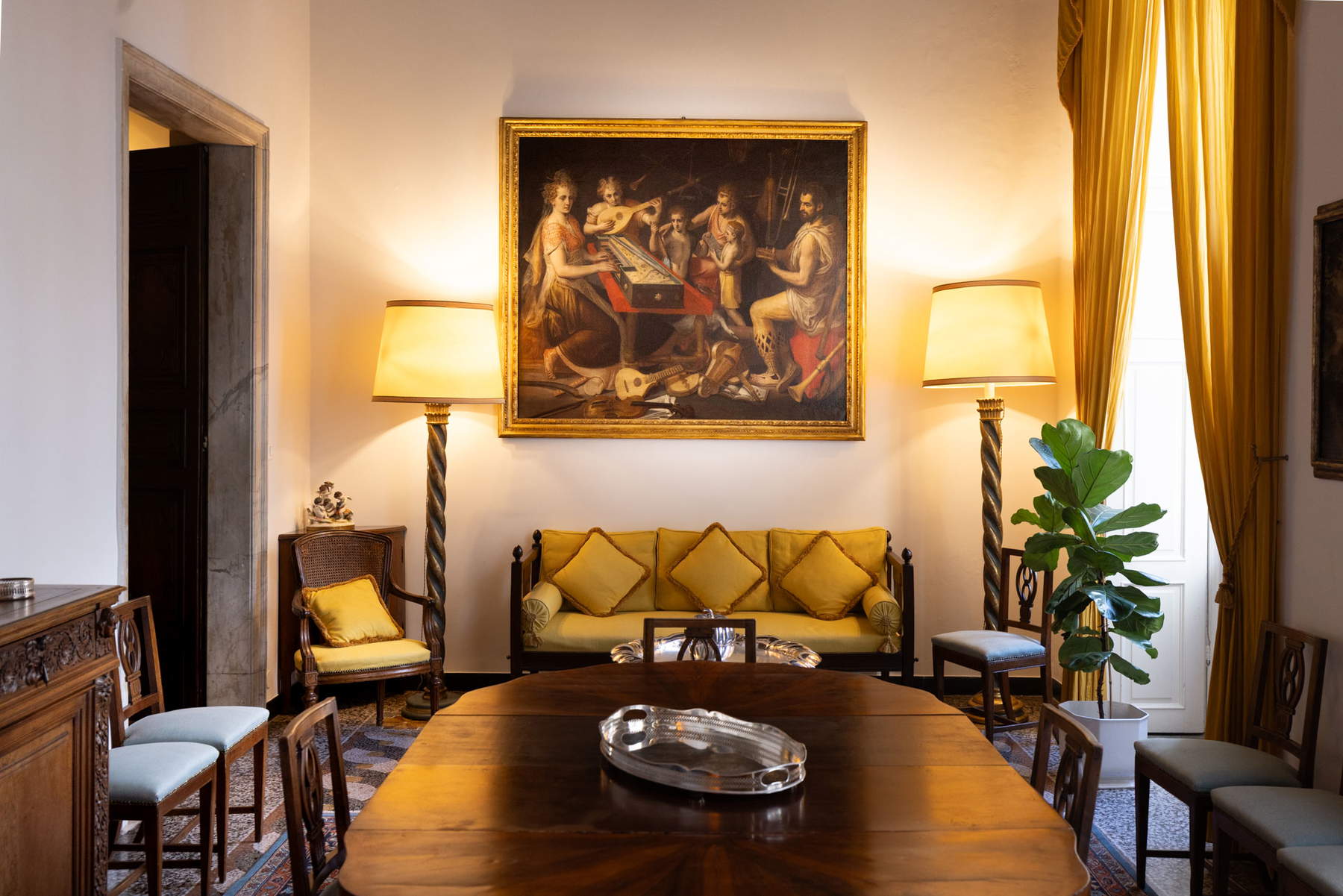
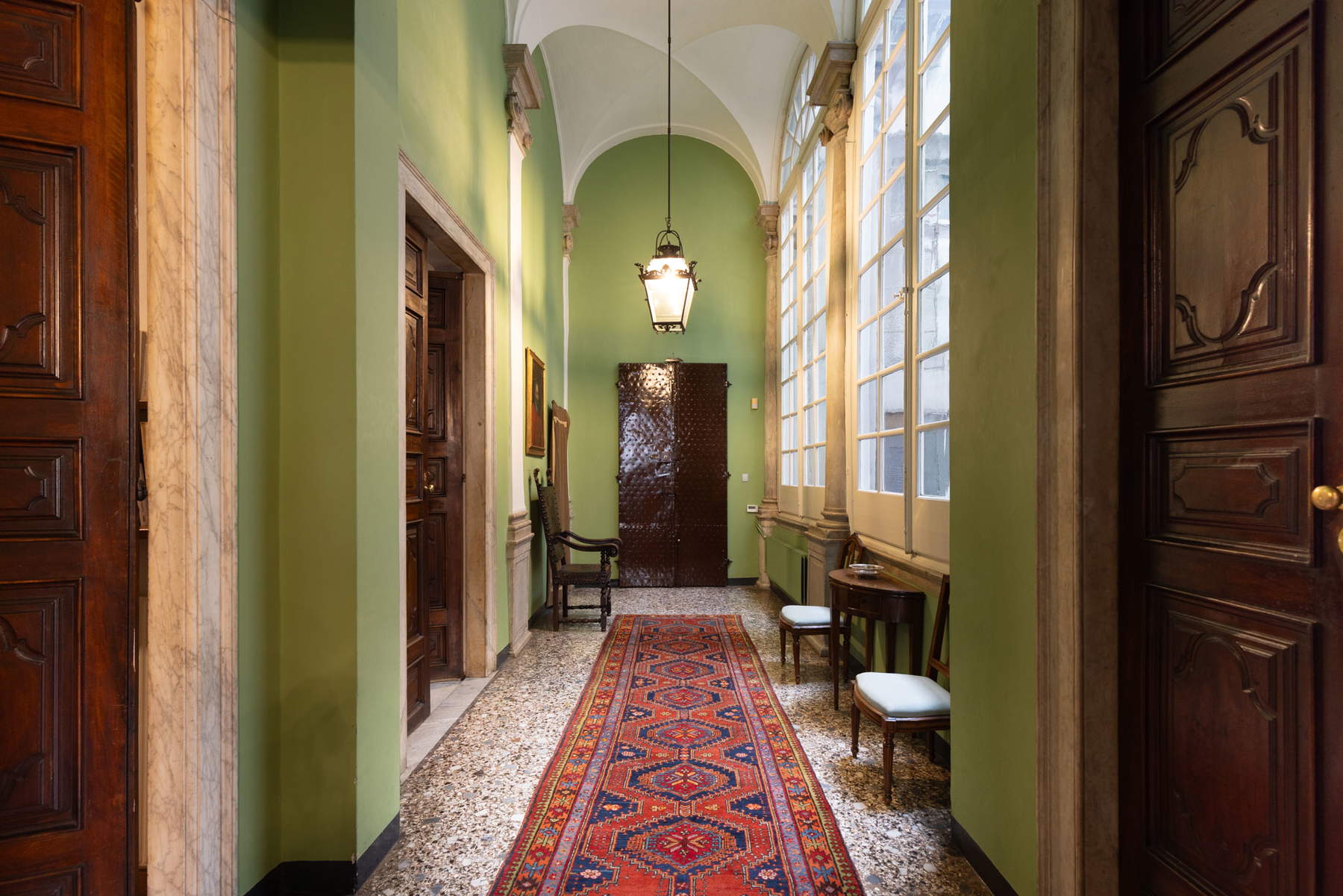
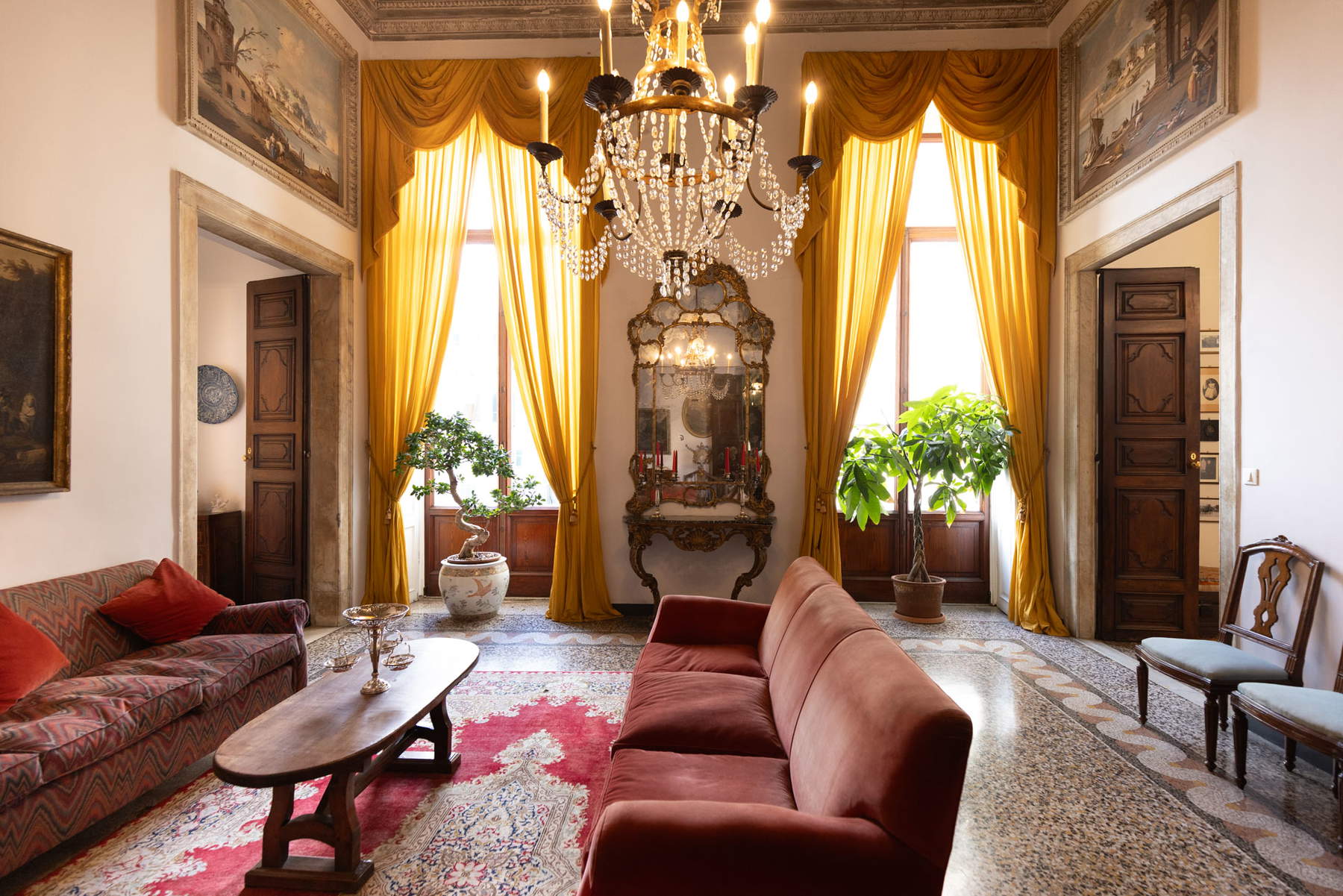
In the first drawing room, therefore, Domenico painted the story of Aurora and Cefalo, a commission most likely given to him by Giovanni Battista to celebrate his marriage to his wife, Tommasina Fieschi. Piola’s artistic style is particularly evident in this room, although the most fascinating element is found in the portion of the fresco that runs below the central medallion depicting the two protagonists. To the naked eye, this section appears to have a darker hue, the result of a posthumous painting intervention. Following the setting back of the façade, the room facing the main elevation was affected by this “reduction,” and for this reason, in 1846, Giuseppe Isola was called upon to restore the compromised section of the fresco. In this instance as well, the choice fell on the most illustrious painter of the time, to whom—by way of example—we owe the decorations on the vault of the Salone del Maggior Consiglio in the Doge’s Palace and the decoration of the vault in the Aula Magna of the University of Genoa.
Presumably during the same period (though this aspect warrants further investigation), Piola also painted a second salon featuring Apollo and Mercury among the Muses. In this room, a practice evident in Genoa since the mid-17th century— thanks to the teachings of the all-too-soon-departed Valerio Castello, in which the figure painter was assisted by a quadraturista—an artist tasked with dividing the pictorial space in the most perspectivally effective way to achieve an illusory sense of spatial expansion. In this room, Piola is assisted by Antonio Haffner, a quadraturist from Bologna who was also very active in Genoa, as evidenced by his work at the Church of San Luca and at Palazzo Rosso, always in support of Piola. The extraordinary architectural backdrops, punctuated with a masterful abundance of foreshortened views along the vault, create a remarkable effect of spatial expansion thanks to the interplay of the foreground, middle ground, and background. Each narrative level, therefore, animated by Piola’s characteristic, subdued Baroque style, expands the actual space in an exceptionally striking way, creating what we might call, in more modern terms, a true “3D effect.” The frescoes, however, which are of the greatest interest in terms of quality, clarity of interpretation, and uniqueness, are without a doubt those brought to life by the brush of Sebastiano Galeotti.
An artist perhaps less well-known to the general public, Galeotti worked primarily in Tuscany, Emilia, and the Lodi area, leaving behind a pictorial style that, without a doubt or hesitation, must be described as unique. Called to Genoa by the Somaschi Fathers to paint the frescoes on the vaults of the Church of the Maddalena, Sebastiano stayed in the Ligurian capital for nearly a decade, from 1729 to 1736. It was precisely during this period that Ambrogio Negrone, son of Giovanni Battista, commissioned the Tuscan painter to decorate two rooms that, even today, make Palazzo Fieschi a true gem of the local landscape.
The first, brought to life by an extraordinary “Triumph of Public Happiness,” was created by Sebastiano with the more than plausible intention of emphasizing—through specific iconographic references drawn from Cesare Ripa— the role of Senator of the Republic held by Ambrogio Negrone on several occasions between 1725 and 1757. It will be worth further investigation and future study to understand precisely how Galeotti came into contact with the Negrone family; however, pending further developments, it is interesting to examine the painterly style left behind in the palace by the Tuscan artist. In fact, the “perfect precision of the drawing and intense power of color” with which the chronicles describe Sebastiano’s work best illustrates the artist’s modus pingendi . At the center of the vault, set within a refined and illusory architectural composition, stands the figure of Public Happiness flanked by Abundance. Enveloped in a thick blanket of clouds, these figures are flanked in a pyramidal arrangement by other allegories, including Peace, who —with a broad, highly expressive gesture of her arms—is intent on driving away the negative allegories. In fact, along the lower edge of the ceiling, War, Discord, and Wrath—confined to a tiny portion of the fresco—move away from the center of the scene, illustrating in the most direct way possible the mission—as we would say today—to which a righteous politician must aspire: the common good. The allegories, drawn with extreme precision from Cesare Ripa’s encyclopedic *Iconologia* , are a perfect example of Galeotti’s artistic language: calligraphic strokes, bold and clean lines (essential for rendering every detail with the utmost precision) combined with vivid yet not excessively warm colors—in contrast to the Piolesque Baroque style of the adjacent rooms.
In the second room frescoed by Galeotti, glorification once again takes center stage: the Triumph of the Noble Arts, a further celebration of the civic role played by Ambrogio. The metallic strokes used to render the figures’ anatomy, along with the undercuts in the animated drapery, combined with the clear and crisp color palette that enlivens the entire composition, remain the undisputed focal points.
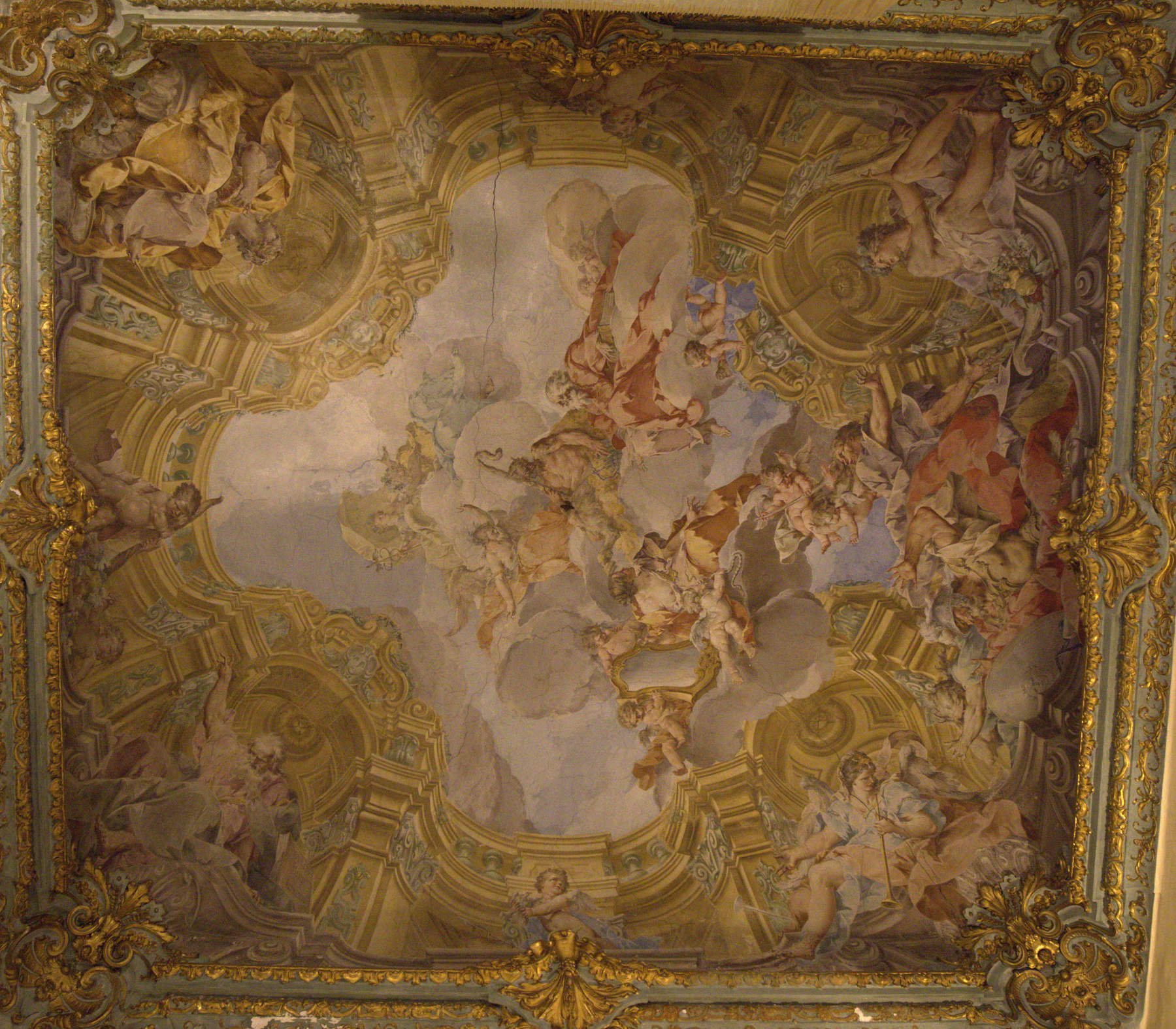
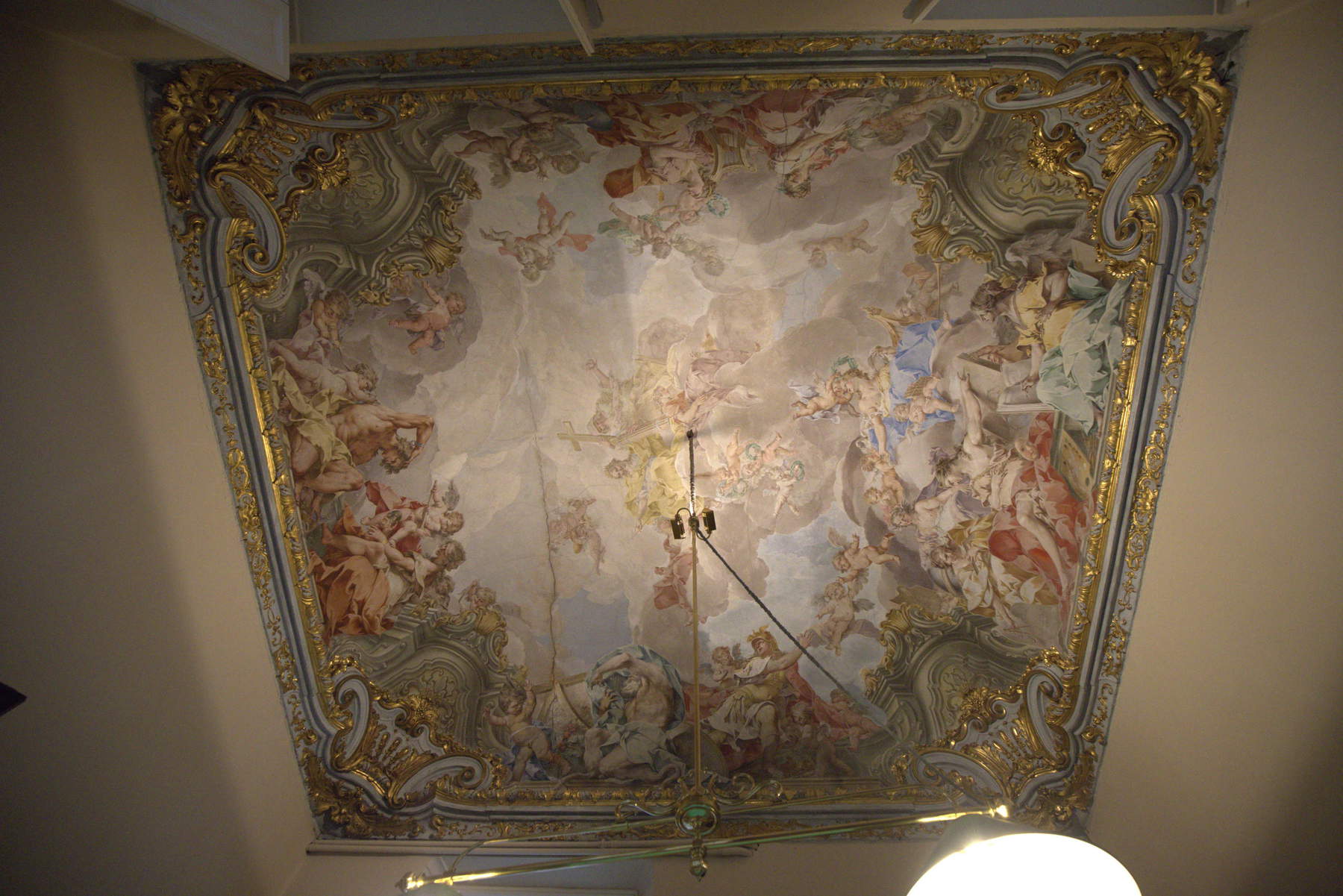
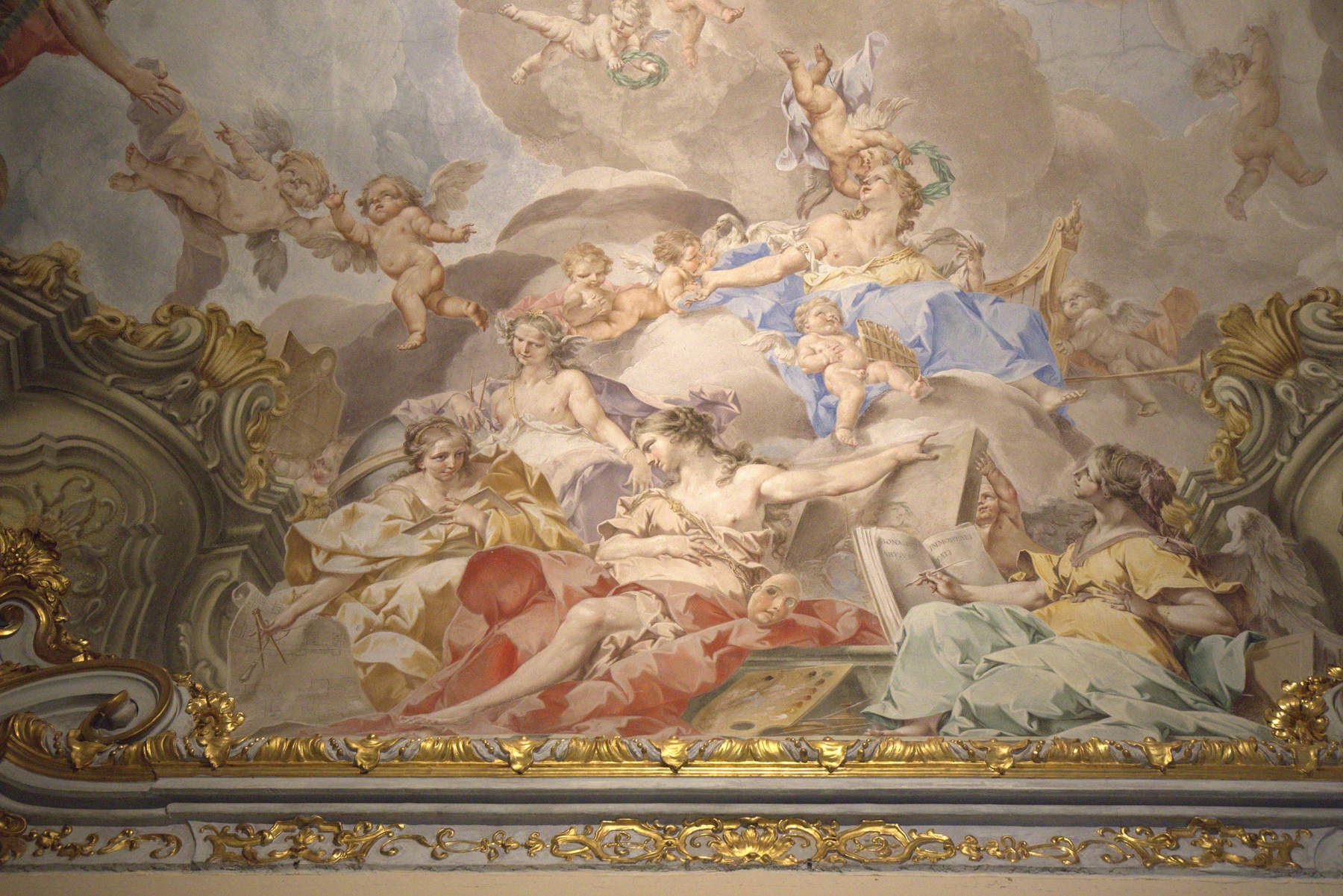
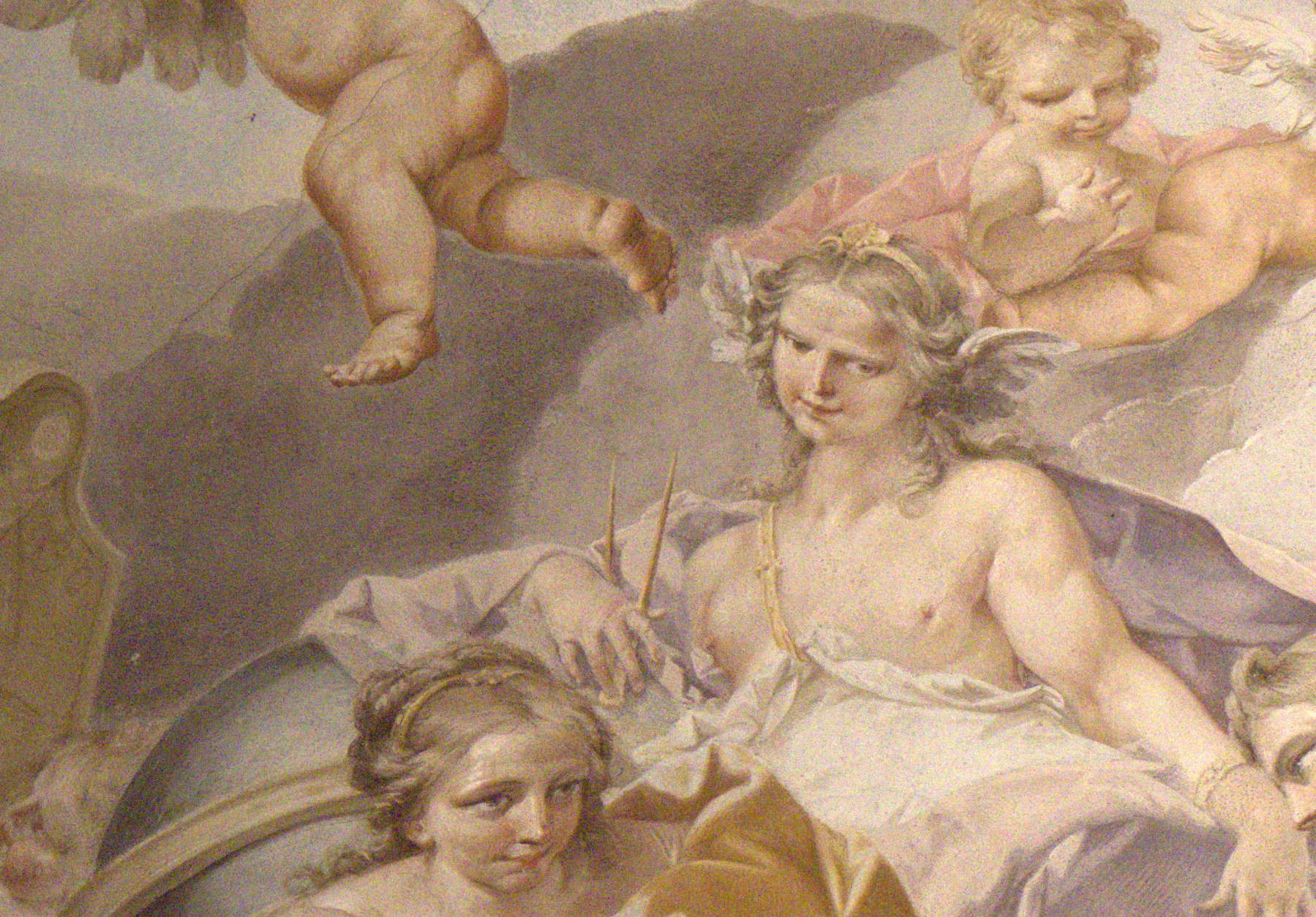
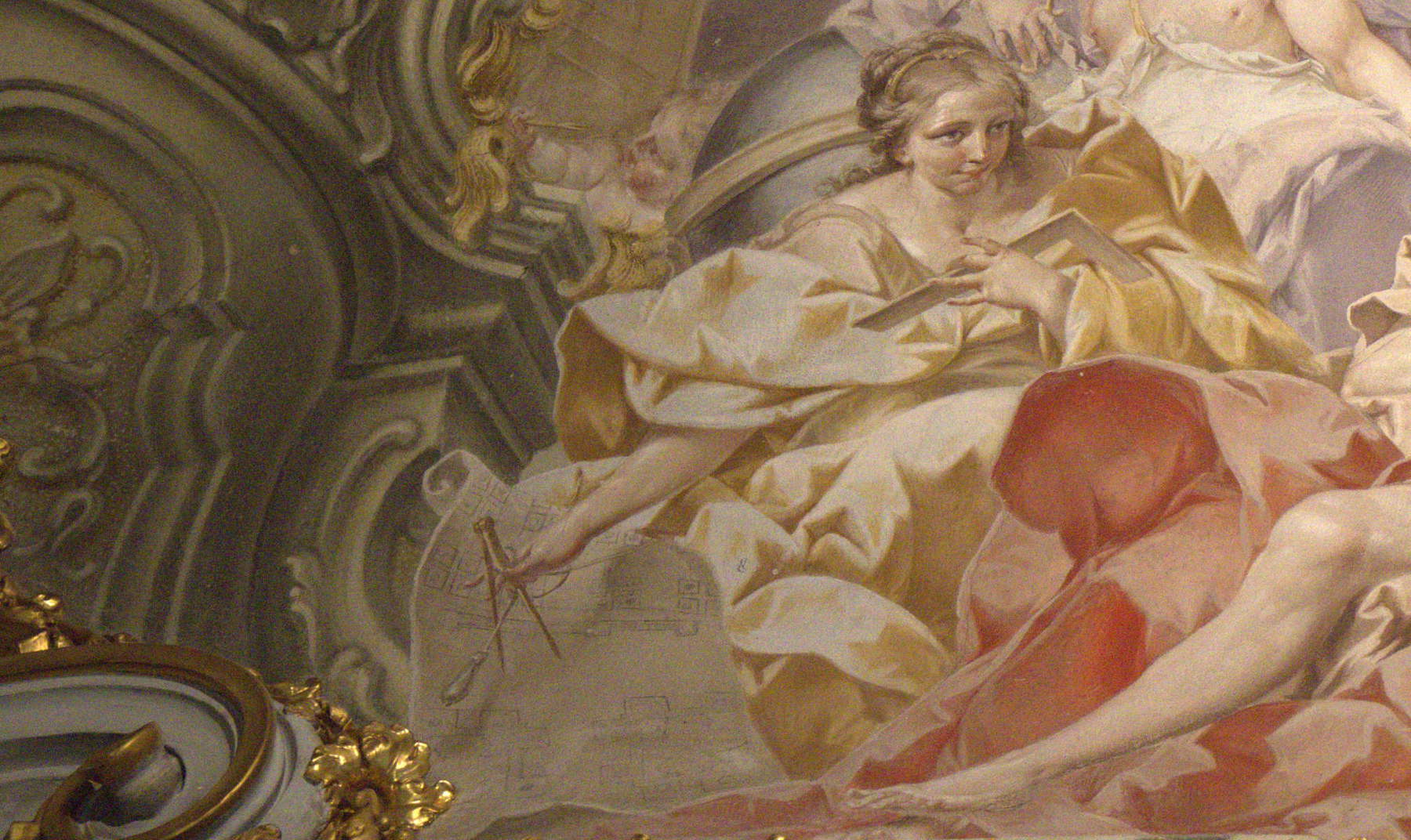
At the center of the vault, the positive allegories—such as Justice, Friendship, Religion, and Faith—inevitably draw the viewer’s eye, focusing it on the paramount importance of these values. Furthermore, along the entire perimeter, the Arts (Painting, Poetry, Architecture, Art, Sculpture)—essential tools for the education of a governor of the res publica—further enliven the entire narrative. Indeed, the indispensable presence of the Noble Arts in the daily life of a civic-minded man appears fundamental to countering those negative elements—such as Fraud, Theft, Deception, and Robbery —which, depicted at the margins of the narrative, must be ostracized. In this dynamic and crowded overall picture, there are two particular aspects on which, ultimately, it is worth dwelling.
The first concerns the allegory of Mathematics, which—depicted as a “middle-aged woman, dressed in a white, transparent veil, with wings on her head”—holds a tablet behind her on which, above two geometric figures, are inscribed the numbers “17” and “30.” Critics have interpreted this detail as a clue left by Sebastiano regarding the year the frescoes were painted: in fact, 1730 can be considered with more than plausible certainty to be the year the paintings were executed, fully consistent with and following the frescoes created by Sebastiano a year earlier at the Church of the Magdalene.
Galeotti leaves a second and final clue in the plan held by a “woman of mature age, with bare arms and a iridescent gown, holding the archipenzolo in one hand”:Architecture. The floor plan depicted by the allegory, in fact, reproduces—almost exactly—the floor plan of the “Palazzo degli Signori Ravaschieri” described by Scamozzi himself in his treatise. Galeotti, therefore, confirms in the most explicit manner possible that the hypothesis that Vincenzo Scamozzi conceived the palace’s design should no longer be considered merely a suggestion.
Palazzo Sinibaldo Fieschi, therefore, offers a unique opportunity within the local artistic landscape to compare, just a few meters apart, two artistic languages that fully embody the tastes which, between the 17th and 18th centuries, inspired both secular and religious commissions in Genoa. If, in conclusion, we add to this the fact that the frescoes are fully and clearly legible, combined with the presence of a figure such as Scamozzi—a figure of absolute prominence on the national stage—the exceptional nature of the site is heightened even further.
Warning: the translation into English of the original Italian article was created using automatic tools. We undertake to review all articles, but we do not guarantee the total absence of inaccuracies in the translation due to the program. You can find the original by clicking on the ITA button. If you find any mistake,please contact us.