




by Redazione 17/04/2026



Categories: Travel / Disclaimer
From his birthplace in the historic center to the shores of the Malvarrosa, Valencia celebrates Joaquín Sorolla. A journey through museums, iconic sites and new openings planned for 2026, rediscovering the legacy of the painter who transformed light and everyday Spanish life into a universal language.
The painting of Joaquín Sorolla, a great Spanish artist who reinterpreted in his homeland the suggestions of the Impressionists, is made up of a few recurring and recognizable elements: white dresses vibrating in the sea breeze, tanned children playing amidst purplish reflections on the wet sand, mighty oxen dragging boats that have just returned from fishing. These are images that still seem to belong to the present along the Valencian coastline, but are actually part of the visual legacy left by Sorolla, who can also be considered the most universal of Valencian artists. More than a century after his death in 1923, his legacy continues to be a hallmark of the city’s aesthetic identity, a grammar made up of light, movement and everyday life that transformed common scenes into iconic images.
Sorolla is not only a painter associated with Valencia, but a key to understanding its deepest soul. His works tell not only about the sea, fishing or bourgeois life, but restore a sensory perception of the city, made of wind and sun. For this reason, retracing the places of his life means embarking on a journey that is both artistic and urban, historical and contemporary. The itinerary to discover Sorolla’s places in Valencia begins in the historic center, on Calle de las Mantas, where a ceramic plaque on a building commemorates the painter’s birth on February 27, 1863. Here his parents ran a textile store, an element that would have a lasting influence on his artistic sensibility. Indeed, in his paintings, clothes are never mere details, but become luminous surfaces, instruments through which light refracts and transforms. Young Joaquín is baptized in the church of Santa Caterina, one of the city’s symbolic places.


His childhood is marked by a tragic event: when he is only two years old, he loses both parents to a cholera epidemic. He is taken in by his maternal aunt and uncle along with his sister Concha, in a family context that, although marked by hardship, allows him to develop his talent. From an early age Sorolla showed a natural inclination for drawing, which led him to enroll in the School of Craftsmen. The current location, on Avenida Regne de València, still preserves valuable evidence of his formative period: drawings, sketches, academic documents and the painting Ramillete de mandarinas, donated by the artist’s son.
The next step is to the Real Academia de Bellas Artes de San Carlos, where Sorolla consolidated his technique and broadened his cultural horizon. Here his report cards and numerous preparatory studies are preserved, traces of a rapidly rising path. His progress enabled him to win a competition and obtain a scholarship from the Diputación de Valencia to study in Rome, a milestone in his education. At the same time, he has the opportunity to go to Madrid and visit the Prado Museum, coming into direct contact with the great masters of Spanish painting.
However, despite his obvious talent, the beginnings of his career are conditioned by practical needs. In order to obtain funding and recognition, the Valencian artist is forced to participate in competitions that require large-scale, historically themed works. This is a production far removed from his more authentic interests, already oriented toward the European avant-garde and, in particular, the French Impressionists. What really fascinates him is the possibility of capturing the light of the Mediterranean in everyday scenes, transforming reality into a personal vision. From this tension was born the bright and terse luminism that would become his artistic signature.
In 1888 he married Clotilde García del Castillo, a central figure in his life and work. Clotilde is not only the mother of his children but also his muse, the protagonist of numerous portraits. Their relationship is reflected in a series of works that combine intimacy and refinement, such as Clotilde contemplating the Venus de Milo, now housed in the Museum of Fine Arts in Valencia.
True international consecration came with Triste herencia!, a painting that marked a turning point in his career. The work depicts a group of sick children being cared for by a religious man on the Cabanyal beach. Sorolla himself recounts the origin of this work, which arose from a chance encounter during a painting session on the theme of Valencian fishing. Impressed by the scene, he obtained permission to work on the spot and made the painting directly on the seashore. The result is a work of great emotional intensity, which earned him the Grand Prix at the 1900 Paris World’s Fair. This recognition marks the beginning of his international fame and also guarantees him important recognition at home. Valencia dedicated a central street to him, while critics began to recognize the value of his artistic research. Today Triste herencia! belongs to the Bancaja Foundation of Valencia, which exhibits it at major retrospectives held in collaboration with the Museo Sorolla.
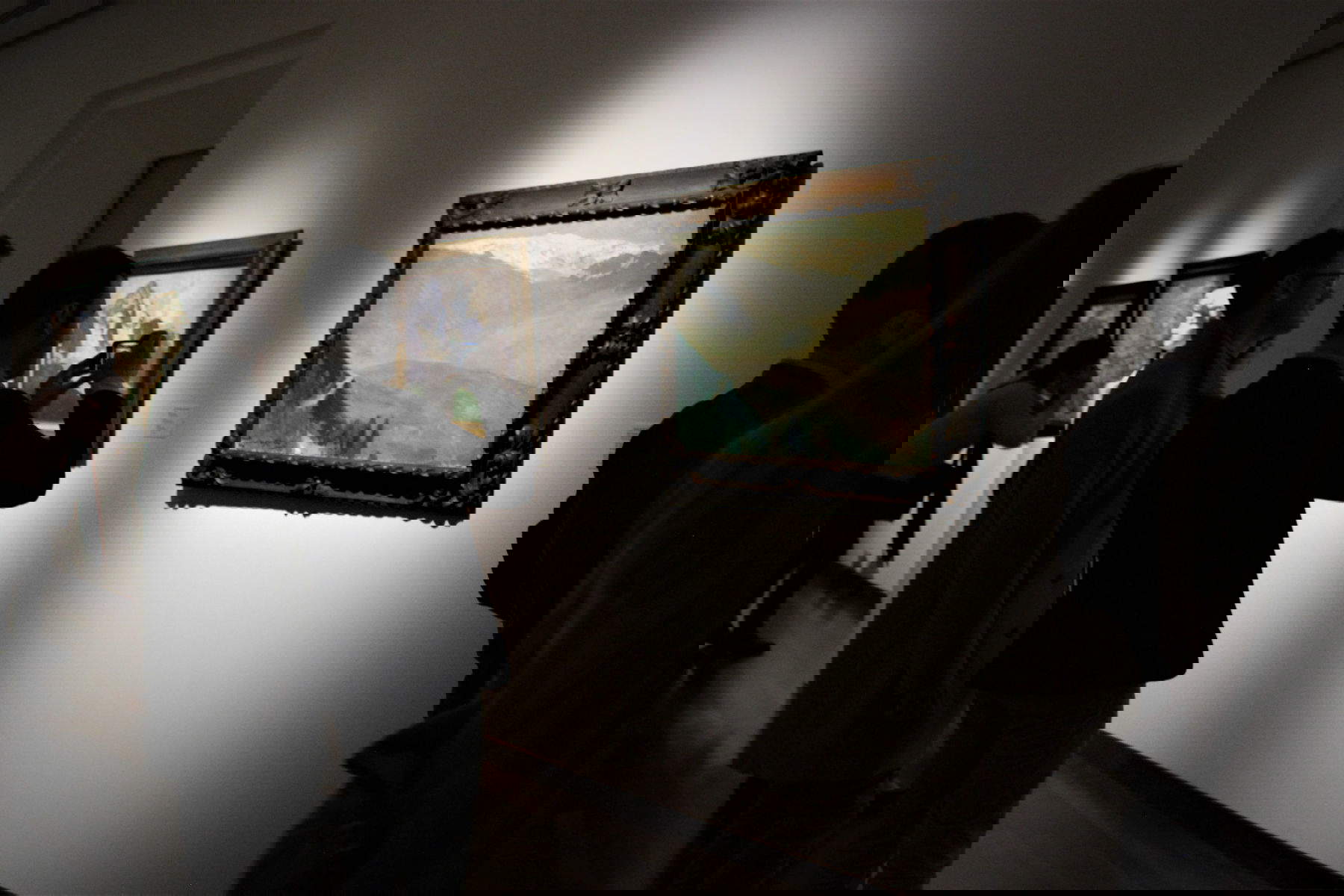
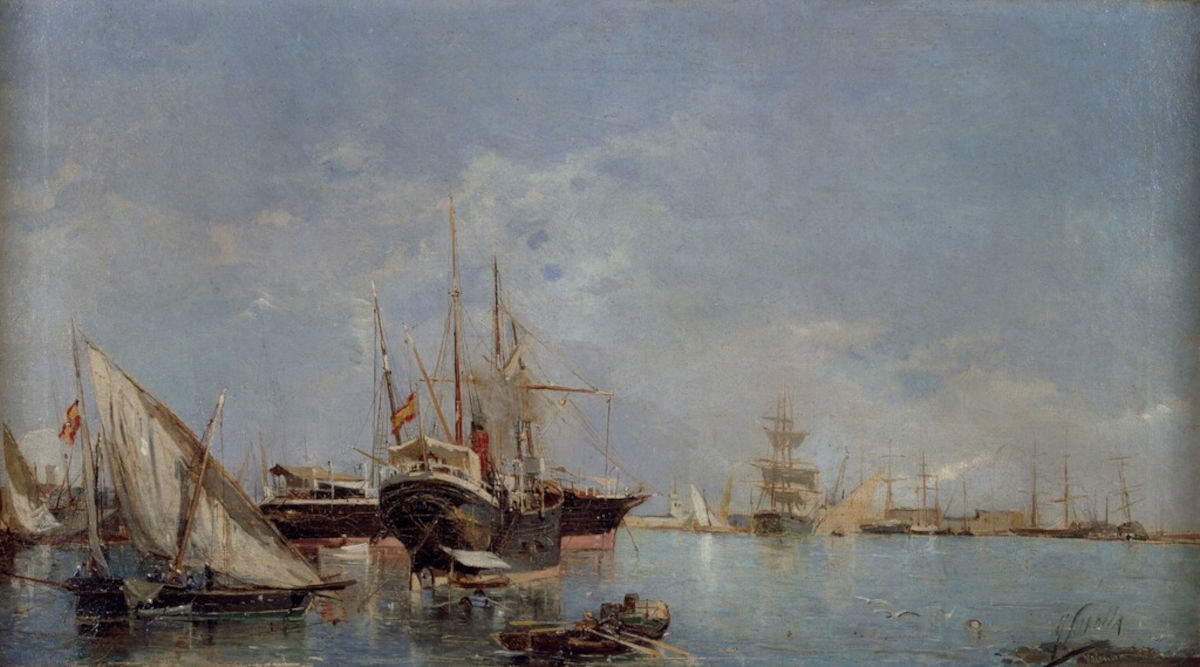
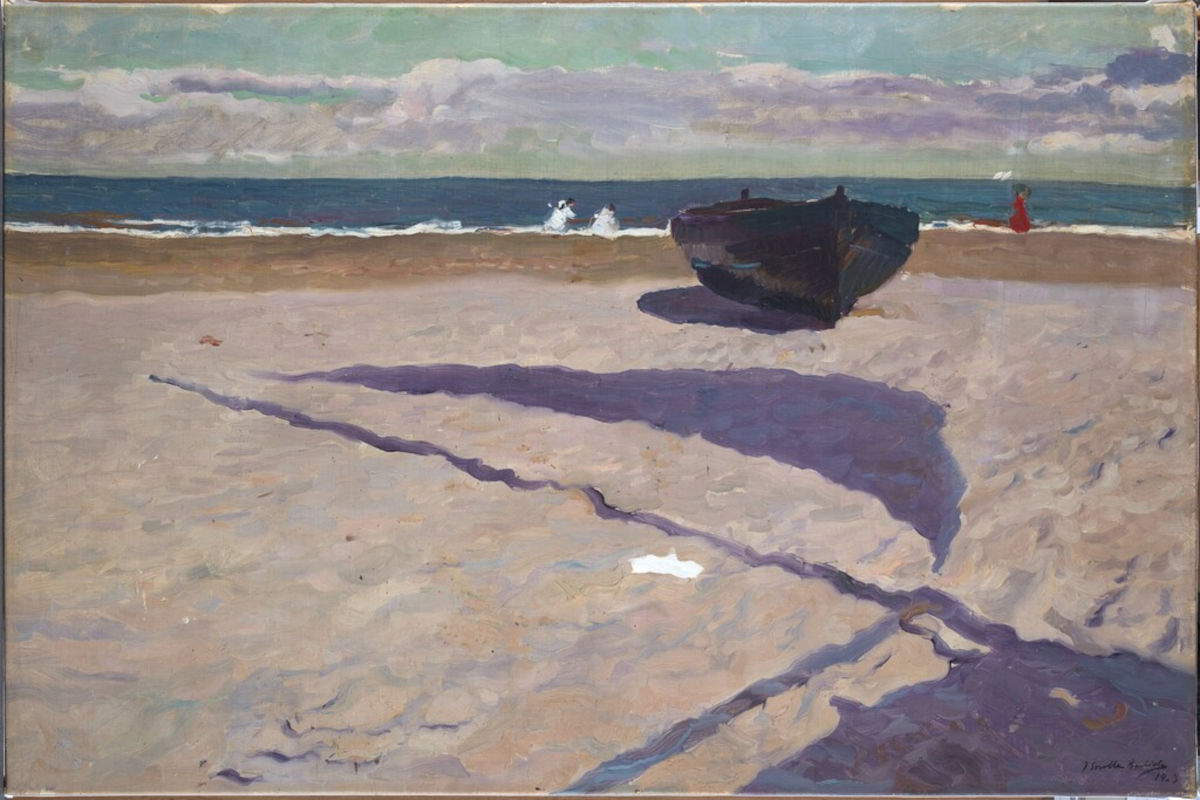
Although success led him to live far from his hometown, Sorolla maintained a constant link with Valencia, returning often and continuing to draw inspiration from its landscapes. Urban beaches became the favored theater of his outdoor painting. The coastline that stretches north of the marina, some 2,300 meters long, includes such well-known stretches as the Arenas, Cabanyal and Malvarrosa. Some of his most famous works were born here, including Walk by the Sea, Return from Fishing and Afternoon Sun.
The Casa dels bous, located on Calle Isabel de Villena, represents another emblematic place. In this space were kept the oxen used to pull boats on the shore, a scene that Sorolla immortalized several times. Other places in the city also enter his pictorial imagination: the Silk Loggia, the Cathedral, the birthplace of San Vicente Ferrer, and the small temple of Our Lady of the Forsaken on the Sea Bridge. Valencia as a whole, then, now offers a widespread route to discover Sorolla’s work: the Museum of Fine Arts is the main reference point, with a dedicated room that also explores the artist’s relationship with his contemporaries and the artists who followed in his footsteps. The Benlliure House Museum, dedicated to brothers José and Mariano Benlliure, on the other hand, holds smaller but no less significant works. These include the Retrato de Peppino and a Marina that testifies to the artist’s ability to capture the essence of the seascape even in small formats.
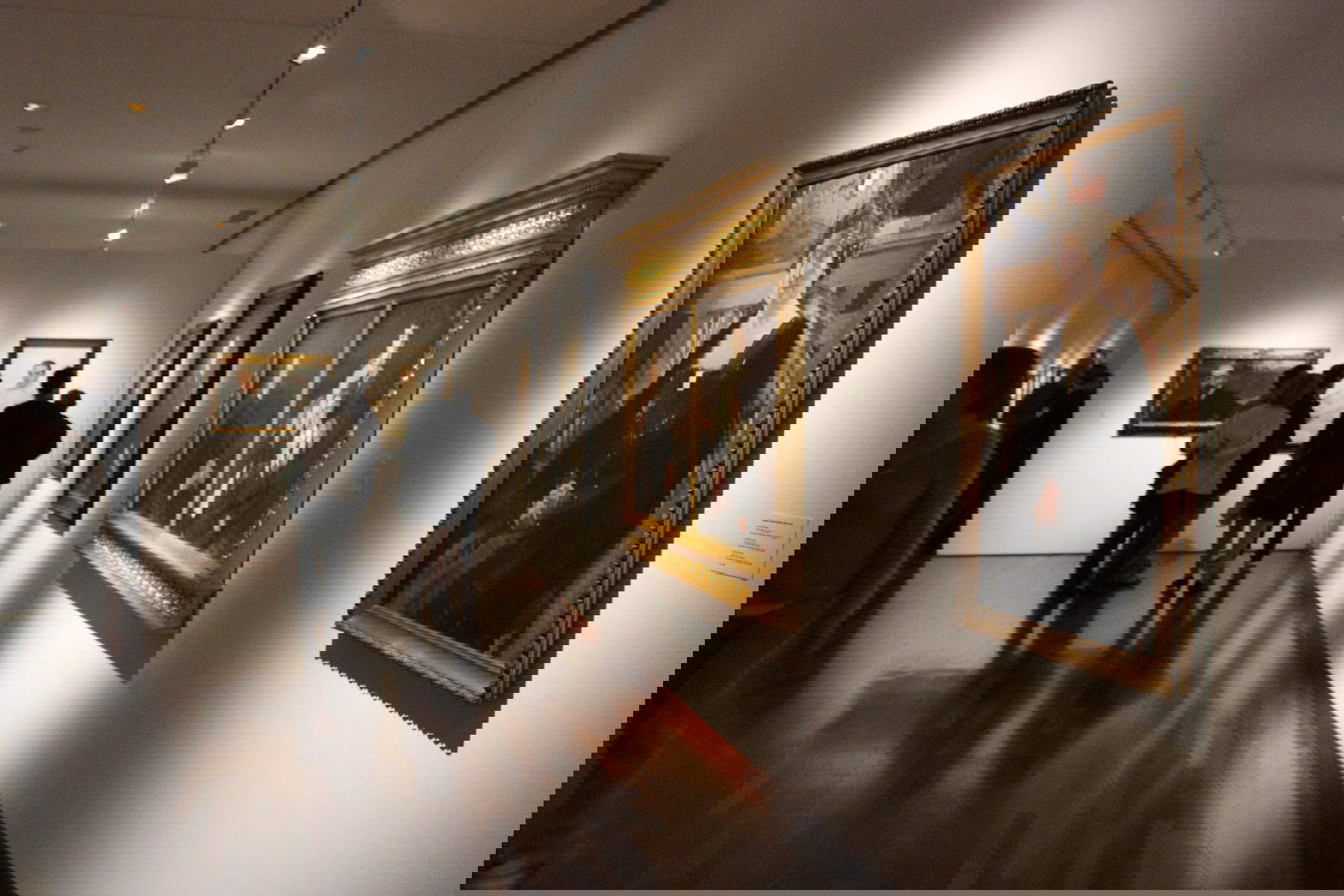
The tour continues through other symbolic places, such as the church of San Martín, where Sorolla was married, and the plaza del Mercado, which served as the backdrop for The Cry of the Palleter. The Palace of the Generalitat Valenciana holds important works in the Salon Daurat, while the City Museum exhibits Mi familia, a portrait that recalls Diego Velázquez’s Las Meninas in composition.
Today, Valencia continues to strengthen its role as an international center for the study and appreciation of Sorolla’s work. A new museum dedicated to the artist is scheduled to open in 2026, housing a collection of 220 works through an agreement with the Hispanic Society of America. The museum will have its permanent home in the Palacio de las Comunicaciones, but an initial exhibition will be set up at the Museum of the City, allowing the public to admire the works even before the spaces are completed. The collection will be organized into three major thematic sections, devoted respectively to Spanish production, the American experience, and portraits. The project also includes a space dedicated to the Fallas, with an immersive installation that will allow visitors to experience some of the most significant moments of the festival, such as the mascletá and the floral offering to the Virgen de los Desamparados.
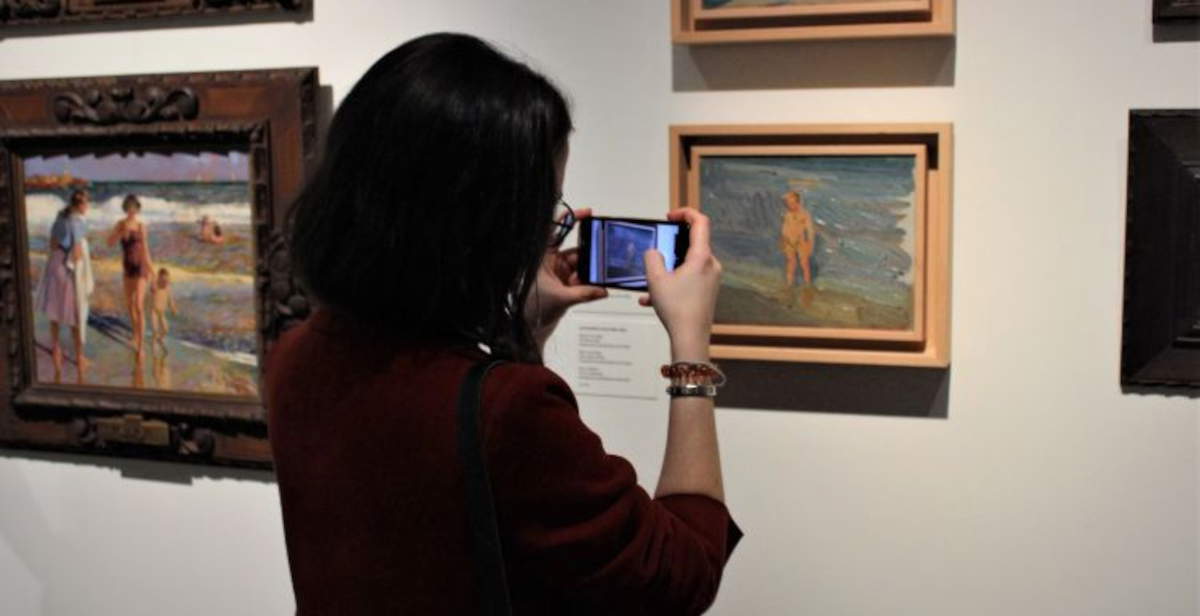
In parallel, the Bancaja Foundation hosted an exceptional exhibition between 2025 and 2026 featuring masterpieces from the Sorolla Museum in Madrid, which was temporarily closed for construction. The exhibition brought together key works such as Walk by the Sea, The Horse’s Bath and La siesta, offering a comprehensive journey through the artist’s life and career. Museo Sorolla’s collection of about 1,400 works represents the most important existing nucleus in the world dedicated to the painter. These are works that Sorolla and Clotilde kept throughout their lives, and which became the foundation of the museum created in 1931 at the behest of his wife. The Valencian exhibition provided a unique opportunity to bring these works back to the artist’s hometown, creating a direct dialogue with Triste herencia!
Alongside the major institutions, other centers also contribute to the richness of Valencian cultural offerings. The IVAM, the first modern art museum created in Spain, the Hortensia Herrero Art Center, the National Ceramics Museum, and the Bombas Gens Centre d’Arts Digitals represent examples of a city that invests in culture and contemporaneity. Yet beyond the museums and exhibitions, perhaps the most authentic way to understand Sorolla remains to walk along the beaches that inspired him. Observe the light reflecting off the water, the contrasts between the white of the robes and the blue of the sea, the movement of the waves and people. It is in these details that one finds his painting, in a continuity between past and present that makes Valencia not only the place where Sorolla was born, but the space in which his art continues to live.
 |
| Sorolla and Valencia: an itinerary in the light of the master who captured the soul of the Mediterranean |
Warning: the translation into English of the original Italian article was created using automatic tools. We undertake to review all articles, but we do not guarantee the total absence of inaccuracies in the translation due to the program. You can find the original by clicking on the ITA button. If you find any mistake,please contact us.