





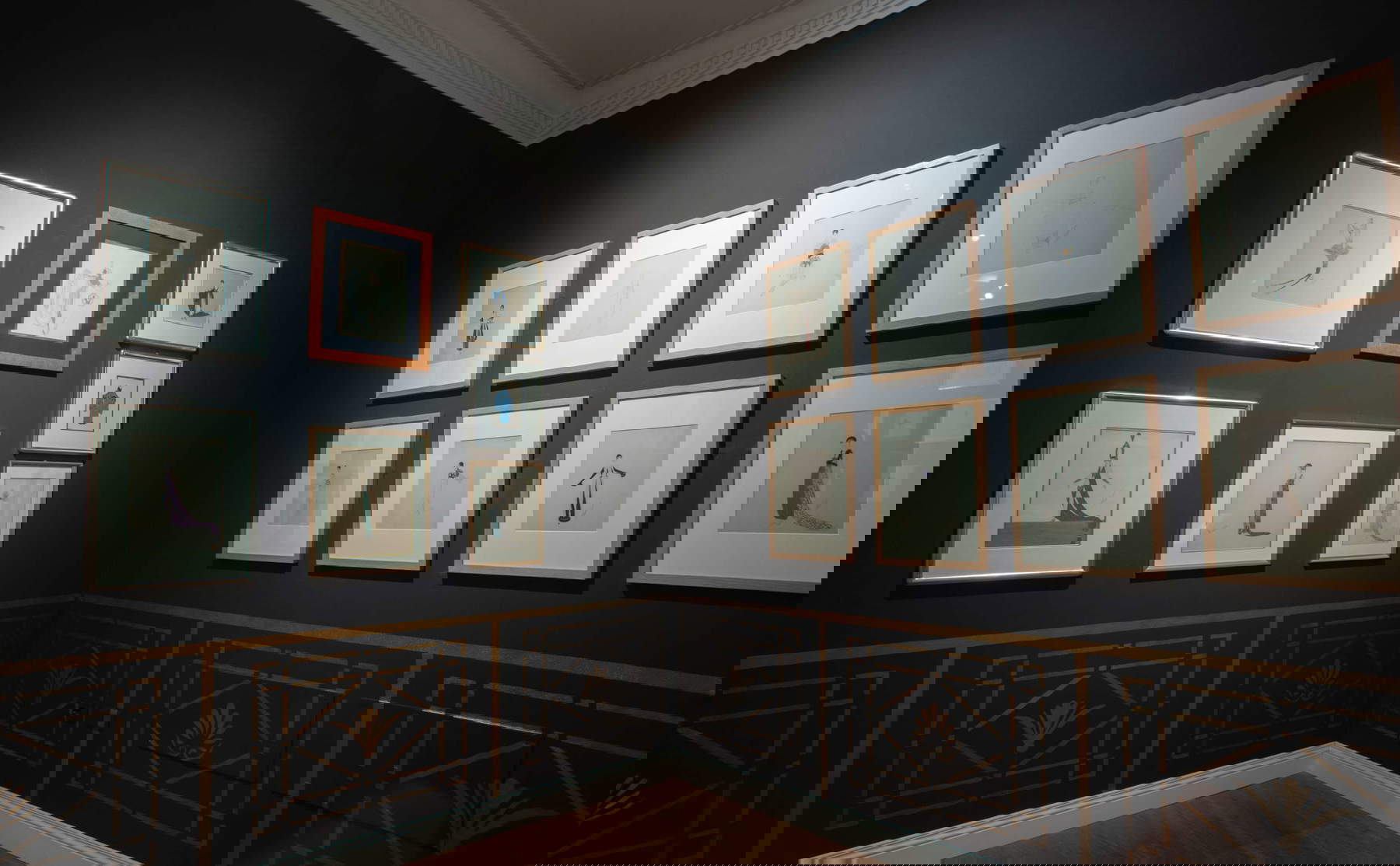
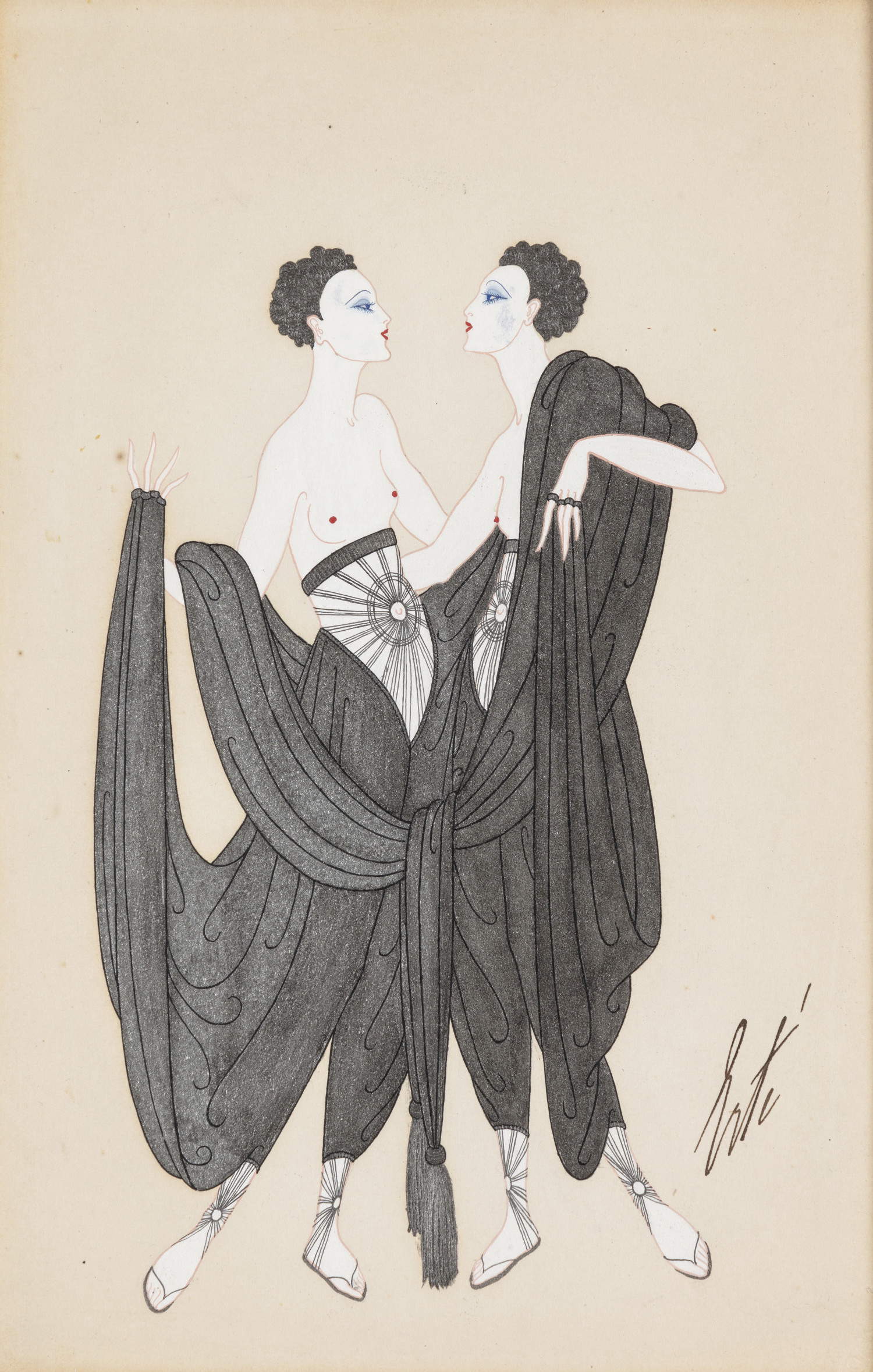
A major figure ofArt Deco: one could sum up in these few words the profile of Erté (Roman Petrovič Tyrtov; St. Petersburg, 1892 - Paris, 1990), a Russian-born but French-born artist in all respects, a multifaceted personality capable of influencing fashion, theater, cinema and graphic arts with unprecedented stylistic rigor. From March 28 to June 28, 2026, the Labirinto della Masone in Fontanellato is dedicating an extraordinary exhibition to this master, entitled Erté. Style is Everything, curated by Valerio Terraroli. The exhibition highlights the modernity of an author who was able to cross the ages while maintaining a formidable expressive coherence. With more than 150 works on display, the itinerary investigates the artist’s golden years, those between the two world wars, a period when his decorative synthesis became the very symbol of the Art Deco aesthetic. Erté was not only a draftsman, but an architect of the ephemeral, capable of translating luxury and exoticism into essential and snappy graphic forms. The Parma exhibition, enriched by international loans such as those from London’s Victoria and Albert Museum, allows us to rediscover a universe populated by sophisticated women and mythological creatures.
At a moment in history when Europe was trying to forget the horrors of World War I, Erté offered a refuge made of elegance, pearls and feathers, a world that was “disengaged and irresponsible” but deeply cultured. His art combined high craftsmanship with mass culture, making his figurines timeless icons. Today, his legacy lives on not only in museum collections, but also in dialogue with contemporary artists such as Caterina Crepax, whose paper dresses pay homage to the suppleness of the bodies designed by the Russian master. To explore Erté’s career is to immerse oneself in an era of radical transformation, where clothing stops being a mere garment and becomes “consciousness.” Here are ten things to know about him.
Born in St. Petersburg in 1892 as Roman Petrovič Tyrtov, the artist came from a family of noble military origins. His father, Admiral Pyotr Ivanovič Tyrtov, dreamed of a career in the Russian Imperial Navy for him, following a centuries-old tradition. However, young Roman manifested an irresistible attraction to drawing and painting from an early age, fleeing from paternal pressures to take refuge in the world of creativity. When in 1912 he decided to move to Paris to pursue his artistic aspirations, he chose to adopt a pseudonym so as not to compromise the prestige of the family surname. Thus Erté, derived from the French pronunciation of his initials “R.T.,” was born.
This name was to become a global brand within a few years, synonymous with aristocratic yet thoroughly modern elegance. Despite his Parisian success, Erté (who also readjusted his name to the French pronunciation: Romain de Tirtoff) always maintained a visual connection with his roots, infusing his works with the bright colors and two-dimensional forms of the Orthodox icons he had admired in his youth. His biography, written in later life, often tends to mythologize these beginnings, presenting him as the last scion of a Tatar lineage that had chosen art over arms. This duality between Russian nobility and French worldliness deeply marked his style, making him capable of interpreting luxury with a unique sensibility. The pseudonym Erté thus represented his passport to a new life, an identity created at the table to conquer the heights of the international art and fashion system.
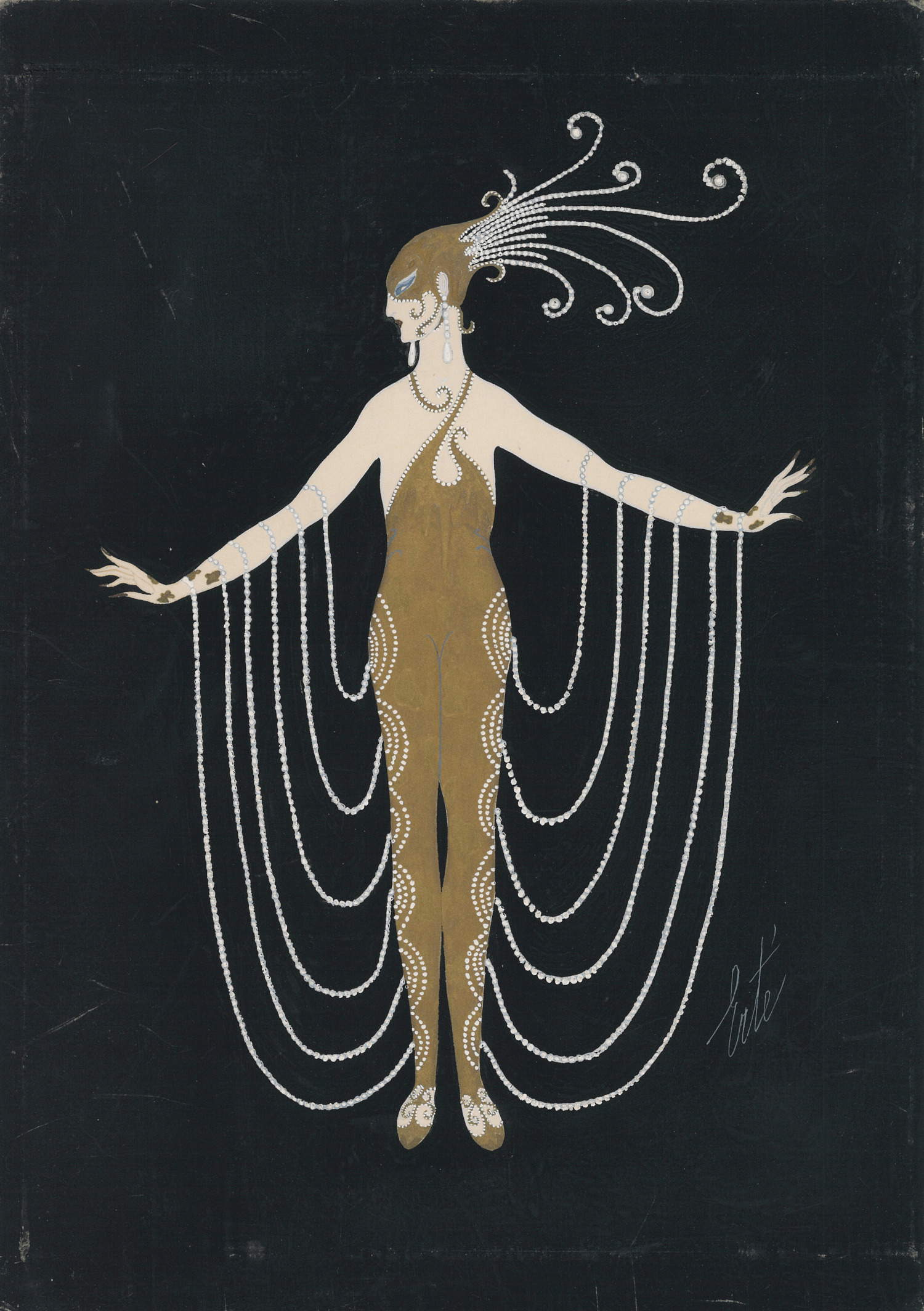
Arriving in the Ville Lumière when he was only nineteen, Erté began collaborating in 1913 with Paul Poiret, the tailor who had revolutionized fashion by eliminating corsets and liberating the female body. In this atelier, the young artist had the opportunity to engage with an exotic aesthetic laden with Eastern influences, which Poiret boldly promoted. Among his first major assignments was the creation of costumes for the opera Le Minaret, where Erté had to dress the famous spy and dancer Mata Hari. The clothes designed for this staging, characterized by trouser skirts and transparent tunics, had such an impact that they influenced the entire Parisian fashion of 1913. Poiret also entrusted his collaborator with the design of accessories, hairstyles and furnishing fabrics, recognizing his talent for manipulating colors and shapes.
It was during this period that Erté learned the importance of theater as a stage for fashion, a concept he would develop throughout his career. Poiret’s influence was crucial, but Erté knew how to go further, further simplifying the lines and approaching an almost geometric stylization. The closure of the Poiret atelier due to the outbreak of World War I forced the artist to seek new paths, leading him toward a career as an illustrator. However, the time spent with the “sultan of fashion” remained the foundation on which Erté built his vision of the modern woman: a free, supple and incredibly sophisticated creature.
In 1915, Erté began what would become one of the most important collaborations in publishing history, signing his first cover for the American magazine Harper’s Bazaar. Between that year and 1937, the artist produced over two hundred covers for the magazine, defining the aesthetic taste of generations of readers. His plates were not simply fashion illustrations, but dreamlike visions populated by oriental princesses, mythological gods, and floral creatures. Thanks to an exclusive contract that bound him to the masthead for decades, Erté became an absolute celebrity in the United States, a country that was replacing the “civilization of the spirit” with that of “signs and things.” Each month, his works brought a fragment of Parisian glamour into American homes, filtered through a refined curved line and flat, perfect color fields.
This creative symbiosis allowed the artist to influence not only sartorial fashion, but also the nascent ready-to-wear market in department stores. Harper’s Bazaar was the springboard that allowed Erté to expand to Broadway theater and Hollywood cinema. His illustrations for the magazine are now considered true masterpieces of Art Deco graphic design, preserved in major museums around the world. The break with the magazine in 1938 marked the end of an era, but the work done during those years remains the visual testament to an era of unparalleled splendor.
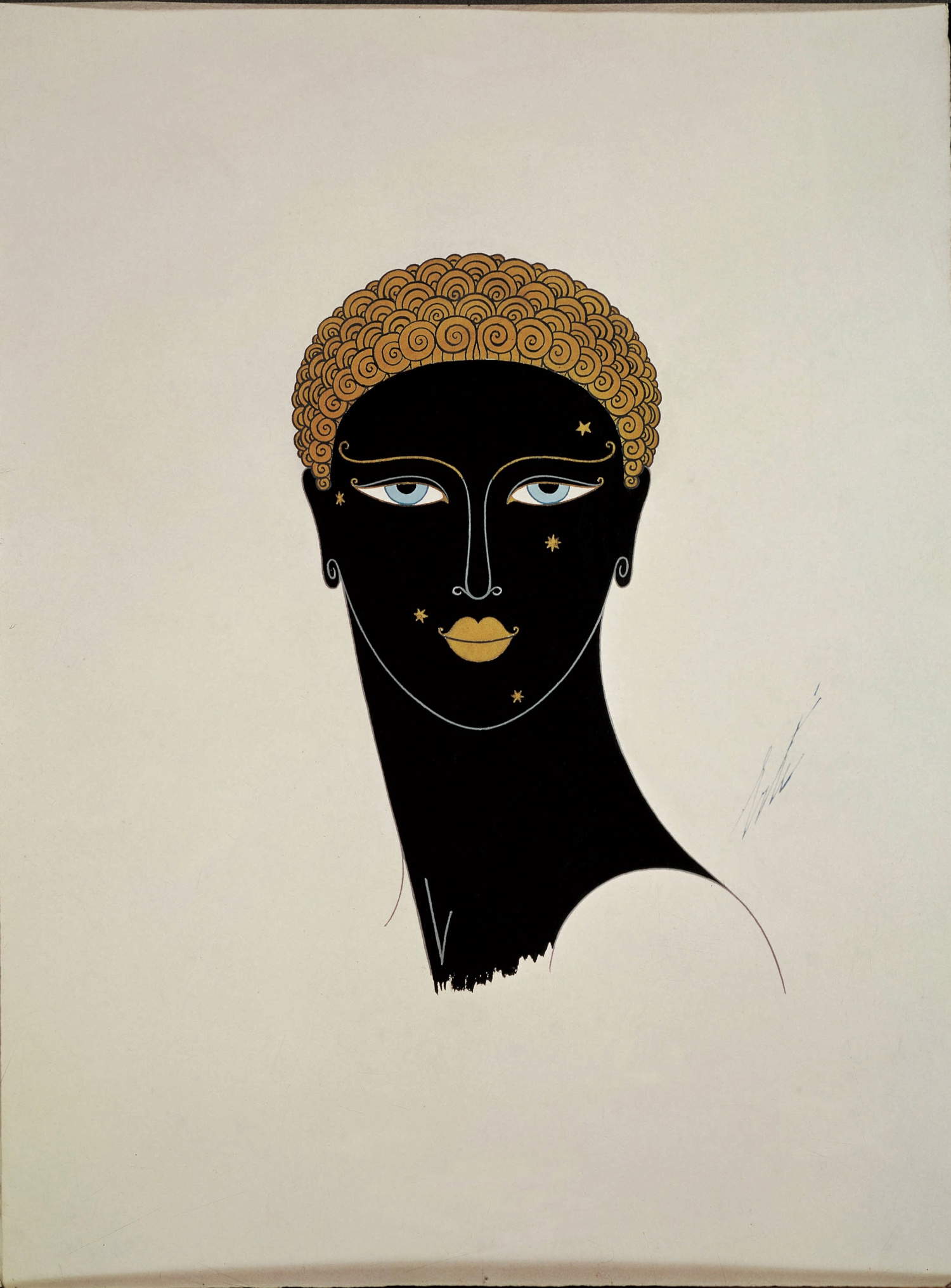
Erté’s style is a perfect synthesis of disparate influences, ranging from Persian and Indian miniatures to archaic Greek sculpture. The artist often stated that the reproductions of Greek vases he admired at the Hermitage in St. Petersburg were fundamental to the development of his stylized, two-dimensional line. This was compounded by a fascination with Sergei Djagilev’s Ballets Russes, whose violent colors and rutilant costumes had shaken turn-of-the-century Paris. Erté knew how to metabolize these suggestions by transforming them into a contemporary language, characterized by a snappy, geometric graphic sign. The term “glamour,” understood as glamour combined with luxury and privilege, perfectly describes the essence of his creations, which aimed to transport the viewer to worlds far removed from everyday banality.
In his works, clothing is never merely functional, but becomes a sign that creates the consciousness of the wearer.Elegance, for Erté, was an innate quality that could be enhanced by a movement or a precious detail, such as an embroidery reminiscent of a spider web or a diamond corset. This obsessive pursuit of beauty led him to collaborate with the greatest fashion houses and magazines, making him the original interpreter of international Deco. His style never sought realism, but always aimed at a “poetic surface” where every element is invented and replaced by sign.
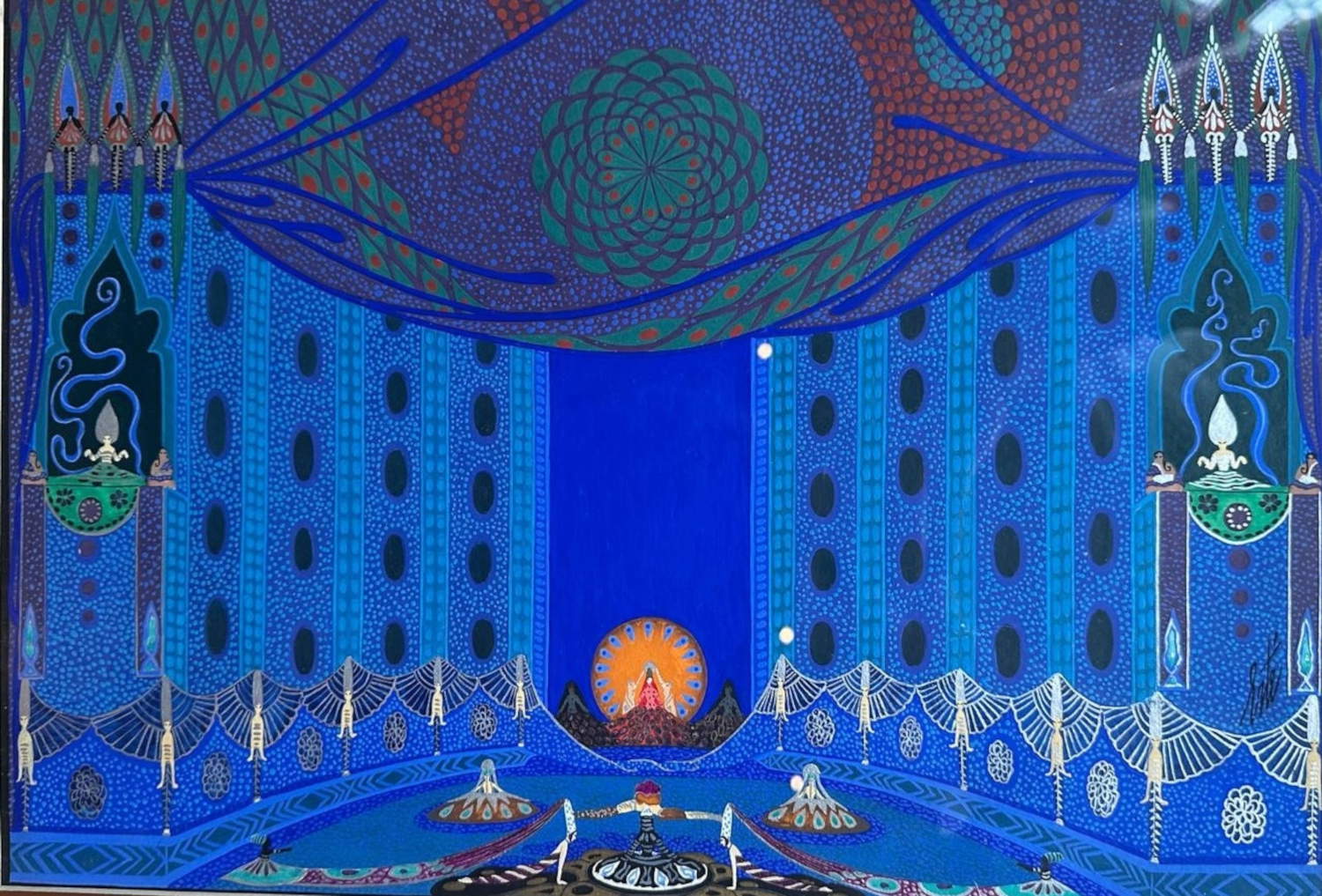
Theater represented for Erté an unlimited sphere of expression, where his imagination could materialize in lavish stagings and out-of-the-ordinary costumes. From 1919 he began collaborating with the Folies Bergère in Paris, creating shows based on the pageantry and fantasy of the sets. At the same time, in New York, he became the star of George White’s Scandals, a series of musicals inspired by the Ziegfeld Follies that launched the best-known names in American light theater. Erté designed every detail: from the monumental staircases to the dancers’ costumes, transforming the stage into a living picture.
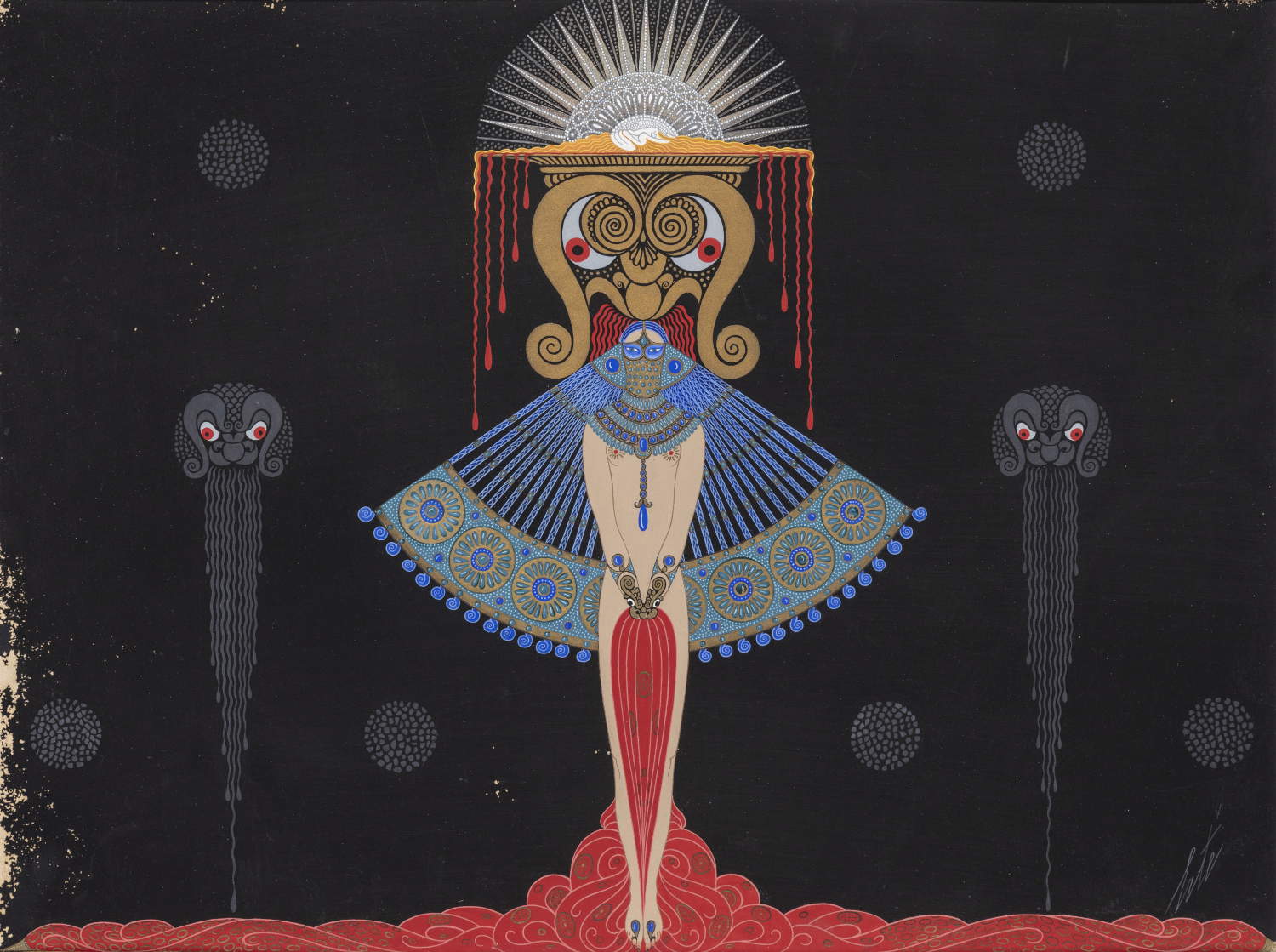
His stagings were characterized by a riot of color and light, with constant costume changes that required unflagging inventiveness. He also collaborated with the Chicago Opera Company, bringing his sophisticated touch to the world of opera. An emblematic example of his theatrical mastery is the gouache for Salome of 1926, which perfectly synthesizes his taste for mysterious exoticism and graphic stylization. Erté was able to dress hundreds of figures simultaneously, maintaining an extraordinary level of detail and luxury for each. His work in the theater profoundly influenced the fashion of the time, as the divas carried offstage the style that the artist envisioned for them. In this universe, theater and life blended seamlessly, especially in the lavish masquerade parties of which Erté was often the host and creator.
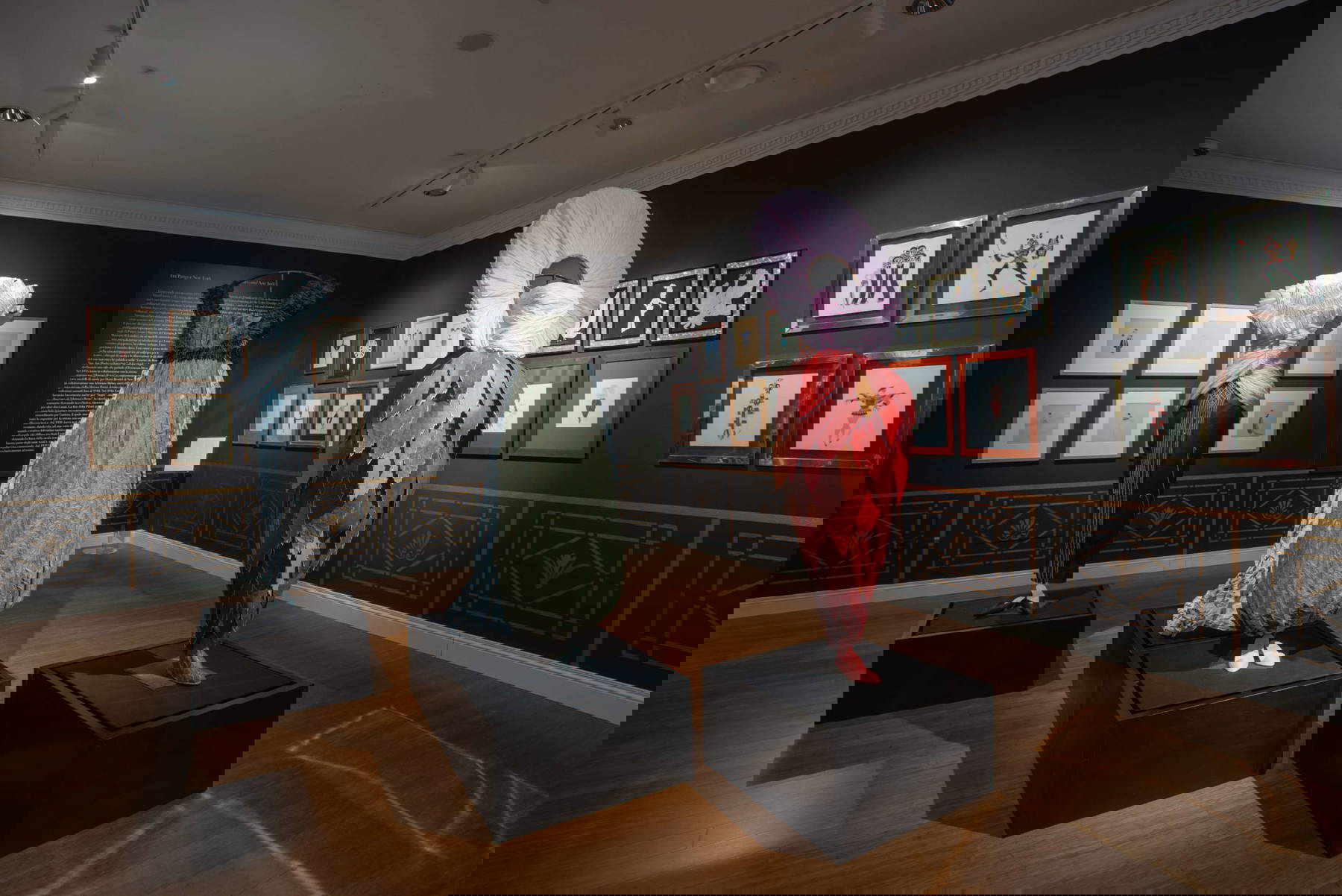
In 1925, Erté landed in Hollywood thanks to a contract with Metro-Goldwyn-Mayer, already at the time one of the most important film production companies. During his stay in California, he curated costumes and sets for several films, bringing the rigor of Parisian taste to American productions. Among his most famous creations from this period is the “Peacock” dress made for actress Carmel Myers in the colossal Ben-Hur. This costume, with its majestic feather wheel and Russian-inspired hairstyles, became one of the most iconic symbols of silent films. Despite its success, the artist did not participate in the 1925 International Exhibition of Decorative Arts in Paris precisely because he was engaged in the United States, even though he was its ideal protagonist.
Cinema allowed Erté to convey his designs to a mass audience, making millions dream of people who saw actresses as the new style icons. Hollywood kept the appeal of Art Deco intact for a few more years, even when the political climate in Europe was beginning to deteriorate. The film experience solidified the myth of Erté as a dream maker, capable of transforming an actress into a hieratic deity through the skillful use of pearls, diamonds and precious fabrics. Even after his return to France, the influence of his work in Hollywood continued to resonate in the sets of the great musicals of the following years.
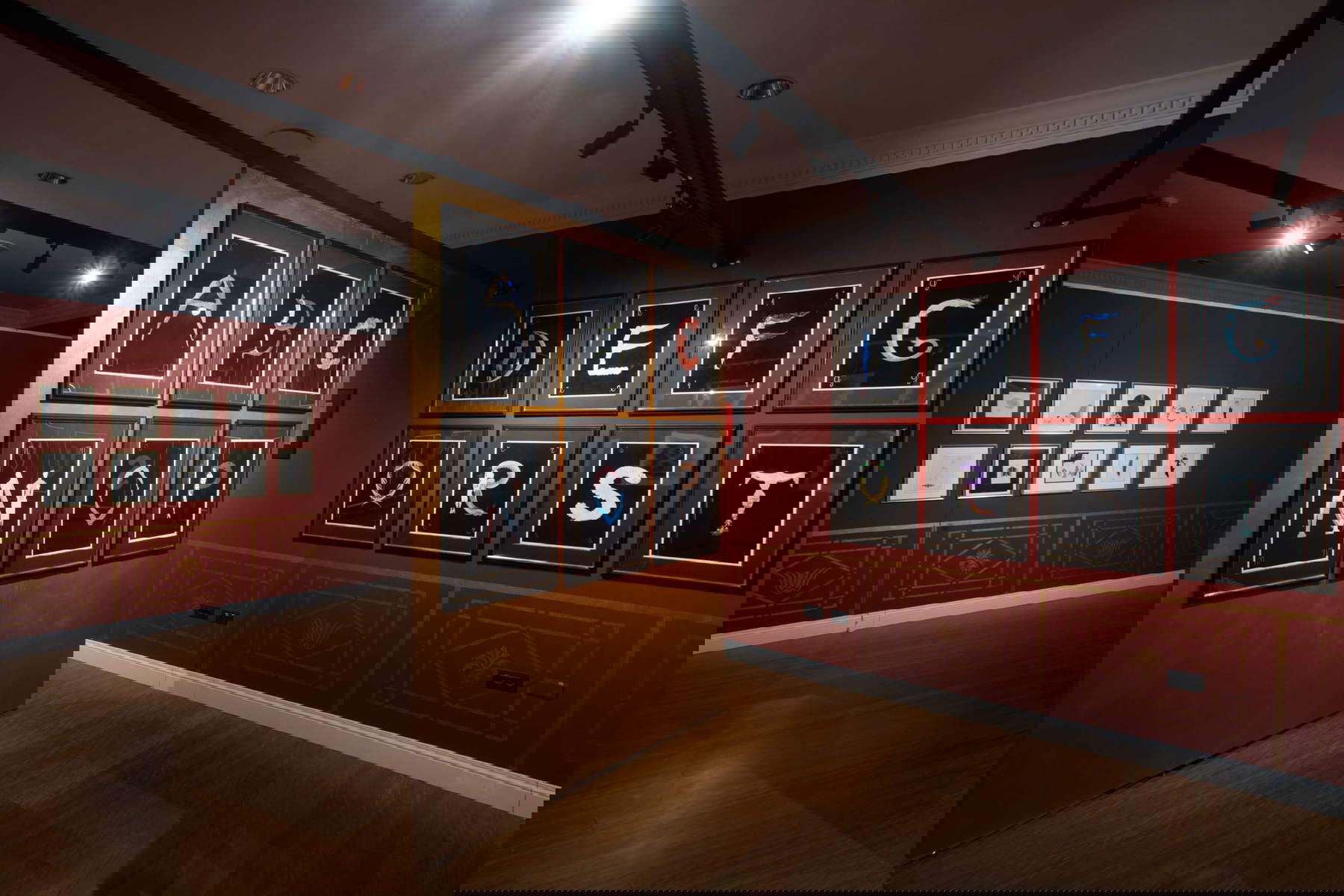
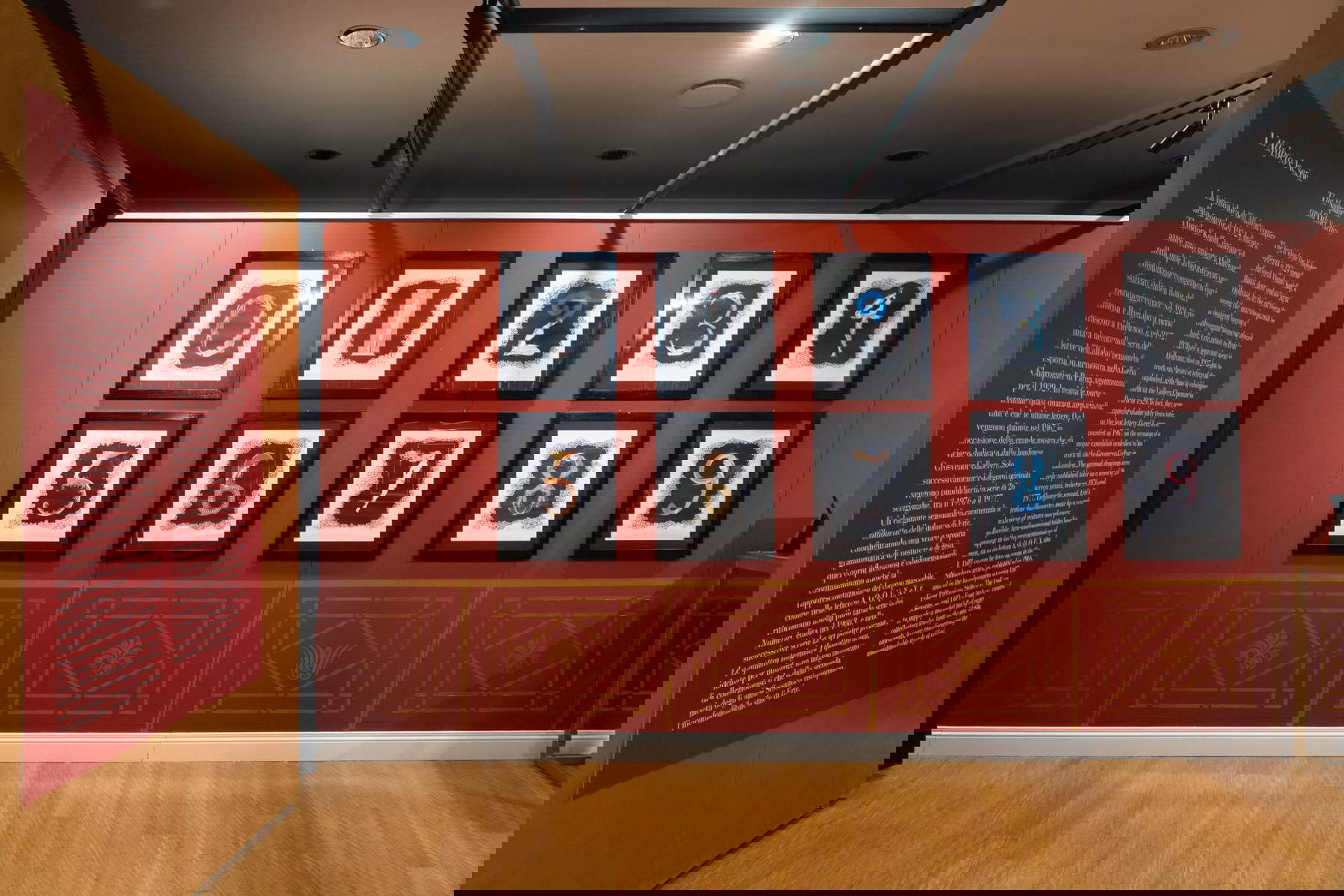
One of Erté’s most ambitious and celebrated projects is undoubtedly theAlphabet series, begun in 1927 and completed only forty years later. In this collection of twenty-six plates, the human body is used to compose letters in a play of poses reminiscent of a dance performance. Each letter is a work of art in its own right: for example, the “L” is represented by a long-limbed figure reminiscent of Marchesa Luisa Casati with her cheetah. The Numbers series, published in 1968, follows the same principle of extreme stylization, where silhouettes lose physical consistency to become pure graphic arabesques. These works demonstrate Erté’s ability to move beyond fashion to a lyrical purism that verges on abstraction.
The plates were later translated into highly successful silkscreens, fueling a vast market of collectors and art lovers. TheAlphabet represents the “dress rehearsal” of a choreography of bodies defining a space and a name, as in the gouache dedicated to the dancer Theodore Kosloff. These graphic series made Erté a definitive icon of the “1925 Style,” celebrated by solo exhibitions in the most prestigious museums, such as the Metropolitan in New York. Through these works, the artist created a universal visual code, where feminine beauty is declined in infinite alphabetical and numerical variations.
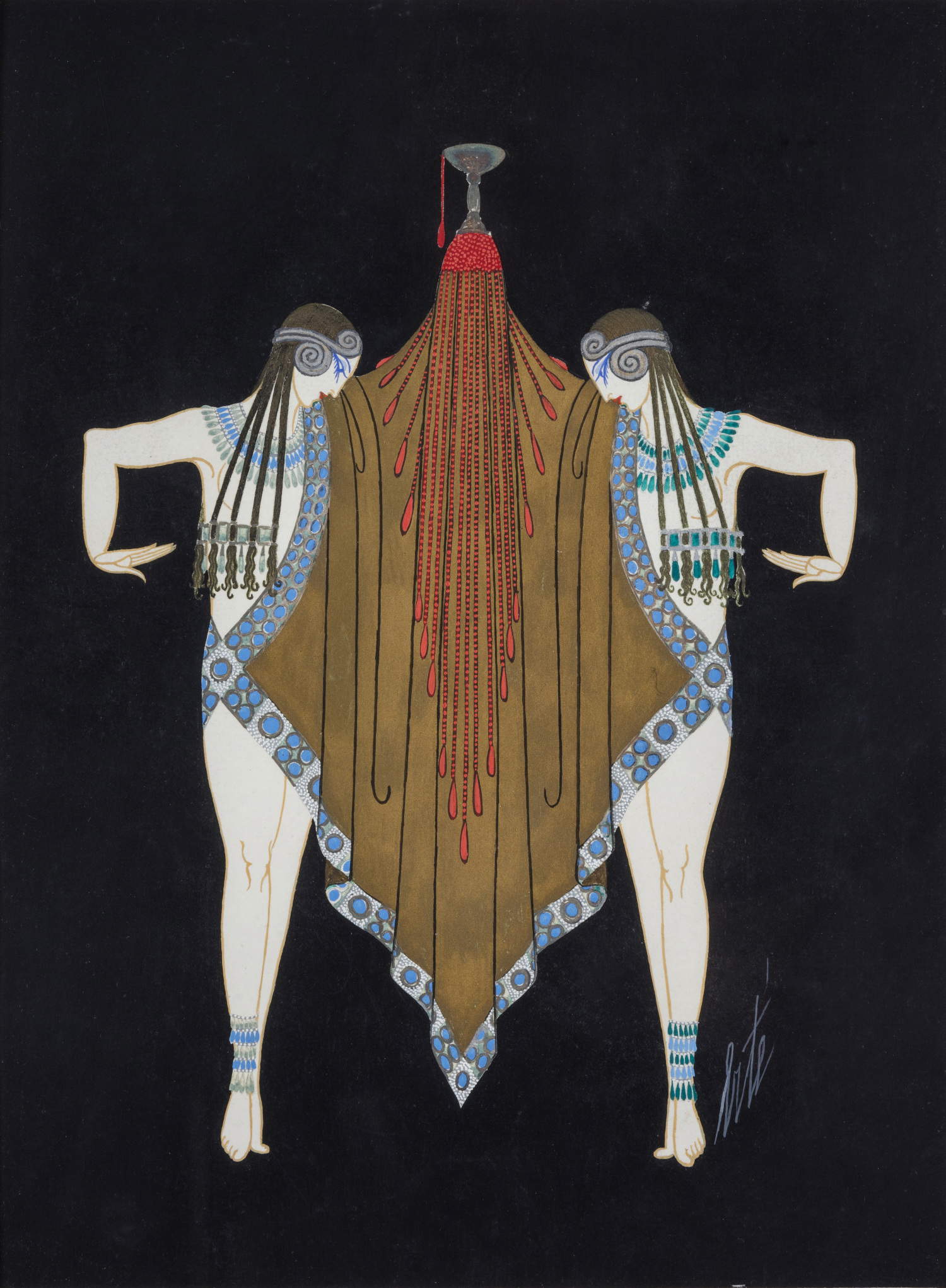
The female figure imagined by Erté is not an ordinary woman, but an incorporeal silhouette, a “pure figure” that sustains dreams made of precious fabrics and geometric jewelry. According to critic Roland Barthes, who wrote a seminal essay on the artist in 1970, in Erté it is not the body that is clothed, but it is the dress that is prolonged in the body. The “Woman of Erté” transfers her feelings and morals directly into costume: modesty resides in veils, sensuality in pearls, and sex in feathers. These figures are indifferent to what lies beneath the surface; everything is invented and poetically developed as a graphic sign.
Lips dyed a dark red in the shape of a heart and feline gazes contribute to an iconography of the femme fatale that coexists with the androgyny of the modern woman. This creature, free but often tinged with a subtle melancholy, smokes, plays sports, and inhabits palaces furnished with precious materials such as ebony and mother-of-pearl. For Erté, elegance was the only quality that mattered, an innate endowment that transformed even a woman of humble origins into a “chic” icon. Through her designs, the artist shaped the very form of the contemporary woman, emerging from the battles for emancipation but still bound to a world of enchantment and awe.
Italy has played a key role in the rediscovery and appreciation of Erté’s work, especially since the 1960s. In 1965 and 1966, the artist exhibited his works at the Galleria Milano, arousing strong interest in national collecting. However, it was the meeting with publisher Franco Maria Ricci that marked a decisive turning point: in 1970, Ricci published the first major monograph dedicated to Erté in the prestigious series I segni dell’uomo. This volume, with the famous essay by Roland Barthes, helped transform the artist into a cultural myth for new generations as well. Ricci also acquired an important nucleus of works, now preserved in the permanent collection of the Labirinto della Masone in Fontanellato. The bond between the publisher and the artist was based on a common passion for refined aesthetics and the importance of signs in industrial society. The 2026 exhibition at the Labyrinth celebrates this association, displaying not only historic drawings but also new acquisitions that enrich the Italian heritage dedicated to Erté. Italy was able to grasp the revolutionary scope of this artist before others, seeing in his “frenzy of modernity” an ideal counterbalance to the classical tradition. Thanks to Ricci, Erté’s name has remained inextricably linked to the history of high-quality design and illustration in our country.
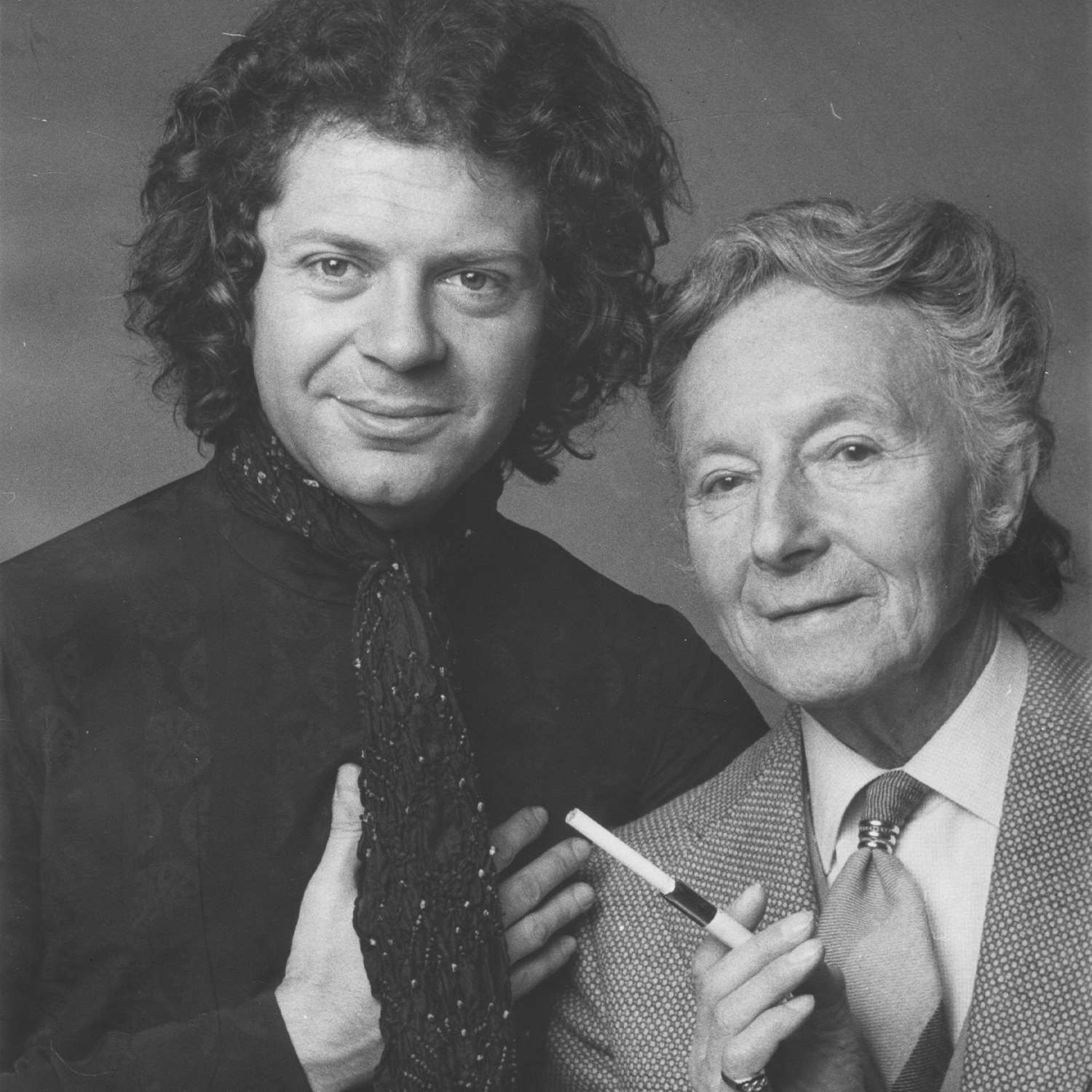
Erté continued to work with inexhaustible energy until the last days of his very long life. In the 1970s and 1980s, his star shone again thanks to the Art Deco revival, leading him to create costumes for soubrette Zizi Jeanmaire and sets for Broadway musicals such as Stardust in 1988. Late in life, he also devoted himself to creating bronze sculptures and jewelry, repurposing the motifs that had made him famous decades earlier in three dimensions. He died in Paris on April 21, 1990, at the age of ninety-seven, having gone through a century of radical change without ever giving up his ideal of beauty.
Her legacy is more alive today than ever, as evidenced by the exhibition at the Labirinto della Masone that includes the creations of Caterina Crepax, inspired by her designs. Crepax makes paper-sculpture dresses that pay homage to the lightness and suppleness typical of the Erté style, demonstrating how her visual grammar is still relevant today. The artist was able to transform fashion into a total work of art, where every detail, from the movement of the body to the choice of material, contributes to creating a world of enchantment. Romain de Tirtoff, aka Erté, remains the stainless standard bearer of a style that, Franco Maria Ricci said, “has been able to replace the civilization of the soul with that of things and signs.”

Warning: the translation into English of the original Italian article was created using automatic tools. We undertake to review all articles, but we do not guarantee the total absence of inaccuracies in the translation due to the program. You can find the original by clicking on the ITA button. If you find any mistake,please contact us.


























 IT
IT FR
FR DE
DE ES
ES CN
CN


