





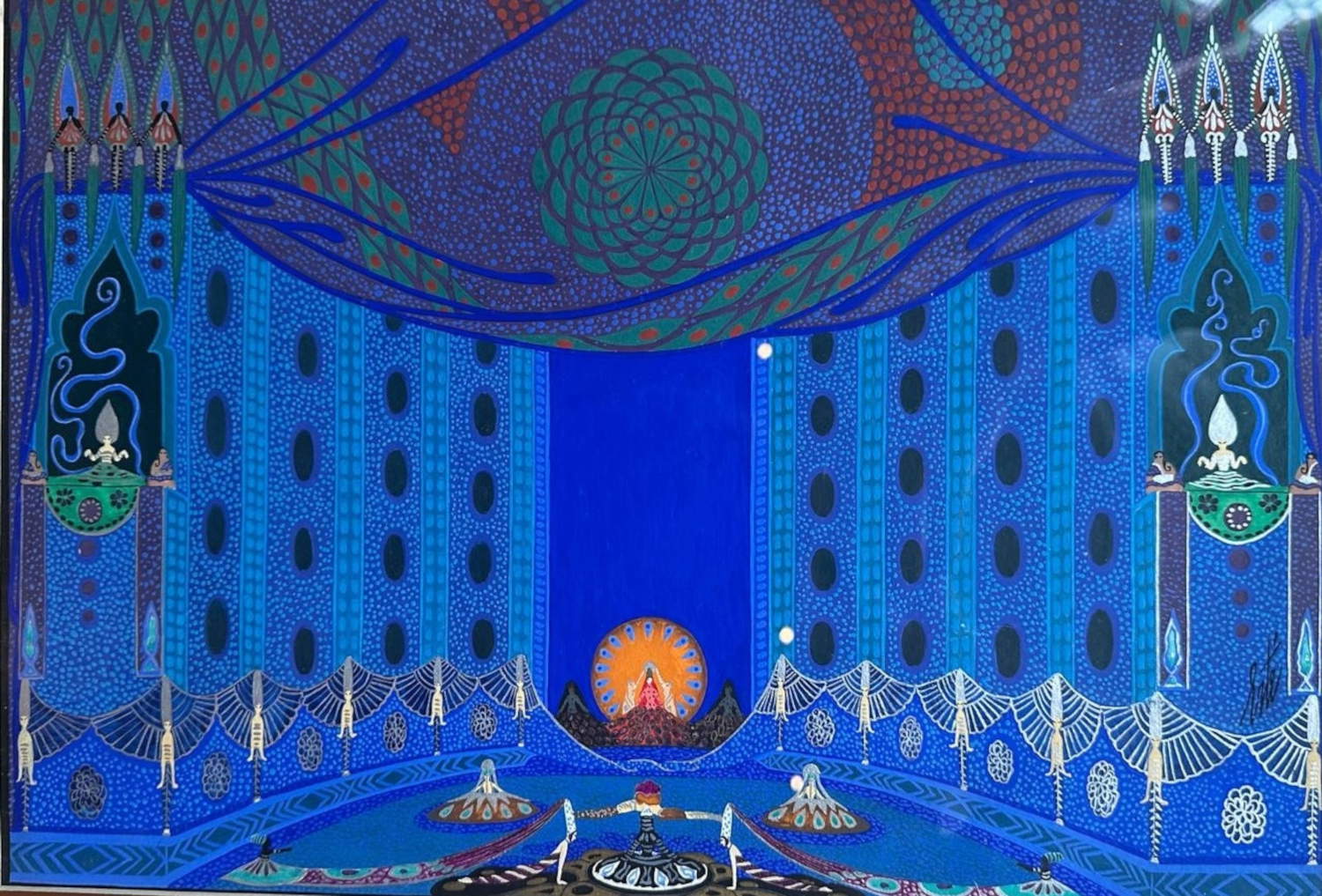
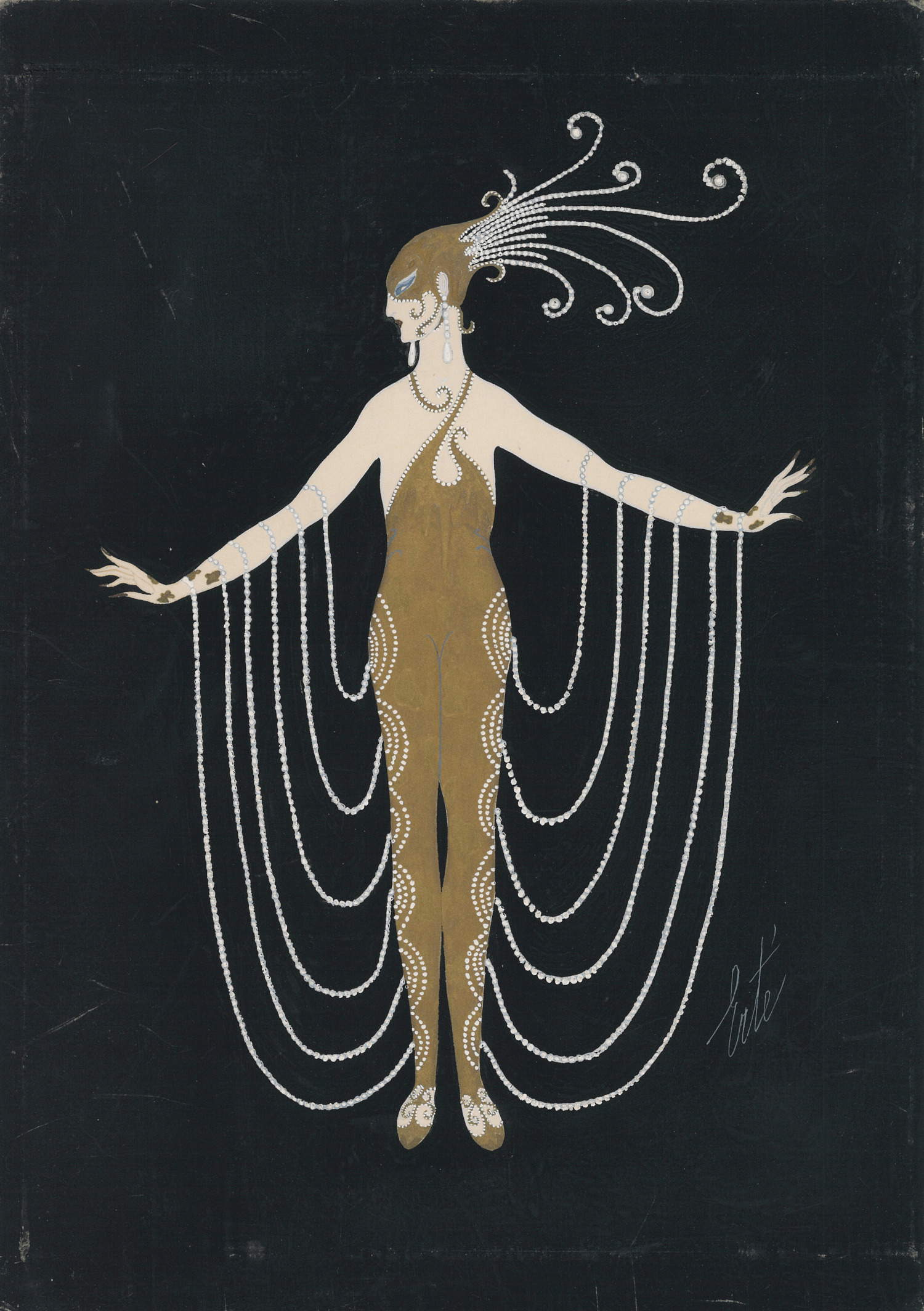
The Labirinto della Masone in Fontanellato (Parma) presents the exhibition Erté from March 28 to June 28, 2026. Style is Everything, curated by Valerio Terraroli and organized by Elisa Rizzardi, to acquaint the public with the figure of Erté, among the most important exponents ofArt Deco. The aim is to propose a new reading of the artist’s work, highlighting its expressive richness and surprising modernity. The itinerary presents a significant selection of his vast production, with a focus on works created between the 1910s and 1930s, considered the most innovative and successful period of his long career.
Erté, born as Roman Petrovič Tyrtov in 1892 in St. Petersburg, moved to Paris at a very young age in 1912 to follow his artistic aspirations. There he changed his name to Romain de Tirtoff, from which he derived the pseudonym Erté, obtained from the French pronunciation of the initials “R.T.” Between 1913 and 1914 he worked in the studio of fashion designer Paul Poiret. In 1915 he began a long collaboration with Harper’s Bazaar magazine, for which he produced about two hundred covers until 1937. This assignment introduced him to the world of entertainment and celebrities of the time, leading him to create sets and costumes for legendary figures such as Mata Hari, Marion Davies, and Mistinguett, as well as for shows at the famous Folies Bergère theater.
In the 1920s and 1930s his illustrations also appeared in magazines such as Vogue, Cosmopolitan and The Illustrated London News. In 1922 he moved to New York, where he collaborated with theater producer George White, and in 1925 he worked in Hollywood, where he created sets and costumes for several silent film films.
An extremely versatile artist, Erté was a theatrical designer, set and costume designer, as well as an illustrator for major international fashion magazines and jewelry designer. His elegant and refined language knew how to synthesize the decorative and stylistic elements of interwar modernity, making him one of the most representative protagonists of the Art Deco aesthetic. Today his works are held in major international museums such as the Metropolitan Museum of Art, the Los Angeles County Museum of Art, and the Victoria and Albert Museum in London.
In 1970 the publisher Franco Maria Ricci published for the series I segni dell’uomo the first major monograph in Italian dedicated to Erté, with a text by Roland Barthes and some recollections of the artist. In those same years Ricci acquired some of the artist’s works, now preserved in the collection of the Labirinto della Masone, recently enriched by four new drawings presented on this occasion.
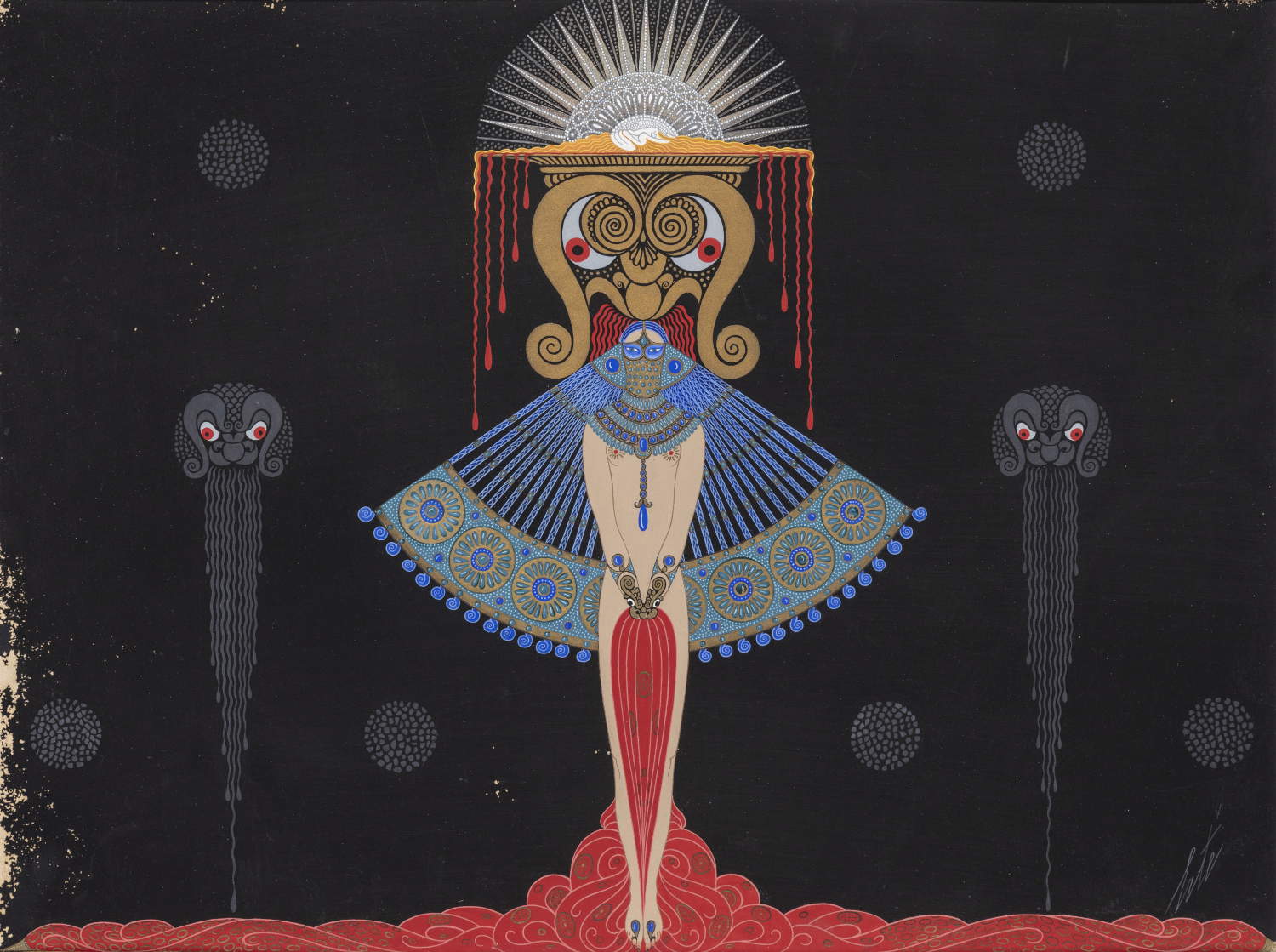
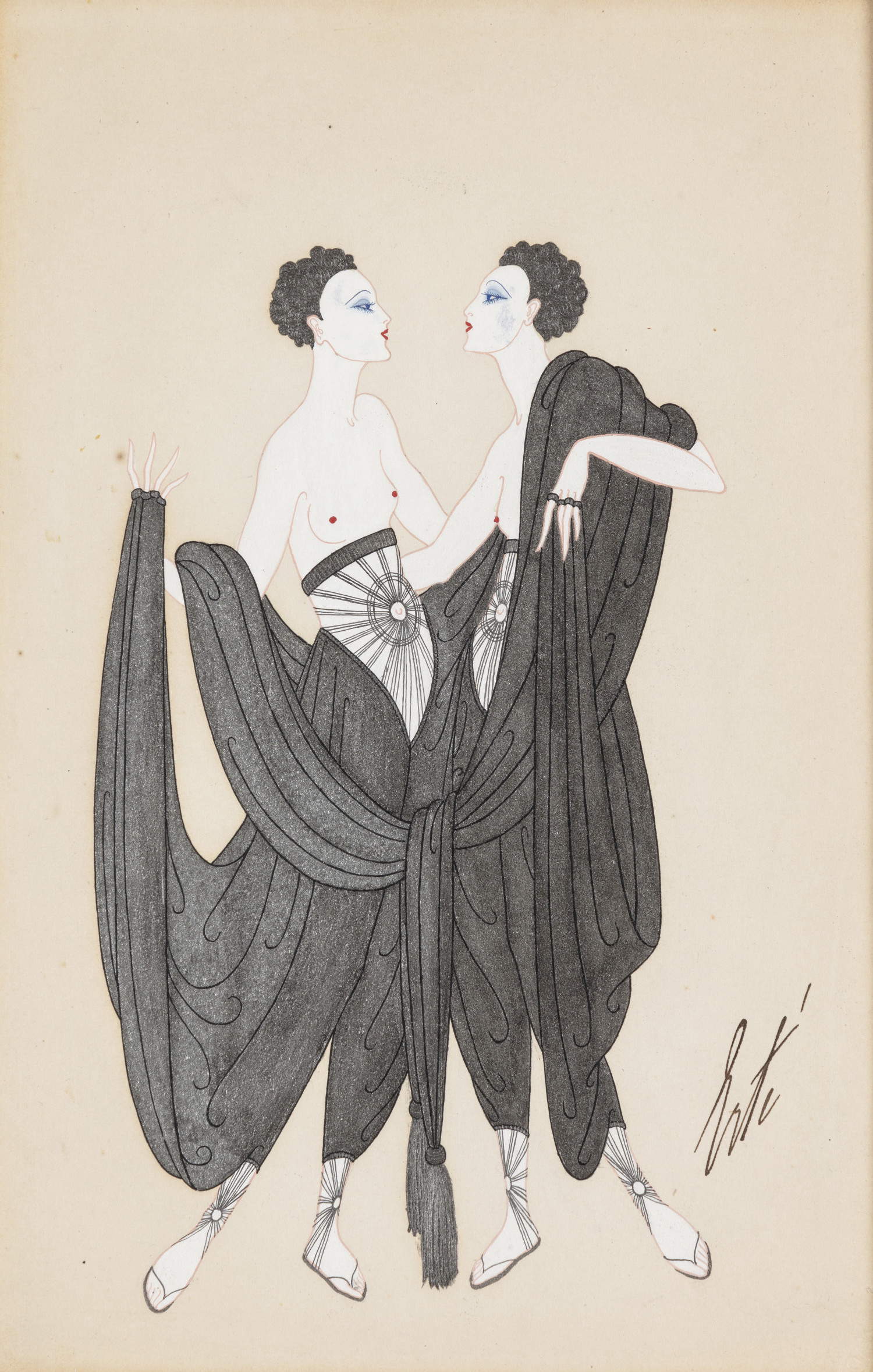
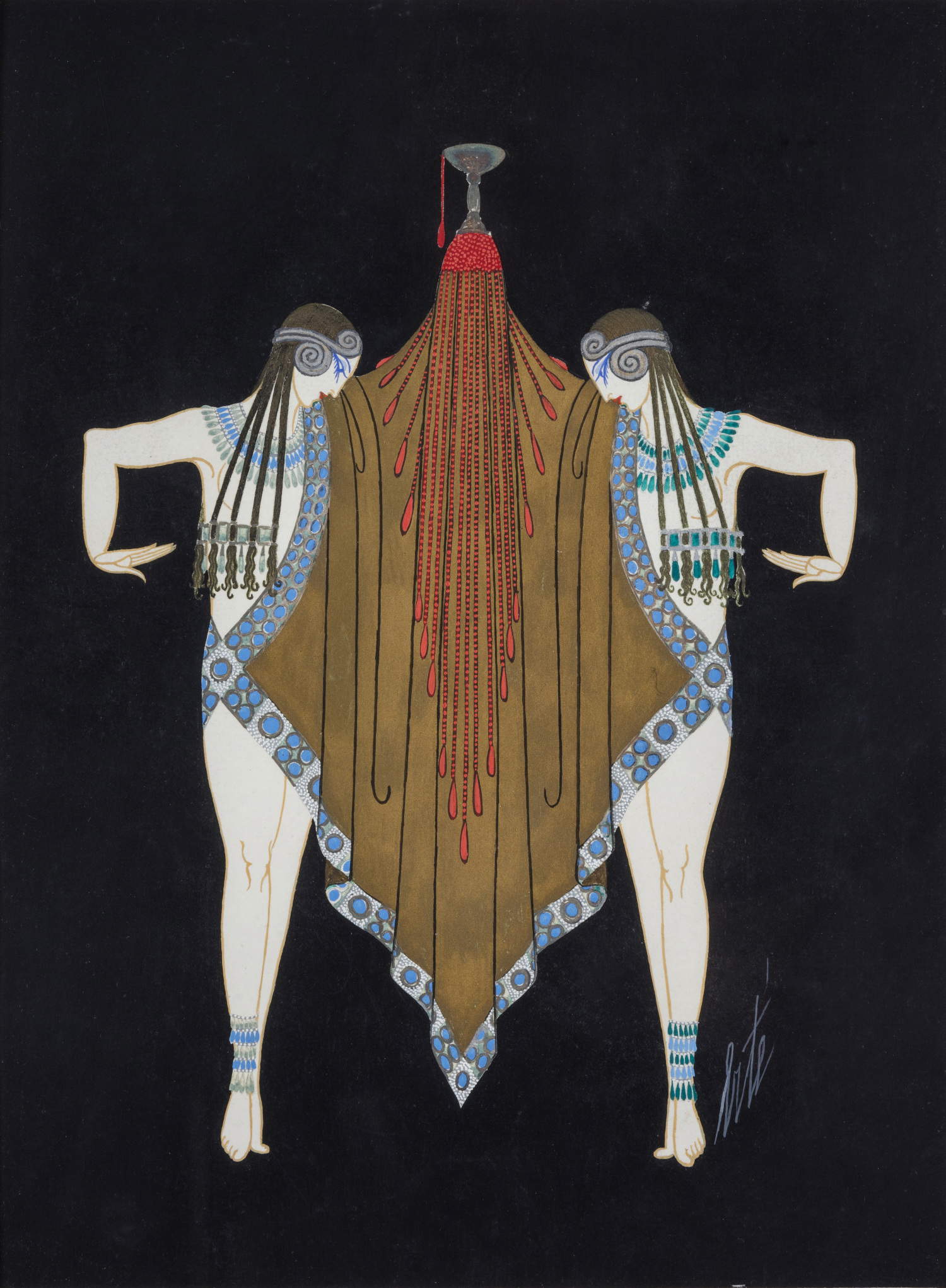
The installation, designed by Maddalena Casalis, brings together more than 150 works, including drawings, sketches, pochoirs, lithographs, historical photographs, documents and film materials. The works on display also include the famousAlphabet and Numbers series. The exhibition also includes 28 works from the Franco Maria Ricci collection, flanked by important loans from private Italian and international collections and the Victoria and Albert Museum in London.
The route, characterized by a scenographic layout, guides the visitor inside Erté’s creative universe through different thematic sections dedicated to the main areas of his activity: from fashion to theater and music hall, to editorial collaborations. His illustrations have become true icons of a luminous Art Deco, populated by elegant and sophisticated female figures, between modern women and mysterious femme fatales. Theatrical and film costumes destined for famous shows, from the Folies Bergère to the Ziegfeld Follies, appeared alongside the fashion figurines.
At the same time, Erté was a careful interpreter of his time: the evolution of taste, the fascination with the world of divas and the dialogue between high fashion and mass culture are reflected in his works, always maintaining a rigorous stylistic consistency.
“The rapid degeneration of European political balances and the outbreak of World War II sanctioned the final disappearance of the formal and aesthetic values of Deco, and with them also of that splendid and fairy-tale world, disengaged and irresponsible, glittering and uninhibited, fatuous and ambiguously erotic, refined and seductive, which Erté was able to personify both in his own life and in his creations, which become, for that very reason, one of the most refined and organic emblems of Art Deco,” said curator Valerio Terraroli.
To underscore the relevance of Erté’s work, the exhibition also features three creations by artist Caterina Crepax, inspired by him. An architect by training and raised in a creative environment, Crepax makes paper clothes conceived as true sculptures: unique pieces in which this material becomes a precious fabric, capable of transforming into wearable works. For the exhibition, the artist has created three new dresses inspired by as many sketches by Erté, paying homage to the master of style.
The exhibition enjoys the patronage of the Emilia-Romagna Region, the City of Parma, the City of Fontanellato, the University of Verona - Department of Cultures and Civilizations - and the Rossana Bossaglia Research Center. A catalog published by Franco Maria Ricci, with essays by Valerio Terraroli and Alessandra Tiddia, will also be published.
Hours: Open every day except Tuesdays. Until March 30, from 9:30 a.m. to 6 p.m. (last admission 4:30 p.m.); March 31 to Oct. 31, from 10:30 a.m. to 7 p.m. (last admission 5:30 p.m.). Access to the exhibition is included in the entrance fee to the Labirinto della Masone (full 20 euros, reductions listed at www.labirintodifrancomariaricci.it ), which also includes access to the bamboo labyrinth and Franco Maria Ricci’s permanent collection.
|
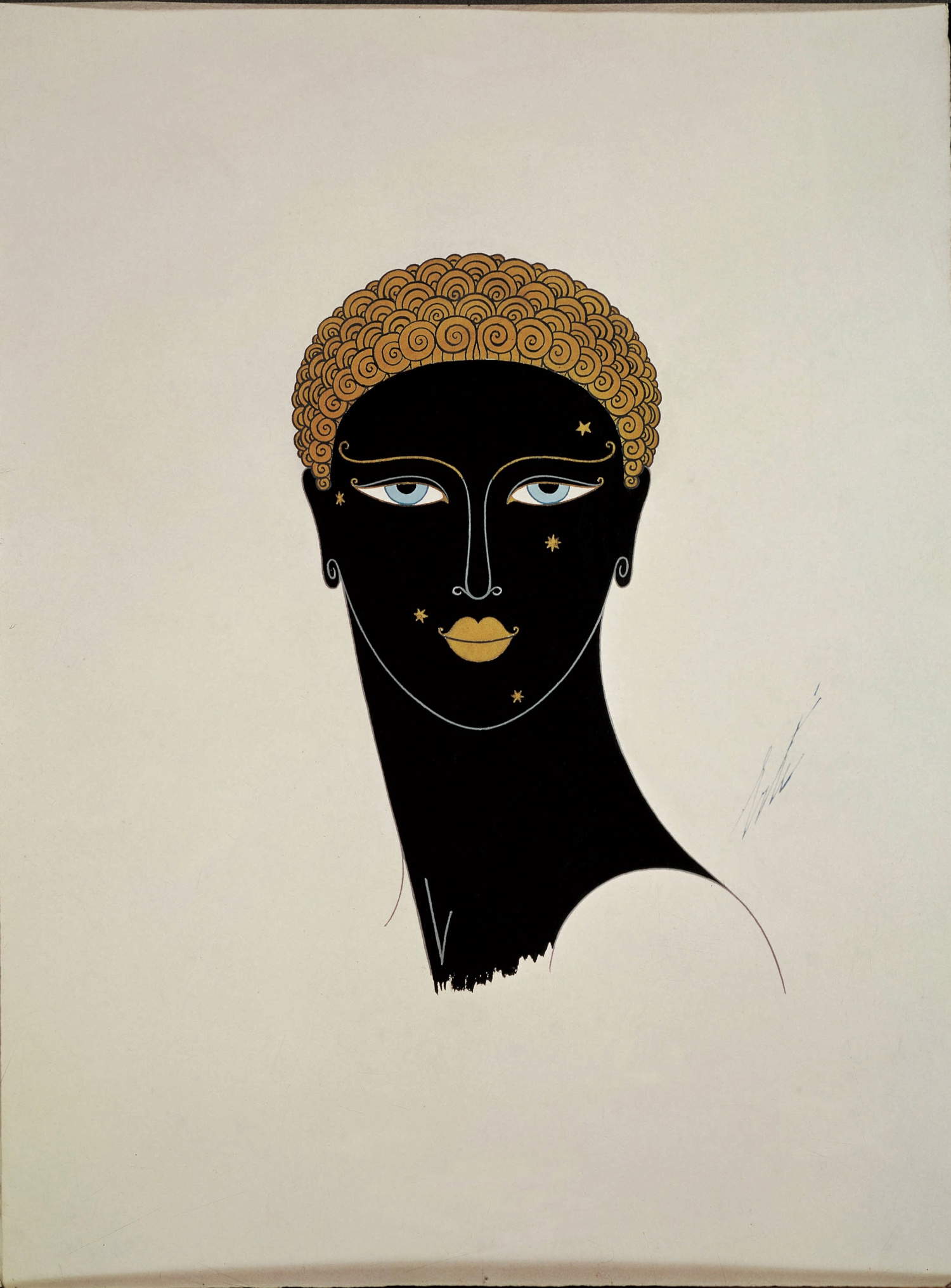
| The Labyrinth of the Masone dedicates an exhibition to Erté, among the most important exponents of Art Deco |

Warning: the translation into English of the original Italian article was created using automatic tools. We undertake to review all articles, but we do not guarantee the total absence of inaccuracies in the translation due to the program. You can find the original by clicking on the ITA button. If you find any mistake,please contact us.














 IT
IT FR
FR DE
DE ES
ES CN
CN


