





When standing before a painting by Jean-Michel Basquiat, something specific—almost automatic—often happens: the gaze tries to make sense of it. It doesn’t just look; it behaves as it would when faced with a page. It draws closer, searching for recognizable words, names, verbal anchors. For a moment, it seems possible to find one’s bearings, then something gets stuck. The words break off, repeat themselves, overlap. Some are crossed out with a sharp line that doesn’t erase them but exposes them even more. Reading then becomes a physical, uneven, almost frustrating experience. It is in this discrepancy that one senses one of the most radical aspects of his painting: using language against itself. At that point, the gaze, almost naturally, shifts elsewhere, as if searching for an origin, a place from which that tension might have sprung.
Basquiat entered the New York art scene in the early 1980s as a figure who was difficult to categorize. Born in Brooklyn in 1960 to a Haitian father and a Puerto Rican mother, he grew up navigating different languages, images, and cultural codes in a city where writing already livedon walls, in notebooks, and in urban spaces. Even before the galleries, there was the practice of SAMO—a use of language that was immediate, fragmentary, and visual. When this language entered the art world, it encountered an environment dominated by opposing codes: a largely white world, built on an idea of art that was cultured, controlled, and theoretically mediated. In this context, Basquiat’s words appear unstable, difficult to discipline. They carry a weight that is not only formal but also historical and cultural. For a Black artist in those years, being named often meant being reduced to a category, pigeonholed into definitions that simplify and limit.
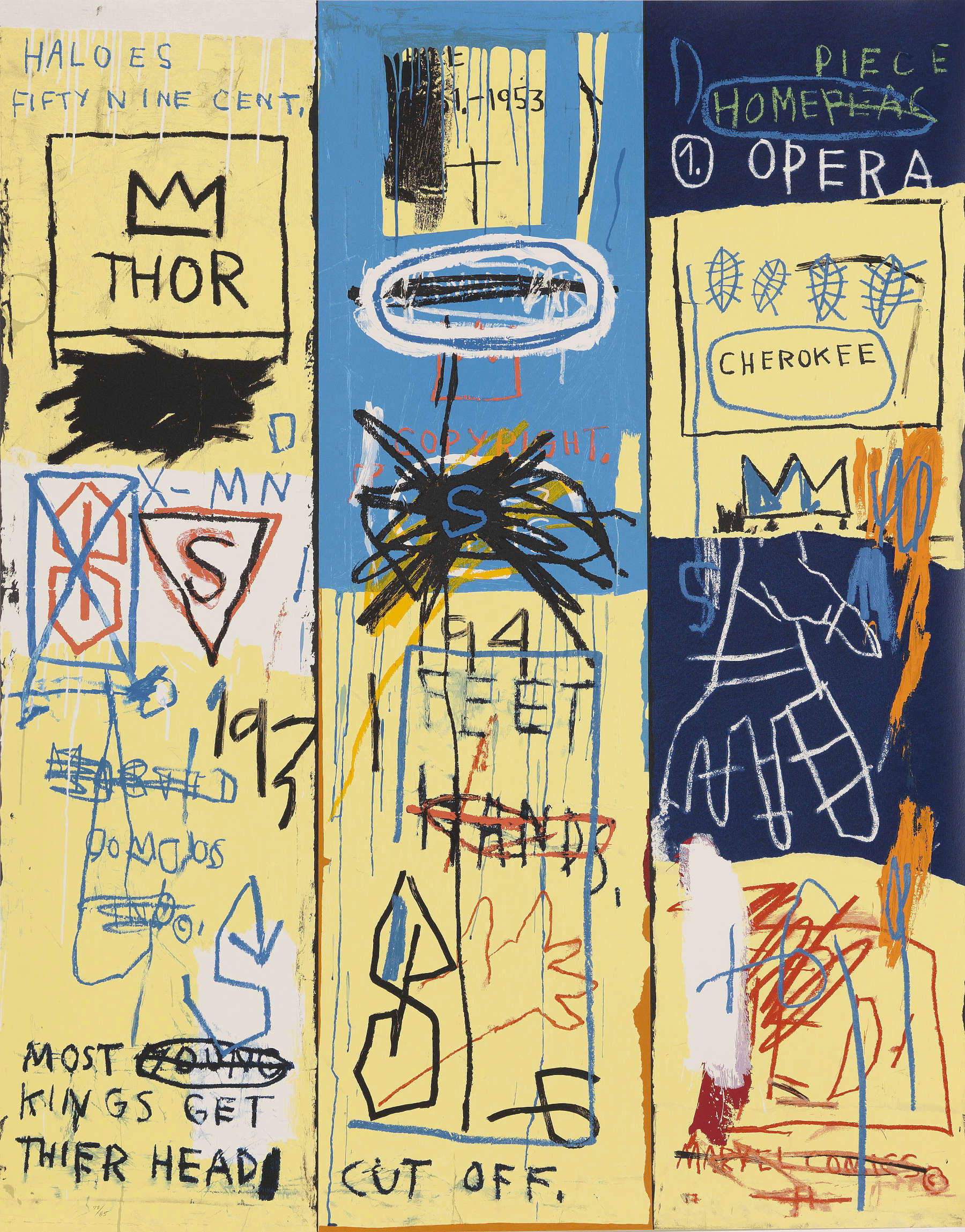
It is precisely in this friction that his painting finds one of its deepest urgencies: to absorb language and undermine itfrom within. Words do not disappear, but they cease to function as stable tools. They break apart, contradict themselves, and remain suspended between what they say and what they can no longer contain. The act of crossing out a word thus becomes central: the line that cuts through the text does not eliminate it; it makes it more visible. It is an act of tension, not of erasure. The word remains legible but loses its balance. It exists in an ambiguous state, suspended between presence and negation. Basquiat himself emphasized this paradox: to erase is to highlight. Painting intervenes precisely there, at the point where language falters.
Alongside this visual dimension, another, more subtle one emerges, linked to sound. Many of the texts in his paintings seem designed more to be heard than read. Repetitions, lists, and proper names generate an internal rhythm that brings painting closer to music. Jazz, the nascent hip-hop, and spoken word are not mere cultural references but deep-seated structures. Words function as visual samples: fragments that accumulate and produce variations.
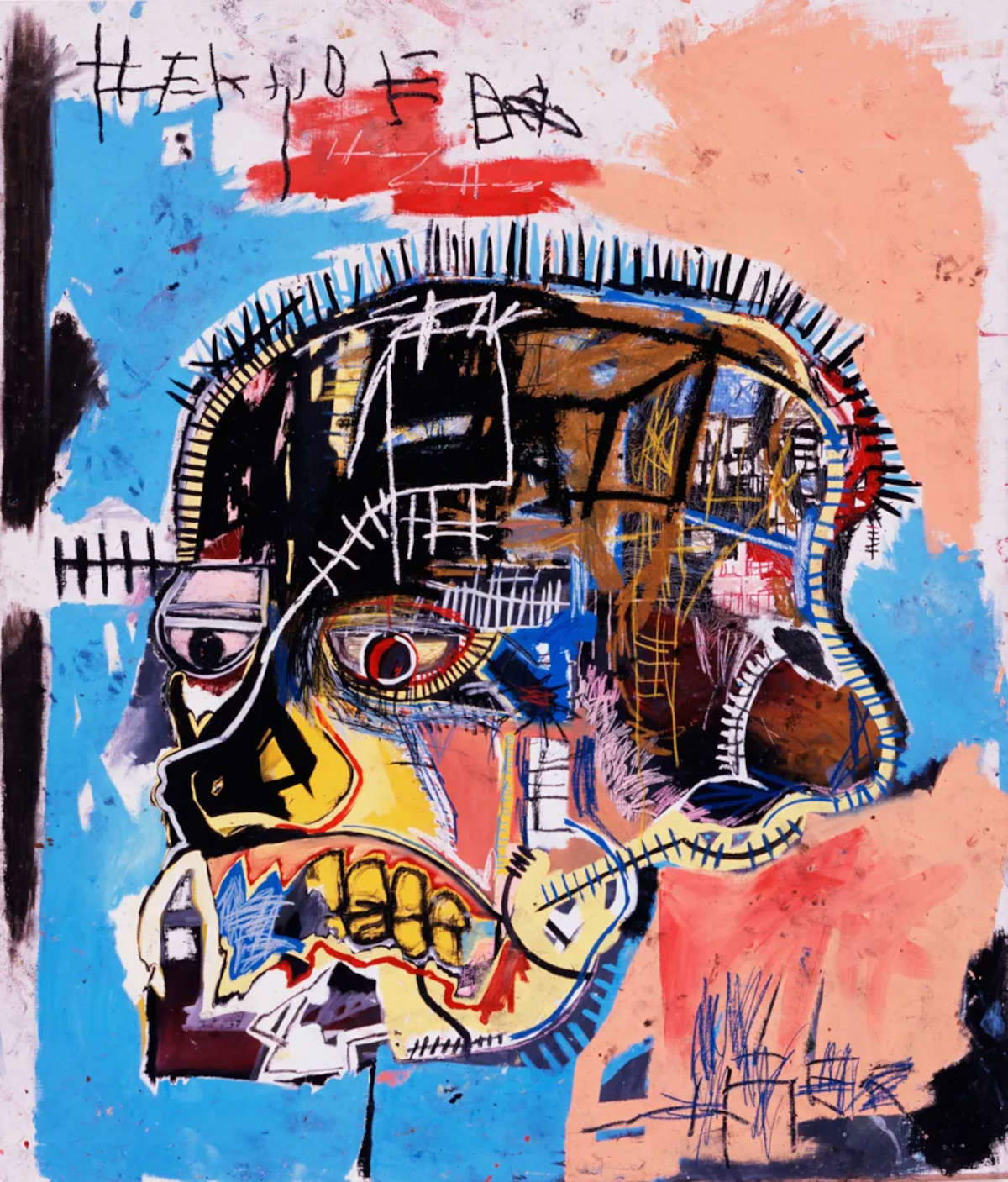
This tension is particularly evident in works such as *Untitled (Skull) * (1981), where the face seems to emerge and dissolve at the same time, crisscrossed by signs, words, and traces that do not construct a stable identity but continually call it into question. Here, too, language intensifies the image’s instability. In this sense, Basquiat’s work fits into a tradition of 20th-century art that has used the word as an image—one might think of Cy Twombly or certain conceptual practices—but with a decisive difference. In his paintings, language is never neutral or detached. It is charged, layered, and permeated by cultural tensions, memory, and urgency.
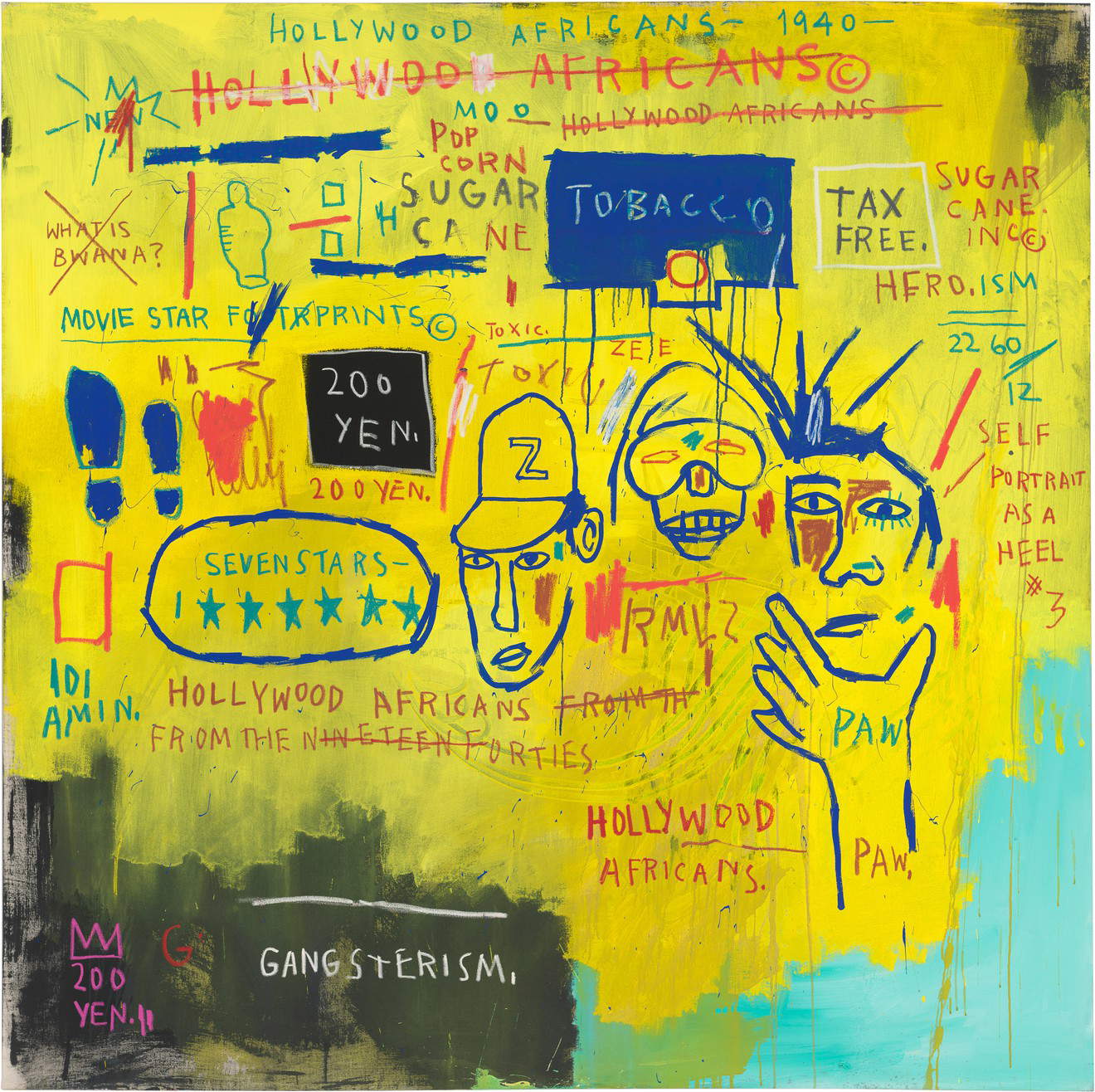
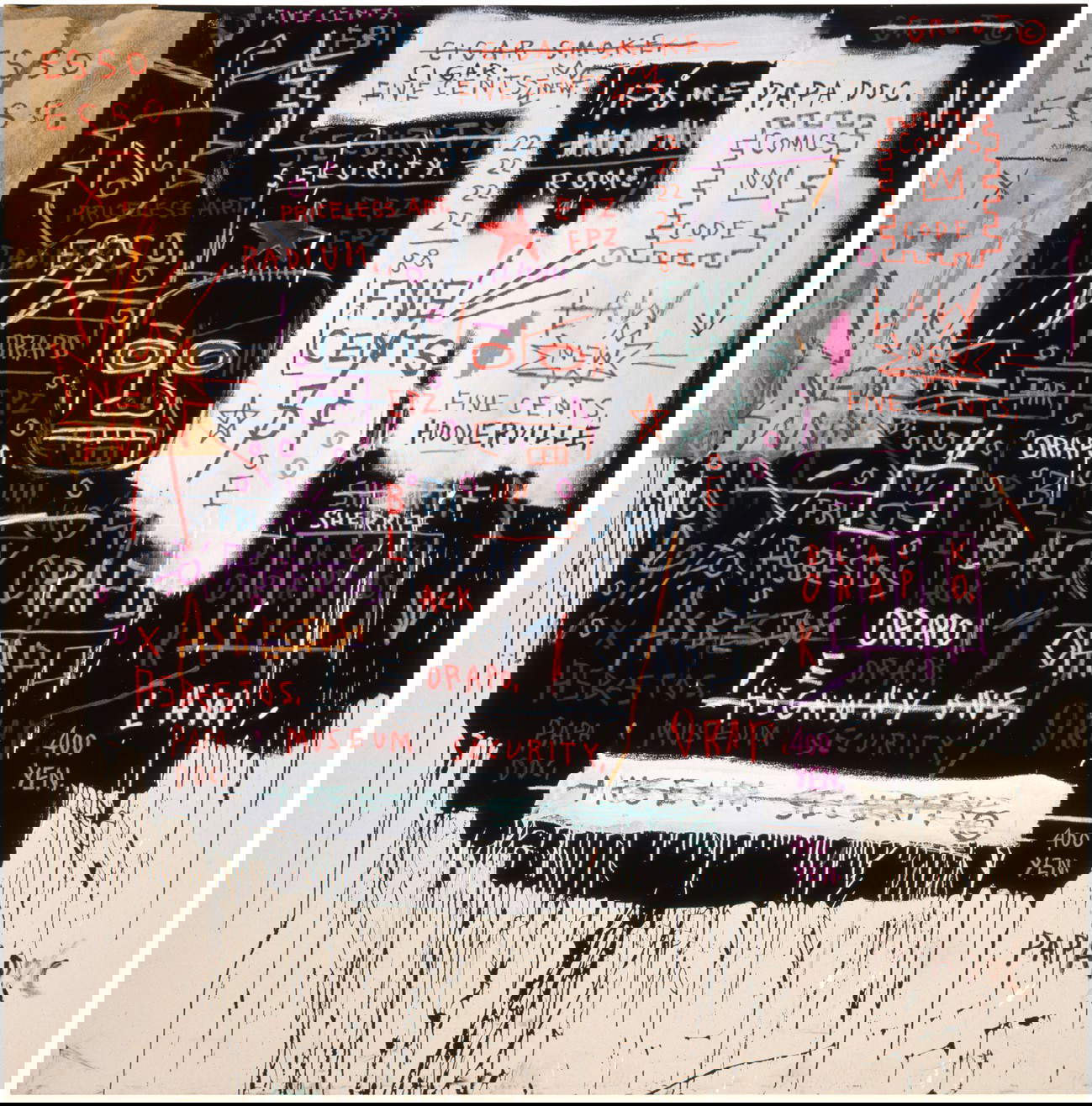
Returning to the surface of his paintings, one understands how all of this translates into a specific form of experience. The viewer finds themselves facing a short circuit. The habit of seeking a clear message clashes with a surface that speaks and eludes at the same time. The words do not guide; they do not reassure. They open up voids, create detours, and interrupt the flow. In his canvases, text does not occupy a secondary position. It does not accompany the image or clarify it. It is an integral part of the pictorial surface, carrying the same weight as the graphic marks, colors, and figures. In works such as *Charles the First* (1982) or *Hollywood Africans* (1983), words invade the space with an insistent presence: names of boxers and jazz musicians, anatomical terms, acronyms, lists, fragments of sentences. They are neither captions nor explanations. They are visual material, rhythm, accumulation.
Basquiat seems to suggest that language, on its own, is not enough to contain experience. There is always an excess, something that eludes us, that cannot be fully articulated. Painting occupies precisely this gap: between what can be named and what remains beyond words. And perhaps this is why, when standing before his paintings, the gaze keeps returning to the same words, the same signs, without ever exhausting them. Not because they are indecipherable, but because they cannot be closed off. They remain open, unstable, alive.

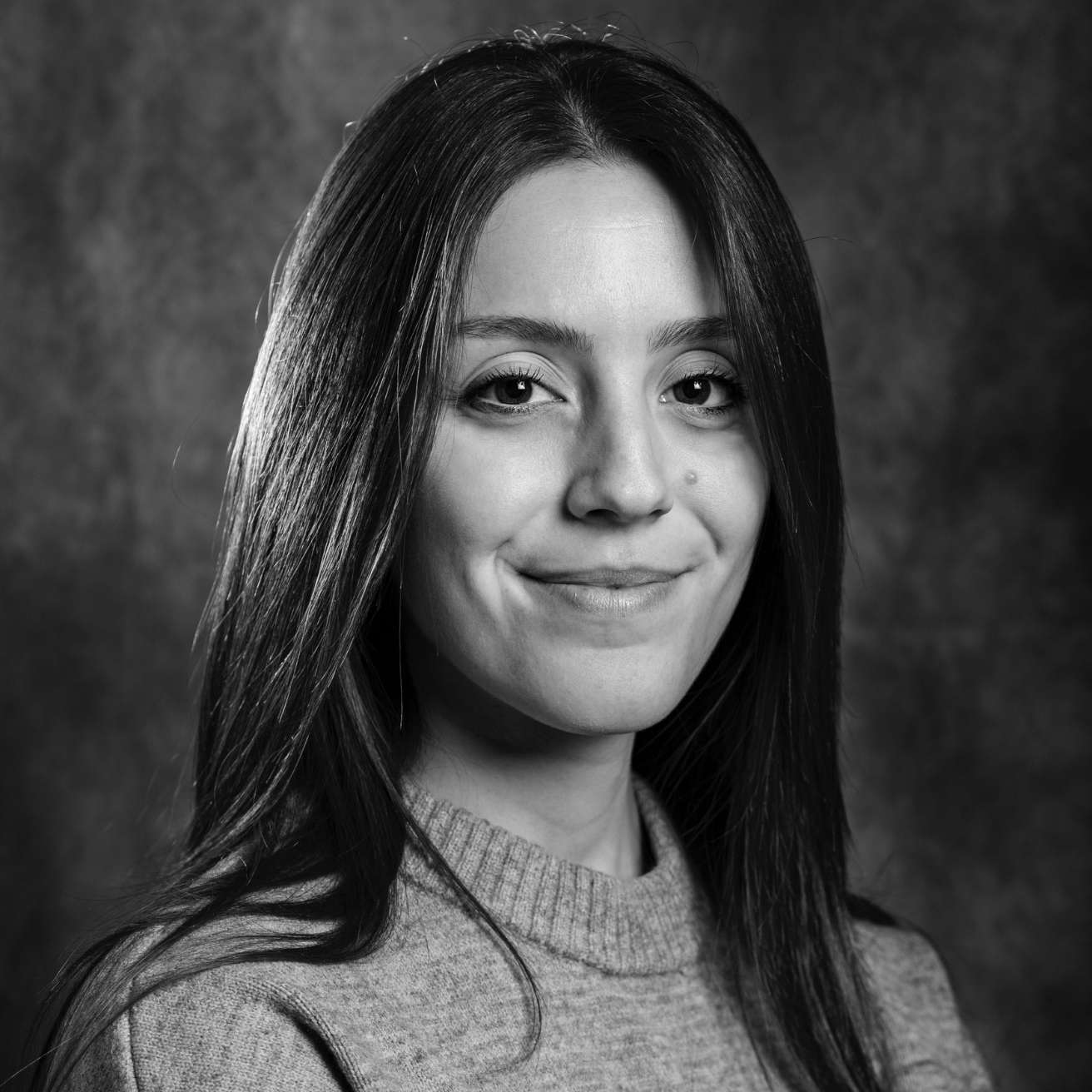
The author of this article: Federica Schneck
Federica Schneck, classe 1996, è una giornalista specializzata in arte contemporanea. Laureata in Storia dell'arte contemporanea presso l'Università di Pisa, il suo lavoro nasce da una profonda fascinazione per il modo in cui le pratiche artistiche operano all’interno, e in contrapposizione, alle strutture sociali e politiche del nostro tempo. Si occupa delle trasformazioni del sistema dell'arte contemporanea, del dialogo tra ricerche emergenti e patrimonio culturale, del mercato, delle istituzioni e delle fiere internazionali. Alla scrittura giornalistica affianca quella critica, con testi per artisti, gallerie e collezioni private.Warning: the translation into English of the original Italian article was created using automatic tools. We undertake to review all articles, but we do not guarantee the total absence of inaccuracies in the translation due to the program. You can find the original by clicking on the ITA button. If you find any mistake,please contact us.


















 IT
IT FR
FR DE
DE ES
ES CN
CN


