



by Andrea Bruciati 31/05/2026



Categories: Works and artists / Disclaimer
Between Villa Adriana and Villa d'Este, Tivoli became in the early twentieth century one of the symbolic sites of European aestheticism. The photographs of Wilhelm von Gloeden and Wilhelm von Plüschow transformed the ruins into settings of memory, desire, and freedom, anticipating sensibilities that today can be traced to queer culture. Andrea Bruciati's article.

Between the late nineteenth century and the first decades of the twentieth century, Tivoli assumed a new role in the European artistic imagination. Villa Adriana and Villa d’Este gradually ceased to be merely archaeological destinations or obligatory stops on the Grand Tour: instead, they entered a broader Mediterranean aesthetic geography that included Rome, Naples, Capri, and Taormina. Artists, photographers, cosmopolitan aristocrats, collectors and travelers attracted not only by the ancient but also by an idea of the Mediterranean as a space of aesthetic freedom, melancholy and sensuality met in these places. It was within this precise framework that a pre-queer sensibility took shape, capable of unhinging the rigid bourgeois conventions of the time through the worship and re-signification of classical beauty.
In this context, the photographs of Wilhelm von Gloeden and Wilhelm von Plüschow, central figures of fin de siècle visual culture, acquired particular importance. Their images did not use the classical world as a mere scholarly backdrop: rather, the ruins became evocative settings within which the contemporary body could appear as a living survival of Mediterranean antiquity. Hadrian’s Villa, with its fragmented architecture, cypress trees, silent pools, and vegetation encroaching on ancient walls, offered an ideal setting for this aesthetic operation. The ancient thus ceased to be merely an object of archaeological study or a symbol of Roman national greatness. In the European decadent sensibility, ruins took on a more ambiguous and suggestive value: they became images of memory, of the dissolution and survival of the past within the modern present. The broken architecture of Hadrian’s Villa appeared as fragments suspended out of time, capable of evoking at once nostalgia, longing and contemplation.


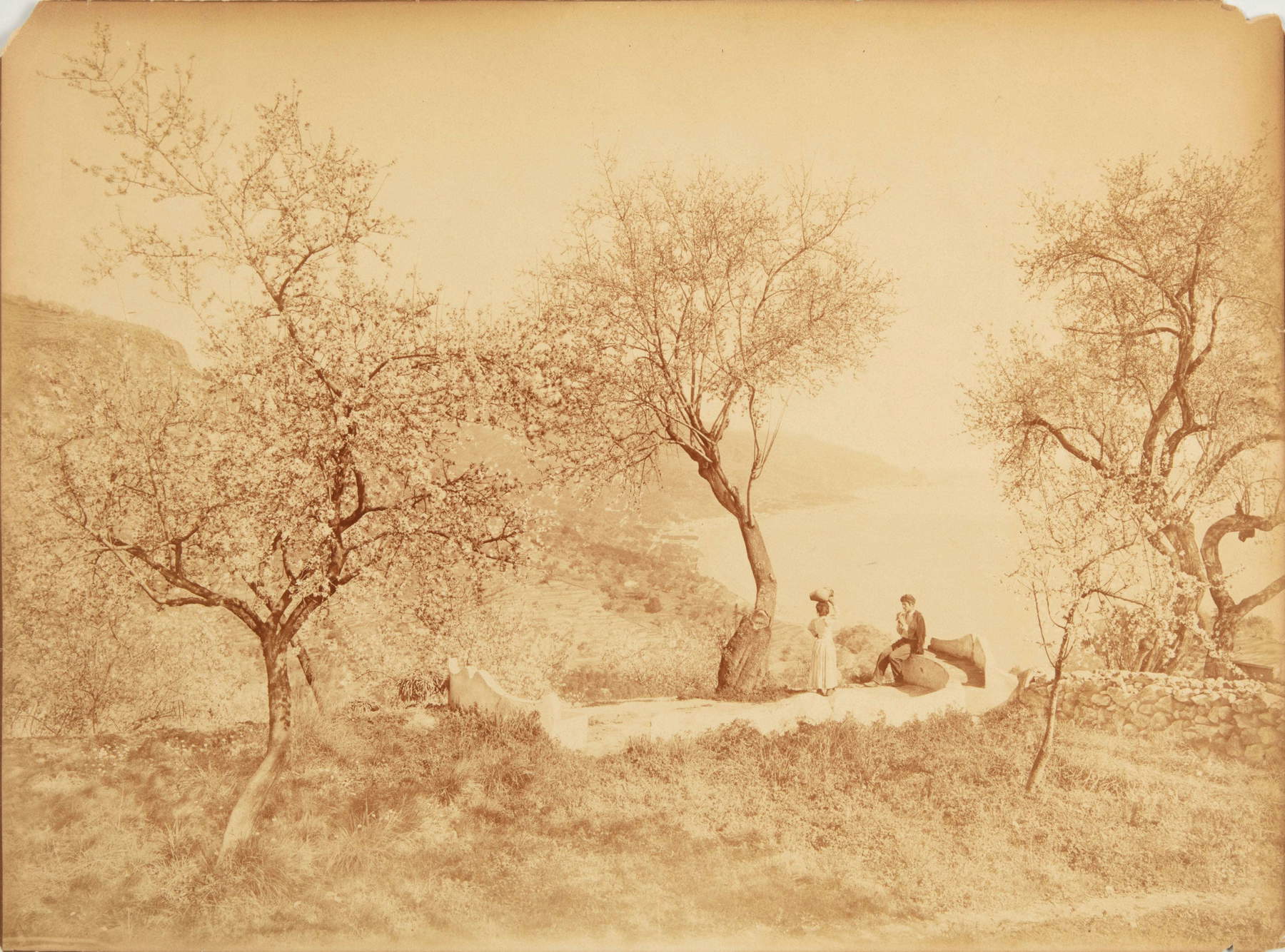
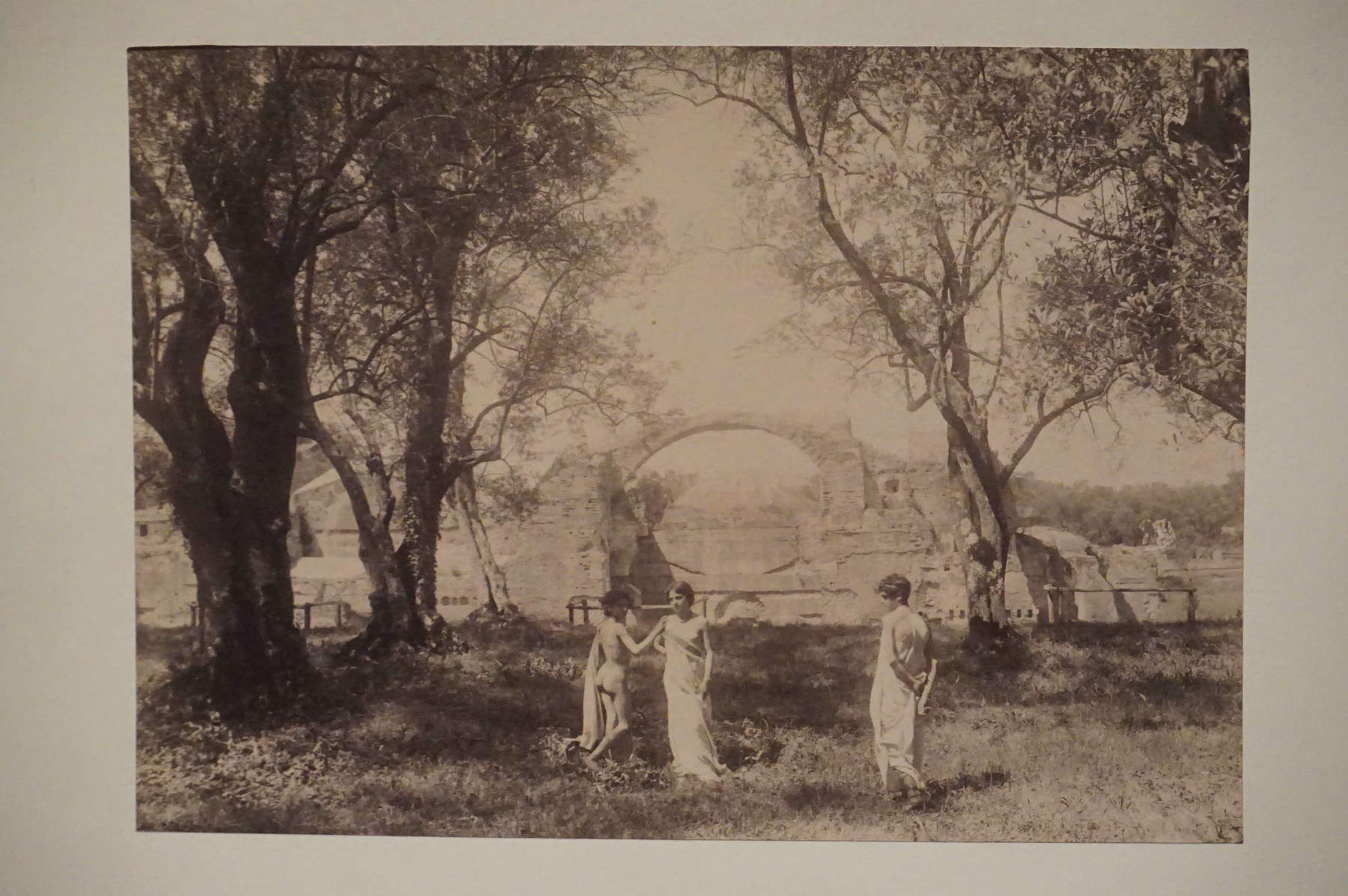
Wilhelm von Plüschow had a particularly significant relationship with Tivoli, though less well known than von Gloeden’s famous connection with Taormina. Active mainly between Rome and Naples, the photographer found in the Tiburtine ruins a setting perfectly consistent with his own visual research. Von Plüschow (Wismar, 1852-Berlin, 1930), von Gloeden’s cousin, worked in Rome from 1878 as a studio photographer before developing the production of outdoor male nudes. His Tiburtine images, which are less well known today because they are partly destroyed or missing, show a more dramatic and theatrical sensibility than his cousin’s idyllic gentleness: the models emerge from the ruins with an almost Michelangeloesque energy, less harmonious and more tormented. The images set at Hadrian’s Villa did not simply document the archaeological site: they reinterpreted it as a symbolic space of a pagan and timeless Mediterranean, where the young contemporary model seemed to naturally re-emerge from antiquity. This vision was from a very different perspective than the official archaeology of post-unitary Italy. While institutional culture tended to present the Roman past as national historical heritage, photographers such as von Gloeden and von Plüschow developed a more intimate and aestheticizing use of antiquity. Through what today we would call a queer gaze, capable of liberating the body from dominant patriotic narratives, ruins became emotional settings; the male nude, set among columns, porticoes, and Mediterranean landscapes, took on an artistic legitimacy through its appeal to classicism.
Between the nineteenth and twentieth centuries, in fact, the theme of the ruin occupied a central position in European decadent culture. Ancient architecture invaded by vegetation was no longer perceived merely as historical relics, but as symbols of the fragility of civilizations and the beauty of dissolution. Hadrian’s Villa perfectly embodied this sensibility: a landscape of memory and melancholy in which time seemed to layer slowly among stone, water, and Mediterranean nature. In this imagery, ruin also took on a deeply aesthetic and erotic dimension. In von Gloeden and von Plüschow’s photographs, the youthful body and decayed architecture often seem to mirror each other: both appear fragile, transient, suspended between vitality and disappearance. The young model emerges from the ruins almost as a figure belonging to an ancient world that has survived into the present.
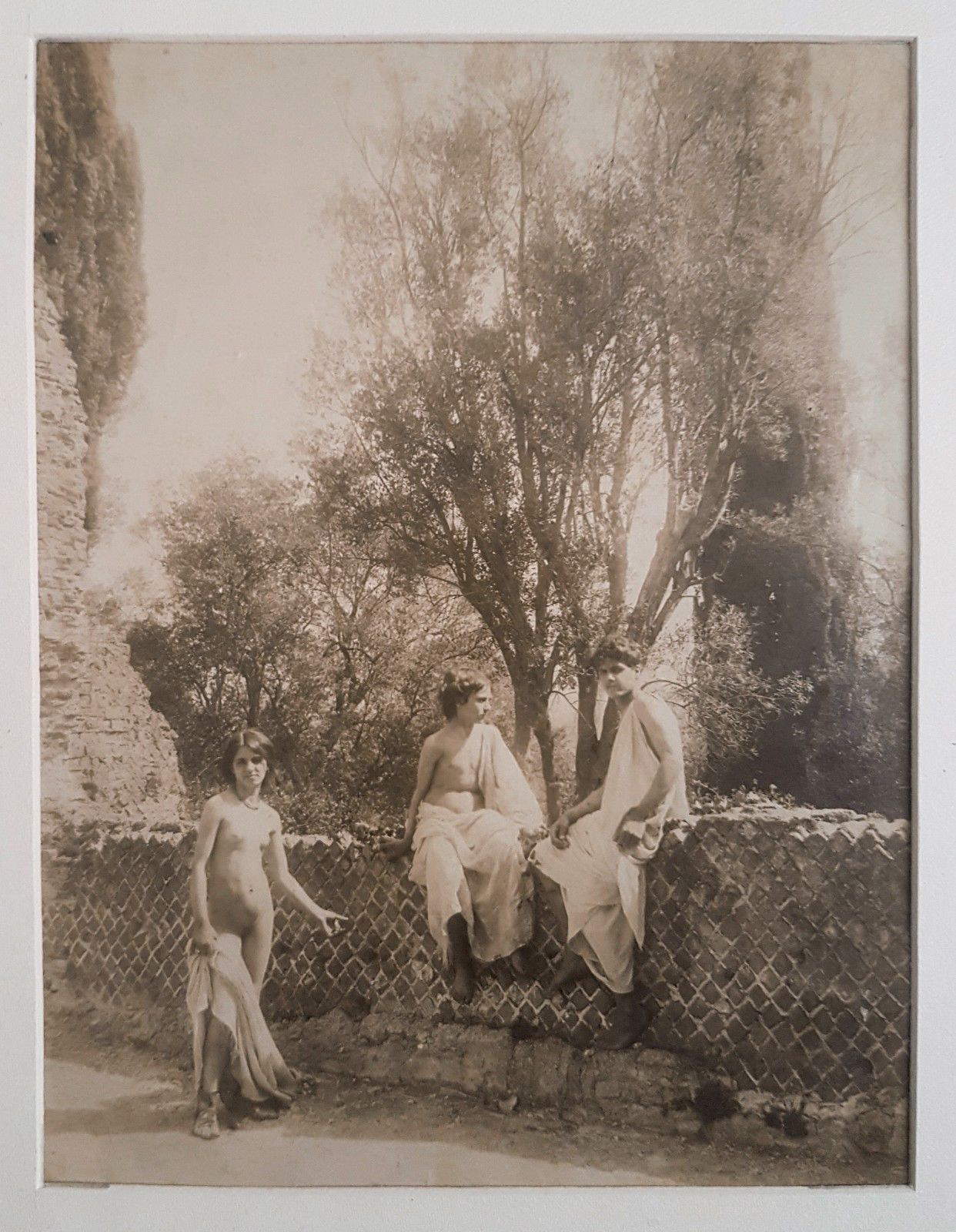
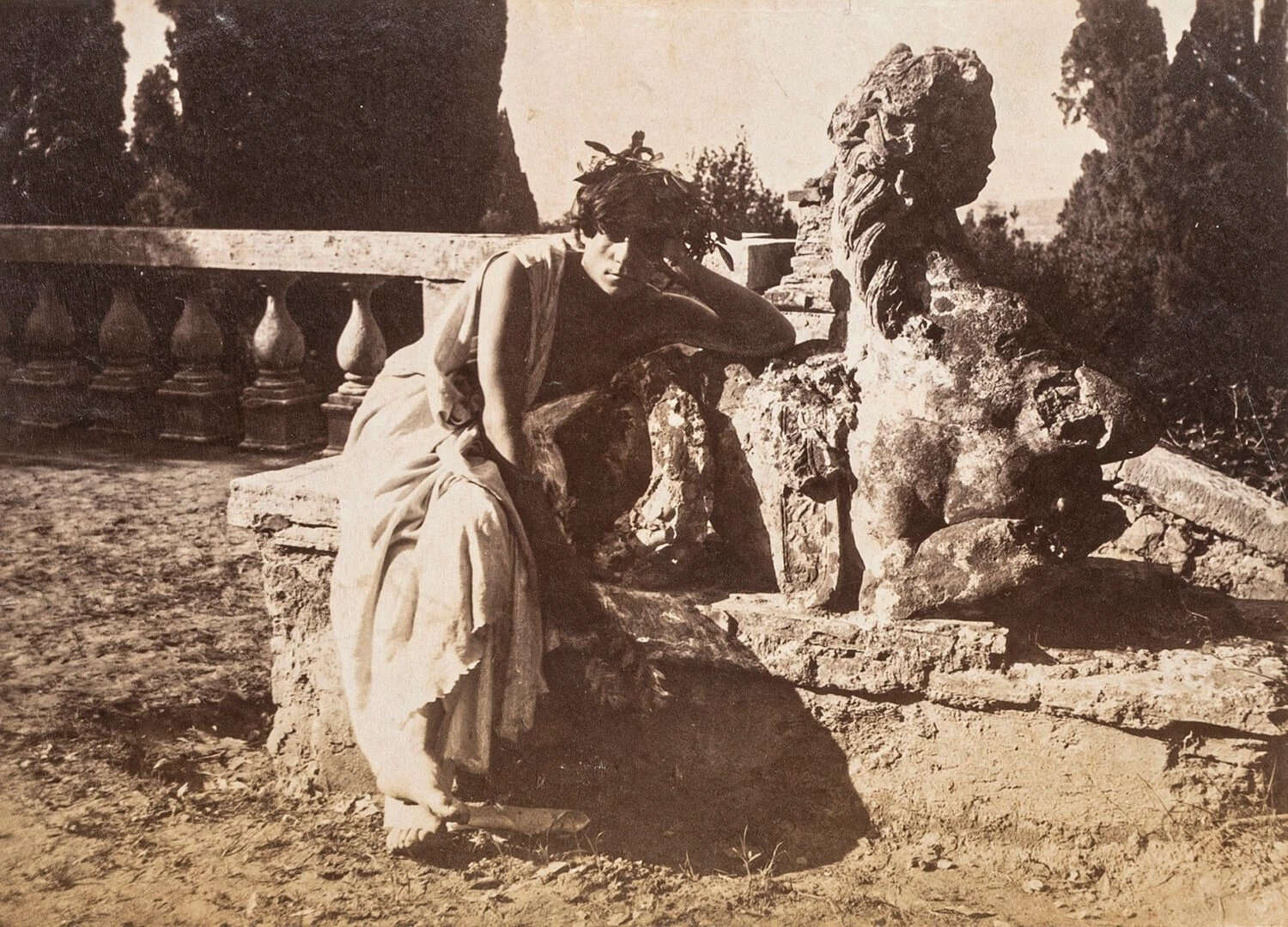
This visual culture found a particularly intense reception in cosmopolitan European circles associated with aestheticism and photographic collecting. Indeed, the images of the two photographers circulated between France, Germany, England and Italy through albums, prints and postcards purchased by artists, aristocrats and cultured travelers. This circulation was ambiguous, however: the postcards themselves were sold as respectable souvenirs of the Grand Tour, with double coding that allowed the buyer to choose whether to see in them a neoclassical work of art or an object of homoerotic desire. The emerging tourist market and the intimacy of the photographic gaze coexisted in tension, not harmony. Reference to the classical world allowed the representation of the male body and homoerotic desire to be placed within a culturally legitimized language balanced between art, archaeology, and desire.
Thus a kind of parallel cultural geography developed that united Rome, Naples, Tivoli, Capri, and Taormina. Capri became the symbol of aesthetic and unconventional freedom frequented by figures such as Jacques d’Adelswärd-Fersen or Norman Douglas; Taormina, thanks to von Gloeden’s photographs, transformed the “Mediterranean boy” into an international icon; Tivoli, on the other hand, offered a more contemplative and archaeological dimension, based on the melancholic charm of the ruin.
Villa d’Este also participated in this imagery. If Hadrian’s Villa evoked the lost grandeur of imperial antiquity, Villa d’Este represented the theatrical and artificial side of the Italian landscape: terraces, fountains, perspectives, and water features contributed to the construction of a space suspended between nature and artifice, perfectly in tune with the fin de siècle aestheticizing sensibility.
In this way Tivoli entered fully into the imagination of European decadent modernity. Not just a real place or archaeological site, but a mental and symbolic landscape in which eros, memory and ruin could merge into a single poetic vision of the Mediterranean. In this short circuit between stone and flesh, the Tiburtine ruins ceased to be dust and became avant-garde, anticipating by a century the modern need to deconstruct dominant genres and narratives.
Warning: the translation into English of the original Italian article was created using automatic tools. We undertake to review all articles, but we do not guarantee the total absence of inaccuracies in the translation due to the program. You can find the original by clicking on the ITA button. If you find any mistake,please contact us.